
Week 7 ———- John 1:35-42
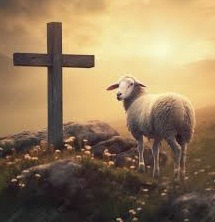
It was on the first day of the Hebrew month of Aviv, 14 days before Passover in 27 A.D. That corresponds to our March 29, 1997 years ago. John the Baptist looked at Jesus who had just come from his time in the wilderness, a time of testing and temptation and said ‘Behold the Lamb of God that takes away the sin of the world.”
I will take you on a journey through the Bible so you will know what John knew. We are familiar with his words, but do we know why he said them?
We have to go back to the beginning when God created everything. He made this world and created a special place where he could dwell with us. It was a garden in Eden. And it was wonderful. Adam walked in the garden with God. God loved the man and the woman. And there was no sickness, and there was no death. But there was a tree. And God told Adam to be obedient to me about the tree. That fruit is not for you. If you eat it, there will be death.
Genesis 2:17 “but you must not eat from the tree of the knowledge of good and evil, for when you eat from it you will certainly die.“
But Adam and Eve were tempted to eat of that tree, to disobey God’s rules, and when they did, everything changed. Sin drove a wedge between man and God. They had to leave the garden, and death did come. One day, they would die. And they did die. The Bible tells us Adam lived for so many years and then died. Seth lived for so many years, and he died, and Enosh lived for so many years, and then he died. Please don’t get all caught up in how many years they lived. The big thing is that they all died. That was not what God intended. Death was not supposed to be a part of the world. Death was a final separation from God. There needed to be an answer for sin and death.
Romans 5:12 “Therefore, just as sin came into the world through one man, and death through sin, and so death spread to all men because all sinned“
Death began when Adam and Eve sinned. Death entered the world then and became a part of it. But death did not spread to all because one man sinned, but because we all sin. You will die because you have sinned.
Romans 6.23 For the wages of sin is death
And I said that everything changed, but not everything changed. God still, despite sin, loved his children deeply and longed to be reunited with them. So, after these first three chapters of the Bible, the following 1186 chapters are all about how God pursues mankind and how God manages to destroy the barriers of sin and death so that God and man can dwell together again.
God calls Abraham and tells him to obey me, and I will build a great nation from you. And that nation will be a nation of priests who will carry my message to the whole world. But Abraham says My wife and I are very old and have no children. How can we have descendants? But God says, “I’ve got that.”
But Abraham is not always obedient; he gives up on God’s promise and has a child with his wife’s maid. But God says no, I will give you and Sarah a child. And Isaac is born… the child of promise.
God says, ‘ If I am to build a nation from Abraham, from this one man, I have to know, and he has to know: ‘Is he faithful now?’ So there is a test. God asks Abraham to sacrifice his beloved son on a mountain. Will Abraham believe that God can fulfill his promise even if Isaac dies? Will Abraham believe God can conquer death?
Abraham and Isaac set out. Abraham is about 100 years old, and Isaac is about 30. And they came to Mt Moriah.
Genesis 22:6 And Abraham took the wood of the burnt offering and laid it on Isaac, his son.
It is a heavy load. This is to be a whole burnt offering and must be completely consumed. It will take a lot of wood. So Isaac struggles up the mountain carrying the wood, and Abraham carries the fire and the knife.
Isaac asks, “Behold, the fire and the wood, but where is the lamb for a burnt offering?” (Genesis 22:7). Abraham replies, “God will provide for himself the lamb” (Genesis 22:8).
At the top of Mount Moriah, Isaac realizes that he is the sacrifice.
Genesis 22:9 And they came to the place which God had told him of; and Abraham built an altar there, and laid the wood in order, and bound Isaac his son, and laid him on the altar upon the wood.
I had always missed something important here. My Jewish friend taught me that the heading for this story in his Bible is “The Binding of Isaac.” In Hebrew, it is the Akedah. They emphasize the binding because Isaac, as a young man of 30, could have resisted. He could have overpowered his father. But he submits voluntarily to be tied up with ropes and placed on the altar—a willing sacrifice.
Abraham raises the knife. When it seems all is lost for Isaac, God provides a substitute: a male lamb appears. There is a lamb to take the place of sacrifice for Isaac.
Fast forward to when Abraham’s descendants end up in Egypt, and they become slaves for 400 years. And they are harshly treated. And they cry out to God for help.
Exodus 3:7-8 Then the LORD said, “I have surely seen the affliction of my people who are in Egypt and have heard their cry because of their taskmasters. I know their sufferings, and I have come down to deliver them out of the hand of the Egyptians and to bring them up out of that land to a good and bropiad land, a land flowing with milk and honey
So God sent Moses, and there were nine horrible plagues, but the pharaoh would not let God’s people go. So, there is one more plague.
Exodus 11:4-5 So Moses said, “Thus says the LORD: ‘About midnight I will go out in the midst of Egypt, and every firstborn in the land of Egypt shall die, from the firstborn of Pharaoh who sits on his throne, even to the firstborn of the slave girl who is behind the handmill, and all the firstborn of the cattle.
Someone must pay the price for sin. The wages of sin is death. The firstborn must die.
But God will spare the firstborn of the Israelites. There will be a substitute as there was for Isaac. There will be a lamb. And Exodus 12:5 says, “Your lamb shall be without blemish, a male a year old.” Every family will take a lamb, slaughter it, cook it, and eat it.
Exodus 12:13 But the blood on your doorposts will serve as a sign, marking the houses where you are staying. When I see the blood, I will pass over you. This plague of death will not touch you when I strike the land of Egypt.
This is not an offering for sin; it is a substitution for death. A family eats it, and none is left.
So they escape Egypt and come to Mount Sinai, where God gives them instructions for a tabernacle so that he can dwell with them. Again, after the first three chapters of the Bible, God is working to restore the relationship with man that he had in the garden. But they are still sinning, so God gives them a means to atone for their sins. Because their sins are continual, they need a continual sacrifice of sin. So, God establishes the tamid sacrifice. (Tamid is Hebrew for ‘continual.’) Again, it is a one-year-old lamb without blemish or spot,
The tamid lamb would be placed on the altar at 9:00 in the morning, and it will burn on the altar along with all the other sacrifices until 3:00 pm when it is completely consumed. And so that there be a lamb there continually, another lamb shall be sacrificed and placed on the altar at 3:00 pm and burn until the next morning, when it will start over.
Ever-present sacrificial lamb before the father. for sin
And so it was, every day. A lamb was placed at 9:00 am and 3:00 pm. And the people would gather at 9 and 3 for the sacrifice. They would say the Shmah prayer and the 18 benedictions.
This happened every day for over a thousand years, so there was an ever-present sacrifice before the Father for sins.
In addition to this twice-a-day tamid offering for sin, once a year, at the time of the Passover celebration, beginning at 9 a.m. until 3 p.m., every family would bring a lamb to the temple, slaughter it, take it home, and roast it. It was to be eaten to remember the Passover when a lamb was slain as a substitute for death.
Because there had to be a solution to the problems of sin and death
But the prophet Isaiah foresaw a time that God would do something different:
Isaiah 43:18-19 “Remember not the former things, nor consider the things of old.
Behold, I am doing a new thing; now it springs forth, do you not perceive it?
I will make a way in the wilderness and rivers in the desert.
And Isaiah tells us that this one would be the new Passover and the new sacrifice:
Isaiah 53:3,5-6 He was despised and rejected by men, a man of sorrows, and acquainted with grief;
But he was pierced for our transgressions; he was crushed for our iniquities;
upon him was the chastisement that brought us peace, and with his wounds, we are healed.
All we like sheep have gone astray; we have turned—every one—to his own way;
and the LORD has laid on him the iniquity of us all.
There is one coming, this new Passover, this new sacrifice. God will provide the lamb.
But after Isaiah predicted this new thing God would do, for the next 600 years, the people of Israel said, as Isaac had said, “Where is the Lamb?”
The nation hits its lowest point, and Babylon attacks them. The city and the temple are destroyed, and they are taken into captivity for 70 years. And the people ask, “Where is the lamb that will bring us redemption?”
They finally return and rebuild the temple, but it is only a shadow of its former self. They make an offering, but God does not show up. And the people ask, “Where is the lamb who will do this new thing?”
They are conquered by the nations who burn their bible scrolls, desecrate their temple, and refuse to let them say the name of their God. And the people ask, “Where is the lamb that will restore us?”
Then they are conquered by the Romans, who are brutal, bring more persecution, bring more death, and crucify whole villages of their neighbors. And the people ask, “Where is the lamb? Where is the way in the wilderness?”
They rebuild the temple, and it is beautiful on the outside, but inside, it is corrupt and controlled by priests who swindle money from the poor to gain personal power and wealth. And the people ask, “Where is the lamb?”
And Jesus walked out of the wilderness, back to where John the Baptist was preaching near the Jordan River. John looked at Jesus, who had just come from his time in the wilderness, a time of testing and temptation, and said, ‘Behold the Lamb of God that takes away the sin of the world.‘ God has provided the lamb.
Jesus spends the next year teaching and demonstrating how to live as a member of the Kingdom of God. When his year is up, he heads to Jerusalem to fulfill his role as the Lamb who takes away the sins of the world. It is the time of the Passover celebration when everyone comes to Jerusalem to sacrifice a spotless lamb to celebrate God’s delivery from death. And he gives himself up. And as Isaiah foresaw, He is beaten repeatedly, scourged, abused, and he did not say a word.
Is. 53:7 He was oppressed, and he was afflicted, yet he opened not his mouth;
like a lamb that is led to the slaughter, and like a sheep that before its shearers is silent,
so he opened not his mouth.
After his beating, Pilate presented Jesus and said, “Behold the man!” (John 19:5). Pilate did not know what John the Baptist knew.
And Abraham took the wood of the burnt offering and laid it on Isaac his son.
And Yehovah took the wood of the cross and laid it on Jesus his Son.
And Isaac carried the wood for the sacrifice up the hill.
And Jesus carried the wood for the cross up the hill.
And Isaac was bound by ropes and laid on the wood.
And Jesus was bound by nails, laid on the wood.
And the innocent lamb took Isaac’s place.
And the innocent lamb took our place.
We stood guilty before God of sins, knowing that the wages of our sins were death. We deserved the penalty of death. But Jesus is the innocent, spotless lamb who takes our place,
It was our sin he took on; it was our punishment of death. He deserved none of it. But he did it because he loves us. He would do anything for us. He would do anything to be able to reunite us – to restore the fellowship of man with God in the garden as he first designed it.
And in the very spot on the same mountain where Abraham laid Isaac on the altar, God provided the lamb. On that very same spot, at 9 a.m., the people gather and pray, and as they have done every year for over 1000 years, the yearling lamb without blemish is being placed on the altar, where it will be until 3 p.m.
But this day is different because it is the day of Passover, and after the 9 am lamb is placed, they begin the slaughter of the Passover lambs. Each family brings a 1-year-old lamb to the temple to that spot on the mountain where God provided the lamb and the sacrifice of the Passover lambs begins. But this day is very different Because at that same time, 9 am when the Tamid is offered for sin, when the Passover lambs are being slain to remember the salvation from death, Jesus is placed on the cross, where he stays until 3 pm.
And John the Baptist points from the grave and shouts, “Behold the Lamb of God who takes away the sins of the world.”
At 3 pm, the Tamid lamb for sin has been consumed, and the last Passover lamb has been slain,
And Jesus says, “It is finished.” In Hebrew, that is one word, “Asah.” That is the last word of Psalm 22, the Psalm that tells the story of the crucifixion. “Asah” means “I have done it.”
At the exact moment when Jesus’ work is complete on the cross, He says, “It is finished,” and the veil of the temple is torn. The curtain that separates God’s presence from the people is ripped from top to bottom. There is no longer a dividing wall between us and God’s presence. The barrier was sin. Jesus conquered sin on the cross. Now, there is a way for God to be reunited with man. And for the first time since God commanded the continual sacrifice in Leviticus — for the first time in over a thousand years, there is no need for the twice-a-day tamid sacrifice of the lambs because Jesus’ sacrifice is the perfect sacrifice.
Sin has been defeated once and for all.
Sin is defeated, but what about death? Death, that final separation, must be addressed.
And Jesus, who did not deserve to die, is placed in the Grave. But the prophets had also predicted the defeat of death.
Isaiah 25:8 He will swallow up death forever; and Yehovah God will wipe away tears from all faces, and the reproach of his people he will take away from all the earth, for Yehovah has spoken.
Hosea 13:14 I shall ransom them from the power of the grave; I shall redeem them from Death. Oh, death, where is your victory? Oh, grave, where is your sting?
Three days later, the stone rolled away from where he was buried to reveal an empty tomb. The angel tells Mary, “He is not here, for he has risen.” The news spreads.
And I can almost see old Nicodemus when someone tells him that Jesus’ grave is empty
and he finally understands what Jesus was trying to say to him.
Nicodemus, For God, so loved the world… This is how much God loved the world. This is how much God wanted to restore the relationship with mankind that was tarnished by separation by sin and death. This is what God was willing to do.
For God so loved the world that he gave his only Son, that whoever believes in him should not perish but have everlasting life.
So when we hear John the Baptist’s words, ”Behold the Lamb of God that takes away the sin of the world,” we remember that Jesus is the Lamb of God who conquered both sin and death.
1 Peter 1:18-19 But you were ransomed with the precious blood of Christ, like that of a lamb without blemish or spot.
1 Corinthians 5:7 For Christ, our Passover lamb, has been sacrificed.
This explains our communion, our Lord’s Supper. Why do we remember what Jesus did by eating bread that represents his body and juice that represents his blood? Because the Passover lamb was eaten, and his blood is our ransom from sin. Because sin and death are both defeated
1 Cor. 15:57 But thanks be to God, who gives us the victory through our Lord Jesus Christ.
 Swallow No Camels
[…] have already discussed the first of the spring appointed times, Passover (see ‘Behold the Lamb #22‘). The Bible doesn’t call the day Passover but uses that term to refer to the sacrifice […]
LikeLike
Referring to John 18, it’s actually John 19:5
”So Jesus came out, wearing the crown of thorns and the purple robe. Pilate said to them, “Behold the man!”“John 19:5 ESV
Sorry but I told you I’m looking up and recording all the scriptures and John 18 just didn’t seem right😁
LikeLiked by 1 person
[…] For more information on Passover, see https://swallownocamels.com/2024/03/31/march-29-27-a-d-behold-the-lamb-the-year-of-the-lords-favor-… […]
LikeLike