June 15-16, 27 A.D.  Jesus Up Before the Dawn #37

Week 18 ———  Jesus is Up Before the Dawn
Mark 1:32-39

Last week, we talked about Jesus’ encounter with the four fishermen.  The next day was the Sabbath in Capernaum. Then, on Sunday morning, he left on a three-week journey to the towns of Galilee. I’d love to tell you some stories from that 3-week trip, but I can’t.  I can’t because the Bible has no details about that trip.  So, while Jesus travels around Galilee until July 7, I have time to back up and talk about what happened a week ago,  June 15-16, 27 AD.

Mark 1:32-34       That evening at sundown they brought to him all who were sick or oppressed by demons. And the whole city was gathered together at the door.  And he healed many who were sick with various diseases, and cast out many demons. And he would not permit the demons to speak because they knew him. 

That Sabbath in Capernaum was a busy day for Jesus.  After he heals a demon-possessed man in the synagogue, he leaves the service and heals Peter’s mother-in-law. After sundown, everyone in the town who had acquaintances who needed healing brought them to Jesus, and Mark tells us, “The whole city was gathered together at the door.”  It was probably a very long night.  Then Mark picks up the following day:

Mark 1:35-39       And rising very early in the morning, while it was still dark, he departed and went out to a desolate place, and there he prayed. And Simon and those who were with him searched for him, and they found him and said to him, “Everyone is looking for you.” And he said to them, “Let us go on to the next towns, that I may preach there also, for that is why I came out.”  And he went throughout all Galilee, preaching in their synagogues and casting out demons.

Have you ever had one of those days that seemed never to end?  There have been a few days in my medical practice where I felt like the whole city had been at the door.  They may all have the same number of hours, but some days are longer than others.  Just a few days ago, Friday, June 21, was the “longest day” of 2024, the summer solstice, when we have more hours of daylight than any other day this year.  But we have all had days that seemed to last forever and some we never wanted to end.  What do you want to do after a long, hard day?  If at all possible, you want to sleep late, right?

So what does Jesus do after healing that lasted long into the night?   Mark says, “And rising very early in the morning, while it was still dark, he departed and went out to a desolate place, and there he prayed.”   What woke Jesus up so early?  Jesus got up before the sun so the daylight didn’t wake him.  He didn’t set an alarm clock.  Why did he wake up so early after a long day?  I am guessing God woke him up.  Does God ever wake you up early?

Back in March, we discussed what Jesus did during the 40 days in the wilderness, and we talked a little about the prayer life of a first-century Jew.   (See “https://swallownocamels.com/2024/03/09/february-16-march-27-27-a-d-jesus-in-the-wilderness-the-year-of-the-lords-favor-16/“)  There were set times for prayer, at least at “evening, morning and noon” as David mentions in Psalm 55:17.  We know Daniel had a habit of praying three times a day, despite the threat of the lions’ den (Daniel 6:10).  And there were at least two set prayers, the Shema and the Amidah. (The text of these prayers is included in the link above.)   We know the early Christian Church prayed the Lord’s Prayer three times a day.  Traditions today vary widely. The Eastern Orthodox Christian Church has adopted breviaries (liturgical prayer books), and church bells ring seven times daily to announce their prayer times. Then you have the Protestant churches in the US, many of which have no set times of prayer.

Many other religions have set prayer times. Most of us who have traveled have heard the call to prayer coming from the minaret of a mosque. Five times a day, it rings out (dawn, early afternoon, late afternoon, after sunset, and nighttime), and the prayers are recited worldwide, facing toward the Grand Mosque in Saudi Arabia.  

Should we have a set time to pray?   I grew up in the church, but no one ever told me I needed to set specific times aside for prayer and that I needed to pray specific prayers.  Is there a command in scripture to stop praying three times a day?  (I can’t find it.)   I once had a Sunday School teacher speak on why we shouldn’t regularly say the same prayer over again.  (He had gotten upset because someone read a printed prayer during the worship service.)  He used Matthew 6:7 as his verse to teach that.  From the KJV:  “But when ye pray, use not vain repetitions, as the heathen do: for they think that they shall be heard for their much speaking. Be not ye, therefore, like unto them: for your Father knoweth what things ye have need of, before ye ask him.”  He interpreted that as saying we shouldn’t use pre-written prayers like those heathen do.  Those are just “vain repetitions.”  The KJV is not wrong here, but this teacher misunderstood.   To repeat something in vain is to say something without meaning.   The “vain repetition” (or, as the ESV calls them, “empty phrases”) Jesus is talking about is the common practice of the pagans of saying the exact phrases over and over because they thought that if you said this particular phrase so many times, you would force the reluctant god to fulfill your request, almost like saying magic words.  Jesus certainly does not speak against saying prescribed prayers, for the next thing he says is to “pray like this” and gives us a prescribed prayer we call the Lord’s Prayer.  It is crucial to guard against the concept of ‘vain repetitions.’ Every time we recite the words of the Lord’s prayer (or any prayer) without heartfelt meaning, we risk repeating them in vain. Our prayers don’t need fancy wording, but they must be honest, from the heart.

Should we pray like Jesus 3 regular times a day?  There is something to be said for having a regular rhythm of prayer in your day.  Perhaps we, as apprentices of Jesus, also need to imitate him in this.  Maybe it is time to live every day in a rhythm of prayer.  In the morning, sometime in the mid-day, and in the evening, set aside a few minutes to pray every day.  Why don’t we do this?   We feel like we are so busy.  There is so much to do each day.  But look at Jesus.  Jesus only has ten months left to do what he was sent here to do before his crucifixion.  He doesn’t have time to waste. That is all the time he has to choose disciples, teach them, show them how to live life and correct their misunderstandings.  He has to train them before he sends them out to change the world with the Gospel.  He spent the first 40 days after his baptism in the wilderness. That is nearly a tenth of the time of his entire ministry.  We think of the time in the wilderness as ‘when he was tested by the satan.’  But the time in the wilderness was his time with the Father and the Holy Spirit with no interruptions.  A time of preparation so that he would be able to do his ministry.  And then, throughout his brief time here, he goes off many times by himself.  Pay attention as you read the Gospels. Jesus is constantly going off by himself to pray.  Because he knew he needed to.

Jesus only had ten months to do what he had been sent here to do before his crucifixion.  He doesn’t have time to waste. He only has 438 days from his baptism to his crucifixion.  That is all the time he has to choose disciples, teach them, show them how to live life and correct their misunderstandings.  He has to train them before he sends them out to change the world with the Gospel.  He spent the first 40 days after his baptisms in the wilderness. That is nearly a tenth of the time of his entire ministry.  We think of the time in the wilderness as ‘when he was tested by the satan.’  But the time in the wilderness was his time with the Father and the Holy Spirit with no interruptions so that he would be able to do his ministry.  And then, throughout his brief time here, he goes off many times by himself because he needed to.  

Once Jesus’ ministry gets going and people find out he is healing, casting out demons, and performing miracles, he is constantly being sought by the crowds. He could have set up a full calendar of speaking engagements at any synagogue in Galilee.  And the healing.  You realize that there were almost no cures for anything in the first century.  The field of medicine was pitiful at best.   So, if you had a disease, you had little hope for healing unless you found a miracle.   If you heard about a healer, you would travel far just for a chance to be healed. That’s why the whole town was at his door.

Yet, with all these crowds pressing in, Jesus made time to pray alone.  The busier Jesus got, the more he went off alone and prayed.  In our passage today, Jesus is tired and exhausted, but he needs to be connected to the Father.  Look back at the passage.  Jesus gets up before dawn to spend time alone with the Father.  Simon is busy searching for Jesus because the town is full of people who are looking for him.  There are more that want his touch.  Simon tells Jesus that there is a great ministry opportunity here.  But Jesus tells Simon that he needs to go to other towns in Galilee, and he invites Simon to go with him.  “Let us go on to the next towns, that I may preach there also, for that is why I have come.”   Again, the reason we don’t have any stories from these three weeks of Jesus’ ministry is that his disciples didn’t go with him.  They weren’t ready for a full-time commitment yet.  They stay home and fish while Jesus goes on this quick tour of Galilee.  So all we know about this trip is this one sentence: ” And he went throughout all Galilee, preaching in their synagogues and casting out demons.

The people in Capernaum are all pro-Jesus here.  (This is a significant change from his reception in Nazareth.)  Jesus has gone viral in Capernaum.  It would have been easy for Jesus to stay there.   But Jesus was fine saying ‘no’ to Simon, saying ‘no’ to the crowd in Capernaum if it meant saying ‘yes’ to the Father.  There are so many good things we can do in God’s world.  There are so many ministries we could help out.  We could try to help all of them and end up just pulling ourselves in so many directions, getting nothing done.  We could do many good things but miss the great things God wanted us to do.  John D. Rockefeller is quoted as saying, “Don’t be afraid to give up the good to go for the great.”  If you say ‘yes’ to doing one thing, you say ‘no’ to many others.  To choose the best thing, the great thing, you must say no to some good things.

Jesus could have done many good things if he stayed in Capernaum.  But they weren’t the things God had for him to do. We have to discern what the great thing God wants us to do is.  Jesus was doing that before dawn in Mark 1— praying to determine God’s best.  And that is the root of prayer. 

In Jesus’ Bible, in Hebrew the most common word for prayer is ‘tefillah’ coming from the root word ‘palal’ as seen in I Kings 8:28:  “Yet have regard to the ‘tefillah’ (prayer) of your servant and to his plea, O LORD my God, listening to the cry and to the “tefillah” (prayer) that your servant ‘palal’ (prays) before you this day,  

The root meaning behind palal is “fall down to the ground in the presence of one in authority to plead a cause or seek a judgment or discernment.”   It is the picture of someone falling on their knees before a king or judge, begging for something.  That is not a familiar picture to those who live in the US, but I have a very clear picture of ‘palal’ in my mind.  

I was working in the mission hospital in Ghana during a malaria epidemic.  Our 36-bed pediatric ward was overflowing with 54 patients, many of whom were near death.  I came to the bedside of a very ill 6-year-old little girl who was hanging on to life by a thread.  The malaria parasite had infected her brain.  Her father fell on his knees before me and begged for us to do anything to save his daughter’s life.  I was shocked and overwhelmed by his actions.  I did the only thing I knew to do.  I went down on my knees with him to appeal to the authority who could actually heal his little girl.  I told him through the translator that we were doing all we could with medicine to treat his girl but that I would join him in praying to God, who could do what we couldn’t do.  So we knelt there on that wood floor beside her bed.  Her father, me, the translator, and all the nurses in the room joined together to fall down before the creator of the universe, the great physician and pled for the life of this little girl.  The next day, she began to improve, and a few days later, this father carried his daughter back to their village, leaving with not only a daughter who was whole but a knowledge of a God who can do what man cannot.   I wish I could tell you that all of the children got better.  But many did not.  Many fathers carried their children back to their village to bury them there.

But this man on his knees, seeking one with the power to fill his request— that is palal.  That is the root of prayer.  Again, it is to “fall down to the ground in the presence of one in authority to plead a cause or seek a judgment or discernment.”  Jesus is up before dawn in our passage today to seek from the authority of the universe a discernment.  Should he stay in Capernaum or go elsewhere?  He can do good wherever he goes, but Jesus has limited time.  He wants to do not what is just good but what is God’s best.  We need to pray more prayers of discernment.  We come to Yehovah for His discernment over our lives. 

Proverbs 3:5-6    Trust in Yehovah with all your heart,
and do not lean on your own understanding.
In all your ways acknowledge him,
and he will make straight your paths.

We know it is not smart to “lean on our own understanding,” but often, we try to decide what is best without seeking the one who knows.  Jewish scholars say prayer is “the soul’s yearning to define what truly matters and to ignore the trivialities that often masquerade as essential.”   That is a haunting phrase, “trivialities that often masquerade as essential.”  Jesus’ time was limited; he had little time for trivialities.  How about us?  Sometimes, we live each day like we have all the time in the world, but our time in this life is also limited.  How good are you at ignoring the trivialities to do what matters?

Trivialities —  I will mention just a couple of examples.  Your trivialities may vary.  
According to a survey conducted in February 2021, 48% of the respondents stated that, on average, they spent five to six hours on their phones daily (not including work-related smartphone use). 22% said they spent three to four hours on their phones daily. Only five percent of users surveyed said they spent less than an hour on their smartphones daily. Have you heard the term ‘doomscrolling’? It refers to spending excessive amounts of time reading large quantities of news online or viewing multiple videos or posts without knowing how much time has passed.   A similar study showed that most Americans watched 3-4 hours of television daily.  And sometimes we say to ourselves, “I wish I had more time to visit with our neighbors, read a book, study the Bible, pray, etc.”  The time is there.  We must be better at discerning how to use it for great things.

God created life with a rhythm.  He established it at the beginning of Genesis.  The years are broken up by appointed times when you stop what you do daily and dedicate time to God.  The weeks are broken up by the Sabbath, a day set aside to stop what you are doing, rest, and seek God.  The days are broken up by times of prayer.  God set up this rhythm to our years, weeks, and days for all the saints in the Bible, Old, and New Testament.  The creator of the universe set it up this way because He knew we needed it.    We were not designed to be continuously busy.  It is not healthy physically or spiritually.  But we live in a busy world.

You understand busy if you have ever walked on New York City streets.  There are things I like about NYC, but the crowds, traffic, and street chaos are not on my list.  The best pictures of NYC are from far above, where you can’t see the people or the cars, just the buildings.  In the mid-1800s, New York City’s population grew exponentially due to a large influx of immigrants, and living conditions became more crowded and unhealthy.   The City’s politicians and planners felt that more open space was needed for the health of the residents.  In 1853, state officials approved funds to purchase the land from 59th to 106th Streets, between Fifth and Eighth Avenues.  So they created Central Park—over 800 acres with artificial lakes, waterfalls, meadows, and wooded areas. It is a respite from the hurry, a place to get away from the craziness of the city. Many New Yorkers say a walk in Central Park maintains their sanity.  Even the New York politicians recognized that amid this craziness, we need space away from the crowds.

As we walk in the footsteps of Jesus, as we apprentice under him, we are called to imitate his actions. One of these actions is taking time for solitude. Just as Jesus sought time alone with his Father, we too should seek moments of quiet reflection and connection with God.   Jesus calls us to slow down, simplify our lives, and be apprentices. We have to be with him, observe what he does, and then do what he does. The trouble is that most of us are too busy to find the time to be with Jesus. Dallas Willard called hurry the great enemy of the spiritual life. He said we must “ruthlessly eliminate hurry from our lives.”  We must learn to live in the spiritual rhythm God designed us for.  We need to take the time to be with Jesus.  Maybe for you, it is in the morning before the dawn.  Perhaps some other time works for you.  But it must be some time. We must learn to say no to things that do not benefit us.  We must also learn to say no to some good things and yes to God’s great things.

Have you settled into a rhythm of prayer?  Would you consider, just as a trial this next week, imitating Jesus with a brief prayer time several times a day?   Come before him with the idea of the Hebrew root of prayer, palal, on your knees before the authority seeking discernment and favor. 

June 13, 27 A.D.  Jesus invites Four Fishermen to Join Him for Sabbath #36

Week 17 ———  Jesus invites Four Fishermen
Matthew 4:18-22     Mark 1:16-20

Last week, we discussed Jesus’ sermon in his hometown of Nazareth and how they wanted to throw him off a cliff when he was finished.  After Jesus was rejected at Nazareth, he moved his ministry base to Capernaum, on the Sea of Galilee. 

Matt. 4:18-22   While walking by the Sea of Galilee, he saw two brothers, Simon (who is called Peter) and Andrew, his brother, casting a net into the sea, for they were fishermen.   And he said to them, “Follow me, and I will make you fishers of men.”   Immediately they left their nets and followed him.   And going on from there he saw two other brothers, James the son of Zebedee and John his brother, in the boat with Zebedee their father, mending their nets, and he called them.   Immediately they left the boat and their father and followed him.

When did Jesus call the disciples?  Because most of us have only read the Gospels individually, we don’t understand the chronology of how Jesus called his followers.  If you are reading the Gospel of Matthew, you don’t hear of anyone following Jesus until the story in Matthew 4 above.  Then you hear of the four fishermen “immediately” leaving their boats and following Jesus, making you wonder what would cause them to suddenly leave their jobs, their only way to feed their family, and follow someone they had never met.   If your 19-year-old son came home and told you he had just given up the family business to follow some religious teacher whom he had never met before, how would you react?  You would likely be quickly trying to find out what kind of cult had recruited your son.  This is part of the reason we are walking through the 70-week ministry of Jesus chronologically.  When you put the story of the disciples and Jesus in the proper order, it makes more sense.

We have already discussed how two of John the Baptist’s disciples began to follow Jesus after his return from the 40 days in the wilderness (John 1:35-42).  One was Andrew, who first found his brother, Simon, before he went to Jesus.  The other is unnamed, but everyone agrees it was John.  The next day, Philip and Nathaniel began to follow Jesus.  All of this happened before John the Baptist was arrested and before our passage today.  So, if Simon and Andrew were already following Jesus, why would they be fishing over two months later in Matthew 4?  Because we don’t read the gospels chronologically, we tend to mash up the stories of Jesus and the disciples and think there was only one encounter where they met him and became full-time disciples.  In fact, there is yet one more encounter with Jesus and these men about a month after our passage today.  That encounter is in Luke 5:1-11. In Jesus’ day, it was uncommon for rabbis to have full-time disciples. Most disciples maintained their ‘day jobs’ (or, in the case of fishermen, their ‘night jobs’). At this point, Andrew, Simon, James, and John have been following Jesus part-time.

Look at the invitations Jesus gives to them.  In John 1, they ask where he is staying, and he says, “Come and see.”  Not only do they spend the day with him, but they follow him to Galilee, where they see the miracle in Cana, and then they travel with him to Jerusalem for Passover.  After Passover, they are baptizing people in the Judean countryside and then travel back through Samaria to Galilee with him.  However, when Jesus returns to Jerusalem for Shavuot (Pentecost), there is no mention of disciples on that trip.  Simon and Andrew likely stayed in Galilee and ‘caught up’ on their fishing until Jesus met them again at the Sea of Galilee in our passage today.

In Matthew 4, Jesus tells Simon and Andrew, “Follow me, and I will make you fishers of men.”  “Will make” in Greek is a future tense verb, so Jesus is saying, “And I will in the future make you fishers of people.”1  Matthew says they “immediately left their nets and followed him.”  But they haven’t left their nets for good because they are fishing again (unsuccessfully) in Luke 5.  Clearly, Luke 5 is a different story.  Jesus teaches from their boat, and then they catch an ‘astounding’ amount of fish.  Then Jesus says, “Do not be afraid; from now [this present moment] on, you will be catching men.”  Then Luke 5:11 tells us,  “And when they had brought their boats to land, they left everything and followed him.”  At this point, they become full-time disciples.  Peter later says in Luke 18:28, “See, we have left our homes and followed you.”  Also, as in Matthew 19:27, “See, we have left everything and followed you.”

For years, we have thought that Jesus had one meeting with Simon and Andrew, and they became disciples. In the same way, we think of our coming to Jesus as a one-time decision.  Instead, we see with these men that it was a process, a journey.  The old Chinese proverb, “A journey of a thousand miles begins with a single step,” is indeed true. But it’s not much of a journey if the only step you take is the first one.  So let me add my own Southern Boy proverb: “A journey of a single step is not much of a journey.”  Today, our churches are filled with people who have decided to believe in Jesus, taken that first step, and then halted. They may attend church, but if you engage them in a conversation about their spiritual journey, they often mention their church membership and baptism.  They have little to say if you ask about their ongoing relationship with God.

Let’s say I invited you to go on a trip.  I ask you to ensure you have your passport and I pick you up and we load your suitcases in the car.  We drive to the airport and then sit in the parking lot for an hour and never leave the vehicle.  Then, maybe one day a week from then on, we load up the car again, drive to the airport, sit there for an hour, and then go home. That is not much of a trip.  But this is like many people’s walk with Jesus.  They start, then they stop.  They think about starting again once a week or so, but they don’t.  This is not discipleship.

Discipleship in Jesus’ day was much like the idea of apprenticeship.  In Jesus’ day, and for thousands of years afterward, if you wanted to learn a trade, say you wanted to be a blacksmith, you didn’t go to blacksmith school.  There was no correspondence course or YouTube videos.  You became an apprentice.  You would often go and live with the blacksmith in his house.  You would follow him everywhere he went.  You would wake up when he woke up, sleep when he slept, and do whatever needed to be done.  For a long time, you would just tend the fire or sweep the shop, all the while watching your mentor.  One day, he might let you hold the sword in the fire or the horseshoe as he hit it with his hammer.   Over the years, by observation and then imitation, you would slowly become like the blacksmith, able to see when the metal was hot enough to form and swing the hammer as he did.  It was a process over the years.

When Jesus called the disciples to ‘Follow me,’ it literally meant ‘come after me’ or ‘come behind me.’  Think of putting your feet right in the footsteps of Jesus, who is walking ahead of you, as if walking in a minefield.  Where Jesus stepped before is safe, so keep your feet in line with him.  You move as he moves; you step where he stepped.  You see how he greets people, how he talks to people, how he loves people.  You see how he prays to His Father, seeks His Father’s direction, and studies and memorizes and uses His Father’s scriptures, how he teaches, and how he heals.  All of this to become like him.

The point is not just to know what Jesus knows or even to do what Jesus does. The point is to be who Jesus is—a reflection of Jesus.

Francis Chan, in his book Multiply, said: 

“It’s impossible to be a disciple or a follower of someone and not end up like that person. Jesus said, “A disciple is not above his teacher, but everyone when he is fully trained will be like his teacher” (Luke 6:40). That’s the whole point of being a disciple of Jesus: we imitate Him, carry on His ministry, and become like Him in the process.  Yet somehow many have come to believe that a person can be a “Christian” without being like Christ. A “follower” who doesn’t follow. How does that make any sense? Many people in the church have decided to take on the name of Christ and nothing else. This would be like Jesus walking up to those first disciples and saying, “Hey, would you guys mind identifying yourselves with Me in some way? Don’t worry; I don’t actually care if you do anything I do or change your lifestyle at all. I’m just looking for people who are willing to say they believe in Me and call themselves Christians.” 2 

Again, discipleship is not a one-time decision. It is a journey full of decisions. Discipleship is not knowing the right things. The process is not informational but transformational. You don’t just learn more about Jesus; you become more like him.  

For Jesus’ disciples, things didn’t come instantly or even quickly.  Jesus’ disciples made many mistakes.  He had to explain many things repeatedly because it took them a while to understand.  He tried to teach them about compassion to the Samaritans, and a bit later, they asked him if they could ask God to rain down fire from heaven and consume them.   Another time, Jesus is explaining God’s great plan of salvation and how he had to suffer and die, and Peter says, “No way I’m letting that happen.”  Even up to Jesus’ last day, they had trouble grasping what was going on.  Yet Jesus had patience with them.  “While the Gospels record many instances of Jesus instantly healing people’s illnesses, we know of not even one instance in which he simply waved his hand to fix an ugly habit for one of his disciples immediately. Instead, he kept teaching and correcting them, giving them time to grow.”3

Ok, fellow disciples, does that make you feel better?  You don’t have to understand everything and get it all right to be a disciple.  The process of discipleship is about learning from your mistakes by keeping your eyes on the master.  Jesus knew his disciples were going to step off the path.  He knew they were going to take their eyes off him.  Remember the story of Jesus walking on water.  That is an excellent picture of discipleship.  Peter saw his master walking on water and began to imitate Jesus.  He got out of the boat and started walking on the water.  Then he got distracted by the wind, took his eyes off Jesus and began to sink.  But Jesus didn’t just watch him falter; he didn’t yell at him for being a poor disciple. He reached out his hand to pull him up, and they walked back to the boat together.  

There will be times in your walk with Jesus when you take your eyes off the master.  Like Simon Peter, you get distracted by the things of this world.  You will make mistakes and wander off the path; you may feel you have made such a mess of your life that you are sinking in the deep.  But Jesus is standing there holding his hand out to help you back on the path.  If that is where you are today, know that you can’t frustrate Jesus more than Peter did.  I am so glad the Bible shows all the impulsive, goofy things that Peter said and did.  If Jesus can put up with Peter, he can certainly put up with you.

Just before Jesus’ last supper with his disciples, Jesus washed their feet.  

John 13:12-15   When he had washed their feet and put on his outer garments and resumed his place, he said to them, “Do you understand what I have done to you?   You call me teacher and Lord, and you are right, for so I am.   If I then, your Lord and Teacher, have washed your feet, you also ought to wash one another’s feet.   For I have given you an example, that you also should do just as I have done to you

He is discipling unto the end.  Follow my example.  Act as I act.  Love as I love, serve as I serve. Be who I am.  Did you notice that he said, “You call me Lord and Teacher?”  There is an essential difference in those two terms.  You can be a student of someone without being a disciple.  You can sit in their class and listen to their lectures.  Perhaps you even take notes.  You can gain information.  But it is only about being informed, not being transformed.  A disciple is much more.  A disciple seeks to imitate the heart and actions of their master, their lord.  A disciple is changing behavior.  Jesus expected his disciples to be obedient:

Luke 6.46  “Why do you call me lord, lord and not do the things I say?”

A student of a Rabbi (teacher) seeks information, while a disciple of the lord (master) seeks transformation.

At the meal that follows the foot washing,  Jesus tells them one of them will betray him.  

Matthew 26:20-22   When it was evening, he reclined at the table with the twelve.  And as they were eating, he said, “Truly, I say to you, one of you will betray me.”   And they were very sorrowful and began to say to him one after another…

Matthew tells us each disciple asks, one after the other, “Is it I, Lord?”.  Then, in verse 25, Matthew tells us, “Judas who would betray him said: “Is it I, Rabbi?”  You see, there is a difference between calling Jesus your rabbi or teacher and calling him Lord or Master.  If you are a student out to learn information, you have a rabbi or teacher.  If you are a disciple out for transformation, you have a master or Lord.  Judas was only a student, not a disciple.

The last thing Jesus says in Matthew is Go and make disciples.  Somehow, we read this and think he said, Go and make people who believe in me. Go and make converts who believe the right things.

How can we be apprentices of Jesus?  Again, an apprentice would live with the master, watch his every move, and imitate everything he does.   So, we need to live with Jesus. We can’t do that like the original disciples did.  Even before Jesus left the earth and ascended into heaven, only a few could be with him constantly; only a few could apprentice under him.   But God had a plan.  “I will ask the Father, and he will give you another Helper, to be with you forever, the Spirit of truth (John 13:16-17).  Later, Jesus tells them, “I will not leave you as orphans” (John 14:18).  God had a plan for us.  God’s Holy Spirit will come and be with you forever.  We can’t live with Jesus right now, but his spirit will live in us and teach and help us.  However, an apprentice not only lives with the master but also observes the master and imitates all he does.  How do we observe and imitate Jesus’ actions?

Fortunately, we have 4 Gospels that tell us much of what Jesus said and did.  But we must read them like disciples, not as students.   We must not just read the Bible for information; we read for transformation.  Jesus didn’t just read the scriptures; he studied them, memorized them, and lived them.  This is why we read, study, and memorize — to imitate Jesus.  Not just to know what he knew but to live as he lived.  So we have Jesus’ Bible (the Old Testament), the gospels of Jesus, and then the records of what his disciples did — examples of his apprentices who went out and did what Jesus did, lived as Jesus did.

We must pray like Jesus. Jesus prayed a lot, and he taught us how to pray. The prayer he gave us (the Lord’s Prayer)—don’t pray it like a student who memorized it but a disciple who intends to live it.

Acts 10:38 tells us Jesus went about doing good.  Everywhere he went, he lifted people up.  He healed the sick, freed people from oppression, helped them in the moment, and gave them hope.  That’s what he gave the woman at the well who was living in depression in a hopeless state.  He gave her hope.  

You probably have Romans 8:28 memorized.  It says: 
“And we know that for those who love God all things work together for good, for those who are called according to his purpose.”
But do you know the next verse?
Romans 8:29  “For those whom he foreknew he also predestined to be conformed to the image of his Son,”
Don’t get hung up on the “foreknew” and “Predestined” words.  I don’t think the point of this verse is the theology of limited or unlimited atonement but more about discipleship, God’s plan to redeem the world.  The process of discipleship is transformational, becoming more like Jesus.  Or, to say it another way, to be conformed to the image of God’s Son.  This is the story of the Bible.  In the beginning, God created us in His image.   Our destiny is to be in the image of God.  This is what God predestined for us from the beginning of time.  But sin tarnished that image.  When we choose to sin, we abandon that image.  By allowing Jesus to cleanse us from sin and becoming his disciple, we become more like him.  

The story of the Bible is the story of God redeeming all of creation.  He is in the process of redeeming us, returning us to his Image and to a place where we can commune with him as he originally designed in the Garden.   Discipleship is God’s plan to conform us to his image.

Where are you in your journey with Jesus?  Have you taken that first step?  Have you decided to follow Jesus, become his disciple, his apprentice?  Have you taken that first step or those first few steps and then stopped?  Maybe you are sitting in the car with Jesus once a week at the airport and never getting out.  Have you gotten distracted and stepped away from your apprenticeship?  Have you stopped following in his footsteps and wandered a little off the path?  Or maybe you are ready to go all in—no turning back. You want to be a proper apprentice, study the master’s ways, and do as the master does. 

Jesus is still calling.

  1. The Greek word ‘anthropoi’ refers here to both men and women
  2. Chan, Francis.  Multiply: Disciples Making Disciples.  page 16.
  3. Spangler, Ann and Tverberg, Lois.  Sitting at the Feet of Rabbi Jesus: How the Jewishness of Jesus Can Transform Your Faith.    Kindle edition, Location 937

June 7, 27 A.D.  Jesus proclaims the Year of Yehovah- The Year of the Lord’s Favor #35

Week 16 ———  Jesus proclaims the Year of Yehovah in the synagogue in Nazareth
Luke 4:14-30

On the day before the feast of Shavuot (Pentecost) in 27 AD, Jesus healed the man at the pool of Bethesda.  The following day, June 1, Jesus teaches in the Temple on Shavuot (John 5:16-47).  In that teaching, he refers to John the Baptist’s ministry in the past tense, and we are told (in Matthew 4:12, Mark 1:14a, and Luke 4:14-15) that he is aware that John has been arrested by Herod.  The following day, he begins his journey back to Galilee and arrives in Nazareth on June 6.

Luke 4:14-30   And Jesus returned in the power of the Spirit to Galilee, and a report about him went out through all the surrounding country.   And he taught in their synagogues, being glorified by all.

And he came to Nazareth, where he had been brought up. And as was his custom, he went to the synagogue on the Sabbath day, and he stood up to read.   And the scroll of the prophet Isaiah was given to him. He unrolled the scroll and found the place where it was written,
“The Spirit of the Lord is upon me,
because he has anointed me
to proclaim good news to the poor.
He has sent me to proclaim liberty to the captives
and recovering of sight to the blind,
to set at liberty those who are oppressed,
to proclaim the year of the Lord’s favor.”

And he rolled up the scroll and gave it back to the attendant and sat down. And the eyes of all in the synagogue were fixed on him. And he began to say to them, “Today this Scripture has been fulfilled in your hearing.”   And all spoke well of him and marveled at the gracious words that were coming from his mouth. And they said, “Is not this Joseph’s son?”  And he said to them, “Doubtless you will quote to me this proverb, ‘“Physician, heal yourself.” What we have heard you did at Capernaum, do here in your hometown as well.’”   And he said, “Truly, I say to you, no prophet is acceptable in his hometown.   But in truth, I tell you, there were many widows in Israel in the days of Elijah, when the heavens were shut up three years and six months, and a great famine came over all the land, and Elijah was sent to none of them but only to Zarephath, in the land of Sidon, to a woman who was a widow.  And there were many lepers in Israel in the time of the prophet Elisha, and none of them was cleansed, but only Naaman the Syrian.”   When they heard these things, all in the synagogue were filled with wrath.   And they rose up and drove him out of the town and brought him to the brow of the hill on which their town was built so that they could throw him down the cliff.   But passing through their midst, he went away.

 “And as was his custom, he went to the synagogue on the Sabbath day.”

We have delved into the worship in the Temple and the significance of God’s appointed times (feasts). However, it is crucial to understand that religious life in Jesus’ era revolved around the small synagogues in every town, and Jesus went to this synagogue all his life. As we do today, there would be a solemn scripture reading and a sermon. Unlike our modern practice, there was no designated ‘preacher,’ but one of the adult males would be asked to read and speak.  If you were to visit a synagogue today, you would witness a reading from the Torah (Genesis to Deuteronomy) and then from the Haftarah (the prophets/writings) followed by a sermon.  Today, every Jewish congregation reads from the same assigned portion of the scriptures on an annual cycle.  The Torah reading on day one commences in Genesis 1.  The year culminates with the final word of Deuteronomy, and the scroll is rolled back to Genesis 1 again in a joyous atmosphere with singing and dancing (the day is called “Simchat Torah” – “the joy of the Torah.1”). Every week, the same section of scripture is read in every synagogue, a practice that has been faithfully upheld for almost 1000 years.  

In 1896, a massive cache of documents was discovered in a Cairo synagogue. Many synagogues have a storeroom called a genizah (Hebrew for ‘hiding place’) for scripture scrolls and books that are too worn to use but too holy to discard because they contain God’s name.  They generally serve as a holding place for the documents until they are buried.  Fortunately for us, no one ever got around to burying any documents in this synagogue. Some of these in the genizah in Cairo were over 1000 years old.  Until their discovery, we had no Hebrew copy of Ecclesiastes; our oldest copy was in Greek.  The genizah also contained a different set of annual readings that were used before the ones we use today.  This was a 3 to 3 1/2-year reading cycle through the Torah, which continued to be used in some synagogues until 1100 AD.  There were no set readings of the Haftarah as we have today, but apparently, the reader chose the passage.  Passages that reflected the theme or beginning words of the Torah portion were chosen.

Jesus returns to the town he grew up in as an itinerant rabbi and is invited to read the assigned Torah portion and a Haftarah section of scripture of his choosing that matches. Then, he gives a brief sermon.  Luke doesn’t tell us about the assigned Torah portion that Jesus would have read (my best guess is Leviticus 25 -about the year of Jubilee – let me know your thoughts on this.)  Jesus then hands over the Torah scroll and is given the Isaiah scroll.

“He unrolled the scroll and found the place where it was written…”

Remember, there are no chapter or verse numbers.  He turns to the end of the Isaiah scroll (our chapter 66) and rolls the scroll to the right to back up (remember Hebrew is read right to the left) to the section that would be our chapter 61.  You must be familiar with the scriptures to choose a proper section of the prophets to match the Torah portion and then find it.

The Haftarah Portion
“The Spirit of the Lord is upon me,
because he has anointed me
to proclaim good news to the poor.
He has sent me to proclaim liberty to the captives
and recovering of sight to the blind,
to set at liberty those who are oppressed,
to proclaim the year of the Lord’s favor.”

Jesus quotes Isaiah 61:1-2a. This is a continuation of Isaiah’s messianic prophecy where Isaiah has the Messiah speaking, telling us what he will do. Remember, “Messiah” is a Hebrew word translated as “anointed one.”  Jesus is anointed, and the spirit descends on him at his baptism.   He is now reading this passage of Isaiah as the Messiah, announcing the “year of the Lord’s favor.”   Isaiah borrows the language of the Leviticus 25 jubilee year, but this is something much more.

Leviticus 25 has commandments about two special years. The first is the Sabbath year, which states that every seven years, the land rests.  You do not sow crops, prune vines, or reap any crops this year.  It is a Sabbath for the land.  Anyone may harvest what they need at the moment that grows of itself on any land, as they did when they were nomads.  The promise was that there would be a great harvest the year before the year of rest so they would have plenty (echoing the gathering of manna in the wilderness).   But you can imagine how it would take a lot of faith for these farmers to forgo a planting season.  The breaking of this command is why the Babylon exile lasted 70 years.  Because they didn’t let the land rest, God removed the people from the land to allow the land to rest and make up for the 490 years they didn’t keep the Sabbath years. So, 70 years of exile.3

2 Chronicles 36:20-21  He took into exile in Babylon those who had escaped from the sword, and they became servants to him and to his sons until the establishment of the kingdom of Persia, to fulfill the word of the LORD by the mouth of Jeremiah, until the land had enjoyed its Sabbaths. All the days that it lay desolate, it kept Sabbath, to fulfill seventy years.

 Leviticus also tells us that after seven cycles of the seven years, the following year (every 50 years) is a year of Jubilee.  The same rules apply for the land, but there is also a reset of the land.  Any land that has been sold returns to the original owner.   Anyone who had to sell themselves as an indentured servant was set free.  All debts were forgiven.  That way, the land would remain in the same families as God initially divided it, and any families that had fallen into poverty would have hope that their poor condition would not curse the family forever.   It was a year of good news for families that had fallen on hard times and become destitute.4

Maybe you didn’t recall reading about these special years in Leviticus 25, but there is one verse you might remember:

Leviticus 25:10   And you shall consecrate the fiftieth year, and proclaim liberty throughout the land to all its inhabitants. It shall be a jubilee for you.

You may have seen that middle section of the verse in an interesting place.  Check the footnotes for the answer.5

The prophecy in Isaiah takes this concept of a Jubilee year to another level.   It is not just a time of rest for the land and a reset of land and monetary debts. This is a year in which the Messiah himself will preach good news to the poor, liberty to those captive or oppressed, and will give sight to the blind.  The year has begun at Shavuot and will continue to the following Shavuot when God will bless with the gift of the Holy Spirit.  This is the time of the ministry of the Messiah.  God’s favor has come in its greatest fashion with the gift of Jesus and the Holy Spirit.  In this year’s time, the spring feasts (Passover, First Fruits, Unleavened Bread, and Shavuot) will be fulfilled.

How do the people react?
When I read a familiar Bible story, I attempt to reread it several times from the perspective of all involved.  So, let’s walk through how Jesus’ friends and neighbors in the synagogue that day would react.   At first, they are proud that their friend has been chosen to read the scripture and comment, and they are probably a little excited to hear what he will say.

Jesus reads the portion, stops reading, hands the scroll to the attendant, and sits down.Then Luke says the people just stare at him.  They are puzzled.  Why are they staring?  Because Jesus stopped reading in the middle of the sentence.  This was a very familiar passage and he stops short of the usual conclusion.  They know the scriptures, so they know what he left out of the Isaiah passage. (Do you know what Jesus left out?)7  Why did Jesus stop reading prematurely?  And if they weren’t already confused, he says, “Today, this scripture has been fulfilled in your hearing.”  How do you think the people responded to this?  It is one thing to talk about scripture prophecies and pray that they will come true one day.  It is a whole other thing for someone to say that the prophecy from long ago is coming true today, and it is all about me.  This is a shocking statement.  Jesus claims to be the promised Messiah and tells his family and friends that he grew up with that this is the beginning of a Jubilee year like they have never imagined. Many in the room are immediately angered that this boy they grew up with is making such a claim.  In my mother’s vocabulary, they are thinking, “he has gotten too big for his britches.”  His friends hear this and get worried.  To claim to be the Messiah is risky.  If you make that claim, and you are not the Messiah, then you will be stoned.  He continues, and as we will see, the peoples’ reaction competes its swing from excitement and anticipation to puzzlement, to fear to wrath.

Jesus stopped reading the passage after it said, “He has sent me to proclaim the year of the Lord’s favor,” and did not read the following line: “…and the day of vengeance of our God.”  Jesus is teaching them something about this passage in Isaiah that they never considered.  He is letting them know that the ministry of the Messiah is in two stages.  First, the Messiah comes with good news: to right wrongs and to set people free.  Today, he says, that is beginning.  The second phase is the “day of vengeance,” when he will come to deal with those who refuse to accept him as king.  The Jews had always understood that the year of favor and the day of vengeance would come together, so they sought a Messiah who would bring justice and redemption by destroying the oppressors.  But Jesus stops with the year of favor announcement and says today is the day for this.  Jesus tells Nicodemus in John 3:17 that “God sent not his Son into the world to condemn the world, but that the world through him might be saved.”   Jesus tells the woman caught in adultery  No man condemns you, and neither do I.  This is not a time for condemnation!  (That is not our job now or ever.)  The time for judgment and vengeance will come later. Theologians call this concept of dividing passages in different time periods “historical stratification,” and the rabbis did this frequently.  They just missed it here.

I cannot overemphasize the importance of this concept.  For hundreds of years, the Jews had been taught that the Messiah would come with favor and with vengeance.  They expected the Messiah to lead a rebellion against the evil nations that held them captive.  The Jews of Jesus’ day expected a Messiah who would bring an end to Roman rule over them.  Instead, they see Rome conquer Jesus, crucifying him like a criminal.  So, they reject Jesus as their Messiah.  It is to these friends of Jesus, the people he has known his entire earthly life, that Jesus reveals this necessary correction of their misinterpretation of scripture.  Jesus wants them (and everyone) to understand God’s plan and accept him.  His heart must have broken to see his friends and neighbors rise against him.

Jesus sees this reaction on their faces and understands their trouble recognizing this fellow they knew as an awkward teenager as the Messiah.  He knows they are like many in this day, wanting to see miracles, which he has not done in Nazareth to this point.  Jesus has revealed the most important spiritual concept in history to these people — and they don’t appreciate it.  They would rather have had a miracle.  This happened over and over in Jesus’ ministry.  He tells some Pharisees several times, “An evil and adulterous generation seeks for a sign” (Matthew 12:39 and 16:4).   Why wouldn’t they, of all people, get a miracle?  Jesus answers the question on their mind with two examples of how many were in need, but only a few got the miracle.  And the examples he gives are times when a Gentile, not a Jew, got the miracle.  At this point, the crowd’s response has completed its shift from pride in the hometown boy to wrath.  This is not the sermon they bargained for.  

Jesus is accused of blasphemy because it is blasphemy to say you are God (unless you are.)  The penalty for blasphemy was stoning to death.  One of the alternate methods of stoning is pushing someone off a cliff.  If the rocks don’t kill them in the fall, you can always finish with some thrown.  But this is not Jesus’ time to die.  He will suffer a much more horrible death for that accusation of blasphemy later, but not now.   So they escort him to a cliff to carry out his sentence.  The people wanted to see a miracle, and Jesus gave them one, but not the one they wanted.  He walked right through the middle of them unharmed.  

Jesus came to his hometown, announcing that he was the Messiah and reminding them what Isaiah had said the Messiah would do.  But they wouldn’t hear it.  They were spiritually blind and didn’t know it.  The Son of God stood before them and shared the truth of God with them.  But it disagreed with their understanding, so they rejected him.

What is Jesus’ message for us?  Or do you even want his message?  Would you rather have a miracle?  If you ask anyone on the street, how would they answer?  Most are like the people in Nazareth.  They would rather have a miracle than hear the word of God. Be very careful.  The Bible is clear that many false messiahs and false prophets will do miracles and lead many astray (Mark 13:22).  God’s Word, God’s truth, is more important than miracles.   

Jesus’ message is the same for us today.  This is what Jesus came to do.  It is what he still wants to do for you today, what he still wants to do for your neighbor.  He has good news for the poor and the poor in spirit, for those who have no hope economically and those who have no hope spiritually.  As we stand before God, without Jesus, we are spiritually bankrupt.  Jesus’ message is good news for those who know they are spiritually in need.  For those who think they are already in good standing with God because they go to church and do all the right things, Jesus’ message is not as good.   For those who have no hope, for those who realize they are spiritually doomed due to their sin, Jesus is the best news ever.


For those who are held captive to the powers of sin, Jesus proclaims liberty.  We have all seen movies where our military rescues prisoners of war.  To see their rescuers is the best news. No more do we have to deal hopelessly with those sins that so easily beset us.  No more do we suffer through addictions, to drugs, to alcohol, to pornography, to bitterness, to malice.  Jesus has come to set us free from these prisons.  

No more do we have to suffer from oppression. Oppression is the “exercise of authority or power in a burdensome, cruel, or unjust manner.”   Spiritual oppression is rampant today.  Many suffer from depression, heaviness, sadness, anxiety, loneliness, isolation, busyness, and shame — and much of this is oppression by the evil in this world.  Jesus has come to set us free from oppression.  I Corinthians says we are oppressed but not crushed by it.  God’s power can bring us victory over oppression.

Jesus also came to give recovery of sight to people who are blind.   Jesus did this literally a few times, but he spent more time trying to do something much more critical: giving sight to those with spiritual blindness.  God was there among them, but they could not see it. Even when he told them, they could not accept it.  They thought they understood what the Messiah would be like and refused to let go of the tradition they had been taught even when God told them differently.  We must not fall into the same trap they did.  They just accepted what they were told about the scripture without reading it for themselves.  Do you do that?  

“Now the Berean Jews were of more noble character than those in Thessalonica, for they received the message with great eagerness and examined the Scriptures every day to see if what Paul said was true.” (Acts 17:11)

This is how you hear a sermon; this is how you read a blog.  Listen/read eagerly, then go home and examine the scriptures daily to see if it was true.  If the apostle Paul came in and preached next Sunday in your church, you shouldn’t accept what he said without going home and examining the Scriptures.  And what Scriptures was Paul talking about here? The Old Testament was the only scripture Paul and the Bereans had.   We have more (thank you, Jesus), but even if we didn’t, Paul said the Old Testament was sufficient to show the mind of God.  Do you want to make me very happy?   Study the scriptures yourself, then come and discuss what I have discussed and ask questions.  This is what discipleship is.

Now that you have this background, watch this clip from “The Chosen” of this passage. Notice the reaction of the Rabbi and the crowd to Jesus. How would you have reacted?

  1. Simchat Torah in 2024 begins the evening of October 24.
  2. There are some differences between Luke’s quotes and the original Isaiah in the Hebrew text vs the Greek Septuagint version.  I’ll leave these minor issues to the scholars.
  3. It is common for modern readers to claim 2 Chronicles 7:14 as a promise to us. (“If my people who are called by my name humble themselves, and pray and seek my face and turn from their wicked ways, then I will hear from heaven and will forgive their sin and heal their land.”)  I wonder if those who wish to claim this promise to Israel as a promise to us today understand that healing of the land required the nation being conquered and people living in exile for 70 years.
  4. Some scholars maintain that there never was an observation of any Jubilee year. 
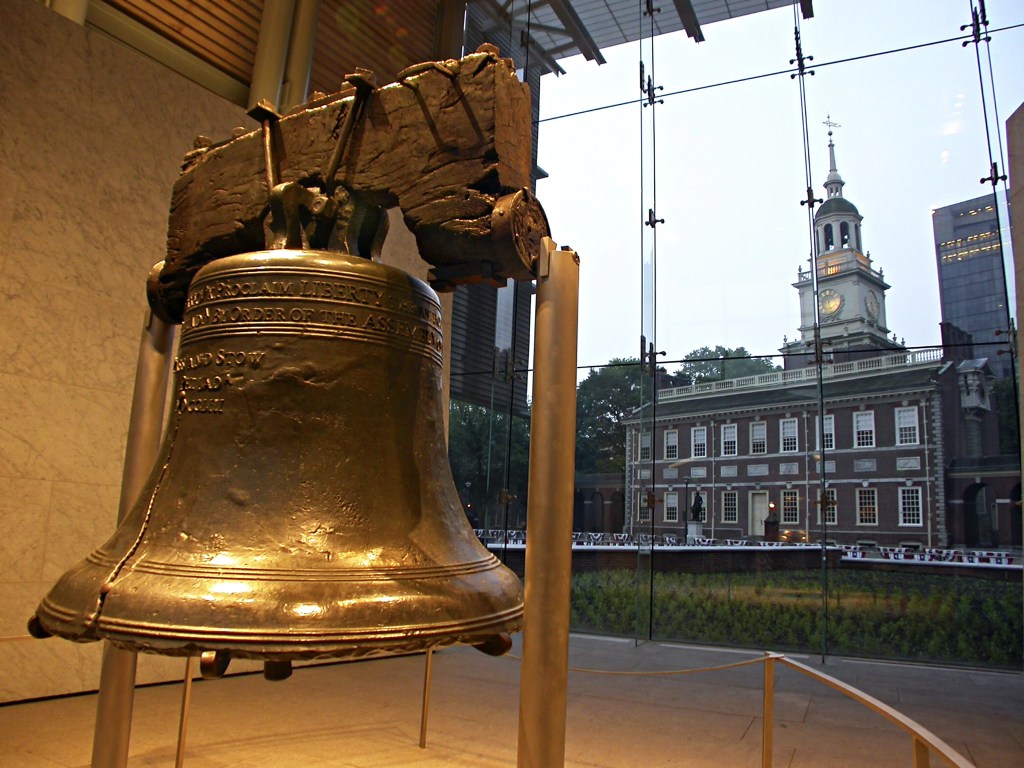
  5. See the pictures below for the answer.  There is no evidence that Israel ever practiced the Jubilee year.   Similarly, the word on the bell that was crafted almost 250 years ago, announcing liberty for all inhabitants of the Land, did not ring true when it was first used. For nearly 100 years after the bell proclaimed liberty, many inhabitants of the land continued to live as enslaved people.
  6. In synagogue tradition, you stand to read the scriptures but sit to teach.
  7. Jesus quotes the Scriptures frequently. If you want to understand what Jesus is saying, it is a good practice to read the quotation in its context in the Old Testament to understand what the passage means and how Jesus is using it.

May 31, 27 A.D.  Healing at the Pool of Bethesda – The Year of the Lord’s Favor #34

Week 15 ———  Healing at the Pool of Bethesda
John 5:1-18

John 5:1  After this, there was a feast of the Jews, and Jesus went up to Jerusalem.
2   Now there is in Jerusalem by the Sheep Gate a pool, in Hebrew called Bethesda, which has five roofed colonnades. 
3   In these lay a multitude of invalids—blind, lame, and paralyzed. 
5   One man was there who had been an invalid for thirty-eight years. 
6   When Jesus saw him lying there and knew that he had already been there a long time, he said to him, “Do you want to be healed?” 
7   The sick man answered him, “Sir, I have no one to put me into the pool when the water is stirred up, and while I am going another steps down before me.” 
8   Jesus said to him, “Get up, take up your bed, and walk.” 
9   And at once the man was healed, and he took up his bed and walked.  Now that day was the Sabbath. 
10  So the Jews said to the man who had been healed, “It is the Sabbath, and it is not lawful for you to take up your bed.”
11   But he answered them, “The man who healed me, that man said to me, ‘Take up your bed, and walk.’” 
12   They asked him, “Who is the man who said to you, ‘Take up your bed and walk’?” 
13   Now the man who had been healed did not know who it was, for Jesus had withdrawn, as there was a crowd in the place. 
14   Afterward Jesus found him in the temple and said to him, “See, you are well! Sin no more, that nothing worse may happen to you.” 
15   The man went away and told the Jews that it was Jesus who had healed him. 
16   And this was why the Jews were persecuting Jesus because he was doing these things  on the Sabbath. 
17   But Jesus answered them, “My Father is working until now, and I am working.”
18   This was why the Jews were seeking all the more to kill him, because not only was he breaking the Sabbath, but he was even calling God his own Father, making himself equal with God

John 5:1 After this, there was a feast of the Jews, and Jesus went up to Jerusalem.
John doesn’t specify this feast. You know which feast comes next if you have studied the Old Testament. Those with only cursory knowledge might know of only Passover and not the other ‘appointed times,’ which may lead to their assuming every feast is Passover. (If this was another Passover, then a year has passed since John 2, and there is another Passover in John 6:4, which means that almost nothing happens in 2 years of their presumed 3-year ministry of Jesus.)  The timing we are using in this 70-week ministry of Jesus fits well, and we know that the next feast is Shavuot (the Feast of Weeks), which is 50 days after Passover.  

The physical setting of this story is the Pool of Bethesda, and the story of this pool is complicated. John’s gospel has two stories of healing in Jerusalem, and they both involve pools. For centuries, scholars said these pools did not exist and that the Gospel of John was historically unreliable, written by someone (not John, the disciple) who had never been to Jerusalem. They said the pools didn’t exist because they had not found evidence of them in excavations yet.  

This is a recurring theme—the science of archeology disproves the Bible because we haven’t found it yet. Scholars said that Belshazzar, the king of Babylon in Daniel, never existed, for there was no record of him; thus, the book of Daniel was fiction. That is until they found this clay cylinder in 1854 that told the story of Belshazzar, forcing them to rewrite their history books to match the Bible.

The Hittites are mentioned throughout the Old Testament, but scholars maintained the Bible just made them up.  They insisted they never existed because they couldn’t find mention of the empire anywhere.  Now, it is one thing to deny the presence of one man, but it is a whole other level to deny the existence of an entire nation.  Then, in the early 1900s, they discovered in modern-day Turkey the city of Hattusha, a vast city of the Hittites with a library with over 10,000 tablets.  Again, the history books must be rewritten to align with Biblical History.

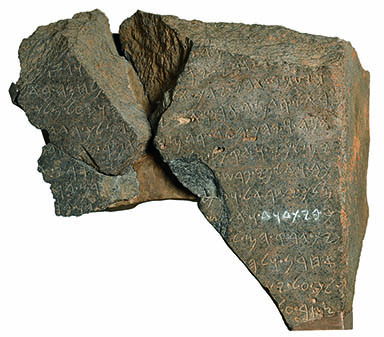
Scholars also had no evidence of a king over Israel named David or a House of David as his descendants who reigned in Israel. The House of David is a significant historical fact in a large portion of the Bible and is essential in the lineage of the Messiah. Scholars said David was merely an Israeli legend—until 1993 when a stele was found that describes the kings who were descendants of David as from the “house of David.”  

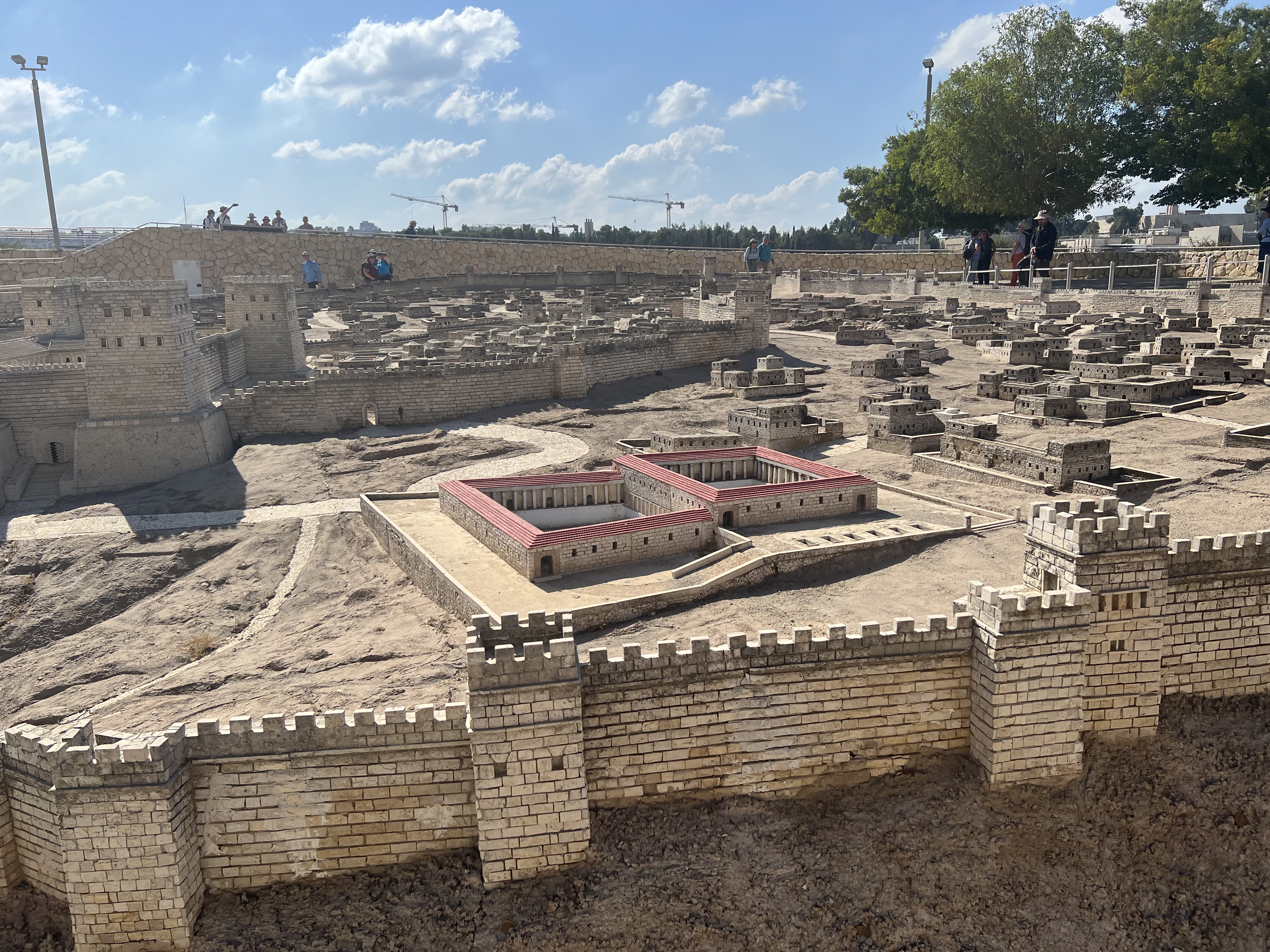
Archeology and history are important and developing sciences that have brought us a better understanding of the culture of the Bible.  But to say something does not exist because we haven’t found it yet is unreasonable. (If you ever lose your car keys, don’t call a historian and an archeologist to help you look for them; they will say that your car never had any keys and the keys don’t exist.) The pool of Bethesda is described as having five porticos (covered porches).  Archeologists had looked for a pool with five sides but found none.  Then, they found this double pool in the late 1800s with a dividing portico. (Thus, there are four side porticos and one between the pools.)  It is located just south of the temple area in Jerusalem.   Here it is in the model of First Century Jerusalem.1

Look back on our scripture from this morning.  Notice anything missing?  
There is no verse 4 in this ESV version.  In fact, verse 4 is missing from most modern translations.  Here is verse 4 in the King James Version:

4  For an angel went down at a certain season into the pool, and troubled the water: whosoever then first after the troubling of the water stepped in was made whole of whatsoever disease he had.

This is one of several examples where notes were inserted into later versions and became part of the text.  It is easy to see how this one happened.  Verse seven has the man saying, 

“Sir, I have no one to put me into the pool when the water is stirred up, and while I am going another steps down before me.”

Remember that until the invention of the printing press in the 1400s, all scripture (and all other books) was copied by hand.  What likely happened is that when copying the Bible, someone added a note explaining the reason the invalid needs to go into the pool when the water is stirred up.  Frequently, scribes add notes in the margin of the text when copying.  The problem is that the next scribe copying his work thinks that the writing in the margin is a verse that he accidentally omitted and had to write in the margin.  So that next scribe inserts it into the text. The first scribe’s note has become part of the ‘scripture.’

Here is a clear example of this.  In this copy of 1 John, the copyist wrote a note in the margin.  You can look at the earlier version of this exact text; the note is not there.  The version copied from this one incorporates the note into the text as if it were part of the original text. (1 John 5:7b-8)

Our oldest and most reliable texts do not have verse four in this passage.  The KJV relied on manuscripts after 1100 AD, while we now have manuscripts almost 1000 years earlier.  None of our texts before 500 AD have verse 4. 

 There was quite a stir when the NIV was published, and there were 49 verses “missing.” Oddly, I found this same dire warning on a friend’s FaceBook post this week after I wrote this.  Do not let this trouble you.  We are just trying to ensure we are using the most accurate copies.  I have friends who write notes in the margins of their Bibles.  I don’t think any of them want their notes to be incorporated into scripture.  In a few weeks, I will show you the one I am sure the NIV should have left out but did not.

The set of two pools functioned well as a mikvah for ceremonial bathing, which was required before entering the Temple.2  The water in mikveh had to be “living water,” flowing water from a natural source, not drawn from a well.  The upper pool would catch rainwater as it fell and serve as a holding tank.  Then, as needed, a door was opened in the wall between the pools to allow water to flow into the lower pool.   This would ensure the lower pool would not become stagnant.  When the water flowed, it was not hard to imagine that it would be ‘stirred.’   Then, it became a superstition or legend to the point that there was a multitude of people there who were “blind, lame, or paralyzed.”  People desperate for healing will believe and try almost anything. 

I am not fond of the word ‘invalid.’  I know it literally means “not strong,” and we have taken it to mean ‘weak from disease or injury,’ but it is too close to ‘invalidate’ and makes it sound (to me) like we are saying ‘worthless.’  When you have been sick for a long time, it is easy to feel worthless. And this man had been in this position for 38 years.  And now he has put his hope on healing on a pagan myth.  

Jesus sees him and doesn’t see him as worthless.  He doesn’t preach to him about his pagan thoughts.  He sees a man who has suffered for a long time and is now hopeless.  There is a lot we could talk about in this passage.  The Pharisees make a big deal because this healing took place on a Sabbath, and the man was carrying his mat, breaking their rules.  ‘Bethesda’ means house of mercy.  They ignore the miracle; they care nothing about the mercy shown and that this man is now able to walk; they focus on their own picky rule about what you can and can’t carry on the Sabbath because Jesus is a threat to their system.  But I want to focus on two things I think are important in this passage: First, Jesus’s aspect of healing, and Second, how about the other people who were there for healing but were not healed?

Jesus asks this man an odd question, and the King James Version does a better job with this translation:  “Wilt thou be made whole?”  Other versions say “…be made well” or “…be healed,” but wholeness is what Jesus is really talking about. He could have said, “Do you want to be able to walk?” but that is only one thing this man needs. He needs more than the use of his legs.  

There is a difference between being well and being whole.  There is a word in Hebrew for wholeness that I suspect Jesus would have used when he talked to this man.  It is ‘shalom.’  Shalom can be translated strictly as ‘peace.’  We define peace as an absence of war with our enemies.  The Hebrew definition is not just an absence of war but whole and complete relations with everyone and God.  Shalom is how God meant the world to be, how he created the garden in Eden to be — a place where people are in proper relations with others and with God.  Sin destroys shalom.  It breaks our relationship with others and with God.  And God is in the process of returning the world to the way it was in the garden.

When Isaiah predicts the coming Messiah, he calls him the ‘Prince of Shalom.’  Why is Jesus called the ‘Prince of Peace’?  Because only through what Jesus accomplishes on the cross can we again have true peace with God.  

Rom. 5:1   Therefore, since we have been justified by faith, we
                  have shalom with God through our Lord Jesus Christ.

Our sins broke the relationship, broke the peace.  By taking away our sins, our shalom with God can be restored.  But shalom with God is more than just a removal of our sins.  It is walking with God hand in hand, as Adam did in the garden.  Note that walking with God means walking in the same direction.  We must go God’s way to be in step with God.  If you are setting your own path and not depending on God to pick the path, then you can not walk with God.

Wholeness begins with a right relationship with God.  It is essential to get this vertical relationship settled first.  You can’t have proper relationships with any other person (horizontal relationship) until you are whole in your relationship with God.  We live in a world where over 50% of marriages end in divorce.  Why do so many relationships fail? Les Parrot, a professor of psychology, ordained pastor, and New York Times bestselling author, says the primary problem is that people believe in the romantic fairy tale and that we need to find that person who will make us whole.  We have bought into the fairy tale that there is one person out there who will make us complete.  He says most relationships fail because we rush into them before we are whole -before we settle the most important relationship with God.  Wholeness begins with a right relationship with God but does not end there.

To have true shalom, you must also be in the right relationship with others. You can’t have a broken relationship with one of God’s children and a right relationship with the Father.  

1 John 4:20-21   If anyone says, “I love God,” and hates his brother, he is a liar; for he who does not love his brother whom he has seen cannot love God whom, he has not seen. And this commandment we have from him: whoever loves God must also love his brother.

Again, you can’t be in a feud with one of God’s kids and say you love the Father.  This is why Jesus says, “Love your enemies”. 

In the Sermon on the Mount, Jesus says, “You have heard it said, do not murder, but I say to you, don’t be angry with your brother.”  Jesus has zero tolerance for broken relationships.  He wants us to have Shalom. (note)

In that same passage, Jesus tells us to walk out of the church and not to give an offering.

Matthew 5:23-24   So, if you are offering your gift at the altar and there remember that your brother has something against you, leave your gift there before the altar and go. First, be reconciled to your brother, and then come and offer your gift. 

I am still waiting for a preacher to stand up before the offering and say, “If you are about to put some money in the offering plate, and there is any person that you are not getting along with, then do not put the money in the offering plate until you have gone to them and made things right.”

Do you see how important shalom is to God?  It is so important that it became the traditional greeting of people when they met in the Old Testament, and it is still among those who speak Hebrew today.  Typically, you hear “Shalom aleichem,”  which means “peace be unto you.”  And the usual response is “Aleichem shalom,” meaning “Unto you peace.”   We often greet people with “How are you?” or “How is it going?”  The Hebrew equivalent of this is “Mah Shalomcha,”  or “How is your shalom,” or “How is your peace?”  The idea of peace and proper relations with God and others is so important.4

So Jesus asks this man, “Do you want to be whole?”  Because wholeness is more than regaining the ability to walk.  He has been down for 38 years.  Have you ever been sick for an extended period of time?  There is depression. There are thoughts that God has forgotten you or doesn’t care about you. There are feelings of uselessness. You begin to see the world differently and develop attitudes that harm your relationship with others.  Jesus sees a man who needs more than physical healing.  He needs shalom.

The man answers Jesus:
“Sir, I have no one to put me into the pool when the water is stirred up, and while I am going another steps down before me.”

He tells Jesus why he can’t get the pagan healing he is waiting for.  And Jesus does not rebuke him for his pagan beliefs.  He does not ask him to correct his theology.3  He simply says, “Rise up and walk.”   And he does.  Jesus starts him on a path to shalom by removing what this man saw as his primary problem.  Then Jesus leaves so quickly that the man doesn’t have time to get his name.   That brings me to the more difficult question this morning.   We know that there was a ‘multitude’ of sick people there at the pool.  Why did Jesus only heal this one and then quickly leave?  We could reason out some possible answers, such as that he knew the Pharisees would be after him if he hung around.  However, as we read the scriptures, there are other people Jesus doesn’t heal.  

For example, the man Peter and John see at the gate of the Temple in Acts 3:
Acts 3:1-10   Now Peter and John were going up to the temple at the hour of prayer, the ninth hour.  And a man lame from birth was being carried, whom they laid daily at the gate of the temple that is called the Beautiful Gate to ask alms of those entering the temple.   Seeing Peter and John about to go into the temple, he asked to receive alms.  And Peter directed his gaze at him, as did John, and said, “Look at us.”  And he fixed his attention on them, expecting to receive something from them.  But Peter said, “I have no silver and gold, but what I do have I give to you.  In the name of Jesus Christ of Nazareth, rise up and walk!”  And he took him by the right hand and raised him up, and immediately his feet and ankles were made strong.   And leaping up, he stood and began to walk, and entered the temple with them, walking and leaping and praising God.   And all the people saw him walking and praising God, and recognized him as the one who sat at the Beautiful Gate of the temple, asking for alms. And they were filled with wonder and amazement at what had happened to him.

This man has been daily at this gate of the Temple for a long time.  Acts 4:22 tells us he is 40 years old.  He is well-known to many people who pass by him frequently.  Jesus likely passed by him many times, but he was not healed then.  We know Jesus healed in the Temple.

Matt. 21:14   And the blind and the lame came to him in the temple, and he healed them.

Why was he not in the group healed then?  Why was he passed by without healing?  We can ask the same question ourselves.  Why doesn’t God heal everyone?

In High School, I had a friend hit by a car.  I prayed hard for him that he would survive.  He did not.  I spent hours beside my little friend Patrick’s bed when I was a resident at Children’s Hospital in Boston.  I could not bear the thought of this sweet 4-year-old dying after his Bone Marrow Transplant.  He had been through so much with Leukemia and remissions.  I had taken care of him for years.  He did not survive.  Last year, I got the call that my brother was being rushed to the hospital in serious condition.  Many prayed.  He did not recover.  Far too many times, I have found myself praying while I am in the middle of resuscitating a premature newborn that God will perform a miracle and allow these too-young lungs to function.  Far too many times, I have had to walk into a room and tell young parents the baby did not make it. We all know friends and family that we have prayed for who did not receive healing.

Why does God not heal everyone?  
He could. Sometimes, we don’t help people because we lack the resources. Some wonderful people read this blog.  I would love to give each person who reads this blog one million dollars just to see what they could do with it.  I’d like to, but I don’t have the resources. That is not God’s problem.  But there are other reasons we don’t help sometimes. We have learned this in our homeless ministry.  We have gotten calls from people to try to help get them out of jail.  But at that point in their life, jail is the best place for them.  Sometimes, you must let people hit rock bottom before they see they need to change their lives.  Sometimes, helping someone prevents them from ever learning to help themselves.  It creates dependence on you or others when they need to learn to handle their own problems.

For another explanation of why God doesn’t heal everyone, watch this clip from The Chosen.  Here, James the lesser (little James) is portrayed as a man with a severe limp.  He has just been told that the disciples will be sent out two by two and will be given the power to heal others.  James is puzzled by the fact that he will be able to heal others, but he himself has not been healed.  

Why did Jesus not heal this man?
For this man lame from birth, the Bible may give a clue in the name of the gate where he was placed.   The Greek word is ‘horaios,’ and the definition listed in Strong’s Greek Dictionary is “belonging to the right hour or season (timely), i.e. (by implication) flourishing (beauteous (figuratively)): — beautiful.”   It carries the idea of beauty due to its ‘ripeness,’ like a fruit ripens at a particular time or a flower blooms and is beautiful for just that moment.5  The writer of Ecclesiastes has that same idea:

Ecc. 3:11   He has made everything beautiful in its time. 

There is no record of a gate called “Beautiful” in any ancient document except in this section of Acts.  Therefore, we have no idea which gate they are referring to.  Perhaps it is because ‘beautiful’ is not the name of the gate but the situation.  This man was at the gate of ‘horaios, the right hour or season.’  It was the perfect time. And while he was hugging Peter and John, a stunned crowd gathers… and Peter preaches, and a thousand or more believe.  God had a purpose for that healing to happen at that exact chosen moment.  It was horaios – and it was beautiful. 

 I believe God will heal everyone one day.  One day, he will correct all wrong, cure all diseases, and bring about perfect justice.  Until then, we wait in a world full of sin and chaos for His promises to come.  We are told God will only give us good gifts.  It is hard to view horrible disease or death as good.  But we look through a glass darkly with our limited vision and understanding.  We also fail to see that our primary purpose in this world is not to live a carefree, uncomplicated life.  It is to bring glory to God.  Perhaps our illness or death will be the best way to fulfill that duty.  This is where we have to trust God.  He won’t ask us to suffer more than he asked Jesus to suffer.  The pain that Jesus endured was to bring glory to God and fulfill his will so that we may be saved.  But at the time, who could see that?  

So, how should we pray?  Most importantly, we should pray honestly.  If you study Psalms, you will see that the Psalmists are not afraid to express their deepest emotion to God, even if we might not think it is the “proper” way to speak to Yehovah.  We should, as the psalmist, pour our hearts out to God in requests for healing.  God knows your heart anyway.  But it is also acceptable to add to our heartfelt cry that we understand that God’s will may not be what we desire to happen and that we relinquish our will and ask Him to do His will.  This is how Jesus prayed in the garden.  “My Father, if it be possible, let this cup pass from me; nevertheless, not as I will, but as you will” (Matt 26.39).  This does not demonstrate a lack of faith to pray in this manner.  It was not for Jesus, and it is not for you.  In fact, it demonstrates your trust in God to vocalize your willingness to seek his will and not your own.

There is so much sickness, depression, and suffering in this world.  Many are waiting by the ‘beautiful gate’ for God’s perfect time for their healing; let it be now, or let it be in the world to come, but while we wait, let us seek wholeness, let us seek shalom.  Let us strive to be first in proper relationship with God and then in good relations with everyone.  And may our life give glory to the Father above in all we say and do.

  1. The Siloam pool, discussed in John 9, was rediscovered during excavation work for a sewer in the autumn of 2004.
  2. There is also a debate on whether the pool was built for ceremonial washing ( a mikvah) or was a pagan pool for the cult of Asclepius, or healing.  It was used as an Asclepion after the fall of Jerusalem, but I don’t think it was in the time of Jesus.  Certainly, Pharisees would not have been seen in such a pagan place.  Also, the steps are designed to function well as a mikvah.
  3. Good lesson.  Do what Jesus would do.  Just because someone’s theology seems wrong to you (even if you are right), sometimes you give them the help they need before you think about preaching to them.
  4. Paul, in Romans 12:18 says, “If possible, so far as it depends on you, live peaceably with all.”  Some people refuse to be reconciled no matter how hard you try.  (Jesus definitely understands this.)
  5. Greek has several words for time. Chronos is the usual generic word for time and is the root for our word chronology and others. Kairos refers to a special or appointed time or season. When Jesus says, “My hour has come,” the word for ‘hour’ is ‘kairos’. ‘Horaios is a smaller window of time than Kairos, a sacred moment, and is only seen four times in the New Testament, two of them in this passage.