
Week 16 ——— Jesus proclaims the Year of Yehovah in the synagogue in Nazareth
Luke 4:14-30
On the day before the feast of Shavuot (Pentecost) in 27 AD, Jesus healed the man at the pool of Bethesda. The following day, June 1, Jesus teaches in the Temple on Shavuot (John 5:16-47). In that teaching, he refers to John the Baptist’s ministry in the past tense, and we are told (in Matthew 4:12, Mark 1:14a, and Luke 4:14-15) that he is aware that John has been arrested by Herod. The following day, he begins his journey back to Galilee and arrives in Nazareth on June 6.
Luke 4:14-30 And Jesus returned in the power of the Spirit to Galilee, and a report about him went out through all the surrounding country. And he taught in their synagogues, being glorified by all.
And he came to Nazareth, where he had been brought up. And as was his custom, he went to the synagogue on the Sabbath day, and he stood up to read. And the scroll of the prophet Isaiah was given to him. He unrolled the scroll and found the place where it was written,
“The Spirit of the Lord is upon me,
because he has anointed me
to proclaim good news to the poor.
He has sent me to proclaim liberty to the captives
and recovering of sight to the blind,
to set at liberty those who are oppressed,
to proclaim the year of the Lord’s favor.”
And he rolled up the scroll and gave it back to the attendant and sat down. And the eyes of all in the synagogue were fixed on him. And he began to say to them, “Today this Scripture has been fulfilled in your hearing.” And all spoke well of him and marveled at the gracious words that were coming from his mouth. And they said, “Is not this Joseph’s son?” And he said to them, “Doubtless you will quote to me this proverb, ‘“Physician, heal yourself.” What we have heard you did at Capernaum, do here in your hometown as well.’” And he said, “Truly, I say to you, no prophet is acceptable in his hometown. But in truth, I tell you, there were many widows in Israel in the days of Elijah, when the heavens were shut up three years and six months, and a great famine came over all the land, and Elijah was sent to none of them but only to Zarephath, in the land of Sidon, to a woman who was a widow. And there were many lepers in Israel in the time of the prophet Elisha, and none of them was cleansed, but only Naaman the Syrian.” When they heard these things, all in the synagogue were filled with wrath. And they rose up and drove him out of the town and brought him to the brow of the hill on which their town was built so that they could throw him down the cliff. But passing through their midst, he went away.
“And as was his custom, he went to the synagogue on the Sabbath day.”
We have delved into the worship in the Temple and the significance of God’s appointed times (feasts). However, it is crucial to understand that religious life in Jesus’ era revolved around the small synagogues in every town, and Jesus went to this synagogue all his life. As we do today, there would be a solemn scripture reading and a sermon. Unlike our modern practice, there was no designated ‘preacher,’ but one of the adult males would be asked to read and speak. If you were to visit a synagogue today, you would witness a reading from the Torah (Genesis to Deuteronomy) and then from the Haftarah (the prophets/writings) followed by a sermon. Today, every Jewish congregation reads from the same assigned portion of the scriptures on an annual cycle. The Torah reading on day one commences in Genesis 1. The year culminates with the final word of Deuteronomy, and the scroll is rolled back to Genesis 1 again in a joyous atmosphere with singing and dancing (the day is called “Simchat Torah” – “the joy of the Torah.1”). Every week, the same section of scripture is read in every synagogue, a practice that has been faithfully upheld for almost 1000 years.
In 1896, a massive cache of documents was discovered in a Cairo synagogue. Many synagogues have a storeroom called a genizah (Hebrew for ‘hiding place’) for scripture scrolls and books that are too worn to use but too holy to discard because they contain God’s name. They generally serve as a holding place for the documents until they are buried. Fortunately for us, no one ever got around to burying any documents in this synagogue. Some of these in the genizah in Cairo were over 1000 years old. Until their discovery, we had no Hebrew copy of Ecclesiastes; our oldest copy was in Greek. The genizah also contained a different set of annual readings that were used before the ones we use today. This was a 3 to 3 1/2-year reading cycle through the Torah, which continued to be used in some synagogues until 1100 AD. There were no set readings of the Haftarah as we have today, but apparently, the reader chose the passage. Passages that reflected the theme or beginning words of the Torah portion were chosen.
Jesus returns to the town he grew up in as an itinerant rabbi and is invited to read the assigned Torah portion and a Haftarah section of scripture of his choosing that matches. Then, he gives a brief sermon. Luke doesn’t tell us about the assigned Torah portion that Jesus would have read (my best guess is Leviticus 25 -about the year of Jubilee – let me know your thoughts on this.) Jesus then hands over the Torah scroll and is given the Isaiah scroll.
“He unrolled the scroll and found the place where it was written…”
Remember, there are no chapter or verse numbers. He turns to the end of the Isaiah scroll (our chapter 66) and rolls the scroll to the right to back up (remember Hebrew is read right to the left) to the section that would be our chapter 61. You must be familiar with the scriptures to choose a proper section of the prophets to match the Torah portion and then find it.
The Haftarah Portion
“The Spirit of the Lord is upon me,
because he has anointed me
to proclaim good news to the poor.
He has sent me to proclaim liberty to the captives
and recovering of sight to the blind,
to set at liberty those who are oppressed,
to proclaim the year of the Lord’s favor.”
Jesus quotes Isaiah 61:1-2a.2 This is a continuation of Isaiah’s messianic prophecy where Isaiah has the Messiah speaking, telling us what he will do. Remember, “Messiah” is a Hebrew word translated as “anointed one.” Jesus is anointed, and the spirit descends on him at his baptism. He is now reading this passage of Isaiah as the Messiah, announcing the “year of the Lord’s favor.” Isaiah borrows the language of the Leviticus 25 jubilee year, but this is something much more.
Leviticus 25 has commandments about two special years. The first is the Sabbath year, which states that every seven years, the land rests. You do not sow crops, prune vines, or reap any crops this year. It is a Sabbath for the land. Anyone may harvest what they need at the moment that grows of itself on any land, as they did when they were nomads. The promise was that there would be a great harvest the year before the year of rest so they would have plenty (echoing the gathering of manna in the wilderness). But you can imagine how it would take a lot of faith for these farmers to forgo a planting season. The breaking of this command is why the Babylon exile lasted 70 years. Because they didn’t let the land rest, God removed the people from the land to allow the land to rest and make up for the 490 years they didn’t keep the Sabbath years. So, 70 years of exile.3
2 Chronicles 36:20-21 He took into exile in Babylon those who had escaped from the sword, and they became servants to him and to his sons until the establishment of the kingdom of Persia, to fulfill the word of the LORD by the mouth of Jeremiah, until the land had enjoyed its Sabbaths. All the days that it lay desolate, it kept Sabbath, to fulfill seventy years.
Leviticus also tells us that after seven cycles of the seven years, the following year (every 50 years) is a year of Jubilee. The same rules apply for the land, but there is also a reset of the land. Any land that has been sold returns to the original owner. Anyone who had to sell themselves as an indentured servant was set free. All debts were forgiven. That way, the land would remain in the same families as God initially divided it, and any families that had fallen into poverty would have hope that their poor condition would not curse the family forever. It was a year of good news for families that had fallen on hard times and become destitute.4
Maybe you didn’t recall reading about these special years in Leviticus 25, but there is one verse you might remember:
Leviticus 25:10 And you shall consecrate the fiftieth year, and proclaim liberty throughout the land to all its inhabitants. It shall be a jubilee for you.
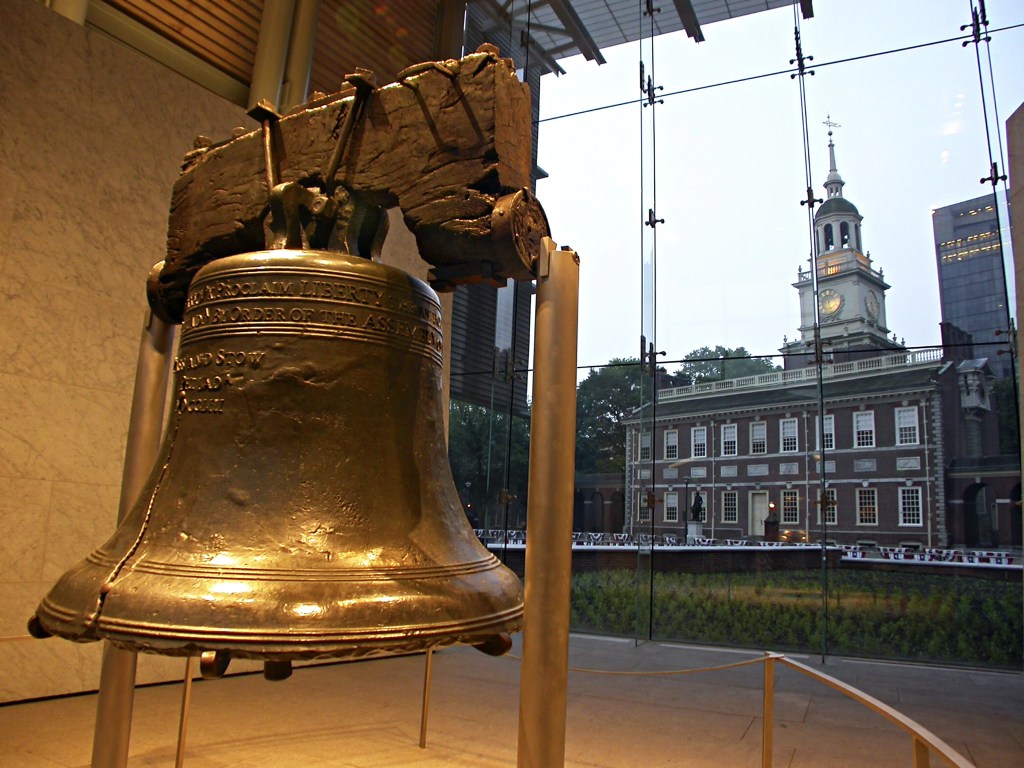
You may have seen that middle section of the verse in an interesting place. Check the footnotes for the answer.5
The prophecy in Isaiah takes this concept of a Jubilee year to another level. It is not just a time of rest for the land and a reset of land and monetary debts. This is a year in which the Messiah himself will preach good news to the poor, liberty to those captive or oppressed, and will give sight to the blind. The year has begun at Shavuot and will continue to the following Shavuot when God will bless with the gift of the Holy Spirit. This is the time of the ministry of the Messiah. God’s favor has come in its greatest fashion with the gift of Jesus and the Holy Spirit. In this year’s time, the spring feasts (Passover, First Fruits, Unleavened Bread, and Shavuot) will be fulfilled.
How do the people react?
When I read a familiar Bible story, I attempt to reread it several times from the perspective of all involved. So, let’s walk through how Jesus’ friends and neighbors in the synagogue that day would react. At first, they are proud that their friend has been chosen to read the scripture and comment, and they are probably a little excited to hear what he will say.
Jesus reads the portion, stops reading, hands the scroll to the attendant, and sits down.6 Then Luke says the people just stare at him. They are puzzled. Why are they staring? Because Jesus stopped reading in the middle of the sentence. This was a very familiar passage and he stops short of the usual conclusion. They know the scriptures, so they know what he left out of the Isaiah passage. (Do you know what Jesus left out?)7 Why did Jesus stop reading prematurely? And if they weren’t already confused, he says, “Today, this scripture has been fulfilled in your hearing.” How do you think the people responded to this? It is one thing to talk about scripture prophecies and pray that they will come true one day. It is a whole other thing for someone to say that the prophecy from long ago is coming true today, and it is all about me. This is a shocking statement. Jesus claims to be the promised Messiah and tells his family and friends that he grew up with that this is the beginning of a Jubilee year like they have never imagined. Many in the room are immediately angered that this boy they grew up with is making such a claim. In my mother’s vocabulary, they are thinking, “he has gotten too big for his britches.” His friends hear this and get worried. To claim to be the Messiah is risky. If you make that claim, and you are not the Messiah, then you will be stoned. He continues, and as we will see, the peoples’ reaction competes its swing from excitement and anticipation to puzzlement, to fear to wrath.
Jesus stopped reading the passage after it said, “He has sent me to proclaim the year of the Lord’s favor,” and did not read the following line: “…and the day of vengeance of our God.” Jesus is teaching them something about this passage in Isaiah that they never considered. He is letting them know that the ministry of the Messiah is in two stages. First, the Messiah comes with good news: to right wrongs and to set people free. Today, he says, that is beginning. The second phase is the “day of vengeance,” when he will come to deal with those who refuse to accept him as king. The Jews had always understood that the year of favor and the day of vengeance would come together, so they sought a Messiah who would bring justice and redemption by destroying the oppressors. But Jesus stops with the year of favor announcement and says today is the day for this. Jesus tells Nicodemus in John 3:17 that “God sent not his Son into the world to condemn the world, but that the world through him might be saved.” Jesus tells the woman caught in adultery No man condemns you, and neither do I. This is not a time for condemnation! (That is not our job now or ever.) The time for judgment and vengeance will come later. Theologians call this concept of dividing passages in different time periods “historical stratification,” and the rabbis did this frequently. They just missed it here.
I cannot overemphasize the importance of this concept. For hundreds of years, the Jews had been taught that the Messiah would come with favor and with vengeance. They expected the Messiah to lead a rebellion against the evil nations that held them captive. The Jews of Jesus’ day expected a Messiah who would bring an end to Roman rule over them. Instead, they see Rome conquer Jesus, crucifying him like a criminal. So, they reject Jesus as their Messiah. It is to these friends of Jesus, the people he has known his entire earthly life, that Jesus reveals this necessary correction of their misinterpretation of scripture. Jesus wants them (and everyone) to understand God’s plan and accept him. His heart must have broken to see his friends and neighbors rise against him.
Jesus sees this reaction on their faces and understands their trouble recognizing this fellow they knew as an awkward teenager as the Messiah. He knows they are like many in this day, wanting to see miracles, which he has not done in Nazareth to this point. Jesus has revealed the most important spiritual concept in history to these people — and they don’t appreciate it. They would rather have had a miracle. This happened over and over in Jesus’ ministry. He tells some Pharisees several times, “An evil and adulterous generation seeks for a sign” (Matthew 12:39 and 16:4). Why wouldn’t they, of all people, get a miracle? Jesus answers the question on their mind with two examples of how many were in need, but only a few got the miracle. And the examples he gives are times when a Gentile, not a Jew, got the miracle. At this point, the crowd’s response has completed its shift from pride in the hometown boy to wrath. This is not the sermon they bargained for.
Jesus is accused of blasphemy because it is blasphemy to say you are God (unless you are.) The penalty for blasphemy was stoning to death. One of the alternate methods of stoning is pushing someone off a cliff. If the rocks don’t kill them in the fall, you can always finish with some thrown. But this is not Jesus’ time to die. He will suffer a much more horrible death for that accusation of blasphemy later, but not now. So they escort him to a cliff to carry out his sentence. The people wanted to see a miracle, and Jesus gave them one, but not the one they wanted. He walked right through the middle of them unharmed.
Jesus came to his hometown, announcing that he was the Messiah and reminding them what Isaiah had said the Messiah would do. But they wouldn’t hear it. They were spiritually blind and didn’t know it. The Son of God stood before them and shared the truth of God with them. But it disagreed with their understanding, so they rejected him.
What is Jesus’ message for us? Or do you even want his message? Would you rather have a miracle? If you ask anyone on the street, how would they answer? Most are like the people in Nazareth. They would rather have a miracle than hear the word of God. Be very careful. The Bible is clear that many false messiahs and false prophets will do miracles and lead many astray (Mark 13:22). God’s Word, God’s truth, is more important than miracles.
Jesus’ message is the same for us today. This is what Jesus came to do. It is what he still wants to do for you today, what he still wants to do for your neighbor. He has good news for the poor and the poor in spirit, for those who have no hope economically and those who have no hope spiritually. As we stand before God, without Jesus, we are spiritually bankrupt. Jesus’ message is good news for those who know they are spiritually in need. For those who think they are already in good standing with God because they go to church and do all the right things, Jesus’ message is not as good. For those who have no hope, for those who realize they are spiritually doomed due to their sin, Jesus is the best news ever.
For those who are held captive to the powers of sin, Jesus proclaims liberty. We have all seen movies where our military rescues prisoners of war. To see their rescuers is the best news. No more do we have to deal hopelessly with those sins that so easily beset us. No more do we suffer through addictions, to drugs, to alcohol, to pornography, to bitterness, to malice. Jesus has come to set us free from these prisons.
No more do we have to suffer from oppression. Oppression is the “exercise of authority or power in a burdensome, cruel, or unjust manner.” Spiritual oppression is rampant today. Many suffer from depression, heaviness, sadness, anxiety, loneliness, isolation, busyness, and shame — and much of this is oppression by the evil in this world. Jesus has come to set us free from oppression. I Corinthians says we are oppressed but not crushed by it. God’s power can bring us victory over oppression.
Jesus also came to give recovery of sight to people who are blind. Jesus did this literally a few times, but he spent more time trying to do something much more critical: giving sight to those with spiritual blindness. God was there among them, but they could not see it. Even when he told them, they could not accept it. They thought they understood what the Messiah would be like and refused to let go of the tradition they had been taught even when God told them differently. We must not fall into the same trap they did. They just accepted what they were told about the scripture without reading it for themselves. Do you do that?
“Now the Berean Jews were of more noble character than those in Thessalonica, for they received the message with great eagerness and examined the Scriptures every day to see if what Paul said was true.” (Acts 17:11)
This is how you hear a sermon; this is how you read a blog. Listen/read eagerly, then go home and examine the scriptures daily to see if it was true. If the apostle Paul came in and preached next Sunday in your church, you shouldn’t accept what he said without going home and examining the Scriptures. And what Scriptures was Paul talking about here? The Old Testament was the only scripture Paul and the Bereans had. We have more (thank you, Jesus), but even if we didn’t, Paul said the Old Testament was sufficient to show the mind of God. Do you want to make me very happy? Study the scriptures yourself, then come and discuss what I have discussed and ask questions. This is what discipleship is.
Now that you have this background, watch this clip from “The Chosen” of this passage. Notice the reaction of the Rabbi and the crowd to Jesus. How would you have reacted?
- Simchat Torah in 2024 begins the evening of October 24.
- There are some differences between Luke’s quotes and the original Isaiah in the Hebrew text vs the Greek Septuagint version. I’ll leave these minor issues to the scholars.
- It is common for modern readers to claim 2 Chronicles 7:14 as a promise to us. (“If my people who are called by my name humble themselves, and pray and seek my face and turn from their wicked ways, then I will hear from heaven and will forgive their sin and heal their land.”) I wonder if those who wish to claim this promise to Israel as a promise to us today understand that healing of the land required the nation being conquered and people living in exile for 70 years.
- Some scholars maintain that there never was an observation of any Jubilee year.
- See the pictures below for the answer. There is no evidence that Israel ever practiced the Jubilee year. Similarly, the word on the bell that was crafted almost 250 years ago, announcing liberty for all inhabitants of the Land, did not ring true when it was first used. For nearly 100 years after the bell proclaimed liberty, many inhabitants of the land continued to live as enslaved people.
- In synagogue tradition, you stand to read the scriptures but sit to teach.
- Jesus quotes the Scriptures frequently. If you want to understand what Jesus is saying, it is a good practice to read the quotation in its context in the Old Testament to understand what the passage means and how Jesus is using it.

 Swallow No Camels
Thank you, this was an excellent blog post. I had not considered the significance of where Jesus stopped reading in the scroll of Isaiah.
Regarding the differences between the Hebrew scrolls and the Greek Septuagint, I have read convincing arguments that Jesus and his disciples probably used the Septuagint on a regular (though not exclusive) basis because quotes in the NT from the OT seem to line up better with the Septuagint.
LikeLike
Thanks, Chris. It is a good reminder to me that we need to dive into the texts that Jesus quotes so we understand the context of what he is saying (and what he is not saying). Certainly the scripture we have in our Greek copies of the New Testament books matches better with the Septuagint (LXX) than the Hebrew Masoretic Jewish Scripture. But if you were translating a Hebrew Gospel of Matthew,into Greek, you would probably not translate the Hebrew word for word from the quoted scriptures, but just go copy them out of the Greek Septuagint since you already had an established good Greek translation. So I don’t think the presence of the LXX in out Greek copies tells us anything about which scripture they read and memorized in the day. (According to most of the other first-century Jewish writings we have, they tended to use the Hebrew in Israel proper.)
LikeLike