
December 10, 2025 – Shalom, and the War You Didn’t Realize You Were Fighting— Acts #24
Acts 9:1-9
Words in Hebrew have very rich meanings. Last time, we discussed the Hebrew word ‘shema’. Shema means listen, but more than listen, it means listen and obey. Obedience is not optional. If you did not obey, then you did not hear. Jesus said, “He who has ears to hear, let him hear.” You will find a version of this 15 times in the New Testament. That isn’t just a poetic phrase Jesus threw out there. He isn’t speaking English. It is about shema. Jesus is talking about obedience. “If you hear what I am saying, then be obedient.”
Today, we look at the word Shalom. It begins with the same letter, ש (shin). It means peace. And peace is the candle that many of you lit this past week for Advent. But like the Hebrew word shema, this word has a richer meaning. Shalom means more than our concept of peace. It carries the idea of wholeness, that all is well, that all is well with you, and with your relationship with your neighbor, and in your relationship with God.
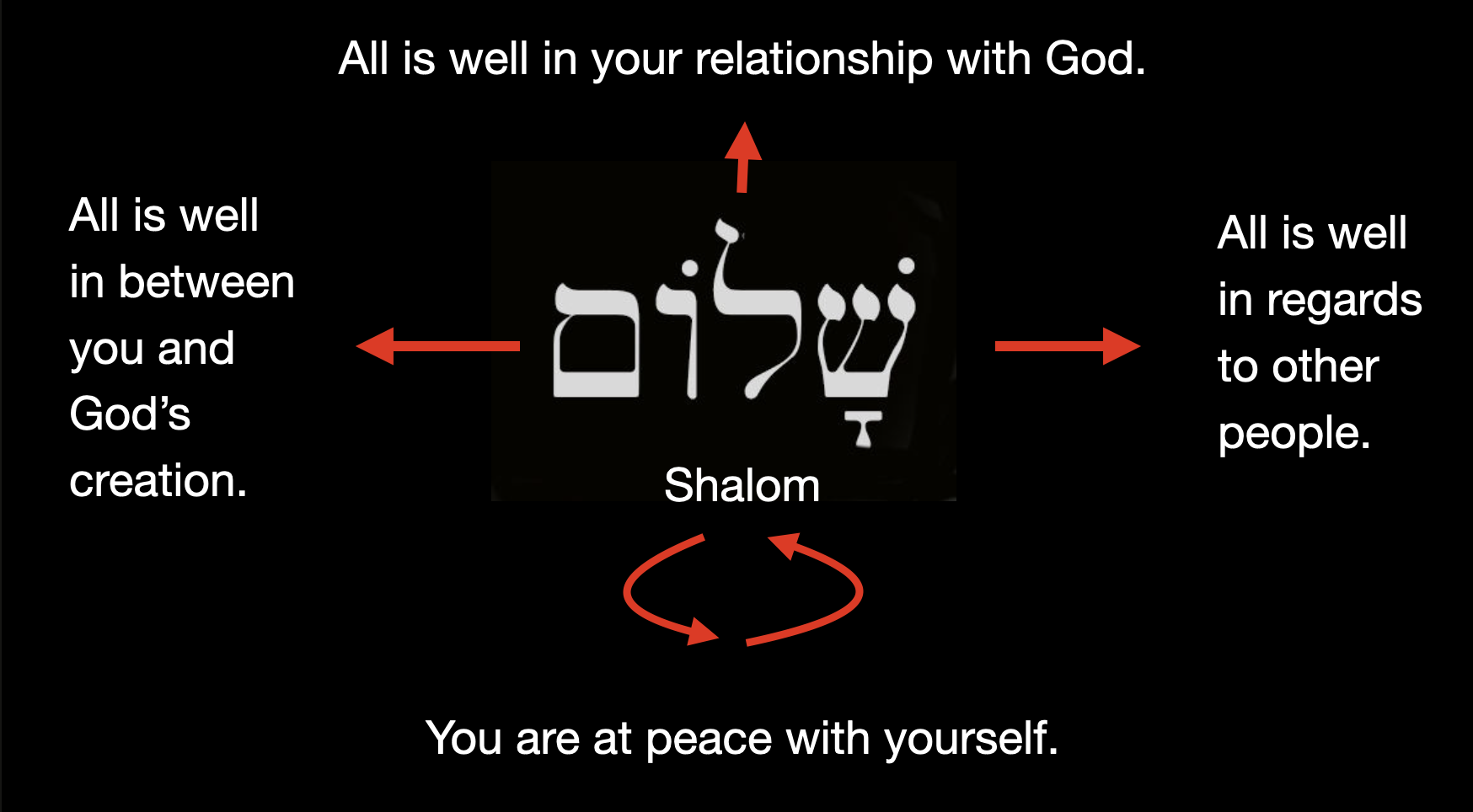
In Acts 8, Shalom was disturbed due to this great persecution of the followers of Jesus.
Acts 8:3 But Saul was ravaging the church, and entering house after house, he dragged off men and women and committed them to prison.
All was not well. And when this persecution hit hard, as we discussed the last few weeks, the people scattered. Philip ended up in Samaria. Some went further north up to Damascus in Syria. That brings us to chapter 9.
Acts 9:1-9 But Saul, still breathing threats and murder against the disciples of the Lord, went to the high priest and asked him for letters to the synagogues at Damascus, so that if he found any belonging to the Way, men or women, he might bring them bound to Jerusalem. Now, as he went on his way, he approached Damascus, and suddenly a light from heaven shone around him. And falling to the ground, he heard a voice saying to him, “Saul, Saul, why are you persecuting me? And he said, “Who are you, Lord?” And he said, “I am Jesus, whom you are persecuting. But rise and enter the city, and you will be told what you are to do.” The men who were traveling with him stood speechless, hearing the voice but seeing no one. Saul rose from the ground, and although his eyes were opened, he saw nothing. So they led him by the hand and brought him into Damascus. And for three days he was without sight, and neither ate nor drank.
We have all heard news reports of rare incidents in which police mistakenly raid the wrong house. Imagine waking up in the middle of the night to the sound of your front door being bashed open, a flash-bang grenade going off in your living room, and then a heavily armed SWAT team entering your home. Unfortunately, it happens. Sometimes the tip the police received was incorrect, or the address was incomplete, or a simple error was made. The police did not mean to raid the wrong house. They had warrants signed by a judge granting them authority to enter the home at that address. They were well-trained. They were putting forth their best effort in the raid. They were highly motivated to apprehend the suspect and protect the public. But they were utterly wrong.
That is what is happening with Saul in Acts 9. Saul has papers from the high priest authorizing him to go into homes, arrest people, and bring them back to Jerusalem. Saul is one of the best-trained scholars of scripture alive in his day. He is giving 100% effort to rid the country of these Jesus followers, to protect the public from heresy. He is highly motivated, going into homes and dragging out the followers of this splinter group. And he is entirely wrong.
In Saul’s mind, he is a soldier defending God’s honor. He is cleaning up Israel. He is protecting the faith. If anyone asked Saul, “Why are you doing this?” he would have said, “Because I love God!” But he is 100% wrong. Because sincerity does not make you right, commitment does not equal correctness, and power does not equal purity. Legal process does not equal morality, nor does strength of conviction make you holy. Passion without truth is dangerous.
God has to intervene. So he throws his own flashbang grenade at Saul’s feet, knocking him to the ground and blinding him. And the voice from heaven asks Saul, “Saul, Saul, why are you persecuting me?” Not why are you persecuting these people, or why are you persecuting these followers, but why are you persecuting me? Then Saul asks an essential question: “Who are you, Lord?”
At this point, Paul is aware he is not dealing with humanity. This blinding flash of light was nothing any human could produce. Is he dealing with an angel, or God himself? So he asks, “Who are you, Lord? (Lord being the equivalent of us saying a very respectful “sir”.) The voice responds: “I am Jesus, whom you are persecuting.” This is a lot for Saul. First, the voice is Jesus, whom he had been told was dead, crucified as a criminal, a blasphemer. But instead, Jesus is very much alive. And Jesus wields the power of God. And Saul finds that he is not rescuing people from a heresy, but waging war against God himself. So God gives Saul a three-day timeout. Three days to consider all of this. Three days when he can not see. And he fasts from food and drink. And you can bet blind Saul prayed, and prayed hard.
Saul thought he was waging war with these heretics who had disturbed the peace of Jerusalem. But it was Saul who was disturbing the shalom of God by waging this war. This story is an example of a great paradox of the message of Jesus. As many of you read in our Advent reading this past week, the prophets say that the Messiah will come as the Prince of Peace.
Isaiah 9:6 For unto us a child is born, to us a son is given; and the government shall be upon his shoulder: and his name shall be called Wonderful, Counsellor, Mighty God, Everlasting Father, Prince of Peace.”
The Messiah is the ‘Prince of Peace.’ And the first to hear the news of Jesus’ birth were the shepherds in the field with their sheep, who heard it from the angels. We sing it in the hymn, “It Came Upon the Midnight Clear”:
“It Came Upon the Midnight Clear,
That glorious song of old.
From angels bending near the earth,
To touch their harps of gold;
“Peace on the earth, goodwill to men,
From Heav’n’s all-gracious King.”
Isaiah said He is the ‘Prince of Peace’. The angels sang that he comes to bring peace on earth. But then how do we reconcile what Jesus says here:
Matthew 10:34-36 Do not think that I have come to bring peace to the earth. I have not come to bring peace, but a sword. For I have come to set a man against his father, and a daughter against her mother, and a daughter-in-law against her mother-in-law. And a person’s enemies will be those of his own household.
How do we reconcile these two passages? The peace that Jesus brings is first and foremost peace with God. True shalom with God. Before Jesus, we had no peace with God. Paul says it this way:
Romans 8:7-8 “For the mind that is set on the flesh is hostile to God, for it does not submit to God’s law; indeed, it cannot. Those who are in the flesh cannot please God.
When you are in your sin, there is hostility towards God. You are living on the king’s land, but you do not follow the king’s rules. You are a rebel. You are waging war with God. The only way to end your rebellion is to ask for forgiveness, which God freely grants through Jesus. And then to begin to live a different life that is not in rebellion to the king’s rule, but to follow him in obedience. As Paul says in the preceding verse:
Romans 8:6 “For to set the mind on the flesh is death, but to set the mind on the Spirit is life and peace.
You can choose peace with God (shalom) or hostility towards God. There is no middle ground. See this again in James:
James 4:4 (NLT) Don’t you realize that friendship with the world makes you an enemy of God? I say it again: If you want to be a friend of the world, you make yourself an enemy of God.
You have to choose. Jesus told his disciples that peace with God can be theirs:
John 14:27 (NLT) I am leaving you with a gift—peace of mind and heart. And the peace I give is a gift the world cannot give. So don’t be troubled or afraid.
And the Bible is consistent. For though the carol said “it came upon the midnight clear,” “Peace on the earth, goodwill to men, from Heaven’s all-gracious King.” That is not what the angels said. Here is what the angels actually said:
Luke 2:14 “Glory to God in the highest, and on earth peace among those with whom he is pleased!
Wait, there is a catch to that peace with God the angels sang about. The only ones who get peace are those with whom God is pleased. Those who are in right relationship with him. Those who follow his son Jesus in salvation and obedience. They have peace, shalom, with God. Everyone else is still at war with God. So let’s see that in a carol that gets it right, “Hark! the Herald Angels Sing”.
Hark! The herald angels sing,
Glory to the newborn King!
Peace on earth, and mercy mild,
God and sinners reconciled.
Peace on earth is tied to this: God and sinners reconciled. There is no peace for us with God until we are reconciled to him through the forgiveness of our sins and the promise we make to follow him as our Lord and live in obedience to him.
Now look what happens with Saul. Saul discovers on the Damascus Road that he and his SWAT teams are raiding the wrong house. He is an enemy of God. Once Saul stops fighting Jesus, he begins an incredible journey of reconciliation. After he is reconciled to God, he will eventually seek fellowship with the same followers he persecuted. And he will become a leader in this fellowship, a missionary of reconciliation.
Paul calls peace a fruit of the Holy Spirit living within us, and he says:
Romans 12:18 If possible, so far as it depends on you, live peaceably with all.
But none of that can happen until his heart is made right with God. Jesus tried to make this clear to his disciples in John 16:
John 16:33 I have said these things to you, that in me you may have peace…
You may have shalom, peace with God. You are at peace with God when you are in a right relationship with Him. But that is not the end of the verse. Keep reading to see the paradox.
John 16:33 I have said these things to you, that in me you may have peace. In the world, you will have tribulation.
If you don’t understand shalom, if you don’t understand the kind of peace Jesus is talking about, then this verse makes no sense. “Which is it, Jesus, peace or tribulation?” But when you have peace with God, you are then at war with the world. You will have tribulation. And now, finish the verse to see the best news.
John 16:33 I have said these things to you, that in me you may have peace. In the world, you will have tribulation. But take heart; I have overcome the world.
Your enemy, the world, has already been defeated. The way of this world, what the Bible calls the way of the flesh, was defeated on the cross of Jesus. Sin, which kept us enemies of God, was defeated, so now we can be friends with God. And then death was defeated. Jesus has overcome. The outcome of the war has been decided. But the battle still rages within us as long as we persist in disobedience.
Peace can be ours now if we seek Him and obey Him. And complete peace, complete shalom, will exist in this world one day. The Prince of Peace will reign over all, and there will be no more enemies. Come, Lord Jesus, come.
Saul’s transformation begins with two simple questions: the first, “Who are You, Lord?” This is the most critical question. Who is Jesus to Saul at this moment of the blinding light? He is no one to Saul, just a teacher whom the Romans killed. But it is in this moment that Saul realizes who Jesus really is, the living Son of God. And this makes all the difference for Saul.
Then the second question: “What do you want me to do?” Now that Saul knows who Jesus is, he wants to listen to Jesus and obey him. This is shema, hear and obey. And that leads to peace with God. Shema leads to shalom. You have to shema (listen and obey) before you find shalom, peace with God. Peace with God requires listening and obeying. In Acts 8, Saul’s relationship with God is like a child pulling on a rope in a tug-of-war against his father. He pulls with all his strength until he is exhausted. It is hopeless. Finally, the father smiles at the child. And the child puts the rope aside, and the father embraces the child. The child’s peace didn’t come from winning the battle—it came from surrendering into the father’s arms. It is here in Acts 9 that Saul drops the rope and surrenders to Jesus. So must we.
It was Christmas Day, and Henry Wadsworth Longfellow was listening to the church bells ring out, representing the angels’ proclamation of peace on earth, goodwill to men. But Longfellow had no peace. It is 1863. He recently lost his wife in a tragic accident. And his son, Charles, was away fighting in our country’s brutal Civil War. And in the midst of this turmoil, he pens these words:
I heard the bells on Christmas Day
, Their old, familiar carols play,
And wild and sweet
The words repeat
Of peace on earth, goodwill to men!
And thought how, as the day had come,
The belfries of all Christendom
Had rolled along
The unbroken song
Of peace on earth, goodwill to men!
Till ringing, singing on its way,
The world revolved from night to day,
A voice, a chime,
A chant sublime
Of peace on earth, goodwill to men!
Then from each black, accursed mouth
The cannon thundered in the South,
And with the sound
The carols drowned
Of peace on earth, goodwill to men!
It was as if an earthquake rent
the hearthstones of a continent,
and made forlorn
the households born
of peace on earth, goodwill to men!
And in despair I bowed my head;
“There is no peace on earth,” I said;
“For hate is strong,
And mocks the song
Of peace on earth, goodwill to men!”
Then pealed the bells more loud and deep:
“God is not dead, nor doth He sleep;
The Wrong shall fail,
The Right prevail,
With peace on earth, goodwill to men.”
God is not dead, nor doth he sleep. Jesus is indeed the Prince of Peace. Jesus wants us to have that shalom with him, that right relationship that comes with His forgiveness and salvation. The peace that comes by shema — listening to the voice of God and being obedient.
This Christmas season, I want you to consider your peace with God. How is that relationship? Could it use more communication? Could it use more obedience? We earnestly seek the peace of God in our lives, even as we yearn for the day when God’s peace will reign supreme in this world. We look forward to that day when God redeems the earth, that day when all is well.
 Swallow No Camels