
January 11, 2026 – The Place of Speaking— Acts #27
Acts 9:1–30
We discussed last week how Saul went into the Jewish synagogue to convince them that Jesus was the Messiah, the Son of God. But he didn’t get the response he wanted. Rather than being convinced, they became confused. And they started to get agitated. It wasn’t as easy as Saul thought it would be. Let’s pick up in Acts where we left off with the following two verses:
Acts 9:22 But Saul became more and more capable, and was causing confusion among the Jews who lived in Damascus by proving that Jesus is the Christ.
Acts 9:23 Now, after some days had passed, the Jews plotted together to kill him…
“After some days had passed….” Now I read that today, and I wonder how many days? Maybe a week or two? What you might miss is that Luke, telling the story of the early Jesus followers, skips 3 years here. There are 3 years between Acts 9:22 and 23. Now, if Luke’s purpose in the book were to tell the life story of this man Saul, he would have included material between these 2 verses. While Saul is an essential figure in Acts, it is not a biography. So Luke skips that part of Saul’s life. But we need to understand that these were crucial years for Saul.
Since people are not responding, as he intended, Saul needs to back up and consider things. And thankfully, Saul tells us what happened in these three years in his letter to the Galatians:
Galatians 1:11-14 For I would have you know, brothers, that the gospel that was preached by me is not man’s gospel. For I did not receive it from any man, nor was I taught it, but I received it through a revelation of Jesus Christ. For you have heard of my former life in Judaism, how I persecuted the church of God violently and tried to destroy it. And I was advancing in Judaism beyond many of my own age among my people, so extremely zealous was I for the traditions of my fathers.
Saul needed some time. He met Jesus a week ago on the road to Damascus. He had a call on his life to share Jesus with everyone. But how could he share what he had just discovered himself? He had studied these scriptures for so long, and he now realized they led to Jesus, but he needed some time to work through this. His old framework for understanding scripture needed to be dismantled and rebuilt in the light of Jesus.
Saul tells us how he came to understand the gospel he was preaching to the Jesus followers in Galatia. It wasn’t man’s gospel. Before meeting Jesus on the Damascus Road, Saul had done a lot of preaching of man’s gospel. He had been trained by the best men, the greatest rabbis. And Saul says, I was the star student. I absorbed everything they taught me like a sponge. I was at the top of the class in knowing the gospel of man. Saul says, I was the expert in the traditions of my fathers. But that was the wrong gospel. It was man’s version, not God’s.
He tells the group of Jesus followers in Galatia that the gospel that he taught them, the story of Jesus, was not something some man taught him. He didn’t sit in a classroom taking notes on Jesus. He didn’t go to a Bible Study. He didn’t sit and listen to some preacher tell him about Jesus. He got it directly from Jesus himself. He didn’t seek out men in Damascus to teach him. He didn’t go to Jerusalem, where Jesus’ disciples were, to discuss it with them. So what did he do? He went away into Arabia. He said he received this message straight from Jesus.
Jesus came to Saul on that road with a blinding light and told Saul that he had it all wrong. Saul was out hunting down these Jesus followers and taking them back to be punished in Jerusalem, and he thought he was fighting for God. But Jesus said, “You are not fighting for God; you are fighting against God. You are persecuting me.”
Saul gets this wake-up call from Jesus, but let me tell you, that one experience with Jesus is not enough for Saul. That gospel of man that he had been preaching had to be thrown out, and Saul had to start back from scratch. He needed to understand the real gospel, and Saul was not about to trust that some man was going to give him the correct answer. He has already made that mistake once. No, he wants to learn the truth from the one who is the truth. No more intermediary. He has to get the story straight, direct from God himself. So Saul goes to Arabia.
Arabia in the first century included much of what we call Saudi Arabia today, but it extended west to the Sinai Peninsula and north to the latitude of the Sea of Galilee. We don’t know where exactly Paul went in Arabia. He could have gone as far as Mount Sinai here and may have spent time in the city of Petra here, but wherever he went, he would have spent a lot of time in the wilderness, for most of Arabia is a desert wilderness.
Saul has a lot to work through. He needed to work through his own forgiveness before he could proclaim forgiveness to others. He was carrying a lot of guilt. He had voted to have Jesus’ followers stoned. He watched as Stephen was killed for proclaiming Jesus. He was hunting them down like animals. He had to come to grips with his own forgiveness.
He had lived his entire life under Levitical law, with all its requirements and sacrifices, seeking atonement for his sins, yet knowing that there was no offering in the Scriptures for intentional sin. Under Levitical law, if you sinned purposely, there was no offering that could be given. You had to depend on grace. If you thought that the Jews only relied on the law and didn’t understand grace, you need to reread the Old Testament.
They knew they had no hope outside God’s grace. Sacrificial offerings were never enough. Now that Saul has found the truth of Jesus’ offering for sin, Saul wondered, “Could there be atonement for purposeful sins?” Does Jesus’ sacrifice for us cover even that? Saul had to work this out and then find forgiveness for his personal campaign of terror against Jesus. Saul was a man undone. He needed more revelation from Jesus himself.
And where do you go when you want to hear directly from God? Sure, God can speak to us anywhere, but let me ask you, “Where do you go when you want to hear from God?” If you are familiar with the Bible, like Saul, then you know where to go – you go to the wilderness. The wilderness is where God speaks.
I have mentioned before that Hebrew is a language of few words. Very commonly, the names of places are not unique, but are derived from the activity that happens at that place. For example, in Hebrew, the verb “to slaughter” or “to sacrifice” is ‘zavach’. The word for the place where sacrifices happen, the altar, is “mizbeach”—same consonants with the ‘mem’ or our letter ‘m’ as a prefix.
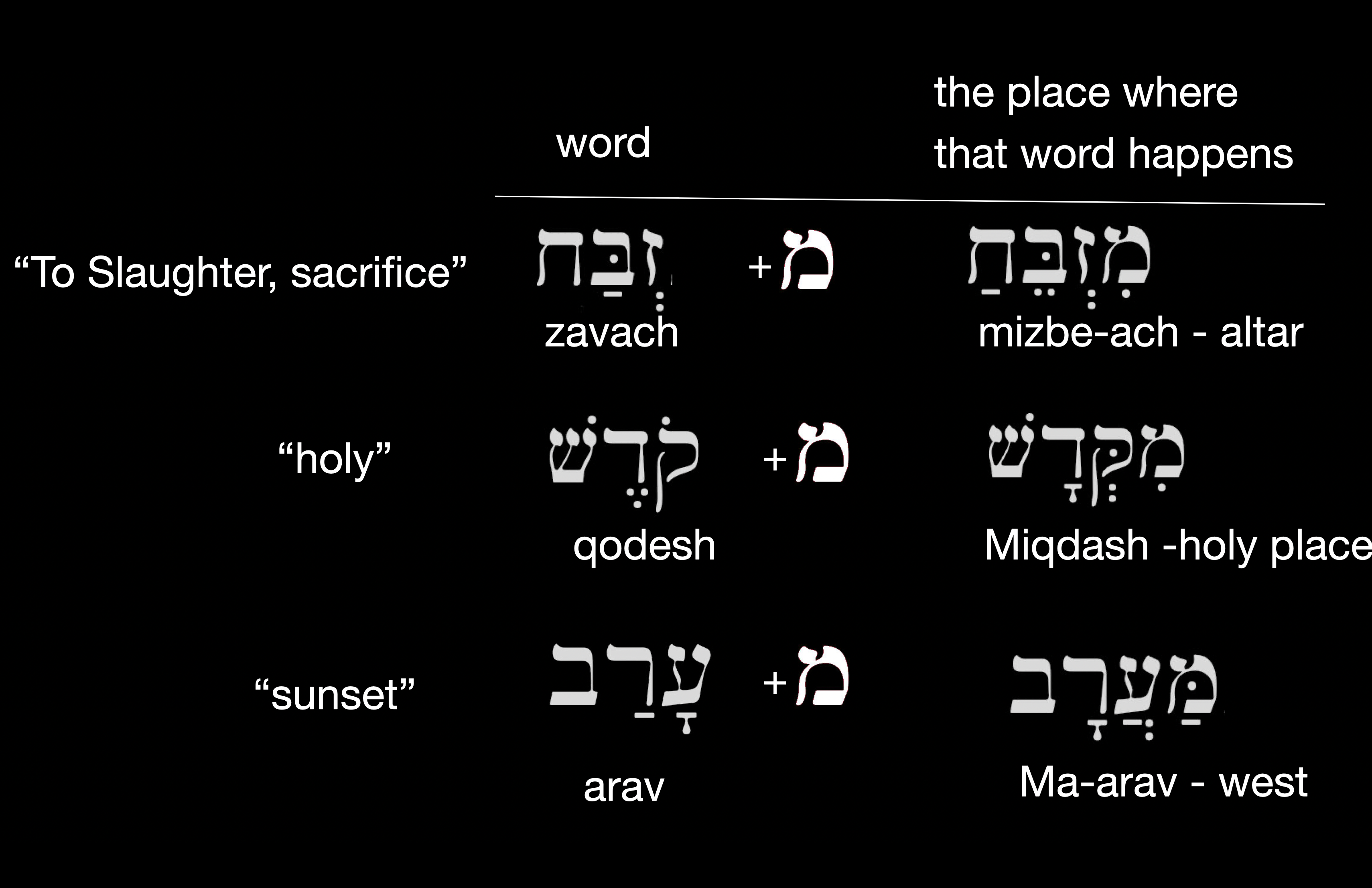
Another example: the word for “holy” is ‘qodesh’. You add the mem (m) to the beginning, and you get miqdash, the place that is holy, or sanctuary. And one more: take the Hebrew word for ‘sunset’, ‘arav’. Again, add the mem and you to the place where sunset happens. ‘ma’a rav’, the Hebrew word for “west”, because that is where the sunset occurs. The psalmist says God will separate our sins from us as far as the east is from the ma’arav. (Psalm 103:12)
And I have shown you all that to show you this: The Hebrew verb “to speak” is ‘dibber.’ Again, add the mem to create the Hebrew word for the place where speaking happens, ‘midbar.’ And ‘midbar’ is the Hebrew word for the wilderness. So, literally, in the Hebrew Bible, the place where speaking happens is the wilderness.
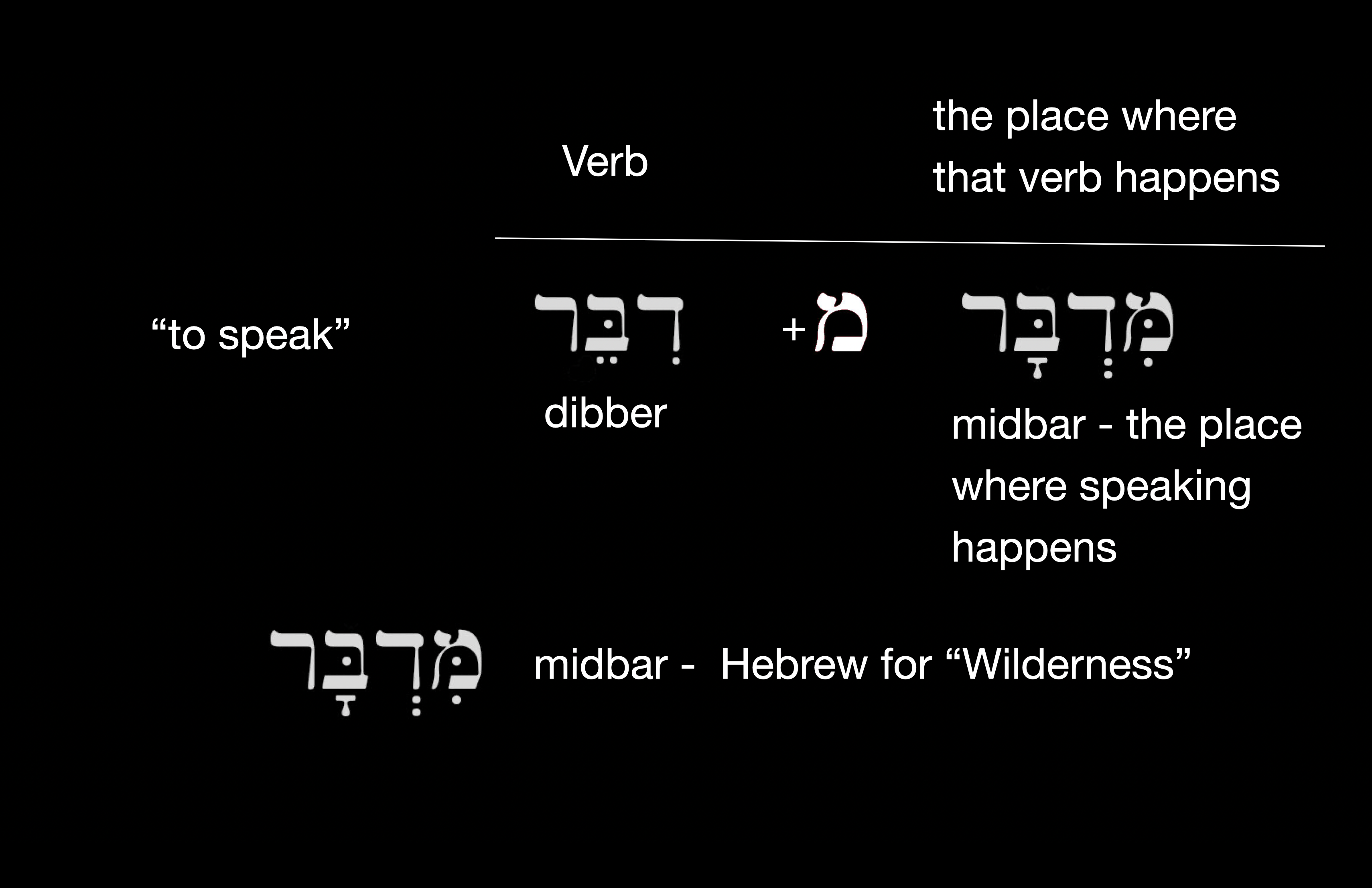
And that is odd, because the wilderness is a place of barrenness, emptiness, loneliness. There is no one there. This is the place where the language of the Bible says that speaking occurs. But if there is no one there, who speaks in the wilderness? I can not overstate the importance of this concept in Scripture. The wilderness is where God speaks. Let me give you a few examples.
Moses – Moses entered the wilderness not by choice. He was adopted to be a prince in Pharaoh’s court but was kicked out of Egypt for murder. In the Egyptians’ minds, it was a death sentence. For them, the wilderness was where you went to die. There was nothing there. No food, no water.
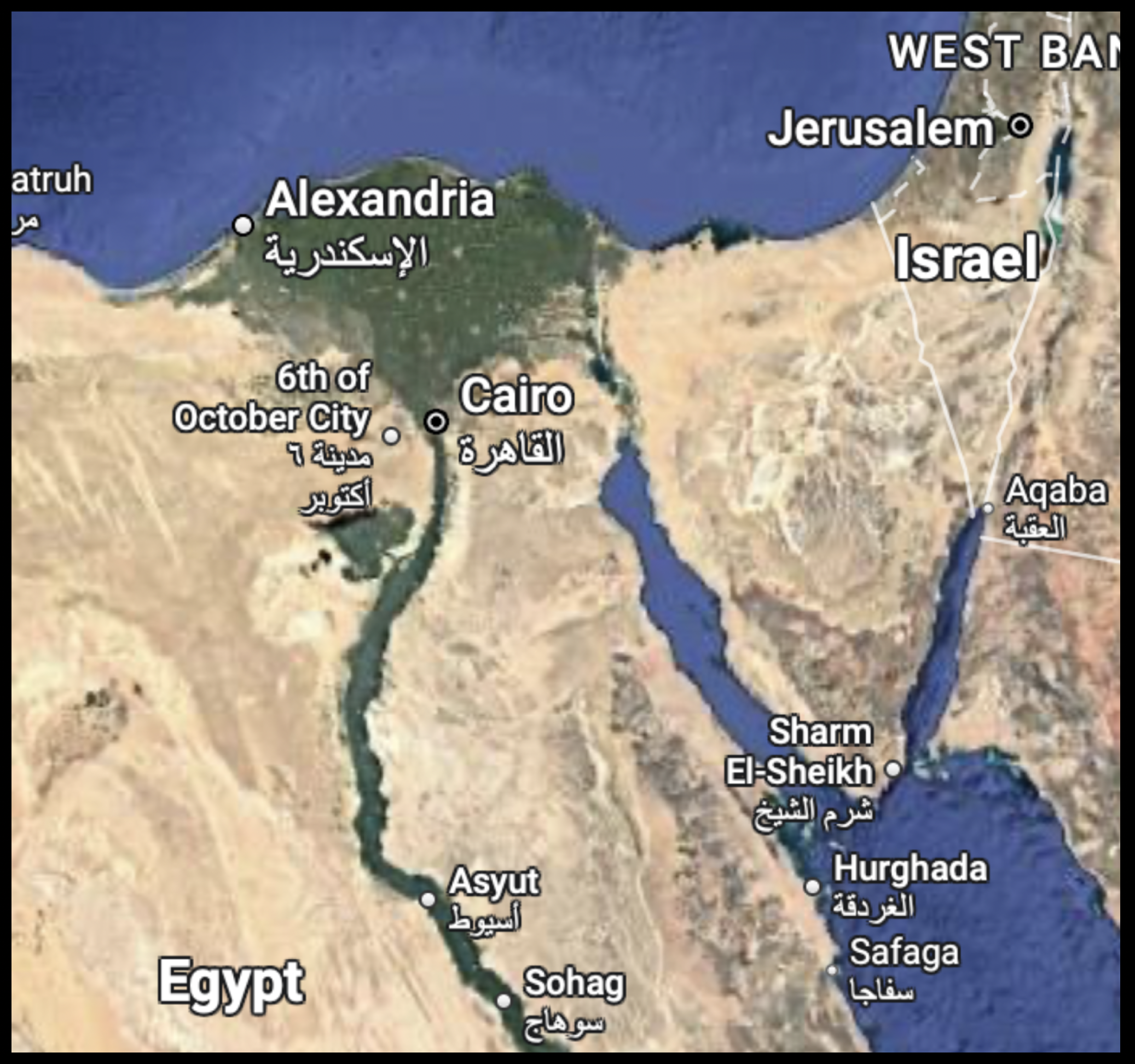
Look at this Google Earth view of Egypt. Notice the thin ribbon of green in a sea of brown. The green is the fertile land surrounding the Nile, the most fertile land in the world. But take one step past the waters of the Nile, and you are in the wilderness, where nothing grows, where there is only death. Aside from the delta, Egypt is a narrow ribbon of green, with the rest desert. Let me give you another view.
This is from about 200 feet in the air. Egypt has the richest farmland in the world. Thousands of years of Nile flooding, bringing rich deposits of silt, have created topsoil layers several feet thick. This view was from last fall in one of these:
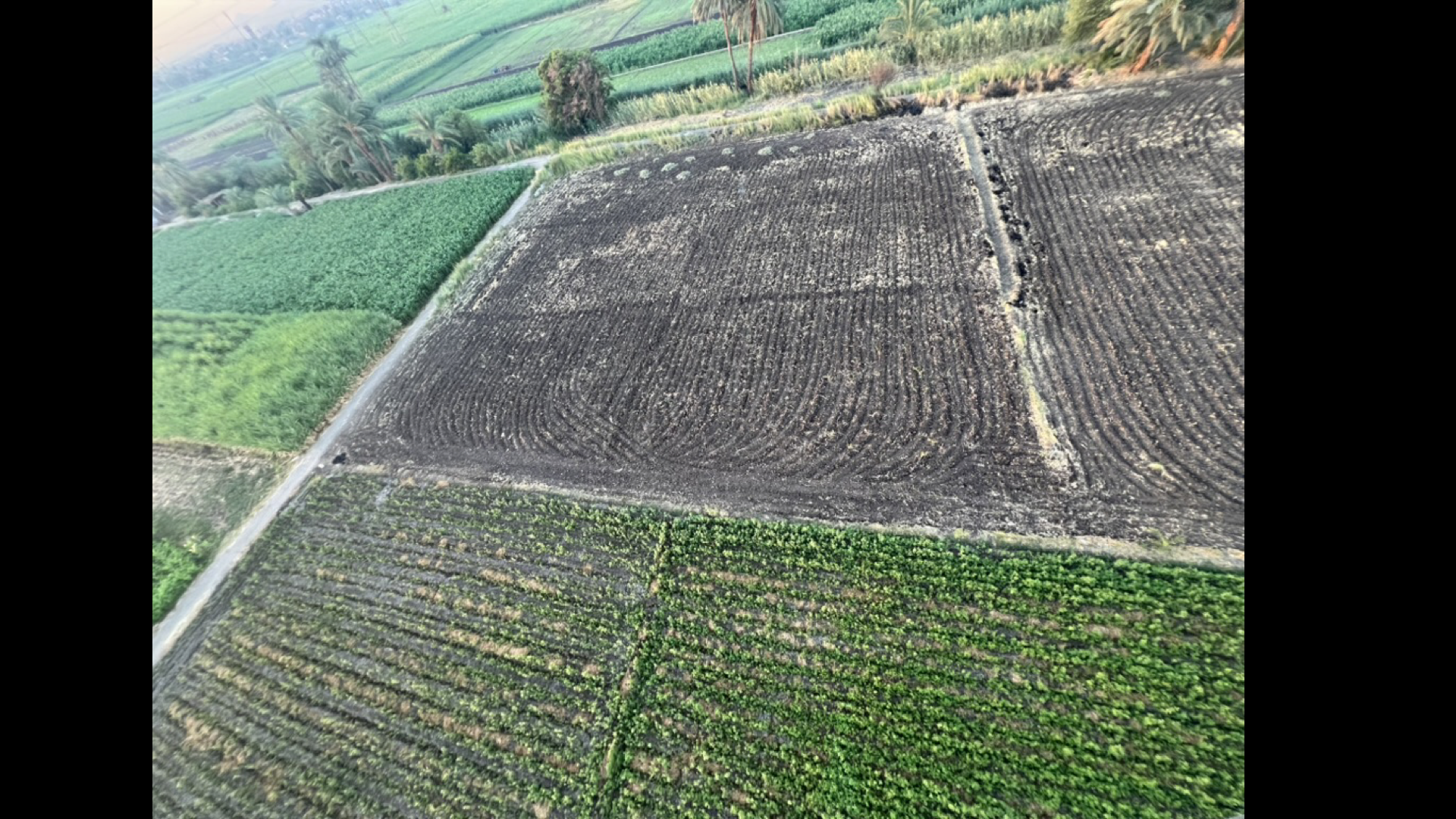
And we floated in a basket out over the ribbon of green that accompanies the Nile.
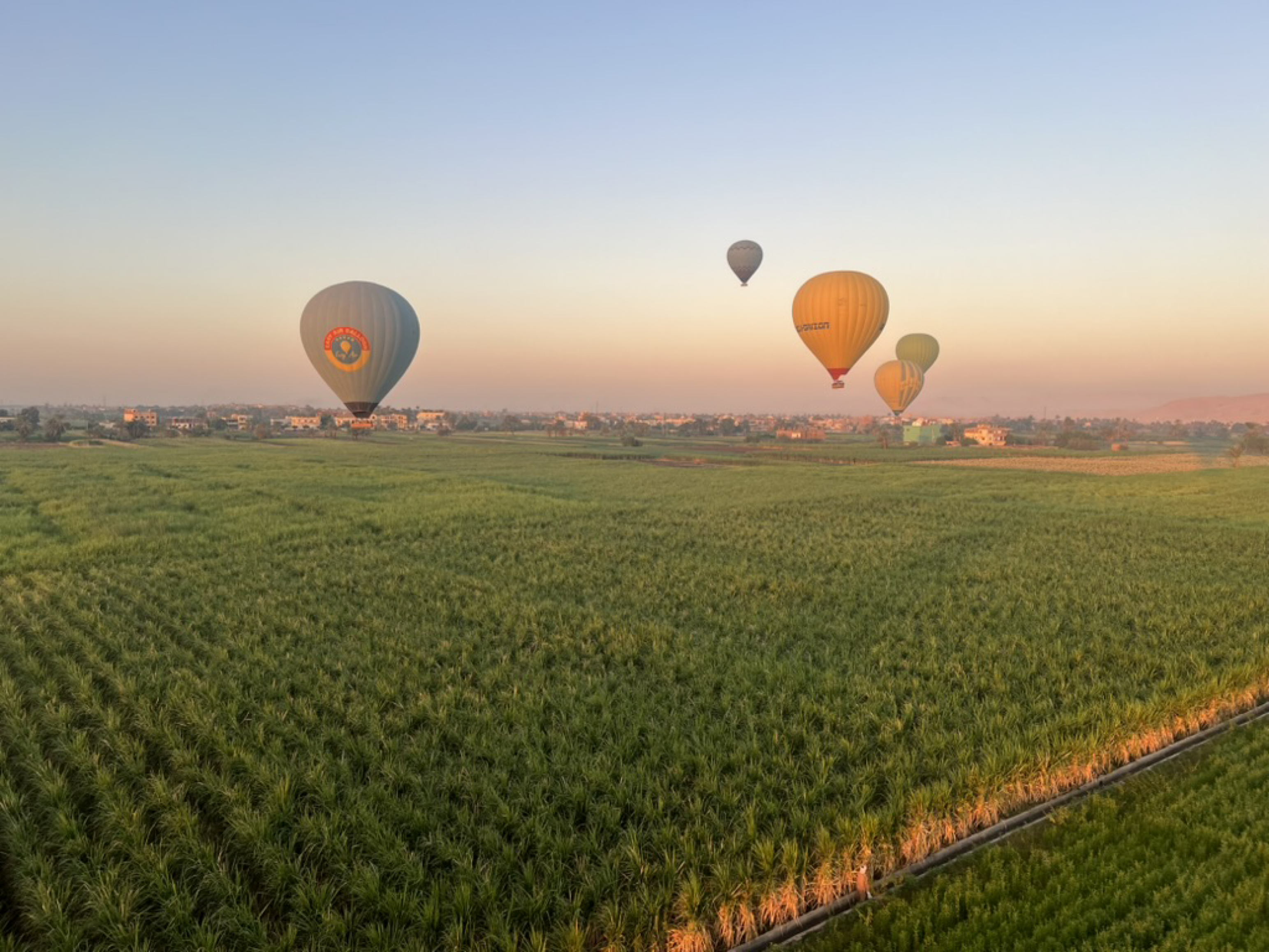
These particular fields were corn or sorghum. The fertility of this land is fantastic. But go up a little higher, and you can see where the green ends.
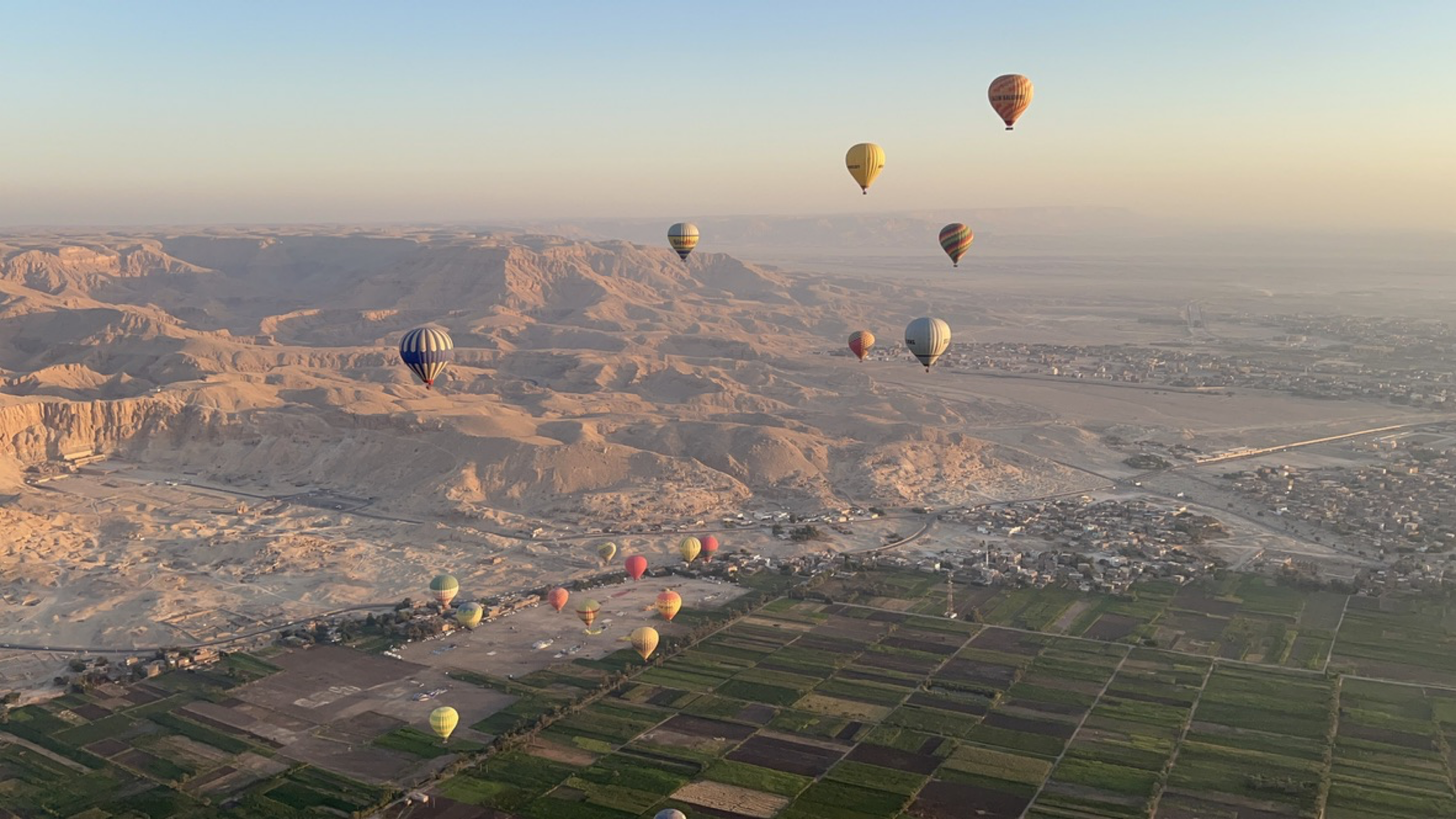
You can see a sharply demarcated line that divides rich farmland from desert and wilderness. A place with no water, where nothing grows, a place where you die. Who would ever leave this lush land and go to this land of death? To be banished to the wilderness is to be sent to die. But Moses doesn’t die; he survives and thrives. He spends 40 years in the wilderness, the same wilderness Saul entered. It was a time of deep introspection that Moses needed. And after 40 years, when Moses is ready, he encounters God in a burning bush on the mountain, Sinai.
Moses’ time in the wilderness became a season of preparation, where his own past in Egypt and his 40 years of shepherding would serve him as he led Israel through that same wilderness for 40 years. What started as a death sentence —a time of punishment for Moses —became a path to his purpose—a training ground for the mission God had prepared for him. In the wilderness, God spoke to Moses.
Elijah — Elijah fled to the wilderness after his battle with the prophets of Baal on Mt Carmel. You know the story. God sends Elijah to King Ahaz to tell him there will be a drought and famine due to the nation’s worship of the false god, Baal. God takes care of Elijah during the famine, first by ravens bringing him food and later through a widow whose jar of flour and oil never run out. Then there is a confrontation between the prophets of Baal and Elijah on Mt Carmel. Both are to build an altar, and whichever god brings down fire on their altar would be the true god. So Yehovah brings down the fire, and in judgment, Elijah slaughters the prophets of Baal.
Then Queen Jezebel is angry at Elijah for killing her prophets and swears to kill him. Elijah flees to escape Jezebel. After this great victory, he is depressed. He feels he is the only prophet of Yehovah left in the world. He flees to the wilderness, where he just wants to die. He ends up at Sinai, the same mountain where God spoke to Moses. And Elijah sits alone in a cave on the mountain. Loneliness is hard. But the wilderness of loneliness can be a gift because in those times, God can speak.
And in this lonely wilderness, God speaks to Elijah, telling him he is not alone. God restores his strength and comforts him. There, you remember, God didn’t appear in the wind, earthquake, or fire, but in a “still small voice,” revealing Himself not in overwhelming power but in gentle presence, speaking to Elijah, giving him new tasks, and assuring him that he is not alone. There are 7,000 faithful Israelites who remain. In the wilderness, God speaks and restores Elijah’s hope.
And there is David, who flees to the wilderness as a fugitive from King Saul, who hunts him relentlessly. There are times when David thinks he has come to the wilderness to die. But there he learns to trust deeply in God to provide for him. And it is there that David learns to listen to God speak, in the land of speaking. And there he sings out to God in psalms like this:
Psalm 63:1-4 O God, You are my God; Earnestly I seek You;
My soul thirsts for You; My body longs for You
In a dry and weary land Where there is no water.
I have seen You in the sanctuary,
Beheld Your power and Your glory.
Because Your love is better than life, My lips will glorify You.
I will praise you as long as I live,
And in your name, I will lift up my hands.
David grew closer to God in the trials of the wilderness, the place where God speaks.
And then there is Jesus, who, after his baptism, was “driven to the wilderness” by the Spirit. He spends 40 days in prayer and fasting to the Father in preparation for his ministry. But Jesus’ story reminds us that in this land of speaking, there may be more than the voice of God. For in the wilderness, where there are no other people or distractions, there are two voices one may listen to: our Father God, and the accuser, the satan. Jesus gains insight and instruction from the Father, but he is also tempted by the accuser. In the wilderness, there is a voice to heed and a voice to reject.
So we see that Biblical characters end up in the wilderness for different reasons. Moses is sent there as a death sentence. Elijah flees in depression and loneliness. David flees from an unjust king, and Jesus is driven by the Spirit. I didn’t mention the first person in the Bible who is seen in the wilderness.
It is Hagar, the slave that the Pharaoh of Egypt gave to Abraham and Sarah; tradition tells us she was a princess in Pharaoh’s court. But Sarah and Abraham mistreat her sexually, and Hagar bears them a son, and then they kick her out of their home into the wilderness to die. Twice, Hagar is in the wilderness, but there God sees her and speaks to her.
And look at this parallel: 400 years after Hagar. Moses, a prince in Pharaoh’s court, is kicked out of his home into the wilderness to die, and there Moses hears God speak to him. This slave turned prince of Egypt was kicked out to the wilderness to die because he took a life. Again, that was 400 years after Hagar, a princess of Egypt, turned slave, kicked out to the wilderness to die because she brought life into the world.
These two people with exactly opposite circumstances both end up in the wilderness, where they are expected to die, but where God speaks to them. These mirror-image stories illustrate an important point: No matter your circumstances, find your way to the wilderness, for that is where God speaks.
Where do you go to hear God speak? Don’t tell me you go to YouTube. God doesn’t have a channel there. Don’t tell me you listen to Christian music or watch a church service on TV, or attend a small country church. Saul would ask you to be very careful listening to the gospel of men.
All of those can be good things. But again, Saul would tell you that you need to hear from God Himself to avoid being off track by listening to the traditions of men. There are some great Christian books and Christian Music out there. But some contain some really odd ideas about God. There are some great teachers and preachers out there, but again, you have to be careful you aren’t just getting Man’s Gospel. Remember what Paul said:
Acts 17:11 “Now the Berean Jews were of more noble character than those in Thessalonica, for they received the message with great eagerness and examined the Scriptures every day to see if what Paul said was true.”
If not for Jesus stopping Saul in his tracks on the Damascus Road, Saul would have wasted his whole life. Saul was giving 100% for God, but he was 100% wrong. That is what he got for following man’s gospel and traditions instead of the real gospel of Jesus. So Saul went to Arabia, to the wilderness, because he knew that was where God spoke. And he wasn’t about to be fooled by another person. So Saul encouraged all his listeners to follow his example and that of these Berean Jews. Saul said, “Listen eagerly to what I say, but don’t take my word for it. Never just accept what any man says. Study the scriptures yourself every day to make sure you are getting it straight from God.”
Do you want to commune with God? Do you want to hear God speak? Then find a lonely, quiet place, open his Word, and pray and listen. It may be on a hike in the woods. It might be in your backyard. It might be in a quiet room of your house at 4 am. God desperately wants a relationship with you. He wants that so much that he sent His son to pay the penalty, the debt we owe for our sins. God wants to speak to you, but he can’t be heard over the noise that we constantly surround ourselves with. We all need to go to some form of wilderness to hear God speak. Go with me to the wilderness — God is waiting for you there.
 Swallow No Camels