July 15, 27 A.D.  Jesus Cleanses a Leper #40

Week 22 ———  Jesus Cleanses Someone You Thought Had Leprosy
Matthew 8:1-4,  Mark 1:40-45,  Luke 5:12-15

This entry is the text of a sermon I gave this past week at the first meeting of an annual Camp Meeting we have attended for many years. (It is my favorite ten days of the year.)  It will read a little differently than my usual blog (including an invitation.)  

Jesus just finished the sermon on the Mount on this day, 1997 years ago. What does he do next?

In the sermon, he describes just who will be the initial people of his kingdom—and they are the people no one would expect. He explains God’s heart behind the Old Testament law, teaches them to pray, and tells them how to be members of God’s kingdom and how to act in God’s kingdom. 

Now, he will demonstrate what he just taught them because actions speak louder than words.   Actions teach better than words. Sunday school teachers, are you listening? Small group leaders, did you hear that?   Pastors?   You can give a well-crafted lesson or sermon, but people will learn more from watching how you live your life than they will ever learn from what you say.  Sometimes, we who preach spend too much time talking and not enough time letting people see how we live it out.  If we aren’t demonstrating what we are saying, then why would anyone listen?  Matthew reports what Jesus taught in chapters 5-7. The following two chapters will be about how Jesus lives it out — demonstrating his teaching by action.

So, let’s join the crowd following Jesus down the mountain.  His first encounter after the sermon is an important one, where Jesus will first put his words into practice.  So walk down the mountain with me, and let’s see who Jesus first meets after he preaches these messages:

Matthew 8:1-4
When he came down from the mountain, great crowds followed him. And behold, a leper came to him and knelt before him, saying, “Lord, if you will, you can make me clean.” And Jesus stretched out his hand and touched him, saying, “I will; be clean.” And immediately his leprosy was cleansed. And Jesus said to him, “See that you say nothing to anyone, but go, show yourself to the priest and offer the gift that Moses commanded, for a proof to them.”

Okay, Jesus heals a leper. It’s a great story. I’ve heard it a hundred times. Let’s sing a song and eat some ice cream. Not so fast, my friends. I want to give you some context. I want you to see this story like Andrew, Simon, and the crowds saw it.

First, I must put my doctor’s hat on for just a minute.  Matthew tells us a man with leprosy comes to Jesus.  Well, that is not exactly what Matthew said.  You can read much about leprosy in the Old Testament — except it is not leprosy.  When the Hebrew Bible was translated into Greek about 250-200 BC (the Septuagint or LXX), the Hebrew word ‘Tsa’arat’ was translated as ‘lepra.’   That was a good word choice because ‘lepra’ was the Greek word Hippocrates used to describe a variety of relatively minor skin disorders (eczema, psoriasis, vitiligo, scurvy), all of which involved flaking skin or whitening of the skin. Now, fast forward to 383 AD, and Jerome, a Bible scholar, is translating the Bible into Latin. He translated the Greek word ‘lepra’ into ‘leprosy,’ the Latin word for a very different disease.  It was an honest mistake.  ‘lepra’ and ‘leprosy’ sound similar. 

But Tsa’arat or lepra has nothing to do with what we call leprosy or Hansen’s Disease today.   Hansen’s disease did not exist in the Middle East until over 1000 years after the time of Leviticus and Moses.  Tsa’arat in the Bible is described as white, flaky skin, occasionally with white hair within it.  Modern leprosy lesions are always dark, never white.  Tsa’arat in the Bible can affect buildings and clothing.  Hansen’s Disease is caused by a bacteria.  It cannot affect inanimate objects.  They are entirely different diseases.

So, Jerome’s simple mistake in 383 AD led to a tremendous misidentification. Jerome’s Latin Vulgate became the primary Bible for over 1,000 years and is still used today in the Catholic Church. This incorrect translation persists today, even in modern biblical translations done in the past ten years.  Even though we know better now, they still keep the mistranslation going.  Tradition wins over correctness again.

So, the man Jesus encounters in Matthew 8 coming down from the mountain does not have the contagious, disfiguring disease we know today as leprosy. He had tsa’arat, or lepra, a skin disease with white, flaky skin that was not contagious.  Yes, the skin lesions were not contagious.   You could not catch it from touching someone.2

Why, then, do we have all these Bible stories of people with tsa’arat having to live outside the camps if it is not contagious?  Why were they avoided as if they had the plague?  Why couldn’t they go into the Temple?  Why is it such a big deal for Jesus to touch this man in Matthew 8?

Because it is not about a contagious medical problem; it is all about ritual purity.   Now, bear with me a bit here because ritual purity is something we poorly understand. If you want to understand anything in the Bible, you have to go back to the beginning. 

God designed a world where he could dwell with us.  The Garden was made for man to dwell with God.  But man chose to sin, and the earth became a place of sin and death — no longer a place where man could dwell with God.  So, the Garden was shut down.  The rest of the Bible after Genesis 3 is the story of God’s plan to return the world to a place where he could dwell with mankind.  God chose one man, Abraham, to build a nation that would be a nation of priests to teach all the other nations about God.  They end up as enslaved people in Egypt.  God rescues them and leads them to a mountain. (I’ll bet you saw that movie.)  There, God enters into a covenant with them.  He wants to restore that Eden relationship with man.  So God tells Moses on Mount Sinai, “Build me a tabernacle that I may dwell…in it”…. No! Not that God may dwell ‘in it’… but God says, “Build me a tabernacle that I may dwell with you.” (Exodus 25:8). God wants to dwell with man.

But there must be some rules if God is going to dwell with man. To see those rules, we go back to your favorite book of the Bible, Leviticus:

Leviticus 11:44-45   For I am Yehovah your God. Consecrate yourselves, therefore, and be holy, for I am holy. You shall not make yourselves unclean with any defiling things.  For I am Yehovah who brought you up out of the land of Egypt to be your God. You shall therefore be holy, for I am holy.”

The key word in this passage: ‘holy.’   And in this passage, we see that the opposite of holy is ‘unclean.’  God is holy and will place himself in the middle of Israel, so they must be holy, too.  We think of holiness more in terms of morality, and that is a part of it.  But ‘holiness’ carries more of an idea of being unique, set apart, and pure.

There are two types of impurity in the Bible, and if you don’t understand this, then you will misunderstand a lot of what Jesus says because he talks about impurity a lot.  There is moral impurity and ritual impurity.

Moral impurity is the result of sin. If you never sin, you are morally pure; if you sin, you become morally impure. We understand this. Moral impurity is not contagious. The person sitting beside you can’t spread their sin to you by touching you.  Moral impurity is cured by punishment or atonement. The wages of sin is death.  

Ritual impurity is very different.  First of all, ritual impurity is not sinful.  You don’t become ritually impure by sinning, and it is not sinful to be ritually impure.  Ritual impurity is unavoidable.  Everyone who lives life will become ritually unclean.

Numbers 5:1  Yehovah spoke to Moses, saying, “Command the people of Israel that they put out of the camp everyone who is leprous or has a discharge and everyone who is unclean through contact with the dead.” 

You can become ritually impure by touching a dead body, touching bodily fluids, and tsa’arat.  All these things represent corruption or death.1  And death is foreign to God.  He created a world without death.  Death was not to be a part of the world he made.  Death is not part of who God is.  So you don’t bring death or the forces of death into God’s presence. To enter the temple in an impure state was a sin.  Again, it is not sinful to be ritually impure unless you go in that state into the temple.   And unlike moral impurity, ritual impurity is spread by contact.  If you touch the fluids, if you touch a corpse, if you touch someone with tsa’arat, then you become ritually impure.  

  The cure for ritual impurity was simple:  washing with water and a time of waiting.  However, everyday activities in life would routinely cause people to become ritually impure again.  So they set up these pools to immerse themselves (mikveh) all around the temple, so everyone would ritually wash before entering the temple, in case they had become ritually impure.  Unless you had tsa’arat, the skin disease.  You couldn’t be clean as long as you had the skin lesions.  So, people with tsa’arat could never enter the temple.  They could never go in and sing the psalms of praise.  They couldn’t make an offering to atone for their sin.  They were banned from God’s presence.  And no one would touch them.

Now, that all sounds a little weird to us.  But you need to realize that every time you open your Bible to read, you are traveling to a foreign country with a different culture.  Now if I travel to Boston and make fun of them and call them ignorant because they don’t have sweet iced tea or grits, and they talk funny, then you call me a dumb intolerant hick from Alabama.  Just because a culture is different doesn’t mean it’s wrong.  Every culture has standards of purity and defilement.   The Hindu will not touch people of lower caste.  Certain sicknesses are taboo to touch in many societies.  Come on, it hasn’t been that long since COVID-19.  “Keep 6 feet away from people.”  “Wear masks.” “Don’t breathe their air.  “Don’t touch them.”  I half expected to see people out in public ringing a bell, “Unclean, Unclean!”   We became very good at fearing medical impurity.  (If only we feared moral impurity with such commitment.)

I have seen people afraid to touch some of our homeless people. I understand. Several times, I picked up homeless hitchhikers, and about 30 seconds later, I realized that I was going to be reminded of their journey with me every time I got in my truck for the next several months. Some odors really linger. 

You may think you have trouble grasping the concept of a holy set aside place where you must be clean to enter.   But there is a unique set-aside place in my hospital.  We call it the operating room.  And it is a place to promote life.  It is a place where the forces of death are defeated, and life is brought into the world.  But not just anyone can go walking in there. There are barriers.  You have to wear special clothes (scrubs), special head coverings, masks, and gloves, and everyone must wash away all uncleanness thoroughly before entering.  It is a unique set-aside place.  Maybe it is not so strange a concept.

When the Israelites were taken captive in Babylon for 70 years and the temple was destroyed, there became much more focus on ritual impurity over moral impurity.  After all, they couldn’t deal with any moral impurity (sin) because there was no temple at which to sacrifice.  But they could still concentrate on the ritual impurity because there was water to cleanse in Babylon.  When they returned and rebuilt the temple, then sin sacrifices could resume, but the focus on ritual impurity remained through the days of Jesus.  But the biggest deal for God was always moral impurity.  It was sin that caused death and the separation of men from God.  

So God wants to dwell among Israel in the Tabernacle.  But there were barriers— fabric walls around the tabernacle with only one opening.  You had to be ritually pure to enter.  Then, there was a holy place where only the priest could go after they washed in the bronze basin.  A barrier of thick curtain, a veil, separated the holy place from the most sacred place that contained the ‘mercy seat’ for the presence of God.  

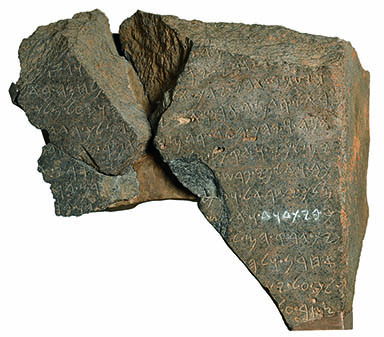
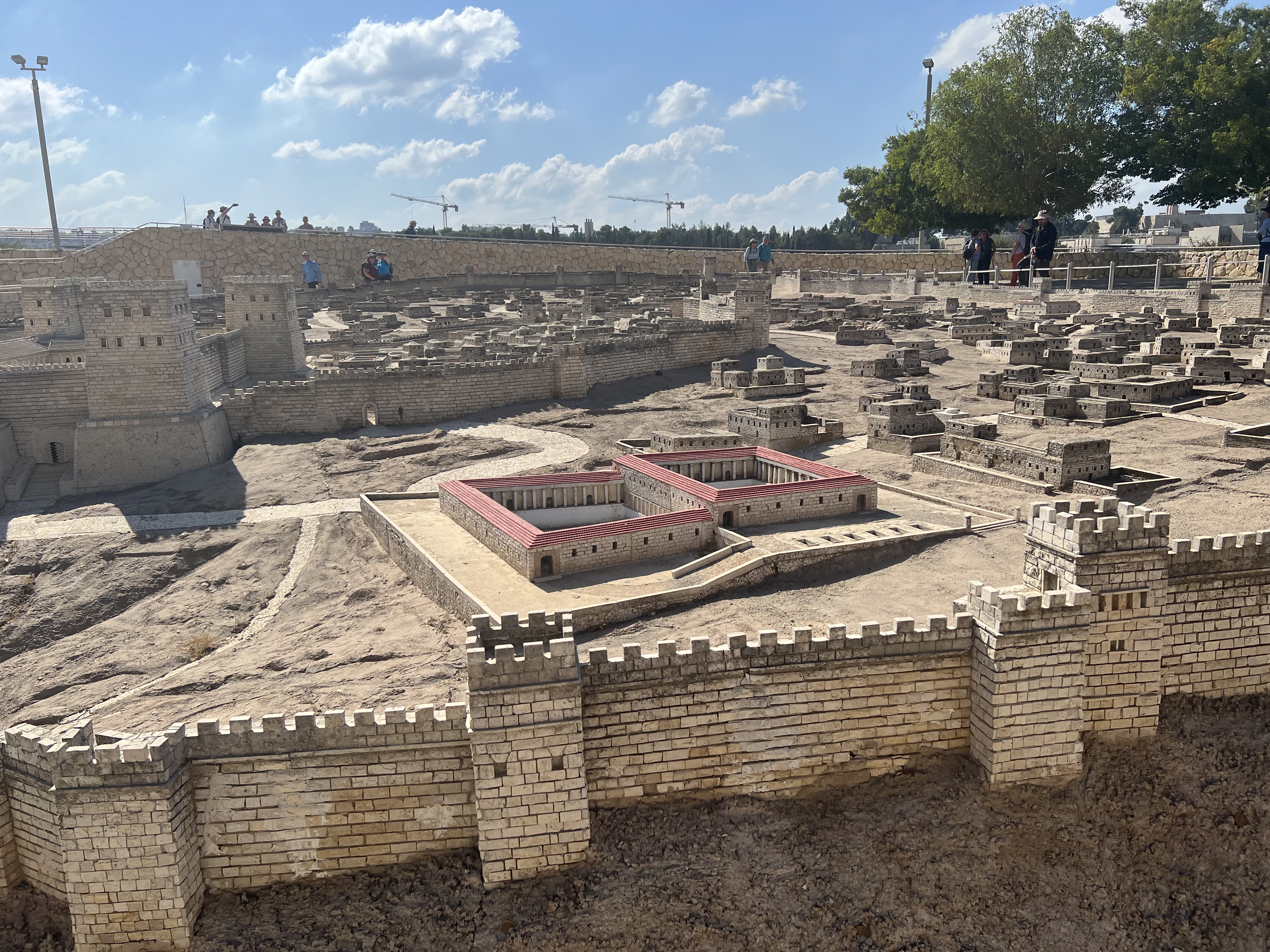
The religious leaders liked these barriers.  They liked them so much that they created more when they built the temple.  They constructed a five-foot-high wall to keep Gentiles from coming too close to the temple, under threat of death.  (One of the signs listing the threat of death to Gentiles that entered was recently found by archeologists.)   Women could go a little further, but not where the men could go, not where the ‘real worship business,’ the sacrifices were made.  Men can go where the offerings were made, but only priests can go further, and then, as in the Tabernacle, only the high priest can enter the holiest place through the veil.   

There were barriers.  (By the way, ladies, that whole ‘court of women’ thing was not God’s idea.  God never prescribes it in the Bible. It is the creation of man. (So don’t blame God for that.)

Enter Jesus.  Throughout the Gospels, we see Jesus breaking down barriers of anything that separated people from God.  Jesus goes charging down the mountain after the sermon on the mount, and the first person he runs into has a skin disease; he is unclean.  He has not been able to go to the temple for a long time, and unless his skin disease is cured, he never will again.  He is an outcast by the religious leaders. He is outcast by the people, but he is not outcast by Jesus.   What does he say to Jesus, “If you are able, you can make me clean.”  No, that is not what he says.  He says, “If you are willing, you can make me clean.”  See, this man has no doubt that Jesus has the power to make him clean.  He is just not sure Jesus is willing to do it.  His past experience with holy men was that they walked a wide berth around him.  They give him the Covid 6 feet.  They don’t give him the time of day.  They ignore him.   If robbers beat him up and he was lying half-dead on the side of the road to Jericho and these holy men came by, they would just leave him there on the side of the road because they didn’t want to become ritually impure.  (That would make a good story.)

I see this in some of our neighbors without homes today—they know the church can help them; they know the church is able to help them, but they have had some past experiences with church people who ignored them and were afraid to touch them.  They are not sure if the church is willing to help them, so they stay away.  They are like the man in Matthew 8 who is wondering, ‘Does Jesus care about me? ‘Is he willing to cleanse me?’

Let me make this easy for you. Jesus is always willing to help you. I don’t care how unclean you think you are or how much sin you have committed.  Jesus is always willing.

He runs down that mountain. He can’t wait until he finds a man with tsa’arat so he can show the people the power of the Gospel.  Jesus is not afraid of this man.  And Jesus doesn’t stop there.  The next thing he does is offer to go to a Gentile Roman soldier’s house to heal his servant.  The crowd gasps.  ‘Go to a Gentile’s house?  No way, Jesus, they are so unclean!’  And then, in the next chapter of Matthew, Jesus is on his way to a dead girl’s room — What?  That is the worst form of uncleanness!   But on his way, the woman with the issue of blood touches the tassel on his garment. 

Do you see what Matthew is doing here?  He has shown Jesus face down all the causes of uncleanness known in the two chapters following the sermon on the mount.  Jesus is breaking down all the barriers that keep people from God.  He is not just talking about it; he is doing it.  

Now, don’t get from this that Jesus is throwing away the purity laws.  Jesus doesn’t think the laws from Leviticus were wrong or bad.   He wrote the laws; he gave Moses the purity laws. He tells the man who is unclean from skin disease to obey the law of Moses and show himself to the priest. This is important: Jesus doesn’t do away with the laws of impurity; he does away with impurity itself.  

When Jesus reaches out and touches the man with the skin disease, you can almost hear the crowd gasp.  Because they thought the man’s uncleanness would make Jesus unclean.  But it didn’t.  Because when Jesus touched the man, his skin disease was gone.  Jesus didn’t touch a man with tsa’arat.  He touched a man who had been cleansed of tsa’arat.  Jesus didn’t get contaminated by the woman with the issue of blood.  Because that is not who grabbed his tassel; it was a woman who had been healed, a woman who used to have a problem that Jesus took care of.  Jesus didn’t touch a corpse; he touched a girl who was dead but was now alive. Every time Jesus encounters a corpse, it comes to life.  Jesus was not afraid of ritual impurity because he took away the cause of the impurity.  

And we need not fear ritual impurity today; that same power of Jesus, the same power that took away uncleanness, the same power that raised Jesus from the grave, lives in us.  Jesus overcomes all uncleanness.  And this should not have surprised anyone. The prophets had predicted a time when all uncleanness would be dealt with: 

Ezekiel 36:25-29    I will sprinkle clean water on you, and you shall be clean from fall your uncleannesses, and from all your idols I will cleanse you. (moral and ritual impurity)  And I will give you a new heart, and a new spirit I will put within you. And I will remove the heart of stone from your flesh and give you a heart of flesh. And I will put my Spirit within you, and cause you to walk in my statutes and be careful to obey my rules. .. And I will deliver you from all your uncleannesses. 

It is the same way with moral impurity.   Jesus is not scared of sin.  You may have heard before, “God can not stand sin in his presence.”  That is not Biblical.  You may have heard that God turned his back on Jesus when Jesus took on our sins on the cross.  Jesus shouted, “My God, my God, why have you forsaken me?”   Jesus wasn’t saying God forsook him.  He was quoting Psalm 22.  (Remember, they didn’t have chapter numbers in Jesus’ day.  He couldn’t say, “Hey, remember Psalm 22.”  So their method of pointing someone to a particular passage of the Bible was to quote the first line.)  Look it up.  Psalm 22 is the story of the crucifixion.  The Psalm says, “For God has not despised or abhorred the affliction of the afflicted one and he has not hidden his face from him, [he has not turned his back on him.] but had heard when he cried to him.”  The Psalm tells us Jesus was not forsaken but would be vindicated, and all the nations will come and praise the Lord because God has done this great thing.  The Psalm ends with this one Hebrew word, ‘Asah,’ which can be translated: ‘He has done this,’ or as Jesus said, “It has been done (finished).”

How can you say God cannot stand sin in his presence?  God put his Tabernacle right in the middle of the children of Israel.  Do you think they were without sin?   God looked at this sinful, lost world.  He didn’t stay away from this world of sin; he chose to enter it himself as a baby.  Jesus is not scared of sin.  He runs down the mountain, looking for the worst sinners he can find to build his kingdom.  He is walking through Jericho and finds the most wicked cheating businessman he can.  He invites himself over to Zacchaeus’ house.  The crowd grumbles, but Zacchaeus repents of cheating people and vows to repay them plus more.  And then Jesus says, “The son of man has come to seek and to save that which was lost.”  Jesus came seeking out sin.  Jesus doesn’t avoid sinners because he conquers sin.  Jesus doesn’t avoid touching corpses because he conquers death.  

Do you sometimes feel distant from God?  Do you feel like some sin you have committed makes God want to be distanced from you?  What is it that separates us from God?  Sin?  God says no, I have that covered.  What keeps God out of my life is not my sin.  What keeps God out of my life is I don’t make space for him.  If we make space for God, he will fill it.  God told the Israelites, “Build me a tabernacle that I may dwell with you.”  If they don’t build a space for God, then he can’t dwell with them.  If you don’t make room for Jesus in your heart, he can’t dwell with you.  If you don’t make room for God in your life, then he cannot be a part of your life. From the beginning of time, God’s desire was to live with his children and walk with them as he did in the Garden.  

Jesus came to break down those barriers.  On the cross, he broke the last one, the biggest one.  When he died, that last barrier, that thick veil in the temple that separated all people from the place reserved for God the holy of holy place, That veil tore in two top to bottom, letting you know that the barriers are all down. 

 Being a Gentile will not keep you from God, being unclean will not keep you from God, and being a woman will not keep you further away than men.  The veil is torn.  God has left the building.  His presence will not be contained in a small room that only the high priest can enter.   Sin will not keep you from God. Death will not keep you from God. God will live with you, within you, if only you will make a place.

Jesus gave the Sermon on the Mount over several days. The sermon begins with Jesus teaching his disciples, but as he teaches, the crowds gather.  People gather from all over, coming together to hear messages from God.   And here we are today, 1997 years later, gathered from all over.  We will listen to messages from God this week.  When this week is over, we will leave here.  This week comes and goes — as the sermon on the mount did almost 2000 years ago last week.

We can leave this place in 10 days, as some left the sermon on the mount.  Some left saying, “I like that line about the ‘do unto others as you would have them do unto you.’”   “And that prayer he taught was nice.  Short and sweet.  Yeah, Jesus did a good job; let’s invite him back and do this again next year.” You can leave this meeting like that, saying it was a good meeting with some good sermons.  It was hot as Hades, but the music was good.  You can leave here feeling good but not be changed.  Or you can be like that crowd after the sermon on the mount who decided they needed more Jesus; like them, you can follow Jesus down the mountain to see what he will do next.  When we leave here in 10 days, and you are traveling down from this mountaintop experience, I will pray that God puts somebody right in front of you that the world thinks is unclean.  I’m praying that God stops you in your tracks so you have an opportunity to live out your faith.

For so many years, I think we have left this place and left blessings on the table. There is so much God wants to give us, but we come and listen and go. You can leave this meeting in 10 days just exactly as you came, or you can leave with a renewed spirit, a renewed energy to live as Jesus wants you to live, a renewed knowledge of scripture, a renewed heart for people, and a renewed dedication to do life differently. Jesus would call it doing life abundantly.

Right now you can decide how you will leave in 10 days.  You can make the most out of this time with Jesus or let it pass by.  We are going to sing, and our altar is open.  Maybe you have never made space in your life for Jesus.  Perhaps today is the day you open your heart to the one who can cleanse you.  Maybe you just want to come and say to God and everyone that you want to dedicate this time to God as a time for you to grow as a disciple.  Whatever God has laid on your heart, you are welcome. 

Jesus is always willing, are you?

  1.   Why these three things?  They all represent corruption or death.  Touching a corpse is self-explanatory, but bodily fluids?  These are particular bodily fluids that are a part of the formation of life (semen, menstrual flow, etc.)  Tim Mackie of the Bible Project explained it as well as I have heard, and I paraphrase:  ‘If you and another person both spit on the ground, then new humans don’t spring up there.  So saliva is not a special fluid and will not make you unclean.  But bodily fluids that are involved in the production of life are included.  Life is sacred, and there is something unclean with encountering these fluids outside the place where they are involved in creating life.’  Tsa’arat represents a corruption of normal skin and is included for that reason.  I don’t expect you to understand exactly how that works, for this concept was formed in a completely different culture, and we will likely never understand.  (And that is okay.  I also don’t know why a “thumbs up” sign is seen as a positive response in the US but interpreted differently in parts of Africa.)
  2. One of the diseases Hippocrates included in his ‘lepra’ category of skin diseases that whitened skin was fungal diseases.  Some of these can occasionally spread from person to person, but never by incidental contact, only by prolonged, close contact.

July 9, 27 A.D.  A Miraculous Catch of Fish #39

Week 21 ———  A Miraculous Catch of Fish
Luke 5:1-11

Luke 5:1-11   On one occasion, while the crowd was pressing in on him to hear the word of God, he was standing by the lake of Gennesaret1, and he saw two boats by the lake, but the fishermen had gone out of them and were washing their nets.  Getting into one of the boats, which was Simon’s, he asked him to put out a little from the land. And he sat down and taught the people from the boat. And when he had finished speaking, he said to Simon, “Put out into the deep and let down your nets for a catch.” And Simon answered, “Master, we toiled all night and took nothing! But at your word, I will let down the nets.” And when they had done this, they enclosed a large number of fish, and their nets were breaking.  They signaled to their partners in the other boat to come and help them. And they came and filled both the boats, so that they began to sink.  But when Simon Peter saw it, he fell down at Jesus’ knees, saying, “Depart from me, for I am a sinful man, O Lord.”  For he and all who were with him were astonished at the catch of fish that they had taken, and so also were James and John, sons of Zebedee, who were partners with Simon. And Jesus said to Simon, “Do not be afraid; from now on you will be catching men.”  And when they had brought their boats to land, they left everything and followed him.

Because we don’t read the gospels chronologically, we often miss that this particular miracle of the massive catch of fish happened twice.  And it was no accident that the setting of these two miracles was the same.  In the story we read just now, Jesus asked the four fishermen who had been with him on and off for several months to go all in.  He asked them to leave their boats and become full-time disciples.  The other occasion for this miracle is in John 21.  Jesus has been resurrected, and he is to meet them in Galilee.

John 21:1-12   After this, Jesus revealed himself again to the disciples by the Sea of Tiberias2, and he revealed himself in this way.   Simon Peter, Thomas (called the Twin), Nathanael of Cana in Galilee, the sons of Zebedee, and two others of his disciples were together.   Simon Peter said to them, “I am going fishing.” They said to him, “We will go with you.” They went out and got into the boat, but that night, they caught nothing.

Just as day was breaking, Jesus stood on the shore, yet the disciples did not know that it was Jesus.  Jesus said to them, “Children, do you have any fish?” They answered him, “No.”   He said to them, “Cast the net on the right side of the boat, and you will find some.” So they cast it, and now they were not able to haul it in because of the quantity of fish.   That disciple whom Jesus loved therefore said to Peter, “It is the Lord!” When Simon Peter heard that it was the Lord, he put on his outer garment, for he was stripped for work, and threw himself into the sea. The other disciples came in the boat, dragging the net full of fish, for they were not far from the land, but about a hundred yards off.

When they got out on land, they saw a charcoal fire in place, with fish laid out on it, and bread.   Jesus said to them, “Bring some of the fish that you have just caught.”   So Simon Peter went aboard and hauled the net ashore, full of large fish, 153 of them. And although there were so many, the net was not torn.   Jesus said to them, “Come and have breakfast.”

So, the disciples have seen Jesus several times since his resurrection.  He told them to go to the Galilee to meet him.  They are waiting around, and Peter decides it is time to go fishing.  I have heard people say Peter is returning to his old business.  He was a disciple, but now that has changed.  He saw himself as a colossal failure as a disciple.  The worst thing a disciple could do is betray their rabbi.  And he did three times. It is not a stretch to think Peter is returning to being a fisherman.  Or maybe he is just fishing while he is waiting on Jesus.  But like our other story in Luke, they catch nothing all night.  Then Jesus showed up, and there was a miraculous catch of fish.  By the way, isn’t it a coincidence that these professional fishermen had a bad night in both stories?  Not a single fish.  Who do you think kept their nets empty all night so He could miraculously fill it the next day?  Maybe there is a lesson for us there.  The next time you find yourself having an incredibly unproductive day, it might be Jesus prepping you for a miracle.  But you know what happens next.  Jesus forgives Peter and has him recommit to do the work of a disciple, or now an apostle. 

So you have these two stories of miraculous catches of fish, and both are followed by Jesus’ call to these men to be fishers of men.  The next time one of you catches a whole lot of fish, you had better listen up.  God may be calling.

But what I want to talk about is the miracle.  God is at work in so many ways: the birth of a baby, the wondrous workings of our complex bodies, and the incredible immense universe we live in.  But some things happen constantly, so we often begin to think of them as ordinary.   Do not forget that God is at work in all of it. There is nothing ordinary about the birth of a baby.  Every baby is a gift straight from God.  We shouldn’t take these everyday works of God for granted.

But God acts in extraordinary ways also.  The Bible calls these “signs and wonders”.  They are signs in that they point to something.  When you read about a sign or miracle in the Bible, you should always ask what the sign is meant to highlight or reveal.   What is the message of the miraculous catches of fish on these two occasions?  Both times, Jesus is inviting Peter and the disciples to join the work of fishing for men.  The catch of fish lets them know that he will be the power behind their efforts.  On their own, without him, they can’t even be successful as fishers of fish. What they will accomplish in their ministry will not be due to their abilities. It is God who will provide the catch.  And with these miracles, they can never forget this lesson— boy, does Jesus know how to teach a point!

You can read the Bible and get the idea that God “used to do miracles all the time.”  But the miracles in the Bible are primarily centered around certain people or times (Moses and the Exodus, Joshua, Elijah and Elisha, Jesus and his apostles.)  There are hundreds of years between times of miracles.  These disciples of Jesus saw a lot of miracles.  But what of the hundreds of thousands of other people living in the world in Jesus’ day?   In perhaps the largest-viewed miracle, over 5 thousand were fed with five loaves and two fish.  But there were (according to the Museum of Natural History) 170 million people living in Jesus’ day.  That’s only 0.006% of people who saw a miracle.   Only a tiny percentage of people living in the days of Jesus saw a miracle.   Why?  They weren’t where Jesus was.  They weren’t following Jesus.  You see, the closer you follow Jesus, the more miracles you will see.  Want to see more miracles?  Follow Jesus closely.

I want to be careful about not calling everything a miracle (A parking spot opened right in front of the store for me. “It’s a miracle.”)   I also want to be careful not to dismiss miracles, seeking to explain everything away as a scientific occurrence or as coincidence, for I know miracles still happen.  I find no evidence in scripture that God drew a line in time and stopped doing what he had always done.  Instead, I see more and more miracles after Jesus comes, all through the New Testament.  And I have seen signs and wonders more than a few times with my own eyes.  I’ll tell you a few of my stories today.

My wife was on a committee with some ministers in our county to see if there was a homeless problem that we could help with.    Some people told us there were no homeless people in Marshall County.  They didn’t see them on the streets with signs.  So they did some research and found there was indeed a large number of homeless, including many children in our schools who did not have homes.  So, about ten people met around a table one night and decided we had to do something about it.  We were about six weeks away from cold weather hitting, and we felt we needed some plan to help those without homes before the cold weather arrived.  But how could these few make the need known, raise money, and assemble a program to house the homeless in 6 weeks?  Someone said it would take a miracle to do that.  But we had prayed and asked God to break our hearts with the things that broke his heart.  So we jumped in.   6 weeks later, we organized ten churches, had a benefit that raised $30,000, and started housing people in an emergency cold weather shelter.  Was that a miracle, or just people responding quickly to a need?  You decide.  That ministry began with ten people and no money 12 years ago, and this year, we own two buildings that can house 40 people with over 30 acres of land (with no debt). It has served hundreds of people yearly and changed hundreds of lives.  Last year, it provided shelter and fed our neighbors without homes with the equivalent of over $750,000 in services.  Lives have been put back together, and people have come to Jesus.  God is doing a great thing.  Would you call this a miracle?  Or would you call it God just doing what God does through his people?  I’ll let you decide.

Let me tell you about a mission hospital in Ghana, Africa, where we have worked.  Our friends were big supporters of the ministry in the hospital.  Every year, they would gather supplies to support the missionaries.  They would spend months filling a large shipping container with donated bed linens, bandages, and other supplies.  They packed the container in February, and there was a little space left.  A local hospital had a baby incubator they were willing to donate so they went to pick it up.   When they arrived to pick up the incubator, there was a box of other old medical equipment.  The hospital said they were welcome to it.  It was all used and outdated, but they would throw it out if the mission couldn’t use it.  They had room in the truck, so they took it.  And there was enough room in the shipping container, so they threw the box in.   It takes months for a shipping container to be shipped from Cartersville, Georgia, to Nalerigu, Ghana.  Amazingly, it arrived in Ghana at the same time we did that summer.  So, our friends who had packed the container in February got to unload it in June.  The first thing off the container was that box of medical junk they threw on at the last minute.  They told my friend Tommy to carry the box to the supply room and that they would sort it out later.

Now, while my friends were unloading the shipping container, I had finished rounds in the Pediatric ward and was about to start seeing patients in the walk-in clinic.  I had just met an OB/GYN surgeon who had come in that week to work with the resident missionary doctors.  He was there to teach them a new procedure to help women who were having bladder problems after having difficult deliveries.  It was a common problem there where many women deliver babies outside the hospital.  They had 35 women set up to have that surgery that week while the visiting surgeon was there so he could give the missionary doctors good experience in the procedure while he helped refine their skills. He brought his equipment to do the procedures, including a special endoscope and planned to leave it with them when he returned home.  But his endoscope was damaged during the trip.  The light was broken, making it unusable.  They had searched for something they could use to replace it, but it was a specialized device.  Nothing else would work.  He was frustrated because now, they could not help those 35 women that week, and he would not be able to teach the procedure to the doctors there to help others.  He was walking back to help see patients in the clinic since they would have to cancel the surgeries. That is when he passed my friend Tommy in the hall carrying the box of junk.

He stopped Tommy.  “Hey, what’s in that box?” he asked.  “Just some medical junk,” Tommy replied.  He asked to take a look.  Guess what was in the top of the box.  The same brand of endoscope our surgeon had.  It’s not the same device he used, but one made by the same company.  Do you think there was any possibility the light would fit his broken device?  Of course, it did.  He could do the surgeries that had been arranged and train the local doctors to help countless more women.  Was that a miracle or a coincidence?  The very light device he needed just happened to be placed in a box of junk that would have been thrown away, but there just happened to be enough room in a shipping container that was packed in February, that just happened to arrive five months later at the same time as the surgeon whose device happened to get broken.  And they just happened to pass in the hall that day.  Was it a miracle, or was it God just doing God things?  It enabled the healing of many people and brought praise to Yehovah, so call it a sign, a wonder, or a miracle.  Every time I think about this story, I think about how good God is.

Look back at Peter’s reaction in our first story in Luke.

Luke 5:8-9  But when Simon Peter saw it, he fell down at Jesus’ knees, saying, “Depart from me, for I am a sinful man, O Lord.”  For he and all who were with him were astonished at the catch of fish that they had taken, and so also were James and John, sons of Zebedee, who were partners with Simon.

   He reminds me of Isaiah, when he was in the temple and got a vision of God.  He falls down and exclaims, “Woe is me, for I am lost.  I am a man of unclean lips…”3  There is no other appropriate reaction when you see God move.   The ESV says they were “astonished.”   The NASB gives a more thorough translation of the Greek:  “For amazement had seized him and all his companions because of the catch of fish which they had taken.”   The Greek for ‘seized’ is  ‘periecho’ which means ‘wrapped up in’, ‘gripped by’, or ‘surrounded by’ amazement.  Seeing God act is overwhelming, and you are ‘wrapped up in emotion.’

Some other day, I will tell you other stories, of prayed-for rain that ended a drought, of a hole that opened in the sky to allow an evangelistic gathering to take place in Mexico, of a miracle spark plug in a cardboard box, and of an empty plastic pharmacy bin in Guatemala that kept supplying medicine for children for days of clinics.   And then there are the medical miracles I have seen.  Stage 4 cancer in a child that disappeared with no treatment (other than prayer), children born with large portions of their brain missing that should have died after birth, running down the hall years later shouting my name and giving me a hug.   I have not seen the dead raised to life.  Oh, I have seen people who flatlined their EKG come back.  But more impressively, I have seen the spiritually dead brought back to life.  I will never forget the night we left the house at 2 am to go pick up a young man who was determined to commit suicide.  He had a long road through returning to Jesus, defeating his drug addictions, working his way out of homelessness, and regaining custody of his young son.  Seeing him now, he is very successful in his job, happily married and raising his boy, owns his own home, is active in his church, and volunteers in the homeless ministry.  He is a picture of redemption and grace, God’s goodness.  Is that a miracle, or is it just what God does?

You will never see a miracle if you don’t throw out your net.  It made no sense for those disciples to fish when they had gone all night with nothing.  Galilean fishermen did not fish in the daytime.  They didn’t have the transparent plastic nets we have today.  They used linen nets.  They fished at night because, in the dark, the fish couldn’t see the nets.  In the daytime, they had no chance of catching fish.  Jesus asked them to do something impossible.  They could have thought Jesus was joking.  They could have said, “Jesus is a nice guy, but he’s no fisherman.”   But they said, “At your word, I will.”  What are you willing to try for Jesus?  Maybe you would be willing to try something easy.  Jesus might ask you to call a friend to encourage them.  Maybe you would be willing to do that.  Or perhaps He will ask you to do something harder.  Maybe he will ask you to talk to a stranger. Perhaps he will ask you to speak to a neighbor you’ve never met.  Maybe he will ask you to talk to a homeless person.  Maybe he will ask you to get them help.  Maybe he will ask you to bring them home to live in your house for a while.  (If this sounds wild to you, clearly, none of you have ever been married to my dear wife.  Yeah, it happened more than a few times.)   Maybe God will ask you to do something you think is pointless, difficult, or impossible.

Perhaps we don’t see miracles because we aren’t willing to throw out the net.  We live lives of relative calm.   Calm and peaceful lives.  That is what everybody wants, right?    Let me tell you one more story.  I love reading missionary biographies, and one reason is that you keep running into stories of miracles. This is one of my favorites. The Story of John G. Paton Or Thirty Years Among South Sea Cannibals.  Paton felt called to the South Sea Islands, where, in the 1800s, no one wanted to go. Today, these islands are highly sought-after vacation spots: Tahiti, Fiji, and Vanuatu.  But in John Paton’s day, the natives were all cannibals.  Talk about going into the deep waters.

He eventually established preaching outposts on several of the tiny islands there and other missionaries joined him there.  He tells of a time when he was seeking to replace the small sailing boat missionaries used to travel between the islands and distribute food and supplies.       

“The Missionaries on the spot had long felt this, and had loudly and earnestly pled for a new and larger Vessel, or a Vessel with Steam Auxiliary power, or some arrangement whereby the work of God on these Islands might be overtaken, without unnecessary exposure of life, and without the dreaded perils that accrue to a small sailing boat from deadly calms and from treacherous gales.”4

That phrase struck me – “deadly calms” and “treacherous gales.”   Now, I can certainly understand “treacherous gales,” but what about the “deadly calm”?  I’m not a sailor, so I didn’t realize what was deadly about the calm.  A sailboat, dependent on the wind for propulsion, becomes “dead in the water” when the wind is calm.  It falls victim to the mercy of the waves and may capsize, or you may be stuck in the middle of the ocean for days.  I think I need to learn to recognize the danger of the “deadly calm” in my life.  In my effort to control my schedule tightly, I may keep my life too calm.  Now, I am not talking about not being busy, for I am guilty of over-committing myself and leaving no empty space on the calendar. Instead, I am talking about only planning activities and projects that fall within my comfort zone.  I am only attempting things I know I can do.  When I read the Bible, I see that God continually calls people to leave their comfort zones and go places they have never been before —Abraham to “the land I will show you,” Israel to the promised land, or the disciples to Samaria.  God continually calls people to do things they have no experience with — Noah building an ark, Moses leading a people, or fishermen becoming preachers. God constantly calls people to do impossible or very unlikely things — conquering giants, fishing in the daytime, or walking on water.  If we choose to remain in our ‘calm’ lives, then we choose a life of disobedience, a life of missed opportunities, a life that is less than the abundant life Jesus promised each of us.

Jesus asked these fishermen to leave the shallow water and go out into the deep.  We won’t see miracles if we are fishing in the kiddie pool.  It is through experiencing God that our faith grows.  If we never put ourselves in situations where we must depend on Him, then we will never see His power come through.   I have most experienced this on medical mission trips to other countries. In my medical practice in Alabama, I am very careful only to see patients for whom I have the proper training and experience to help.  If someone would be better served seeing a surgeon or a psychiatrist, I refer them there.  I carefully control my schedule. That is good practice for a doctor.   But many times on these trips, I have found myself in situations where I had absolutely no control over the situation, as helpless as a boat with no oars. I have seen authorities confiscate all of our medicine at the border, leaving us without any means to treat the patients.   I have seen a large evangelistic event threatened to cancel in a storm.  I have faced medical situations that required my actions but were way beyond anything I had ever been trained to do.   But in these (and many other) situations, I saw God take charge and make things happen.  He miraculously provided; He swept back the clouds; He enabled me through His power.  Praise His name!  Through these experiences, my faith grew in leaps and bounds.   Where would my faith be if I had not left the ‘deadly calm’? 

God is still in the miracle business today — only if we allow him to be.  Jesus was rejected at Nazareth.  Mark tells us Jesus was shocked at their unbelief and relates a very sad scripture:  “And he could do no mighty work there, except that he laid his hands on a few sick people and healed them” (Mark 6:5).    Jesus wanted to heal more and perform more miracles. But they were not interested because they had no faith in him.  We can be the limiting factor that keeps God from doing the good works He wants to do.

What about you?  I don’t know if you call these things that I’ve talked about miracles or not.  But I know God is still doing God things.  Things only God can do.  Do you want to see God do these kinds of things?

First, you must be a follower of Jesus.   You have to be with Jesus to see what Jesus does.  You have to have a relationship with God to have your eyes opened to see the wonders of the spiritual world.  Second, you must be willing to go where he asks you.   You must be willing to leave the shallow waters and go out into the deep, leaving the deadly calm of your neat, scheduled existence.  You must be willing to leave your comfort zone.  Finally, you must be willing to do what he asks you to do.  You must be willing to throw out the net.   It doesn’t matter if you’ve been throwing it all night with no results.  It doesn’t matter if it seems impossible.  Just be obedient.  If we only attempt to do things we can without divine help, then we don’t need God.  We must attempt God-sized tasks to leave room for God to do God things. 

  1. That is the Sea of Galilee.
  2. Again, the Sea of Galilee.
  3. Isaiah 6:5.
  4. The Story of John G. Paton Or Thirty Years Among South Sea Cannibals.  Paton, John Gibson and Paton, James.  Kindle Edition loc 2330.

June 14, 27 A.D.  A Demon in the Congregation #38

Week 18 ———  A Demon in the Congregation
Mark 1:21-28  Luke 4:31-37

Today, in 27 AD, Jesus is still on his three-week tour of Galilee without his disciples. Since we have no stories of this time, I will back up to discuss what happened on that Sabbath in Capernaum (the day before he left on the trip).

Picture it.  It is Saturday morning in Capernaum.  Jesus is teaching in the synagogue.  Luke says, “They were astonished at his teaching, for his word possessed authority.” Things are going so much better for Jesus here than in Nazareth.  As the people sit and intently listen, Jesus suddenly gets heckled.  Like the drunk guy who interrupts the act in a comedy club,  a man yells: “Leave us alone!”  Let’s read the scripture:

Luke 4:31-34  And he went down to Capernaum, a city of Galilee. And he was teaching them on the Sabbath, and they were astonished at his teaching, for his word possessed authority.   And in the synagogue, there was a man who had the spirit of an unclean demon, and he cried out with a loud voice,   “Ha!  What have you to do with us, Jesus of Nazareth? Have you come to destroy us? I know who you are—the Holy One of God.”

Now I am thinking, ‘What is a demon-possessed man doing in the worship service?’  But Jesus does not seem to be surprised.

Luke 4:35-37   But Jesus rebuked him, saying, “Be silent and come out of him!” And when the demon had thrown him down in their midst, he came out of him, having done him no harm. And they were all amazed and said to one another, “What is this word? For with authority and power, he commands the unclean spirits, and they come out!” And reports about him went out into every place in the surrounding region.

Luke 4:40-41   Now, when the sun was setting, all those who had any who were sick with various diseases brought them to him, and he laid his hands on every one of them and healed them. And demons also came out of many, crying, “You are the Son of God!” But he rebuked them and would not allow them to speak because they knew that he was the Christ.

Mark 1:39    And he went throughout all Galilee, preaching in their synagogues and casting out demons.

I am usually hesitant to talk about demons and Jesus casting them out.  I am not an expert on that subject. I grew up in the Southern Baptist Church, and no one ever talked about that.  But you can’t read the New Testament and ignore that Jesus did a lot of “casting out demons” and led his disciples to do the same.  We have so many misconceptions about demons from our tradition, from poor translations, and from all the supernatural stuff in movies, TV, etc. — so many misconceptions that it is complicated to talk about.  You have some people who believe that the talk of demon possession in the New Testament is only their first-century way to describe seizures, psychoses, or other disorders that we modern, informed intellectual people would describe as mental illness or medical disease.  There seem to be two groups of people.  One would attribute everything that goes wrong in the world to “the devil and his demons,” and another that denies the existence of evil spiritual beings.

It would be easier for me to skip this subject. But if I am covering Jesus’ 70-week ministry day by day. I can’t skip over every instance of him casting out demons because it is a big part of his ministry.

My question is, “Do you believe the Bible is true?”  If you say the Bible is true, then you are forced to believe in spiritual beings that we cannot see, for they are plainly discussed throughout the scriptures.  Michael Heiser gives a good overview of this in his book Supernatural, a shorter, simpler version of his book The Unseen Realm.  My thoughts here lean heavily on Heiser’s books, for that is where I learned to appreciate  (and gain at least a little understanding of) the vast discussion of the spiritual realm in the text of the Bible.  Before discussing the concept of Jesus casting out demons, we need at least some basic awareness of the spiritual forces at work in our world.  That is the focus for today.  Later, we will expand this discussion to what Jesus did in the synagogue in Capernaum that day and throughout his ministry.

In the beginning, there was God.  Yehovah.  There is one God who is the creator of everything. But other spiritual beings were created by God and are in place when man is created. God has a heavenly council of spiritual beings with whom he discusses his plans and often assists God in carrying out his will. These beings are frequently referred to as the heavenly host, gods, or “sons of god.”  The council is seen in Psalm 82.

Psalm 82:1-2    God has taken his place in the divine council; in the midst of the gods, he holds judgment: “How long will you judge unjustly and show partiality to the wicked?

Does that mention of “in the midst of the gods” bother you?  It sure used to bother me.  If the Bible teaches there is only one God, where did these others come from?  It is the Hebrew elohim, here translated as ‘gods,’ but don’t get hung up on that because that word“refers to any inhabitant of the spiritual world.”1  So Yehovah is elohim, as are demons and the human dead in the afterlife because they are all inhabitants of the spiritual world.    When our translators choose the word ‘god’ to translate ‘elohim,’ we can be confused, thinking the Bible is talking about other beings similar to Yehovah.  Certainly, that is not true.  The Bible is consistent in noting the uniqueness and superiority of Yehovah:

1 Kings 8:23   O Yehovah, God [elohim] of Israel, there is no god [elohim- spiritualbeing] like you.

Psalm 97:9   For you, Yehovah, are most high over all the earth;  you are exalted far above all gods [elohim- spiritualbeings].  

These spiritual beings were created to dwell with Yehovah and to be a heavenly council. 

We see them in the scripture doing 2 basic things: 1. to take part in decisions and 2. to be his task force to accomplish certain things. (When they are in the job of messengers, we see them called ‘angels’ for ‘angel’ is the English derivative of the Greek ‘aggelos’ and Hebrew ‘malach’, both words which mean ‘messenger.’ )  In 1 Kings 22, Yehovah has decided that the wicked king, Ahab, has to go.  In the meeting of the divine council, Yehovah lets the council decide how Ahab will meet his end.  They also assist in the judgment of King Nebuchadnezzar of Babylon (Daniel 4).  [Read the chapters listed.  Both of these decisions end in very creative punishment.]  Heiser says, “God doesn’t need a divine council, but he chooses to use one.” In the same way, Yehovah does not need humans to help him in his work, but he chooses to work with us.  He didn’t have to have Moses raise his staff to part the sea or have the people march around Jericho to make the walls fall.  He can do anything without us.  But God chooses to live in community with us.  He wants us to work with him in his kingdom. He chooses family.  

In the beginning, it wasn’t just God and Adam and Eve in the garden.  Yehovah’s heavenly family was there also.  The garden was designed to be where all of God’s family could live together.  And Yehovah wants so much for all of his family to be together.  It is like a mother’s joy when all her children are back in the house together.  But one of God’s heavenly beings decided to rebel.  The accuser, the satan, a heavenly being, rebelled against Yehovah and convinced the humans to rebel also.  When sin and rebellion came, the garden in Eden was shut down, and God could no longer dwell with his earthly family.  The rest of the Bible after Genesis 3 is the story of God’s plan to reunite his family all in the same place.

I had been taught that before humanity was created, there was a great rebellion, and 1/3 of the heavenly beings were cast out.  This is based on Revelation 12:7-9, but that passage is associated with the birth of the Messiah. This rebellion in Genesis 3 is the first of three rebellions by heavenly beings.    When the satan rebelled, he was expelled from God’s presence and “thrown down to the ground” (Isaiah 14:12).  The earth now is a place of death (introduced by sin) and is no longer fit to be a place for God and his heavenly beings.  The satan becomes the ruler over the place of death and over all who die.   And things on earth go from bad to worse.

After the satan and the humans are cast out of God’s space, evil multiplies to the point that Genesis 6:5 tells us:   “Yehovah saw that the wickedness of man was great in the earth and that every intention of the thoughts of his heart was only evil continually.”  Also, in Genesis 6, in this setting of man’s horrible dive into wickedness, the second rebellion of the heavenly beings happens.  There we have that story of “the sons of God” fathering earthly children, whom the Bible calls the Nephilim.  Genesis 6:4 tells us the “Nephilim were on the earth in those days, and also afterward,” and calls them “mighty men.”  They were giants, fierce warriors, and they were evil.  You must refer to the New Testament for further information(2 Peter 2:4-6 and Jude 6.)   Peter and Jude both share information from the book of 1 Enoch, which, though not considered scripture, was deemed worthy of quoting in scripture. (This book teaches that demons are the unembodied spirits of the Nephilim who perished in and after the flood.)  These rebellious heavenly “sons of God” were sent to hell to be judged later.  We will see more of the Nephilim later.

God commanded humans to “be fruitful and multiply” to spread his kingdom throughout the earth.  But they don’t want to disperse and so they build a tower in Babylon.  This displeases Yehovah, so he meets with his heavenly council and says, “ Come, let us go down and there confuse their language so that they may not understand one another’s speech” (Genesis 11:7).  We all know this part of the story that tells how the nations listed in Genesis 10 came to be.  However, many of us have never noticed Moses’ comments on the Tower of Babel story in Deuteronomy.

“Remember the days of old; consider the years of many generations;  ask your father, and he will show you, your elders, and they will tell you.  When the Most High gave to the nations their inheritance, when he divided mankind, he fixed the borders of the peoples according to the number of the sons of God.  But Yehovah’s portion is his people,  Jacob his allotted heritage.  (Deuteronomy 32:7-9)

God divided the people into nations, assigned to be under members of his heavenly council (the “sons of God”).  There are 70 nations mentioned in this part of Genesis.   The nation God left for himself was Jacob (Israel). That is why the next thing in Genesis is God calling Abraham.  But God did not abandon the other nations.  He planned to make of his people, Israel, a kingdom of priests to carry his message to the world.  Through his people, through Abraham, Yehovah planned to bless the nations.  But these members of the heavenly council took advantage of these nations.  They managed the nations unjustly and demanded to be worshiped.  So, the other nations began to worship these members of God’s council instead of Yehovah, God himself. This is the Third Rebellion of God’s Spiritual Beings.

So, back to Psalm 82, where we see Yehovah  judging them:

Psa. 82:1    God has taken his place in the divine council;
in the midst of the gods he holds judgment:
“How long will you judge unjustly
and show partiality to the wicked? Selah
Give justice to the weak and the fatherless;
maintain the right of the afflicted and the destitute.
Rescue the weak and the needy;
deliver them from the hand of the wicked.”
They have neither knowledge nor understanding,
they walk about in darkness;
all the foundations of the earth are shaken.
I said, “You are gods,
sons of the Most High, all of you;
nevertheless, like men you shall die,
and fall like any prince.”
Arise, O God, judge the earth;
for you shall inherit all the nations!

Yehovah says to the divine council in Psalm 81:6, “You are elohim, sons of the Most High, all of you.”   They are his sons; he created them to be family, just as he created us to be part of his family.  They were created to assist him in ruling over creation, much like we were created to have dominion over the earth.  But something went wrong.  They did not follow Yehovah’s method of dealing justly with the nations.  They were supposed to shepherd the nations and teach them the ways of Yehovah, but instead, the people learned nothing.  They were left in the darkness instead of leading them back to Yehovah.  The spiritual beings demanded to be worshipped instead of Yehovah.  So verse 7 tells us, “You are gods, sons of the Most High, all of you; nevertheless, like men you shall die, and fall like any prince.”  This council is being judged and found guilty, and the wages for their crimes is the loss of their immortality; they will die like humans. And Yehovah will inherit all the nations.

Now, back to those Nephilim.   The Nephilim who died became demons.  But many lived on the earth and reproduced and carried this bloodline through the time of David.  We see them in Numbers 13:33 when the children of Israel were at the edge of the promised land, and they sent spies to the land. In the report of the spies sent in to scout out the land of Canaan:  “And there we saw the Nephilim (the sons of Anak, who come from the Nephilim), and we seemed to ourselves like grasshoppers, and so we seemed to them.”  

Their fear of these giants is greater than their faith in Yehovah’s promises to conquer the land for them. They choose not to enter the land, so all of these adults (other than Joshua and Caleb) die.

But their children are given another chance.  Just before entering the land 40 years later, God directed them to go against the armies of Sihon and Og, the king of Bashan.  The Bible tells us these two Amorite kings were rulers of the Rephaim3 (Deuteronomy 2).  This time, instead of running scared, they face and eliminate the descendants of the Nephilim.  They continue to encounter these giants, and you see that this conquest of Canaan is a spiritual battle as well as a physical battle, and you begin to understand why God insisted some cities be destroyed entirely and everyone killed.  The bloodline of the Nephilim was demonic and needed to be destroyed to stop their influence in the land.  But they were not completely successful.  Joshua 11:21-22 tells us, 

Joshua 11:21-22   “ And Joshua came at that time and cut off the Anakim from the hill country, from Hebron, from Debir, from Anab, and from all the hill country of Judah, and from all the hill country of Israel. Joshua devoted them to destruction with their cities. There was none of the Anakim left in the land of the people of Israel. Only in Gaza, in Gath, and in Ashdod did some remain. 

Unfortunately, the few descendants of the Nephilim that remained continued to cause trouble for Israel.  We know that Gath becomes a Philistine city. You know the name of one of the Rephaim from Gath.  He was defeated by the shepherd boy David.  (Gath was the hometown of Goliath and other Anakim.)

Once again, Yehovah desires to reunite us all, as it was in Eden.  God’s plan at the Tower of Babel to start over with the nation he would build from Abraham does not bear fruit because, again, humans are disobedient and faithless.  There were some excellent leaders of the people of Israel, but even the best of them, Abraham, Moses, Joshua, and David, were sinners and disobedient to God’s plan.  So God’s nation, Israel, fails to be what God wanted them to be.   But God has not given up on humankind.  He still wants to redeem us and live together with us in a new Eden.  Heiser says: 

“Humanity could not be trusted with reviving the Edenic kingdom rule.  Only God himself could do what needed to be done.  Only God could meet the obligations of his own covenants.  But humanity would not be set aside.  Instead, God would have to become man.  Instead, God would have to fulfill the Law and the covenants himself and then take upon himself the penalty for all human failure.” 2 

So God has a plan for Jesus to be the one who could live a life without sin and remove the curse of death. Have you ever wondered why God’s plan for Jesus to die for sins and to remove the curse of death is not simply described in the Old Testament?   Scattered prophecies hint at this, but why didn’t God spell it out plainly?”  Why didn’t God say, “Hey, in a few hundred years, I’m going to send Jesus to be the Messiah and die on the cross for the sins of mankind”?   Instead, we have all of Isaiah’s prophecies of the suffering servant, but nowhere in Isaiah’s prophesies is the word ‘messiah’ found.   It is almost like God wanted to keep this plan a secret that could only be seen after it happened.

And that is the point.  God did want to keep it a secret.  Jesus was to come and live a sinless life and be an innocent man crucified by the forces of darkness and then resurrected.  But if the forces of darkness, the satan, and the demons (the fallen former council members) knew God’s plan, then they wouldn’t fall for it.

That is how Paul understood it:

1 Corinthians 2:7-8   But we impart a secret and hidden wisdom of God, which God decreed before the ages for our glory. None of the rulers of this age understood this, for if they had, they would not have crucified the Lord of glory.

Near the end, when Jesus tells his disciples he must suffer and die, You don’t hear them say, “Well, of course, you are… that is just what we read in the scriptures.”  No!  Peter basically tells Jesus that it is a dumb plan.  Those Old Testament scriptures that we now, looking backward, see so easily were predicting Jesus’ death and resurrection, which were almost impossible to know before it happened.  Even after the resurrection, the disciples need supernatural help to understand what happened:  

Luke 24:44-45   Then he said to them, “These are my words that I spoke to you while I was still with you, that everything written about me in the Law of Moses and the Prophets and the Psalms must be fulfilled.”  Then he opened their minds to understand the Scriptures.”

These evil beings used to be in God’s council.  They are intelligent; they know the scriptures.  But they are not all-knowing.  They recognized that Jesus came as the prophesied son of David to be the Messiah.  You see these demons over and over shout it out, “You are the holy one of God” You are the son of God.”  And so they know they have to do something to stop him.  So they arranged to have him betrayed and crucified.  And when he died and was buried, they thought they had won.  Imagine their surprise when Jesus shows up in the place of the dead and lets them know he is just there for a few days because he is being resurrected.

Jesus defeats the curse of death.  Our debt of sin is paid in full.  Death no longer has any hold on us.  The satan, the lord of death, and his demons no longer have any hold on us.  God’s kingdom is being rebuilt, one believer at a time.  God is redeeming us so that we can again live with him.

Following Jesus’ ascension, Pentecost comes. Pentecost is the grand reversal of what happened at the Tower of Babel.  At Babel, God divided the people into nations with different languages and gave each nation to his heavenly council to reign while he chose one nation to rule himself.  At Pentecost, God brings all these nations together:

Acts 2:5  Now there were staying in Jerusalem God-fearing Jews from every nation under heaven.

It is not a coincidence that the nations listed in Acts 2 are the same nations listed in Genesis 10.  While at Babel, the nations were divided because they couldn’t understand each other’s language, at Pentecost, every nation can now understand the disciples, and God reunites the nations under Him.  About 3000 are saved. These new believers in Jesus will leave Jerusalem and return to their home countries to spread God’s message.   The kingdom is expanding, and the nations are being redeemed.

God’s message will be spread.  His will will be done.  The battle is over, and the forces of darkness have already lost.  If you are in Christ, the satan has no hold on you. He is lord of the dead, and death has been defeated in Christ.  The demons have no hold on you.  You are no longer part of their kingdom when you join the Kingdom of God.  Jesus will come again and fully restore God’s kingdom.  As Peter says, we will be promoted to heavenly status, “partakers of the divine nature” (2 Peter 1:4). The Bible refers to it as ‘glorification.’  We will be as God created Adam and Eve to be: immortal, glorified images of God, dwelling in the presence of God.

But until then, we must see the world as Paul did: Our struggle in this world is not against people but against the spiritual forces of evil.  

Eph. 6:10-13   Finally, be strong in the Lord and in the strength of his might.  Put on the whole armor of God so that you may be able to stand against the schemes of the devil. For we do not wrestle against flesh and blood, but against the rulers, against the authorities, against the cosmic powers over this present darkness, against the spiritual forces of evil in the heavenly places. Therefore, take up the whole armor of God, that you may be able to withstand in the evil day, and having done all, to stand firm.

In the past few weeks, we have talked about discipleship as apprenticeship, about how we need to spend time with Jesus so that we can imitate him.  I shared Romans 8:29, which said God had destined us from the beginning of time to be conformed to the image of his Son.  This is something God will accomplish.  I don’t want you to feel guilty about those areas of your life where you are not like Jesus.  Being like Jesus is not a task you do, so God will not be angry with you.  Guilt is not the attitude you should have.   Instead, this is the attitude I want you to have:   Gratitude.  

Be grateful that our God Himself is looking forward to the day He will bring about our glorification.  When he will transform us, when we replace this perishable body with the imperishable, when we put on immortality and become partakers in the divine nature, when “we shall be like him.”   Meanwhile, we live in such a way that the people around us, who have been ensnared by the trap of the devil, will want to join us in the family of God

  1. Heiser, Michael. Supernatural. Kindle edition, page 18.
  2. You will see these descendants of the Nephalim in the Old Testament called ‘The Anakim’ (the giant descendants of Anak), or the Rephaim (which is Hebrew for “lofty terrible ones”).
  3. Ibid. page 96.

June 15-16, 27 A.D.  Jesus Up Before the Dawn #37

Week 18 ———  Jesus is Up Before the Dawn
Mark 1:32-39

Last week, we talked about Jesus’ encounter with the four fishermen.  The next day was the Sabbath in Capernaum. Then, on Sunday morning, he left on a three-week journey to the towns of Galilee. I’d love to tell you some stories from that 3-week trip, but I can’t.  I can’t because the Bible has no details about that trip.  So, while Jesus travels around Galilee until July 7, I have time to back up and talk about what happened a week ago,  June 15-16, 27 AD.

Mark 1:32-34       That evening at sundown they brought to him all who were sick or oppressed by demons. And the whole city was gathered together at the door.  And he healed many who were sick with various diseases, and cast out many demons. And he would not permit the demons to speak because they knew him. 

That Sabbath in Capernaum was a busy day for Jesus.  After he heals a demon-possessed man in the synagogue, he leaves the service and heals Peter’s mother-in-law. After sundown, everyone in the town who had acquaintances who needed healing brought them to Jesus, and Mark tells us, “The whole city was gathered together at the door.”  It was probably a very long night.  Then Mark picks up the following day:

Mark 1:35-39       And rising very early in the morning, while it was still dark, he departed and went out to a desolate place, and there he prayed. And Simon and those who were with him searched for him, and they found him and said to him, “Everyone is looking for you.” And he said to them, “Let us go on to the next towns, that I may preach there also, for that is why I came out.”  And he went throughout all Galilee, preaching in their synagogues and casting out demons.

Have you ever had one of those days that seemed never to end?  There have been a few days in my medical practice where I felt like the whole city had been at the door.  They may all have the same number of hours, but some days are longer than others.  Just a few days ago, Friday, June 21, was the “longest day” of 2024, the summer solstice, when we have more hours of daylight than any other day this year.  But we have all had days that seemed to last forever and some we never wanted to end.  What do you want to do after a long, hard day?  If at all possible, you want to sleep late, right?

So what does Jesus do after healing that lasted long into the night?   Mark says, “And rising very early in the morning, while it was still dark, he departed and went out to a desolate place, and there he prayed.”   What woke Jesus up so early?  Jesus got up before the sun so the daylight didn’t wake him.  He didn’t set an alarm clock.  Why did he wake up so early after a long day?  I am guessing God woke him up.  Does God ever wake you up early?

Back in March, we discussed what Jesus did during the 40 days in the wilderness, and we talked a little about the prayer life of a first-century Jew.   (See “https://swallownocamels.com/2024/03/09/february-16-march-27-27-a-d-jesus-in-the-wilderness-the-year-of-the-lords-favor-16/“)  There were set times for prayer, at least at “evening, morning and noon” as David mentions in Psalm 55:17.  We know Daniel had a habit of praying three times a day, despite the threat of the lions’ den (Daniel 6:10).  And there were at least two set prayers, the Shema and the Amidah. (The text of these prayers is included in the link above.)   We know the early Christian Church prayed the Lord’s Prayer three times a day.  Traditions today vary widely. The Eastern Orthodox Christian Church has adopted breviaries (liturgical prayer books), and church bells ring seven times daily to announce their prayer times. Then you have the Protestant churches in the US, many of which have no set times of prayer.

Many other religions have set prayer times. Most of us who have traveled have heard the call to prayer coming from the minaret of a mosque. Five times a day, it rings out (dawn, early afternoon, late afternoon, after sunset, and nighttime), and the prayers are recited worldwide, facing toward the Grand Mosque in Saudi Arabia.  

Should we have a set time to pray?   I grew up in the church, but no one ever told me I needed to set specific times aside for prayer and that I needed to pray specific prayers.  Is there a command in scripture to stop praying three times a day?  (I can’t find it.)   I once had a Sunday School teacher speak on why we shouldn’t regularly say the same prayer over again.  (He had gotten upset because someone read a printed prayer during the worship service.)  He used Matthew 6:7 as his verse to teach that.  From the KJV:  “But when ye pray, use not vain repetitions, as the heathen do: for they think that they shall be heard for their much speaking. Be not ye, therefore, like unto them: for your Father knoweth what things ye have need of, before ye ask him.”  He interpreted that as saying we shouldn’t use pre-written prayers like those heathen do.  Those are just “vain repetitions.”  The KJV is not wrong here, but this teacher misunderstood.   To repeat something in vain is to say something without meaning.   The “vain repetition” (or, as the ESV calls them, “empty phrases”) Jesus is talking about is the common practice of the pagans of saying the exact phrases over and over because they thought that if you said this particular phrase so many times, you would force the reluctant god to fulfill your request, almost like saying magic words.  Jesus certainly does not speak against saying prescribed prayers, for the next thing he says is to “pray like this” and gives us a prescribed prayer we call the Lord’s Prayer.  It is crucial to guard against the concept of ‘vain repetitions.’ Every time we recite the words of the Lord’s prayer (or any prayer) without heartfelt meaning, we risk repeating them in vain. Our prayers don’t need fancy wording, but they must be honest, from the heart.

Should we pray like Jesus 3 regular times a day?  There is something to be said for having a regular rhythm of prayer in your day.  Perhaps we, as apprentices of Jesus, also need to imitate him in this.  Maybe it is time to live every day in a rhythm of prayer.  In the morning, sometime in the mid-day, and in the evening, set aside a few minutes to pray every day.  Why don’t we do this?   We feel like we are so busy.  There is so much to do each day.  But look at Jesus.  Jesus only has ten months left to do what he was sent here to do before his crucifixion.  He doesn’t have time to waste. That is all the time he has to choose disciples, teach them, show them how to live life and correct their misunderstandings.  He has to train them before he sends them out to change the world with the Gospel.  He spent the first 40 days after his baptism in the wilderness. That is nearly a tenth of the time of his entire ministry.  We think of the time in the wilderness as ‘when he was tested by the satan.’  But the time in the wilderness was his time with the Father and the Holy Spirit with no interruptions.  A time of preparation so that he would be able to do his ministry.  And then, throughout his brief time here, he goes off many times by himself.  Pay attention as you read the Gospels. Jesus is constantly going off by himself to pray.  Because he knew he needed to.

Jesus only had ten months to do what he had been sent here to do before his crucifixion.  He doesn’t have time to waste. He only has 438 days from his baptism to his crucifixion.  That is all the time he has to choose disciples, teach them, show them how to live life and correct their misunderstandings.  He has to train them before he sends them out to change the world with the Gospel.  He spent the first 40 days after his baptisms in the wilderness. That is nearly a tenth of the time of his entire ministry.  We think of the time in the wilderness as ‘when he was tested by the satan.’  But the time in the wilderness was his time with the Father and the Holy Spirit with no interruptions so that he would be able to do his ministry.  And then, throughout his brief time here, he goes off many times by himself because he needed to.  

Once Jesus’ ministry gets going and people find out he is healing, casting out demons, and performing miracles, he is constantly being sought by the crowds. He could have set up a full calendar of speaking engagements at any synagogue in Galilee.  And the healing.  You realize that there were almost no cures for anything in the first century.  The field of medicine was pitiful at best.   So, if you had a disease, you had little hope for healing unless you found a miracle.   If you heard about a healer, you would travel far just for a chance to be healed. That’s why the whole town was at his door.

Yet, with all these crowds pressing in, Jesus made time to pray alone.  The busier Jesus got, the more he went off alone and prayed.  In our passage today, Jesus is tired and exhausted, but he needs to be connected to the Father.  Look back at the passage.  Jesus gets up before dawn to spend time alone with the Father.  Simon is busy searching for Jesus because the town is full of people who are looking for him.  There are more that want his touch.  Simon tells Jesus that there is a great ministry opportunity here.  But Jesus tells Simon that he needs to go to other towns in Galilee, and he invites Simon to go with him.  “Let us go on to the next towns, that I may preach there also, for that is why I have come.”   Again, the reason we don’t have any stories from these three weeks of Jesus’ ministry is that his disciples didn’t go with him.  They weren’t ready for a full-time commitment yet.  They stay home and fish while Jesus goes on this quick tour of Galilee.  So all we know about this trip is this one sentence: ” And he went throughout all Galilee, preaching in their synagogues and casting out demons.

The people in Capernaum are all pro-Jesus here.  (This is a significant change from his reception in Nazareth.)  Jesus has gone viral in Capernaum.  It would have been easy for Jesus to stay there.   But Jesus was fine saying ‘no’ to Simon, saying ‘no’ to the crowd in Capernaum if it meant saying ‘yes’ to the Father.  There are so many good things we can do in God’s world.  There are so many ministries we could help out.  We could try to help all of them and end up just pulling ourselves in so many directions, getting nothing done.  We could do many good things but miss the great things God wanted us to do.  John D. Rockefeller is quoted as saying, “Don’t be afraid to give up the good to go for the great.”  If you say ‘yes’ to doing one thing, you say ‘no’ to many others.  To choose the best thing, the great thing, you must say no to some good things.

Jesus could have done many good things if he stayed in Capernaum.  But they weren’t the things God had for him to do. We have to discern what the great thing God wants us to do is.  Jesus was doing that before dawn in Mark 1— praying to determine God’s best.  And that is the root of prayer. 

In Jesus’ Bible, in Hebrew the most common word for prayer is ‘tefillah’ coming from the root word ‘palal’ as seen in I Kings 8:28:  “Yet have regard to the ‘tefillah’ (prayer) of your servant and to his plea, O LORD my God, listening to the cry and to the “tefillah” (prayer) that your servant ‘palal’ (prays) before you this day,  

The root meaning behind palal is “fall down to the ground in the presence of one in authority to plead a cause or seek a judgment or discernment.”   It is the picture of someone falling on their knees before a king or judge, begging for something.  That is not a familiar picture to those who live in the US, but I have a very clear picture of ‘palal’ in my mind.  

I was working in the mission hospital in Ghana during a malaria epidemic.  Our 36-bed pediatric ward was overflowing with 54 patients, many of whom were near death.  I came to the bedside of a very ill 6-year-old little girl who was hanging on to life by a thread.  The malaria parasite had infected her brain.  Her father fell on his knees before me and begged for us to do anything to save his daughter’s life.  I was shocked and overwhelmed by his actions.  I did the only thing I knew to do.  I went down on my knees with him to appeal to the authority who could actually heal his little girl.  I told him through the translator that we were doing all we could with medicine to treat his girl but that I would join him in praying to God, who could do what we couldn’t do.  So we knelt there on that wood floor beside her bed.  Her father, me, the translator, and all the nurses in the room joined together to fall down before the creator of the universe, the great physician and pled for the life of this little girl.  The next day, she began to improve, and a few days later, this father carried his daughter back to their village, leaving with not only a daughter who was whole but a knowledge of a God who can do what man cannot.   I wish I could tell you that all of the children got better.  But many did not.  Many fathers carried their children back to their village to bury them there.

But this man on his knees, seeking one with the power to fill his request— that is palal.  That is the root of prayer.  Again, it is to “fall down to the ground in the presence of one in authority to plead a cause or seek a judgment or discernment.”  Jesus is up before dawn in our passage today to seek from the authority of the universe a discernment.  Should he stay in Capernaum or go elsewhere?  He can do good wherever he goes, but Jesus has limited time.  He wants to do not what is just good but what is God’s best.  We need to pray more prayers of discernment.  We come to Yehovah for His discernment over our lives. 

Proverbs 3:5-6    Trust in Yehovah with all your heart,
and do not lean on your own understanding.
In all your ways acknowledge him,
and he will make straight your paths.

We know it is not smart to “lean on our own understanding,” but often, we try to decide what is best without seeking the one who knows.  Jewish scholars say prayer is “the soul’s yearning to define what truly matters and to ignore the trivialities that often masquerade as essential.”   That is a haunting phrase, “trivialities that often masquerade as essential.”  Jesus’ time was limited; he had little time for trivialities.  How about us?  Sometimes, we live each day like we have all the time in the world, but our time in this life is also limited.  How good are you at ignoring the trivialities to do what matters?

Trivialities —  I will mention just a couple of examples.  Your trivialities may vary.  
According to a survey conducted in February 2021, 48% of the respondents stated that, on average, they spent five to six hours on their phones daily (not including work-related smartphone use). 22% said they spent three to four hours on their phones daily. Only five percent of users surveyed said they spent less than an hour on their smartphones daily. Have you heard the term ‘doomscrolling’? It refers to spending excessive amounts of time reading large quantities of news online or viewing multiple videos or posts without knowing how much time has passed.   A similar study showed that most Americans watched 3-4 hours of television daily.  And sometimes we say to ourselves, “I wish I had more time to visit with our neighbors, read a book, study the Bible, pray, etc.”  The time is there.  We must be better at discerning how to use it for great things.

God created life with a rhythm.  He established it at the beginning of Genesis.  The years are broken up by appointed times when you stop what you do daily and dedicate time to God.  The weeks are broken up by the Sabbath, a day set aside to stop what you are doing, rest, and seek God.  The days are broken up by times of prayer.  God set up this rhythm to our years, weeks, and days for all the saints in the Bible, Old, and New Testament.  The creator of the universe set it up this way because He knew we needed it.    We were not designed to be continuously busy.  It is not healthy physically or spiritually.  But we live in a busy world.

You understand busy if you have ever walked on New York City streets.  There are things I like about NYC, but the crowds, traffic, and street chaos are not on my list.  The best pictures of NYC are from far above, where you can’t see the people or the cars, just the buildings.  In the mid-1800s, New York City’s population grew exponentially due to a large influx of immigrants, and living conditions became more crowded and unhealthy.   The City’s politicians and planners felt that more open space was needed for the health of the residents.  In 1853, state officials approved funds to purchase the land from 59th to 106th Streets, between Fifth and Eighth Avenues.  So they created Central Park—over 800 acres with artificial lakes, waterfalls, meadows, and wooded areas. It is a respite from the hurry, a place to get away from the craziness of the city. Many New Yorkers say a walk in Central Park maintains their sanity.  Even the New York politicians recognized that amid this craziness, we need space away from the crowds.

As we walk in the footsteps of Jesus, as we apprentice under him, we are called to imitate his actions. One of these actions is taking time for solitude. Just as Jesus sought time alone with his Father, we too should seek moments of quiet reflection and connection with God.   Jesus calls us to slow down, simplify our lives, and be apprentices. We have to be with him, observe what he does, and then do what he does. The trouble is that most of us are too busy to find the time to be with Jesus. Dallas Willard called hurry the great enemy of the spiritual life. He said we must “ruthlessly eliminate hurry from our lives.”  We must learn to live in the spiritual rhythm God designed us for.  We need to take the time to be with Jesus.  Maybe for you, it is in the morning before the dawn.  Perhaps some other time works for you.  But it must be some time. We must learn to say no to things that do not benefit us.  We must also learn to say no to some good things and yes to God’s great things.

Have you settled into a rhythm of prayer?  Would you consider, just as a trial this next week, imitating Jesus with a brief prayer time several times a day?   Come before him with the idea of the Hebrew root of prayer, palal, on your knees before the authority seeking discernment and favor. 

June 13, 27 A.D.  Jesus invites Four Fishermen to Join Him for Sabbath #36

Week 17 ———  Jesus invites Four Fishermen
Matthew 4:18-22     Mark 1:16-20

Last week, we discussed Jesus’ sermon in his hometown of Nazareth and how they wanted to throw him off a cliff when he was finished.  After Jesus was rejected at Nazareth, he moved his ministry base to Capernaum, on the Sea of Galilee. 

Matt. 4:18-22   While walking by the Sea of Galilee, he saw two brothers, Simon (who is called Peter) and Andrew, his brother, casting a net into the sea, for they were fishermen.   And he said to them, “Follow me, and I will make you fishers of men.”   Immediately they left their nets and followed him.   And going on from there he saw two other brothers, James the son of Zebedee and John his brother, in the boat with Zebedee their father, mending their nets, and he called them.   Immediately they left the boat and their father and followed him.

When did Jesus call the disciples?  Because most of us have only read the Gospels individually, we don’t understand the chronology of how Jesus called his followers.  If you are reading the Gospel of Matthew, you don’t hear of anyone following Jesus until the story in Matthew 4 above.  Then you hear of the four fishermen “immediately” leaving their boats and following Jesus, making you wonder what would cause them to suddenly leave their jobs, their only way to feed their family, and follow someone they had never met.   If your 19-year-old son came home and told you he had just given up the family business to follow some religious teacher whom he had never met before, how would you react?  You would likely be quickly trying to find out what kind of cult had recruited your son.  This is part of the reason we are walking through the 70-week ministry of Jesus chronologically.  When you put the story of the disciples and Jesus in the proper order, it makes more sense.

We have already discussed how two of John the Baptist’s disciples began to follow Jesus after his return from the 40 days in the wilderness (John 1:35-42).  One was Andrew, who first found his brother, Simon, before he went to Jesus.  The other is unnamed, but everyone agrees it was John.  The next day, Philip and Nathaniel began to follow Jesus.  All of this happened before John the Baptist was arrested and before our passage today.  So, if Simon and Andrew were already following Jesus, why would they be fishing over two months later in Matthew 4?  Because we don’t read the gospels chronologically, we tend to mash up the stories of Jesus and the disciples and think there was only one encounter where they met him and became full-time disciples.  In fact, there is yet one more encounter with Jesus and these men about a month after our passage today.  That encounter is in Luke 5:1-11. In Jesus’ day, it was uncommon for rabbis to have full-time disciples. Most disciples maintained their ‘day jobs’ (or, in the case of fishermen, their ‘night jobs’). At this point, Andrew, Simon, James, and John have been following Jesus part-time.

Look at the invitations Jesus gives to them.  In John 1, they ask where he is staying, and he says, “Come and see.”  Not only do they spend the day with him, but they follow him to Galilee, where they see the miracle in Cana, and then they travel with him to Jerusalem for Passover.  After Passover, they are baptizing people in the Judean countryside and then travel back through Samaria to Galilee with him.  However, when Jesus returns to Jerusalem for Shavuot (Pentecost), there is no mention of disciples on that trip.  Simon and Andrew likely stayed in Galilee and ‘caught up’ on their fishing until Jesus met them again at the Sea of Galilee in our passage today.

In Matthew 4, Jesus tells Simon and Andrew, “Follow me, and I will make you fishers of men.”  “Will make” in Greek is a future tense verb, so Jesus is saying, “And I will in the future make you fishers of people.”1  Matthew says they “immediately left their nets and followed him.”  But they haven’t left their nets for good because they are fishing again (unsuccessfully) in Luke 5.  Clearly, Luke 5 is a different story.  Jesus teaches from their boat, and then they catch an ‘astounding’ amount of fish.  Then Jesus says, “Do not be afraid; from now [this present moment] on, you will be catching men.”  Then Luke 5:11 tells us,  “And when they had brought their boats to land, they left everything and followed him.”  At this point, they become full-time disciples.  Peter later says in Luke 18:28, “See, we have left our homes and followed you.”  Also, as in Matthew 19:27, “See, we have left everything and followed you.”

For years, we have thought that Jesus had one meeting with Simon and Andrew, and they became disciples. In the same way, we think of our coming to Jesus as a one-time decision.  Instead, we see with these men that it was a process, a journey.  The old Chinese proverb, “A journey of a thousand miles begins with a single step,” is indeed true. But it’s not much of a journey if the only step you take is the first one.  So let me add my own Southern Boy proverb: “A journey of a single step is not much of a journey.”  Today, our churches are filled with people who have decided to believe in Jesus, taken that first step, and then halted. They may attend church, but if you engage them in a conversation about their spiritual journey, they often mention their church membership and baptism.  They have little to say if you ask about their ongoing relationship with God.

Let’s say I invited you to go on a trip.  I ask you to ensure you have your passport and I pick you up and we load your suitcases in the car.  We drive to the airport and then sit in the parking lot for an hour and never leave the vehicle.  Then, maybe one day a week from then on, we load up the car again, drive to the airport, sit there for an hour, and then go home. That is not much of a trip.  But this is like many people’s walk with Jesus.  They start, then they stop.  They think about starting again once a week or so, but they don’t.  This is not discipleship.

Discipleship in Jesus’ day was much like the idea of apprenticeship.  In Jesus’ day, and for thousands of years afterward, if you wanted to learn a trade, say you wanted to be a blacksmith, you didn’t go to blacksmith school.  There was no correspondence course or YouTube videos.  You became an apprentice.  You would often go and live with the blacksmith in his house.  You would follow him everywhere he went.  You would wake up when he woke up, sleep when he slept, and do whatever needed to be done.  For a long time, you would just tend the fire or sweep the shop, all the while watching your mentor.  One day, he might let you hold the sword in the fire or the horseshoe as he hit it with his hammer.   Over the years, by observation and then imitation, you would slowly become like the blacksmith, able to see when the metal was hot enough to form and swing the hammer as he did.  It was a process over the years.

When Jesus called the disciples to ‘Follow me,’ it literally meant ‘come after me’ or ‘come behind me.’  Think of putting your feet right in the footsteps of Jesus, who is walking ahead of you, as if walking in a minefield.  Where Jesus stepped before is safe, so keep your feet in line with him.  You move as he moves; you step where he stepped.  You see how he greets people, how he talks to people, how he loves people.  You see how he prays to His Father, seeks His Father’s direction, and studies and memorizes and uses His Father’s scriptures, how he teaches, and how he heals.  All of this to become like him.

The point is not just to know what Jesus knows or even to do what Jesus does. The point is to be who Jesus is—a reflection of Jesus.

Francis Chan, in his book Multiply, said: 

“It’s impossible to be a disciple or a follower of someone and not end up like that person. Jesus said, “A disciple is not above his teacher, but everyone when he is fully trained will be like his teacher” (Luke 6:40). That’s the whole point of being a disciple of Jesus: we imitate Him, carry on His ministry, and become like Him in the process.  Yet somehow many have come to believe that a person can be a “Christian” without being like Christ. A “follower” who doesn’t follow. How does that make any sense? Many people in the church have decided to take on the name of Christ and nothing else. This would be like Jesus walking up to those first disciples and saying, “Hey, would you guys mind identifying yourselves with Me in some way? Don’t worry; I don’t actually care if you do anything I do or change your lifestyle at all. I’m just looking for people who are willing to say they believe in Me and call themselves Christians.” 2 

Again, discipleship is not a one-time decision. It is a journey full of decisions. Discipleship is not knowing the right things. The process is not informational but transformational. You don’t just learn more about Jesus; you become more like him.  

For Jesus’ disciples, things didn’t come instantly or even quickly.  Jesus’ disciples made many mistakes.  He had to explain many things repeatedly because it took them a while to understand.  He tried to teach them about compassion to the Samaritans, and a bit later, they asked him if they could ask God to rain down fire from heaven and consume them.   Another time, Jesus is explaining God’s great plan of salvation and how he had to suffer and die, and Peter says, “No way I’m letting that happen.”  Even up to Jesus’ last day, they had trouble grasping what was going on.  Yet Jesus had patience with them.  “While the Gospels record many instances of Jesus instantly healing people’s illnesses, we know of not even one instance in which he simply waved his hand to fix an ugly habit for one of his disciples immediately. Instead, he kept teaching and correcting them, giving them time to grow.”3

Ok, fellow disciples, does that make you feel better?  You don’t have to understand everything and get it all right to be a disciple.  The process of discipleship is about learning from your mistakes by keeping your eyes on the master.  Jesus knew his disciples were going to step off the path.  He knew they were going to take their eyes off him.  Remember the story of Jesus walking on water.  That is an excellent picture of discipleship.  Peter saw his master walking on water and began to imitate Jesus.  He got out of the boat and started walking on the water.  Then he got distracted by the wind, took his eyes off Jesus and began to sink.  But Jesus didn’t just watch him falter; he didn’t yell at him for being a poor disciple. He reached out his hand to pull him up, and they walked back to the boat together.  

There will be times in your walk with Jesus when you take your eyes off the master.  Like Simon Peter, you get distracted by the things of this world.  You will make mistakes and wander off the path; you may feel you have made such a mess of your life that you are sinking in the deep.  But Jesus is standing there holding his hand out to help you back on the path.  If that is where you are today, know that you can’t frustrate Jesus more than Peter did.  I am so glad the Bible shows all the impulsive, goofy things that Peter said and did.  If Jesus can put up with Peter, he can certainly put up with you.

Just before Jesus’ last supper with his disciples, Jesus washed their feet.  

John 13:12-15   When he had washed their feet and put on his outer garments and resumed his place, he said to them, “Do you understand what I have done to you?   You call me teacher and Lord, and you are right, for so I am.   If I then, your Lord and Teacher, have washed your feet, you also ought to wash one another’s feet.   For I have given you an example, that you also should do just as I have done to you

He is discipling unto the end.  Follow my example.  Act as I act.  Love as I love, serve as I serve. Be who I am.  Did you notice that he said, “You call me Lord and Teacher?”  There is an essential difference in those two terms.  You can be a student of someone without being a disciple.  You can sit in their class and listen to their lectures.  Perhaps you even take notes.  You can gain information.  But it is only about being informed, not being transformed.  A disciple is much more.  A disciple seeks to imitate the heart and actions of their master, their lord.  A disciple is changing behavior.  Jesus expected his disciples to be obedient:

Luke 6.46  “Why do you call me lord, lord and not do the things I say?”

A student of a Rabbi (teacher) seeks information, while a disciple of the lord (master) seeks transformation.

At the meal that follows the foot washing,  Jesus tells them one of them will betray him.  

Matthew 26:20-22   When it was evening, he reclined at the table with the twelve.  And as they were eating, he said, “Truly, I say to you, one of you will betray me.”   And they were very sorrowful and began to say to him one after another…

Matthew tells us each disciple asks, one after the other, “Is it I, Lord?”.  Then, in verse 25, Matthew tells us, “Judas who would betray him said: “Is it I, Rabbi?”  You see, there is a difference between calling Jesus your rabbi or teacher and calling him Lord or Master.  If you are a student out to learn information, you have a rabbi or teacher.  If you are a disciple out for transformation, you have a master or Lord.  Judas was only a student, not a disciple.

The last thing Jesus says in Matthew is Go and make disciples.  Somehow, we read this and think he said, Go and make people who believe in me. Go and make converts who believe the right things.

How can we be apprentices of Jesus?  Again, an apprentice would live with the master, watch his every move, and imitate everything he does.   So, we need to live with Jesus. We can’t do that like the original disciples did.  Even before Jesus left the earth and ascended into heaven, only a few could be with him constantly; only a few could apprentice under him.   But God had a plan.  “I will ask the Father, and he will give you another Helper, to be with you forever, the Spirit of truth (John 13:16-17).  Later, Jesus tells them, “I will not leave you as orphans” (John 14:18).  God had a plan for us.  God’s Holy Spirit will come and be with you forever.  We can’t live with Jesus right now, but his spirit will live in us and teach and help us.  However, an apprentice not only lives with the master but also observes the master and imitates all he does.  How do we observe and imitate Jesus’ actions?

Fortunately, we have 4 Gospels that tell us much of what Jesus said and did.  But we must read them like disciples, not as students.   We must not just read the Bible for information; we read for transformation.  Jesus didn’t just read the scriptures; he studied them, memorized them, and lived them.  This is why we read, study, and memorize — to imitate Jesus.  Not just to know what he knew but to live as he lived.  So we have Jesus’ Bible (the Old Testament), the gospels of Jesus, and then the records of what his disciples did — examples of his apprentices who went out and did what Jesus did, lived as Jesus did.

We must pray like Jesus. Jesus prayed a lot, and he taught us how to pray. The prayer he gave us (the Lord’s Prayer)—don’t pray it like a student who memorized it but a disciple who intends to live it.

Acts 10:38 tells us Jesus went about doing good.  Everywhere he went, he lifted people up.  He healed the sick, freed people from oppression, helped them in the moment, and gave them hope.  That’s what he gave the woman at the well who was living in depression in a hopeless state.  He gave her hope.  

You probably have Romans 8:28 memorized.  It says: 
“And we know that for those who love God all things work together for good, for those who are called according to his purpose.”
But do you know the next verse?
Romans 8:29  “For those whom he foreknew he also predestined to be conformed to the image of his Son,”
Don’t get hung up on the “foreknew” and “Predestined” words.  I don’t think the point of this verse is the theology of limited or unlimited atonement but more about discipleship, God’s plan to redeem the world.  The process of discipleship is transformational, becoming more like Jesus.  Or, to say it another way, to be conformed to the image of God’s Son.  This is the story of the Bible.  In the beginning, God created us in His image.   Our destiny is to be in the image of God.  This is what God predestined for us from the beginning of time.  But sin tarnished that image.  When we choose to sin, we abandon that image.  By allowing Jesus to cleanse us from sin and becoming his disciple, we become more like him.  

The story of the Bible is the story of God redeeming all of creation.  He is in the process of redeeming us, returning us to his Image and to a place where we can commune with him as he originally designed in the Garden.   Discipleship is God’s plan to conform us to his image.

Where are you in your journey with Jesus?  Have you taken that first step?  Have you decided to follow Jesus, become his disciple, his apprentice?  Have you taken that first step or those first few steps and then stopped?  Maybe you are sitting in the car with Jesus once a week at the airport and never getting out.  Have you gotten distracted and stepped away from your apprenticeship?  Have you stopped following in his footsteps and wandered a little off the path?  Or maybe you are ready to go all in—no turning back. You want to be a proper apprentice, study the master’s ways, and do as the master does. 

Jesus is still calling.

  1. The Greek word ‘anthropoi’ refers here to both men and women
  2. Chan, Francis.  Multiply: Disciples Making Disciples.  page 16.
  3. Spangler, Ann and Tverberg, Lois.  Sitting at the Feet of Rabbi Jesus: How the Jewishness of Jesus Can Transform Your Faith.    Kindle edition, Location 937

June 7, 27 A.D.  Jesus proclaims the Year of Yehovah- The Year of the Lord’s Favor #35

Week 16 ———  Jesus proclaims the Year of Yehovah in the synagogue in Nazareth
Luke 4:14-30

On the day before the feast of Shavuot (Pentecost) in 27 AD, Jesus healed the man at the pool of Bethesda.  The following day, June 1, Jesus teaches in the Temple on Shavuot (John 5:16-47).  In that teaching, he refers to John the Baptist’s ministry in the past tense, and we are told (in Matthew 4:12, Mark 1:14a, and Luke 4:14-15) that he is aware that John has been arrested by Herod.  The following day, he begins his journey back to Galilee and arrives in Nazareth on June 6.

Luke 4:14-30   And Jesus returned in the power of the Spirit to Galilee, and a report about him went out through all the surrounding country.   And he taught in their synagogues, being glorified by all.

And he came to Nazareth, where he had been brought up. And as was his custom, he went to the synagogue on the Sabbath day, and he stood up to read.   And the scroll of the prophet Isaiah was given to him. He unrolled the scroll and found the place where it was written,
“The Spirit of the Lord is upon me,
because he has anointed me
to proclaim good news to the poor.
He has sent me to proclaim liberty to the captives
and recovering of sight to the blind,
to set at liberty those who are oppressed,
to proclaim the year of the Lord’s favor.”

And he rolled up the scroll and gave it back to the attendant and sat down. And the eyes of all in the synagogue were fixed on him. And he began to say to them, “Today this Scripture has been fulfilled in your hearing.”   And all spoke well of him and marveled at the gracious words that were coming from his mouth. And they said, “Is not this Joseph’s son?”  And he said to them, “Doubtless you will quote to me this proverb, ‘“Physician, heal yourself.” What we have heard you did at Capernaum, do here in your hometown as well.’”   And he said, “Truly, I say to you, no prophet is acceptable in his hometown.   But in truth, I tell you, there were many widows in Israel in the days of Elijah, when the heavens were shut up three years and six months, and a great famine came over all the land, and Elijah was sent to none of them but only to Zarephath, in the land of Sidon, to a woman who was a widow.  And there were many lepers in Israel in the time of the prophet Elisha, and none of them was cleansed, but only Naaman the Syrian.”   When they heard these things, all in the synagogue were filled with wrath.   And they rose up and drove him out of the town and brought him to the brow of the hill on which their town was built so that they could throw him down the cliff.   But passing through their midst, he went away.

 “And as was his custom, he went to the synagogue on the Sabbath day.”

We have delved into the worship in the Temple and the significance of God’s appointed times (feasts). However, it is crucial to understand that religious life in Jesus’ era revolved around the small synagogues in every town, and Jesus went to this synagogue all his life. As we do today, there would be a solemn scripture reading and a sermon. Unlike our modern practice, there was no designated ‘preacher,’ but one of the adult males would be asked to read and speak.  If you were to visit a synagogue today, you would witness a reading from the Torah (Genesis to Deuteronomy) and then from the Haftarah (the prophets/writings) followed by a sermon.  Today, every Jewish congregation reads from the same assigned portion of the scriptures on an annual cycle.  The Torah reading on day one commences in Genesis 1.  The year culminates with the final word of Deuteronomy, and the scroll is rolled back to Genesis 1 again in a joyous atmosphere with singing and dancing (the day is called “Simchat Torah” – “the joy of the Torah.1”). Every week, the same section of scripture is read in every synagogue, a practice that has been faithfully upheld for almost 1000 years.  

In 1896, a massive cache of documents was discovered in a Cairo synagogue. Many synagogues have a storeroom called a genizah (Hebrew for ‘hiding place’) for scripture scrolls and books that are too worn to use but too holy to discard because they contain God’s name.  They generally serve as a holding place for the documents until they are buried.  Fortunately for us, no one ever got around to burying any documents in this synagogue. Some of these in the genizah in Cairo were over 1000 years old.  Until their discovery, we had no Hebrew copy of Ecclesiastes; our oldest copy was in Greek.  The genizah also contained a different set of annual readings that were used before the ones we use today.  This was a 3 to 3 1/2-year reading cycle through the Torah, which continued to be used in some synagogues until 1100 AD.  There were no set readings of the Haftarah as we have today, but apparently, the reader chose the passage.  Passages that reflected the theme or beginning words of the Torah portion were chosen.

Jesus returns to the town he grew up in as an itinerant rabbi and is invited to read the assigned Torah portion and a Haftarah section of scripture of his choosing that matches. Then, he gives a brief sermon.  Luke doesn’t tell us about the assigned Torah portion that Jesus would have read (my best guess is Leviticus 25 -about the year of Jubilee – let me know your thoughts on this.)  Jesus then hands over the Torah scroll and is given the Isaiah scroll.

“He unrolled the scroll and found the place where it was written…”

Remember, there are no chapter or verse numbers.  He turns to the end of the Isaiah scroll (our chapter 66) and rolls the scroll to the right to back up (remember Hebrew is read right to the left) to the section that would be our chapter 61.  You must be familiar with the scriptures to choose a proper section of the prophets to match the Torah portion and then find it.

The Haftarah Portion
“The Spirit of the Lord is upon me,
because he has anointed me
to proclaim good news to the poor.
He has sent me to proclaim liberty to the captives
and recovering of sight to the blind,
to set at liberty those who are oppressed,
to proclaim the year of the Lord’s favor.”

Jesus quotes Isaiah 61:1-2a. This is a continuation of Isaiah’s messianic prophecy where Isaiah has the Messiah speaking, telling us what he will do. Remember, “Messiah” is a Hebrew word translated as “anointed one.”  Jesus is anointed, and the spirit descends on him at his baptism.   He is now reading this passage of Isaiah as the Messiah, announcing the “year of the Lord’s favor.”   Isaiah borrows the language of the Leviticus 25 jubilee year, but this is something much more.

Leviticus 25 has commandments about two special years. The first is the Sabbath year, which states that every seven years, the land rests.  You do not sow crops, prune vines, or reap any crops this year.  It is a Sabbath for the land.  Anyone may harvest what they need at the moment that grows of itself on any land, as they did when they were nomads.  The promise was that there would be a great harvest the year before the year of rest so they would have plenty (echoing the gathering of manna in the wilderness).   But you can imagine how it would take a lot of faith for these farmers to forgo a planting season.  The breaking of this command is why the Babylon exile lasted 70 years.  Because they didn’t let the land rest, God removed the people from the land to allow the land to rest and make up for the 490 years they didn’t keep the Sabbath years. So, 70 years of exile.3

2 Chronicles 36:20-21  He took into exile in Babylon those who had escaped from the sword, and they became servants to him and to his sons until the establishment of the kingdom of Persia, to fulfill the word of the LORD by the mouth of Jeremiah, until the land had enjoyed its Sabbaths. All the days that it lay desolate, it kept Sabbath, to fulfill seventy years.

 Leviticus also tells us that after seven cycles of the seven years, the following year (every 50 years) is a year of Jubilee.  The same rules apply for the land, but there is also a reset of the land.  Any land that has been sold returns to the original owner.   Anyone who had to sell themselves as an indentured servant was set free.  All debts were forgiven.  That way, the land would remain in the same families as God initially divided it, and any families that had fallen into poverty would have hope that their poor condition would not curse the family forever.   It was a year of good news for families that had fallen on hard times and become destitute.4

Maybe you didn’t recall reading about these special years in Leviticus 25, but there is one verse you might remember:

Leviticus 25:10   And you shall consecrate the fiftieth year, and proclaim liberty throughout the land to all its inhabitants. It shall be a jubilee for you.

You may have seen that middle section of the verse in an interesting place.  Check the footnotes for the answer.5

The prophecy in Isaiah takes this concept of a Jubilee year to another level.   It is not just a time of rest for the land and a reset of land and monetary debts. This is a year in which the Messiah himself will preach good news to the poor, liberty to those captive or oppressed, and will give sight to the blind.  The year has begun at Shavuot and will continue to the following Shavuot when God will bless with the gift of the Holy Spirit.  This is the time of the ministry of the Messiah.  God’s favor has come in its greatest fashion with the gift of Jesus and the Holy Spirit.  In this year’s time, the spring feasts (Passover, First Fruits, Unleavened Bread, and Shavuot) will be fulfilled.

How do the people react?
When I read a familiar Bible story, I attempt to reread it several times from the perspective of all involved.  So, let’s walk through how Jesus’ friends and neighbors in the synagogue that day would react.   At first, they are proud that their friend has been chosen to read the scripture and comment, and they are probably a little excited to hear what he will say.

Jesus reads the portion, stops reading, hands the scroll to the attendant, and sits down.Then Luke says the people just stare at him.  They are puzzled.  Why are they staring?  Because Jesus stopped reading in the middle of the sentence.  This was a very familiar passage and he stops short of the usual conclusion.  They know the scriptures, so they know what he left out of the Isaiah passage. (Do you know what Jesus left out?)7  Why did Jesus stop reading prematurely?  And if they weren’t already confused, he says, “Today, this scripture has been fulfilled in your hearing.”  How do you think the people responded to this?  It is one thing to talk about scripture prophecies and pray that they will come true one day.  It is a whole other thing for someone to say that the prophecy from long ago is coming true today, and it is all about me.  This is a shocking statement.  Jesus claims to be the promised Messiah and tells his family and friends that he grew up with that this is the beginning of a Jubilee year like they have never imagined. Many in the room are immediately angered that this boy they grew up with is making such a claim.  In my mother’s vocabulary, they are thinking, “he has gotten too big for his britches.”  His friends hear this and get worried.  To claim to be the Messiah is risky.  If you make that claim, and you are not the Messiah, then you will be stoned.  He continues, and as we will see, the peoples’ reaction competes its swing from excitement and anticipation to puzzlement, to fear to wrath.

Jesus stopped reading the passage after it said, “He has sent me to proclaim the year of the Lord’s favor,” and did not read the following line: “…and the day of vengeance of our God.”  Jesus is teaching them something about this passage in Isaiah that they never considered.  He is letting them know that the ministry of the Messiah is in two stages.  First, the Messiah comes with good news: to right wrongs and to set people free.  Today, he says, that is beginning.  The second phase is the “day of vengeance,” when he will come to deal with those who refuse to accept him as king.  The Jews had always understood that the year of favor and the day of vengeance would come together, so they sought a Messiah who would bring justice and redemption by destroying the oppressors.  But Jesus stops with the year of favor announcement and says today is the day for this.  Jesus tells Nicodemus in John 3:17 that “God sent not his Son into the world to condemn the world, but that the world through him might be saved.”   Jesus tells the woman caught in adultery  No man condemns you, and neither do I.  This is not a time for condemnation!  (That is not our job now or ever.)  The time for judgment and vengeance will come later. Theologians call this concept of dividing passages in different time periods “historical stratification,” and the rabbis did this frequently.  They just missed it here.

I cannot overemphasize the importance of this concept.  For hundreds of years, the Jews had been taught that the Messiah would come with favor and with vengeance.  They expected the Messiah to lead a rebellion against the evil nations that held them captive.  The Jews of Jesus’ day expected a Messiah who would bring an end to Roman rule over them.  Instead, they see Rome conquer Jesus, crucifying him like a criminal.  So, they reject Jesus as their Messiah.  It is to these friends of Jesus, the people he has known his entire earthly life, that Jesus reveals this necessary correction of their misinterpretation of scripture.  Jesus wants them (and everyone) to understand God’s plan and accept him.  His heart must have broken to see his friends and neighbors rise against him.

Jesus sees this reaction on their faces and understands their trouble recognizing this fellow they knew as an awkward teenager as the Messiah.  He knows they are like many in this day, wanting to see miracles, which he has not done in Nazareth to this point.  Jesus has revealed the most important spiritual concept in history to these people — and they don’t appreciate it.  They would rather have had a miracle.  This happened over and over in Jesus’ ministry.  He tells some Pharisees several times, “An evil and adulterous generation seeks for a sign” (Matthew 12:39 and 16:4).   Why wouldn’t they, of all people, get a miracle?  Jesus answers the question on their mind with two examples of how many were in need, but only a few got the miracle.  And the examples he gives are times when a Gentile, not a Jew, got the miracle.  At this point, the crowd’s response has completed its shift from pride in the hometown boy to wrath.  This is not the sermon they bargained for.  

Jesus is accused of blasphemy because it is blasphemy to say you are God (unless you are.)  The penalty for blasphemy was stoning to death.  One of the alternate methods of stoning is pushing someone off a cliff.  If the rocks don’t kill them in the fall, you can always finish with some thrown.  But this is not Jesus’ time to die.  He will suffer a much more horrible death for that accusation of blasphemy later, but not now.   So they escort him to a cliff to carry out his sentence.  The people wanted to see a miracle, and Jesus gave them one, but not the one they wanted.  He walked right through the middle of them unharmed.  

Jesus came to his hometown, announcing that he was the Messiah and reminding them what Isaiah had said the Messiah would do.  But they wouldn’t hear it.  They were spiritually blind and didn’t know it.  The Son of God stood before them and shared the truth of God with them.  But it disagreed with their understanding, so they rejected him.

What is Jesus’ message for us?  Or do you even want his message?  Would you rather have a miracle?  If you ask anyone on the street, how would they answer?  Most are like the people in Nazareth.  They would rather have a miracle than hear the word of God. Be very careful.  The Bible is clear that many false messiahs and false prophets will do miracles and lead many astray (Mark 13:22).  God’s Word, God’s truth, is more important than miracles.   

Jesus’ message is the same for us today.  This is what Jesus came to do.  It is what he still wants to do for you today, what he still wants to do for your neighbor.  He has good news for the poor and the poor in spirit, for those who have no hope economically and those who have no hope spiritually.  As we stand before God, without Jesus, we are spiritually bankrupt.  Jesus’ message is good news for those who know they are spiritually in need.  For those who think they are already in good standing with God because they go to church and do all the right things, Jesus’ message is not as good.   For those who have no hope, for those who realize they are spiritually doomed due to their sin, Jesus is the best news ever.


For those who are held captive to the powers of sin, Jesus proclaims liberty.  We have all seen movies where our military rescues prisoners of war.  To see their rescuers is the best news. No more do we have to deal hopelessly with those sins that so easily beset us.  No more do we suffer through addictions, to drugs, to alcohol, to pornography, to bitterness, to malice.  Jesus has come to set us free from these prisons.  

No more do we have to suffer from oppression. Oppression is the “exercise of authority or power in a burdensome, cruel, or unjust manner.”   Spiritual oppression is rampant today.  Many suffer from depression, heaviness, sadness, anxiety, loneliness, isolation, busyness, and shame — and much of this is oppression by the evil in this world.  Jesus has come to set us free from oppression.  I Corinthians says we are oppressed but not crushed by it.  God’s power can bring us victory over oppression.

Jesus also came to give recovery of sight to people who are blind.   Jesus did this literally a few times, but he spent more time trying to do something much more critical: giving sight to those with spiritual blindness.  God was there among them, but they could not see it. Even when he told them, they could not accept it.  They thought they understood what the Messiah would be like and refused to let go of the tradition they had been taught even when God told them differently.  We must not fall into the same trap they did.  They just accepted what they were told about the scripture without reading it for themselves.  Do you do that?  

“Now the Berean Jews were of more noble character than those in Thessalonica, for they received the message with great eagerness and examined the Scriptures every day to see if what Paul said was true.” (Acts 17:11)

This is how you hear a sermon; this is how you read a blog.  Listen/read eagerly, then go home and examine the scriptures daily to see if it was true.  If the apostle Paul came in and preached next Sunday in your church, you shouldn’t accept what he said without going home and examining the Scriptures.  And what Scriptures was Paul talking about here? The Old Testament was the only scripture Paul and the Bereans had.   We have more (thank you, Jesus), but even if we didn’t, Paul said the Old Testament was sufficient to show the mind of God.  Do you want to make me very happy?   Study the scriptures yourself, then come and discuss what I have discussed and ask questions.  This is what discipleship is.

Now that you have this background, watch this clip from “The Chosen” of this passage. Notice the reaction of the Rabbi and the crowd to Jesus. How would you have reacted?

  1. Simchat Torah in 2024 begins the evening of October 24.
  2. There are some differences between Luke’s quotes and the original Isaiah in the Hebrew text vs the Greek Septuagint version.  I’ll leave these minor issues to the scholars.
  3. It is common for modern readers to claim 2 Chronicles 7:14 as a promise to us. (“If my people who are called by my name humble themselves, and pray and seek my face and turn from their wicked ways, then I will hear from heaven and will forgive their sin and heal their land.”)  I wonder if those who wish to claim this promise to Israel as a promise to us today understand that healing of the land required the nation being conquered and people living in exile for 70 years.
  4. Some scholars maintain that there never was an observation of any Jubilee year. 
  5. See the pictures below for the answer.  There is no evidence that Israel ever practiced the Jubilee year.   Similarly, the word on the bell that was crafted almost 250 years ago, announcing liberty for all inhabitants of the Land, did not ring true when it was first used. For nearly 100 years after the bell proclaimed liberty, many inhabitants of the land continued to live as enslaved people.
  6. In synagogue tradition, you stand to read the scriptures but sit to teach.
  7. Jesus quotes the Scriptures frequently. If you want to understand what Jesus is saying, it is a good practice to read the quotation in its context in the Old Testament to understand what the passage means and how Jesus is using it.

May 31, 27 A.D.  Healing at the Pool of Bethesda – The Year of the Lord’s Favor #34

Week 15 ———  Healing at the Pool of Bethesda
John 5:1-18

John 5:1  After this, there was a feast of the Jews, and Jesus went up to Jerusalem.
2   Now there is in Jerusalem by the Sheep Gate a pool, in Hebrew called Bethesda, which has five roofed colonnades. 
3   In these lay a multitude of invalids—blind, lame, and paralyzed. 
5   One man was there who had been an invalid for thirty-eight years. 
6   When Jesus saw him lying there and knew that he had already been there a long time, he said to him, “Do you want to be healed?” 
7   The sick man answered him, “Sir, I have no one to put me into the pool when the water is stirred up, and while I am going another steps down before me.” 
8   Jesus said to him, “Get up, take up your bed, and walk.” 
9   And at once the man was healed, and he took up his bed and walked.  Now that day was the Sabbath. 
10  So the Jews said to the man who had been healed, “It is the Sabbath, and it is not lawful for you to take up your bed.”
11   But he answered them, “The man who healed me, that man said to me, ‘Take up your bed, and walk.’” 
12   They asked him, “Who is the man who said to you, ‘Take up your bed and walk’?” 
13   Now the man who had been healed did not know who it was, for Jesus had withdrawn, as there was a crowd in the place. 
14   Afterward Jesus found him in the temple and said to him, “See, you are well! Sin no more, that nothing worse may happen to you.” 
15   The man went away and told the Jews that it was Jesus who had healed him. 
16   And this was why the Jews were persecuting Jesus because he was doing these things  on the Sabbath. 
17   But Jesus answered them, “My Father is working until now, and I am working.”
18   This was why the Jews were seeking all the more to kill him, because not only was he breaking the Sabbath, but he was even calling God his own Father, making himself equal with God

John 5:1 After this, there was a feast of the Jews, and Jesus went up to Jerusalem.
John doesn’t specify this feast. You know which feast comes next if you have studied the Old Testament. Those with only cursory knowledge might know of only Passover and not the other ‘appointed times,’ which may lead to their assuming every feast is Passover. (If this was another Passover, then a year has passed since John 2, and there is another Passover in John 6:4, which means that almost nothing happens in 2 years of their presumed 3-year ministry of Jesus.)  The timing we are using in this 70-week ministry of Jesus fits well, and we know that the next feast is Shavuot (the Feast of Weeks), which is 50 days after Passover.  

The physical setting of this story is the Pool of Bethesda, and the story of this pool is complicated. John’s gospel has two stories of healing in Jerusalem, and they both involve pools. For centuries, scholars said these pools did not exist and that the Gospel of John was historically unreliable, written by someone (not John, the disciple) who had never been to Jerusalem. They said the pools didn’t exist because they had not found evidence of them in excavations yet.  

This is a recurring theme—the science of archeology disproves the Bible because we haven’t found it yet. Scholars said that Belshazzar, the king of Babylon in Daniel, never existed, for there was no record of him; thus, the book of Daniel was fiction. That is until they found this clay cylinder in 1854 that told the story of Belshazzar, forcing them to rewrite their history books to match the Bible.

The Hittites are mentioned throughout the Old Testament, but scholars maintained the Bible just made them up.  They insisted they never existed because they couldn’t find mention of the empire anywhere.  Now, it is one thing to deny the presence of one man, but it is a whole other level to deny the existence of an entire nation.  Then, in the early 1900s, they discovered in modern-day Turkey the city of Hattusha, a vast city of the Hittites with a library with over 10,000 tablets.  Again, the history books must be rewritten to align with Biblical History.

Scholars also had no evidence of a king over Israel named David or a House of David as his descendants who reigned in Israel. The House of David is a significant historical fact in a large portion of the Bible and is essential in the lineage of the Messiah. Scholars said David was merely an Israeli legend—until 1993 when a stele was found that describes the kings who were descendants of David as from the “house of David.”  

Archeology and history are important and developing sciences that have brought us a better understanding of the culture of the Bible.  But to say something does not exist because we haven’t found it yet is unreasonable. (If you ever lose your car keys, don’t call a historian and an archeologist to help you look for them; they will say that your car never had any keys and the keys don’t exist.) The pool of Bethesda is described as having five porticos (covered porches).  Archeologists had looked for a pool with five sides but found none.  Then, they found this double pool in the late 1800s with a dividing portico. (Thus, there are four side porticos and one between the pools.)  It is located just south of the temple area in Jerusalem.   Here it is in the model of First Century Jerusalem.1

Look back on our scripture from this morning.  Notice anything missing?  
There is no verse 4 in this ESV version.  In fact, verse 4 is missing from most modern translations.  Here is verse 4 in the King James Version:

4  For an angel went down at a certain season into the pool, and troubled the water: whosoever then first after the troubling of the water stepped in was made whole of whatsoever disease he had.

This is one of several examples where notes were inserted into later versions and became part of the text.  It is easy to see how this one happened.  Verse seven has the man saying, 

“Sir, I have no one to put me into the pool when the water is stirred up, and while I am going another steps down before me.”

Remember that until the invention of the printing press in the 1400s, all scripture (and all other books) was copied by hand.  What likely happened is that when copying the Bible, someone added a note explaining the reason the invalid needs to go into the pool when the water is stirred up.  Frequently, scribes add notes in the margin of the text when copying.  The problem is that the next scribe copying his work thinks that the writing in the margin is a verse that he accidentally omitted and had to write in the margin.  So that next scribe inserts it into the text. The first scribe’s note has become part of the ‘scripture.’

Here is a clear example of this.  In this copy of 1 John, the copyist wrote a note in the margin.  You can look at the earlier version of this exact text; the note is not there.  The version copied from this one incorporates the note into the text as if it were part of the original text. (1 John 5:7b-8)

Our oldest and most reliable texts do not have verse four in this passage.  The KJV relied on manuscripts after 1100 AD, while we now have manuscripts almost 1000 years earlier.  None of our texts before 500 AD have verse 4. 

 There was quite a stir when the NIV was published, and there were 49 verses “missing.” Oddly, I found this same dire warning on a friend’s FaceBook post this week after I wrote this.  Do not let this trouble you.  We are just trying to ensure we are using the most accurate copies.  I have friends who write notes in the margins of their Bibles.  I don’t think any of them want their notes to be incorporated into scripture.  In a few weeks, I will show you the one I am sure the NIV should have left out but did not.

The set of two pools functioned well as a mikvah for ceremonial bathing, which was required before entering the Temple.2  The water in mikveh had to be “living water,” flowing water from a natural source, not drawn from a well.  The upper pool would catch rainwater as it fell and serve as a holding tank.  Then, as needed, a door was opened in the wall between the pools to allow water to flow into the lower pool.   This would ensure the lower pool would not become stagnant.  When the water flowed, it was not hard to imagine that it would be ‘stirred.’   Then, it became a superstition or legend to the point that there was a multitude of people there who were “blind, lame, or paralyzed.”  People desperate for healing will believe and try almost anything. 

I am not fond of the word ‘invalid.’  I know it literally means “not strong,” and we have taken it to mean ‘weak from disease or injury,’ but it is too close to ‘invalidate’ and makes it sound (to me) like we are saying ‘worthless.’  When you have been sick for a long time, it is easy to feel worthless. And this man had been in this position for 38 years.  And now he has put his hope on healing on a pagan myth.  

Jesus sees him and doesn’t see him as worthless.  He doesn’t preach to him about his pagan thoughts.  He sees a man who has suffered for a long time and is now hopeless.  There is a lot we could talk about in this passage.  The Pharisees make a big deal because this healing took place on a Sabbath, and the man was carrying his mat, breaking their rules.  ‘Bethesda’ means house of mercy.  They ignore the miracle; they care nothing about the mercy shown and that this man is now able to walk; they focus on their own picky rule about what you can and can’t carry on the Sabbath because Jesus is a threat to their system.  But I want to focus on two things I think are important in this passage: First, Jesus’s aspect of healing, and Second, how about the other people who were there for healing but were not healed?

Jesus asks this man an odd question, and the King James Version does a better job with this translation:  “Wilt thou be made whole?”  Other versions say “…be made well” or “…be healed,” but wholeness is what Jesus is really talking about. He could have said, “Do you want to be able to walk?” but that is only one thing this man needs. He needs more than the use of his legs.  

There is a difference between being well and being whole.  There is a word in Hebrew for wholeness that I suspect Jesus would have used when he talked to this man.  It is ‘shalom.’  Shalom can be translated strictly as ‘peace.’  We define peace as an absence of war with our enemies.  The Hebrew definition is not just an absence of war but whole and complete relations with everyone and God.  Shalom is how God meant the world to be, how he created the garden in Eden to be — a place where people are in proper relations with others and with God.  Sin destroys shalom.  It breaks our relationship with others and with God.  And God is in the process of returning the world to the way it was in the garden.

When Isaiah predicts the coming Messiah, he calls him the ‘Prince of Shalom.’  Why is Jesus called the ‘Prince of Peace’?  Because only through what Jesus accomplishes on the cross can we again have true peace with God.  

Rom. 5:1   Therefore, since we have been justified by faith, we
                  have shalom with God through our Lord Jesus Christ.

Our sins broke the relationship, broke the peace.  By taking away our sins, our shalom with God can be restored.  But shalom with God is more than just a removal of our sins.  It is walking with God hand in hand, as Adam did in the garden.  Note that walking with God means walking in the same direction.  We must go God’s way to be in step with God.  If you are setting your own path and not depending on God to pick the path, then you can not walk with God.

Wholeness begins with a right relationship with God.  It is essential to get this vertical relationship settled first.  You can’t have proper relationships with any other person (horizontal relationship) until you are whole in your relationship with God.  We live in a world where over 50% of marriages end in divorce.  Why do so many relationships fail? Les Parrot, a professor of psychology, ordained pastor, and New York Times bestselling author, says the primary problem is that people believe in the romantic fairy tale and that we need to find that person who will make us whole.  We have bought into the fairy tale that there is one person out there who will make us complete.  He says most relationships fail because we rush into them before we are whole -before we settle the most important relationship with God.  Wholeness begins with a right relationship with God but does not end there.

To have true shalom, you must also be in the right relationship with others. You can’t have a broken relationship with one of God’s children and a right relationship with the Father.  

1 John 4:20-21   If anyone says, “I love God,” and hates his brother, he is a liar; for he who does not love his brother whom he has seen cannot love God whom, he has not seen. And this commandment we have from him: whoever loves God must also love his brother.

Again, you can’t be in a feud with one of God’s kids and say you love the Father.  This is why Jesus says, “Love your enemies”. 

In the Sermon on the Mount, Jesus says, “You have heard it said, do not murder, but I say to you, don’t be angry with your brother.”  Jesus has zero tolerance for broken relationships.  He wants us to have Shalom. (note)

In that same passage, Jesus tells us to walk out of the church and not to give an offering.

Matthew 5:23-24   So, if you are offering your gift at the altar and there remember that your brother has something against you, leave your gift there before the altar and go. First, be reconciled to your brother, and then come and offer your gift. 

I am still waiting for a preacher to stand up before the offering and say, “If you are about to put some money in the offering plate, and there is any person that you are not getting along with, then do not put the money in the offering plate until you have gone to them and made things right.”

Do you see how important shalom is to God?  It is so important that it became the traditional greeting of people when they met in the Old Testament, and it is still among those who speak Hebrew today.  Typically, you hear “Shalom aleichem,”  which means “peace be unto you.”  And the usual response is “Aleichem shalom,” meaning “Unto you peace.”   We often greet people with “How are you?” or “How is it going?”  The Hebrew equivalent of this is “Mah Shalomcha,”  or “How is your shalom,” or “How is your peace?”  The idea of peace and proper relations with God and others is so important.4

So Jesus asks this man, “Do you want to be whole?”  Because wholeness is more than regaining the ability to walk.  He has been down for 38 years.  Have you ever been sick for an extended period of time?  There is depression. There are thoughts that God has forgotten you or doesn’t care about you. There are feelings of uselessness. You begin to see the world differently and develop attitudes that harm your relationship with others.  Jesus sees a man who needs more than physical healing.  He needs shalom.

The man answers Jesus:
“Sir, I have no one to put me into the pool when the water is stirred up, and while I am going another steps down before me.”

He tells Jesus why he can’t get the pagan healing he is waiting for.  And Jesus does not rebuke him for his pagan beliefs.  He does not ask him to correct his theology.3  He simply says, “Rise up and walk.”   And he does.  Jesus starts him on a path to shalom by removing what this man saw as his primary problem.  Then Jesus leaves so quickly that the man doesn’t have time to get his name.   That brings me to the more difficult question this morning.   We know that there was a ‘multitude’ of sick people there at the pool.  Why did Jesus only heal this one and then quickly leave?  We could reason out some possible answers, such as that he knew the Pharisees would be after him if he hung around.  However, as we read the scriptures, there are other people Jesus doesn’t heal.  

For example, the man Peter and John see at the gate of the Temple in Acts 3:
Acts 3:1-10   Now Peter and John were going up to the temple at the hour of prayer, the ninth hour.  And a man lame from birth was being carried, whom they laid daily at the gate of the temple that is called the Beautiful Gate to ask alms of those entering the temple.   Seeing Peter and John about to go into the temple, he asked to receive alms.  And Peter directed his gaze at him, as did John, and said, “Look at us.”  And he fixed his attention on them, expecting to receive something from them.  But Peter said, “I have no silver and gold, but what I do have I give to you.  In the name of Jesus Christ of Nazareth, rise up and walk!”  And he took him by the right hand and raised him up, and immediately his feet and ankles were made strong.   And leaping up, he stood and began to walk, and entered the temple with them, walking and leaping and praising God.   And all the people saw him walking and praising God, and recognized him as the one who sat at the Beautiful Gate of the temple, asking for alms. And they were filled with wonder and amazement at what had happened to him.

This man has been daily at this gate of the Temple for a long time.  Acts 4:22 tells us he is 40 years old.  He is well-known to many people who pass by him frequently.  Jesus likely passed by him many times, but he was not healed then.  We know Jesus healed in the Temple.

Matt. 21:14   And the blind and the lame came to him in the temple, and he healed them.

Why was he not in the group healed then?  Why was he passed by without healing?  We can ask the same question ourselves.  Why doesn’t God heal everyone?

In High School, I had a friend hit by a car.  I prayed hard for him that he would survive.  He did not.  I spent hours beside my little friend Patrick’s bed when I was a resident at Children’s Hospital in Boston.  I could not bear the thought of this sweet 4-year-old dying after his Bone Marrow Transplant.  He had been through so much with Leukemia and remissions.  I had taken care of him for years.  He did not survive.  Last year, I got the call that my brother was being rushed to the hospital in serious condition.  Many prayed.  He did not recover.  Far too many times, I have found myself praying while I am in the middle of resuscitating a premature newborn that God will perform a miracle and allow these too-young lungs to function.  Far too many times, I have had to walk into a room and tell young parents the baby did not make it. We all know friends and family that we have prayed for who did not receive healing.

Why does God not heal everyone?  
He could. Sometimes, we don’t help people because we lack the resources. Some wonderful people read this blog.  I would love to give each person who reads this blog one million dollars just to see what they could do with it.  I’d like to, but I don’t have the resources. That is not God’s problem.  But there are other reasons we don’t help sometimes. We have learned this in our homeless ministry.  We have gotten calls from people to try to help get them out of jail.  But at that point in their life, jail is the best place for them.  Sometimes, you must let people hit rock bottom before they see they need to change their lives.  Sometimes, helping someone prevents them from ever learning to help themselves.  It creates dependence on you or others when they need to learn to handle their own problems.

For another explanation of why God doesn’t heal everyone, watch this clip from The Chosen.  Here, James the lesser (little James) is portrayed as a man with a severe limp.  He has just been told that the disciples will be sent out two by two and will be given the power to heal others.  James is puzzled by the fact that he will be able to heal others, but he himself has not been healed.  

Why did Jesus not heal this man?
For this man lame from birth, the Bible may give a clue in the name of the gate where he was placed.   The Greek word is ‘horaios,’ and the definition listed in Strong’s Greek Dictionary is “belonging to the right hour or season (timely), i.e. (by implication) flourishing (beauteous (figuratively)): — beautiful.”   It carries the idea of beauty due to its ‘ripeness,’ like a fruit ripens at a particular time or a flower blooms and is beautiful for just that moment.5  The writer of Ecclesiastes has that same idea:

Ecc. 3:11   He has made everything beautiful in its time. 

There is no record of a gate called “Beautiful” in any ancient document except in this section of Acts.  Therefore, we have no idea which gate they are referring to.  Perhaps it is because ‘beautiful’ is not the name of the gate but the situation.  This man was at the gate of ‘horaios, the right hour or season.’  It was the perfect time. And while he was hugging Peter and John, a stunned crowd gathers… and Peter preaches, and a thousand or more believe.  God had a purpose for that healing to happen at that exact chosen moment.  It was horaios – and it was beautiful. 

 I believe God will heal everyone one day.  One day, he will correct all wrong, cure all diseases, and bring about perfect justice.  Until then, we wait in a world full of sin and chaos for His promises to come.  We are told God will only give us good gifts.  It is hard to view horrible disease or death as good.  But we look through a glass darkly with our limited vision and understanding.  We also fail to see that our primary purpose in this world is not to live a carefree, uncomplicated life.  It is to bring glory to God.  Perhaps our illness or death will be the best way to fulfill that duty.  This is where we have to trust God.  He won’t ask us to suffer more than he asked Jesus to suffer.  The pain that Jesus endured was to bring glory to God and fulfill his will so that we may be saved.  But at the time, who could see that?  

So, how should we pray?  Most importantly, we should pray honestly.  If you study Psalms, you will see that the Psalmists are not afraid to express their deepest emotion to God, even if we might not think it is the “proper” way to speak to Yehovah.  We should, as the psalmist, pour our hearts out to God in requests for healing.  God knows your heart anyway.  But it is also acceptable to add to our heartfelt cry that we understand that God’s will may not be what we desire to happen and that we relinquish our will and ask Him to do His will.  This is how Jesus prayed in the garden.  “My Father, if it be possible, let this cup pass from me; nevertheless, not as I will, but as you will” (Matt 26.39).  This does not demonstrate a lack of faith to pray in this manner.  It was not for Jesus, and it is not for you.  In fact, it demonstrates your trust in God to vocalize your willingness to seek his will and not your own.

There is so much sickness, depression, and suffering in this world.  Many are waiting by the ‘beautiful gate’ for God’s perfect time for their healing; let it be now, or let it be in the world to come, but while we wait, let us seek wholeness, let us seek shalom.  Let us strive to be first in proper relationship with God and then in good relations with everyone.  And may our life give glory to the Father above in all we say and do.

  1. The Siloam pool, discussed in John 9, was rediscovered during excavation work for a sewer in the autumn of 2004.
  2. There is also a debate on whether the pool was built for ceremonial washing ( a mikvah) or was a pagan pool for the cult of Asclepius, or healing.  It was used as an Asclepion after the fall of Jerusalem, but I don’t think it was in the time of Jesus.  Certainly, Pharisees would not have been seen in such a pagan place.  Also, the steps are designed to function well as a mikvah.
  3. Good lesson.  Do what Jesus would do.  Just because someone’s theology seems wrong to you (even if you are right), sometimes you give them the help they need before you think about preaching to them.
  4. Paul, in Romans 12:18 says, “If possible, so far as it depends on you, live peaceably with all.”  Some people refuse to be reconciled no matter how hard you try.  (Jesus definitely understands this.)
  5. Greek has several words for time. Chronos is the usual generic word for time and is the root for our word chronology and others. Kairos refers to a special or appointed time or season. When Jesus says, “My hour has come,” the word for ‘hour’ is ‘kairos’. ‘Horaios is a smaller window of time than Kairos, a sacred moment, and is only seen four times in the New Testament, two of them in this passage.  

May 18-24, 27 A.D.  The Nobleman’s Son- The Year of the Lord’s Favor #33

Week 14 ———  The Nobleman’s Son
John 4:43-54

John 4:43   After the two days he departed for Galilee.  (For Jesus himself had testified that a prophet has no honor in his own hometown.)   So when he came to Galilee, the Galileans welcomed him, having seen all that he had done in Jerusalem at the feast. For they too had gone to the feast.  

So he came again to Cana in Galilee, where he had made the water wine. And at Capernaum there was an official whose son was ill. When this man heard that Jesus had come from Judea to Galilee, he went to him and asked him to come down and heal his son, for he was at the point of death. So Jesus said to him, “Unless you see signs and wonders you will not believe.”  The official said to him, “Sir, come down before my child dies.” 50 Jesus said to him, “Go; your son will live.” The man believed the word that Jesus spoke to him and went on his way.   As he was going down, his servants met him and told him that his son was recovering.   So he asked them the hour when he began to get better, and they said to him, “Yesterday at the seventh hour the fever left him.”   The father knew that was the hour when Jesus had said to him, “Your son will live.” And he himself believed, and all his household.   This was now the second sign that Jesus did when he had come from Judea to Galilee.

So, after spending two days in Samaria, they continue to Galilee and, as before, pass through his hometown of Nazareth and on through Sepphoris to Cana.  Already, he is not well received in Nazareth, so his path goes through Nazareth, but he does not stop there.  He explained to his disciples that a “prophet has no honor in his hometown.”  (More to come in Nazareth later.)  

In Cana, he is met by an “official,” literally a ‘royal officer.’  This would be some official of Herod Antipas, the Tetrarch. Some have proposed he was Manaen, Herod’s foster brother, who is seen in Acts 13:1 as a member of the church in Antioch. Others suggest it was Chuza, the husband of Joanna, one of the women with Jesus and the disciples in Luke 8:3, who supported his ministry.

The official had heard of Jesus’ prior miracles and knew that he was coming from Judea, so he met him at Cana. He asks Jesus to “come down” to Capernaum (Capernaum is a lower altitude than Cana at the Sea of Galilee—up and down are more important when you are walking 20 miles).  His son is “at the point of death.”  “Asks” here may not express the intensity of the Greek.  This is the same word for ‘beg,’ and the tense is continuous – so “continuously begged Jesus to come down” is appropriate.  Jesus replies “to him” but speaks in the plural “you” twice in his response, so he is talking to everyone there. “Unless you [all] see signs and wonders you [all] will not believe.  “Signs and wonders” is John’s way of saying ‘miracles.’1  But the word for signs is the Greek word for ‘sign-post,’ and it better conveys that these miracles of Jesus are pointing to something.  Leon Morris, in the New International Commentary of the New Testament, says:

Jesus says, “Go; your son will live,” and the man departs. Verse 50 says, “The man believed the word that Jesus spoke to him and went on his way.”  The man only gets Jesus’ word, which is enough for him.  (Did you see that Gideon?)  We are told this happened at the seventh hour.  Remember, John uses the Jewish measure of time, not the Roman one that we are accustomed to, so the seventh hour would be seven hours after sunrise (~6 am), so our 1 pm.  He then begins his 20-mile journey to Capernaum.

He is met by his slaves, who tell him that his son is recovering. He inquires when he began to improve and is told, “Yesterday at the seventh hour.”  That ‘yesterday’ sounds odd to us, but remember that the day for the Jew begins around sunset (~6 pm).  

Jesus says ‘go’ and the man believes and goes.  He shares his belief and his whole household believes.  Note that belief is accompanied by action.  (From a Jewish perspective, belief without action is not belief at all.)  This is a good lesson for us.

  1. The Synoptic Gospels typically use the word “dunamis” for Jesus’ miracles, concentrating on the power of Jesus. (‘Dunamis’ is the basis for our word ‘dynamo’ or ‘dynamite.)
  2. Morris, Leon.  New International Commentary of the New Testament, “John”.

May 18-24, 27 A.D.  The Samaritan Woman at the Well- The Year of the Lord’s Favor #32

Week 14 ———  The Samaritan Woman at the Well
John 4:5-42

Several stories in the Bible begin with a man meeting a woman at a well. This setting is where Rebecca is found as a wife for Isaac, where Jacob meets his future wife Rachel, and where Moses meets Zipporah whom he will marry. All of these stories all end in marriage, but today’s story is different.

You have probably heard several sermons on this story.  I have, and they all pretty much go the same way:  The disgraced, sinful woman encounters Jesus, and he reveals her sin, and she comes to believe in him.

Here is a typical rendering, from ‘Got Questions Ministry’ “What we can learn from the woman at the well”:

“…she was an outcast and looked down upon by her own people. This is evidenced by the fact that she came alone to draw water from the community well when, during biblical times, drawing water and chatting at the well was the social highpoint of a woman’s day. However, this woman was ostracized and marked as immoral, an unmarried woman living openly with the sixth in a series of men. The story of the woman at the well teaches us that God loves us in spite of our bankrupt lives.”

And another traditional view from John Piper, in his sermon titled: ‘God Seeks People to Worship Him in Spirit and Truth’:

“If people are spiritually asleep, you have to shock them, startle them, scandalize them, if you want them to hear what you say. Jesus was especially good at this. When he wants to teach us something about worship, he uses a whore.”

That is the traditional interpretation.   Today I want to challenge that interpretation.

Forever this story has been read with the assumption that this woman was of ill repute.  One of my Hebrew teachers, Eli Lizorkin, wrote a book in 2015, on the gospel of John. In the chapter on John 4 he questions that presupposition.  Then this past week, I read a book by Caryn Reeder that focused on the problems with the traditional approach to this woman (and many other women in scripture.)

So, let’s take a new look at this story.

The location is Sycar, a village near Shechem, where Jacob’s well was. This was one of the first pieces of land in Israel owned by the Hebrews, and it is where Joseph’s bones were brought from Egypt to rest. 

Joshua 24:32   As for the bones of Joseph, which the people of Israel brought up from Egypt, they buried them at Shechem.

A divine appointment.

Jesus is waiting for her when she arrives at the well at an unusual time, noon.  Most people would have already made their daily trip for water in the morning. The suggestion is that she is intentionally avoiding others.  This had led pastors for centuries to say that she was a sinful woman, having been married multiple times and now living with a man out of wedlock.  These pastors describe her as shunned by her village.  This is a reasonable conclusion based on our modern culture.  But this story didn’t happen in our culture.  So let’s place the story back into its original setting.

Why all the marriages?   There are two ways marriages can end in Israel in the first-century culture: divorce or death.

In Jesus’ day, divorce was not uncommon, but only men could file for divorce, and they could do it for pretty much any reason.  This was a subject of much debate by the Pharisees of the day, and they questioned Jesus on his opinion in Matthew 19.1 One of the common reasons for divorce was that the woman could not bear a child.  There was no procedure for women to file for divorce.2  If divorced, a woman did not take anything from the marriage, including anything the husband had given them during the marriage.  They had the right to take the original dowery, but this often didn’t happen.  So many women left with almost nothing and no way to provide for their needs.   

Women in Jesus’ culture typically were married when they were 12 – 15 years old, and husbands were usually 10-15 years older.  With the state of medical care, accidents and illnesses would mean many would not live past their mid-30s.  As in divorce, if her husband died, the wife did not inherit anything from the husband’s estate; it all went to his heirs.  That included the family home.  She again only had the right to her dowery.  Often, this meant she had no place to live.  If she had an adult son, he might be able to care for her. Any younger children belonged to the husband’s family. So frequently, in a divorce or the death of a husband, the wife would lose almost everything, including her home and children.  

“The man you now have is not your husband.”  We jump to the conclusion (based on our prior assumption of her character) that she is living out of wedlock.  If she has had and lost five husbands, no matter the reason, she will unlikely marry again.  A single woman in this culture could not live on her own. Women who cannot marry seek refuge with some male relative who can help support them. She may be living with a relative or another man out of necessity.  We don’t know.3

One other thing has always bothered me about the traditional characterization of this woman.  If she was seen by her community as a ‘horrible non-repentant sinner’, how is it possible that she can run in the village bearing witness to the Messiah, and suddenly everyone follows her back to the well?  That seems unlikely.  If she, instead, was pitied by her community for her misfortune and depression, it is more reasonable that this sudden change of spirits would lead them to take the hike to the well to investigate. 

Given this culture and these uncertainties, you can certainly not jump to the conclusion that she is a sinful woman. How odd is it that sermons on this story seem to always focus on her sin when sin is never mentioned in Jesus’ conversation with the woman?   Jesus doesn’t identify her relationships as sinful, nor does he offer her forgiveness. Jesus does not ask her to repent or change her life. Elsewhere in the Gospel of John, we see Jesus freely discussing sin — the woman caught in adultery is told to “go and sin no more”.  He tells the paralytic, “Your sins are forgiven.”  But the omission of any mention of sin here is striking.4

Remember, this is a shame/honor culture.  If you have read much of the Old Testament, you understand the shame of a woman who is not married and the even worse shame of a woman who can not bear children.  Whether this Samaritan woman is at fault for her prior relationships or not, her position is the same.  She lives in shame in her community, from either their accusations or their pity.  It seems Jesus doesn’t focus on why she is living as she is.  His concern is not who is at fault.  He looks past the blame and sees a hurting woman he can help.

How unlike Jesus we can be.  We are very quick to decide if we are willing to help people based on how much they deserve our help.  We are much more likely to support an innocent victim than we are someone whose bad behavior got them into a mess.  We have seen this over and over in our homeless ministry.  A father loses his job, and his family with three young children finds themselves homeless.  People rush in to help.  We get more offers for help for them than we can handle.  But a young man comes in the same day who made bad decisions and became involved with drugs and lost his home — that rush of offers never comes.  He sees the response that the churches have to the family with kids while he is ignored.  What does he learn about the church?  Some people deserve grace, and some people do not.  That is a poor reflection of Jesus.

People say, “He got what he deserved.”  That is a very common response.  But is it a Christ-like response?   One of my friends said about the young man, “He made his bed, now he has to sleep in it.”  How ironic. The problem is that right now he doesn’t have a bed to sleep in or a place to put one.  He may be at fault, but he is also in need.

We often reserve our mercy and grace for those we deem worthy. But aren’t we grateful that Jesus dispenses grace and mercy freely, even when we don’t deserve it? None of us can earn God’s grace through our actions. Isn’t it a comfort to know that Jesus offers grace unconditionally? I don’t know anyone who wants to stand in front of God at judgment and ask to be given what they deserve.

As we discussed last week, Jesus went out of his way to meet this woman. He drags his disciples down what they feel is a wrong and dangerous path to have this one encounter. They do not see these Samaritans as worthy of their attention or God’s love. But Jesus comes to bring her hope, healing, and salvation.

But first, he has to break through some problematic barriers.   Remember, the Samaritans and Jews are bitter enemies with a long history of strife.  No Jew would share a meal with a Samaritan or drink from a Samaritan’s vessel.  Remember the quote from the Mishna:

Mishna Shebiith 8:10  “He that eats the bread of the Samaritans is like to one that eats the flesh of swine.”

Jesus starts the conversation by asking her for water, breaking any expectations she might have had about this Jew.   He then turns the conversation to ‘living water’, which he can offer her.  She initially does not understand this concept.5  Jesus then reveals himself as a prophet, and she responds by asking him the critical question regarding worship for a Samaritan.  Where is the proper place to worship?  Remember, the Samaritans had been, at times, not allowed to participate in temple worship in Jerusalem.  They had built their temple on Mt Gerizim, which the Jews had destroyed around 130 years before this encounter.  So there is no temple for her to worship in.  And this woman could not go to the Jerusalem temple due to racial strife.  But even if she could, she would have been restricted to the outer court, the “Women’s Court” simply because she was a woman. Women had a lower place in the religious culture of Jesus’ day.  This was not God’s idea.  There is no Biblical command for a court of women in the Tabernacle or the Temple.  It is an invention of the culture of men.  Sadly, some religions still refuse to admit women to certain areas of the church just because they are women.  Further, this woman would have a hard time even going to the local synagogue because of her shame.  

So she asks, where is the proper place to worship?  This is an important question that we still fail to grasp today.  Jesus tells her that salvation comes through the Jews, but now worship can happen anywhere and has no racial restrictions. God is to be worshiped in spirit and truth. Jesus tells her that the day is here, that the location won’t matter, and that she will have full access to God. Can you imagine what this would mean to her?

It is not about where.  Not this mountain or that mountain.  Not this temple or that temple.  Not this church or that church.  It is not about methods.  Not this denomination or that denomination.  Not with this style of music or that.  Worship is our response to the awe and wonder of a mighty God.  The Hebrew word for worship is avad which is also the word for work.  Worship is not simply a state of mind; it is doing the work that God demands. We call the church building a place of worship.  If this is the only place you worship, then you don’t comprehend what Jesus said to this woman.  What Jesus is saying is that place doesn’t matter.  The place of worship is anywhere the spirit is.  Anywhere you go is a place of worship.  Your occupation, your home, your grocery store, your friend’s house – these are all places of worship.  Worship is what we do every day of the week as we walk in obedience to him. We call this a worship service. Do you see that?  Service is the work a servant does. But the community worship we do for one hour on Sunday morning is just a tiny part of our week.  The other 167 hours in the week we worship as we walk with God and do his work.  We do not work to earn salvation. We do the work of God because that is our way to worship every day of our lives.  Jesus said we show our love for him by following his commandments.  Worship is doing justice, loving mercy, and walking humbly with God.  (Micah 6:8)

This is all too good for her to believe, even coming from a prophet.  ‘That’s nice, Mr. Prophet, but only the Messiah can reveal that truth when he comes.’And that is when Jesus tells her he is the Messiah.  She is the first person he reveals himself to.  And now she knows what is too good to be true — it has just become true.  She drops her water jars and runs into town.

Then Jesus speaks with his disciples an often quoted verse:

“Do you not say, ‘There are yet four months, then comes the harvest’? Look, I tell you, lift up your eyes, and see that the fields are white for harvest.”  John 4:35

Do you understand the significance of the placement of this verse right here in this story?   Jesus speaks of a field ready for harvest, and then verse 41 tells us: “And many more believed because of his word.”  The field Jesus is talking about is a field that the disciples would have never considered to be their responsibility to harvest, never considered to be capable of harvest.  This was a field of enemies.  A field full of hated people.  They were people who had polluted their worship and were unclean.  But not to Jesus.  

We can not set limits on God’s view of the harvest.

Do you see the trouble Jesus has gone through to teach the disciples and us this lesson?

God’s original plan was for the Jews to be his kingdom of priests to carry his message to the whole world.  But they were not obedient to this plan.  Their view of God’s kingdom was too small.  Samaritans part of the Kingdom?  No way. We don’t even talk to them, we don’t drink from their water jars, and we don’t allow them to come to our temple.  They are our enemies.  A woman?  Are you serious?  We keep them in the outer courts.7  Now a Samaritan woman who is living in shame?  She is probably a horrible sinner.  She has no place in God’s harvest.

But Jesus says, “Yes!”  Samaritan’s? “Yes!”  Enemies? “Yes!”  Women? “Yes!”  Sinners? “Yes!”

How big is your view of God’s kingdom?  Is it for the poor, is it for the prisoner, is it for the Hamas member, is it for your neighbor who is rude or mean, Is it for the people who are public sinners as well as those who we pity?  This woman dropped everything and ran to tell people about the Messiah.  And here we sit, clutching our water pots.

  1. Note that Jesus in Matthew 19 is not giving an exhaustive teaching on divorce, but answering a specific question.
  2. An exception is that the very wealthy or highly politically connected women could, in certain situations file for divorce.
  3. Caryn Reeder notes in her book, The Samaritan Woman’s Story: Reconsidering John 4 After #ChurchToo, “The characterization of the Samaritan woman as an adulterer or prostitute exemplifies the dehumanizing, reductive sexualization of women in the theology and practice of the church. This pattern of interpretation endlessly repeats: Deborah and Jael, Bathsheba, Mary Magdalene, the woman who anoints Jesus in Luke 7: 36-50. These women (among many others) are categorized and defined on the basis of gender and sexuality.”
  4. And the centuries of male-dominated church leaders’ insistence on proclaiming the sin of this woman is even more striking.
  5. It is interesting to compare this one-on-one conversation with Jesus’ conversation with Nicodemus in the previous chapter.   Nicodemus is a leader of the Jews, a great teacher, and held in high esteem by the community.  She is of the lowest social status.  She is not even given a name.  She encounters Jesus in the middle of the day while Nicodemus comes at night, and Jesus says a lot to him about the light and the dark. They both initially have trouble understanding Jesus’ symbolism (born again, living water.)  But in a surprising twist, Nicodemus says little in his conversation with Jesus, while this woman holds her own.  And this unnamed Samaritan woman becomes the model for us to believe and witness, not the great Pharisee, Nicodemus.
  6. Since the Samaritans only had the first five books of the Bible, their primary prophecy on the Messiah was Deuteronomy 18:18 which refers to a prophet like Moses that will come and speak the very words of God.
  7. “It is frighteningly easy for a woman in the church to absorb a message that she is lesser, inferior, and lacking in some way.”  Lucy Peppiatt, in Recovering Scripture’s Vision for Women.

May 17-24, 27 A.D.  Jesus must go through Samaria- The Year of the Lord’s Favor #31

Week 14 ———  Jesus had to pass through Samaria
John 4:1-4

Recap:
Jesus was baptized on Feb 16 and spent 40 days in the wilderness.  The satan tempted him on March 28.  Then he returned to the area where John was baptizing, and John said, “Behold the Lamb of God that takes away the sins of the world.”  They travel north to Galilee, where he turns the water into wine at Cana.  Then he travels south to Jerusalem for the feast of Passover.  He throws the money changers out of the temple on April 10, has Passover on April 11, and then speaks with Nicodemus on April 12.  He leaves after the week of Unleavened Bread, and his disciples are baptizing in Judea.  When he begins to be noticed by the Pharisees, he decides to head north back to Galilee. 

Why did Jesus have to pass through Samaria?

If you were going north to Galilee in Jesus’s day, you had three choices: The most direct route was to head north and go through Samaria. This is the fastest way, but the Jews rarely used it because travel through Samaria was dangerous. So most chose to go east across the Jordan and then north before crossing the Jordan again near Beth Shean or Jezreel.  The western route was even more difficult.

I want you to take two minutes to watch this clip from “The Chosen.”  I am usually impressed at the series’s effort to try to be culturally and historically accurate.  They portray Jesus’ journey with the disciples as he decides to go through Samaria (much to their surprise.)  There are two minor disagreements with the Scripture in this episode.  First, they have somewhat placed this story out of order — note in the clip that Jesus has already called most of the disciples.  Secondly, they are traveling in the opposite direction from the Biblical account (north from Judea to Galilee in Bible and south from Galilee in the clip).  Nevertheless, I feel that the disciples’ response to Jesus’ decision to take the journey through Samaria is so well done that this has become one of my favorite scenes in the series.

John tells us “he had to pass through Samaria”  without explaining why. We only have one story on this journey: the encounter between Jesus and the Samaritan woman at the well. So, we must assume this is his divine appointment. Next week, we will look at that encounter, but to understand this story, we must understand the conflict between the Jews and the Samaritans. Where did they come from?

The History Lesson

Around 1000 BC, David became king over all of Israel, and when he died, his son, Solomon, became king, and the land reached the peak of its prosperity.  Solomon dies in 931 BC, and there is a struggle for control. His son, Rehoboam, makes very poor decisions, and the kingdom splits.  Ten tribes in the North became known as ‘Israel’ (yes, a little confusing, sorry).  The capital of Israel was established in Samaria, with Jeroboam as their king.  The tribes of Judah and Benjamin in the South became known as ‘Judah’ with their capital remaining in Jerusalem and Rehoboam as their king.  Jeroboam’s first act in the North was establishing areas for worship in Bethel and Dan (so Israel wouldn’t have to travel back to Jerusalem to worship.)

1 Kings 12:26-29    And Jeroboam said in his heart, “Now the kingdom will turn back to the house of David.   If this people go up to offer sacrifices in the temple of the LORD at Jerusalem, then the heart of this people will turn again to their lord, to Rehoboam king of Judah, and they will kill me and return to Rehoboam king of Judah.”   So the king took counsel and made two calves of gold. And he said to the people, “You have gone up to Jerusalem long enough. Behold your gods, O Israel, who brought you up out of the land of Egypt.”    And he set one in Bethel, and the other he put in Dan.

Things started badly for the Northern Kingdom of Israel, and they got worse until God sent Assyria to sack Israel in 722 BC. Assyria’s method of controlling its conquered countries was to export the leaders and a percentage of the population and then bring in people from other conquered nations to cause the people to lose their distinctiveness and be less likely to rebel.

2 Kings 17:24   And the king of Assyria brought people from Babylon, Cuthah, Avva, Hamath, and Sepharvaim, and placed them in the cities of Samaria instead of the people of Israel. And they took possession of Samaria and lived in its cities. 

The Assyrians (in the Annals of Sargon II) claimed to have deported 27,290 people, but it is currently thought that only about 10% of the population of the northern kingdom was deported, and only about 1000 people were brought into the country from beyond.  So, there was less of an influx of foreign people than previously thought.  This is important because one of the reasons the Jews in Judah disliked the Samaritans was that they maintained the Samaritans were people who broke God’s laws about intermarriage; they called them half-breeds. The Samaritans maintained they were descendants from the tribes of Levi, Ephraim, and Manasseh (Joseph), who were not deported to Assyria.  While the Bible mentions the influx of foreigners, I can’t find any Biblical reference to their intermarriage.1  2 Kings 17:29ff discusses the foreign idols placed in the land, but the transplanted people place these, not the people originally from the Northern Kingdom who the Assyrians did not carry away.  “But every nation still made gods of its own and put them in the shrines of the high places that the Samaritans had made, every nation in the cities in which they lived.” (2 Kings 17:29).  There are around 900 Samaritans today, with most living in Nablus which is in the location of the ancient city of Samaria.  Interestingly, genetic studies were done in the past 25 years that support the Samaritans’ claim of their pure ancestry, refuting the once-held claims of the Jews in the Southern Kingdom.  

One hundred thirty-six years after the Northern Kingdom was decimated, Babylon conquered Judah, and Jerusalem and the temple were destroyed. Babylon had a different policy of controlling conquered nations. They exported most people from the land, leaving only a few very poor.  So Judah was exiled in Babylon for 70 years.  Persia conquered Babylon and allowed all those captives to return to their homes.  

When the exiles returned, they began rebuilding the temple. Some of the people who had already lived in the land offered to help, but they were refused.

Ezra 4:1   Now when the adversaries of Judah and Benjamin heard that the returned exiles were building a temple to the LORD, the God of Israel,  they approached Zerubbabel and the heads of fathers’ houses and said to them, “Let us build with you, for we worship your God as you do, and we have been sacrificing to him ever since the days of Esarhaddon king of Assyria who brought us here.”  But Zerubbabel, Jeshua, and the rest of the heads of fathers’ houses in Israel said to them, “You have nothing to do with us in building a house to our God; but we alone will build to the LORD, the God of Israel, las King Cyrus the king of Persia has commanded us.” 

These were likely not Samaritans, as these people say the king of Assyria ‘brought them here.’  They are the imported people from the nations listed in 2 Kings 17:24.  But at this point, the people of Judah have refused to see any difference between the Jews who were not taken and the Gentiles who were brought in.  They lump them all together. (As do many people who discuss this time in history.)

The final separation between the Jews of Judah and the Samaritans comes when Nehemiah discovers that a grandson of the high priest, Eliashib, had married a daughter of Sanballat, the governor of the province of Samaria.  Since Nehemiah saw her as ‘non-Jewish,’ he felt the priesthood had been defiled and drove the high priest out of Jerusalem (Nehemiah 13:28-29). According to the historian Josephus, Sanballat then built a temple on Mount Gerizim where this exiled priest could function.

And then things get even worse.

After Alexander the Great died, his kingdom was divided among three generals.  The Seleucid leader Antiochus Epiphanes persecuted the Jews. He desecrated the temple and altar, leading to a rebellion and the Maccabean Wars in the 2nd century BC. The Jews in Judah asked the Samaritans for help fighting off the Selucids. However, they refused and aligned with the Selucids fighting against Judah. After Judah prevailed, in 108 BC, they went to Mt Gerizim and destroyed the Samaritan’s temple in retribution.  The Samaritans finally struck back in 6 AD and sneaked into the Jerusalem temple at night and scattered human bones around, defiling the temple and ruining the Passover celebration.

A few quotes from literature from that time further reveal the animosity:

The Wisdom of Ben Sirach 50:25-26  (ca. 200 BC)  “There are two nations my soul detests, the third is not a nation at all; the inhabitants of Mt Seir (the Edomites), the Philistines, and the stupid people living at Shechem.

Mishna Shebiith 8:10  “He that eats the bread of the Samaritans is like to one that eats the flesh of swine.”

Finally, there is the story in Luke 9:51-56 where Jesus is again traveling through Samaria to the Feast of Tabernacles.  One of the Samaritan villages would not receive him, because he was a Jew headed to Jerusalem, so James and John ask Jesus “Lord, do you want us to tell fire to come down from heaven and consume them?” (Luke 9:54).  Jesus rebuked them and traveled on.2  The Hatfields and the McCoys had nothing on the Jews and the Samaritans.  

Samaritans were not just social outcasts — they were the enemy, the most hated people on the planet by Jews in Jesus’ day.  When Jesus said, “Love your enemies,” the people they would have pictured as enemies were Samaritans.  (Incidentally, who do you think about if you hear “Love your enemies”?)

Jesus had to pass through Samaria. He had a divine appointment. He will not miss this appointment, even if it means taking a more difficult journey that no one wants to take. He takes the path less taken only to have a meeting with this one woman. The woman we will see next week was isolated, lonely, and ignored by her community. In all of Samaria, he considers this one woman. And that conversation with one woman will lead to many believing in him.

Jesus had the ability to see the one among the many. In the Gospels, he saw a funeral procession with many mourners, yet he focused on one grieving woman. Amidst a crowd, he noticed the one woman in need who touched the hem of his garment. Walking through a busy market, he saw one tax collector and stopped to invite Matthew to follow him. Jesus saw the one who needed him most.  

“The God who sees”

Hagar is an Egyptian who is given to Abraham’s wife, Sarah, as a handmaiden.  She is mistreated and forced into the wilderness.  There, God finds her and gives her comfort and encouragement.  She calls him ‘El Roi’, the God who sees.   If you have ever felt lonely in a crowd, hopeless, or isolated, if you think the whole world is against you — God sees you, loves you, and looks out for you.  Like Hagar, he may not change your circumstances but will change you so you can bear them.

Sometimes, it is easier to see the many instead of the one.

It is easy to see the many and say they need help. It is easy to see the TV advertisement with starving children and say, “Let’s donate to help the children in Africa.”  It is not difficult to drop off some food at the local food pantry to help the hungry in our town, take some clothes to the Salvation Army, or go to a charity dinner to help single mothers. These are all good things, but that is not how Jesus did ministry.  Jesus spent more time talking to individuals than he did preaching to crowds.

Jesus was all about reaching out and making relationships, especially with those left out by society — look at who he worked with:  the hated people like Samaritans, tax collectors, prostitutes, zealots, the poor, and lepers — people no one would put on their dinner invitation list.   Can we just for a moment think about who Jesus ministered to and then look at our lives and see if we are following Jesus?

Did you notice in the clip that the disciples were ahead of Jesus, looking at a map? It is hard to follow someone if you are walking in front of them. The disciples were goal-oriented. They knew their final destination and were headed there with blinders on. They would never consider going to Samaria, calling a tax collector, touching a leper, or making a prostitute a disciple. At the end of the clip, Jesus steps ahead and says again, “Follow me.”

There are so many people left out—so many needs.  And again, we need to, like Jesus, focus on not the many but the one.

Mother Teresa worked for six decades among the desperate and hopeless streets of the extremely poor in Calcutta, India. When asked how she was not overwhelmed by the crowds in need around her, she said,  “I don’t see crowds; I see individuals.”

On my first trip to Guatemala to do medical missions, we woke up early and drove up the side of a volcano to a village where the missionary told people to gather for free medical care. As we wound up that road, we began to pass people standing in a line that stretched for what seemed like miles. I asked our missionary, “What are those people in line for?”  He turned around and grinned and replied, “To see you.”  That day, I was overwhelmed by the crowd of sick children.  Then, I got some of the best advice I had ever received in my medical career.  “You will see hundreds of children today.  The needs will be great, and you will not be able to meet them all.  Do not see the hundreds. See the one.  The only one that matters is the one in front of you at the moment.  Give your all to that one.”  

There is a well-known parable I like to share with people as we depart for mission trips.  A man was walking on the beach early one morning.  He was the only one out that early, except for a boy he could see far in the distance.  As he walked further, he saw the little boy throwing something into the ocean.  As he got closer, he saw that the tide had washed up thousands of starfish on the beach.  They were drying out in the morning sun, but the little boy threw one after another back into the water.  The man said, “Hey, kid, there are thousands of starfish washed up.  Stop wasting your time.   You can’t possibly make a difference.  The little boy picked up another starfish and threw it as far as he could into the ocean and then replied to the man, “It made a difference to that one.”

Do you see the many, or do you see the one?

Later in his ministry, a Bible scholar will ask Jesus a question that Jesus answers by telling the parable of the Good Samaritan. The question was, “Who is my neighbor?”  The answer was “The one who saw to the needs of another.”  It is easy to say everyone is my neighbor.  But you can’t meet “everyone’s” needs.  Who is your neighbor?  Do you know the people who live around you?  Do they have needs?  You can’t meet everyone’s needs, but you can meet someone’s needs.  We need to follow Jesus’ lead and see the one, make relationships, and share the love of God. There are divine appointments out there for each of us.

Let me close this by sharing one of my divine appointments.

It had been a tough week.  That Monday, I saw a very sick 10-day-old baby and sent her by ambulance to Children’s Hospital.  She ended up that evening in the ICU, and I was told she was stable.  She died the following day.  I had tried to reach out to the family and share my condolences and offer support, but the phone number and address we had were not good.  I was on-call that weekend and had finished my hospital rounds on the babies and sick kids by noon.  I was just ready to go home and forget the week.  I stopped for gas on the way home and was headed in to pay (because, of course, the pay-at-the-pump was broken.)  A rough-looking man was sitting on the curb near the door, and I got the message from God that I needed to talk to him.  Begrudgingly, I did.  We talked a bit, and I discovered he had hitchhiked over 400 miles in the past several days.  He was headed to Guntersville, where I was headed.  I offered to take him there.  On the way, I asked him what brought him to our little town.  He teared up and said he was coming for the funeral of his 2-week-old granddaughter, whom he never got to see.  Sure enough, it was the baby I had seen.  So, God enabled me to reach out to this family in a way I could not have imagined.  After leaving their house, I had to repent of my poor attitude, my reluctance to listen, and all the other times I had ignored the Holy Spirit when I was so focused on going where I wanted to go.

Let me challenge you this week to see beyond the many and see the one.  God has a divine appointment for you.  Don’t miss it.

And let me ask you to do one more thing: Please share your own story of your divine appointment. I would love it if several of you posted your story as a comment on this blog. It will bless us all.  

Thanks.  

  1. I could not find any scriptural evidence for the common belief that there was a large amount of intermarriage between the Israelites not taken by Assyria and the imported people. If you know if a reference, please let me know.
  2. Jesus rebukes James and John for their continued animosity towards the Samaritans. Perhaps this is part of the reason Jesus tells the parable of the Good Samaritan in the following chapter in Luke.