December 17, 2025 –  Unlikely Choices and Impossible Tasks— Acts #25

December 17, 2025 –  Unlikely Choices and Impossible Tasks— Acts #25
Acts 9:10-19

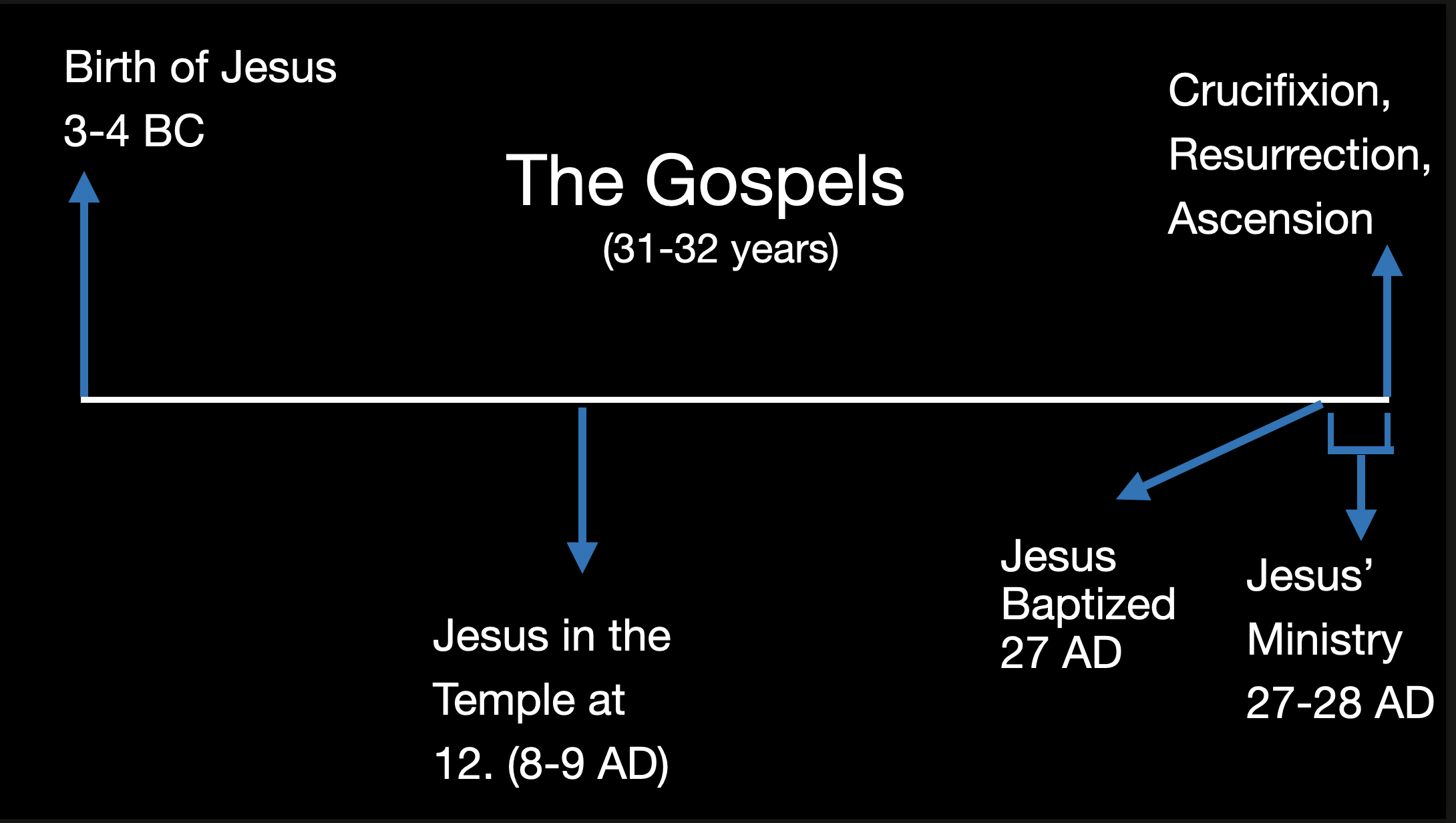
Before we continue in Acts, I want to talk about the timeline.  (You will not find universal agreement on the actual dates, but it is the division of time I want you to see here.)   The Gospels begin with the story of John the Baptist’s and Jesus’ birth around 4 BC and end with his crucifixion, resurrection, and ascension in 28 AD, covering 31-32 years.  But other than the birth narrative and the visit to the temple at 12 years old, everything else in the Gospels happens in this 1 1/2 year or 70-week period.  When we covered the ministry of Jesus, we went pretty much week by week, following him through the Gospels in real time.

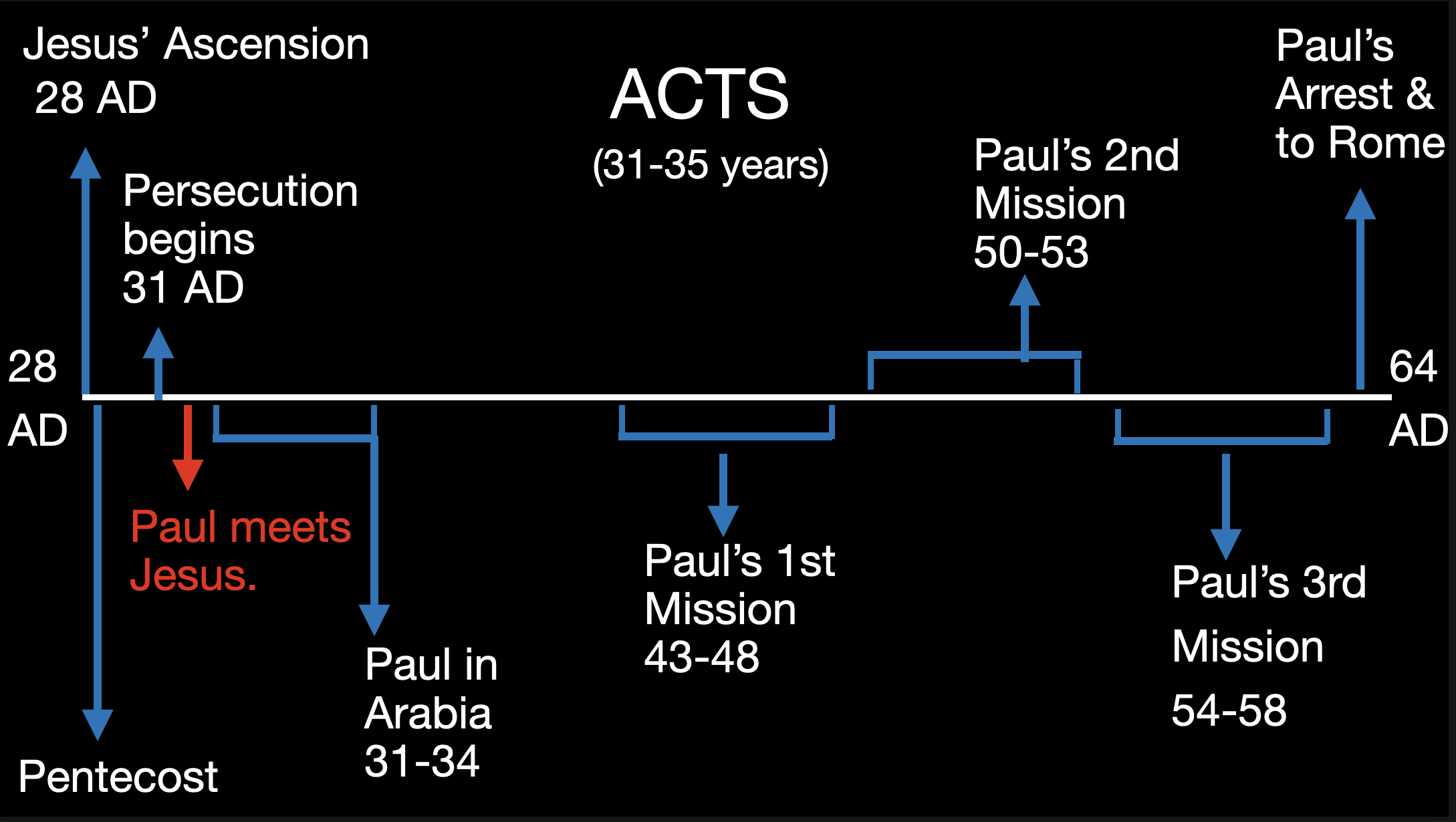
The Timeline for Acts is also around 30-35 years, but the action is not concentrated at a single point.  Acts begins with the Ascension of Jesus and Pentecost, which would have been in June of 28 AD. So we have covered the first 8.5 chapters of Acts in the past 6 months, but that encompasses 2-3 years.  By the 9th chapter of Acts, it is now 2-3 years since Jesus’s crucifixion, resurrection, and the events of Pentecost.  The church has grown in numbers, and persecution has begun.  The rest of Acts covers the 3 years Paul spent in Arabia and his three missionary journeys.

Again, today, in Acts 9, we are at the red arrow above.  Saul met Jesus near Damascus and had been in the city for 3 days.

Acts 9:10-19   Now there was a disciple at Damascus named Ananias. Yehovah said to him in a vision, “Ananias.” And he said, “Here I am, Lord.” And Yehovah said to him, “Rise and go to the street called Straight, and at the house of Judas look for a man of Tarsus named Saul, for behold, he is praying, and he has seen in a vision a man named Ananias come in and lay his hands on him so that he might regain his sight.” But Ananias answered, “Lord, I have heard from many about this man, how much evil he has done to your saints at Jerusalem. And here he has authority from the chief priests to bind all who call on your name.” But Yehovah said to him, “Go, for he is a chosen instrument of mine to carry my name before the Gentiles and kings and the children of Israel. For I will show him how much he must suffer for the sake of my name.” So Ananias departed and entered the house. And laying his hands on him he said, “Brother Saul, Yehovah Jesus who appeared to you on the road by which you came has sent me so that you may regain your sight and be filled with the Holy Spirit.” And immediately something like scales fell from his eyes, and he regained his sight. Then he rose and was baptized; and taking food, he was strengthened.

“Now there was a disciple named Ananias.” (Acts 9:10)   Where did this disciple come from?  Saul is on his way to Damascus to find the followers of Jesus who escaped from Jerusalem.  But Ananias is not one of this group, for in his conversation with Jesus, he says this:

Acts 9:13   But Ananias answered, “Lord, I have heard from many about this man, how much evil he has done to your saints at Jerusalem.

He may be a new follower of Jesus through the gospel spread by these escapees from Jerusalem, but it is more likely he has been a follower of Jesus in Damascus for some time.   Saul says in his personal account of the story in Acts 22:

Acts 22:12   And one Ananias, a devout man according to the law, well spoken of by all the Jews who lived there…

Notice that Ananias is considered a devout man by all the Jews in Damascus.  And we have already seen that he was a disciple of Jesus.  Don’t miss that followers of Jesus can worship alongside Jews in the synagogue.  And these Jews consider the Christians devout, because the Christians are keeping the law.  Again, these followers were not changing religions when they went from the Judaism they grew up in to a belief that their Jewish Messiah had come in Jesus. 

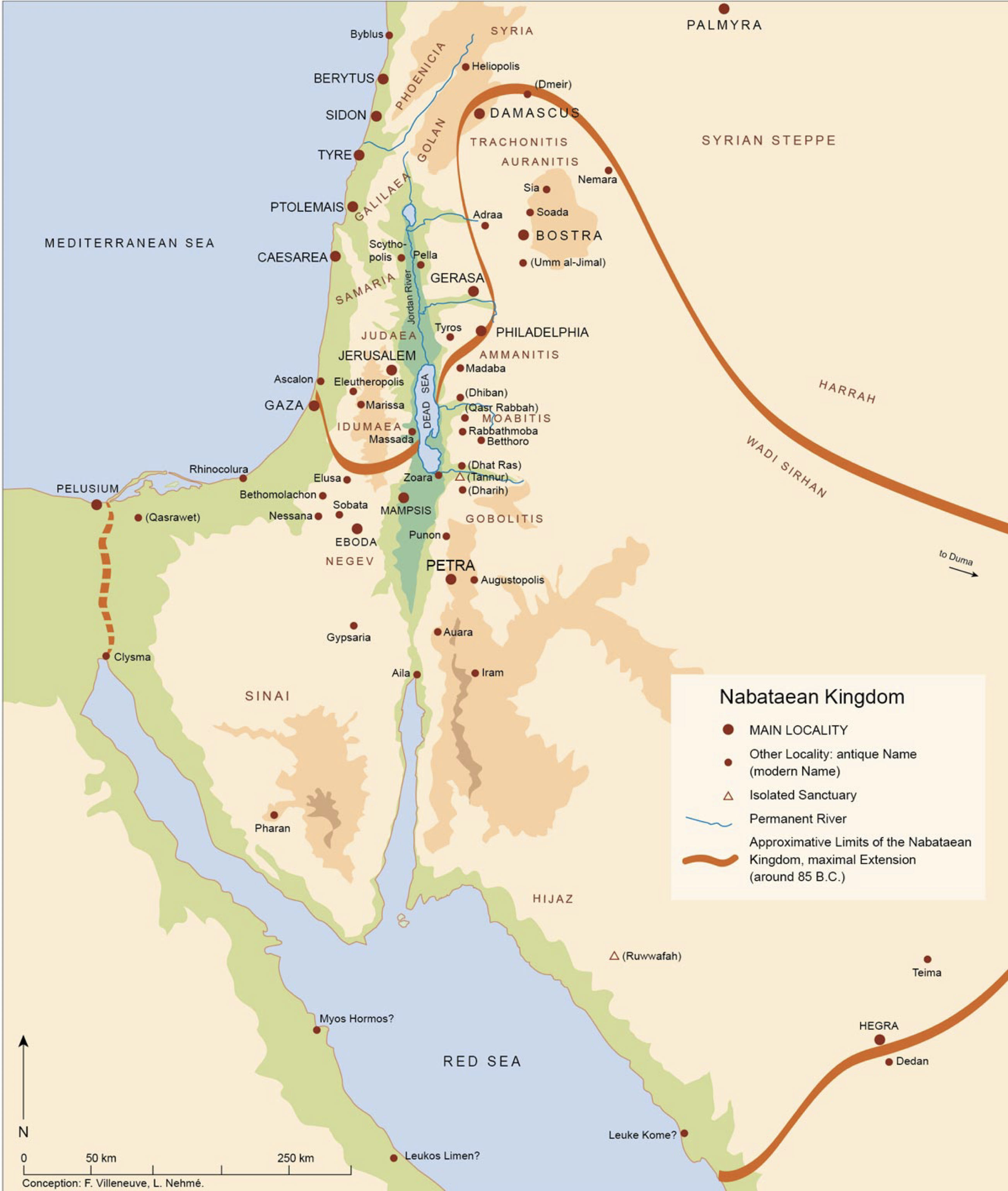
So somehow, Ananias became a follower of Jesus some time ago.  But Jesus never went to Damascus.  Damascus is a long way from anywhere Jesus went.  The closest Jesus came was Caesarea Philippi (about 40 miles away), and there was no public ministry by Jesus there that we have recorded.  

But the message spread through people whose names have never been recorded.  Someone shared the gospel of Jesus with Ananias, and now God has chosen him to correct Saul’s vision problem.  We are not told he is a leader in the church.  He has no title.  He is just an ordinary guy worshiping with all the Jews in the synagogue every Sabbath.  And they all speak well of him.  He is a man of character, well respected by all. 

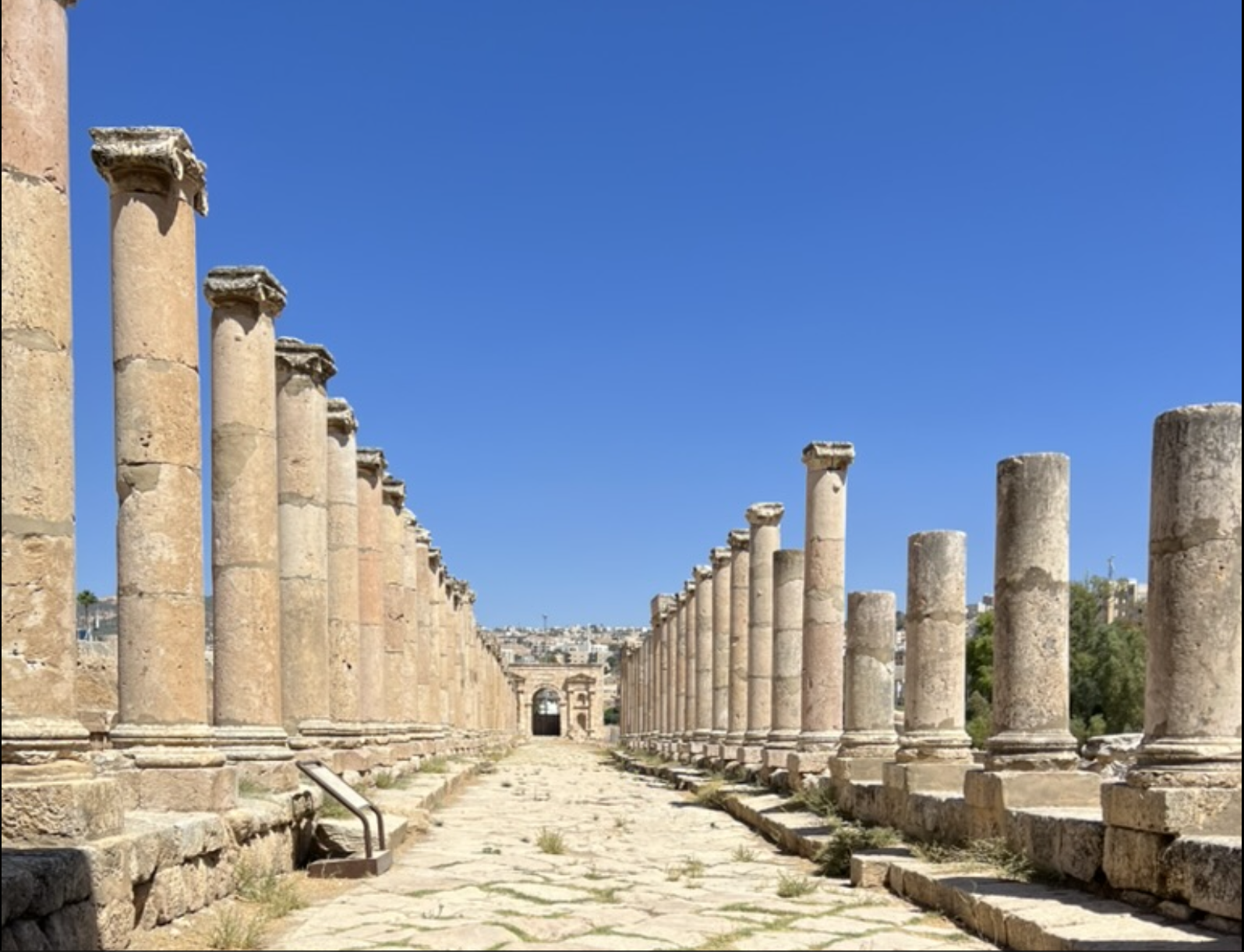
God calls this ordinary man, Ananias, to do a task.   Go to Judas’ house on Straight Street to see a man for me.  The “street called straight” would be the major east-west street in the center of the city, called the decumanus maximus.  (The major North-South street is called the cardo.) You can see this street in the old town of Damascus today.  But in Ananias’ day, it would have looked more like this colonaded Roman decumanus (Straight Street) in Jerash, Jordan.

In Saul’s day, there would have been houses and shops all along these streets.  So God tells Ananias to go to the home of Judas to see a man named Saul, who has been praying, and who God had shown in a vision that you are coming.  God has really set the table for Ananias.  Have you had a witnessing experience like this: God performed a miracle to get someone’s attention, told you that you personally were coming to help them, and then told you exactly where to go?  I wonder if it wouldn’t happen more if we made a practice of listening for God’s voice.  

But this is no ordinary person that Ananias is being sent to.  Imagine Ananias’ surprise: “His name is Saul?   Saul from Tarsus?    Wait a minute!   You mean the guy who put all the Jesus followers in prison in Jerusalem, the guy who chased some of them all the way up here to tie them up and take them back there to be beaten or worse?    And you want me to go see him?” Well, to cut to the end, Ananias does go; he lays hands on Saul, and his blindness is healed, and Saul is given his call to be a minister.

Two things I want us to see in this story.  First, that God uses ordinary people like Ananias to do his work. Secondly, that God works through very unexpected ways, seeing the potential in people that we often do not see.  And I want to illustrate that by comparing this story in Acts to a very similar story in 1 Samuel. So let’s take a look at 1 Samuel 16:1-13.  Remember 2 weeks ago when we talked about King Saul?  He disobeyed God so often that God fired him as king.  So God tells Samuel to anoint someone else to be king.

1 Samuel 16:1-13   Yehovah said to Samuel, “How long will you grieve over Saul, since I have rejected him from being king over Israel?  Fill your horn with oil, and go. I will send you to Jesse the Bethlehemite, for I have provided for myself a king among his sons.” And Samuel said, “How can I go? If Saul hears it, he will kill me.” And Yehovah said, “Take a heifer with you and say, ‘I have come to sacrifice to Yehovah.’ And invite Jesse to the sacrifice, and I will show you what you shall do. And you shall anoint for me him whom I declare to you.

Samuel did what Yehovah commanded and came to Bethlehem. The elders of the city came to meet him trembling and said, “Do you come peaceably?” And he said, “Peaceably; I have come to sacrifice to Yehovah. Consecrate yourselves, and come with me to the sacrifice.” And he consecrated Jesse and his sons and invited them to the sacrifice.

When they came, he looked on Eliab and thought, “Surely Yehovah’s anointed is before him.” But Yehovah said to Samuel, “Do not look on his appearance or on the height of his stature, because I have rejected him. For Yehovah sees not as man sees: man looks on the outward appearance, but Yehovah looks on the heart.” Then Jesse called Abinadab and made him pass before Samuel. And he said, “Neither has Yehovah chosen this one.” Then Jesse made Shammah pass by. And he said, “Neither has Yehovah chosen this one.” And Jesse made seven of his sons pass before Samuel. And Samuel said to Jesse, “Yehovah has not chosen these.”

Then Samuel said to Jesse, “Are all your sons here?” And he said, “There remains yet the youngest, but behold, he is keeping the sheep.” And Samuel said to Jesse, “Send and get him, for we will not sit down till he comes here.” And he sent and brought him in. Now he was ruddy and had beautiful eyes and was handsome. And Yehovah said, “Arise, anoint him, for this is he.” Then Samuel took the horn of oil and anointed him in the midst of his brothers. And the Spirit of Yehovah rushed upon David from that day forward. And Samuel rose up and went to Ramah.

In both stories, God chooses one of his followers to anoint someone who will become a great leader.  He chose the prophet Samuel to anoint David and an ordinary man, Ananias, to anoint Saul.  Notice that both of these choices for future leaders are people who would not have been chosen by popular vote at the time.  David was the youngest son of an unremarkable family in a tiny town.  He had no political experience, no political connections, and no political aspirations.  His family was not wealthy.  Anyone alive then would tell you there was no good reason to choose this shepherd boy as king.  Yet he was God’s choice.  David had the one requirement God seeks – obedience. 

Because anything else, God can provide.  You don’t have the wealth?  God can take care of that.  You have no experience?  God has already supplied you in ways you don’t even realize, and he will continue to give you what you need.  You don’t have the right connections?  God knows everyone you need to know.  Rest assured that the creator and sustainer of this universe is quite capable of supplying all your needs.

Philippians 4:19 “And my God will supply every need of yours according to his riches in glory in Christ Jesus.”

But as we discussed several weeks ago, there is one thing God can not supply — your obedience.  God’s plan for our lives will fail if we are not obedient.  Notice I said his plan for your life will fail if you fail him.  But God will see to it that His plan is carried out.  He will give you another chance, or he will find someone else who is willing to work with him.   

Over and over in the Bible, God chooses people to do a task for which they are not fully equipped.   David does not have the prerequisites to become a king.  At the burning bush, Moses gives God all the reasons he is a poor choice.  Moses provides all his excuses, and God answers him, “I will be with you, and I will empower you.”  None of the young men Jesus chose to be disciples would have been selected by any other rabbi of the day.   Poor untrained fishermen, rash impetuous Peter, a tax collector hated by everyone, a zealot?

As with Ananias, God isn’t looking for anyone exceptional.  He doesn’t choose the wisest or the richest or the smartest.   And Saul of Tarsus … he was the one in charge of hunting down and punishing any followers of Jesus.  If you were choosing someone to be the greatest missionary of the first century and the writer of 1/4 of the New Testament, he would have been the unanimous last choice.  What do we learn from this?  Don’t judge people as you see them.  What did God tell Samuel when Samuel thought he had found the best choice for king among Jesse’s boys? 

1 Samuel 16:7   Do not look on his appearance or on the height of his stature, because I have rejected him. For Yehovah sees not as man sees: man looks on the outward appearance, but Yehovah looks on the heart.

We have to learn not to trust our own perception of people, because we tend to see only the surface, while God looks at the heart.  In the same way, we are not to trust our own judgment of right and wrong, because our vision is limited.

The first sin in the Bible was when Adam and Eve decided that the fruit looked okay to them.   They said, “I don’t see anything wrong with this fruit.”  But the sin was that they were not to decide what is right or wrong.  Only God can determine what is good and what is evil.  The minute we begin asking ourselves if something is good or bad, we have sinned.  The correct question to ask is, “Does God say this is good or bad?”  And it is the same with judging people.  It is not up to Samuel to decide which of Jesse’s sons would make a great king.  That is for God to choose, because he is God and we are not.  Isaiah said it this way:

Isaiah 55:8-9  “For my thoughts are not your thoughts, neither are your ways my ways, declares Yehovah.  For as the heavens are higher than the earth, so are my ways higher than your ways and my thoughts than your thoughts.

God is brighter than any of us.  And the level that he thinks about things is as much higher than our level of thinking as the sky is higher than the ground.  We are stuck thinking earthly, while God thinks heavenly.  So we should not be surprised when God does things very differently from the way we would.

This was a problem for the religious leaders in Jerusalem with Jesus.  No one would choose a country boy from the podunk town of Nazareth to be the Messiah.  He was not from the right family.  He had no formal rabbinic training. He did not follow all of their traditions.  He didn’t even spend much time in Jerusalem, but mainly stayed in the sticks up in Galilee.  He was nobody’s choice.  But God chose to send him specifically this way.  And part of the reason is that God wanted to show us what really matters.  

Search the Scriptures.  You will see God using unconventional methods and people no one would choose to get the job done over and over.   Say it is 1400 BC, and you want to take the most heavily defended fortified city in the world?  Not a single General in the Pentagon would come up with this strategy:   Take no weapons but trumpets and walk around the city seven times, and shout.   But that was how God had the Israelites take Jericho.

God wants Israel to defeat the army of Midian. How does he accomplish that?  First, He chose this unknown guy as a leader for the people.  A person you would have never selected because he is so scared of the Midianites that he’s hiding underground to thresh his wheat.  And then God looks at the Midianite army with over 130,000 soldiers, and then at Gideon’s army with his 32,000 soldiers, and He says, “Okay, Gideon, they outnumber you 4 to 1.  You clearly have too many soldiers, so send most of them home.”  “Okay, now you have 300 soldiers against their 130,000; they outnumber us over 400 to 1. That is much better, God says, I like those odds.

The children of Israel escape from Egypt, but Pharaoh decides to pursue them.   The Israelites are trapped by a body of water behind them, and the Egyptian army is charging at them with hundreds of chariots and the finest weapons of the day, while they have no weapons at all.  And God says, “Now we have the Egyptians right where we want them.”  Why does God consistently want to accomplish his mission with the odds stacked so high against his people? Paul answered this question in one of his letters to the Corinthians:

1 Corinthians 1:26-2:1 (NIV)   Brothers and sisters, think of what you were when you were called. Not many of you were wise by human standards; not many were influential; not many were of noble birth. But God chose the foolish things of the world to shame the wise; God chose the weak things of the world to shame the strong. God chose the lowly things of this world and the despised things—and the things that are not—to nullify the things that are, so that….

“So that…”  Wait a minute.  Slow down here.  We don’t often get explanations of why God does things.  (That is probably because we are not able to understand the explanations, much like my parents telling 3-year-old me why I shouldn’t cross the street by myself.)  So here comes the why:

…so that no one may boast before him. It is because of him that you are in Christ Jesus, who has become for us wisdom from God—that is, our righteousness, holiness, and redemption. Therefore, as it is written: “Let the one who boasts boast in the Lord.”

God does this so that no one can boast, saying, “Look what I did.”  Do you think any of Gideon’s 300 soldiers went home after that battle and bragged to their wives about how they fought so well and defeated the 130,000 Midianites?  Nobody would believe them.  God fixed it so everyone would know He won the battle.  He defeated the Egyptians in the Sea of Reeds.  Everyone left those situations praising God and boasting of God’s power and his victory.  Salvation – whether it is deliverance from the enemies of this world or deliverance from the enemy of sin and death, salvation has always been about what God does; it is not of our works, lest any man should boast.  Paul repeats it:

Ephesians 2:8-9   For by grace you have been saved through faith. And this is not your own doing; it is the gift of God, not a result of works, so that no one may boast.

See, soldiers of Gideon, it was by God’s grace you were saved.  Hey Israelites strolling through dry ground between walls of water, guess what?   God did this, and you didn’t do anything to deserve it; he did it out of his chesed (his loyal covenant love and grace).  Hey church member, you can’t earn your salvation either.  Your obedience is your way of telling God you love Him.

I sat in a deacon’s meeting one day and listened to a discussion about whether our church should join with other local churches to form a mission to the poor and marginalized of our county.  And the debate went as you would expect, with men raising reasonable questions, such as: “Do we have the financial resources to participate in this?”  “Do we have the people who will volunteer to fill the roles needed?”  “Is this something we are capable of doing?”  “How long a commitment would we be making?”  There were 20 minutes spent analyzing the situation as a CEO would consider the pros and cons of opening a new business location, or as a general would consider the options for fighting a battle.  I asked the question that I thought was the only important one: “But does God want this to be done?”

But the discussion soon returned to the logistics. Someone actually said, “Well, if God wanted us to do it, He would have already given us the resources to do it.”   And in the end, it was decided that we would not participate in the project.  Without this large church’s support, the plan for that mission fell apart. And I believe that day, God’s plan was temporarily delayed by our disobedience.  But God wanted this mission to happen, so he found another church that would do it.   And it became a very successful outreach to many poor and marginalized in our community for many years.  The idea that was missed in that meeting was that God calls and then, as you go about being obedient, He equips you for the task, supplying your every need.  

If we only attempt to do the things we currently have the resources for, we have no faith.  If we only attempt tasks we are capable of doing, there is no need for God to join us.  We complete the task, but there is no growth in our faith, no growth in our relationship with God.  If we are called to attempt impossible tasks, then we leave room for God to join with us.  We do the task under his power, not our own. With resources He supplies from His riches.  That experience deepens our faith in God and strengthens our relationship with God.  Of course, God could do all these things without us.  He could have rescued the Israelites without Moses; He didn’t need Moses’s staff to part the sea or win a battle.  But he chooses to call us alongside him to do the work because he wants our relationship with him to grow.  

We looked at two stories of two different Sauls.  Acts 9 of Saul and Ananias, and 1 Samuel 16, of King Saul and Samuel.  The Hebrew word Shaul is a verb meaning ‘to ask’. As a name, it means ‘one who is asked’.  Saul in the Old Testament was asked to be king of Israel.  He was asked to be a king who was obedient to God, who would lead the people in the way God directed.  Saul in the New Testament, was asked by God to be a leader, a missionary to Jews, Gentiles, and kings.  Two Sauls, one a colossal failure and the other recorded in the Bible as one of God’s best servants, and the difference is obedience.

And these two stories illustrate the unlikely people God chooses to do his work.  We see them as unlikely because we don’t see them as God sees them.  The people in Acts 9, including Ananias, looked at Saul and saw a threat.  A man who could cause them harm.  What did God see when he looked at Saul?   A man who wanted to fight for God.  A man who was not comfortable just complaining about a problem but was willing to give 100% to solve a problem. A man of high commitment and zeal.  Sure, Saul was wrong, but in God’s thinking, what a fantastic missionary a man like this could be if he turned toward the truth.  We need to see people with God’s eyes. 

Where we see threats and danger, God sees purpose and commitment.  Where we see Insignificance, God sees potential.  Where we see impossibility, God sees opportunity to grow our faith.  And where we see broken pasts, God sees redeemed futures.

Let us seek to see the world through God’s eyes, not our own.  Let us see people as God sees them, looking for the potential within them.  And let us always be open to respond obediently to God’s call on us to do things that are beyond our ability, for then we partner with Him and grow in Him. 

December 10, 2025 –  Shalom, and the War You Didn’t Realize You Were Fighting— Acts #24

December 10, 2025 –  Shalom, and the War You Didn’t Realize You Were Fighting— Acts #24
Acts 9:1-9

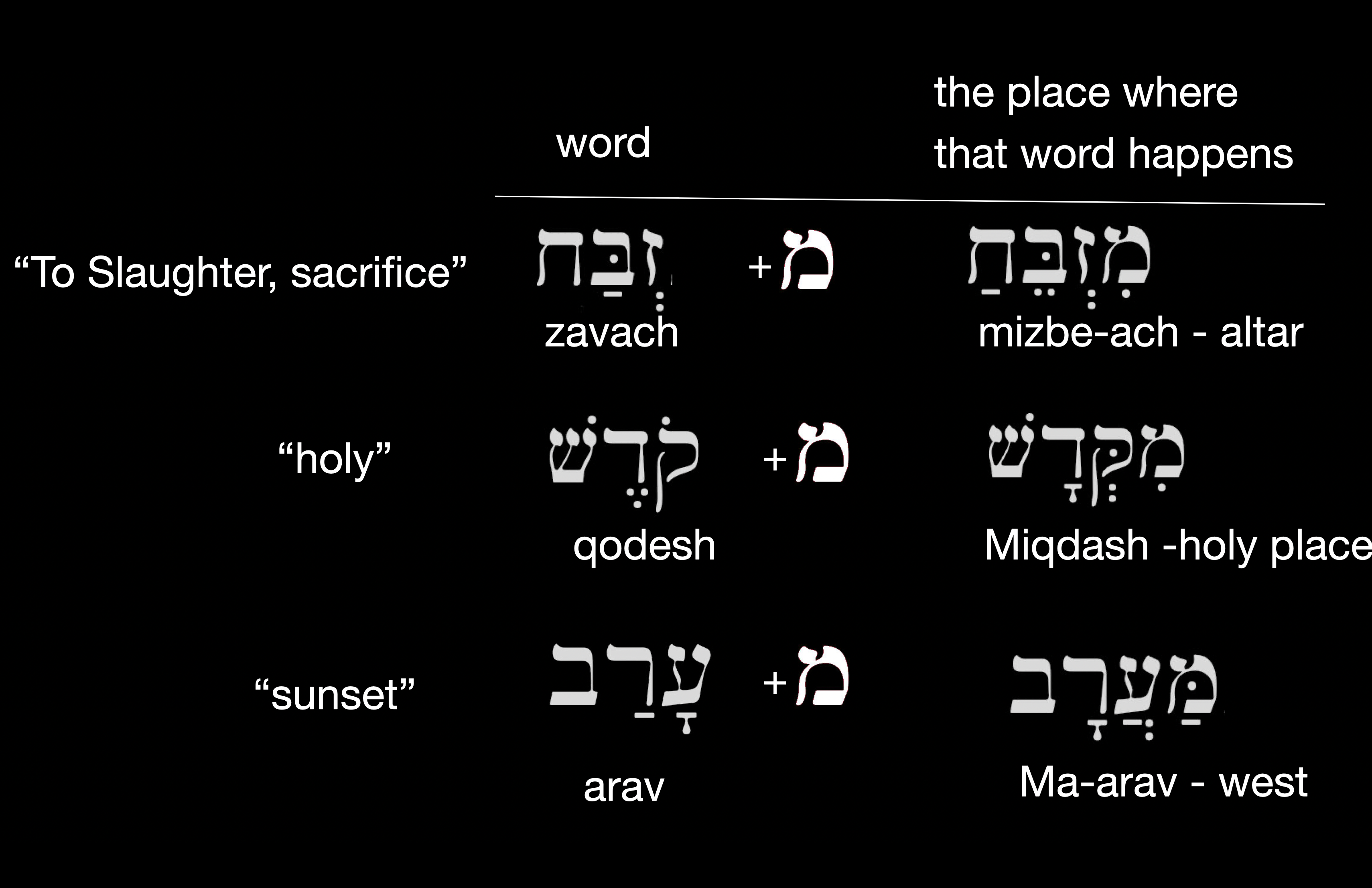
Words in Hebrew have very rich meanings. Last time, we discussed the Hebrew word ‘shema’Shema means listen, but more than listen, it means listen and obey.  Obedience is not optional.  If you did not obey, then you did not hear.  Jesus said, “He who has ears to hear, let him hear.” You will find a version of this 15 times in the New Testament. That isn’t just a poetic phrase Jesus threw out there.  He isn’t speaking English.  It is about shema.  Jesus is talking about obedience.   “If you hear what I am saying, then be obedient.”

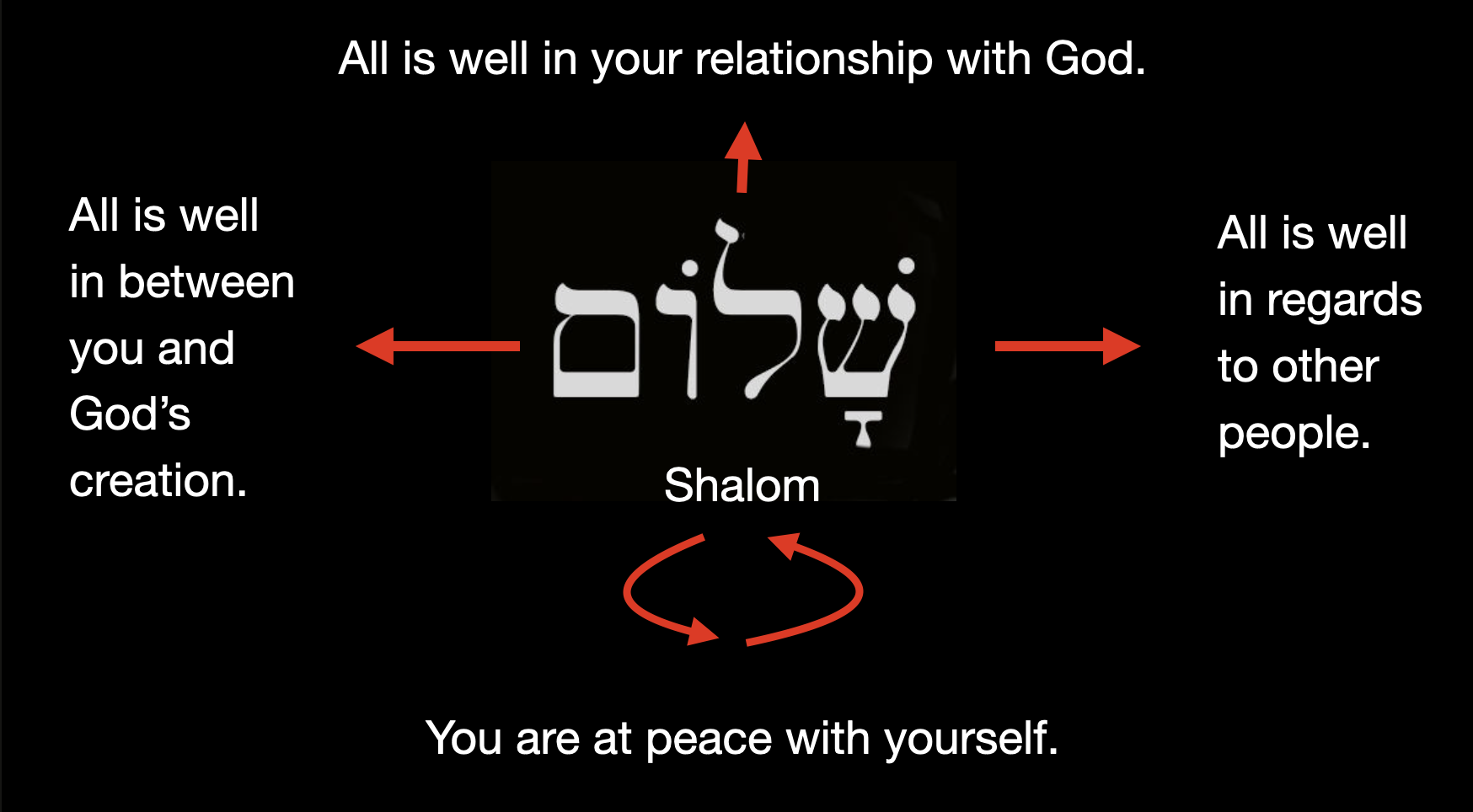
Today, we look at the word Shalom.  It begins with the same letter, ש (shin).  It means peace.  And peace is the candle that many of you lit this past week for Advent.  But like the Hebrew word shema, this word has a richer meaning.  Shalom means more than our concept of peace.  It carries the idea of wholeness, that all is well, that all is well with you, and with your relationship with your neighbor, and in your relationship with God.

  In Acts 8, Shalom was disturbed due to this great persecution of the followers of Jesus.

Acts 8:3  But Saul was ravaging the church, and entering house after house, he dragged off men and women and committed them to prison.

All was not well.   And when this persecution hit hard, as we discussed the last few weeks, the people scattered.  Philip ended up in Samaria.  Some went further north up to Damascus in Syria.  That brings us to chapter 9.

Acts 9:1-9   But Saul, still breathing threats and murder against the disciples of the Lord, went to the high priest and asked him for letters to the synagogues at Damascus, so that if he found any belonging to the Way, men or women, he might bring them bound to Jerusalem. Now, as he went on his way, he approached Damascus, and suddenly a light from heaven shone around him. And falling to the ground, he heard a voice saying to him, “Saul, Saul, why are you persecuting me?  And he said, “Who are you, Lord?” And he said, “I am Jesus, whom you are persecuting. But rise and enter the city, and you will be told what you are to do.” The men who were traveling with him stood speechless, hearing the voice but seeing no one. Saul rose from the ground, and although his eyes were opened, he saw nothing. So they led him by the hand and brought him into Damascus. And for three days he was without sight, and neither ate nor drank.

We have all heard news reports of rare incidents in which police mistakenly raid the wrong house.   Imagine waking up in the middle of the night to the sound of your front door being bashed open, a flash-bang grenade going off in your living room, and then a heavily armed SWAT team entering your home.  Unfortunately, it happens.  Sometimes the tip the police received was incorrect, or the address was incomplete, or a simple error was made. The police did not mean to raid the wrong house.  They had warrants signed by a judge granting them authority to enter the home at that address.  They were well-trained.  They were putting forth their best effort in the raid.  They were highly motivated to apprehend the suspect and protect the public. But they were utterly wrong.

That is what is happening with Saul in Acts 9.  Saul has papers from the high priest authorizing him to go into homes, arrest people, and bring them back to Jerusalem.  Saul is one of the best-trained scholars of scripture alive in his day.  He is giving 100% effort to rid the country of these Jesus followers, to protect the public from heresy.  He is highly motivated, going into homes and dragging out the followers of this splinter group.  And he is entirely wrong.  

In Saul’s mind, he is a soldier defending God’s honor. He is cleaning up Israel. He is protecting the faith. If anyone asked Saul, “Why are you doing this?” he would have said, “Because I love God!”  But he is 100% wrong.  Because sincerity does not make you right, commitment does not equal correctness, and power does not equal purity.   Legal process does not equal morality, nor does strength of conviction make you holy.   Passion without truth is dangerous.  

God has to intervene.  So he throws his own flashbang grenade at Saul’s feet, knocking him to the ground and blinding him.   And the voice from heaven asks Saul, “Saul, Saul, why are you persecuting me?”  Not why are you persecuting these people, or why are you persecuting these followers, but why are you persecuting me?  Then Saul asks an essential question: “Who are you, Lord?”

At this point, Paul is aware he is not dealing with humanity.  This blinding flash of light was nothing any human could produce.  Is he dealing with an angel, or God himself?  So he asks, “Who are you, Lord?  (Lord being the equivalent of us saying a very respectful “sir”.)  The voice responds: “I am Jesus, whom you are persecuting.”  This is a lot for Saul.  First, the voice is Jesus, whom he had been told was dead, crucified as a criminal, a blasphemer.  But instead, Jesus is very much alive.  And Jesus wields the power of God.  And Saul finds that he is not rescuing people from a heresy, but waging war against God himself.  So God gives Saul a three-day timeout.  Three days to consider all of this.  Three days when he can not see.  And he fasts from food and drink.  And you can bet blind Saul prayed, and prayed hard.

Saul thought he was waging war with these heretics who had disturbed the peace of Jerusalem.  But it was Saul who was disturbing the shalom of God by waging this war.  This story is an example of a great paradox of the message of Jesus.  As many of you read in our Advent reading this past week, the prophets say that the Messiah will come as the Prince of Peace.

Isaiah 9:6   For unto us a child is born, to us a son is given; and the government shall be upon his shoulder: and his name shall be called Wonderful, Counsellor, Mighty God, Everlasting Father, Prince of Peace.”

The Messiah is the ‘Prince of Peace.’  And the first to hear the news of Jesus’ birth were the shepherds in the field with their sheep, who heard it from the angels.  We sing it in the hymn, “It Came Upon the Midnight Clear”:

“It Came Upon the Midnight Clear, 
That glorious song of old.
From angels bending near the earth,
To touch their harps of gold;
“Peace on the earth, goodwill to men, 
From Heav’n’s all-gracious King.”

Isaiah said He is the ‘Prince of Peace’.  The angels sang that he comes to bring peace on earth.  But then how do we reconcile what Jesus says here:

Matthew 10:34-36   Do not think that I have come to bring peace to the earth. I have not come to bring peace, but a sword. For I have come to set a man against his father, and a daughter against her mother, and a daughter-in-law against her mother-in-law. And a person’s enemies will be those of his own household.

 How do we reconcile these two passages?  The peace that Jesus brings is first and foremost peace with God.  True shalom with God.  Before Jesus, we had no peace with God.  Paul says it this way:

Romans 8:7-8  “For the mind that is set on the flesh is hostile to God, for it does not submit to God’s law; indeed, it cannot. Those who are in the flesh cannot please God.  

When you are in your sin, there is hostility towards God.  You are living on the king’s land, but you do not follow the king’s rules.  You are a rebel.  You are waging war with God.  The only way to end your rebellion is to ask for forgiveness, which God freely grants through Jesus. And then to begin to live a different life that is not in rebellion to the king’s rule, but to follow him in obedience.  As Paul says in the preceding verse:  

Romans 8:6 “For to set the mind on the flesh is death, but to set the mind on the Spirit is life and peace.

You can choose peace with God (shalom) or hostility towards God.  There is no middle ground.  See this again in James:  

James 4:4 (NLT)  Don’t you realize that friendship with the world makes you an enemy of God? I say it again: If you want to be a friend of the world, you make yourself an enemy of God. 

You have to choose.  Jesus told his disciples that peace with God can be theirs:

John 14:27 (NLT)   I am leaving you with a gift—peace of mind and heart.  And the peace I give is a gift the world cannot give.  So don’t be troubled or afraid.

And the Bible is consistent.  For though the carol said “it came upon the midnight clear,” “Peace on the earth, goodwill to men, from Heaven’s all-gracious King.”  That is not what the angels said.  Here is what the angels actually said:

Luke 2:14 “Glory to God in the highest, and on earth peace among those with whom he is pleased! 

Wait, there is a catch to that peace with God the angels sang about.  The only ones who get peace are those with whom God is pleased.  Those who are in right relationship with him.  Those who follow his son Jesus in salvation and obedience.  They have peace, shalom, with God. Everyone else is still at war with God.  So let’s see that in a carol that gets it right, “Hark! the Herald Angels Sing”.  

Hark! The herald angels sing,  
Glory to the newborn King!  
Peace on earth, and mercy mild, 
God and sinners reconciled.

Peace on earth is tied to this:  God and sinners reconciled.  There is no peace for us with God until we are reconciled to him through the forgiveness of our sins and the promise we make to follow him as our Lord and live in obedience to him.  

Now look what happens with Saul.  Saul discovers on the Damascus Road that he and his SWAT teams are raiding the wrong house.  He is an enemy of God.  Once Saul stops fighting Jesus, he begins an incredible journey of reconciliation.  After he is reconciled to God, he will eventually seek fellowship with the same followers he persecuted.  And he will become a leader in this fellowship, a missionary of reconciliation.

Paul calls peace a fruit of the Holy Spirit living within us, and he says:

Romans 12:18 If possible, so far as it depends on you, live peaceably with all.

But none of that can happen until his heart is made right with God.  Jesus tried to make this clear to his disciples in John 16:

John 16:33  I have said these things to you, that in me you may have peace…

You may have shalom, peace with God.  You are at peace with God when you are in a right relationship with Him. But that is not the end of the verse.  Keep reading to see the paradox.

John 16:33  I have said these things to you, that in me you may have peace.  In the world, you will have tribulation.

If you don’t understand shalom, if you don’t understand the kind of peace Jesus is talking about, then this verse makes no sense.  “Which is it, Jesus, peace or tribulation?”  But when you have peace with God, you are then at war with the world.  You will have tribulation.  And now, finish the verse to see the best news.  

John 16:33  I have said these things to you, that in me you may have peace. In the world, you will have tribulation.  But take heart; I have overcome the world.

Your enemy, the world, has already been defeated.  The way of this world, what the Bible calls the way of the flesh, was defeated on the cross of Jesus.  Sin, which kept us enemies of God, was defeated, so now we can be friends with God.  And then death was defeated.  Jesus has overcome.  The outcome of the war has been decided.  But the battle still rages within us as long as we persist in disobedience. 

Peace can be ours now if we seek Him and obey Him.  And complete peace, complete shalom, will exist in this world one day.   The Prince of Peace will reign over all, and there will be no more enemies.  Come, Lord Jesus, come.  

Saul’s transformation begins with two simple questions: the first, “Who are You, Lord?”  This is the most critical question.  Who is Jesus to Saul at this moment of the blinding light?  He is no one to Saul, just a teacher whom the Romans killed.  But it is in this moment that Saul realizes who Jesus really is, the living Son of God.  And this makes all the difference for Saul.

Then the second question:  “What do you want me to do?” Now that Saul knows who Jesus is, he wants to listen to Jesus and obey him.  This is shema, hear and obey.  And that leads to peace with God.   Shema leads to shalom.  You have to shema (listen and obey) before you find shalom, peace with God.  Peace with God requires listening and obeying.  In Acts 8, Saul’s relationship with God is like a child pulling on a rope in a tug-of-war against his father.  He pulls with all his strength until he is exhausted. It is hopeless.  Finally, the father smiles at the child.  And the child puts the rope aside, and the father embraces the child. The child’s peace didn’t come from winning the battle—it came from surrendering into the father’s arms.   It is here in Acts 9 that Saul drops the rope and surrenders to Jesus. So must we.

It was Christmas Day, and Henry Wadsworth Longfellow was listening to the church bells ring out, representing the angels’ proclamation of peace on earth, goodwill to men.  But Longfellow had no peace.  It is 1863.  He recently lost his wife in a tragic accident.  And his son, Charles, was away fighting in our country’s brutal Civil War. And in the midst of this turmoil, he pens these words:

I heard the bells on Christmas Day
, Their old, familiar carols play,
And wild and sweet
The words repeat
Of peace on earth, goodwill to men!

And thought how, as the day had come,
The belfries of all Christendom
Had rolled along
The unbroken song
Of peace on earth, goodwill to men!

Till ringing, singing on its way,
The world revolved from night to day,
A voice, a chime,
A chant sublime
Of peace on earth, goodwill to men!

Then from each black, accursed mouth
The cannon thundered in the South,
And with the sound
The carols drowned
Of peace on earth, goodwill to men!

It was as if an earthquake rent
the hearthstones of a continent,
and made forlorn
the households born
of peace on earth, goodwill to men!

And in despair I bowed my head;
“There is no peace on earth,” I said;
“For hate is strong,
And mocks the song
Of peace on earth, goodwill to men!”

Then pealed the bells more loud and deep:
“God is not dead, nor doth He sleep;
The Wrong shall fail,
The Right prevail,
With peace on earth, goodwill to men.”

God is not dead, nor doth he sleep.  Jesus is indeed the Prince of Peace.  Jesus wants us to have that shalom with him, that right relationship that comes with His forgiveness and salvation.  The peace that comes by shema — listening to the voice of God and being obedient.  

This Christmas season, I want you to consider your peace with God.  How is that relationship?  Could it use more communication?  Could it use more obedience?  We earnestly seek the peace of God in our lives, even as we yearn for the day when God’s peace will reign supreme in this world.  We look forward to that day when God redeems the earth, that day when all is well.

December 3, 2025 –  Philip follows the Holy Spirit – Shema— Acts #23

December 3, 2025 –  Philip follows the Holy Spirit – Shema— Acts #23
Acts 8:26-40

Are you ready to be a disciple?

Shema – it means “listen” in Hebrew, but it means much more than “listen”.  Because in the Jewish culture of the Old Testament, listening implies obedience.  There is no concept of listening to God without being obedient.  It is just wrong; it is a sin.

This word is so important. It is the title and the first word of the prayer every Jewish person has prayed several times a day for thousands of years.  The prayer is a collection of passages from Deuteronomy.  And this is the first prayer Mary and Joseph taught Jesus as a small boy.  And he prayed this prayer every day.  And this concept of shema is critical to a follower of Jesus. 

We continue our story of Philip in Acts 8, and in this story, Philip shows us what it looks like to listen for God’s voice and obey without delay.  Through him, God brings salvation to a man who was seeking truth but didn’t yet know where to find it.

Acts 8:26-40   Now an angel of the Lord said to Philip, “Rise and go toward the south to the road that goes down from Jerusalem to Gaza.” This is a desert place. And he rose and went. And there was an Ethiopian, a eunuch, a court official of Candace, queen of the Ethiopians, who was in charge of all her treasure. He had come to Jerusalem to worship and was returning, seated in his chariot, and he was reading the prophet Isaiah.
And the Spirit said to Philip, “Go over and join this chariot.” So Philip ran to him and heard him reading Isaiah the prophet and asked, “Do you understand what you are reading?” And he said, “How can I, unless someone guides me?” And he invited Philip to come up and sit with him.
Now the passage of the Scripture that he was reading was this: “Like a sheep he was led to the slaughter and like a lamb before its shearer is silent, so he opens not his mouth.
In his humiliation justice was denied him. Who can describe his generation? For his life is taken away from the earth.”
And the eunuch said to Philip, “About whom, I ask you, does the prophet say this, about himself or about someone else?” Then Philip opened his mouth, and beginning with this Scripture he told him the good news about Jesus. And as they were going along the road they came to some water, and the eunuch said, “See, here is water! What prevents me from being baptized?” 
And he commanded the chariot to stop, and they both went down into the water, Philip and the eunuch, and he baptized him. And when they came up out of the water, the Spirit of the Lord carried Philip away, and the eunuch saw him no more, and went on his way rejoicing. But Philip found himself at Azotus, and as he passed through he preached the gospel to all the towns until he came to Caesarea.”

Philip was in Samaria experiencing revival.  Things were going great!  People were coming to know Jesus as their Messiah.  Lives were being changed.  Miracles were happening.  People were being healed.  Crowds were eager to hear the Gospel.  It was the perfect situation for a church leader.  Then God says, “Go south to the desert road.”  Everything is going great, so go to the desert.  How does that make sense?  Leave the crowds?  Leave success?  Leave the work God is blessing? For a desert road?   No preacher today with any sense would leave a place of great success and go to a deserted land.  (You notice preachers rarely get called to leave a big, successful church and go to a tiny, struggling church in the middle of nowhere.) That desert road led to Gaza.  Now that is a place that you probably wouldn’t want to go today.  It wasn’t much better in Philip’s day.  But God had an assignment for Philip, and Philip didn’t argue… he listened and obeyed.

Many of God’s most significant assignments begin with an interruption in routine and a disruption in comfort. Abraham is minding his own business at home, and God calls him to leave everything he knows.  Moses is tending sheep, just as he has done every day for the past 40 years.  He has a good life in Midian. He has no thoughts of ever returning to the country he was kicked out of.  But God interrupts his life and gives him a difficult task. Mary is engaged to be married.  It was an exciting time in her life. She was planning a wedding, getting everything ready to set up a household with Joseph.  And then God interrupts her in a significant way.

God’s task assignments often come with few details.  Now this can be frustrating at times.  We like to know the whole plan, including all the details, before we set out on a project.  We want to know how long it will last, how much it will cost, and what equipment we will need. But God only gave Philip step 1:   Rise and go toward the south to the road that goes down from Jerusalem to Gaza.    No mention of why.  No mention of what he would do there. But this is the way God usually works.  He rarely gives anyone the big picture up front.

We often miss this when we read the scripture in the psalms:

Psalm 119:105   Your word is a lamp to my feet… 

What is a lamp to my feet?  They didn’t have flashlights in those days.  They used oil lamps held by a string near their feet.  It provided just enough light for the next step.  They couldn’t see any further ahead.  And this is typically how God reveals his plans or tasks for us.  Just one step at a time.  That requires trust.  That requires faith.  

God sends a messenger to Philip.  (That is literally what the word translated ‘angel’ in our English Bibles means.  Both ‘angelos’ in Greek and ‘malach’ in Hebrew mean messenger.)  A few verses later in this passage, it says, “And the Spirit said to Philip…”  I am not sure that there is a big difference in these two statements of the delivery of God’s message to Philip.  In Jewish thought, there is little distinction, as seen in Acts 23:9.

Acts 23:9   Then a great clamor arose, and some of the scribes of the Pharisees’ party stood up and contended sharply, “We find nothing wrong in this man. What if a spirit or an angel spoke to him?”

God very rarely speaks through messengers who take human form.  And contrary to every painting you have ever seen, angels do not have wings.   Angels in human form are the least frequent way God sends messages.  He occasionally speaks through dreams or visions, but the most common way God speaks is through scripture. When you read the Bible, it is God’s word to you.  It is God speaking to you.  And we pray to converse with God.  Mark Batterson says that God most frequently speaks in whispers.  In his book, “Whisper”, Batterson notes that to hear someone whisper, you have to draw close to them.  God speaks to those who draw close.  And God speaks to those who listen.

But the question is: Do we give God a chance to speak to us?  

Do we allow God to speak in our prayer time?  Are we listening, not just talking?  Prayer is meant to be a conversation, not a monologue.  

When we read Scripture, do we allow time for God to speak? Tim Makie of the Bible Project frequently refers to the Bible as meditation literature.  It is not meant to be read like a cookie recipe.  It is not meant to be read like a newspaper or a history book.  It is intended to be read slowly and meditated upon.  Often God has something to whisper to you when you read scripture.  (That is when I most often hear God speak to me.)

Do we make space for God to speak to us?  If every moment of our life is filled with noise, we will miss the whisper of God.  Have you ever wondered why printed books have margins?  They could save a lot of paper if they just used all the space on the page instead of leaving an inch on all sides.  But pages printed to the edge are harder to read.  Your eyes can’t track the lines as well.  The margins are necessary.   And we need margin in our lives.  We fill every moment with constant input, from others or from a television or radio.  There is no blank time, no margin.  It is in quietness that the Spirit often whispers.

God speaks — but do we pause long enough to hear Him?

God speaks to the obedient.   You may not hear God speak because you weren’t obedient to the last request.  If Philip had not been obedient to God’s order to go to the desert, He would not have been in a position for the next instruction.  Only after he has followed God to the desert can he see the chariot, the Ethiopian, and the scroll.  You have to be obedient in the small things that you may not understand to be in a position to do the task God has for you.

But Philip follows God’s instruction to travel to the desert road.  Then he sees a man from south of Egypt, the land called Cush in the Old Testament.  (Currently known as northern Sudan.  This man is an official in the court of the Kandake (the queen mother).  (“The king of Ethiopia was venerated as the child of the sun and regarded as too sacred a personage to discharge the secular functions of royalty; these were performed on his behalf by the queen-mother, who bore the dynastic title Kandakē.”  NICNT  FF Bruce 

He has apparently been to the recent Jewish festival of Pentecost.  He is what they called a God-fearer.  He believes there is a god named Yehovah, and he is convinced of His power, but he has not fully committed. Today, we would call him a seeker.   He may have witnessed, or at least heard about, the commotion in the temple courtyard at Pentecost, and may have heard some talk about Jesus.  But he is going home confused.

God’s plan is good.  His timing is flawless.  Look at this: This person, who has been seeking God but not understanding everything, is alone on the road (he has time on his hands) and trying to read scripture about the Messiah.  He wants to understand it, but he needs help.  So God arranged Philip to be there at that moment.   It is a perfect plan.  But it all hinges on one thing—the obedience of Philip.

God’s great plan will fail if Philip does not follow it.  What happens is Philip says no?  If Philip says, “No way God is calling me to go down that desert road.  That road to Gaza is dangerous.  I am needed here in Samaria.  I am leading a massive movement here.  I am too important to the work being done here to waste that time on the road.  Notice that from Samaria, Philip will travel 50-70 miles on foot.  It will be a 3-4 day journey each way.  This will take Philip away from his work in Samaria for more than a week. And why?  He does not know any details.  The only answer he has to the question of why is obedience.

So what happens to that Ethiopian if Philip is not obedient?  Even if Philip quits on God, God is not going to quit on that Ethiopian.  God is not going to abandon a seeker.  What does God do when people fail to follow and mess up his plan?  Well, fortunately, there is a book that tells us precisely what  God does and how he deals with people.  So let’s look in the Old Testament to see two ways God accomplishes his plan when we are disobedient. 

1.  He gives the disobedient person another chance to follow.  Our example is Jonah.  God had a great plan for turning Nineveh, the capital of the nation of Assyria, to him.  It was up to Jonah to go and preach.  But Jonah was disobedient and got on a boat headed in the opposite direction.  Did God give up on Ninevah?  Did God give up on Jonah?  No.  God created a storm, and God ordained the sailors’ lots to tell them Jonah was the problem.  And then God rescued Jonah from drowning with a great fish.  And then God asks Jonah again, “So how about now, Jonah?  What do you think about going to Nineveh today?

God went to a lot of trouble to encourage Jonah to be obedient, to give him another chance.  God is forgiving of Jonah’s disobedience.  He shows Jonah great mercy.  Do you remember why Jonah didn’t want to go to Nineveh in the first place?  Because he knew God was merciful and forgiving.  Jonah knew that God would give the Ninevites a chance to repent.   And Jonah didn’t really want the Ninevites to have an opportunity for repentance.  They were his enemy.  But Jonah finally obeys and goes, and God shows mercy on the people of Nineveh.  And the end of the 4-chapter book teaches much about mercy to all people. But what would God have done if Jonah had not finally decided to be obedient? 

2.  If God’s chosen person for a task refuses to be obedient, then God chooses another person to do the task.  For an example of this, we look at King Saul in the Old Testament in 1 Samuel 13-16.  God chose Saul to be king over Israel and lead his people faithfully.  But Saul repeatedly disobeyed God’s commands.  I’ll briefly mention two specific examples: He was impatient and did not wait for the priest Samuel to perform the sacrifices before battle, so he offered them himself.  He was not a priest and was not authorized to make any sacrifices.  Secondly, he refused to carry out God’s instructions concerning the Amalekites.   The Amalekites were the nation that refused the children of Israel passage through their land, forcing them to take a considerable detour.  So Saul was to conquer the Amalekites, and everything in the city belonged to God.  No man of Saul’s army was to take any plunder from the attack.  And Saul conquered the Amalekites but allowed his people to take cattle and sheep from the land, even though God had forbidden it.  So after a long history of Saul’s disobedience, God tells the prophet, Samuel, this:

1 Samuel 15:10-11   The word of Yehovah came to Samuel: “I regret that I have made Saul king, for he has turned back from following me and has not performed my commandments.

God has watched Saul, his chosen person, be disobedient so many times that God regrets giving him the job of king.  God has given him chance after chance, but Saul refuses to be obedient. So Samuel goes to Saul, who tells him, “Look, I destroyed the Amalekites just as God said to do.”  And Samuel asks Saul, “Then what are all these sheep and cattle doing here?”  “Oh,” Saul says, “we took the best of the sheep and cattle from the Amalakites to sacrifice them to God.”   So Samuel says:

1 Samuel 15:22-23   And Samuel said, “Has Yehovah as great delight in burnt offerings and sacrifices, as in obeying the voice of Yehovah? Behold, to obey is better than sacrifice, and to listen than the fat of rams.  For rebellion is as the sin of divination, and presumption is as iniquity and idolatry. Because you have rejected the word of Yehovah, he has also rejected you from being king.

In other words, “You’re fired.”  God will appoint someone else to do the job of king, because you can not be obedient.  God then sent Samuel to Bethlehem to anoint a new king, David, a young shepherd boy, whose best qualification for kingship is his obedience.

Look at what Samuel said.  Listen and obey — shema.  What Saul did would be like someone today doing something in disobedience to God to make a lot of money and then excusing their behavior by saying, “Well, I’m going to give some of that money to the church.”  God doesn’t need your money.  He wants you to obey his voice.  He wants you to listen and obey.  You can not obey if you don’t listen.

Thankfully, Philip in Acts 8 listened and was obedient.  He went without hesitation to the desert road. Had he hesitated, he would have missed that divine appointment.  But he was able to explain the scriptures of Isaiah to the Ethiopian who accepted Jesus and asked to be baptized. There are people around us who are spiritually hungry — often quietly.  Like the Ethiopian, they may have status, authority, wealth, education, or influence.  But what they really need is understanding.  There are many people you encounter who look like they have it all together, but they are quietly asking:  How do I make sense of life?  Is this Jesus stuff real?  What am I missing?  God wants to position obedient disciples alongside searching souls, but the disciples must listen and be obedient to the call.  Sometimes all you have to do is walk across the room.  

Do you hear God’s message to you?

Some people say they have never heard God speak.  Maybe you haven’t heard God’s voice, but you have seen its evidence.  God’s initial word, spoken to the cosmos in Genesis 1, is still echoing through the universe.  He said, “Let there be light”, and “let there be stars”, and in our universe, we now have evidence that stars are still being formed.  God’s word is not finished.

Does God still speak?   I can testify that God is still speaking.  You may never experience an angel, a divine messenger.  Most people in the Bible never did either.  But He speaks through his word and through others, and through whispers.   The real question is:  Are you listening? Or is God’s voice crowded out by other voices?   We also see in this passage that God honors those who seek him.  I challenge you to seek God this next week earnestly.  Spend some time in the quiet.  Spend time meditating on His word.  Listen for his whispers.  And be obedient.  As Samuel said, 

1 Samuel 3:10.  Speak, Lord, for your servant is listening.

November 25, 2025 –  Responses to the Gospel — “Thanks” & “No Thanks” — Acts #22

November 25, 2025 –  Responses to the Gospel — “Thanks” & “No Thanks” — Acts #22
Acts 8:9-24

One problem when you are going through a book of the Bible in a class or a sermon series is that you come to a time in the calendar when you want to cover a particular topic, like this week.  All of our thoughts turn to Thanksgiving.  And since you all are already thinking in that direction, it is important to discuss what the scripture says about what is already on our minds.  But we are slowly working through the Book of Acts, so let’s see what God gives.

Acts 8:9-24   But there was a man named Simon, who had previously practiced magic in the city and amazed the people of Samaria, saying that he himself was somebody great. They all paid attention to him, from the least to the greatest, saying, “This man is the power of God that is called Great.” And they paid attention to him because for a long time he had amazed them with his magic. But when they believed Philip as he preached good news about the kingdom of God and the name of Jesus Christ, they were baptized, both men and women. Even Simon himself believed, and after being baptized he continued with Philip. And seeing signs and great miracles performed, he was amazed.

Now when the apostles at Jerusalem heard that Samaria had received the word of God, they sent to them Peter and John, who came down and prayed for them that they might receive the Holy Spirit, for he had not yet fallen on any of them, but they had only been baptized in the name of the Lord Jesus. Then they laid their hands on them and they received the Holy Spirit. Now when Simon saw that the Spirit was given through the laying on of the apostles’ hands, he offered them money, saying, “Give me this power also, so that anyone on whom I lay my hands may receive the Holy Spirit.” But Peter said to him, “May your silver perish with you, because you thought you could obtain the gift of God with money! You have neither part nor lot in this matter, for your heart is not right before God. Repent, therefore, of this wickedness of yours, and pray to the Lord that, if possible, the intent of your heart may be forgiven you. For I see that you are in the gall of bitterness and in the bond of iniquity.” And Simon answered, “Pray for me to the Lord, that nothing of what you have said may come upon me.

Well, we have this fascinating story about a man named Simon, a magician who tried to buy the Holy Spirit from the apostles. …Happy Thanksgiving!

Remember that it was the persecution of the followers of Jesus in Jerusalem that led them to leave Jerusalem and scatter to other places.   And last week, we discussed Philip, one of the seven men chosen, along with Stephen, to help disperse the church’s funds to widows and those in need.  He flees persecution in Jerusalem and ends up in Samaria, a place Jesus’ disciples didn’t want to go.  But Jesus had predicted that his followers would take the gospel to Jerusalem, Samaria, and the ends of the earth.

Acts 1:8   But you will receive power when the Holy Spirit has come upon you, and you will be my witnesses in Jerusalem and in all Judea and Samaria, and to the end of the earth.

They reach Samaria here in Acts chapter 8.  The ends of the earth would have to wait.  Now they kept spreading in Acts, to Asia Minor, Greece, Italy, and Spain.  But Jesus’ prediction about the spread of the gospel to the ends of the earth?  To this day, it has not yet been fulfilled.  A month ago, I mentioned some villages in Sierra Leone that still don’t have any idea who Jesus is.  There, where the gospel has not yet reached, evil prevails, and child sacrifice continues.  But the gospel is now reaching those villages, and Jesus’ prophecy that the ends of the earth would be reached draws closer to its final fulfillment.

But here is Philip in Samaria, and we discussed last week that the people there were very receptive to the gospel.  Luke tells us:

Acts 8:8   So there was much joy in that city.

The gospel brings joy… to those who accept it.    And they did

Acts 8:12   But when they believed Philip as he preached good news about the kingdom of God and the name of Jesus Christ, they were baptized, both men and women.

Now, when the apostles in Jerusalem hear that Philip is baptizing Samaritans, Peter and John go to investigate.  

Acts 8:14-17   Now when the apostles at Jerusalem heard that Samaria had received the word of God, they sent to them Peter and John, who came down and prayed for them that they might receive the Holy Spirit, for he had not yet fallen on any of them, but they had only been baptized in the name of the Lord Jesus. Then they laid their hands on them and they received the Holy Spirit.

Don’t get too caught up in this particular example: they were first baptized in the name of Jesus, then the apostles prayed and laid hands on them, and they received the Spirit.  In the Bible, the spirit comes sometimes with laying on of hands, sometimes not, sometimes close to water baptism, sometimes not. There are several different ways it happens in the New Testament.  What we need to remember is that the Holy Spirit is God’s gift to us under God’s control.  God is sovereign; he gives it in His time.

And in Luke 8, he sets up a contrast in how people responded to the gospel.  Luke contrasts the reactions of the Samaritans to the gospel with those of a man named Simon.  

What do we know of this Simon?

Acts 8:9-11   But there was a man named Simon, who had previously practiced magic in the city and amazed the people of Samaria, saying that he himself was somebody great. They all paid attention to him, from the least to the greatest, saying, “This man is the power of God that is called Great.” And they paid attention to him because for a long time he had amazed them with his magic.

He practiced magic.  The Greek word is ‘mageuo’, from which we get our word ‘magic’,  but it is not magic as we think of it today.  We think of magicians like David Copperfield or other modern magicians who are, in reality, illusionists.  They perform things that trick your eyes and mind, like sawing someone in half or making things disappear.  They use elaborate props to trick you into thinking they have performed the impossible.

But a better English translation of ‘mageuo’ is ‘sorcerer’.  (And we see that word used in many English translations, KJV and NIV included.)  Throughout the Bible, sorcery is recognized not as illusion, but as a genuine power.  We know that God has miraculous power, but the Bible also recognises other supernatural powers at work in our world. Sorcery or magic in the Bible is always an actual power that is in opposition to God’s power.

This Simon in Acts 8 makes use of some supernatural power from evil spirits.  The Bible is clear that there are powers of evil at work in the world.  We too often downplay the work of evil spirits in our world, relegating this to horror movies.  But Scripture speaks of the danger of powers and principalities.  This is not something to laugh at or to toy with.  So this Simon performed some miracles with his sorcery and deceived the people into thinking he was a man of God; perhaps they even thought he was the Messiah.  The Scriptures warn us to test the spirits.  Do not believe someone is from God just because they can do amazing miracles.  The book of Revelation speaks of this as a problem in the last days.  

But now Simon encounters the true power of God, the Holy Spirit, through his indwelling presence in Philip, a follower of Jesus.  Simon recognizes that this power in Philip is greater than the power he uses.  So Simon believes what Philip is preaching, and he is baptized and stays close to Philip.   That phrase “continued with Philip” carries an intensity greater than our English words present.   Other translations note “He followed Philip everywhere.”  He wants to know more.  But what exactly does he want?

He sees signs and miracles and is amazed.  There is a difference between being amazed by a miracle or a power and being humbled by grace.   As the story goes on, we realize that Simon didn’t really become a full-fledged follower of Jesus.  And Luke drops some clues in the story.

But then Peter and John arrive. They came from Jerusalem to see what was going on with these Samaritans.  And Simon sees that Peter and John:

Acts 8:13    Even Simon himself believed, and after being baptized he continued with Philip. And seeing signs and great miracles performed, he was amazed.

For example, we read that Luke said the Samaritans “believed the good news about the kingdom of God and Jesus Christ.” (Acts 8:12)  But about Simon, he says, “Even Simon himself believed,”  but he doesn’t state exactly what Simon believes.  Sometimes it is essential to note what is not said.  That’s just a hint.  Luke makes it clear here.

Acts 8:18-19   Now when Simon saw that the Spirit was given through the laying on of the apostles’ hands, he offered them money, saying, “Give me this power also, so that anyone on whom I lay my hands may receive the Holy Spirit.” 

Simon didn’t believe the gospel message of Jesus.  He wasn’t interested in the truth of the Gospel; he was just amazed by the power.    He had made himself very popular by using the power of evil, impressing the people.  Now Peter and John come in with a greater power, and he wants to purchase it.  He thinks God works like a magician’s guild — you pay to learn the secret, the new trick.  

Now look at Peter’s response to Simon:

Acts 8:20-21  “But Peter said to him, “May your silver perish with you, because you thought you could obtain the gift of God with money!   You have neither part nor lot in this matter, for your heart is not right before God.”

Does that seem harsh to you?  Let me put this in a situation you might understand better. 

Imagine that you have a spouse who is a great cook, and one day you meet someone who is wowed by your spouse’s cooking, and they say, “Wow, she is a great cook.  How much do you want for her?  That is just not right.  But Simon’s sin is even worse than that. The Holy Spirit isn’t merely another person—He is God Himself. Simon has offered to buy God himself, as if God were something you purchased at a store!

Simon is trying to use the ways of the world to control the things of God.   So Peter reacts strongly:

Acts 8:22-23  “Repent, therefore, of this wickedness of yours, and pray to the Lord that, if possible, the intent of your heart may be forgiven you. For I see that you are in the gall of bitterness and in the bond of iniquity.

Peter says, You are still in your sins.  You have not given your heart to Jesus.    You are in the bond of iniquity — in bondage to sin — a slave to sin.   You need to repent.

And how does Simon answer?

Acts 8:24   And Simon answered, “Pray for me to the Lord, that nothing of what you have said may come upon me.”

There is fear in Simon’s response, but no repentance.  He wants to be relieved of any consequences.  He does not ask for forgiveness or cleansing.  He does not commit to changing his ways.  He wants protection, not transformation.  He still does not understand the gospel.  Repentance is not being sorry you got caught — It’s being broken because you have offended God.

Now there are a lot of lessons from this passage.  We could talk about how Simon was all about the power, all about the show.  He was drawn to the people preaching the gospel because of their powerful display.  People today are still captivated by the spectacular — they attend a church based on celebrity pastors,  or incredible music, great programs, or impressive buildings.  Unfortunately, some are like Simon the Sorcerer.  It’s all about the show.  But fascination is not faith.   

We could talk about how Simon was amazed by power—but not humbled by grace.  Simon only came to God for what he might get out of Him.  He understood nothing about the gospel. It’s possible to get close to God’s movement, to belong to a body of believers, to be baptized, and yet still not be transformed.

But I am supposed to be headed to a Thanksgiving message, so let me focus on this:Simon thought he could purchase the power of God.   If you are wealthy enough, then you can buy your way into a political office. You can buy power, prestige, and titles, but you cannot buy the Holy Spirit.  Your money will not influence God.  You can’t purchase salvation.  You can’t buy forgiveness.  These are gifts God gives freely to surrendered hearts.

It’s a good thing that God’s grace is not for sale.  There is no way any of us could ever afford it.  The price is too high.  Only Jesus could pay that price.  We should live lives of continual thanksgiving to God who gives us every breath we take.

Psalm 100:4  “Enter his gates with Thanksgiving…”
1 Thessalonians 5:18  “…give thanks in all circumstances.”
Ephesians 5:20  “…always giving thanks to God the Father for everything.”
Philippians 4:6  “…in everything, by prayer and petition, with thanksgiving, let your requests be made known to God.”

We should not come into God’s presence without a voice of gratitude.  We should always enter into prayer with an attitude of thanksgiving.  Thanksgiving is rooted in joyful repentance.  We need to check our motivation.  Are we seeking Jesus for His blessings or because He is Lord?

We need to watch our hearts.  God doesn’t just want our worship songs.  He wants our surrender.  We need to reject any attitude of entitlement. We do not give thanks because we have everything we want;  We give thanks because God has given us everything we need in Christ.  We must guard against a consumer Christianity.  We don’t make deals with God.  We can’t purchase financial success by tithing.  We can’t earn extra blessings from God by doing good deeds.  Faith isn’t a spiritual marketplace.

We do these things, we obey God because we love him.  They are acts of gratitude.  Thanksgiving is often not what you say, but what you do.

Simon shows us the danger of a heart not right with God —a faith without surrender, a belief without gratitude.  But Samaria shows us what happens when the gospel takes root —joy erupts, worship spreads, and lives are transformed.  This Thanksgiving —let us not be like Simon, pursuing what God gives.  Let us seek God Himself, the source of every good and perfect gift.

2 Corinthians 9:15   Thanks be to God for His indescribable gift!

November 18, 2025 –  The Turning Point in Acts— Acts #21

November 18, 2025 –  The Turning Point in Acts— Acts #21
Acts 8:1-8

Today, we come to a significant turning point in the book of Acts.  

Acts 8:1-3  And there arose on that day a great persecution against the church in Jerusalem, and they were all scattered throughout the regions of Judea and Samaria, except the apostles. Devout men buried Stephen and made great lamentation over him. But Saul was ravaging the church, and entering house after house, he dragged off men and women and committed them to prison.

Have you ever been in an earthquake?  Now I have felt some tremors a few times, but I have never been where the ground is actually shaking.  I remember watching a man being interviewed on a newscast years ago after a large quake in California.  He had recently moved there, and it was his first major quake.  He said, “I had no idea what to do.  My first instinct was to run back inside my house.  Your home is supposed to be your safe place.  But everything in the house was shaking, and pictures were falling off the walls.  I just froze.

You may have never been in an earthquake, but you know that feeling.  When things are uncertain, you want to return home, to your safe place.  We humans love our comfort zones, familiar routines, stable jobs, and predictable communities because what is familiar feels secure.  We like to know what’s happening in advance.  We want to do things we know we are successful at.  We prefer doing things we have done before instead of trying something new.  

Max Lucado wrote a book entitled “A Heart Like Jesus.” In that book, Lucado asks us to imagine what it would be like if, for one day, Jesus became you.  He wakes up in your bed, wears your clothes, and takes on your schedule, responsibilities, and friends.  “Jesus lives your life with his heart. His priorities govern your actions.  His passions drive your decisions.  His love directs your behavior.”  Lucado asks, “Would your friends notice the difference?  Would your schedule change?    What if you lived by Jesus’ heart and not your own?”1

Lucado says,  “God loves you just the way you are, but He refuses to leave you that way.  He wants you to be just like Jesus.”   We sing that song, “Just As I Am,” and that is how we come to God.  But Lucado is right, God has no intention of letting us stay the way we were.  

And I see this throughout the Bible; I see God constantly calling people to go to places they have never been before, to do things they have never done before, and to strive to become more than they were.  He told a man who had never seen an ocean or felt a raindrop to build a giant boat.  He told Abraham to leave his homeplace and go to a land he had never seen before.  He told Moses to return to the country he had fled in fear and to tell the most powerful ruler in the world to set all his slaves free.

God told prophet after prophet to deliver bad news to a king.  Jesus told a group of young men to leave their jobs and follow him, and then later said to them that people would hate them and persecute them.   You can not read the Bible and come away with the idea that God wants us to be safe and comfortable, or that it is okay to do nothing and remain the same person you were.

God’s primary interest is not your comfort and safety.   Oh, He believes in a time of rest.  He built a whole day of it into a week, and he is serious about it.  He wants us to rest in Him, not in ourselves.  We like our lives to be calm, peaceful, easy-going, and free from disruption.   But we live in a world that is not calm, peaceful, or easygoing.  It is often more like an earthquake.

And so it happens to all of us sometimes, the ground shakes beneath us. Life is a series of disruptions.   Something happens to upset our safe, calm existence.  It could be a death in the family, a sudden or chronic illness, the loss of a job, or a change in the world.  And all of a sudden, our life is filled with uncertainty and fear.

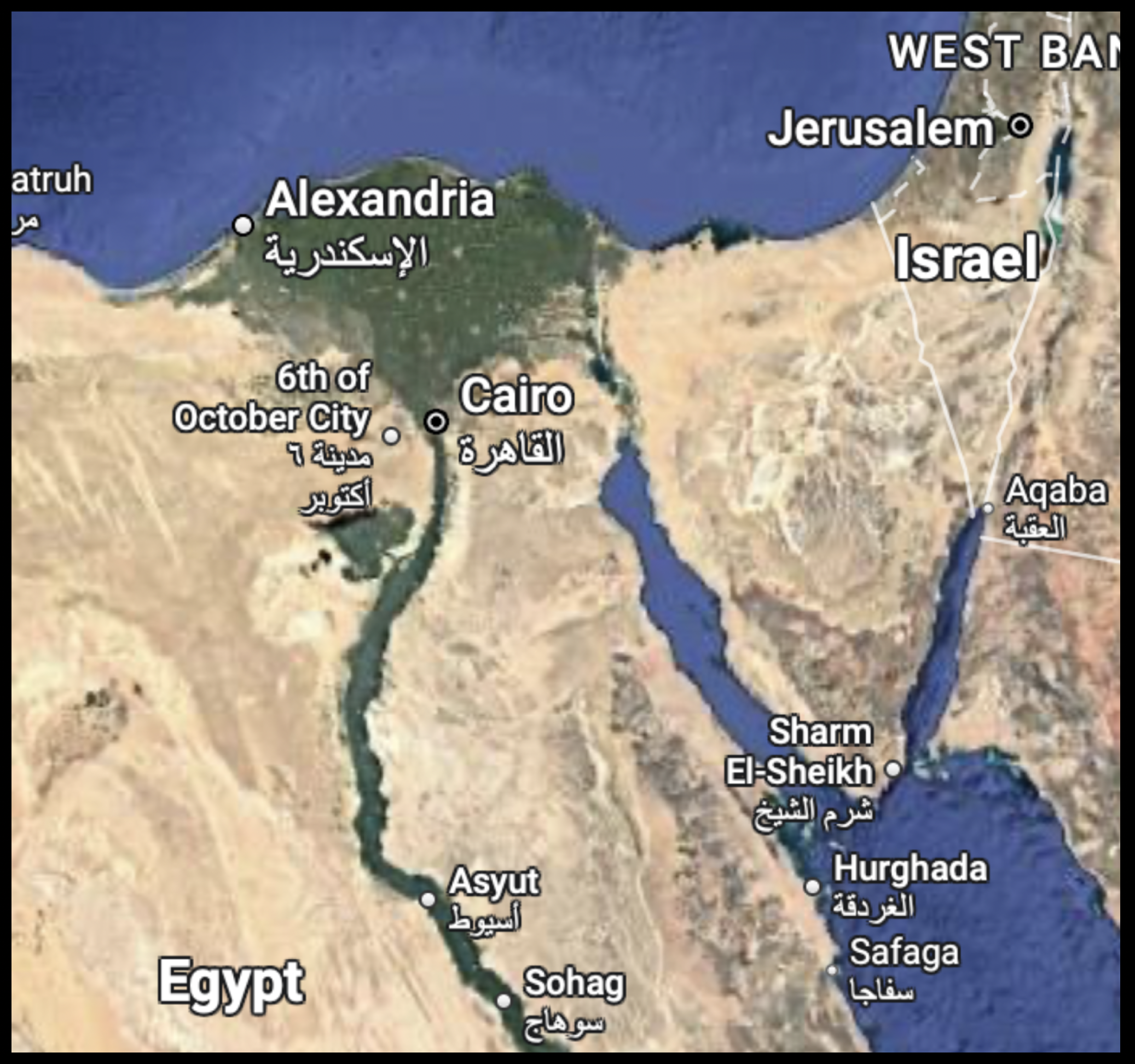
That’s precisely what happens to the early church in Acts 8. Up until this point, everything in Acts has been happening in Jerusalem, this small city on the map below.  It is so small that the dot on the map is too small to see. 

There in Jerusalem, there is powerful preaching, miracles, generosity, and a caring community.  Thousands are being saved.   Imagine, for a moment, you are a leader in a church like that: thousands of people joining and coming to Jesus in a few months, everyone being cared for, miracles happening.   It’s everything a pastor or church leader dreams of.   If you have all that, you may feel that it is enough.  Things are going well. We just need to keep doing what we are doing.

But in God’s eyes, the tremendous growth in Jerusalem was great, but it wasn’t enough because it was just a tiny dot.   A little bit that you can barely see in a world full of people who need the Gospel.   God sees a bigger picture than we do.  We look at our corner of the county.  See your tiny dot on the map, and then see the whole world like God sees it. 

John 3:16   For  God so loved the world, that he gave his only Son, that whoever believes in him should not perish but have eternal life.

God so loved the world.  It is not, “God so loved our tiny dot…” Not just the people in Jerusalem, Jesus also taught the disciples that He came because God loved the Samaritans.  And later the church in Acts would realize that God so loved not just the Jews, but the people in Asia Minor, and Greece, and even those horrible Romans.  God loves the world, and he wanted the early church to love the world too.  It was not enough that they loved the other Jews in Jerusalem who were just like them.  Things were good there, a growing, caring church.   But God wanted more.  He wants us not just to love each other and the people around us who are mostly like us.   God wants us to love the whole world, not just the small corner we can see.

To really appreciate Acts 8, we need to remember what’s come before. The story of Acts so far has been a spiritual rollercoaster — full of ups and downs, triumphs and trials, good news and bad news.  So let’s recap the Book of Acts.  

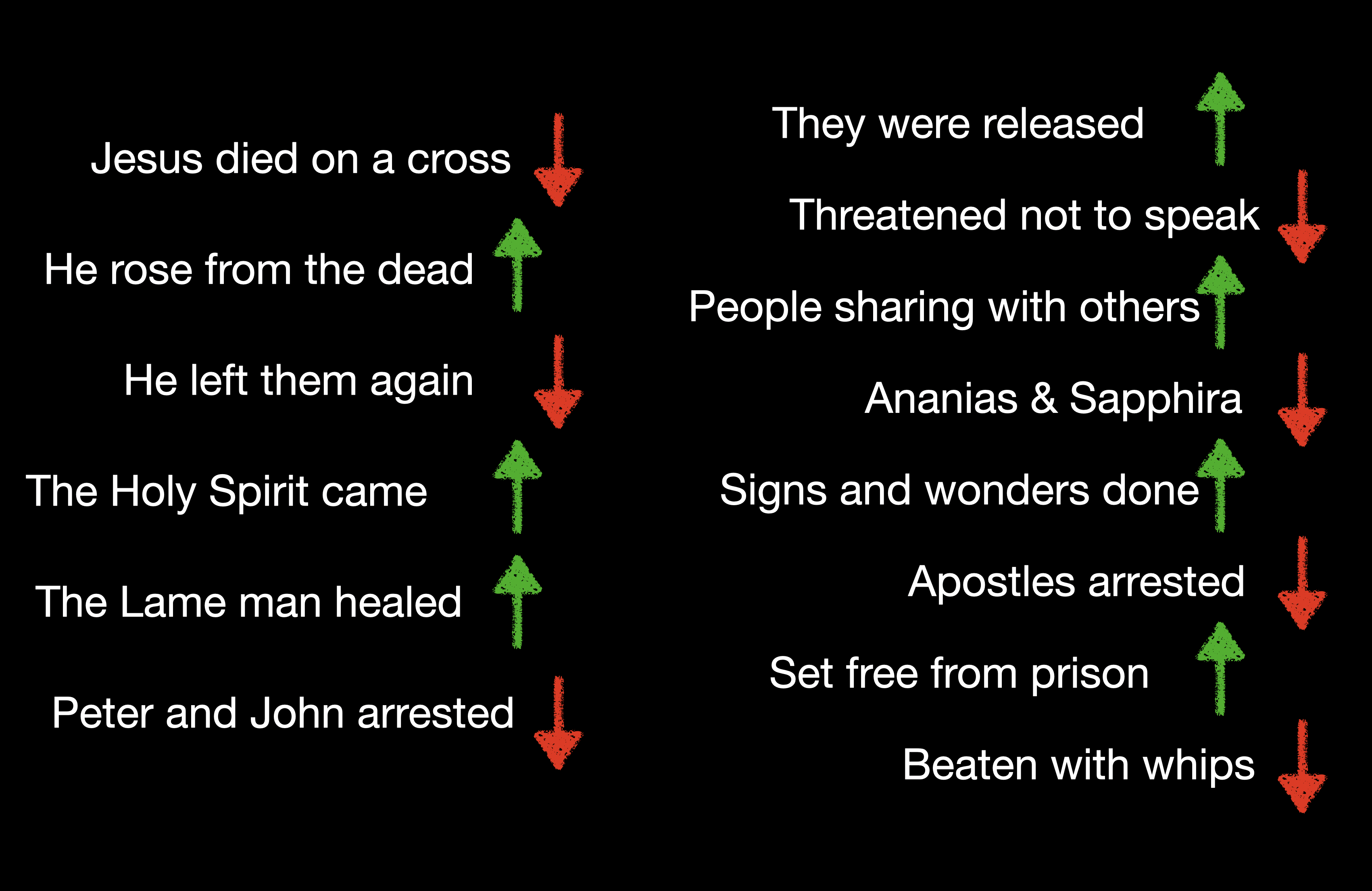
Jesus had died on a cross, which looked bad, but 3 days later he rose from the dead, which was really good. Jesus stayed 40 days teaching his disciples, and then left them, going up to heaven, which was kind of sad. But it was good because He said the Holy Spirit would come.  And that day the Spirit came was a really good day.   And then the day that Peter and John healed the lame man in the Temple was great, until they were arrested and put in jail.  That was bad.  But they were released, and that was good, but they threatened them not to speak anymore about Jesus, which was bad.  Then we read about everyone sharing with those who had needs.   That was good.  But then the story of Ananias and Sapphira, which wasn’t good.  

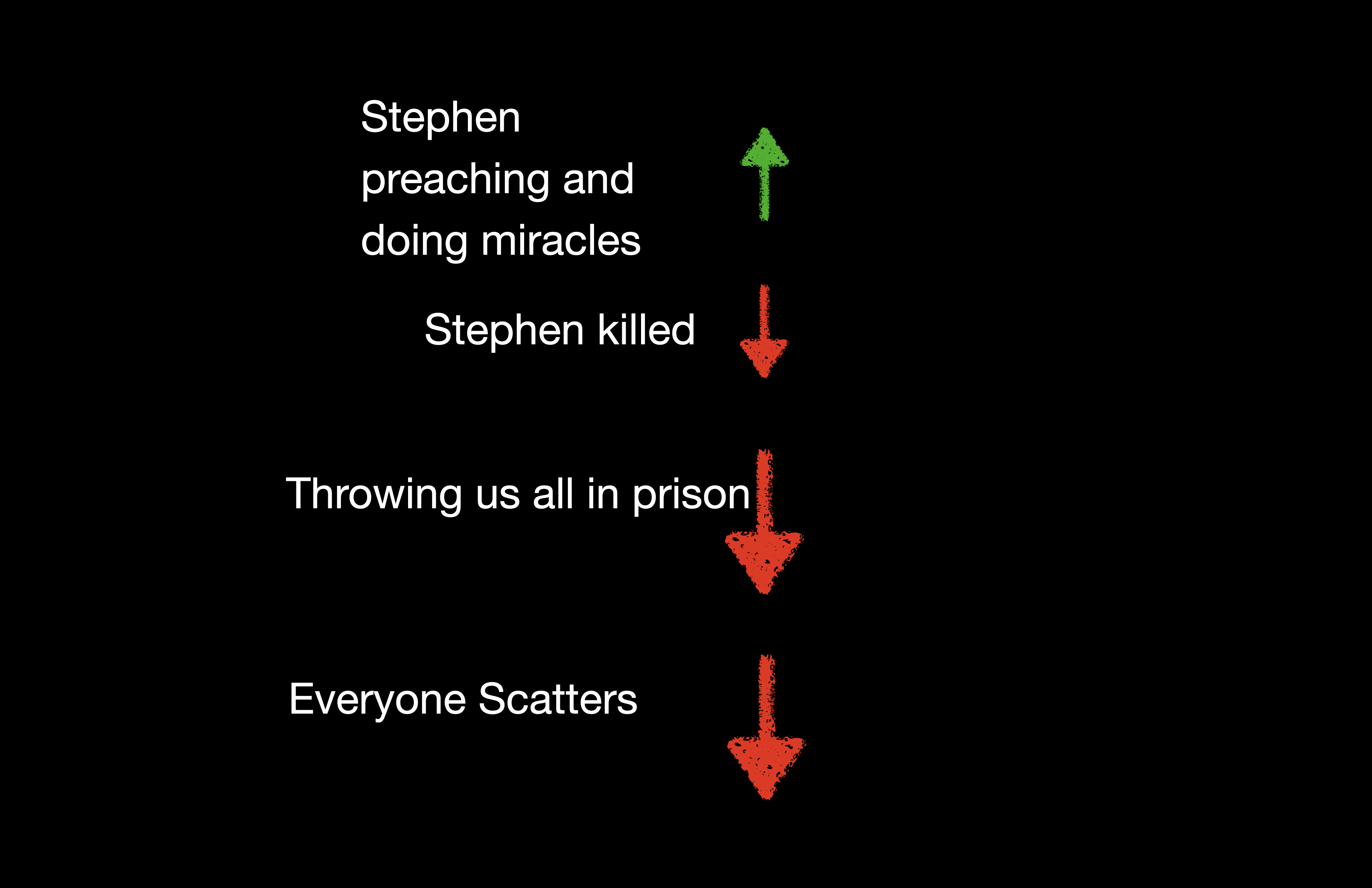
Then miracles were being done, and over 5000 followers had joined the disciples.  Things were going good…until the apostles were arrested (that was bad).  But it was good because an angel set them free, though then, after the court hearing, they were beaten with whips.  Then we read of Stephen, full of the Holy Spirit, preaching and doing miracles.   That was good, until he was killed.  And after that, things got really bad.

  This is a defining moment. For the first time, the church experiences organized, targeted persecution. The honeymoon period is over for these early followers of Jesus.  This is bad.   

Acts 8:1,3  And Saul approved of his execution.   And there arose on that day a great persecution against the church in Jerusalem, and they were all scattered throughout the regions of Judea and Samaria, except the apostles. …But Saul was ravaging the church, and entering house after house, he dragged off men and women and committed them to prison.

This is not just a young man who just watched the clothes while others stoned Stephen.  This zealous rabbi voted in the council to kill Stephen and then went on a rampage, going into homes and dragging off men and women.  Imagine the fear and confusion. Families are split apart. Homes raided. The fellowship they’ve built in Jerusalem — shattered.   They are scared to do or say anything.  They are scared to death.  This is bad news.

By the time we reach Acts 8, the church has experienced incredible highs and devastating lows.   Every time there’s a victory, opposition follows.  Just when things seem to be going good, here comes trouble.  The book of Acts has so far been a rollercoaster of highs and lows, but now, in Acts 8, it seems to be plummeting toward destruction.

Do you see this in your life also?  A rollercoaster of highs and lows, good and bad?  Just when things seem to be going good, here comes trouble.  How do you respond when things go wrong?  Disappointment?  Depression?  Fear?  Hopelessness?  Do you want to question God?  Why did you let them put the apostles in prison?  Why did you let them kill Stephen?  Why did my friend get cancer?  Why do evil people prosper?  Why is there so much trouble in the world?

This persecution should not have been surprising to them or us.  Jesus said:

John 15:18, 20   If the world hates you, know that it has hated me before it hated you…
If they persecuted me, they will also persecute you.”

And remember, He also said this:

Matthew 5:11-12   Blessed are you when others revile you and persecute you and utter all kinds of evil against you …

Oh, but as we discussed before, “Blessed” is the Greek “makarios,” which really means “happy are you” or “how fortunate you are,” so let’s read it that way…

Matthew 5:11-12   How wonderful it is for you when others revile you and persecute you and utter all kinds of evil against you falsely on my account. Rejoice and be glad, for your reward is great in heaven, for so they persecuted the prophets who were before you.

Jesus says that when you are persecuted, you are the lucky ones!  Do you think the followers in Jerusalem saw it that way?  Saul is dragging them out of their houses and throwing them in prison.  And do you think they are celebrating their good fortune?  How does this make sense?

To understand how you are lucky or happy when persecuted, you have to be able to see things from God’s view and not your own.  We need to look through God’s eyes.  We need to see the bigger picture again.   There are three reasons that persecution is good. 

1.  Persecution helps the believer mature and grow in Christ.

Romans 5:3-5   Not only that, but we rejoice in our sufferings, knowing that suffering produces endurance, and endurance produces character, and character produces hope, and hope does not put us to shame, because God’s love has been poured into our hearts through the Holy Spirit who has been given to us.

We need suffering to grow.  It is only when we experience failure, disappointment, persecution, and defeat that we are able to understand that we are not enough.  We learn to depend on our Father instead of ourselves.  We mature as followers of Jesus.

2.  Persecution purifies the church.

It is sad, but there are always those in the church who are not faithful followers but wolves in sheep’s clothing.  But when trouble comes, when persecution comes, their truth is revealed.   We see this in 1 John, and Jesus speaks of it in his parable of the soils.  

Matthew 13:20-21   As for what was sown on rocky ground, this is the one who hears the word and immediately receives it with joy, yet he has no root in himself, but endures for a while, and when tribulation or persecution arises on account of the word, immediately he falls away.

When persecution comes, some will leave the church.  They were never really a member anyway.  We have not had persecution in our time.  So, from what Jesus said, you would expect the church to have a lot of people who aren’t really committed to Jesus.  They are there with joy, but have never given their life to Christ.  And if persecution does come, they will fall away.

3.  Persecution causes the church to grow

Now this doesn’t seem to make a lot of sense.  If Paul is going from house to house in Acts 8, dragging people out to put them in prison, that seems it would have a negative effect on the group of followers in Jerusalem.  But look what happens:

Acts 8:4   Now those who were scattered went about preaching the word.

Verse 4 is a hinge in the book of Acts.  The word “scattered” here — diaspeirō in Greek — is the same word used for scattering seed. It’s not a random dispersal; it’s purposeful planting.  The devil tried to stamp out the fire in Jerusalem, but all he did was scatter the embers — and they caught flame in new places.  Everywhere these believers went, they carried the gospel. They didn’t have a denomination, a mission-sending agency, a church building, a program, or a budget. What they had was the message of Jesus, and that was enough.

Acts 8:5    Philip went down to the city of Samaria and proclaimed to them the Christ.

Philip, one of the seven deacons appointed back in Acts 6, goes to Samaria! Remember how the disciples first responded when Jesus took them through Samaria? They couldn’t believe he was actually going there.   They hated the Samaritans.  They called them half-breed Jews.  They wouldn’t even talk to them.  Jews and Samaritans had centuries of hostility, but the gospel breaks that barrier wide open.  That’s a remarkable scene,  See how the Holy Spirit has changed these followers to be more like Jesus?

Philip is crossing cultural and religious boundaries.   What began with Stephen’s death in Jerusalem leads to joy in Samaria.  The chapter that opened with mourning ends with rejoicing.
The story that began with persecution ends with proclamation.  The bad news becomes the vehicle for the good news.  This is the power of the gospel. And they went further…

Acts 11:19   Now those who were scattered because of the persecution that arose over Stephen traveled as far as Phoenicia and Cyprus and Antioch, speaking the word to no one except Jews.

At the beginning of Acts 4, the entire church, the gathering of followers of Jesus, is all in one city.  All in that one little dot.  But because of the persecution, they scatter like seed and are planted here.

So what is the lesson we learn from this passage in Acts 8?

Application 1: God’s Good News Often Moves Through Bad News
This is a pattern we see all through Scripture. Joseph was sold into slavery so he could save his family. Moses fled Egypt before leading God’s people out of it. The cross looked like defeat until resurrection morning.  Acts 8 continues that pattern — what looks like a disaster becomes divine strategy.  Maybe you’ve seen that in your own life. You lose a job and end up finding a deeper purpose. A relationship breaks down, and you discover how faithful God really is. A closed door becomes the very thing that pushes you toward your calling.

Romans 8:28  And we know that for those who love God all things work together for good, for those who are called according to his purpose.

Listen, God did not want this persecution.  God loved Stephen.  He did not want Stephen to be stoned.  But God gave men free will, and men choose evil.  But God takes the evil that man has done and makes it work for good.  God has a way of turning scattering into sowing — pain into purpose, loss into mission.  So when you get bad news, a bad diagnosis, a financial bad turn, or some tragedy, if you are a follower of Jesus, know that God, who loves you, will take that tragedy and work it for good.

Application 2: Comfort Can Become the Enemy of God’s Purpose

The church in Jerusalem had everything — community, teaching, worship, generosity, and miracles. But all of that was happening inside one city.  And we have to admit, many of our churches today fall into the same pattern. We have programs, fellowship, music, structure — often much more of these than mission. We love being together, but we can easily become so inward-focused that we forget why we exist.

Sometimes, God allows discomfort — in a church, in a ministry, even in a nation — to push His people outward again.  The early church didn’t plan a missions strategy.  Persecution became their mission strategy. God used shaking to send them out.

Application 3: Wherever God Scatters You, Carry the Gospel

Acts 8:4   Now those who were scattered went about preaching the word.

Notice that Acts 8:4 doesn’t say “the apostles” went preaching — it says “those who were scattered.” Ordinary believers. Shopkeepers, craftsmen, mothers, widows, servants. They didn’t have seminary training, but they had stories of grace.  They didn’t have pulpits, but they had conversations.  They didn’t have missionary boards, but they had neighbors. Every believer was a messenger. And wherever they went, the gospel went too.

Maybe God has “scattered” you in a way you didn’t expect — a new job, a new city, a new season of life. Don’t see it as random. See it as God planting you where the gospel can take root.  If you find yourself in an oncology waiting room, find a way to be the gospel there, and maybe even use words.  Stuck in an elevator, waiting in a long line, wherever.  And if you are somewhere uncomfortable, be alert for opportunities to share.  Sometimes God shakes our comfort so He can share His comfort through us.

I don’t go to the movie theater much anymore.  (Even though I love paying $25 for some popcorn and a soda.)  But at a movie, I sit in my seat and watch, and when it is over, then I walk out of the theater and go about my life as if nothing has happened.  Once a week, we come to our seats at church and watch.  And when it’s over, then what?  Is this like a movie, or have we had an encounter with the God of the Universe who wants us to leave this place changed, to leave this place with a mission?  We are not saved to sit.  We are saved to serve.  We can’t fulfill God’s plan for our lives in this building.  

Jesus’ great commission was not “Go to church on Sunday and then go home (after you go out and eat lunch).   It was “Go into all the world and do something that will likely make you uncomfortable.”   

The passage ends in verse 8: “So there was much joy in that city.”   The church’s pain became someone else’s joy.  Their scattering became someone else’s salvation.   That’s the rhythm of the gospel — out of suffering comes life, out of loss comes joy, out of persecution comes expansion.  So when life shakes beneath your feet — when bad news comes — don’t assume God has abandoned you. He might take this opportunity to move you into the next chapter of His plan.  The ground may be shaking, but God is sowing.  What feels like bad news may be the start of very good news indeed.

  1. Lucado, Max. A Heart Like Jesus: Lessons for Living a Christ-Like Life. Kindle Edition. Location 33.

November 13, 2025 –  Stephen, Stoning, and Getting What You Deserve— Acts # 20

November 13, 2025 –  Stephen, Stoning, and Getting What You Deserve— Acts # 20
Acts 7:54 – 8;1

Acts 7:54-60   Now when they heard these things they were enraged, and they ground their teeth at him. But he, full of the Holy Spirit, gazed into heaven and saw the glory of God, and Jesus standing at the right hand of God. And he said, “Behold, I see the heavens opened, and the Son of Man standing at the right hand of God.” But they cried out with a loud voice and stopped their ears and rushed together at him. Then they cast him out of the city and stoned him. And the witnesses laid down their garments at the feet of a young man named Saul. And as they were stoning Stephen, he called out, “Lord Jesus, receive my spirit.” And falling to his knees he cried out with a loud voice, “Lord, do not hold this sin against them.” And when he had said this, he fell asleep.

Imagine if you were one of the over 5000 Jewish followers of Jesus on this day.   One of your leaders has just been stoned to death by the people in charge of the Jewish Religion, your religion.  All Jesus-followers at this time were Jewish, and they did not think they had stopped being Jewish when they followed the apostles and Jesus.  You see, all their life they had been raised by their Jewish parents, their Jewish community at synagogue, and the leaders of the Jewish religion, the priests, scribes, and Pharisees, to pray every day for the Messiah that would one day come.  So if you are a Jesus follower on this day, you have no reason to believe you have stopped being Jewish.  In fact, that Jewish prayer you prayed every day, for the Jewish Messiah to come, has come true, just as the Jewish prophets foretold.   You are a Jew who believes your Messiah has come.

And the people in charge of your religion, the ones in charge of the temple where you worship, and the ones who hold the power to excommunicate you from the religion or even kill you, these people just killed one of the most helpful, kind, Spirit-filled men you have ever known.  And the charge against him, blasphemy, was for saying the same things you were speaking to a friend yesterday.  How would you feel?  Would you be wondering if they were coming for you next?  

Acts 7:58   Then they cast him out of the city and stoned him.

You have heard Bible stories about stoning and have probably at one time read the rules about stoning in Leviticus and Deuteronomy, but since many people fall asleep reading Leviticus and since we don’t know the culture well, let’s review a little about stoning.

Stoning was a common form of punishment in ancient times.  It is found in the law codes of several cultures.  In the Old Testament, sins punishable by stoning are in two categories:

  1. Those that deal with man’s relationship to God.   This includes those who tempt others to engage in idolatry (Deuteronomy 13:7,11), those who participate in idolatry themselves (Deuteronomy 17:5), those who use God’s name in a curse (Leviticus 24:16), those who offer their children to Molech (Leviticus 20:2), people who serve as mediums or necromancers (Leviticus 20:27) and a special case of a man who gathered wood on a Sabbath (Numbers 15:32-36).
  2. Social Crimes.   It is the fate prescribed for the wayward and defiant son (Deut 21:18-21), whose actions are accounted a capital offence to emphasise the gravity of disrespect for parents.   This sounds incredibly harsh to us, but understand the context.  First, it was not uncommon at all in these times for a father to kill his son for disobedience. Many cultures saw this as a fitting punishment, either death or being sold into slavery. But Biblical law is more restrictive and deprives the father of his authority to exert capital punishment on his own.  It is for the community elders to decide.  Secondly, in Jewish history, this was never done.  The Talmud states, “It never happened and it never will happen.”  Like many of our law codes today, there are specific maximum punishments on the books that are never used.  In Old Testament times, extreme cases of rebellious sons usually resulted in disinheritance.  The punishment of stoning was carried out in some cases of adultery, and there are several cases discussed in the Old Testament (and one in the New Testament).   Again, this maximum punishment was not always carried out, and apparently, the spouse had the right to insist on a lesser sentence.

Stoning took place outside the camp or city.  

Leviticus 24:13-14   Then Yehovah spoke to Moses, saying, “Bring out of the camp the one who cursed, and let all who heard him lay their hands on his head, and let all the congregation stone him.”

This was to ensure that the blood of the guilty would not contaminate the camp or city.  Remember that contact with a dead body made a person ritually unclean for seven days. 

Numbers 19:14-16   This is the law when someone dies in a tent: everyone who comes into the tent and everyone who is in the tent shall be unclean seven days. And every open vessel that has no cover fastened on it is unclean. Whoever in the open field touches someone who was killed with a sword or who died naturally, or touches a human bone or a grave, shall be unclean seven days.

Remember that Jesus was crucified and Stephen was stoned just outside the city walls.  (The exception to this was adultery.  If a woman was convicted of the crime of not being a virgin when she married, she was to be stoned at the door of her father’s house, implying parental responsibility for their child’s sexual behavior.)

Initially, stoning was done by throwing stones at the guilty person until they were dead.  By New Testament times, stoning was frequently done by pushing the guilty off a roof or a cliff.   If they did not die from the fall, a large rock was placed on their chest to make breathing difficult.  If they survived that, then they would cast stones.  Note this quote from the Mishna, the first written collection of the Jewish oral law that had been passed down for centuries.

“The elevation of the stoning grounds was twice the height of a man. One of the witnesses to the crime pushes him by his hips [so that he falls on his side]. If he falls onto his chest, he is turned onto his hips. If he dies [from the fall], the court has fulfilled its obligation. If he is still alive, the second witness takes a stone and places it on his chest. If the condemned man dies, the court has fulfilled its obligation.  If he is not dead, he is stoned by all of Israel…”

This quote from the Mishna (Sanhedrin 45) was written after 200 AD, but was considered the practice in the first century as well. The rabbis noted that the change in method was to fulfil Leviticus 19:18 (“Love your neighbor as yourself”) as seen in this quotation from Sanhedrin 45a: “Love your fellow as yourself, by choosing for him a better way to die.”  

This method of stoning is seen when the leaders of the synagogue in Nazareth decided that Jesus had committed blasphemy and needed to be killed. 

Luke 4:29   And they rose up and drove him out of the town and brought him to the brow of the hill on which their town was built, so that they could throw him down the cliff.

They intended to stone Jesus in the usual manner of the day, by pushing him off the cliff.  But God did not allow it that day.

Stoning was a form of public execution, not just observed by the public but carried out by it.  

Leviticus 20:2   The people of the land shall stone him with stones.

The community was responsible for carrying out the punishment.  Again, this may seem odd to us because our culture does not operate under the same assumption of community guilt as the culture of the Bible (though it should).   According to scripture, the community bears some of the guilt of any member who sins.  If a family member sinned, it brought guilt and shame on the family.  If a member of their community or nation sinned, this too brought guilt and shame on every member.   By participating in the stoning, they removed the guilt the lawbreaker had brought on the community.

And when the stoning was the sentence of a court hearing, the witnesses in the hearing were to throw the first stone.

Deuteronomy 17:7   The hand of the witnesses shall be first against him to put him to death, and afterward the hand of all the people. So you shall purge the evil from your midst.

The Scripture is clear that there must be two or three witnesses, and that God takes the idea of false witness very seriously.  It is one of the ten commandments.

Exodus 20:16.  You shall not bear false witness against your neighbor.

By requiring the witnesses to throw the first stone, the witnesses are directly responsible for the execution, so if their testimony was false, then they are guilty of murder.   

Knowing this information about stoning gives us some insight into the story in John 8 of Jesus and the adulterous woman. 

John 8:2-7   Early in the morning, Jesus came again to the temple. All the people came to him, and he sat down and taught them. The scribes and the Pharisees brought a woman who had been caught in adultery, and placing her in the midst, they said to him, “Teacher, this woman has been caught in the act of adultery. Now in the Law, Moses commanded us to stone such women. So what do you say?” This they said to test him, that they might have some charge to bring against him. Jesus bent down and wrote with his finger on the ground. And as they continued to ask him, he stood up and said to them, “Let him who is without sin among you be the first to throw a stone at her.”

If you pictured the crowd of accusers picking up stones and then dropping them as they walked away, then know it didn’t happen that way.  They would not have stoned her there in the city, much less in the most holy place, the Temple.  We are told that this woman was caught in the act.  It is somewhat odd that she was caught in the act, but only the woman was brought to Jesus as the guilty party.  And they misquote the Scripture specifying the woman should be stoned when both of the scriptures that mention this (Leviticus 20:10 and Deuteronomy 22:22)  refer to both the man and the woman (and do not specify stoning). 

Then Jesus said, “Let him who is without sin among you be the first to throw a stone at her.” 

 First, understand that the Greek word for ‘throw a stone at her’ (“ballo”) can also be translated as ‘put or place a stone on her.’  Any of those 3 English words can be used.  The translator has to choose which English word to use based on the context.  This is the same Greek word, translated as “put” in this verse in James:

James 3:3   If we put bits into the mouths of horses so that they obey us, we guide their whole bodies as well.

I am glad our translators chose ‘put’ in this verse in James instead of ‘throw’.  It would take perfect aim and timing to throw a bit into a horse’s mouth, and I do not recommend trying this.  But the original English translators of the Bible were unaware of the change in method for stoning when they translated, so they chose to use “throw” instead of “put” or “place”.  But knowing what we know now, we see that what Jesus said is indeed consistent with the practice of the day, placing stones on the guilty party if the guilty party did not die from the fall. 

Secondly, when Jesus said, “Let him who is without sin place the first stone,” he is not asking who in the crowd is perfect and without sin (as I have usually heard it interpreted).  He is referring to the specific command in Deuteronomy 17 that the witnesses are to be the first to throw (or place) stones.  He is reminding these people who have come forward as ‘witnesses’ to this woman’s sin that it is a sin to be a false witness, and they had better be willing to fulfill their responsibility to begin the sentence if, indeed, they are without the sin of false testimony.   

Suddenly, no one is willing to be a ‘witness’ to this adultery, as apparently, no one is willing to commit the sin of false witness and murder.  There is no one left to condemn her.

But the false witnesses in our story of Stephen in Acts 7 were indeed willing to take on that sin.  How would you feel if this were your friend that people had lied about in court to have him killed?  What if you were Stephen’s mother or father?  How would you respond?  And these convicting him are members of their synagogues, and church leaders and priests.  How could God allow this?  They all deserve death.

Would you be angry?  Would you want to take revenge on the person who did this to your friend?  Would you pray and ask God to punish them severely for this horrible sin?  Would you want God to open up a hole in the earth and swallow them right away?  There may have been people in Stephen’s day who prayed that very prayer, who wanted to take vengeance into their own hands.  But how did Stephen respond?

Acts 7:59-60  And as they were stoning Stephen, he called out, “Lord Jesus, receive my spirit.” And falling to his knees, he cried out with a loud voice, “Lord, do not hold this sin against them.” And when he had said this, he fell asleep.”

His dying words were, “Lord, do not hold this sin against them.”  What a Jesus-like attitude to have.  Jesus said the same thing from the cross.  He, too, was condemned by false witnesses and the court of the priests.  Those who were responsible for maintaining the integrity of religious practice, but committed the worst possible evil.  

We know the names of some who were in the court that convicted Stephen.  Annas and Ciaphas were there for sure.  But there is one other person who had a part in deciding Stephen’s fate, who you know very well.  Later on in this person’s life, he confesses to this sin.  He admits that he voted to put them to death.  And we know without a doubt that he was there for Stephen’s trial. He says this:

Acts 26:9-10   I myself was convinced that I ought to do many things in opposing the name of Jesus of Nazareth. And I did so in Jerusalem. I not only locked up many of the saints in prison after receiving authority from the chief priests, but when they were put to death, I cast my vote against them.

“I cast my vote against them.”  There is no other place to cast a vote like this except in the Sanhedrin, the court that tried and convicted Stephen.  The person speaking here is the apostle Paul.  He admits he voted in the court to have Stephen and others killed.  He admits the sins he committed.

And the Scripture specifically records his presence there.  

Acts 7:58-60  Then they cast Stephen out of the city and stoned him. And the witnesses laid down their garments at the feet of a young man named Saul. And as they were stoning Stephen, he called out, “Lord Jesus, receive my spirit.” And falling to his knees he cried out with a loud voice, “Lord, do not hold this sin against them.” And when he had said this, he fell asleep.

Though oddly, when chapter divisions were added to the Bible in the 13th century, Mr Langton separated the last sentence of this story of Stephen into a different chapter. (I leave it to you to contemplate his motive.)  So the final sentence of this story is in chapter 8:

Acts 8:1   And Saul approved of his execution.

And Saul approved of his execution.  In Greek, “approved” or “agreed to.”  This young rabbi, trained by the most respected rabbi of his day, was in the council voting to have this innocent man stoned to death.  Now, what is the penalty for condemning an innocent man?  What should God do with these men?  What do they deserve?  What does Saul deserve?

But God did not give them what they deserved.  There are plenty of times when God does give people what they deserve throughout the Old Testament, and we discussed the story of Ananias and Sapphira just a few weeks ago, who received their punishment immediately.  How about these people who sent Jesus to the Romans for crucifixion and those who sent this innocent man, Stephen, to his death?  I can’t help but wonder whether the reason they didn’t get what they deserved is that one of God’s dear children prayed that they wouldn’t.  

Jesus:  “Father, forgive them for they really don’t understand what they are doing”
Stephen: “Lord, do not hold this sin against them.”  

I can’t speak for the outcome of all of these men who voted to kill Jesus or Stephen.  But I can talk about one of them.  God did not hold the young man Saul’s sin that day against him.  God did not give Saul what he deserved.  In fact, Jesus makes a very dramatic effort to reveal himself to this very man, appearing to him on the Damascus road.  Do you think the prayer of Stephen asking God to forgive those who condemned him (including Saul) had anything to do with God’s miraculous intervention with Saul?

There is an interesting comment Jesus makes to the disciples on the day of his resurrection.  They are gathered together.

John 20:22-23.  And when Jesus had said this, he breathed on them and said to them, “Receive the Holy Spirit. If you forgive the sins of any, they are forgiven them; if you withhold forgiveness from any, it is withheld.”

We don’t have time now to discuss these verses thoroughly.  Perhaps another day.  But know that different denominations interpret this differently.  The Catholic Church uses this passage as Biblical evidence for the rite of confession.  They maintain that Jesus is giving his apostles the ability to choose which sins are forgiven and which are not, and that this is passed on through apostolic succession to priests.  (The priests don’t forgive the sin, but they say he has the power to convey or confer the forgiveness of God.)   Some Protestant denominations explain that these verses do not give church leaders this power, but are saying that we can pass on the knowledge of the path to salvation so that men can become saved through Jesus and thus receive forgiveness of sins.  

Let me add my interpretation. I believe in prayer. I believe prayer matters.  I see examples in the Bible of people praying and God listening and responding to their prayers.  And I think one way God answered that prayer that Stephen prays to forgive his accusers was to meet Saul on the Damascus Road.   I believe an answer to Stephen’s prayer is the apostle Paul.  Because God sought out Saul, who deserved to die right then and there, the gospel spread throughout much of the world, and we have much of the New Testament.  And this knowledge demands that I pray earnestly for God to forgive others, especially those who have harmed me.

Regardless of how you interpret these verses, know that we have a responsibility to forgive sin, even the sins of those who are our enemies, those who persecute us. 

Matthew 5:44:  But I tell you, love your enemies and pray for those who persecute you.
Luke 6:28   Bless those who curse you, pray for those who abuse you.
Matthew 6:14-15  For if you forgive other people when they sin against you, your heavenly Father will also forgive you.  But if you do not forgive others their sins, your Father will not forgive your sins.

Do you have an enemy?  Has someone done you wrong?  Has someone treated you so poorly that you want God to punish them?  Then pray for his forgiveness.  Pray that he will seek the forgiveness of Jesus.  In Paul’s second letter to Timothy, he says this:

2 Timothy 2:25-26   Opponents must be gently instructed, in the hope that God will grant them repentance leading them to a knowledge of the truth, and that they will come to their senses and escape from the trap of the devil, who has taken them captive to do his will.

What if Stephen had not prayed for Saul’s forgiveness?   What if, instead, he prayed for Saul to be given what he deserved?   Would it have changed the outcome?

I can’t pray for people to get what they deserve, because God certainly didn’t give me what I deserved.  I was a sinner, lost and without hope.  I deserved death and eternal separation from God.  I deserved hell.  But grace.  God’s grace did not give me what I deserved, but what I needed.  Love and mercy and grace.  Forgiveness of sins and God’s Holy Spirit were placed within me.   I thank God every day that Saul didn’t get what he deserved.  Then we wouldn’t have these rich letters of scripture he wrote.  I thank god every day that I didn’t get what I deserved.   And I then have no choice but to pray to God that, even for those who have treated me harshly, God will grant them repentance. 

November 6, 2025 –  Temples, Monuments, and Churches— Acts #19

November 6, 2025 –  Temples, Monuments, and Churches— Acts #19
Acts 6:12 – 7:1

We continue with the story of Stephen.  He was chosen to be one of seven to oversee the distribution of resources in the growing church.  He was obedient to this and more.  The Holy Spirit began to do miracles through him.  Then some rose up against him and made accusations to the court of priests.  That’s where we pick up the story in Acts.

Acts 6:12-7:1   And they stirred up the people and the elders and the scribes, and they came upon him and seized him and brought him before the council, and they set up false witnesses who said, “This man never ceases to speak words against this holy place and the law, for we have heard him say that this Jesus of Nazareth will destroy this place and will change the customs that Moses delivered to us.” And gazing at him, all who sat in the council saw that his face was like the face of an angel.
And the high priest said, “Are these things so?”

Stephen then gives them a long lesson.  52 verses.  I won’t print it all here, but you should read it now, Acts 7:2-53.  Stephen recounts Israel’s history, but he focuses on two main themes. The first one is that God has, throughout history, raised up deliverers for the people, but they have been rejected. And just as they rejected the prophets, they rejected Jesus.   And the second one that I would like to look at primarily here is that God gave them the tabernacle and the temple as places where they may dwell with him, but they made the mistake of thinking that God actually dwelt in the temple.  They put too much emphasis on the temple and its liturgy.   By the time of Jesus, the temple had essentially lost its true function and was more of a monument than a Temple. An excellent piece of architecture —a grand building —but not a place for God.

While we were in Egypt a month ago, we saw temple after temple.  But no one worships at any of these temples any longer.  They no longer function as temples, but just monuments to long-lost Pharaohs.  And Stephen, in his speech to the Chief Priests, will tell them that they have lost the purpose of their Jerusalem temple.  It was a place to meet God in worship, but they have used it to make money and gain power for themselves.  And they revere the temple more than they revere the God they should worship there.  Their temple has become an idol.

And the question we need to ask ourselves this morning, as we consider this passage of scripture, is: do we make the same mistake?  Have we placed too much emphasis on our individual church, on this church, or on a particular denomination, or church service itself, and forgotten that it is all about God, that the church is not the style of worship we use or the church rules we follow or the denomination we belong to, or the building we worship in?  Are we in danger of making the same mistake as these religious leaders in Acts 7?  

Just over 20 years ago, our church in Alabama was having its sanctuary remodeled.  Overnight, some cleaning rags spontaneously combusted, and the sanctuary was destroyed by fire.  It was a difficult time.  Many mourned the loss of that building, as they had very fond memories of their time there.  Babies had been dedicated there, children baptized there, couples married there, and some saints’ funerals held there.  There were mothers of young girls who dreamed of their daughters being married in that sanctuary.  But it was beyond repair. 

I remember standing outside looking at the charred building and saying to the pastor, “It’s only a building.”  That may have sounded a little callous then, because it really wasn’t just any old building, like a warehouse or a store.  But it really was just a building.  There were some holy moments in that place, but it was the moments that were holy, not the place.  It’s just a building.

But sadly, there are many stories of churches that have had bitter controversies over building decisions, whether to build a new building or remodel.   At least one church split over the color of the carpet in the new sanctuary.  Half wanted blue, half wanted red. The argument became so heated that people stopped speaking to each other. Some even left.  Months later, when the church finally installed the new carpet, they had lost far more than members—they had lost their witness. 

Now perhaps one group was right.  Maybe there were experts on interior decorating and on church decor who could state as a fact that one color was better for that circumstance.  But that doesn’t matter.  Choosing to be right is not more important than choosing to be in relationship.  A church splitting over carpet color may sound ridiculous… until we realize that we all have our “carpet issues.”

As a Christian Counselor, my wife often faces this same situation in marriage counseling. Usually, the most significant conflict in marriage is over things that don’t really matter, like carpet color.  She frequently asks couples who can’t seem to agree on a particular situation this:  “Would you rather be right, or would you rather be in a good relationship with your spouse?”  This is not only an essential principle for marriage, but a fundamental part of our understanding of God.  God is always right.  He is never wrong.  But he is willing to love us despite our wrongs and to seek a relationship with us.  He is willing to suffer himself to atone for the wrongs we have done, so that he can have that relationship.  And he wants us to show that same mercy and grace to others.  

But we all fight carpet color issues at some point.  Small things are blown out of proportion, causing division.  Every church has them.  Every denomination has them.  Every heart has them.  We all have the temptation to make something secondary into something sacred.  And this time, in Acts 6 and 7, the fight was over the temple itself.  And Stephen stood before the religious leaders of Israel and dared to challenge their obsession with one sacred thing: the Temple.

The charge against Stephen was simple. 

Acts 6:13-14   They set up false witnesses who said, “This man never ceases to speak words against this holy place and the law, for we have heard him say that this Jesus of Nazareth will destroy this place and will change the customs that Moses delivered to us.

They produced false witnesses who said,  He wants to tear down our temple and the way we worship here.  He wants to demolish the center of our faith.  But Stephen’s response in Acts 7 would reveal that their love for the Temple had actually blinded them to the true center of their faith—not a building and the sacrifices offered there, but the presence of God.

When Stephen begins his 52-verse defense, he doesn’t start with the accusations against him. He begins with a history lesson.  He tells the story of Abraham, Joseph, and Moses—men who met God outside of any temple or holy site.  He wants to show them that God doesn’t have to have a Temple made with human hands to meet people.

Long before there was a temple, before there was a promised land, before there was a chosen people, God first appeared to Abraham not in this place but in a pagan land.  Stephen is saying, “You think God only works in Jerusalem? He met our father Abraham in Babylon!”

And where did God first meet Moses? In the wilderness.  God spoke to Moses from a burning bush—not in a temple, but on dusty ground on Mount Sinai.  Stephen quoted God’s words:  

Acts 7:33. “Take off your sandals, for the place where you are standing is holy ground.” 

I have been on that mountain twice. I’ve hiked up and down that mountain, and there is no place with a sign that says this is holy ground.  That was Stephen’s point: Wherever God is present, it becomes sacred ground.  Let me tell you that on that sunrise at the top of Sinai, I found holy ground.  I had a sacred moment with God up there. Because it was never the ground that was holy, it was the presence of God that was holy.  It’s not about the location—it’s about His presence.   

Then Stephen speaks of how God moved with the children of Israel on their journey.  After God delivered them from Egypt, they returned to the same mountain where God had met Moses before.   And there God told Moses, “Make me a tabernacle that I may be worshipped in it.”  No, that is not what he said.  God said:

Exodus 25:8  “Let them make me a tabernacle, that I may dwell in their midst.   

That is what God wanted.  That is what he did in creation: he built a world and made a garden there so he could dwell with us.  And ever since Adam and Eve messed up God’s perfect plan to live with us, ever since Man brought sin and death into the world to drive a wedge between us and God, ever since that moment, God has been working to make a way to reunite himself with his creation.  So that is why they built the Tabernacle so that he could move with his people on their journey, and the tent was placed right in the middle of them. 

For all of the years in the wilderness and for hundreds of years after coming into the land, God met them in a tent—the Tabernacle—because His presence moved with His people. Only later, when Israel had settled in the land, did Solomon build the Temple, and even then, Stephen told them:

Acts 7:47-50 “But it was Solomon who built a house for him.  Yet the Most High does not dwell in houses made by hands, as the prophet says,
“‘Heaven is my throne, and the earth is my footstool. What kind of house will you build for me, says the Lord, or what is the place of my rest?  Did not my hand make all these things?’”

Stephen reminds the Sanhedrin that even when Solomon built the Temple that God designed, it was not to be His house.  God made it clear then that He cannot be contained in any man-made structure.

And yet the Temple had become their idol.  The Temple was not a bad thing, nor was the Tabernacle.  They were both good.  God gave the plans for the Tabernacle to Moses and the plans for the Temple to David.  God gave these structures to be a symbol of His desire to dwell among His people.  But symbols can become substitutes.  

Remember the bronze serpent on the pole that Moses made?  The people were dying from poisonous snake bites, and God instructed Moses to make a bronze (or more likely, copper) serpent on a pole.  The people would look to it and be healed.  (Jesus mentions it in His discussion with Nicodemus in John 4.)  Did you know that this copper snake that Moses made was still around in Israel 1000 years after Moses made it?   2 Kings 18 tells us that when the good king Hezekiah was trying to destroy all the idols in Israel:

2 Kings 18:4   And he [Hezekiah] broke in pieces the bronze serpent that Moses had made, for until those days the people of Israel had made offerings to it (it was called Nehushtan).

The people had taken something good that God designed for a good purpose and turned it into an idol.  And idols must be destroyed.  This is not a new idea.  God made all the animals and all the heavenly bodies, and many false religions have turned them into idols.  And now Stephen is telling these priests that they have taken the idea of the Temple as the place where God meets men and turned it into an idol.

And for these Jewish leaders, the Temple was a status symbol: proof of their national pride.  It was a security blanket: “As long as we have the Temple, God is with us.”  And it was a source of control: it gave the priests and leaders power over who could approach God.  They believed that questioning the Temple was questioning God Himself.   But in truth, their loyalty had shifted—from the Lord to the location.  This is not a new problem.  It was the same 600 years earlier in Jeremiah’s day.

Jeremiah 7:3-4  “Thus says Yehovah of hosts, the God of Israel: Amend your ways and your deeds, and I will let you dwell in this place. Do not trust in these deceptive words: ‘This is the temple of the LORD, the temple of the LORD, the temple of the LORD.’

They had made a mantra of their claims that because the temple was there, they could not be defeated.  The Babylonians can not take our city, for the Temple of God stands here.   But Jeremiah warned them that the Temple was no protection from the punishment for abandoning their obedience to God.  And so this prophecy came true on the ninth day of the month of Av, 586 BC, the Babylonians sacked Jerusalem and destroyed the temple.

And now Stephen tells them, as Jeremiah did their predecessors, that the Temple is not God, and they have left God no choice but to destroy the object of their idolatry. Idols must be destroyed.

So again, God called up a foreign oppressor nation to do that.  And in 70 AD, Roman troops breached the city’s walls and destroyed the temple.  And it happened on the same day of the year as before, on the ninth of the month of Av.  God is trying to teach this vital lesson.  Do not take something good I have given you and make it into an idol.

It is easy to read the story and see how these priests had been deceived into thinking they were doing a great job handling religion, when all the time they were like shepherds leading their sheep to destruction, to see how they had substituted their Temple and their religious practice for God.   But now let’s bring this forward 2,000 years.   

The problem Stephen exposed still exists—the temptation is still there, just in different clothes.  There is a temptation today to take something wonderful that God has given us and turn it into an idol.  And there is a temptation to see the local church as the new Temple.  It’s easy for a congregation to fall in love with itself.   There’s nothing wrong with loving your church!  But some churches, over time, like the Temple, turn inward on themselves.  They see themselves like these priests in Stephen’s day see the Temple, as the “House of God”.

J D Greear wrote a book in 2015 called “Gaining by Losing,” in which he described the modern-day church as a cruise ship.  Initially, there were ocean liners, built to ferry people across the Atlantic.  Now, don’t be fooled by the movie about the Titanic.  For all but a few people, these were not luxury trips at all but were filled with poor immigrants or refugees seeking a new life in America.  These were destination-based trips.  You tolerated the journey to reach the destination.  That is why they were called ocean liners. They were designed to get you from point A to point B on a regular route or line, like a bus or train.

With the advent of larger airplanes, the need for ocean liners as primary transportation diminished.  And then we saw the rise of cruise ships that did go places but, over time, really became destinations in themselves, with top entertainment, restaurants, water slides, ice rinks, etc.   They mostly went in circles, delivering you back where you started.

Before the 1960s, most churches were small and community-based. They had a sanctuary, a few offices, and classrooms. The church was destination-based; a means to get you to the throne of God.  Then churches began following the cruise ship model, Greear notes, offering more and more amenities to attract members to their particular brand.  We saw churches build sports complexes, coffee shops, and bookstores, and, of course, better-decorated sanctuaries with the latest stage sound, lighting, and special effects, and padded pews for the comfort of the members: more charismatic pastors, video backdrops. 

All of this catering to a membership that chooses which church to attend based on what that church can do for me or how it meets my perceived needs.  I have heard friends say, “Well, this church has better programs,” or “that pastor didn’t meet my needs,” or “that is not my favorite kind of music.” “I didn’t enjoy the worship service.”   It is all about me and what I need.  They go somewhere, but they don’t get you to the throne of God.

Therein is the problem.   The gathering of believers is not for the purpose of getting something but giving something — giving praise to God, giving a part of your income, and giving service to others to spread the gospel.  We are there to serve, not to be served.  To give, not to get.   

You should never make your decision about church attendance based on what you get out of it.

There is the danger that the destination is our enjoyment of the worship service. Not us meeting God at his throne.  Do you see how ridiculous that sounds?   You can lose the church’s very purpose by making it all about yourself.  Then you are no longer worshipping God, but you are worshipping an idol, either the church or yourself.

The priests in Acts 7 got a lot out of the Temple.  They got power, prestige, and money.  It was not about God; it was all about them.  The temple had become their cruise ship.  We, too, must be careful not to obsess over our own institutions, for if we do, we stop moving outward and start looking inward.

Temple-thinking says: “If people want God, they’ll come to us.”  The gospel says: “Go into all the world.”  Our focus must be broader than our little corner of the world.  We need to be kingdom-minded.  Just because we have the resources to make our sanctuaries bigger or better doesn’t mean we should.  We have to consider the needs of God’s kingdom.  It is not all about us.

The religious leaders thought they were guarding holiness, but in truth, they were rejecting the Holy One Himself.  Jesus stood right before them—and they didn’t recognize Him.  Stephen’s accusation still echoes:  “You’re worshiping the symbol of God’s presence, not God’s actual presence.”

Jesus came to make a radical change in the structure of the Temple in God’s world.  The days of a physical temple as a symbol of God’s dwelling among people are no longer needed. God was never contained in a building, he told Solomon that.  It was always God’s wish to dwell with us intimately in our hearts.  But the problem was sin.  So Jesus came to bring about the final defeat of sin, so that God could take up residence in our hearts.  And 50 days after Jesus defeated sin, the Holy Spirit came in power on Pentecost.  And from that day on, the Temple building in Jerusalem lost its purpose.  Oh, they had polluted and defiled it so severely that it was no longer serving the purpose God intended anyway.  So it is no more.

  Paul said this:  

1 Corinthians 3:16  Do you not know that you are God’s temple and that God’s Spirit dwells in you?

And Paul isn’t using the generic Greek word for ‘temple’ there.  He is using the Greek ‘naos’ for the Temple.  Naos is the word for the most holy place, the holy of holies, the very place where God’s spirit dwells.  When Jesus cleanses us of sin, we become together the holy of holies.  God has accomplished his goal of communion with us again.  We are the temple.

And Stephen got a glimpse of that.  They become so angry at Stephen that they take him outside the city and stone him to death.  And as the stones began to fly, Stephen looked up and said: 

Acts 7:56   Look, I see heaven open and the Son of Man standing at the right hand of God!”

Think about that. They accused him of disrespecting the Temple—but Stephen saw the real Temple—the presence of God in heaven, with Jesus standing beside the Father.   What they were defending was a shadow.  What Stephen saw was the reality.   Through Christ, we have become God’s temple.  That means that God’s presence is not limited to one church building.   God’s Spirit is not confined to one denomination. God’s glory is not dependent on our brand.   The actual temple is wherever the people of God live, love, and carry His presence into the world.

I showed you monuments that the pharaohs in Egypt built 1000s of years ago.  Monuments to a past that is gone.  That is what man has always built – monuments.   We do that in our country also. 

And the Temple in Jerusalem had become a monument.  It was initially built to be a place where God met people.  Where worship was centered.  But over the years, it became just a monument.  A structure that commemorates a past event.  Not only did it no longer function as God intended, but it had become an idol.  And idols must be destroyed.

God doesn’t build buildings and monuments; God builds people.

So we must not put too much importance on buildings.   Don’t call this the house of God.  God doesn’t live here.  He can’t be contained.   Don’t call it the church house either.  We don’t live here; we just meet here to worship.  I don’t even like the phrase ‘house of worship’. One, because it is not a house, and 2, because worship is something we do all day, every day, everywhere. 

We should look at our buildings as mission outposts.   A mission outpost is a small, localized base, often focused on outreach, service, and fellowship. These outposts can serve as places for evangelism and discipleship, hubs for community support — like food and clothing —or spaces for believers to be recharged and connected to go back out into the world.  I believe the current military term is Forward Operating Base or FOB.  This is a staging area to send people out to do the mission.

As Greear noted, we as a local church should not function like a cruise ship.  We are not here to serve ourselves.   Greear said we should be more like aircraft carriers.  Aircraft Carriers equip planes to go off and complete missions.  The church is not the mission. It is a staging ground for the mission of carrying the light of the gospel to the places in the world where there is darkness.  We meet here to worship God and to get our mission assignment.  Every time we walk out those doors, we should know what our specific mission is for that week.  Do you know your mission?

October 29, 2025 –  Good News and Bad News— Acts #18

October 29, 2025 –  Good News and Bad News— Acts #18
Acts 6:8–15

Acts 6:8-15   And Stephen, full of grace and power, was doing great wonders and signs among the people. Then some of those who belonged to the synagogue of the Freedmen (as it was called), and of the Cyrenians, and of the Alexandrians, and of those from Cilicia and Asia, rose up and disputed with Stephen. But they could not withstand the wisdom and the Spirit with which he was speaking. Then they secretly instigated men who said, “We have heard him speak blasphemous words against Moses and God.” And they stirred up the people and the elders and the scribes, and they came upon him and seized him and brought him before the council, and they set up false witnesses who said, “This man never ceases to speak words against this holy place and the law, for we have heard him say that this Jesus of Nazareth will destroy this place and will change the customs that Moses delivered to us.” And gazing at him, all who sat in the council saw that his face was like the face of an angel.

Today, we discuss Stephen.  He was one of the seven we spoke of last week, appointed to ensure that everyone (specifically widows) received the assistance they needed.  They were given the task of distributing resources.  That may not seem very interesting, but look at verse 8.

Acts 6:8   And Stephen, full of grace and power, was doing great wonders and signs among the people. 

Verse 8 tells us that Stephen was not some glorified waiter passing out food or serving tables.  When Stephen began to allow God to use him in this ministry, the Holy Spirit began to work in his life in even more dramatic ways.  This is an important lesson.  Jesus said: 

Luke 16:10   One who is faithful in a very little is also faithful in much,

And in his parable of the master rewarding his faithful servant, the servant is told:  

Matthew 25:23“Well done, good and faithful servant. You have been faithful over a little; I will set you over much.

Stephen was faithful over the work of distribution, and next thing you know, the Holy Spirit is doing miracles through him.  There is a lesson here.   Do something small in obedience to God, and watch the Holy Spirit turn your small act into something big.  Do you want to see God do mighty things?  Then be obedient to do small things.  Visit a neighbor, bake a cake, rake someone’s leaves, take someone to lunch, volunteer in a local mission.  Be faithful, and watch God come alongside you; then the Holy Spirit starts doing what the Holy Spirit does, and before you know it, you are seeing the power of God at work through you.  Stephen is bringing the gospel to people through his words and his actions. 

Remember that our word “gospel” comes from the Old English “godspel,” which meant “good story.”  This is the word most translations use for the Greek ‘evangelion,’ which meant “good news.”  The gospel of Jesus Christ is the best news the world has ever heard.This is the gospel:  God so loved the world that He gave his only Son, that whosoever believes in him may have eternal life.   Hear the good news: God, the all-powerful creator of the universe, sees you and loves you so much that he would do whatever it took to bring you back to Him.   God’s love led him to give His Son for you, even though that meant suffering at the hands of those he came to help, so that complete forgiveness for our sins is available.  The good news is that the wages of your sin -death – have been paid.  The good news is that, because sin and death have been defeated, we can dwell with God forever in his love and grace.

But have you noticed — not everyone receives it as good news? Some are offended by it, angered by it, even threatened by it.  That’s precisely what we see in Acts 6.  Stephen is doing good — full of grace, full of power — but his message stirs up fierce opposition.  The very ones who should have recognized the hand of God accuse him of blasphemy.  How can the same message that brings life to some bring fury to others?  Look back at Jesus’ sermon in his hometown of Nazareth.  He reads this scripture out of Isaiah:

Luke 4:18-19  The Spirit of the Lord is upon me, because he has anointed me to proclaim good news to the poor. He has sent me to proclaim liberty to the captives and recovering of sight to the blind, to set at liberty those who are oppressed, to proclaim the year of the Lord’s favor.

This passage in Isaiah was very familiar to those there.  They prayed for the day when this good news would come, for it would be the time of the Messiah.  They prayed every day for this time to come.  So Jesus reads the scripture that foretold of the coming good news to the poor, the captives, the blind and the oppressed.  And then:

Luke 4:20-21  And he rolled up the scroll and gave it back to the attendant and sat down. And the eyes of all in the synagogue were fixed on him. And he began to say to them, “Today this Scripture has been fulfilled in your hearing.

Jesus gives them the best possible news they could ever hear.  You know that thing you have been praying for your whole life?  That your mother and your grandfather and your great-grandfather and people for hundreds of years have prayed for? Well, here it is.  The Messiah is here.  Good news!  And how do they react?

Luke 4:28-29   When they heard these things, all in the synagogue were filled with wrath. And they rose up and drove him out of the town and brought him to the brow of the hill on which their town was built, so that they could throw him down the cliff. 

It should have been good news to them.  But they took it as bad news.  As with Stephen, they are ready to kill the messenger.  How can the gospel be seen as bad news?  The scriptures tell us that some will see the gospel as good news, but some groups will see it as bad news.  We just looked at Jesus quoting Isaiah that the gospel is good news for the poor, the blind, the captive, and the oppressed.  Now look at the Beatitudes in the Sermon on the Mount, we find in Matthew 5.  These are the people that Jesus says the gospel is good news for:  the poor in spirit, the meek, the merciful, the pure in heart, those who hunger and thirst for righteousness…. The gospel is bad news for the proud, the powerful, the corrupt, the comfortable, the demonic. Let’s take a look at these groups.

The Gospel is Bad News for the Proud.
The gospel says: “You cannot save yourself.” That’s humbling. It tears down pride and ego. The proud want to believe they’re good enough — that their morality, religion, or hard work will earn them favor.  But the gospel says, “All have sinned and fall short of the glory of God.” (Romans 3:23). To the proud, that’s not good news — it’s offensive.   Because it means they stand in need of mercy; they aren’t good enough.  That’s why some of the Pharisees couldn’t stand Jesus.  He told them their righteousness wasn’t sufficient.

Matthew 5:20  For I tell you, unless your righteousness exceeds that of the scribes and Pharisees, you will never enter the kingdom of heaven.

These guys that all of the Jews looked up to as the righteous ones, these guys who followed every single law in the Torah.  They were so careful to tithe every penny and not walk too far or do work on the Sabbath.  If you can’t be more righteous than they are, then you can’t be part of my kingdom. This offended some of the Pharisees, and they turned against Jesus.  Their pride in their keeping of the law was challenged by the gospel that says “no one is good enough.  We can never be.  We need the righteousness of Jesus.”

In Luke 18, Jesus tells a story about two men who were praying in the temple: one a Pharisee and the other a tax collector. The Pharisee, standing by himself, prayed thus: ‘God, I thank you that I am not like other men, extortioners, unjust, adulterers, or even like this tax collector. I fast twice a week; I give tithes of all that I get.’ But the tax collector, standing far off, would not even lift his eyes to heaven, but beat his breast, saying, ‘God, be merciful to me, a sinner!’ 

Jesus said, “I tell you, this man went down to his house justified, rather than the other. For everyone who exalts himself will be humbled, but the one who humbles himself will be exalted.”  We see this all through the Bible.  From Proverbs to James

Proverbs 16:18   Pride goes before destruction, and a haughty spirit before a fall.
James 4:6   God opposes the proud but gives grace to the humble.

So, the good news that only grace can save may be great news to those who know they are sinners, but it is bad news for the proud and self-righteous.

The Gospel is Bad News for the Powerful.
The message of Stephen — and the message of Jesus — was a direct challenge to the power structures of their day.  And they were both dealt with in the same way.  Jesus was put to death on a cross, and Stephen was stoned to death.  When the gospel says “Jesus is the authority: it also says “the Chief priest and the Sanhedrin are not.  When the gospel says “Jesus is Lord,” it also says “Caesar is not.”

The powerful, the elite, and the controlling forces of society don’t like that.
They build their empires on fear and domination — and here comes a carpenter from Nazareth proclaiming a kingdom built on love and justice.  No wonder rulers trembled.

The gospel is bad news for every tyrant, every oppressor, every unjust system — because it proclaims that Christ alone reigns.  We read in the Bible that God’s Kingdom was bad news for Pharaoh in Egypt, for Nebuchadnezzar in Babylon, and for the Emperors of Rome.   We have seen this in modern times also.

In 1949, Mao Zedong announced the formation of the People’s Republic of China.  He is easily the worst mass murderer in the history of the world, responsible for over 45 million deaths.   And he highly opposed Christianity and the gospel.  Mao’s communist regime aggressively persecuted Christians, methodically searching out Christians, torturing them, and letting them die in labor camps, seeking to eliminate the faith.  

He wanted to stamp out the gospel.  To him, it was not good news.  But bad news for you, Mao, the gospel is unstoppable.

Mao’s attempt to eliminate Christianity from China ultimately backfired, leading to an explosive growth of the church. The persistence of the faith under a state that sought its destruction demonstrates the Gospel’s power to endure in the face of tyranny.   But China is a slow learner.  Persecution of Christians in China continues.  They demand that churches be registered with the state and then place in their churches images of Xi Jinping and sing communist anthems and praise communist heroes.  The government places rewritten Bibles with passages removed that contradict communist beliefs and others rewritten to align with socialist values.  They use spies and facial recognition to identify underground churches, and they arrest church leaders.  

Despite all these government attempts to destroy or control the gospel, listen up, China.  I have some terrible news for you.  Over the past 4 decades, Christianity has grown in China faster than anywhere else in the world, from 1 million Christians to 100 million.  The underground house church movement flourished under Roman oppression in the first century, and it continues to do so today in China. And Jesus is just getting started.

The Gospel is Bad News for the Corrupt.
John 3:19–20  Light has come into the world, but people loved darkness instead of light because their deeds were evil.

That’s why they couldn’t stand Stephen — he was shining too much light.  His words exposed hypocrisy. His life reflected holiness.   When light enters the room, darkness doesn’t debate — it flees or fights.  The Gospel was bad news for the corrupt Herod Antipas.  His corruption was exposed, and it was his downfall.   The gospel is bad news for the corrupt, not because God doesn’t love them, but because His love won’t let them hide any longer.

The gospel calls us to die to self, take up our cross, and follow Jesus.  That’s uncomfortable. It demands change.  For those who want a safe, easy religion, the gospel is bad news — because Jesus doesn’t offer comfort without commitment.  He calls us out of the pew and into the mission field.  He calls us to forgive, to serve, to sacrifice.  The gospel is bad news for those who just want Jesus to make their life smoother — instead, He makes it meaningful.

The gospel forces a decision; it never leaves us neutral.  It confronts us with the question: “What will you do with Jesus?”  You can’t ignore Him. You can only receive Him or reject Him.   That’s why the gospel is bad news for the indifferent — because it insists on a response. Indifference dies at the foot of the cross.  You must either fall on your knees or turn away.

So the Gospel is bad news for the Proud, the Powerful, the Corrupt and the Complacent and finally, the gospel is bad news for darkness, for Satan, and all evil powers.   Every time the good news is proclaimed, hell trembles.  Colossians 2:15 says:

Colossians 2:15  He [Jesus] disarmed the rulers and authorities and put them to open shame, by triumphing over them in the cross.

The gospel announces that evil’s time is up.  The serpent’s head has been crushed.  The victory of Christ is final.  That’s bad news for every force that opposes the reign of God.

I had the opportunity this past Thursday to talk to a missionary, Joe Fleming, who is working with the Holy Spirit doing some amazing work in Africa.  His story is amazing.  He was working with Voice of the Martyrs in West Africa when he happened to meet up with this man.

His name is Emmanuel Momo Kante.  Momo grew up in a small village in Sierra Leone, where for a thousand years, people there worshipped idols and regularly sacrificed their children to these idols.  The village priests would hear from the idol how many children were required.  They would go to the home and choose a child from birth to 17 years old for sacrifice.  The child had to be free of blemishes or deformities.  They would then take that child that evening up on the mountain to an altar there and slit his throat.  When he was 8 years old, Momo was chosen to be sacrificed, but his sister helped him escape to a city where a family took him in and raised him.

At 20 years old he developed a severe illness and went to a Baptist missionary who prayed for him.  He was healed and gave his life to Jesus.  Several years later, his brother persuaded him to return to his village to bring the gospel.  He was afraid to go as he thought they would kill him.  But he did return and shared the good news that they didn’t have to kill their children any longer.  He told them of a God who did not ask for them to die but instead sent his Son to die for them.   He spoke to the whole village for 3 days of the gospel and 150 people accepted Jesus and were baptized, and the child sacrifice stopped in that village immediately.

Momo took John to his village and they sat in a hut and listened as over a dozen women told him how they had to give up their children.  A mother talking about how she had 11 children, but only one lives.  The rest were taken and sacrificed.  A grandmother who lost six children and five grandchildren.  A young man who had no siblings because they were all taken, and no parents because they were killed for mourning their children.  But in this village, they told him, because the gospel came, we don’t have to give up our children anymore.  See, now we have children.  Jesus did this for us.

This is the power of the gospel.  This is the power of the Word of God.  Do you think the gospel is good news?  What if you woke up every morning wondering if today was the day you would have to give up your child to be sacrificed? Your parents, your grandparents, your great-grandparents- for over a thousand years parents lived in this fear.   And then someone comes and tells you that there is a better way.  That you can follow the one true God, who doesn’t require you to give up your son because He gave up His son for you.  How good is the news that no more children have to die?  You can understand why that in almost every village that the gospel enters there are mass conversions.  Most of the village all at once chooses to leave thier way of life and follow Jesus.  150 baptized in a day.  How can you not choose so great a salvation?

In 2020 they identified 600 villages where the gospel had not reached, where they still practiced child sacrifice.  By June of this year the gospel has entered 200 of those villages and there are no more sacrifices of children.  This is good news.  But the gospel is very bad news for the power of evil.  The demons no longer have their way in those 200 villages.  And listen up Satan, your days are numbered in those other 400 villages, because the gospel is going there too.

This past Monday, six days ago, one of my pastor friends in Alabama heard this story and how John had 12 teams ready to go out to 12 more villages, but didn’t have the funds.  It costs just over $12,000 per team to equip them and pay the teams salary for the 14 months it takes to establish a church.   So in 3 days this week they raised over $200,000 to send these teams and more.  So those 12 teams will be equipped and sent out next week.  The gospel will go into 12 more villages, and that is bad news for the forces of darkness.

Joe has trainers now all across Africa and into Pakistan and Afghanistan.  He told us Thursday they have started 2100 churches and have over 373,000 believers.   Since May of 2023, just over two years they have baptized 35,000 new believers.  This in places where evil had ruled people for over a thousand years.  And now all of these people can claim this verse in Colossians:

Colossians 1:13-14   He has delivered us from the domain of darkness and transferred us to the kingdom of his beloved Son, in whom we have redemption, the forgiveness of sins.”

So to review:
Jesus told us the gospel is good news for: the poor in spirit, the meek, the merciful, the pure in heart, those who hunger and thirst for righteousness…. I think we in America really don’t comprehend what amazingly good news our gospel is.  We are somewhat insulated from the horrors of our world. When we really take a hard look at the world and the evil in the world around us, child sacrifice, child trafficking, the killing of unborn babies, the horrible treatment of the poor, only then can we appreciate the good news of the light of the gospel.

And how can we possibly hear the stories of child sacrifice and do nothing about it.  How can we hear the stories of child trafficking and ignore it?  How can we see people created in God’s image being oppressed and just look away?  Because, as the Gospel is incredibly good news to these, it is bad news for some.

The gospel is bad news for: the proud, the powerful, the corrupt, the comfortable, and the demonic.  Watch out you proud, you powerful, you corrupt, you who are comfortable, and beware forces of darkness… your time is almost up.   The gospel is more powerful. The Gospel is unstoppable.   Sin and death have been defeated, and you are next.   

As children of God,  as followers of Jesus, our eyes opened to the goodness of God and the evil in this world, we go out into this world as representatives of the gospel, as reflections of King Jesus.

2 Corinthians 2:15-16   For we are to God the aroma of Christ among those who are being saved and among those who are perishing: to the one an aroma of death leading to death; to the other, an aroma of life leading to life.

October 23, 2025 –  Time to Serve— Acts #17

October 23, 2025 –  Time to Serve— Acts #17
Acts 6:1–7

Acts 6:1-7   Now in these days, when the disciples were increasing in number, a complaint by the Hellenists arose against the Hebrews because their widows were being neglected in the daily distribution. And the twelve summoned the full number of the disciples and said, “It is not right that we should give up preaching the word of God to serve tables. Therefore, brothers, pick out from among you seven men of good repute, full of the Spirit and of wisdom, whom we will appoint to this duty. But we will devote ourselves to prayer and to the ministry of the word.” And what they said pleased the whole gathering, and they chose Stephen, a man full of faith and of the Holy Spirit, and Philip, and Prochorus, and Nicanor, and Timon, and Parmenas, and Nicolaus, a proselyte of Antioch. These they set before the apostles, and they prayed and laid their hands on them.

And the word of God continued to increase, and the number of the disciples multiplied greatly in Jerusalem, and a great many of the priests became obedient to the faith.

As we have seen so far in Acts, the early church was known for many things — bold preaching, miracles of healing, and rapid growth — but one of its most beautiful qualities was its heart to serve.  They didn’t just preach the gospel; they lived it.  They didn’t just talk about love; they showed it in action.  When widows were hungry, they fed them.  When needs arose, they met them, giving of what they had and, if necessary, selling land they owned to provide for those in need.

But we read in Acts 6 today about that spirit of service being tested.  As the church grew, some widows — the Greek-speaking Hellenists — were being overlooked in the daily distribution of food.  It wasn’t intentional. There are natural divisions in the church at this point based on their language.  Most in the Jerusalem area spoke Aramaic or Hebrew and used the Hebrew Scriptures in their synagogues.  Others were from regions outside Judea and in their community spoke Greek, like most of the rest of the world.  They would typically use the Septuagint in their synagogues, the Greek translation of the Old Testament done by Jewish scholars in the 2nd and 3rd centuries BC. 

There was a natural division, of course, based on language.  And the needs of those in your same-language community would be more well-known than the needs of others you have less contact with.  So some of the Greek-speaking widows were not receiving the help they needed.  Once the need was made known, the church rushed to fill it.  Before the apostles in the book of Acts ever said a word about serving widows, the call to serve had already been written into the story of God’s people in the Bible.  From the beginning, God’s law commanded care for the poor, the widow, the orphan, and the foreigner:

Deuteronomy 10:17-19  For Yehovah your God is God of gods and Lord of lords, the great, the mighty, and the awesome God, who is not partial and takes no bribe. He executes justice for the fatherless and the widow, and loves the sojourner, giving him food and clothing. Love the sojourner, therefore, for you were sojourners in the land of Egypt.

Since their departure from Egypt, God has been teaching the children of Israel who He is and how He wants them to behave.   In fact, if you want to know how God wants you to act, then study God’s character, for we are to imitate Him.  The more we understand who God is, the better we know how God wants us to act.  Yehovah says, “This is who I am.  You see how I act.  If I am your Father, then grow up and act like me.”   He tells them, “Look, I am not like the gods of Egypt, where you were slaves.  You could bribe those gods; they didn’t care about justice.  They cared only for themselves.  Do not imitate them, but imitate me.

This is the heart of the God we serve — a God who stoops low to care for the vulnerable.  And they specifically list three sets of people here.  The fatherless and the widow, you understand.   Orphaned children obviously need the care of the community. So too did widows, for in their culture the widow had no means of support.  And then the sojourner.  That Hebrew word, ‘ger,’ meant the “newcomer, the foreigner, the alien, or the immigrant.”  These people, just joining them, had no land and thus no means to care for themselves.  Like the widow and the orphan, they needed the community’s love and support.

This is the Abu Simbel temple near the southern border of Egypt, carved into the side of a mountain just beside the Nile.  These four colossal statues are of Ramses II. They are over 70 feet tall.  Every depiction of Pharaoh and their gods is huge.  Why are they so big? 

Look here at the base of one of these statues of Ramses.  The person standing there gives you an idea of the proportions.  Now look at the figures carved under the feet of Ramses.

These are the people whom he has conquered and enslaved.  They are on their knees with their hands bound behind their back, humbled in submission to the great Ramses.  They are literally under his feet.  His enemy has been trampled and subjugated.   And they are tiny compared to the pharaoh, just as you are when you pass by under Pharaoh’s feet. 

The reason that all of the depictions of gods in Egypt were big was to make you look small.  You are nothing compared to them.   You are like a pitiful slave.  But Yehovah says that He is not like these gods of Egypt.  He stoops low to care for the most vulnerable of his people.  And He is trying to teach this lesson to the children of Israel.  He says, “You were immigrants in Egypt. You spoke a different language and worshiped a different God.  And they treated you poorly.  You were slaves there.  Don’t let me find you treating others like this.   Don’t imitate the pharaoh and the gods of Egypt.  Imitate me.  You are my children.”

Exodus 22:22-24  You shall not mistreat any widow or fatherless child. If you do mistreat them, and they cry out to me, I will surely hear their cry, and my wrath will burn, and I will kill you with the sword, and your wives shall become widows and your children fatherless.

This is the lesson they are taught just after escaping from Egypt.  God is serious about how widows, orphans, and immigrants are treated.  God says, ‘If you mistreat them, I will destroy you.’  But Israel doesn’t learn this lesson very well.  Here are the words of Isaiah  7-800 years later:

Isaiah 10:1-3  (Message)  Doom to you who legislate evil, who make laws that make victims—
 Laws that make misery for the poor, that rob my destitute people of dignity, exploiting defenseless widows, taking advantage of homeless children.
 What will you have to say on Judgment Day, when Doomsday arrives out of the blue? Who will you get to help you?

God cares for those that society abuses and tosses aside. This is the heart of the God we serve — a God who stoops low to care for the vulnerable.  He hears the cry of the oppressed, He defends the weak, and He calls His people to do the same.

The mistreatment of these poor is listed as a primary reason that God called down the enemy to destroy them, just as he told them he would in Exodus.  First, Assyria came from the north and wiped out the Northern tribes.  Then, Babylon came as an instrument of God to destroy their country and take the southern tribes into exile for 70 years.    God is so serious about this that he brought destruction on his chosen people. 

Pharaoh would never humble himself to help an ordinary person.  However, in contrast, our God did this:

Philippians 2:6-7  Jesus, though he was in the form of God, did not count equality with God a thing to be grasped, but emptied himself, by taking the form of a servant, being born in the likeness of men.

Jesus left his throne in God’s heaven, where there was no pain or hunger or sickness.  A place where he was worshipped constantly.  And he left all that behind to enter our cruel world and take the form of a servant.  No idol god of any nation would ever do that.   No other king would give up his throne to come to take on the task that Jesus did.

And Jesus spent his entire ministry serving others.  And he tried to teach his disciples that whoever would be greatest must be the servant of all.  They were slow to grasp this lesson, so on the night before he went to the cross, at his final meal with them.  He takes on the task of the lowest servant and washes their feet.

Matthew 20:28  The Son of Man came not to be served but to serve, and to give his life as a ransom for many.

So the passage we just read in Philippians continues with this verse. 

Philippians 2:8  And being found in human form, he humbled himself by becoming obedient to the point of death, even death on a cross.

He humbled himself.  He lowered himself to the point of suffering and death for us.  You see, Pharaoh made himself look big so he could make everyone else look small.  Our God became small, to make us big.   He came to lift us up and make us bigger—more than we were.  And Paul says this is the lesson that Israel had trouble learning and that we must learn.  The verse that precedes this passage :

Philippians 2:4-5  Let each of you look not only to his own interests, but also to the interests of others. Have this mind among yourselves, which is yours in Christ Jesus,

Have this mind in you.  This is the mind of Christ.  Think like Jesus.  See others the way Jesus sees them.  And be willing to lower yourself, to humble yourself, to make yourself small, to lift others up.  This is who God is. This is the gospel message.

Now back to our story…

Acts 6:2   And the twelve summoned the full number of the disciples and said, “It is not right that we should give up preaching the word of God to serve tables.

Now, don’t read this wrong.  They weren’t saying serving tables was unimportant — they were saying it was so important that it needed to be done by people called and equipped by God, especially for this job.  Look at the qualifications for this position.  They aren’t looking for good businessmen, strong backs, or good organizational skills.

Acts 6:3  “Therefore, brothers, pick out from among you seven men of good repute, full of the Spirit and of wisdom, whom we will appoint to this duty.”

They looked for people full of the Holy Spirit.  Why? Because even simple acts of service are sacred work when done in Jesus’ name.  Every meal served, every visit made, every hand extended in compassion is more than just a good deed.  Because God, through the Holy Spirit, is present in those acts of mercy and love, they carry much more meaning.

What we learn from this passage is this:  Serving others isn’t a distraction from the gospel — it’s a demonstration of it.  Every time we love someone in need, we preach a silent sermon about who Jesus is.  The Holy Spirit in us makes an impact in our service way beyond any physical act we can do.  

Stephen was one of the seven chosen.  We will talk about him next week.  He didn’t see himself as “just serving tables.”  He saw himself as serving Christ. And we will see how God used him mightily, both as a servant and a powerful witness. When you serve others, you are not doing small work — you are doing kingdom work. You’re showing the world what the love of Christ looks like in action.

So what is the most important job in the Kingdom of God?  Is it the prophet – the preacher?  Is it the administrator?  Is it the worker of miracles, the healer?  How about the teacher?  What is the highest calling in the Kingdom of God?  Paul answered that question in 1 Corinthians 12.

1 Corinthians 12:27-31 “Now you are the body of Christ and individually members of it. And God has appointed in the church first apostles, second prophets, third teachers, then miracles, then gifts of healing, helping, administrating, and various kinds of tongues. Are all apostles? Are all prophets? Are all teachers? Do all work miracles? Do all possess gifts of healing? Do all speak with tongues? Do all interpret? But earnestly desire the higher gifts.”

Earnestly desire the higher gifts.   But what are the higher gifts?   Don’t misunderstand his statement about “first apostles, second prophets, third teachers….”  Theologians will be quick to say that this is not a listing of importance.   So what are the higher gifts that we are to desire?  The next verse says: 

1 Corinthians 12:31  And I will show you a still more excellent way.

And what does Paul show us next?  That is the last verse of the twelfth chapter.  So the more excellent way is found in the thirteenth chapter of Corinthians. 

1 Corinthians 13:1-2  If I speak in the tongues of men and of angels, but have not love, I am a noisy gong or a clanging cymbal. And if I have prophetic powers, and understand all mysteries and all knowledge, and if I have all faith, so as to remove mountains, but have not love, I am nothing.

This is the Love chapter.   The more excellent way is the way of love.  

1 Corinthians 13:8  Love never ends. As for prophecies, they will pass away; as for tongues, they will cease; as for knowledge, it will pass away. 

Prophecy or knowledge or tongues or any gift or ministry without love is empty.  All the other gifts and ministries will come to an end.  But the love that is behind them, the love that comes to us from God and flows out of us through God, will never cease.  All gifts and all work done in the kingdom are essential, but the most important job is to love. 

1 Corinthians 13:13  So now faith, hope, and love abide, these three; but the greatest of these is love.

It is greater than faith. It is greater than hope.  Again, if we understand who God is, then we know how God wants us to behave.  God is love.  His love is limitless and is for all people. So that should be who we are, people who love others radically.  People who like their God are willing to sacrifice themselves to love others.  But again, back to our story.

Once the seven men were chosen, the apostles prayed over them and set them apart for service.  And look at what happened next: 

Acts 6:7 “ And the word of God continued to increase, and the number of the disciples multiplied greatly in Jerusalem, and a great many of the priests became obedient to the faith.”

That’s not a coincidence.  When the church began serving one another well, the gospel began to spread further.  Why? Because the love of God is powerful, spreading like a wildfire.  When people see the church caring for each other — across cultural lines, across differences — it gives credibility to the message we preach.  Do we want our church to grow?  Then we must learn this lesson.  Service in love, across cultural and language differences.  Jesus said,

John 13:35   By this all people will know that you are my disciples, if you have love for one another.

The church grew not just through preaching, but through serving.   If we want to see revival in our day, it won’t come just through louder preaching —it will come through deeper compassion.  It’s often the acts of love that open the door for the words of truth.  When a church rolls up its sleeves, when believers feed the hungry, comfort the hurting, and serve the forgotten — that’s when the light of Christ shines the brightest.

Acts 6 shows us what happens when a church takes service seriously: needs are met, unity is restored, and the gospel moves forward.  Serving others is not optional for a follower of Christ — it’s the very heartbeat of our faith.  It’s how the world sees Jesus in us.   So, ask yourself today: How can I serve others in Jesus’ name?  How can I reach out to those in our community who are forgotten, who suffer from injustice, who are poor and needy, who are the sojourners?

1 John 3:16-18   This is how we know what love is: Jesus Christ laid down his life for us. And we ought to lay down our lives for our brothers and sisters. If anyone has material possessions and sees a brother or sister in need but has no pity on them, how can the love of God be in that person? Dear children, let us not love with words or speech but with actions and in truth.

October 13, 2025 –  This Is How I Fight My Battles — Acts #16

October 13, 2025 –  This Is How I Fight My Battles — Acts #16
Acts 5:33-42

Today, we will conclude our story in Acts 5.  Remember that the apostles are all placed in prison overnight for disobeying a specific order from the highest court in Israel.   But God decided that they didn’t need to stay there overnight.  He sent an angel to release them so they could return to the temple and resume preaching that same message.  As the choir just sang, “If you need freedom or saving, He’s a prison-shaking Savior.  If you got chains, He’s a chain breaker.”

Acts 5:33-42  When they heard this, they were enraged and wanted to kill them. But a Pharisee in the council named Gamaliel, a teacher of the law held in honor by all the people, stood up and gave orders to put the men outside for a little while. And he said to them, “Men of Israel, take care what you are about to do with these men. For before these days Theudas rose up, claiming to be somebody, and a number of men, about four hundred, joined him. He was killed, and all who followed him were dispersed and came to nothing. After him Judas the Galilean rose up in the days of the census and drew away some of the people after him. He too perished, and all who followed him were scattered. So in the present case I tell you, keep away from these men and let them alone, for if this plan or this undertaking is of man, it will fail; but if it is of God, you will not be able to overthrow them. You might even be found opposing God!” So they took his advice, and when they had called in the apostles, they beat them and charged them not to speak in the name of Jesus, and let them go. Then they left the presence of the council, rejoicing that they were counted worthy to suffer dishonor for the name. And every day, in the temple and from house to house, they did not cease teaching and preaching that the Christ is Jesus.

First, let’s discuss the principal players in this section of the story.  They are meeting in the council of the highest court, the Sanhedrin.  Remember that the high court of priests was composed of two religious groups, the Sadducees and the Pharisees.  These two groups differed in their religious beliefs, their social standing, and the focus of their religious practice.   

Social/Political Standing- 
Sadducees were the aristocrats; they were generally wealthy.  They were politically involved and often allied with the Romans.  Pharisees were a lay movement popular among the ordinary people and the middle class. 

Religious Beliefs
Sadducees accepted the first five books of the Torah.  They rejected the Oral Torah (the laws added by the Pharisees).  They did not believe in supernatural beings (angels or demons) and dismissed the idea of an afterlife and the resurrection of the dead.

Pharisees accepted the authority of the entire written Torah (our whole OT) and the Oral Torah (the laws they believed were handed down to Moses but not written in the Scriptures.  Laws that their predecessors continued to refine over time.  They believed in angels, demons, and other spiritual beings as well as in the afterlife and the resurrection of the dead.  

Religious focus
The Sadducees’ religious focus was on the temple and the rituals there (and of course, the collection of temple taxes, contributions, and other sources of revenue).  The Pharisees focused on righteousness, as defined by keeping all of the commandments (written and oral).

The Sadducees were against Jesus from the beginning.  His teaching emphasized the resurrection that they completely rejected.  And Jesus threatened their political power, and then he threatened their authority and their pocketbooks when he cleansed the temple of the money changers.

We often overemphasize the conflict between the Pharisees and Jesus.  Initially, they were curious about Jesus and his beliefs, and their debate with him was not aggressive but rather their usual learning style.  Jesus certainly had more in common with the Pharisees than the Sadducees.  He often ate in their homes.  Nicodemus was a Pharisee, as was Paul.  At one point, Pharisees warned him of a plot on his life.  Later, as his rejection of the Oral Law became clearer, some of them (not all) joined the Sadducees in their opposition to Jesus.

In the days of Jesus and Acts, the Sadducees had a greater representation on the Sanhedrin, and they controlled the high priesthood.  But they needed the support of the Pharisees there to maintain social stability.

Knowing this, let’s look back at the story we have been working through in Acts.  The apostles are continuing to preach their primary story of Jesus being the Messiah and God raising him from the dead.  You can now understand why the Sadducees on the court are particularly angry about this, for they say resurrection is impossible.  That is why 

Acts 5:33  When they heard this, they were enraged and wanted to kill them.

We looked at this word translated here, “enraged,” back in July.   The Greek is diaprio, which literally means “sawn in half.”  This is an abbreviated version of what we see in Acts 7:54, which in Greek is “diapriō kardia autos” and is translated in the ESV “enraged,” but in the King James Version more literally “cut to the heart.”  This is extreme anger, bordering on rage or madness.  These apostles have, according to the Sadducees, “filled Jerusalem with your doctrine [of resurrection from the dead]” and they are thus way beyond just angry to the point of planning how to kill them.

These religious leaders think they stand on righteous ground when they desire to kill the apostles.  They feel like they are defending the true religion against some new heresy.  They believe these apostles are deceiving people and leading them astray.  They must be stopped to protect the true faith. They feel that it is their duty to defend the faith.  They are defending God himself.  

Enter Gamaliel.  
Gamaliel was no obscure figure. He was the most respected Pharisee of his day, later known as “Gamaliel the Elder.” According to Acts 22:3, the apostle Paul himself studied under him. Jewish tradition holds Gamaliel in high esteem—wise, balanced, and respected by all. Here, in Acts 5, Gamaliel demonstrates that wisdom. He commands the council to pause and consider what they are doing (always good advice).:

Acts 5:35  “Men of Israel, take care what you are about to do with these men.”

He reminds them of two failed movements—Theudas and Judas the Galilean—both of which at first received considerable support but fizzled out after their leaders died. Then comes his key insight:

Acts 5:38-39  “If this plan or undertaking is of man, it will fail; but if it is of God, you will not be able to overthrow them. You might even be found opposing God!”

In other words, you don’t need to defend God. If this movement isn’t from Him, it will collapse. If it is from Him, nothing can stop it. That’s faith. That’s confidence in the sovereignty of God. And it stands in stark contrast to the anxious defensiveness that we see in the Sadducees and that so often characterizes religious people—even today.

Let’s be honest: most of us are more like the Sanhedrin than Gamaliel. When Christianity is criticized, when society moves away from biblical values, or when our beliefs are mocked, we feel a surge of indignation. We want to “strike back”—with words, with politics, sometimes even with hostility.

The church has a long history of poorly reacting to perceived threats against religion.  Let me give you just a few examples:

The Crusades (11th–13th centuries): After centuries of Islamic military expansion and the conquest of the Holy Land by the muslims, Pope Urban II called for the First Crusade in 1095, asking knights to come to the aid of the church to defend it’s honor, to expell the Muslims from the Holy land, and in doing so, to get remission of all their sins.  They did liberate Jerusalem, but along the way, crusading armies responded with violent sieges and massacres of thousands of people, including entire Jewish communities in the Rhineland, seeing the Jewish “enemies of God” as a more immediate threat than Muslims in the Holy Land.  Many Jews were given the option of forcibly converting or dying.  This established a violent pattern that was repeated in later crusades and pogroms. The Crusades are part of our sad history, reflecting an aggressive and militarized response to a perceived religious threat.

The Counter-Reformation (16th–17th centuries): The Catholic Church responded to the rise of Protestantism with a Counter-Reformation. This involved theological reforms, but also violent persecution in Catholic-dominated territories. Protestants were labeled heretics and subjected to torture, as in the Spanish Inquisition. Many were hanged or burned at the stake for their views. The French Wars of Religion involved decades of brutal civil war and included the St. Bartholomew’s Day Massacre in 1572, in which Catholics slaughtered thousands of Protestants.  All in the name of “defending the faith.”

Lest you think it was only the Catholic Church responding with violence, John Calvin participated in the trial of a theologian, Michael Servetus, who was burned at the stake; Martin Luther endorsed the brutal drowning of Anabaptists and the burning of heretics.  He wrote pamphlets that encouraged the violent suppression of a revolt in Germany, and also wrote a pamphlet supporting the persecution of the Jews, including burning their homes and synagogues.  Again, all in the name of defending true religion.

Witch hunts (15th–18th centuries): In both Protestant and Catholic areas of Europe and in the US, hysteria and fear of witchcraft led to the persecution and execution of tens of thousands of people, most of them women. Theologians often conflated magic with heresy, justifying the punishment of witches as a way to defend Christianity against perceived Satanic threats.

How about in our times?   
One morning in December 1994, my wife was in a grocery store just across the street in Brookline, Massachusetts, when John Salvi opened fire in an abortion clinic on Beacon Street, killing two people and wounding five others.  This, Salvi said, in defense of the Catholic Church.

And you know of the actions of the Westboro Baptist Church that have held protests at military funerals as well as at the funerals of gay victims of crimes.  On May 14, 2008, two days after the 2008 Sichuan earthquake, which claimed the lives of at least 70,000 people, WBC issued a press release thanking God for the heavy loss of life in China, and praying “for many more earthquakes to kill many more thousands of impudent and ungrateful Chinese.”

And you know of Jerry Falwell, who in 1980 proclaimed that the AIDS epidemic was a divine punishment for homosexuality.  John Hagee commented on Hurricane Katrina in 2005, stating he believed New Orleans was being punished for its “level of sin.”  The day after a devastating earthquake hit Haiti in 2010, televangelist Pat Robertson claimed the disaster was the result of a “pact with the devil.”  And then, after the events of 9/11, Jerry Falwell, Pat Robertson, and other conservative figures suggested that the attacks were divine judgment for America’s supposed moral failings, including the acceptance of abortion and homosexuality. 

And this is just a tiny sample of centuries of hostility and hate, all in the name of protecting religion, defending the church, or standing up for God.  This is the same attitude driving this Jewish court in our story. 

So how are we to respond?  How do you react when you feel someone is attacking your religion or your church, or Jesus himself?   Aren’t you responsible for speaking up when people are berating your God and your faith?  You can’t just sit back and let it go on, can you?  Someone has to fight that battle, don’t they?

Seven years ago, a song came out of Overcomers Church in Dallas, Texas, with a great message, though I have to admit that I initially found it annoyingly repetitive. The lyrics are:  “This is how  I fight my battles.  It may look like I’m surrounded, but I’m surrounded by you.  This is how I fight my battles, right here at your table. Your blood and your body have overcome.  Grace, Grace, Grace.  This is how I fight my battles.”   

There is a great story in 2 Chronicles 20:19-23.  The armies of Ammon, Moab, and Mount Seir have come to attack Judah.  King Jehoshaphat set up his army to stand against them.  And who did he put on the front lines?  Who did he put right at the front of his army?  Not his infantry.  He appointed Levites and singers to go out before the army, praising God with loud voices.  And God defeated those armies, with the soldiers of Judah never having to fight.   This is how we fight our battles.  We fight our battles with praise to the Lord.   

In Second Kings 6, the prophet Elisha and his servant are under attack by the armies of Aram, and the servant is scared because they are surrounded.  

2 Kings 6:15-17  When the servant of the man of God rose early in the morning and went out, behold, an army with horses and chariots was all around the city. And the servant said, “Alas, my master! What shall we do?” He said, “Do not be afraid, for those who are with us are more than those who are with them.” Then Elisha prayed and said, “O Yehovah, please open his eyes that he may see.” So Yehovah opened the eyes of the young man, and he saw, and behold, the mountain was full of horses and chariots of fire all around Elisha.”

Those who are with us are more than those who are with them.  It may look like I’m surrounded, but I’m surrounded by you.   This is how we fight our battles.

The Israelites are escaping Egypt.  They have a body of water in front of them that they cannot cross, with the Egyptian army coming toward them.

Exodus 14:10-14  When Pharaoh drew near, the people of Israel lifted up their eyes, and behold, the Egyptians were marching after them, and they feared greatly. And the people of Israel cried out to Yehovah. They said to Moses, “Is it because there are no graves in Egypt that you have taken us away to die in the wilderness? What have you done to us in bringing us out of Egypt? Is not this what we said to you in Egypt: ‘Leave us alone that we may serve the Egyptians’? For it would have been better for us to serve the Egyptians than to die in the wilderness.” And Moses said to the people, “Fear not, stand firm, and see the salvation of Yehovah, which he will work for you today. For the Egyptians whom you see today, you shall never see again. Yehovah will fight for you, and you have only to be silent.

And the Israelites pass through the water on dry land and the Egyptians drown. Stand firm, be silent, Yehovah will fight for you. This is how we fight our battles.

And one night in the Garden of Gethsemane, Jesus is taken prisoner by the temple guards.  And Peter takes a sword and attacks those arresting Jesus. 

Matthew 26:52-54  Then Jesus said to him, “Put your sword back into its place. For all who take the sword will perish by the sword. Do you think that I cannot appeal to my Father, and he will at once send me more than twelve legions of angels? But how then should the Scriptures be fulfilled, that it must be so?”

A few hours later, Jesus stands before those who can sentence him to death.

Matthew 27:12-14  But when he was accused by the chief priests and elders, he gave no answer. Then Pilate said to him, “Do you not hear how many things they testify against you?” But he gave him no answer, not even to a single charge, so that the governor was greatly amazed.

Silence before those who berate and accuse you.   This is how I fight my battles.

Why was Jesus silent?  Because He knew the truth didn’t need to win an argument. He didn’t need to win a court trial or a debate.  He was there to win a battle with sin and death.  A battle that he would win not by winning, but by dying on a cross, and by lying 3 days in a grave, and then by rising from the dead.  This is how I fight my battles: in silence before my accusers, then with the thundering power of an almighty God who can conquer death.  God’s truth does not need a verbal defense.  His truth will be evident in His will being done despite any opposition.

And the entire story of Scripture shows this: God’s truth has never needed human defense. It only needs faithful witnesses.

We need to study scripture and learn the lessons there.  When we feel attacked, we don’t act in fear and panic.  We don’t rush to the offensive or the defensive.  We stand still in silence and see Yehovah fight for us.  We don’t need to win debates on Facebook or in public.  We don’t need to win arguments; we need to win hearts.  And that comes through the body and the blood of Jesus, the love and mercy and grace of the Father, not through our words or our swords.  This is how we fight our battles.

If we feel like we need to defend God, then we don’t understand who God is.   Ancient people believed that their gods needed human support in the form of sacrifices — animal or even human—to live. We saw in Egypt how they felt they needed to bring their Gods food to eat and people to serve them.  Yehovah, however, makes abundantly clear in the Bible that He is not like that. He does not need our sacrifices or offerings, and He doesn’t need us to defend His honor.  He is self-sufficient.

And we do not need to defend the gospel message.  Charles Spurgeon said it best: “The Gospel is like a caged lion. It does not need to be defended. It just needs to be let out of its cage.”If you look up every use of the word “defend” in the Bible, you will see that it is God who is our defender.  We are not to defend ourselves, and we are not to defend Him.   This is an essential message to a world where Christians are constantly talking about defending “our” rights.  

But the Scripture does call us to defend somebody.  Not God and not our rights or ourselves.  We are called to defend the fatherless, widows, oppressed, afflicted, poor, and foreigners.

Proverbs 31:9  Speak up and judge fairly; defend the rights of the poor and needy.
Isaiah 1:17  Learn to do right; seek justice. Defend the oppressed. Take up the cause of the fatherless; plead the case of the widow.
Deuteronomy 10:18  He defends the cause of the fatherless and the widow and loves the foreigner residing among you, giving them food and clothing.

What if Christians focused their energy on these things and defended the purity of the gospel message? The faith that Jesus initiated would suddenly become much more attractive. And remember, God doesn’t need us to defend Him. He wants us to represent Him!  There’s a big difference.

These apostles were sentenced by this court and flogged, chained to a post, and beaten with whips.  Then they were released, and how did they respond? 

Acts 5:41  Then they left the presence of the council, rejoicing that they were counted worthy to suffer dishonor for the name.

Their backs are bleeding with deep wounds, and in intense pain, they rejoice.  They had seen their Lord just months ago, punished in this same manner.   They celebrate they they are worthy to suffer like him.   This is how we fight our battles.  Did this stop the spreading of God’s message?  No, because as Gamaliel said, “if it is of God, you will not be able to stop it. Chapter 5 ends with this verse:

Acts 5:42 “And every day, in the temple and from house to house, they did not cease teaching and preaching that the Christ is Jesus.

This is how we fight our battles.