May 31, 27 A.D.  Healing at the Pool of Bethesda – The Year of the Lord’s Favor #34

Week 15 ———  Healing at the Pool of Bethesda
John 5:1-18

John 5:1  After this, there was a feast of the Jews, and Jesus went up to Jerusalem.
2   Now there is in Jerusalem by the Sheep Gate a pool, in Hebrew called Bethesda, which has five roofed colonnades. 
3   In these lay a multitude of invalids—blind, lame, and paralyzed. 
5   One man was there who had been an invalid for thirty-eight years. 
6   When Jesus saw him lying there and knew that he had already been there a long time, he said to him, “Do you want to be healed?” 
7   The sick man answered him, “Sir, I have no one to put me into the pool when the water is stirred up, and while I am going another steps down before me.” 
8   Jesus said to him, “Get up, take up your bed, and walk.” 
9   And at once the man was healed, and he took up his bed and walked.  Now that day was the Sabbath. 
10  So the Jews said to the man who had been healed, “It is the Sabbath, and it is not lawful for you to take up your bed.”
11   But he answered them, “The man who healed me, that man said to me, ‘Take up your bed, and walk.’” 
12   They asked him, “Who is the man who said to you, ‘Take up your bed and walk’?” 
13   Now the man who had been healed did not know who it was, for Jesus had withdrawn, as there was a crowd in the place. 
14   Afterward Jesus found him in the temple and said to him, “See, you are well! Sin no more, that nothing worse may happen to you.” 
15   The man went away and told the Jews that it was Jesus who had healed him. 
16   And this was why the Jews were persecuting Jesus because he was doing these things  on the Sabbath. 
17   But Jesus answered them, “My Father is working until now, and I am working.”
18   This was why the Jews were seeking all the more to kill him, because not only was he breaking the Sabbath, but he was even calling God his own Father, making himself equal with God

John 5:1 After this, there was a feast of the Jews, and Jesus went up to Jerusalem.
John doesn’t specify this feast. You know which feast comes next if you have studied the Old Testament. Those with only cursory knowledge might know of only Passover and not the other ‘appointed times,’ which may lead to their assuming every feast is Passover. (If this was another Passover, then a year has passed since John 2, and there is another Passover in John 6:4, which means that almost nothing happens in 2 years of their presumed 3-year ministry of Jesus.)  The timing we are using in this 70-week ministry of Jesus fits well, and we know that the next feast is Shavuot (the Feast of Weeks), which is 50 days after Passover.  

The physical setting of this story is the Pool of Bethesda, and the story of this pool is complicated. John’s gospel has two stories of healing in Jerusalem, and they both involve pools. For centuries, scholars said these pools did not exist and that the Gospel of John was historically unreliable, written by someone (not John, the disciple) who had never been to Jerusalem. They said the pools didn’t exist because they had not found evidence of them in excavations yet.  

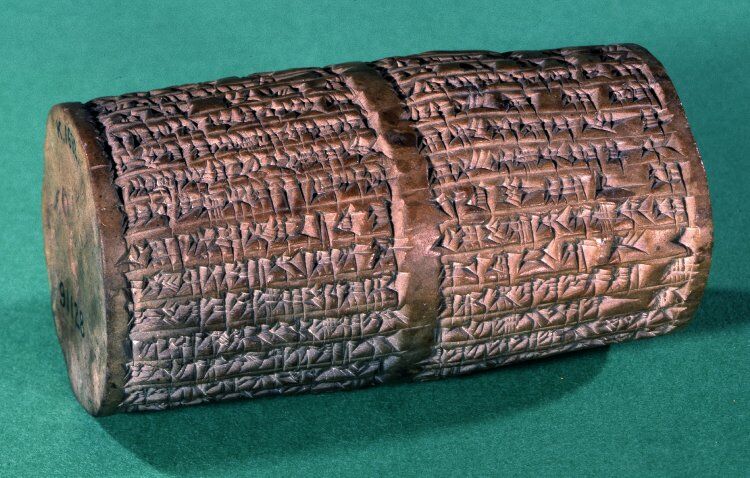
This is a recurring theme—the science of archeology disproves the Bible because we haven’t found it yet. Scholars said that Belshazzar, the king of Babylon in Daniel, never existed, for there was no record of him; thus, the book of Daniel was fiction. That is until they found this clay cylinder in 1854 that told the story of Belshazzar, forcing them to rewrite their history books to match the Bible.

The Hittites are mentioned throughout the Old Testament, but scholars maintained the Bible just made them up.  They insisted they never existed because they couldn’t find mention of the empire anywhere.  Now, it is one thing to deny the presence of one man, but it is a whole other level to deny the existence of an entire nation.  Then, in the early 1900s, they discovered in modern-day Turkey the city of Hattusha, a vast city of the Hittites with a library with over 10,000 tablets.  Again, the history books must be rewritten to align with Biblical History.

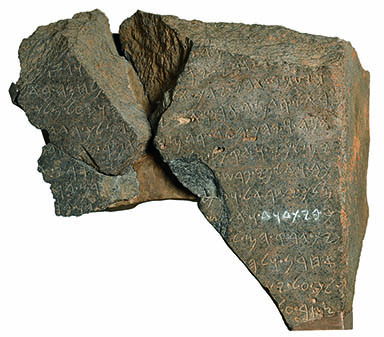
Scholars also had no evidence of a king over Israel named David or a House of David as his descendants who reigned in Israel. The House of David is a significant historical fact in a large portion of the Bible and is essential in the lineage of the Messiah. Scholars said David was merely an Israeli legend—until 1993 when a stele was found that describes the kings who were descendants of David as from the “house of David.”  

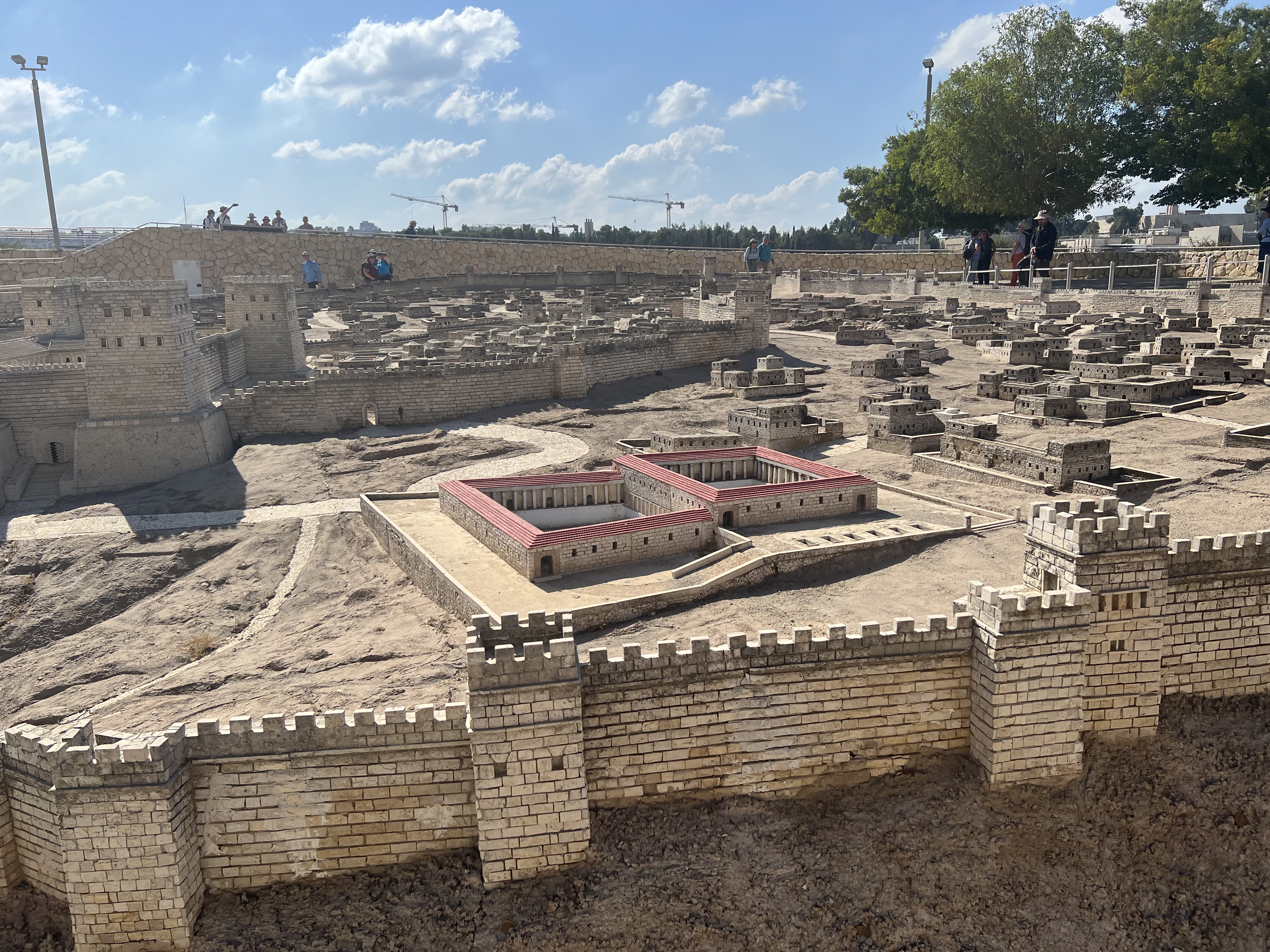
Archeology and history are important and developing sciences that have brought us a better understanding of the culture of the Bible.  But to say something does not exist because we haven’t found it yet is unreasonable. (If you ever lose your car keys, don’t call a historian and an archeologist to help you look for them; they will say that your car never had any keys and the keys don’t exist.) The pool of Bethesda is described as having five porticos (covered porches).  Archeologists had looked for a pool with five sides but found none.  Then, they found this double pool in the late 1800s with a dividing portico. (Thus, there are four side porticos and one between the pools.)  It is located just south of the temple area in Jerusalem.   Here it is in the model of First Century Jerusalem.1

Look back on our scripture from this morning.  Notice anything missing?  
There is no verse 4 in this ESV version.  In fact, verse 4 is missing from most modern translations.  Here is verse 4 in the King James Version:

4  For an angel went down at a certain season into the pool, and troubled the water: whosoever then first after the troubling of the water stepped in was made whole of whatsoever disease he had.

This is one of several examples where notes were inserted into later versions and became part of the text.  It is easy to see how this one happened.  Verse seven has the man saying, 

“Sir, I have no one to put me into the pool when the water is stirred up, and while I am going another steps down before me.”

Remember that until the invention of the printing press in the 1400s, all scripture (and all other books) was copied by hand.  What likely happened is that when copying the Bible, someone added a note explaining the reason the invalid needs to go into the pool when the water is stirred up.  Frequently, scribes add notes in the margin of the text when copying.  The problem is that the next scribe copying his work thinks that the writing in the margin is a verse that he accidentally omitted and had to write in the margin.  So that next scribe inserts it into the text. The first scribe’s note has become part of the ‘scripture.’

Here is a clear example of this.  In this copy of 1 John, the copyist wrote a note in the margin.  You can look at the earlier version of this exact text; the note is not there.  The version copied from this one incorporates the note into the text as if it were part of the original text. (1 John 5:7b-8)

Our oldest and most reliable texts do not have verse four in this passage.  The KJV relied on manuscripts after 1100 AD, while we now have manuscripts almost 1000 years earlier.  None of our texts before 500 AD have verse 4. 

 There was quite a stir when the NIV was published, and there were 49 verses “missing.” Oddly, I found this same dire warning on a friend’s FaceBook post this week after I wrote this.  Do not let this trouble you.  We are just trying to ensure we are using the most accurate copies.  I have friends who write notes in the margins of their Bibles.  I don’t think any of them want their notes to be incorporated into scripture.  In a few weeks, I will show you the one I am sure the NIV should have left out but did not.

The set of two pools functioned well as a mikvah for ceremonial bathing, which was required before entering the Temple.2  The water in mikveh had to be “living water,” flowing water from a natural source, not drawn from a well.  The upper pool would catch rainwater as it fell and serve as a holding tank.  Then, as needed, a door was opened in the wall between the pools to allow water to flow into the lower pool.   This would ensure the lower pool would not become stagnant.  When the water flowed, it was not hard to imagine that it would be ‘stirred.’   Then, it became a superstition or legend to the point that there was a multitude of people there who were “blind, lame, or paralyzed.”  People desperate for healing will believe and try almost anything. 

I am not fond of the word ‘invalid.’  I know it literally means “not strong,” and we have taken it to mean ‘weak from disease or injury,’ but it is too close to ‘invalidate’ and makes it sound (to me) like we are saying ‘worthless.’  When you have been sick for a long time, it is easy to feel worthless. And this man had been in this position for 38 years.  And now he has put his hope on healing on a pagan myth.  

Jesus sees him and doesn’t see him as worthless.  He doesn’t preach to him about his pagan thoughts.  He sees a man who has suffered for a long time and is now hopeless.  There is a lot we could talk about in this passage.  The Pharisees make a big deal because this healing took place on a Sabbath, and the man was carrying his mat, breaking their rules.  ‘Bethesda’ means house of mercy.  They ignore the miracle; they care nothing about the mercy shown and that this man is now able to walk; they focus on their own picky rule about what you can and can’t carry on the Sabbath because Jesus is a threat to their system.  But I want to focus on two things I think are important in this passage: First, Jesus’s aspect of healing, and Second, how about the other people who were there for healing but were not healed?

Jesus asks this man an odd question, and the King James Version does a better job with this translation:  “Wilt thou be made whole?”  Other versions say “…be made well” or “…be healed,” but wholeness is what Jesus is really talking about. He could have said, “Do you want to be able to walk?” but that is only one thing this man needs. He needs more than the use of his legs.  

There is a difference between being well and being whole.  There is a word in Hebrew for wholeness that I suspect Jesus would have used when he talked to this man.  It is ‘shalom.’  Shalom can be translated strictly as ‘peace.’  We define peace as an absence of war with our enemies.  The Hebrew definition is not just an absence of war but whole and complete relations with everyone and God.  Shalom is how God meant the world to be, how he created the garden in Eden to be — a place where people are in proper relations with others and with God.  Sin destroys shalom.  It breaks our relationship with others and with God.  And God is in the process of returning the world to the way it was in the garden.

When Isaiah predicts the coming Messiah, he calls him the ‘Prince of Shalom.’  Why is Jesus called the ‘Prince of Peace’?  Because only through what Jesus accomplishes on the cross can we again have true peace with God.  

Rom. 5:1   Therefore, since we have been justified by faith, we
                  have shalom with God through our Lord Jesus Christ.

Our sins broke the relationship, broke the peace.  By taking away our sins, our shalom with God can be restored.  But shalom with God is more than just a removal of our sins.  It is walking with God hand in hand, as Adam did in the garden.  Note that walking with God means walking in the same direction.  We must go God’s way to be in step with God.  If you are setting your own path and not depending on God to pick the path, then you can not walk with God.

Wholeness begins with a right relationship with God.  It is essential to get this vertical relationship settled first.  You can’t have proper relationships with any other person (horizontal relationship) until you are whole in your relationship with God.  We live in a world where over 50% of marriages end in divorce.  Why do so many relationships fail? Les Parrot, a professor of psychology, ordained pastor, and New York Times bestselling author, says the primary problem is that people believe in the romantic fairy tale and that we need to find that person who will make us whole.  We have bought into the fairy tale that there is one person out there who will make us complete.  He says most relationships fail because we rush into them before we are whole -before we settle the most important relationship with God.  Wholeness begins with a right relationship with God but does not end there.

To have true shalom, you must also be in the right relationship with others. You can’t have a broken relationship with one of God’s children and a right relationship with the Father.  

1 John 4:20-21   If anyone says, “I love God,” and hates his brother, he is a liar; for he who does not love his brother whom he has seen cannot love God whom, he has not seen. And this commandment we have from him: whoever loves God must also love his brother.

Again, you can’t be in a feud with one of God’s kids and say you love the Father.  This is why Jesus says, “Love your enemies”. 

In the Sermon on the Mount, Jesus says, “You have heard it said, do not murder, but I say to you, don’t be angry with your brother.”  Jesus has zero tolerance for broken relationships.  He wants us to have Shalom. (note)

In that same passage, Jesus tells us to walk out of the church and not to give an offering.

Matthew 5:23-24   So, if you are offering your gift at the altar and there remember that your brother has something against you, leave your gift there before the altar and go. First, be reconciled to your brother, and then come and offer your gift. 

I am still waiting for a preacher to stand up before the offering and say, “If you are about to put some money in the offering plate, and there is any person that you are not getting along with, then do not put the money in the offering plate until you have gone to them and made things right.”

Do you see how important shalom is to God?  It is so important that it became the traditional greeting of people when they met in the Old Testament, and it is still among those who speak Hebrew today.  Typically, you hear “Shalom aleichem,”  which means “peace be unto you.”  And the usual response is “Aleichem shalom,” meaning “Unto you peace.”   We often greet people with “How are you?” or “How is it going?”  The Hebrew equivalent of this is “Mah Shalomcha,”  or “How is your shalom,” or “How is your peace?”  The idea of peace and proper relations with God and others is so important.4

So Jesus asks this man, “Do you want to be whole?”  Because wholeness is more than regaining the ability to walk.  He has been down for 38 years.  Have you ever been sick for an extended period of time?  There is depression. There are thoughts that God has forgotten you or doesn’t care about you. There are feelings of uselessness. You begin to see the world differently and develop attitudes that harm your relationship with others.  Jesus sees a man who needs more than physical healing.  He needs shalom.

The man answers Jesus:
“Sir, I have no one to put me into the pool when the water is stirred up, and while I am going another steps down before me.”

He tells Jesus why he can’t get the pagan healing he is waiting for.  And Jesus does not rebuke him for his pagan beliefs.  He does not ask him to correct his theology.3  He simply says, “Rise up and walk.”   And he does.  Jesus starts him on a path to shalom by removing what this man saw as his primary problem.  Then Jesus leaves so quickly that the man doesn’t have time to get his name.   That brings me to the more difficult question this morning.   We know that there was a ‘multitude’ of sick people there at the pool.  Why did Jesus only heal this one and then quickly leave?  We could reason out some possible answers, such as that he knew the Pharisees would be after him if he hung around.  However, as we read the scriptures, there are other people Jesus doesn’t heal.  

For example, the man Peter and John see at the gate of the Temple in Acts 3:
Acts 3:1-10   Now Peter and John were going up to the temple at the hour of prayer, the ninth hour.  And a man lame from birth was being carried, whom they laid daily at the gate of the temple that is called the Beautiful Gate to ask alms of those entering the temple.   Seeing Peter and John about to go into the temple, he asked to receive alms.  And Peter directed his gaze at him, as did John, and said, “Look at us.”  And he fixed his attention on them, expecting to receive something from them.  But Peter said, “I have no silver and gold, but what I do have I give to you.  In the name of Jesus Christ of Nazareth, rise up and walk!”  And he took him by the right hand and raised him up, and immediately his feet and ankles were made strong.   And leaping up, he stood and began to walk, and entered the temple with them, walking and leaping and praising God.   And all the people saw him walking and praising God, and recognized him as the one who sat at the Beautiful Gate of the temple, asking for alms. And they were filled with wonder and amazement at what had happened to him.

This man has been daily at this gate of the Temple for a long time.  Acts 4:22 tells us he is 40 years old.  He is well-known to many people who pass by him frequently.  Jesus likely passed by him many times, but he was not healed then.  We know Jesus healed in the Temple.

Matt. 21:14   And the blind and the lame came to him in the temple, and he healed them.

Why was he not in the group healed then?  Why was he passed by without healing?  We can ask the same question ourselves.  Why doesn’t God heal everyone?

In High School, I had a friend hit by a car.  I prayed hard for him that he would survive.  He did not.  I spent hours beside my little friend Patrick’s bed when I was a resident at Children’s Hospital in Boston.  I could not bear the thought of this sweet 4-year-old dying after his Bone Marrow Transplant.  He had been through so much with Leukemia and remissions.  I had taken care of him for years.  He did not survive.  Last year, I got the call that my brother was being rushed to the hospital in serious condition.  Many prayed.  He did not recover.  Far too many times, I have found myself praying while I am in the middle of resuscitating a premature newborn that God will perform a miracle and allow these too-young lungs to function.  Far too many times, I have had to walk into a room and tell young parents the baby did not make it. We all know friends and family that we have prayed for who did not receive healing.

Why does God not heal everyone?  
He could. Sometimes, we don’t help people because we lack the resources. Some wonderful people read this blog.  I would love to give each person who reads this blog one million dollars just to see what they could do with it.  I’d like to, but I don’t have the resources. That is not God’s problem.  But there are other reasons we don’t help sometimes. We have learned this in our homeless ministry.  We have gotten calls from people to try to help get them out of jail.  But at that point in their life, jail is the best place for them.  Sometimes, you must let people hit rock bottom before they see they need to change their lives.  Sometimes, helping someone prevents them from ever learning to help themselves.  It creates dependence on you or others when they need to learn to handle their own problems.

For another explanation of why God doesn’t heal everyone, watch this clip from The Chosen.  Here, James the lesser (little James) is portrayed as a man with a severe limp.  He has just been told that the disciples will be sent out two by two and will be given the power to heal others.  James is puzzled by the fact that he will be able to heal others, but he himself has not been healed.  

Why did Jesus not heal this man?
For this man lame from birth, the Bible may give a clue in the name of the gate where he was placed.   The Greek word is ‘horaios,’ and the definition listed in Strong’s Greek Dictionary is “belonging to the right hour or season (timely), i.e. (by implication) flourishing (beauteous (figuratively)): — beautiful.”   It carries the idea of beauty due to its ‘ripeness,’ like a fruit ripens at a particular time or a flower blooms and is beautiful for just that moment.5  The writer of Ecclesiastes has that same idea:

Ecc. 3:11   He has made everything beautiful in its time. 

There is no record of a gate called “Beautiful” in any ancient document except in this section of Acts.  Therefore, we have no idea which gate they are referring to.  Perhaps it is because ‘beautiful’ is not the name of the gate but the situation.  This man was at the gate of ‘horaios, the right hour or season.’  It was the perfect time. And while he was hugging Peter and John, a stunned crowd gathers… and Peter preaches, and a thousand or more believe.  God had a purpose for that healing to happen at that exact chosen moment.  It was horaios – and it was beautiful. 

 I believe God will heal everyone one day.  One day, he will correct all wrong, cure all diseases, and bring about perfect justice.  Until then, we wait in a world full of sin and chaos for His promises to come.  We are told God will only give us good gifts.  It is hard to view horrible disease or death as good.  But we look through a glass darkly with our limited vision and understanding.  We also fail to see that our primary purpose in this world is not to live a carefree, uncomplicated life.  It is to bring glory to God.  Perhaps our illness or death will be the best way to fulfill that duty.  This is where we have to trust God.  He won’t ask us to suffer more than he asked Jesus to suffer.  The pain that Jesus endured was to bring glory to God and fulfill his will so that we may be saved.  But at the time, who could see that?  

So, how should we pray?  Most importantly, we should pray honestly.  If you study Psalms, you will see that the Psalmists are not afraid to express their deepest emotion to God, even if we might not think it is the “proper” way to speak to Yehovah.  We should, as the psalmist, pour our hearts out to God in requests for healing.  God knows your heart anyway.  But it is also acceptable to add to our heartfelt cry that we understand that God’s will may not be what we desire to happen and that we relinquish our will and ask Him to do His will.  This is how Jesus prayed in the garden.  “My Father, if it be possible, let this cup pass from me; nevertheless, not as I will, but as you will” (Matt 26.39).  This does not demonstrate a lack of faith to pray in this manner.  It was not for Jesus, and it is not for you.  In fact, it demonstrates your trust in God to vocalize your willingness to seek his will and not your own.

There is so much sickness, depression, and suffering in this world.  Many are waiting by the ‘beautiful gate’ for God’s perfect time for their healing; let it be now, or let it be in the world to come, but while we wait, let us seek wholeness, let us seek shalom.  Let us strive to be first in proper relationship with God and then in good relations with everyone.  And may our life give glory to the Father above in all we say and do.

  1. The Siloam pool, discussed in John 9, was rediscovered during excavation work for a sewer in the autumn of 2004.
  2. There is also a debate on whether the pool was built for ceremonial washing ( a mikvah) or was a pagan pool for the cult of Asclepius, or healing.  It was used as an Asclepion after the fall of Jerusalem, but I don’t think it was in the time of Jesus.  Certainly, Pharisees would not have been seen in such a pagan place.  Also, the steps are designed to function well as a mikvah.
  3. Good lesson.  Do what Jesus would do.  Just because someone’s theology seems wrong to you (even if you are right), sometimes you give them the help they need before you think about preaching to them.
  4. Paul, in Romans 12:18 says, “If possible, so far as it depends on you, live peaceably with all.”  Some people refuse to be reconciled no matter how hard you try.  (Jesus definitely understands this.)
  5. Greek has several words for time. Chronos is the usual generic word for time and is the root for our word chronology and others. Kairos refers to a special or appointed time or season. When Jesus says, “My hour has come,” the word for ‘hour’ is ‘kairos’. ‘Horaios is a smaller window of time than Kairos, a sacred moment, and is only seen four times in the New Testament, two of them in this passage.  

May 18-24, 27 A.D.  The Nobleman’s Son- The Year of the Lord’s Favor #33

Week 14 ———  The Nobleman’s Son
John 4:43-54

John 4:43   After the two days he departed for Galilee.  (For Jesus himself had testified that a prophet has no honor in his own hometown.)   So when he came to Galilee, the Galileans welcomed him, having seen all that he had done in Jerusalem at the feast. For they too had gone to the feast.  

So he came again to Cana in Galilee, where he had made the water wine. And at Capernaum there was an official whose son was ill. When this man heard that Jesus had come from Judea to Galilee, he went to him and asked him to come down and heal his son, for he was at the point of death. So Jesus said to him, “Unless you see signs and wonders you will not believe.”  The official said to him, “Sir, come down before my child dies.” 50 Jesus said to him, “Go; your son will live.” The man believed the word that Jesus spoke to him and went on his way.   As he was going down, his servants met him and told him that his son was recovering.   So he asked them the hour when he began to get better, and they said to him, “Yesterday at the seventh hour the fever left him.”   The father knew that was the hour when Jesus had said to him, “Your son will live.” And he himself believed, and all his household.   This was now the second sign that Jesus did when he had come from Judea to Galilee.

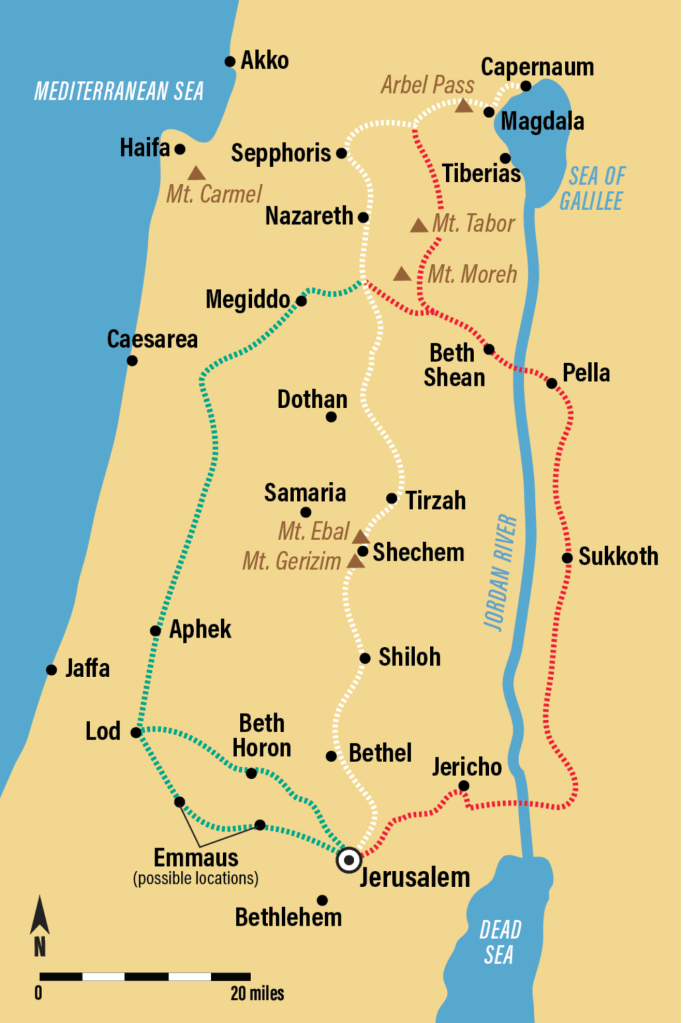
So, after spending two days in Samaria, they continue to Galilee and, as before, pass through his hometown of Nazareth and on through Sepphoris to Cana.  Already, he is not well received in Nazareth, so his path goes through Nazareth, but he does not stop there.  He explained to his disciples that a “prophet has no honor in his hometown.”  (More to come in Nazareth later.)  

In Cana, he is met by an “official,” literally a ‘royal officer.’  This would be some official of Herod Antipas, the Tetrarch. Some have proposed he was Manaen, Herod’s foster brother, who is seen in Acts 13:1 as a member of the church in Antioch. Others suggest it was Chuza, the husband of Joanna, one of the women with Jesus and the disciples in Luke 8:3, who supported his ministry.

The official had heard of Jesus’ prior miracles and knew that he was coming from Judea, so he met him at Cana. He asks Jesus to “come down” to Capernaum (Capernaum is a lower altitude than Cana at the Sea of Galilee—up and down are more important when you are walking 20 miles).  His son is “at the point of death.”  “Asks” here may not express the intensity of the Greek.  This is the same word for ‘beg,’ and the tense is continuous – so “continuously begged Jesus to come down” is appropriate.  Jesus replies “to him” but speaks in the plural “you” twice in his response, so he is talking to everyone there. “Unless you [all] see signs and wonders you [all] will not believe.  “Signs and wonders” is John’s way of saying ‘miracles.’1  But the word for signs is the Greek word for ‘sign-post,’ and it better conveys that these miracles of Jesus are pointing to something.  Leon Morris, in the New International Commentary of the New Testament, says:

Jesus says, “Go; your son will live,” and the man departs. Verse 50 says, “The man believed the word that Jesus spoke to him and went on his way.”  The man only gets Jesus’ word, which is enough for him.  (Did you see that Gideon?)  We are told this happened at the seventh hour.  Remember, John uses the Jewish measure of time, not the Roman one that we are accustomed to, so the seventh hour would be seven hours after sunrise (~6 am), so our 1 pm.  He then begins his 20-mile journey to Capernaum.

He is met by his slaves, who tell him that his son is recovering. He inquires when he began to improve and is told, “Yesterday at the seventh hour.”  That ‘yesterday’ sounds odd to us, but remember that the day for the Jew begins around sunset (~6 pm).  

Jesus says ‘go’ and the man believes and goes.  He shares his belief and his whole household believes.  Note that belief is accompanied by action.  (From a Jewish perspective, belief without action is not belief at all.)  This is a good lesson for us.

  1. The Synoptic Gospels typically use the word “dunamis” for Jesus’ miracles, concentrating on the power of Jesus. (‘Dunamis’ is the basis for our word ‘dynamo’ or ‘dynamite.)
  2. Morris, Leon.  New International Commentary of the New Testament, “John”.

May 18-24, 27 A.D.  The Samaritan Woman at the Well- The Year of the Lord’s Favor #32

Week 14 ———  The Samaritan Woman at the Well
John 4:5-42

Several stories in the Bible begin with a man meeting a woman at a well. This setting is where Rebecca is found as a wife for Isaac, where Jacob meets his future wife Rachel, and where Moses meets Zipporah whom he will marry. All of these stories all end in marriage, but today’s story is different.

You have probably heard several sermons on this story.  I have, and they all pretty much go the same way:  The disgraced, sinful woman encounters Jesus, and he reveals her sin, and she comes to believe in him.

Here is a typical rendering, from ‘Got Questions Ministry’ “What we can learn from the woman at the well”:

“…she was an outcast and looked down upon by her own people. This is evidenced by the fact that she came alone to draw water from the community well when, during biblical times, drawing water and chatting at the well was the social highpoint of a woman’s day. However, this woman was ostracized and marked as immoral, an unmarried woman living openly with the sixth in a series of men. The story of the woman at the well teaches us that God loves us in spite of our bankrupt lives.”

And another traditional view from John Piper, in his sermon titled: ‘God Seeks People to Worship Him in Spirit and Truth’:

“If people are spiritually asleep, you have to shock them, startle them, scandalize them, if you want them to hear what you say. Jesus was especially good at this. When he wants to teach us something about worship, he uses a whore.”

That is the traditional interpretation.   Today I want to challenge that interpretation.

Forever this story has been read with the assumption that this woman was of ill repute.  One of my Hebrew teachers, Eli Lizorkin, wrote a book in 2015, on the gospel of John. In the chapter on John 4 he questions that presupposition.  Then this past week, I read a book by Caryn Reeder that focused on the problems with the traditional approach to this woman (and many other women in scripture.)

So, let’s take a new look at this story.

The location is Sycar, a village near Shechem, where Jacob’s well was. This was one of the first pieces of land in Israel owned by the Hebrews, and it is where Joseph’s bones were brought from Egypt to rest. 

Joshua 24:32   As for the bones of Joseph, which the people of Israel brought up from Egypt, they buried them at Shechem.

A divine appointment.

Jesus is waiting for her when she arrives at the well at an unusual time, noon.  Most people would have already made their daily trip for water in the morning. The suggestion is that she is intentionally avoiding others.  This had led pastors for centuries to say that she was a sinful woman, having been married multiple times and now living with a man out of wedlock.  These pastors describe her as shunned by her village.  This is a reasonable conclusion based on our modern culture.  But this story didn’t happen in our culture.  So let’s place the story back into its original setting.

Why all the marriages?   There are two ways marriages can end in Israel in the first-century culture: divorce or death.

In Jesus’ day, divorce was not uncommon, but only men could file for divorce, and they could do it for pretty much any reason.  This was a subject of much debate by the Pharisees of the day, and they questioned Jesus on his opinion in Matthew 19.1 One of the common reasons for divorce was that the woman could not bear a child.  There was no procedure for women to file for divorce.2  If divorced, a woman did not take anything from the marriage, including anything the husband had given them during the marriage.  They had the right to take the original dowery, but this often didn’t happen.  So many women left with almost nothing and no way to provide for their needs.   

Women in Jesus’ culture typically were married when they were 12 – 15 years old, and husbands were usually 10-15 years older.  With the state of medical care, accidents and illnesses would mean many would not live past their mid-30s.  As in divorce, if her husband died, the wife did not inherit anything from the husband’s estate; it all went to his heirs.  That included the family home.  She again only had the right to her dowery.  Often, this meant she had no place to live.  If she had an adult son, he might be able to care for her. Any younger children belonged to the husband’s family. So frequently, in a divorce or the death of a husband, the wife would lose almost everything, including her home and children.  

“The man you now have is not your husband.”  We jump to the conclusion (based on our prior assumption of her character) that she is living out of wedlock.  If she has had and lost five husbands, no matter the reason, she will unlikely marry again.  A single woman in this culture could not live on her own. Women who cannot marry seek refuge with some male relative who can help support them. She may be living with a relative or another man out of necessity.  We don’t know.3

One other thing has always bothered me about the traditional characterization of this woman.  If she was seen by her community as a ‘horrible non-repentant sinner’, how is it possible that she can run in the village bearing witness to the Messiah, and suddenly everyone follows her back to the well?  That seems unlikely.  If she, instead, was pitied by her community for her misfortune and depression, it is more reasonable that this sudden change of spirits would lead them to take the hike to the well to investigate. 

Given this culture and these uncertainties, you can certainly not jump to the conclusion that she is a sinful woman. How odd is it that sermons on this story seem to always focus on her sin when sin is never mentioned in Jesus’ conversation with the woman?   Jesus doesn’t identify her relationships as sinful, nor does he offer her forgiveness. Jesus does not ask her to repent or change her life. Elsewhere in the Gospel of John, we see Jesus freely discussing sin — the woman caught in adultery is told to “go and sin no more”.  He tells the paralytic, “Your sins are forgiven.”  But the omission of any mention of sin here is striking.4

Remember, this is a shame/honor culture.  If you have read much of the Old Testament, you understand the shame of a woman who is not married and the even worse shame of a woman who can not bear children.  Whether this Samaritan woman is at fault for her prior relationships or not, her position is the same.  She lives in shame in her community, from either their accusations or their pity.  It seems Jesus doesn’t focus on why she is living as she is.  His concern is not who is at fault.  He looks past the blame and sees a hurting woman he can help.

How unlike Jesus we can be.  We are very quick to decide if we are willing to help people based on how much they deserve our help.  We are much more likely to support an innocent victim than we are someone whose bad behavior got them into a mess.  We have seen this over and over in our homeless ministry.  A father loses his job, and his family with three young children finds themselves homeless.  People rush in to help.  We get more offers for help for them than we can handle.  But a young man comes in the same day who made bad decisions and became involved with drugs and lost his home — that rush of offers never comes.  He sees the response that the churches have to the family with kids while he is ignored.  What does he learn about the church?  Some people deserve grace, and some people do not.  That is a poor reflection of Jesus.

People say, “He got what he deserved.”  That is a very common response.  But is it a Christ-like response?   One of my friends said about the young man, “He made his bed, now he has to sleep in it.”  How ironic. The problem is that right now he doesn’t have a bed to sleep in or a place to put one.  He may be at fault, but he is also in need.

We often reserve our mercy and grace for those we deem worthy. But aren’t we grateful that Jesus dispenses grace and mercy freely, even when we don’t deserve it? None of us can earn God’s grace through our actions. Isn’t it a comfort to know that Jesus offers grace unconditionally? I don’t know anyone who wants to stand in front of God at judgment and ask to be given what they deserve.

As we discussed last week, Jesus went out of his way to meet this woman. He drags his disciples down what they feel is a wrong and dangerous path to have this one encounter. They do not see these Samaritans as worthy of their attention or God’s love. But Jesus comes to bring her hope, healing, and salvation.

But first, he has to break through some problematic barriers.   Remember, the Samaritans and Jews are bitter enemies with a long history of strife.  No Jew would share a meal with a Samaritan or drink from a Samaritan’s vessel.  Remember the quote from the Mishna:

Mishna Shebiith 8:10  “He that eats the bread of the Samaritans is like to one that eats the flesh of swine.”

Jesus starts the conversation by asking her for water, breaking any expectations she might have had about this Jew.   He then turns the conversation to ‘living water’, which he can offer her.  She initially does not understand this concept.5  Jesus then reveals himself as a prophet, and she responds by asking him the critical question regarding worship for a Samaritan.  Where is the proper place to worship?  Remember, the Samaritans had been, at times, not allowed to participate in temple worship in Jerusalem.  They had built their temple on Mt Gerizim, which the Jews had destroyed around 130 years before this encounter.  So there is no temple for her to worship in.  And this woman could not go to the Jerusalem temple due to racial strife.  But even if she could, she would have been restricted to the outer court, the “Women’s Court” simply because she was a woman. Women had a lower place in the religious culture of Jesus’ day.  This was not God’s idea.  There is no Biblical command for a court of women in the Tabernacle or the Temple.  It is an invention of the culture of men.  Sadly, some religions still refuse to admit women to certain areas of the church just because they are women.  Further, this woman would have a hard time even going to the local synagogue because of her shame.  

So she asks, where is the proper place to worship?  This is an important question that we still fail to grasp today.  Jesus tells her that salvation comes through the Jews, but now worship can happen anywhere and has no racial restrictions. God is to be worshiped in spirit and truth. Jesus tells her that the day is here, that the location won’t matter, and that she will have full access to God. Can you imagine what this would mean to her?

It is not about where.  Not this mountain or that mountain.  Not this temple or that temple.  Not this church or that church.  It is not about methods.  Not this denomination or that denomination.  Not with this style of music or that.  Worship is our response to the awe and wonder of a mighty God.  The Hebrew word for worship is avad which is also the word for work.  Worship is not simply a state of mind; it is doing the work that God demands. We call the church building a place of worship.  If this is the only place you worship, then you don’t comprehend what Jesus said to this woman.  What Jesus is saying is that place doesn’t matter.  The place of worship is anywhere the spirit is.  Anywhere you go is a place of worship.  Your occupation, your home, your grocery store, your friend’s house – these are all places of worship.  Worship is what we do every day of the week as we walk in obedience to him. We call this a worship service. Do you see that?  Service is the work a servant does. But the community worship we do for one hour on Sunday morning is just a tiny part of our week.  The other 167 hours in the week we worship as we walk with God and do his work.  We do not work to earn salvation. We do the work of God because that is our way to worship every day of our lives.  Jesus said we show our love for him by following his commandments.  Worship is doing justice, loving mercy, and walking humbly with God.  (Micah 6:8)

This is all too good for her to believe, even coming from a prophet.  ‘That’s nice, Mr. Prophet, but only the Messiah can reveal that truth when he comes.’And that is when Jesus tells her he is the Messiah.  She is the first person he reveals himself to.  And now she knows what is too good to be true — it has just become true.  She drops her water jars and runs into town.

Then Jesus speaks with his disciples an often quoted verse:

“Do you not say, ‘There are yet four months, then comes the harvest’? Look, I tell you, lift up your eyes, and see that the fields are white for harvest.”  John 4:35

Do you understand the significance of the placement of this verse right here in this story?   Jesus speaks of a field ready for harvest, and then verse 41 tells us: “And many more believed because of his word.”  The field Jesus is talking about is a field that the disciples would have never considered to be their responsibility to harvest, never considered to be capable of harvest.  This was a field of enemies.  A field full of hated people.  They were people who had polluted their worship and were unclean.  But not to Jesus.  

We can not set limits on God’s view of the harvest.

Do you see the trouble Jesus has gone through to teach the disciples and us this lesson?

God’s original plan was for the Jews to be his kingdom of priests to carry his message to the whole world.  But they were not obedient to this plan.  Their view of God’s kingdom was too small.  Samaritans part of the Kingdom?  No way. We don’t even talk to them, we don’t drink from their water jars, and we don’t allow them to come to our temple.  They are our enemies.  A woman?  Are you serious?  We keep them in the outer courts.7  Now a Samaritan woman who is living in shame?  She is probably a horrible sinner.  She has no place in God’s harvest.

But Jesus says, “Yes!”  Samaritan’s? “Yes!”  Enemies? “Yes!”  Women? “Yes!”  Sinners? “Yes!”

How big is your view of God’s kingdom?  Is it for the poor, is it for the prisoner, is it for the Hamas member, is it for your neighbor who is rude or mean, Is it for the people who are public sinners as well as those who we pity?  This woman dropped everything and ran to tell people about the Messiah.  And here we sit, clutching our water pots.

  1. Note that Jesus in Matthew 19 is not giving an exhaustive teaching on divorce, but answering a specific question.
  2. An exception is that the very wealthy or highly politically connected women could, in certain situations file for divorce.
  3. Caryn Reeder notes in her book, The Samaritan Woman’s Story: Reconsidering John 4 After #ChurchToo, “The characterization of the Samaritan woman as an adulterer or prostitute exemplifies the dehumanizing, reductive sexualization of women in the theology and practice of the church. This pattern of interpretation endlessly repeats: Deborah and Jael, Bathsheba, Mary Magdalene, the woman who anoints Jesus in Luke 7: 36-50. These women (among many others) are categorized and defined on the basis of gender and sexuality.”
  4. And the centuries of male-dominated church leaders’ insistence on proclaiming the sin of this woman is even more striking.
  5. It is interesting to compare this one-on-one conversation with Jesus’ conversation with Nicodemus in the previous chapter.   Nicodemus is a leader of the Jews, a great teacher, and held in high esteem by the community.  She is of the lowest social status.  She is not even given a name.  She encounters Jesus in the middle of the day while Nicodemus comes at night, and Jesus says a lot to him about the light and the dark. They both initially have trouble understanding Jesus’ symbolism (born again, living water.)  But in a surprising twist, Nicodemus says little in his conversation with Jesus, while this woman holds her own.  And this unnamed Samaritan woman becomes the model for us to believe and witness, not the great Pharisee, Nicodemus.
  6. Since the Samaritans only had the first five books of the Bible, their primary prophecy on the Messiah was Deuteronomy 18:18 which refers to a prophet like Moses that will come and speak the very words of God.
  7. “It is frighteningly easy for a woman in the church to absorb a message that she is lesser, inferior, and lacking in some way.”  Lucy Peppiatt, in Recovering Scripture’s Vision for Women.

May 17-24, 27 A.D.  Jesus must go through Samaria- The Year of the Lord’s Favor #31

Week 14 ———  Jesus had to pass through Samaria
John 4:1-4

Recap:
Jesus was baptized on Feb 16 and spent 40 days in the wilderness.  The satan tempted him on March 28.  Then he returned to the area where John was baptizing, and John said, “Behold the Lamb of God that takes away the sins of the world.”  They travel north to Galilee, where he turns the water into wine at Cana.  Then he travels south to Jerusalem for the feast of Passover.  He throws the money changers out of the temple on April 10, has Passover on April 11, and then speaks with Nicodemus on April 12.  He leaves after the week of Unleavened Bread, and his disciples are baptizing in Judea.  When he begins to be noticed by the Pharisees, he decides to head north back to Galilee. 

Why did Jesus have to pass through Samaria?

If you were going north to Galilee in Jesus’s day, you had three choices: The most direct route was to head north and go through Samaria. This is the fastest way, but the Jews rarely used it because travel through Samaria was dangerous. So most chose to go east across the Jordan and then north before crossing the Jordan again near Beth Shean or Jezreel.  The western route was even more difficult.

I want you to take two minutes to watch this clip from “The Chosen.”  I am usually impressed at the series’s effort to try to be culturally and historically accurate.  They portray Jesus’ journey with the disciples as he decides to go through Samaria (much to their surprise.)  There are two minor disagreements with the Scripture in this episode.  First, they have somewhat placed this story out of order — note in the clip that Jesus has already called most of the disciples.  Secondly, they are traveling in the opposite direction from the Biblical account (north from Judea to Galilee in Bible and south from Galilee in the clip).  Nevertheless, I feel that the disciples’ response to Jesus’ decision to take the journey through Samaria is so well done that this has become one of my favorite scenes in the series.

John tells us “he had to pass through Samaria”  without explaining why. We only have one story on this journey: the encounter between Jesus and the Samaritan woman at the well. So, we must assume this is his divine appointment. Next week, we will look at that encounter, but to understand this story, we must understand the conflict between the Jews and the Samaritans. Where did they come from?

The History Lesson

Around 1000 BC, David became king over all of Israel, and when he died, his son, Solomon, became king, and the land reached the peak of its prosperity.  Solomon dies in 931 BC, and there is a struggle for control. His son, Rehoboam, makes very poor decisions, and the kingdom splits.  Ten tribes in the North became known as ‘Israel’ (yes, a little confusing, sorry).  The capital of Israel was established in Samaria, with Jeroboam as their king.  The tribes of Judah and Benjamin in the South became known as ‘Judah’ with their capital remaining in Jerusalem and Rehoboam as their king.  Jeroboam’s first act in the North was establishing areas for worship in Bethel and Dan (so Israel wouldn’t have to travel back to Jerusalem to worship.)

1 Kings 12:26-29    And Jeroboam said in his heart, “Now the kingdom will turn back to the house of David.   If this people go up to offer sacrifices in the temple of the LORD at Jerusalem, then the heart of this people will turn again to their lord, to Rehoboam king of Judah, and they will kill me and return to Rehoboam king of Judah.”   So the king took counsel and made two calves of gold. And he said to the people, “You have gone up to Jerusalem long enough. Behold your gods, O Israel, who brought you up out of the land of Egypt.”    And he set one in Bethel, and the other he put in Dan.

Things started badly for the Northern Kingdom of Israel, and they got worse until God sent Assyria to sack Israel in 722 BC. Assyria’s method of controlling its conquered countries was to export the leaders and a percentage of the population and then bring in people from other conquered nations to cause the people to lose their distinctiveness and be less likely to rebel.

2 Kings 17:24   And the king of Assyria brought people from Babylon, Cuthah, Avva, Hamath, and Sepharvaim, and placed them in the cities of Samaria instead of the people of Israel. And they took possession of Samaria and lived in its cities. 

The Assyrians (in the Annals of Sargon II) claimed to have deported 27,290 people, but it is currently thought that only about 10% of the population of the northern kingdom was deported, and only about 1000 people were brought into the country from beyond.  So, there was less of an influx of foreign people than previously thought.  This is important because one of the reasons the Jews in Judah disliked the Samaritans was that they maintained the Samaritans were people who broke God’s laws about intermarriage; they called them half-breeds. The Samaritans maintained they were descendants from the tribes of Levi, Ephraim, and Manasseh (Joseph), who were not deported to Assyria.  While the Bible mentions the influx of foreigners, I can’t find any Biblical reference to their intermarriage.1  2 Kings 17:29ff discusses the foreign idols placed in the land, but the transplanted people place these, not the people originally from the Northern Kingdom who the Assyrians did not carry away.  “But every nation still made gods of its own and put them in the shrines of the high places that the Samaritans had made, every nation in the cities in which they lived.” (2 Kings 17:29).  There are around 900 Samaritans today, with most living in Nablus which is in the location of the ancient city of Samaria.  Interestingly, genetic studies were done in the past 25 years that support the Samaritans’ claim of their pure ancestry, refuting the once-held claims of the Jews in the Southern Kingdom.  

One hundred thirty-six years after the Northern Kingdom was decimated, Babylon conquered Judah, and Jerusalem and the temple were destroyed. Babylon had a different policy of controlling conquered nations. They exported most people from the land, leaving only a few very poor.  So Judah was exiled in Babylon for 70 years.  Persia conquered Babylon and allowed all those captives to return to their homes.  

When the exiles returned, they began rebuilding the temple. Some of the people who had already lived in the land offered to help, but they were refused.

Ezra 4:1   Now when the adversaries of Judah and Benjamin heard that the returned exiles were building a temple to the LORD, the God of Israel,  they approached Zerubbabel and the heads of fathers’ houses and said to them, “Let us build with you, for we worship your God as you do, and we have been sacrificing to him ever since the days of Esarhaddon king of Assyria who brought us here.”  But Zerubbabel, Jeshua, and the rest of the heads of fathers’ houses in Israel said to them, “You have nothing to do with us in building a house to our God; but we alone will build to the LORD, the God of Israel, las King Cyrus the king of Persia has commanded us.” 

These were likely not Samaritans, as these people say the king of Assyria ‘brought them here.’  They are the imported people from the nations listed in 2 Kings 17:24.  But at this point, the people of Judah have refused to see any difference between the Jews who were not taken and the Gentiles who were brought in.  They lump them all together. (As do many people who discuss this time in history.)

The final separation between the Jews of Judah and the Samaritans comes when Nehemiah discovers that a grandson of the high priest, Eliashib, had married a daughter of Sanballat, the governor of the province of Samaria.  Since Nehemiah saw her as ‘non-Jewish,’ he felt the priesthood had been defiled and drove the high priest out of Jerusalem (Nehemiah 13:28-29). According to the historian Josephus, Sanballat then built a temple on Mount Gerizim where this exiled priest could function.

And then things get even worse.

After Alexander the Great died, his kingdom was divided among three generals.  The Seleucid leader Antiochus Epiphanes persecuted the Jews. He desecrated the temple and altar, leading to a rebellion and the Maccabean Wars in the 2nd century BC. The Jews in Judah asked the Samaritans for help fighting off the Selucids. However, they refused and aligned with the Selucids fighting against Judah. After Judah prevailed, in 108 BC, they went to Mt Gerizim and destroyed the Samaritan’s temple in retribution.  The Samaritans finally struck back in 6 AD and sneaked into the Jerusalem temple at night and scattered human bones around, defiling the temple and ruining the Passover celebration.

A few quotes from literature from that time further reveal the animosity:

The Wisdom of Ben Sirach 50:25-26  (ca. 200 BC)  “There are two nations my soul detests, the third is not a nation at all; the inhabitants of Mt Seir (the Edomites), the Philistines, and the stupid people living at Shechem.

Mishna Shebiith 8:10  “He that eats the bread of the Samaritans is like to one that eats the flesh of swine.”

Finally, there is the story in Luke 9:51-56 where Jesus is again traveling through Samaria to the Feast of Tabernacles.  One of the Samaritan villages would not receive him, because he was a Jew headed to Jerusalem, so James and John ask Jesus “Lord, do you want us to tell fire to come down from heaven and consume them?” (Luke 9:54).  Jesus rebuked them and traveled on.2  The Hatfields and the McCoys had nothing on the Jews and the Samaritans.  

Samaritans were not just social outcasts — they were the enemy, the most hated people on the planet by Jews in Jesus’ day.  When Jesus said, “Love your enemies,” the people they would have pictured as enemies were Samaritans.  (Incidentally, who do you think about if you hear “Love your enemies”?)

Jesus had to pass through Samaria. He had a divine appointment. He will not miss this appointment, even if it means taking a more difficult journey that no one wants to take. He takes the path less taken only to have a meeting with this one woman. The woman we will see next week was isolated, lonely, and ignored by her community. In all of Samaria, he considers this one woman. And that conversation with one woman will lead to many believing in him.

Jesus had the ability to see the one among the many. In the Gospels, he saw a funeral procession with many mourners, yet he focused on one grieving woman. Amidst a crowd, he noticed the one woman in need who touched the hem of his garment. Walking through a busy market, he saw one tax collector and stopped to invite Matthew to follow him. Jesus saw the one who needed him most.  

“The God who sees”

Hagar is an Egyptian who is given to Abraham’s wife, Sarah, as a handmaiden.  She is mistreated and forced into the wilderness.  There, God finds her and gives her comfort and encouragement.  She calls him ‘El Roi’, the God who sees.   If you have ever felt lonely in a crowd, hopeless, or isolated, if you think the whole world is against you — God sees you, loves you, and looks out for you.  Like Hagar, he may not change your circumstances but will change you so you can bear them.

Sometimes, it is easier to see the many instead of the one.

It is easy to see the many and say they need help. It is easy to see the TV advertisement with starving children and say, “Let’s donate to help the children in Africa.”  It is not difficult to drop off some food at the local food pantry to help the hungry in our town, take some clothes to the Salvation Army, or go to a charity dinner to help single mothers. These are all good things, but that is not how Jesus did ministry.  Jesus spent more time talking to individuals than he did preaching to crowds.

Jesus was all about reaching out and making relationships, especially with those left out by society — look at who he worked with:  the hated people like Samaritans, tax collectors, prostitutes, zealots, the poor, and lepers — people no one would put on their dinner invitation list.   Can we just for a moment think about who Jesus ministered to and then look at our lives and see if we are following Jesus?

Did you notice in the clip that the disciples were ahead of Jesus, looking at a map? It is hard to follow someone if you are walking in front of them. The disciples were goal-oriented. They knew their final destination and were headed there with blinders on. They would never consider going to Samaria, calling a tax collector, touching a leper, or making a prostitute a disciple. At the end of the clip, Jesus steps ahead and says again, “Follow me.”

There are so many people left out—so many needs.  And again, we need to, like Jesus, focus on not the many but the one.

Mother Teresa worked for six decades among the desperate and hopeless streets of the extremely poor in Calcutta, India. When asked how she was not overwhelmed by the crowds in need around her, she said,  “I don’t see crowds; I see individuals.”

On my first trip to Guatemala to do medical missions, we woke up early and drove up the side of a volcano to a village where the missionary told people to gather for free medical care. As we wound up that road, we began to pass people standing in a line that stretched for what seemed like miles. I asked our missionary, “What are those people in line for?”  He turned around and grinned and replied, “To see you.”  That day, I was overwhelmed by the crowd of sick children.  Then, I got some of the best advice I had ever received in my medical career.  “You will see hundreds of children today.  The needs will be great, and you will not be able to meet them all.  Do not see the hundreds. See the one.  The only one that matters is the one in front of you at the moment.  Give your all to that one.”  

There is a well-known parable I like to share with people as we depart for mission trips.  A man was walking on the beach early one morning.  He was the only one out that early, except for a boy he could see far in the distance.  As he walked further, he saw the little boy throwing something into the ocean.  As he got closer, he saw that the tide had washed up thousands of starfish on the beach.  They were drying out in the morning sun, but the little boy threw one after another back into the water.  The man said, “Hey, kid, there are thousands of starfish washed up.  Stop wasting your time.   You can’t possibly make a difference.  The little boy picked up another starfish and threw it as far as he could into the ocean and then replied to the man, “It made a difference to that one.”

Do you see the many, or do you see the one?

Later in his ministry, a Bible scholar will ask Jesus a question that Jesus answers by telling the parable of the Good Samaritan. The question was, “Who is my neighbor?”  The answer was “The one who saw to the needs of another.”  It is easy to say everyone is my neighbor.  But you can’t meet “everyone’s” needs.  Who is your neighbor?  Do you know the people who live around you?  Do they have needs?  You can’t meet everyone’s needs, but you can meet someone’s needs.  We need to follow Jesus’ lead and see the one, make relationships, and share the love of God. There are divine appointments out there for each of us.

Let me close this by sharing one of my divine appointments.

It had been a tough week.  That Monday, I saw a very sick 10-day-old baby and sent her by ambulance to Children’s Hospital.  She ended up that evening in the ICU, and I was told she was stable.  She died the following day.  I had tried to reach out to the family and share my condolences and offer support, but the phone number and address we had were not good.  I was on-call that weekend and had finished my hospital rounds on the babies and sick kids by noon.  I was just ready to go home and forget the week.  I stopped for gas on the way home and was headed in to pay (because, of course, the pay-at-the-pump was broken.)  A rough-looking man was sitting on the curb near the door, and I got the message from God that I needed to talk to him.  Begrudgingly, I did.  We talked a bit, and I discovered he had hitchhiked over 400 miles in the past several days.  He was headed to Guntersville, where I was headed.  I offered to take him there.  On the way, I asked him what brought him to our little town.  He teared up and said he was coming for the funeral of his 2-week-old granddaughter, whom he never got to see.  Sure enough, it was the baby I had seen.  So, God enabled me to reach out to this family in a way I could not have imagined.  After leaving their house, I had to repent of my poor attitude, my reluctance to listen, and all the other times I had ignored the Holy Spirit when I was so focused on going where I wanted to go.

Let me challenge you this week to see beyond the many and see the one.  God has a divine appointment for you.  Don’t miss it.

And let me ask you to do one more thing: Please share your own story of your divine appointment. I would love it if several of you posted your story as a comment on this blog. It will bless us all.  

Thanks.  

  1. I could not find any scriptural evidence for the common belief that there was a large amount of intermarriage between the Israelites not taken by Assyria and the imported people. If you know if a reference, please let me know.
  2. Jesus rebukes James and John for their continued animosity towards the Samaritans. Perhaps this is part of the reason Jesus tells the parable of the Good Samaritan in the following chapter in Luke.

May 11-18, 27 A.D.    – The Year of the Lord’s Favor #30

Week 13   Jesus has the Spirit without measure.
John 3:25-30

Last time, we talked about John the Baptist’s attitude. His disciples came to him worried because Jesus’ disciples were baptizing more. John said that is the way it is supposed to be. I am not worthy to untie his sandals. It is not about us. We are here to introduce Jesus. “He must increase, and I must decrease.”  We continue today with John’s discussion with his disciples as he tells them why it is all about Jesus.  There is a lot here to unpack.  What is so special about Jesus?

John 3:31-36   He who comes from above is above all. He who is of the earth belongs to the earth and speaks in an earthly way.  He who comes from heaven is above all.  He bears witness to what he has seen and heard, yet no one receives his testimony. Whoever receives his testimony sets his seal to this, that God is true. For he whom God has sent utters the words of God, for he gives the Spirit without measure. The Father loves the Son and has given all things into his hand.  Whoever believes in the Son has eternal life; whoever does not obey the Son shall not see life, but the wrath of God remains on him.

John says Jesus is above all.  He says it twice for emphasis.  And John is not even aware of all of Jesus’ story.  He knows that Jesus is the expected Messiah, but there is much there that John does not know at this time.   He did not have the advantage Paul had to look back on the whole ministry of Jesus.  Paul expressed these thoughts on the supremacy of Jesus:

Col. 1:15-20   He is the image of the invisible God, the firstborn of all creation. For by him, all things were created, in heaven and on earth, visible and invisible, whether thrones or dominions or rulers or authorities—all things were created through him and for him.   And he is before all things, and in him all things hold together.   And he is the head of the body, the church. He is the beginning, the firstborn from the dead, that in everything he might be preeminent.   For in him all the fullness of God was pleased to dwell, and through him to reconcile to himself all things, whether on earth or in heaven, making peace by the blood of his cross.

John simply said that Jesus is ‘above all’. John contrasts with himself, being ‘of earth’ who can only speak in an ‘earthly way’, while Jesus, who comes from ‘above’, can talk about what he has seen and experienced in the presence of the Father. Sadly, John says that few receive the eyewitness testimony that Jesus brings.  

“For he whom God has sent utters the words of God, for he gives the Spirit without measure.”

Some versions make the pronouns challenging to resolve, but “he whom God has sent” is Jesus.  And Jesus “utters the words of God” because God gives Jesus the “Spirit without measure.”  Why does John say Jesus is given the Spirit with no limit?  To understand this, we must understand what John and the other disciples of Jesus knew about the Holy Spirit.  

But first a Bible trivia question:
When is the first time we see the Holy Spirit in the Bible?   (No peeking.)

The Spirit appears in the third sentence of the Bible.  

“And the Spirit of God was hovering over the face of the waters.”  

That Hebrew word for “hovering” is used in the Old Testament to describe how a bird hovers or flutters.  You have seen a bird ‘hovering’ over their nest as they land there to care for their young.  The Holy Spirit is pictured this way in creation.  The Hebrew word for the Spirit is ‘ruach.’  Ruach can be translated as “Spirit,” “wind,” or “breath.”  Why did the Hebrews devise these multiple uses for the word thousands of years ago?

If you look outside when a storm is coming, you will see the trees moving.  But you know trees are inanimate objects.  They don’t move by themselves.  So then, Hebrew person 4000 years ago, what moves them? It is something you can not see.  There is an invisible energy that animates them. They called it the Ruach.  It is the force of creation.  It animates the trees, and it animates us. 

We are described in Genesis 3:19 as dust.  I remember reading long ago that if our bodies were broken down into their basic chemicals, we were only worth about $1.98.  You’ll be glad to know inflation has made our bodies worth more.   Wired magazine noted in 2003 that your body contains $7.12 worth of phosphorous, $5.95 worth of potassium, and about four dollars worth of other substances for a total of $17.18.1 And now, 21 years later, we could top out over $25.  (If you plan on selling out, note that this does not include the cost of extracting these chemicals.)

But the Bible tells us we are more than dust — we are dust and spirit.

Then Yehovah God formed the man of dust from the ground and breathed into his nostrils the ruach of life, and the man became a living creature.   Genesis 2:7

God took dust and gave it ruach, His breath, his Spirit on loan to us giving us life.  Have you witnessed the birth of a baby?  When a baby emerges from the womb, it is quiet and motionless.  As a pediatrician, I have seen this moment of anxiety many times.  Then, the baby takes that first breath. Lungs that have been filled with fluid for nine months are suddenly filled with air, and there is a cry, and the baby begins to move, arching its back and stretching its arms and legs. To someone thousands of years ago, not versed in modern science, breath is seen as animating.  Have you ever witnessed death?  When someone dies, the final act is that last exhalation of breath.  The breath leaves their body and, with it, life. 

This is how the ancient Hebrews came to use the word, ruach, for wind, spirit, and breath.  Yehovah’s Holy Spirit is the source of all life and is instrumental in all creation.  The second thing we see the Holy Spirit do is enter people to empower them with abilities to perform a specific task.

So here is another Bible trivia question:  Who is the first person filled with the Spirit in the Bible? 

The answer is Joseph, and oddly, the first person to recognize the filling of the Spirit is the Pharaoh of Egypt.

Genesis 41:38  And Pharaoh said to his servants, “Can we find a man like this, in whom is the Spirit of God?

We see an important concept here: the world notices the difference when God’s Spirit is present.  When God’s Holy Spirit comes on a person in power, the world can’t help but notice.

Joseph is given insight that he could not have known by himself.  He is given inspiration from the Holy Spirit.  Divine inspiration.  Don’t you find it interesting that inspiration is a word for breathing?  To inspire is to take in a breath.  The ruach of God is breathed into Joseph, and he is given supernatural insight to interpret Pharaoh’s dream, predicting the years of plenty and the years of famine.

Bezalel is another example of an Old Testament character given the Holy Spirit as a special gifting for a particular purpose.

Exodus 31:1-3   Now the Lord spoke to Moses, saying, “See, I have called by name Bezalel, the son of Uri, the son of Hur, of the tribe of Judah. I have filled him with the Spirit of God in wisdom, in understanding, in knowledge, and in all kinds of craftsmanship…

Bezalel is empowered by the Holy Spirit with the creative ability to produce the elaborate craftsmanship in the Tabernacle, including the ark of the covenant, lamp stands, and other furnishings.

The Spirit also filled the prophets in the Old Testament.

Micah  3:8  But as for me, I am filled with power, with the Spirit of Yehovah, and with justice and might, to declare to Jacob his transgression and to Israel his sin.

This is the same language John the Baptist used to describe Jesus.  Jesus can speak the very words of God because he is given the Holy Spirit without measure.  The prophets had foretold this time when one would come with a different filling of the spirit. 

Isaiah 11:1-2 There shall come forth a shoot from the stump of Jesse, and a branch from his roots shall bear fruit. And the Spirit of Yehovah shall rest upon him, the Spirit of wisdom and understanding, the Spirit of counsel and might, the Spirit of knowledge and the fear of Yehovah.

In this Messianic prophecy, Isaiah saw that God was going to do something different. When we see the Holy Spirit come on people in the Old Testament, it typically comes on for a season, for a specific task. But this Messiah that Isaiah is predicting will have the Spirit rest on him.  He will be not just ‘clothed’ with the Spirit for a specific time or function but filled with the Spirit that would remain on him.  

And Joel saw a time  when the spirit would be poured out on not just a very few, but on everyone,

Joel 2:28-29  And it shall come to pass afterward, that I will pour out my Spirit on all flesh; your sons and your daughters shall prophesy, your old men shall dream dreams, and your young men shall see visions. Even on the male and female servants in those days I will pour out my Spirit.

Joel is saying, listen, isn’t it amazing when God gives his Spirit to a prophet?  It happens once or twice in a hundred years.  Can you imagine what will happen when God pours out his Spirit on everyone?  What a difference that will make in the world.

So we move into the New Testament, where we see the Greek word pneuma. Interestingly, pneuma can also be used for wind, spirit, or breath. (You can see the root of our words pneumatic, pneumonia, pneumothorax, etc.) The Spirit performs the task of creation and empowers people with supernatural abilities, and you also see the Spirit in the word of re-creation.

After hundreds of years of waiting, the Messiah comes, and the Bible makes it clear that the incarnation of Jesus is the work of the Holy Spirit.

Matthew 1:20   “…do not fear to take Mary as your wife, for that which is conceived in her is from the Holy Spirit.”

Several weeks ago, we discussed the Spirit descending on Jesus after his baptism.  Isaiah had pleaded with God to tear open the heavens and come down. 

Isaiah 64:1  Oh, that You would tear open the heavens and come down.

And that is how Mark described the scene: “And when he came up out of the water, immediately he saw the heavens being torn open” (Mark 1:10).  The spirit is described as descending “like a dove” reminiscent of the Holy Spirit ‘hovering” like a bird over creation.  And it comes “to rest on him” just as Isaiah had predicted.  God is doing something new.  The Messiah is given the Holy Spirit without measure. Jesus is being empowered for a mission.  The gospel writers (especially Luke) carefully note the Spirit’s presence with Jesus throughout his ministry.  

Next, we see the Holy Spirit in the work of re-creation, raising Jesus from death to life.  

Romans 1:4  [Jesus] was declared to be the Son of God in power according to the Spirit of holiness by his resurrection from the dead.

And then on the day of his resurrection we have this story:

John 20:19-22   On the evening of that day, the first day of the week, the doors being locked where the disciples were for fear of the Jews, Jesus came and stood among them and said to them, “Peace be with you.” When he had said this, he showed them his hands and his side. Then the disciples were glad when they saw the Lord.  Jesus said to them again, “Peace be with you. As the Father has sent me, even so I am sending you.” And when he had said this, he breathed on them and said to them, “Receive the Holy Spirit.”

Jesus is setting the disciples aside for a mission to lead the church and breathes on them.  Now, that would seem odd for Jesus to do if you don’t understand the concept of the ruach of God.  The breath of God, breathed into man in Genesis, is now breathed into these men as the Holy Spirit empowers them for their mission.  But we are not done. The prophet Joel saw that God was going to give the Holy Spirit to everyone, not just to a few. So we turn to Acts 2, where 120 are gathered.

Acts 2:1-4   When the day of Pentecost arrived, they were all together in one place. And suddenly there came from heaven a sound like a mighty rushing wind, and it filled the entire house where they were sitting. And divided tongues as of fire appeared to them and rested on each one of them. And they were all filled with the Holy Spirit and began to speak in other tongues as the Spirit gave them utterance.

They spoke the words of God because they were filled with the Spirit.  God’s Spirit makes a difference that the world can not ignore.  This is what Joel predicted.  The spirit is poured out on all who believe.  In the Book of Acts and the rest of the New Testament, we see that people believe in God and receive the spirit of God—everyone who believes.  And the Spirit makes a difference in their lives.

In Galatians 5, Paul discusses the work of the Spirit in believers’ lives.

Gal. 5:22-25   But the fruit of the Spirit is love, joy, peace, patience, kindness, goodness, faithfulness, gentleness, self-control; against such things there is no law.   And those who belong to Christ Jesus have crucified the flesh with its passions and desires.

If we live by the Spirit, let us also keep in step with the Spirit.

The spirit can make a difference in our lives if we allow it. We must follow and stay in step.  We all get out of step with the Spirit. I do. That old man rises up, and I say something stupid.  We have to follow the Spirit within us, not ignore it.  We can’t afford to ignore the spirit.  We can’t just continue trying to do what God wants us to do in our own power.  We can not be who God wants us to be if we are not in step with God’s spirit.

Francis Chan calls the Holy Spirit “The Forgotten God”.

“You might think that calling the Holy Spirit the “forgotten God” is a bit extreme. Maybe you agree that the church has focused too much attention elsewhere but feel it is an exaggeration to say we have forgotten about the Spirit. I don’t think so. From my perspective, the Holy Spirit is tragically neglected and, for all practical purposes, forgotten. While no evangelical would deny His existence, I’m willing to bet there are millions of churchgoers across America who cannot confidently say they have experienced His presence or action in their lives over the past year. And many of them do not believe they can. The benchmark of success in church services has become more about attendance than the movement of the Holy Spirit. The “entertainment” model of church was largely adopted in the 1980s and ’90s, and while it alleviated some of our boredom for a couple of hours a week, it filled our churches with self-focused consumers rather than self-sacrificing servants attuned to the Holy Spirit. Perhaps we’re too familiar and comfortable with the current state of the church to feel the weight of the problem. But what if you grew up on a desert island with nothing but the Bible to read? Imagine being rescued after twenty years and then attending a typical evangelical church. Chances are you’d be shocked (for a whole lot of reasons, but that is another story). Having read the Scriptures outside the context of contemporary church culture, you would be convinced that the Holy Spirit is as essential to a believer’s existence as air is to staying alive. You would know that the Spirit led the first Christians to do unexplainable things, to live lives that didn’t make sense to the culture around them, and ultimately to spread the story of God’s grace around the world. There is a big gap between what we read in Scripture about the Holy Spirit and how most believers and churches operate today. In many modern churches, you would be stunned by the apparent absence of the Spirit in any manifest way. And this, I believe, is the crux of the problem. If I were Satan and my ultimate goal was to thwart God’s kingdom and purposes, one of my main strategies would be to get churchgoers to ignore the Holy Spirit. The degree to which this has happened (and I would argue that it is a prolific disease in the body of Christ) is directly connected to the dissatisfaction most of us feel with and in the church. We understand something very important is missing. The feeling is so strong that some have run away from the church and God’s Word completely. I believe that this missing something is actually a missing Someone-namely, the Holy Spirit. Without Him, people operate in their own strength and only accomplish human-size results. The world is not moved by love or actions that are of human creation. And the church is not empowered to live differently from any other gathering of people without the Holy Spirit. But when believers live in the power of the Spirit, the evidence in their lives is supernatural. The church cannot help but be different, and the world cannot help but notice.”2

I was talking with a worship leader in a large church and asked him why the music had to be so loud. (As a pediatrician, I was concerned when the decibel level of our service was consistently over the level that can cause permanent hearing damage, especially to children.)  Why does it have to be jackhammer-level?  He said it gives a lot of energy to the service and gets people excited and involved in the worship.  And I am thinking…isn’t that what the Holy Spirit does?  So, is our entertainment-style worship with rock concert-level music and flashing lights necessary because we no longer involve the Holy Spirit?  

We can create a church service that people can enjoy. We can have professional-quality musicians, lighting, sound systems, great preaching, and wonderful programs. When people leave the service, they may talk about how good the musicians were, how good the preacher was, or how nice the people were, but they won’t leave talking about how good God is. They won’t leave inspired to worship God throughout the week or leave in awe of God. And isn’t that the reason we are here?  

We are living in difficult times.  We need the Holy Spirit to be active in our lives and churches.  We have people around us facing terrible diseases with difficult prognoses.  We have people in our communities dying without Jesus.  We can not afford to be who we were yesterday when God has so much more for us.  We need to be in step with the Spirit.  Will you join me in praying for God to move among us?

  1. Di Justo, Patrick.  Wired Magazine 2003.
  2. Chan, Francis.  Forgotten God (2009). Kindle location 44.

April 28-May 4, 27 A.D.  The Attitude of John the Baptist- The Year of the Lord’s Favor #29

Week 11 ———  The Attitude of John the Baptist
John 3:25-30

We continue to follow Jesus’ 70-week ministry. He was baptized on February 16, went into the wilderness for 40 days, returned to be with John the Baptist, and then headed into the Galilee. He went to a wedding in Cana, performed miracles, and then headed down to Jerusalem for Passover. He had a conversation with Nicodemus. He celebrated Firstfruits and the Feast of Unleavened Bread.

John 3:25   Now a discussion arose between some of John’s disciples and a Jewish leader over purification. And they came to John and said to him, “Rabbi, he who was with you across the Jordan, to whom you bore witness—look, he is baptizing, and all are going to him.” John answered, “A person cannot receive even one thing unless it is given him from heaven. You yourselves bear me witness, that I said, ‘I am not the Christ, but I have been sent before him.’  The one who has the bride is the bridegroom. The friend of the bridegroom, who stands and hears him, rejoices greatly at the bridegroom’s voice. Therefore this joy of mine is now complete. He must increase, but I must decrease.”

There arose a discussion, more literally a debate, between John’s disciples and a Pharisee.  They were debating about purification, a topic often discussed among religious leaders at the time.  Remember that debate was the usual form of discussion and teaching of the day.  We have no reason to believe this was a heated argument.  But at some point, the idea that the number of people coming to hear their rabbi, John the Baptist, was dwindling.  John had been seeing huge crowds come to him.  By any standards used by preachers today, John was incredibly successful.  But something had changed.  John’s attendance was down.  Something was going wrong.

So his disciples came to him and said, “Rabbi, that guy you called the “Lamb of God,” he is copying your ministry and baptizing like you are. He even uses your sermon line, “Repent for the Kingdom of Heaven is at hand.”  And he is attracting our crowd.  We are down 30% in baptisms over the past month.  We’ve got to do something!

How does John respond? 

He could have been very jealous.  His life was hard.  He was an aesthetic.  Jesus went to marriage celebrations, feasts, and parties.  Meanwhile, John ate locusts and wild honey in the desert and only had water.  He lived in the wilderness.  He wore simple clothes.  He ends up in prison and is beheaded around 30 years old.  It was not easy being John the Baptist.

I imagine John’s response shocked his disciples.  They had given up their life to follow John.  They believed in his message of repentance.   And they had seen people flock to him and commit to the cause by being baptized.  Then, his disciples saw Jesus preaching the same sermon that John was preaching, and his disciples were baptized just as they were.  Jesus and his followers were stealing their show.

And John says, “This is exactly how it is supposed to be.”  John knew his place and he stayed in his lane.  

John tells them:
Listen, guys, you’ve heard me say it several times.  This Jesus is the Messiah we have been praying for and looking for for hundreds of years.   People kept asking me if I was the Messiah.  You know I never claimed to be.  From the beginning, I told you my job was to prepare the people for the coming Messiah by acknowledging their sins and repenting.  And then it was my place to point out the Messiah when he arrived.  And you saw him yourself.  You know that the bridegroom and the bride are the stars of the wedding day.  It is not the best man’s place to upstage the groom.  The attendants don’t upstage the bride. The best man is the supporting actor, not the star.  A good friend of the groom will only be happy to see the groom come and take his bride. 

My ministry was to prepare the way and point towards Jesus.  So when Jesus came, it was the happiest day of my life.  My joy was complete when I saw Jesus.  That is the task God gave me.  It is not all about me. —-It is all about Jesus and the kingdom he is building.

Get your attitudes right.

John knows Jesus is the messiah.  He knows that Jesus will do amazing miracles and be the great teacher of Israel.  But he doesn’t get to follow Jesus.  Did you ever wonder why John the Baptist didn’t get to be one of Jesus’ disciples?  If I were Jesus, I would have picked John first.  He was the most qualified.  He understood Jesus’ message.  In fact, Jesus picks up John’s message and preaches it verbatim.  And John was willing.  He had proved he was willing to do whatever God called him to do.  However, Jesus did not choose John to be his disciple.

He didn’t get to follow Jesus; he didn’t hear Jesus’ sermons, see his miracles, and perform miracles like Jesus’ disciples.  Instead, his path was to preach a bit longer in the wilderness and then be arrested,  languish in prison, and be beheaded by an evil king.  

This would make most people bitter.  It would make most people question God.  But how John answers his disciples reveals the attitude of John that we all need to understand and adopt.  

“A person cannot receive even one thing unless it is given to him from heaven.”

Do you think we earned anything we have in life?  Did you earn the right to live today?  Does God owe you another day of life?  Did you do something before birth to deserve to be born in this place?  Who gave you this land?  Who gave you the smarts to achieve what you have achieved?  

Some people consider themselves ‘self-made men.’ They came from modest income or poor families and have become very successful in the business world.  They are reluctant to support programs for people in need because they feel that everyone else should pick up themselves by their bootstraps as they did.  They have forgotten how God gifted them personally to become successful. They don’t understand that some have limited IQ, mental illness, chronic medical problems, or haven’t gotten the “lucky breaks” they got.  They think they have done it all themselves. They have forgotten the grace God gave them.

This attitude of John the Baptist is critical to understand.  He knew his place.  He said he wasn’t even worthy to be a slave to Jesus; he wasn’t even worthy to do the lowest job of a slave – to untie his sandals.  But despite his unworthiness, Jesus gave him a place, a job to do.  And that gave him joy.  Joy came from serving where God placed him.

So he says, “He must increase, I must decrease.”

Look, disciples of John. This has been the plan from the beginning. Our job was to point out the Messiah so he could assume his role. It is not all about us, but it is natural to see the world as if it is all about us.

Francis Chan, in his book Crazy Love, says it so well:
“Even though I glimpse God’s holiness, I am still dumb enough to forget that life is all about God and not about me at all. It goes sort of like this…. Suppose you are an extra in an upcoming movie. You will probably scrutinize that one scene where hundreds of people are milling around, just waiting for that two-fifths of a second when you can see the back of your head. Maybe your mom and your closest friend get excited about that two-fifths of a second with you … maybe. But no one else will realize it is you. Even if you tell them, they won’t care. Let’s take it a step further. What if you rent out the theater on opening night and invite all your friends and family to come see the new movie about you? People will say, “You’re an idiot! How could you think this movie is about you?” Many Christians are even more delusional than the person I’ve been describing. So many of us think and live like the movie of life is all about us. Now consider the movie of life…. God creates the world. (Were you alive then? Was God talking to you when He proclaimed “It is good” about all He had just made?) Then people rebel against God (who, if you haven’t realized it yet, is the main character in this movie), and God floods the earth to rid it of the mess people made of it. Several generations later, God singles out a ninety-nine-year-old man called Abram and makes him the father of a nation (did you have anything thing to do with this?). Later, along come Joseph and Moses and many other ordinary and inadequate people that the movie is also not about. God is the one who picks them and directs them and works miracles through them. In the next scene, God sends judges and prophets to His nation because the people can’t seem to give Him the one thing He asks of them (obedience). And then, the climax: The Son of God is born among the people whom God still somehow loves. While in this world, the Son teaches His followers what true love looks like. Then the Son of God dies and is resurrected and goes back up to be with God. And even though the movie isn’t quite finished yet, we know what the last scene holds. It’s the scene I already described in chapter 1: the throne room of God. Here every being worships God who sits on the throne, for He alone is worthy to be praised. From start to finish, this movie is obviously about God. He is the main character. How is it possible that we live as though it is about us? Our scenes in the movie, our brief lives, fall somewhere between the time Jesus ascends into heaven (Acts) and when we will all worship God on His throne in heaven (Revelation). We have only our two-fifths-of-a-second-long scene to live. I don’t know about you, but I want my two-fifths of a second to be about my making much of God. First Corinthians 10:31 says, “So whether you eat or drink or whatever you do, do it all for the glory of God.” That is what each of our two-fifths of a second is about. So what does that mean for you? Frankly, you need to get over yourself. It might sound harsh, but that’s seriously what it means. Maybe life’s pretty good for you right now. God has given you this good stuff so that you can show the world a person who enjoys blessings, but who is still totally obsessed with God. Or maybe life is tough right now, and everything feels like a struggle. God has allowed hard things in your life so you can show the world that your God is great and that knowing Him brings peace and joy, even when life is hard. Like the psalmist who wrote, “I saw the prosperity of the wicked…. Surely in vain have I kept my heart pure…. When I tried to understand all this, it was oppressive to me till I entered the sanctuary of God” (Ps. 73:3, 13, 16-17). It is easy to become disillusioned with the circumstances of our lives compared to others’. But in the presence of God, He gives us a deeper peace and joy that transcends it all. To be brutally honest, it doesn’t really matter what place you find yourself in right now. Your part is to bring Him glory-whether eating a sandwich on a lunch break, drinking coffee at 12:04 a.m. so you can stay awake to study, or watching your four-month-old take a nap. The point of your life is to point to Him. Whatever you are doing, God wants to be glorified, because this whole thing is His. It is His movie, His world, His gift.”1

But we tend to make it all about us. We do that even in church. Have you ever heard anyone say, “I really enjoyed worship today” or “I just don’t get much out of the worship there”? That is worship all about us. You aren’t supposed to get something out of worship; you’re supposed to put something in.

Matt Redman tells the story about his song, “The Heart of Worship.” He says that their church was going through some difficult times. There have been all these discussions about the style of worship: some said it was too fast, too slow, too loud, or too soft. “I like that song,” or “I don’t like that song.” “I like the way this worship leader does it.”  “The drums are too loud.” “The lights are too bright.”  “The preaching lasts too long.” “The songs are old.

People were becoming consumers, judging worship like a product you buy at a store. It was all about them and what they enjoyed.  He said we aren’t worshipping to “get something out of it,” but we are supposed to be bringing something to worship.

So this big contemporary church with a professional-level worship band removed the sound system and all the instruments off the stage.  They did away with the sermon; they did away with all of it. They told people, “Ask God what you can bring as an offering today in worship.”  So, people showed up with their Bibles and nothing else.  He said it was very awkward at first.  But then people started singing hymns with just voices; someone would read a scripture and testify what God was doing in their life.  They discovered true worship.  No show.  There was no performance on stage.  It was all about God.  And he said it was good.2

After this experience in their church, Redman wrote the song “Heart of Worship,” which expresses what I feel is the attitude of John the Baptist.  Here is the second verse and chorus:

King of endless worth
No one could express
How much You deserve
Though I’m weak and poor
All I have is Yours
Every single breath
I’ll bring You more than a song
For a song in itself
Is not what You have required
You search much deeper within
Through the way things appear
You’re looking into my heart
I’m coming back to the heart of worship
And it’s all about You,
It’s all about You, Jesus
I’m sorry, Lord, for the thing I’ve made it
And it’s all about You,
It’s all about You, Jesus3

True worship is all about God. If we make it about us and what we like, then who is being worshipped? Is it about you or God? Revelation 4 and 5 describe the worship in heaven, with the throne in the center, all the elders, spirits, and creatures, and a rainbow of light around the throne. And who is on the throne? He who is worthy.

Worship is not something you come to church to do.  Every moment of your life should be a time of worship because worship is the unworthy recognizing the worthy.  We come to church to join together and point out that God alone is worthy.  We recognize him as our creator and sustainer, as the one who is love, who is peace, who is grace, who is comfort, who is healing, who is good.  He alone is worthy of worship.  

The other day, our grandson was at the house and wanted his mother to see what he had done.  She was busy talking, and he kept saying Mama, mama, mama, louder and louder until she acknowledged him.  With our daughter it was “Look at me! Look at me!” whenever she did something and wanted our attention.  That is natural for a child.  Apparently, it is also natural for anyone on social media..  Look at me! I got a new car! Look at me! My son got an award!  Look at me!  My daughter’s going to the prom! Look at me!  I went on a trip!  I guess it is natural for all of us.   Now, don’t get me wrong.  I enjoy keeping up with what is going on with my friends and past acquaintances.  There is nothing wrong with that.  But our job on this earth is not to point to ourselves but, like John the Baptist, to point to Jesus.  So keep posting all of that.  But perhaps, sometimes, you could say, ‘Look at Jesus!  Look what he did today!’  That might make Facebook a little more worth looking at.

You have a place in the kingdom.  You matter.  Yeah, it is not all about you. You are not the star.  But you are more than an extra in this movie of life.  You are more than a background actor.  There are no small parts in God’s world.  You have a speaking role.  You can contribute to the kingdom if you understand your place like John the Baptist and fulfill the role God has given you.  Everyone take your hand and point.  You can point at yourself or some other person… but point up.  This is what we are to do.  

Like John, our job is to stand and point out Jesus.  He must increase.  I must decrease.

Every church has a place in the kingdom. Some churches will never be a huge mega-church.  Many will never be a Saddleback or a Northpoint or as numerically successful as other churches in their area.  But every church has a place in the kingdom.  Our job is to seek God’s plan, seek His will, know our place, and fulfill our role to point to Jesus. Churches fail when they advertise themselves.  ‘Look at how great our church is! We have great music, a good preacher, great facilities, and wonderful programs.’  Slow down the self-promotion bus!   All churches should exist to point not to themselves but to point to Jesus.  If we spend a lot of time promoting ourselves or our church, we are failing in our mission to make everything about Jesus.  And our job at church in this community is to help others learn to point to Jesus.

Let me tell you about Tommy. Someone I met who taught me about all about pointing to Jesus.  One of my life’s most meaningful worship experiences happened with him in an unusual place. It was in the middle of nowhere, in Northern Ghana, Africa.  There was not a village for miles.  I rode out with the pastor.  Tommy had no training as a pastor.  He was a diesel mechanic.  He retired from his diesel business in Alabama and would come with his wife 3-4 times a year to service the diesel generators for the Baptist Hospital there.  There was initially no other electricity. They depended on the generator.  When his wife passed away, Tommy left Alabama and moved to Ghana to do maintenance at the hospital. Tommy had an important job.  But God had more for Tommy.

Tommy loved people, but he loved Jesus even more.  He started off plowing fields for people living in a remote area near the hospital.  He had the only tractor anywhere around.  He kept little spiral notebooks in his pocket and wrote down words he didn’t know. He taught himself the Manpruli language.  And he started three preaching points.   I was there on a medical mission trip, and he invited me on a Sunday morning to go with him.  He picked me up in his truck, and soon, it was filled with people we had met on the dusty roads.  Everyone knew Tommy.  Everyone.  On the way to the church, we must have picked up and dropped off 30 or more people here and there.  Then we left the area of villages and went 4-5 miles out further.  We stopped by a solitary mango tree in an empty field. As far as I could see, there was nothing in all directions.  But in a few minutes, I could see people walking miles away from every direction.  They had seen the dust his truck kicked up and knew it was time for church.  We waited about an hour and a half for everyone to have time to walk the 3-4 miles to where we were.  While we waited, Tommy told me what he would preach about because I didn’t speak the language.  

Then it started.  And people spontaneously started praising God.  They clapped, beat the drums they brought, and they danced.  And it was beautiful.  Tommy would tell me what the song was about now and then, but I didn’t need the explanation.  It was worship.  It was recognizing a God who had been so good to them.  There was a good mango crop that year, and they were thanking God.  After about an hour or so of praising God, they all sat on the ground and listened to Tommy tell them how God was the creator and how the idols often worshiped in the area were just wood made by man.  And they listened.  And they responded.  And several stood and bore witness.  And I was blessed beyond measure to see people I couldn’t understand point to Jesus.4

The attitude of John the Baptist.  

John’s role was to speak the truth and die for it. He had known the crowds at one time. He was ‘the next best thing,’ people flocked from the cities to hear him preach. But then the crowds were gone, and he saw his flock dwindle. Then he was arrested and beheaded.  His life had been hard, but the last years were miserable in Herod’s prison in Machaerus. Most people who spoke of John would say he was a 30-year-old failure, a has-been who didn’t live up to his potential. He had few followers and few friends.

But there was one who gave him praise.

Matt. 11:11   Truly, I say to you, among those born of women there has arisen no one greater than John the Baptist. 

It does not matter what the world thinks of you or if you are successful in the eyes of this world. What matters is what Jesus thinks of you.  There is only one affirmation we should seek, and only one matters. I care not what the world thinks of me. There is one voice I want to hear. I have wasted too much of my life seeking praise from others.  I want to hear Jesus say, “Well done, good and faithful servant.”

What about you?  Let’s all seek to live lives that point to Jesus.  Let our worship be all about Him, not about us.  Let our very attitude be that He must increase, and I must decrease.

  1. Chan, Francis. Crazy Love: Overwhelmed by a Relentless God.  (2013) Kindle location 231.
  2. Interview with Matt Redman, BBC Radio 2013.
  3. “Heart of Worship” by Matt Rodman, 1999.
  4. I pray for God’s richest blessings on Tommy Harrison. In a single Sunday morning, he taught me more about living for Jesus throughout your life, humility, and true worship than I could have ever learned anywhere else.  He had an immeasurable impact on so many people during his time in Ghana.

April 11-18, 27 A.D.  Jesus and the Appointed Time of Firstfruits- The Year of the Lord’s Favor #28

Week 9 ———  Jesus and the Appointed Times – Firstfruits
John 2:18-22

Last time, we talked about how God in creation set up appointed times of meeting, the moadim.  On the 4th day of creation, God made the sun, moon, and stars —to separate day from night, to mark the days and years, for signs, and to mark specially appointed times.

But historically, we Christians haven’t spent a whole lot of time studying the Older Testament.  We don’t read Leviticus – it’s too hard. We say that, but we must understand that Leviticus is what Jesus and the other Jews in the first century used as their first-grade reader.  While all the kids in my grade were learning about Dick, Jane, and Spot, Jesus was reading Leviticus.   Because our background on these appointed times is weak, we miss much of what God is saying in Jesus.

Leviticus 23 discusses eight appointed meeting times with God.  The first one mentioned is the most important, Sabbath.  Then, there are four spring times for meetings with God and three in the fall.  The first three in the spring all happen in the same week.

This year, the time for Passover and Unleavened Bread and Firstfruits begins this week.  It starts with the day of preparation for the Passover.  Before the destruction of the temple in 70 A.D., this would be the time when the Passover lambs were slain and then taken home to roast.  Today, this preparation day is also the time to prepare the meal. The Passover would be eaten after sundown.   That day, no matter which day of the week, is a special Sabbath and the first day of the seven-day Feast of Unleavened Bread.  The regular seventh-day Sabbath would begin as usual at the twilight of our Friday evening.  The Sabbath ends at twilight on our Saturday.  After the seventh-day Sabbath has ended, the Priest would go and harvest the dedicated barley and prepare it for the firstfruits offering, which would be given on Sunday morning.  This offering of Firstfruits always happens after dawn on the first day of the week (Sunday).  Unleavened Bread continues and ends with another special Sabbath on the final day.  Note there are 3 Sabbaths in this week and three of the four spring appointed times.

Firstfruits is a dedication of the barley harvest to God.  Barley is the first harvest in the spring.  The people have been living through the winter on their stored wheat.  If the wheat harvest was not good, they may have been running out of food at this point.  But even if they were near starvation, they were not allowed to harvest any of the barley until the first fruit offering to God was made.  They were not to touch the grain until the harvest was dedicated to God.  This was in recognition that the land and the harvest were God’s.  They were just stewards of His land; so though He deserved the whole harvest,  God had required only the first of the harvest.

In his book The Temple, Alfred Edersheim says the barley for the first fruit offering was cut by the priests in a particular field on the Mount of Olives on the day of the Passover sacrifice and gathered into ten standing sheaves.  The priests then crossed back to the Temple and to their homes before twilight to eat their Passover meal.  After the Sabbath during Unleavened Bread, they would cross back over to harvest the offering at twilight and spend the night preparing it for the wave offering the following day.1  Offering the firstfruits consecrated the entire harvest to God. If God accepted the firstfruits of the harvest, it meant God would accept the whole harvest.

This offering was the first day of 50 days (this day and seven weeks of days) that they would have a similar wave offering to God, marking the days until the Feast of Shavuot (Weeks).  There were seven weeks and one day.  The book of Acts calls this appointed time “Pentecost” from the Greek for ’50’.  We will discuss this feast later and the three appointed times of the fall:  The Day of Trumpets, The Day of Atonement, and Sukkoth (The Feasts of Booths.)

What do these Old Testament feasts have to do with us?  

Passover.
 God established the Passover sacrifice and meal to remind the people of his great deliverance from Egypt.  They were slaves for 400 years.  God brought them out with power, with ten plagues or signs, the last being the death of the firstborn of Egypt.  The Passover lamb takes the place of the firstborn of Israel, and they are spared from death. For 1500 years, they celebrated Passover with the sacrifice of a lamb, recognizing the deliverance God gave them that day from death.  But they knew they needed a more complete deliverance from sin and death, and their prophets had told them that one day God would do something different. One day, a Messiah would come and be that perfect lamb of God not just to cover sin but to take it away; not just to spare them from death temporarily, but to defeat death— that it would not be a permanent separation from God.  And Jesus came to fulfill the Passover in his crucifixion. And  God arranged in his calendar to set aside Jesus to be our Passover lamb on the exact day and time that the Passover lambs were being sacrificed.  This is not a coincidence.  This is God being sovereign over time.  He didn’t want his people to miss the relevance of Jesus’ crucifixion. For thousands of years, God has painted a picture of history.  We only have to trouble ourselves to know what he has done in the past to recognize what he does in the present and what he will do in the future.

Unleavened Bread.  
God established the Feast of Unleavened Bread as a memorial to the Jews who quickly escaped from Egypt with no time for their bread to rise.  Yeast became a metaphor for corruption and sin.  They were to remove the leaven (yeast) from their homes as a reminder of their ancestors’ journey and that God had called them to live differently and not to follow the sinful ways of other nations.  Jesus comes to Jerusalem just before Passover when everyone is cleaning out their homes and removing the leaven.  Jesus sees the sin and corruption in God’s house, the Temple, and cleanses the Temple.  Jesus becomes the Bread of Life, without leaven, for us.

John 6:47-51 “Truly, truly, I say to you, whoever believes has eternal life. I am the bread of life.  Your fathers ate the manna in the wilderness, and they died.  This is the bread that comes down from heaven, so that one may eat of it and not die.  I am the living bread that came down from heaven. If anyone eats this bread, he will live forever. And the bread that I will give for the life of the world is my flesh.” 

Like the children of Israel, God has called us to live holy lives, free from sin (leaven).  We are not to be conformed to the world around us but to be transformed.

Firstfruits.  
The barley offered to God on the Sunday after the Sabbath after Passover represents the whole harvest.  If that portion is acceptable to God, the entire agricultural harvest is acceptable.  They do not touch the harvest until God receives his share first.  This is to remind them that everything they have is from God.  He is their life.   Jesus is resurrected from the dead at the same time as the firstfruits are harvested.

“But in fact Christ has been raised from the dead, the firstfruits of those who have fallen asleep.”      1 Cor 15:20

Because Jesus is resurrected, the whole world, the fields white unto spiritual harvest, are accepted.  He is our life.

John 11:25   “I am the resurrection and the life.  Whoever believes in me, though he die, yet shall he live.”

Again, look at how the spring feasts are fulfilled:
Passover –  Jesus, our Passover lamb, removes the curse of death and sin in his crucifixion.
Unleavened Bread – Jesus is the Bread of Life who took on our sin (leaven).  It is buried with him.
Firstfruits – Jesus is the firstfruits of the resurrection.  Because he has been raised, we will be raised.
Feast of Weeks – fulfilled in the Book of Acts (we will get there in just over a month).

The spring appointed times have all been fulfilled in Jesus.  The fall feasts have yet to be fulfilled.  I do not know when they will be fulfilled, this year or 100 years from now, but I have to think they will, like the spring feasts, find their fulfillment on the same day God ordained for the originally appointed times.  

Let me cover at one more aspect of Jesus’ resurrection.  On Sunday morning, Mary Magdalene comes to the tomb and sees the stone rolled away.  Then she tells Peter and John, and they all return to the tomb to see it empty. John tells us that he and Peter returned to where they had been staying, but Mary was left weeping in the tomb.  Jesus appears and reveals himself to Mary and then curiously says, “Do not touch me for I have not yet ascended to my Father…” (John 20:17).

Have you ever wondered why Mary can not touch Jesus yet? He specifically asks Thomas to touch him later. But Jesus needs to appear before the Father first. If you understand the appointed times, there is nothing surprising about this. Remember that Israel was not allowed to touch the barley harvest until the firstfruits were offered to the Father.  Jesus is not to be touched until he is presented as the firstfruit of resurrection to the Father.

“But in fact Christ has been raised from the dead, the firstfruits of those who have fallen asleep.  For as by a man came death, by a man has come also the resurrection of the dead. For as in Adam all die, so also in Christ shall all be made alive. But each in his own order: Christ the firstfruits, then at his coming those who belong to Christ.”    1 Cor. 15:20

Because Jesus’s sacrifice is acceptable to the Father as our Firstfruit, we are all eligible to be harvested in resurrection as acceptable to our God.

Let me end with one of the Psalms of Ascent that those journeying to Jerusalem for these appointed times would sing as they travel.

Psalm 126:5-6   Those who sow in tears
shall reap with shouts of joy!
  He who goes out weeping,
bearing the seed for sowing,
shall come home with shouts of joy,
bringing his sheaves with him.2

The fields are white unto harvest.  The firstfruits have been offered in Jesus, now let us seek to bring in all the harvest.

  1. Edersheim, Alfred. The Temple (1874)
  2. Remember that sheaves in the Bible can represent people (as in Joseph’s dream).  Jesus said the fields are “white unto harvest.”  

April 11-18, 27 A.D.  Jesus celebrates the Feast of Unleavened Bread- The Year of the Lord’s Favor #27

Week 9 ———  Jesus and the Appointed Times
John 2:18-22

(April 11-18: Jesus observes the Feast of Unleavened Bread in Jerusalem. The Gospels don’t mention any specifics of his activity after the discussion with Nicodemus until April 20th, when he and his disciples leave Jerusalem.  So, I will take this time to provide some background on the special appointed times in God’s calendar and then discuss the feast of Firstfruits next week. This will hopefully give you time to catch up if you have gotten behind.)

Eclipse fever is over (until the next one.)   I am sure you got your fill of the apocalyptic predictions based on that regular occurrence of the moon blocking out the sun totally for 4-5 minutes.  This is not a new thing.  Some saw some Hebrew letters in the tracks of the path of the last three solar eclipses to cross the US.  (Hey, if you want to get some revelation from Hebrew letters, I can show you 304,805 Hebrew letters in my Hebrew Scriptures.  I can promise you that you will get a lot of good information there.)  But people have forever been searching for meaning from the sun, moon, and stars.

But is that why the sun, moon, and stars exist?  God tells us exactly why he created those in Genesis 1.

Gen. 1:14-15   And God said, “Let there be lights in the expanse of the heavens to separate the day from the night. And let them be for signs and for seasons, and for days and years, and let them be lights in the expanse of the heavens to give light upon the earth.” 

So there are four reasons.  The most obvious one is “to give light upon the earth.” But their significance goes beyond mere illumination. Secondly, they are also “for days and years.”  The sun determines our days.  The sun ‘comes up’ and then the sun ‘goes down.’  Sunset is the beginning of a new day (as God defines it and the Hebrew Bible understands it — “evening and morning was the first day.”)   And how about ‘years’?   Because the Earth revolves around the sun in just over 365 days and because its axis is tilted, the sun rises and sets in a slightly different place every day.  It only sets in the due west on two days of the year, the spring and fall equinoxes.   Stonehenge in the United Kingdom, the pyramids in Egypt, and many other ancient monuments were constructed to align with the direction of the sunrise at the summer solstice.  People have forever realized how the sun marks out the years.

Thirdly, the Sun and Moon are there for signs (Hebrew ‘otom’).  Not the signs people want to see in an eclipse or a comet, but something more.  People have forever been trying to make “signs from God” out of natural occurrences (or trying to explain away the signs of God as natural occurrences.)  Comets were associated with the death of Caesar or the coming of the black plague in the Middle Ages.  During solar eclipses in ancient China, people thought an invisible dragon was eating the sun. So the Chinese would bang drums, pots, and pans and get archers to shoot arrows into the sky to scare the dragon away. Moments later, the sun would reemerge. So it must have worked! In the Middle East, in 585 BC, the Lydians and Medes were in a five-year war. A total solar eclipse occurred during the battle, and nations stopped fighting at once and forged a peace treaty.  In 1504, on Columbus’ final voyage, he got stranded in Jamaica.  He convinced the indigenous people that if they didn’t feed and take care of him, the gods would be angry.  He used an almanac to predict a lunar eclipse and told the people the gods would give them a warning and that the moon would disappear for a time that night.  The son of Columbus, Ferdinand, wrote:

“…with great howling and lamentation they came running from every direction to the ships, laden with provisions, praying the Admiral to intercede by all means with God on their behalf; that he might not visit his wrath upon them.”

What does the Bible say about people seeking signs?   Jesus said:

Matthew 12:39-40   “An evil and adulterous generation seeks for a sign, but no sign will be given to it except the sign of the prophet Jonah.  For just, as Jonah was three days and three nights in the belly of the great fish, so will the Son of Man be three days and three nights in the heart of the earth. “

We will talk much more about this sign of Jonah later.   Jesus hints at this sign in our passage today:

John 2:18-22   “So the Jews said to him, “What sign do you show us for doing these things?” Jesus answered them, “Destroy this temple, and in three days I will raise it up.” The Jews then said, “It has taken forty-six years to build this temple, and will you raise it up in three days?” But he was speaking about the temple of his body. When therefore he was raised from the dead, his disciples remembered that he had said this, and they believed the Scripture and the word that Jesus had spoken.”

But I think this verse from Jeremiah sums up the turmoil that constantly circulates during these routine celestial happenings:

Jeremiah 10:2-3  “Thus says Yehovah: “Learn not the way of the nations, nor be dismayed at the signs of the heavens because the nations are dismayed at them, for the customs of the peoples are vanity.”

Jeremiah goes on to say don’t be afraid of idols either.  Like the fear of man from routine movements of the heavens, they are only inventions of man.  They “can not do evil, nor is it in them to do good.” (Jer.10:5).  But every big astronomical event brings out the sign-seekers.  Don’t fall for that nonsense.  If you want to know about real signs, check out the otom in the Bible.

In the Bible, these signs, “otom”, refer not to natural astronomical occurrences but to something beyond the ordinary.  For example, the plagues in Egypt are called ‘otom’.  One plague was darkness, but not the darkness of a solar eclipse that affects a small area for a short time. All of Egypt (except where the Hebrews were) was in total darkness for three days.  In Joshua 10, the sun and moon stand still during a battle for the length of a day.  In 2 Kings 20 (also in Isaiah 38), the shadow of Ahaz’s sundial goes backward ten steps as a sign.  Routine visible astronomical events are a wonder of God’s creation, but not miracles or signs.

Finally, the sun and moon are there for what the ESV calls “seasons.”  This is the translation of the Hebrew “moadim” in almost every translation.  That is unfortunate, as the actual translation is “an appointed time or place for meeting with God.”   The NIV is on the money here and translates moadim as “sacred times” and the Holman likewise as “signs for festivals.”   It could refer to a season only as a ‘sacred season’ or “appointed season” to meet with God.1  The primary two things this word refers to in the Bible are 1) The “tent of meeting” — where Moses met with God outside the camp (an appointed meeting time and place with God). Or 2)  the appointed feasts in the Biblical calendar.  — Lev. 23:44   “Thus Moses declared to the people of Israel the appointed feasts [moadim] of Yehovah.”

Leviticus 23 lists eight appointed times.  There are four in the spring and three in the fall—but these are mentioned only after the most important appointed time, the Sabbath.  

Lev. 23:1-4   Yehovah spoke to Moses, saying,  “Speak to the people of Israel and say to them, These are the appointed feasts [moadim] of Yehovah that you shall proclaim as holy convocations; they are my appointed feasts [moadim].  “Six days shall work be done, but on the seventh day is a Sabbath of solemn rest, a holy convocation. You shall do no work. It is a Sabbath to Yehovah in all your dwelling places.

Again, the Sabbath is the most important appointed time for meeting with God.  We will discuss the Sabbath in Jesus’ teaching later.

We have already discussed the first of the spring appointed times, Passover (see ‘Behold the Lamb #22‘).  The Bible doesn’t call the day Passover but uses that term to refer to the sacrifice “Pesach,” which is eaten after twilight, thus the beginning of the next day, the first day of the seven days of Unleavened Bread. (We discussed unleavened bread in ‘Jesus Cleanses the Temple #25‘.)  The first day of Unleavened Bread is a special Sabbath, as well as the last day of Unleavened Bread (Lev. 23:7-8). So you can have 3 Sabbaths in the week of Unleavened Bread.2

The next feast is Firstfruits, which is on the day after the Sabbath of Unleavened Bread. Several New Testament books refer to this feast. Understanding Firstfruits will deepen your understanding of why Jesus’ resurrection opens the door for our resurrection. So that is our topic for next week.

  1. Brown-Driver-Briggs Lexicon,  article for ‘moed.’ (‘Moed’ is the singular form, and ‘moadim’ is plural.)
  2. At this point, a very wise and careful reader may think about the final week of Jesus’ life and how they had to rush his burial as the next day was the Sabbath.  That led everyone to believe that Jesus was crucified on a Friday because the Sabbath starts at twilight on our Friday night.  But, if you know about Jewish feasts, you realize that every day after the Passover lamb is slaughtered is a Sabbath, so Jesus’ death did not have to be on a Friday.  We will go into more detail about this possibility next year.

April 12, 27 A.D.  Jesus and Nicodemus – The Year of the Lord’s Favor #26

Week 9 ———  Jesus and Nicodemus
John 2:23 – 3:21

John 3:1-3   Now there was a man of the Pharisees named Nicodemus, a ruler of the Jews. This man came to Jesus by night and said to him, “Rabbi, we know that you are a teacher come from God, for no one can do these signs that you do unless God is with him.”   Jesus answered him, “Truly, truly, I say to you, unless one is born again, he cannot see the kingdom of God.”

We feel like we understand Jesus’ encounter with Nicodemus. After all, that encounter has the most quoted verse in the New Testament, John 3:16.  Yeah, we know all about this. These words are important to us. God put this here for us. But I want you to see it differently. These words were said for you but not to you.  We usually read it as if Jesus was talking to us, Christians in America in 2024.  But he was talking to a Jewish Pharisee in Jerusalem in 27 A.D.  Nicodemus doesn’t know what we know.  He hasn’t seen the football players with John 3:16 on their faces nor the guy with the crazy hair holding up the sign at the pro games.  He is not familiar with the term ‘born again.’  We have heard it all our lives.  But not only does Nicodemus not know what we know, we do not know what Nicodemus knows.  I want to look at that encounter again through Nicodemus’ eyes so we can fully understand what Jesus was saying and why Nicodemus was having so many problems with what Jesus was saying.

We usually ask why Nicodemus came to Jesus at night.  But I want first to ask why he came to Jesus at all.

“Rabbi, we know that you are a teacher come from God, for no one can do these signs that you do unless God is with him.”  John 3:2.

So, Nicodemus saw the miracles Jesus had been doing.

John 2:23   Now when he was in Jerusalem at the Passover Feast, many believed in his name when they saw the signs that he was doing.

But John tells us Jesus did not ‘entrust himself to them’  — he didn’t tell them who he was.

So Nicodemus can’t figure out Jesus. He saw the miracles, but he also knew that two days ago, Jesus raised a ruckus in the outer court of the temple, taking a whip and driving out the people selling sacrificial animals and the moneychangers. So, who was this guy who could do miracles but also threw a fit in the temple? Jesus is a puzzle to him.

Nic is curious to discover who he is, but he can’t afford to be seen talking with the guy who made such a mess in the temple, so he comes in secret. He starts the conversation by giving Jesus the benefit of the doubt and perhaps a compliment, “I know you are from God.”  With such a gracious opening line, He is expecting Jesus to reply something like,  “Oh, thanks, Nicodemus,”  “I appreciate you saying that,” and “What nice words coming from such a respected member of the Sanhedrin.”  But instead, Jesus says:

“Truly, truly, I say to you, unless one is born again from above, he cannot see the kingdom of God.”  John 3:3.

What kind of response is that?  Apparently, Jesus is not going to waste time with pleasantries.  Now, Nic is puzzled and shocked.

Jesus starts, “Amen, Amen.”  This is a very Hebrew way of saying, ‘What I am about to say is a fundamental truth.’  Now, Nicodemus is taken aback because he thinks his spot is secure in God’s kingdom already.   The Pharisees were sure that all Jews would enter the kingdom through resurrection on the last day.  The only way that they could lose their position in God’s kingdom was to renounce their Jewishness and deny their faith.  He was shocked to hear that he was lacking.  He has been told all his life that his ticket was punched.  And of all things to say to a pharisee!  This Jesus fellow is sounding about as crazy as that John the Baptist fellow.

Remember how John the Baptist responded when the Pharisees came to him:

But when he saw many of the Pharisees and the Sadducees coming to his baptism, he said to them, “You brood of vipers! Who warned you to flee from the wrath to come? Bear fruit in keeping with repentance. And do not presume to say to yourselves, We have Abraham as our father,’ for I tell you, God is able from these stones to raise up children for Abraham.   Matthew 3:7-9

John the Baptist says the same thing.  Being born a Jew is not a free ticket.  God can make children of Abraham out of rocks!  Now Nicodemus feels a bit insulted. But he can’t deny Jesus’s miracles, so he tries to understand what Jesus is saying, questioning him further.

“How can a man be born when he is old? Can he enter a second time into his mother’s womb and be born?”  John 3:4.

Nic is wondering how he can be born a second time, when Jesus was talking about a whole different kind of birth. (The Greek we translate as ‘born again’ carries with it the concept of birth from above – ‘born again from above.’)  Jesus tries to clarify it, saying that what you need to enter the kingdom of God is a birth of water and spirit—a natural birth of water and then a spiritual birth.

Nicodemus is not understanding.  Jesus says, “This shouldn’t shock you; the spirit is like the wind.  You can’t see it, but you can see its effects.

Nic still doesn’t get it.—it makes no sense to him, so he asks,  ”How can this be?”  Jesus says, “Wait a minute, you are the great teacher in Israel, and you don’t understand this?”  It is like he is asking Nic, ‘Haven’t you ever read the Bible?’ (He will say this to other Pharisees later on.)  He tells Nic, ‘If you can’t understand how God works on earth, then you’ll never understand the stuff of heaven. You aren’t even getting the easy stuff. How will you ever understand the more difficult things? ‘

We have to stop here.  Why was Jesus expecting Nic to already know about this?  Nic was supposed to know the Old Testament, and the idea of regeneration by the Spirit is not an uncommon theme in the Old Testament (see Isa. 44:3; Isa. 59:21; Ezek. 11:19, 20; 36:26–27; Joel 2:28–29; Ps. 51:10).  Jesus expected the great teacher of Israel to understand these things. Nicodemus, of course, was not alone in this shortcoming. Jesus accused other Pharisees of being people who claimed to see but were, in fact, blind (9:39–41).  Jesus expected Nic to remember that God would do something new, something that involved God’s spirit—a new heart and a new spirit—a spiritual rebirth.

Jesus presses on, while Nic is trying to absorb this.  He is going to throw Nic a bone. Nic is a scholar of the Old Testament, so Jesus will give him a remez.  Remez is Hebrew for ‘hint.’  Rabbis do this all the time. They use some phrase from scripture and expect you to know the scripture, grab that context, and use it in what they are saying.  This is what Jesus does on the cross. He quotes the first line of Psalm 22, expecting you to know the Psalm. If you do, you will understand what is happening at the crucifixion.  We do this also with movie quotes. For example, if you were in an unexpectedly odd situation, you might say to your friend, “We’re not in Kansas anymore.” You expect them to know the context of the quote and pull that context into what you are saying.  So here is the hint Jesus gives Nicodemus:

“No one has ascended into heaven except he who descended from heaven, the Son of Man.” John 3:13.

Did you catch the remez?  In case you’re a little behind on studying and memorizing your Older Testament, let me help you. Nic knew there was a verse that asked, “Who will ascend into heaven..” 

Deut. 30:11-12   Now what I am commanding you today is not too difficult for you or beyond your reach.   It is not up in heaven, so that you have to ask, “Who will ascend into heaven to get it and proclaim it to us so we may obey it?”

Let me make sure you know what Nic knows: Remember that Deuteronomy is Moses’ farewell address to the people he has spent the past 40 years leading to the land he will not enter.  He desperately wants them to follow the rules that God has given them.  He reminds them if they do well, they will prosper as a nation, but if they do not keep God’s laws, his Torah, then they will not prosper.  (And we see that in their history.)  Here, he tells them that the instructions God gave them are not hard to keep. It is “not too difficult for you or beyond your reach.”  It is not so complicated that we have to send someone up to Heaven to get an explanation and then come back down here and explain it to us.  It is “in your mouth and in your heart.” That is, you already know it; this is easy stuff.

Jesus says the same thing later in his ministry:  

Matthew 11:28-29  “Take my yoke upon you, and learn from me, for I am gentle and lowly in heart, and you will find rest for your souls. For my yoke is easy, and my burden is light.”1  

And we see it also here:

 1 John 5:3  “For this is the love of God, that we keep his commandments. And his commandments are not burdensome.”

Contrast that with what Jesus says about the Pharisees’ teaching:

Matt 23:4 They tie up heavy burdens, hard to bear, and lay them on people’s shoulders,

They made it hard — Nicodemus was a member of the group that made it hard. These Pharisees made additions to the law that God gave on Sinai.  They call it the ‘Oral Law’; Jesus calls it “the traditions of men” (Mark 7:8).  Their point is to build a fence around the Written Law to keep people from breaking it.  It is like guardrails on a road.  You don’t want someone to run off the road on a curve and fall off the mountain, so you put up a guardrail.  But it is like the Pharisees came along and said, ‘Well, you don’t want anyone to hit that guardrail and scratch up their car, so let’s put a guardrail in front of that guardrail to protect it.  And eventually, you can’t drive on the road for all the guardrails.  For example, if the written law says, “Don’t work on the Sabbath,” then the Pharisees reasoned that they needed to strictly define work so people wouldn’t accidentally break the law.  But these additions to the law made life difficult for everyone.  Having a day of rest is wonderful, God’s idea from Genesis 1.  It is a gift to us.  But the Pharisees made it very hard to keep all their Sabbath laws.  Let’s look at how that works today.

Building a fire was defined as work.  If you can’t light a fire on the Sabbath, you can’t flip a light switch because there is a little spark when you do.  This means you also can’t start a car, even an electric one.  So you walk.  But you can only walk so many steps; one more than that is a sin.  Carrying stuff is work, so you can’t carry anything outside your house, like a handkerchief in your pocket or your house key.   You can’t tear; tearing is work. So, for the Sabbath, you can buy toilet paper that is pre-cut and folded.  When I was a Pediatric resident at Boston Children’s Hospital, we lived in Brookline, which was 90% Jewish.  Many houses had two refrigerators, two sinks, two sets of pots and pans, two dishwashers, and two stoves.  Why?  Mixing meat and dairy products in the same meal, container, or storage was not okay.  My friend had to wait 6 hours after eating any dairy product before he could have any meat product.  Where did they get the idea of not mixing meat and dairy?

Exodus 23:19: Do not cook a young goat in its mother’s milk (also in Exodus 34:26, Deut  14:21).  This was a common Canaanite practice as part of their sacrifice to ensure the fertility of the land. God forbade this because it was idolatry.  

I am not your rabbi.  Jesus is your rabbi.  You fall under his teaching.  My job is to help you understand his teaching.  His yoke is easy.  I do not want to make it harder.  I will go out on a limb and say it is not idolatry to eat a cheeseburger.  And I am not saying this to poke fun at my Jewish friends.  I deeply respect anyone who strives to meet the obligations God places on them.  But my understanding of the Scripture falls more in line with the Karaite branch of Judaism that follows only what was in the Scriptures and doesn’t follow the rabbis’ additions to the law (Oral Law.)  And God knows, we Christians have done the same thing, adding our own ‘traditions of men’ to the scripture and holding them to the level of Scripture, so let’s not throw rocks. (Did you get that remez?)

Moses and Jesus pointed out that following God’s instructions is not hard. The scriptures were written so that a young child should be able to hear and understand them. Any eight-year-old child should be able to listen to them and know what to do just by hearing them read once.  

Deuteronomy 31:9-13  “So Moses wrote this law and delivered it to the priests, the sons of Levi who bore the ark of the covenant of the Lord, and to all the elders of Israel. And Moses commanded them, saying: “At the end of every seven years, at the appointed time in the year of release, at the Feast of Tabernacles, when all Israel comes to appear before the Lord your God in the place which He chooses, you shall read this law before all Israel in their hearing. Gather the people together, men and women and little ones, and the stranger who is within your gates, that they may hear and that they may learn to fear the Lord your God and carefully observe all the words of this law, and that their children, who have not known it, may hear and learn to fear the Lord your God as long as you live in the land which you cross the Jordan to possess.”

Every seven years, they would read the first five books of the Bible to the gathered nation. Does that seem impossible? Actually, you can read those five books in Hebrew in about 12 hours (English would take 14 hours). You can read the entire Bible in 75 hours, and all but six individual books of the Bible can be read in three hours (which happens to be the amount of time the average American watches TV every day).

But wait, if it is so easy that a ‘little one’ can understand it, why is it not so easy for me to understand it today?

  1. It was written 2-3000 years ago in a language you can’t read to a culture that is incredibly foreign to you.  Everyone then knew about the ‘young goat in the milk’ thing because it was all around them.  It turns out that the life of nomadic shepherds 3000 years ago in the Middle East may not make much sense to engineers in 21st-century America.  They use idioms we have no idea about. (I’m sure if we said we ‘got up on the wrong side of the bed’ to a shepherd in Jesus’ day, he would be a little confused.)
  2. The Bible contains different types of literature. The Bible contains history, law, poetry, songs, wisdom literature, prophecy, personal letters, and apocalyptic literature. You don’t read a book of poetry the same way you read a history book. The Chronicles of Narnia is a great fiction book by C.S. Lewis, and it has some beautiful Christian messages in it, but you would never take the talking lion literally.  Yet many people read the apocalyptic literature in the Bible, like Revelation, and take it very literally even though it is not a history book.
  3. We don’t know the history or the land. The people Moses was teaching had just left Egypt, where their people had lived for 400 years. They understood Egyptian mythology, culture, and temples—that’s all they knew about temples and worship. God used their baseline knowledge as a starting point to teach them proper worship. But if you don’t know the starting point, you can’t understand what God is saying to them.  Many people read the stories of the feeding of the 5000 and the feeding of the 4000 and think they are the same story, but John made a math error.  Why are they different?  They are very different because of where they happen.  The 4000 occurs in the Decapolis, a place with mostly Gentiles.  But you don’t know that unless you do a little reading.
  4. Sometimes, we are the problem.  We have preconceived ideas that we don’t want to let go of.  That is why Nicodemus had trouble understanding the ‘born again from above’ thing.  If you think you are a lock to get into heaven because you were born Jewish, then you may not want to hear that is not enough.  If you have been told for 400 years that the Messiah is coming as a military leader, then when it doesn’t happen that way, you have to be open-minded enough to see it.
  5. We aren’t willing to study the Bible as we were taught.

  Acts 17:11  Now the Berean Jews were of more noble character than those in Thessalonica, for they received the message with great eagerness and examined the Scriptures every day to see if what Paul said was true.

They listened eagerly to hear the message. But they didn’t just listen and go about their business. They heard Paul speak and then took the time to go through the Scriptures to see if what he was saying was true. They examined the Scriptures every day. They talked about them as they went about their lives. If you don’t do this when you hear a sermon, then I guess you think your preacher is better than Paul. Be a Berean! Study the scriptures for yourself.  

So Moses said: “It is not up in heaven, so you have to ask, “Who will ascend into heaven to get it and proclaim it to us so we may obey it?” And Jesus said to Nic, “No one has ascended into heaven except he who descended from heaven, the Son of Man.”  Do you get the remez now?  The point is that (1) God has clearly taught us what to do.  (2) It is not hard to understand or do.  and (3)  But since you Pharisees have found a way to make it hard, then I am the Messiah who has come down from heaven to explain it to you and show you how to live it correctly.  This is a claim of divinity.  Nic, did you want to know exactly who Jesus is? Well, here it is: he is the guy from heaven, Daniel’s Son of Man, the Messiah.

And because Jesus desperately wants Nicodemus to understand this, he gives him one more well-known Scripture reference to drive it home:

John 3:14  And as Moses lifted up the serpent in the wilderness, so must the Son of Man be lifted up, that whoever believes in him may have eternal life.

Now, this is an odd one.  Jesus comparing himself to a snake is a shocker.  Let’s look back at the story.  The children of Israel are nearing the end of their journey in the wilderness.  The country of Edom will not let them pass through, so they have to go around — it is a long detour that means an extra several months of walking.  They are discouraged. And they are tired of walking.  And the temptation to murmur gets the best of them.  (When does temptation strike?  At your weakest.)

Once again, they begin complaining to God about the food. We have talked about this—murmuring, complaining about your circumstances—this is sin. It is more than ungratefulness; it is denying the goodness of God—faithlessness.  

This will be the last time they complain about the food.  This is strike three (another remez.)  

Numbers 21:6   Then Yehovah sent venomous snakes among them; they bit the people, and many Israelites died. 

This is the wrath of God against a people who continue to sin over and over.  It is a curse in the form of the animal who was cursed in Genesis 3.    It brings death — the wages of sin is death.

How do the people react?

Numbers 21:7   The people came to Moses and said, “We sinned when we spoke against Yehovah and against you. Pray that Yehovah will take the snakes away from us.” So Moses prayed for the people.

It’s incredible how people run to God for help when disaster strikes—to the same God they were complaining about just yesterday.  We saw this happen after 9/11  when all of the churches were full (for a brief time).  But God does not take away the snakes.  The snakes are still there, biting people, filling them with poison that will cause their death.  He doesn’t remove the snakes, but he provides a way to remove the curse of death.

Numbers 21:8-9   Yehovah said to Moses, “Make a snake and put it up on a pole; anyone who is bitten can look at it and live.”   So Moses made a bronze snake and put it up on a pole. Then when anyone was bitten by a snake and looked at the bronze snake, they lived.

Does it seem odd that Moses would make a copper/bronze snake2 and put it on a pole? 

It was not odd at all to Moses and his people because they understood the context. We don’t know what they knew, but we have some context they didn’t have at the time.

The snake, one of the gods of Egypt, was often worn on the headdress of Pharaoh as a sign of power. If you defy Pharaoh, you will die, and you will die the most agonizing death Egypt knows — death from a cobra bite. In Egypt, this was a sign of the power of death. You fear Pharaoh because he can kill you.

So God tells Moses to turn this sign of death into a sign of deliverance from death. The people would look at the serpent on the pole and see that God has provided a means of deliverance from the curse of death they deserved.

Jesus tells Nicodemus that the Son of man must be placed on a pole and lifted up.  People can look to him to see that God has provided a means of deliverance from the curse of death.  A curse they brought on themselves due to their sin.  So God takes the cross, the symbol of Roman power over the Jews.  Rome holds the power of life and death over you. And Roman crucifixion was the symbol of that power.  Like the cobra, the most cruel, agonizing death Rome knew of.  You fear Rome because it can crucify you.

 Now Jesus does what Moses did.  He takes this symbolic representation of pagan control over life into a vehicle of healing through the One true God.  The symbol of Rome’s power is converted into a sign of Yehovah’s grace, just as the symbol of Egypt’s power was converted into a sign of Yehovah’s grace and healing.  And in both cases, the recipient must look upon that pagan symbol and see something new; not a sign of the power of pagan gods but a sign of the authority of Israel’s God.

Jesus is trying to connect the dots for Nicodemus.  The serpent brings death.  It was the Accuser, in the form of a serpent that tempted Adam and Eve and brought death into this world.  As Yehovah told Eve in Genesis 3, one day, one of her descendants would crush the snake. Jesus crushes the serpent by disarming him, removing his weapon against us, that is death.

This is how much God loves the world, Nicodemus. And we come to that verse you already know, John 3:16: “For God so loved the world…”  The word ‘world’ in Greek is ‘kosmos,’ from which we get our word ‘cosmos.’  God is not just redeeming people; God is redeeming all of creation. And if you have memorized 3:16 but don’t know 3:17, please add that one to your list.

“For God sent not his Son into the world to condemn the world, but that the world through Him might be saved.”  John 3:17

Jesus’ church has messed up so many times, thinking its job was to go around condemning everyone of every sin (well, of the ones they don’t do). Jesus said he wasn’t there to condemn; he told the woman caught in adultery he didn’t condemn her.   He was on a mission to save the world, not condemn it.  If you find yourself speaking words of condemnation instead of words of salvation, then do you think you are better than Jesus?  We are condemned already; we know we are condemned.   The church should not be known for telling everyone what they are doing is bad.  We should be out telling everyone what God has done that is good.

And it will be Nicodemus’ friends, his cohorts in the Sanhedrin, that will condemn.  They will condemn the only one who never deserved it.   But it will be Nicodemus who will speak up for Jesus.  It was in the fall, about six months after Nicodemus first encounters Jesus, that charges are first brought up against Jesus in the Sanhedrin.  And Nicodemus stands up and says,

John 7:51  ”Does our law judge a man without first giving him a hearing and learning what he does?” 

Nicodemus, along with Joseph, his fellow member of the Sanhedrin, will arrange for Jesus’s honorable burial. 

John 19:39  ”And there came also Nicodemus, which at the first came to Jesus by night, and brought a mixture of myrrh and aloes, about an hundred pound weight.”

We don’t know exactly when Nicodemus finally understood.  It may not have been until Jesus was ‘lifted up,’ and he recalled Jesus’ words.  But as Moses and Jesus said, it really wasn’t that hard, once you drop your preconceptions and biases.

Sometimes we are like Nicodemus.  Sometimes, God is trying to tell us something, but we don’t get it.  Maybe it is because we don’t know our Bible, or we don’t have time to read it, or we don’t take the time to dig into it and really study it.  But often it is because, like Nicodemus,  we read the Bible with a closed mind, looking for what we think we already know.  We read it through the lenses of our preconceived doctrines and traditions.  Are you willing to forget what you think you know from tradition and approach the Bible with eyes to see?

Moses said it’s not hard; even a child can understand it.  You don’t have to have someone come out of heaven to explain it.  But after hundreds of years of teachers getting it wrong, someone did come out of heaven to explain it.  Jesus said he didn’t come to do away with what God had already said (the Law and the Prophets), but he came to bring it to its correct conclusion, to explain it fully.3  And then he sent his Spirit to be with us, just as the prophets had foreseen, to comfort and guide us.  Let us all seek to diligently study God’s Word with eyes that are not clouded with preconceptions and thousands of years of man’s tradition, but let us study using all the resources God has given us under the power of His Spirit that lives in us.

1.  This is a loaded verse and there is a lot for us to unpack later.  For now, just know Jesus ‘yoke’ is God’s instruction that binds us together so we can do the work we have to do.

2.  The Hebrew can mean either bronze or copper, but copper is much more likely in this area.

3.  This is why, in “The Chosen,” Jesus says, “I am the Law of Moses.”  He is the author and embodiment of the Law and the Prophets, and he came to explain them and fulfill their meaning to us.

April 10, 27 A.D.  Jesus Cleanses the Temple – The Year of the Lord’s Favor #25

Week 8 ———  Jesus Cleanses the Temple

John 2:14-22

Jesus and those traveling with him have just completed a 5-day walk covering 94 miles from Capernaum to Jerusalem.  The last part of the journey is all uphill, going up in altitude from near the earth’s lowest point (the Dead Sea) in the Rift Valley to the mountains of Jerusalem, a gain of over 3700 feet.  The goal of the pilgrimage was the Temple, and in Jesus’ day, the rebuilding of the second temple under Herod was grand.1 This massive marble structure gilded with gold must have been a sight, especially for those living in the ‘back country’ of Galilee.  

Jesus entered the temple area on this day, 1997 years ago. However, his attention is not focused on the massive structure in the center of the courts but on the commotion in the outer courts.   

This would happen in the “Gentiles Courtyard.”  Note the size of the footprint of the Temple Mount complex (about 37 acres) in comparison to a modern football field.  

Again, Jesus is arriving for the Passover and the Feast of Unleavened Bread, as commanded several times in the Bible.

Lev. 23:4-8  These are the appointed feasts of Yehovah, the holy convocations, which you shall proclaim at the time appointed for them.  In the first month, on the fourteenth day of the month at twilight, is Yehovah’s Passover.  And on the fifteenth day of the same month is the Feast of Unleavened Bread to Yehovah; for seven days you shall eat unleavened bread.  On the first day you shall have a holy convocation; you shall not do any ordinary work.  But you shall present a food offering to Yehovah for seven days. On the seventh day is a holy convocation; you shall not do any ordinary work.”2

Unleavened bread, in Hebrew, ‘matzah,’ means bread not made with yeast.  This is to remember when the children of Israel left Egypt in a hurry and did not have time to make bread that would rise. 

Exodus 12:34    So the people took their dough before it was leavened, their kneading bowls being bound up in their cloaks on their shoulders.

Typically, they would keep a small amount of their old yeast bread (their ‘starter’) and mix a small portion in with the new dough.  The yeast would spread throughout the entire dough. As the yeast feeds on the sugars in the dough, it creates gas bubbles that cause the dough to rise.  Yeast (leaven) is often used in the Bible as a metaphor for sin or corruption.  (It is also used in Hellenistic literature as a metaphor for corruption.)  

Matthew 16:6-12 “Beware of the leaven [teaching] of the Pharisees.”  

Exodus 13:7  Unleavened bread shall be eaten for seven days; no leavened bread shall be seen with you, and no leaven shall be seen with you in all your territory.  

Based on this scripture, before the Feast, there was a great effort to remove any trace of leaven from their homes.  This was a very serious spring housecleaning.  Everything and every surface of the walls and floors were scrubbed.  Cooking pots and utensils were boiled in water.  This still goes on in modern Israel in Orthodox Jewish homes today.  It has become more challenging to rid modern businesses of all the leaven.  For example, grocery stores and factories that produce leavened products like bread or beer can’t just destroy their stock and shut down and clean their equipment.  So, what they currently do is use an interesting legal loophole. For the past 25 years, the State of Israel has sold the entire stock of food items and related goods to one Muslim man, Hussein Jabar.  He pays ~$14,000 to Israel as a down payment.  The contract says he owns the products and has ten days to pay the remainder (~300 million dollars) to complete the transaction. This way no Jewish people would own any yeast products. He is also given the keys to the premises.  Every year, he fails to pay the remainder by the end of the Feast so he ‘returns’ all the property and receives his down payment back.3

So, every house in Jesus’ day was thoroughly cleaned—all but one.  Jesus enters the temple and sees God’s house is full of corruption.  So Jesus takes it upon himself to do a little house cleaning.  Did you realize that Jesus drives out the money changers and the people selling animals twice in the scriptures?  Did you know that the two events are the exact same time of year?  Both times are immediately before Passover and the Feast of Unleavened Bread.  Jesus is symbolically cleansing the leaven from the temple.

John 2:14-17  “In the temple he found those who were selling oxen and sheep and pigeons, and the money-changers sitting there. And making a whip of cords, he drove them all out of the temple, with the sheep and oxen. And he poured out the coins of the money-changers and overturned their tables. And he told those who sold the pigeons, “Take these things away; do not make my Father’s house a house of trade.” His disciples remembered that it was written, “Zeal for your house will consume me.”

Why are money changers in the temple? The annual Temple Tax began as an offering for atonement, a ransom of the firstborn (all of Israel is God’s firstborn). A census was taken of the people ransomed from Egypt. (The census is where we get our names for the Book of Numbers.)

Exodus 30:12 -15  “When you take the census of the people of Israel, then each shall give a ransom for his life to Yehovah when you number them, that there be no plague among them when you number them. Each one who is numbered in the census shall give this: half a shekel according to the shekel of the sanctuary (the shekel is twenty gerahs), half a shekel as an offering to Yehovah. Everyone who is numbered in the census, from twenty years old and upward, shall give Yehovah’s offering. The rich shall not give more, and the poor shall not give less, than the half shekel, when you give Yehovah’s offering to make atonement for your lives. 

It became an annual offering, as seen in 2 Kings 12:5-17 and Nehemiah 10:32-33.

The offering had to be paid in a specific monetary unit: shekels from Tyre.  Some have said that was because other coins had ‘graven images,’ but the Tyrian shekel had the image of a god.  The real reason was that the Tyrian Shekels were more pure silver.   (Roman coinage was only 80% silver, and Tyrian coins were 94% or more.)  The money changers referenced in the New Testament Gospels (Matt. 21:12 and parallels) provided Tyrian shekels in exchange for Roman currency, at a cost, of course.  The current value of this amount of silver is about 27 dollars.

Then, there were those selling animals for sacrifices.  The original reason is that people traveling to Jerusalem would not have to carry the animals long distances but could purchase them after arrival.  There was a place originally designated for these purposes outside the temple proper at what is now the Western Wall.  Presumably, these businesses were moved inside the temple by Annas (the High Priest before Caiphas) so he could keep an eye on them and ensure he got his cut of the profits.  Of course, the animal you brought would not be deemed “without blemish” when inspected, so you would have to purchase another that was deemed ‘perfect’ at a premium cost.  The ‘imperfect’ animal would be taken in trade and presumably recycled later as newly deemed ‘perfect.’  It was quite the business model.

John quotes Jesus as saying “Do not make my Father’s house a house of trade.”  In the passages in the other gospels, when Jesus replays the driving out of these traders, he quotes Isaiah and Jeremiah,  “Is it not written, ‘My house shall be called a house of prayer for all the nations’? But you have made it a den of robbers.” Mark 11:17, quoting from Isaiah 56:7 and Jeremiah 7:11.

The Greek word for ‘robbers’ is ‘lēstai,’ which can mean ‘robber, bandit, or insurrectionist.’  It is the same word used in Matthew 27:38 “Then two robbers were crucified with him, one on the right and one on the left.”  But Rome did not use the punishment of crucifixion for robbers or bandits.  Primarily, crucifixion was used for Romans who committed treason or non-citizens who committed rebellion or insurrection.  Indeed, the charge Pilate gives Jesus is insurrection.  So those two beside Jesus at his crucifixion are not robbers but lēstai, insurrectionists.   Then, overturning the tables in the temple courtyard is not about robbery but about those rising up against an authority.  Then, who is the authority that the guilty is attempting to overthrow?  The authority Jesus is defending is God himself, and the rebels are those attempting to usurp God’s authority, the priests and temple rulers.

In 2024, Passover and the Feast of Unleavened Bread begin in less than two weeks.  If yeast represents sin, it may be time for all of us to do a little spring cleaning. God’s temple must be kept clean.   “Do you not know that you are God’s temple and that God’s Spirit dwells in you?” (1 Cor. 3:16.)  Ask Yehovah to look deep into your life, in all the corners and crevices, and remove all that hinders us from being worthy vessels for his service.  And if you have given Jesus authority over you, let us pray we never are insurrectionists, attempting to regain that authority over ourselves.

  1. Some sections of the temple were still under construction and were officially completed between 64 and 66 A.D. The Romans destroyed the Temple just a few years later, in 70 A.D.
  2. Note that the first day of the Feast of Unleavened Bread and the last day are special Sabbaths.  In a week when the first day falls on a day other than the seventh day of the week, there can be three Sabbaths in that week.  This will become important next year when we consider the Sabbaths in the week that Jesus is crucified.
  3. https://www.timesofisrael.com/meet-the-arab-israeli-who-buys-all-of-israels-hametz/