
Week 14 ——— The Nobleman’s Son
John 4:43-54
John 4:43 After the two days he departed for Galilee. (For Jesus himself had testified that a prophet has no honor in his own hometown.) So when he came to Galilee, the Galileans welcomed him, having seen all that he had done in Jerusalem at the feast. For they too had gone to the feast.
So he came again to Cana in Galilee, where he had made the water wine. And at Capernaum there was an official whose son was ill. When this man heard that Jesus had come from Judea to Galilee, he went to him and asked him to come down and heal his son, for he was at the point of death. So Jesus said to him, “Unless you see signs and wonders you will not believe.” The official said to him, “Sir, come down before my child dies.” 50 Jesus said to him, “Go; your son will live.” The man believed the word that Jesus spoke to him and went on his way. As he was going down, his servants met him and told him that his son was recovering. So he asked them the hour when he began to get better, and they said to him, “Yesterday at the seventh hour the fever left him.” The father knew that was the hour when Jesus had said to him, “Your son will live.” And he himself believed, and all his household. This was now the second sign that Jesus did when he had come from Judea to Galilee.
So, after spending two days in Samaria, they continue to Galilee and, as before, pass through his hometown of Nazareth and on through Sepphoris to Cana. Already, he is not well received in Nazareth, so his path goes through Nazareth, but he does not stop there. He explained to his disciples that a “prophet has no honor in his hometown.” (More to come in Nazareth later.)
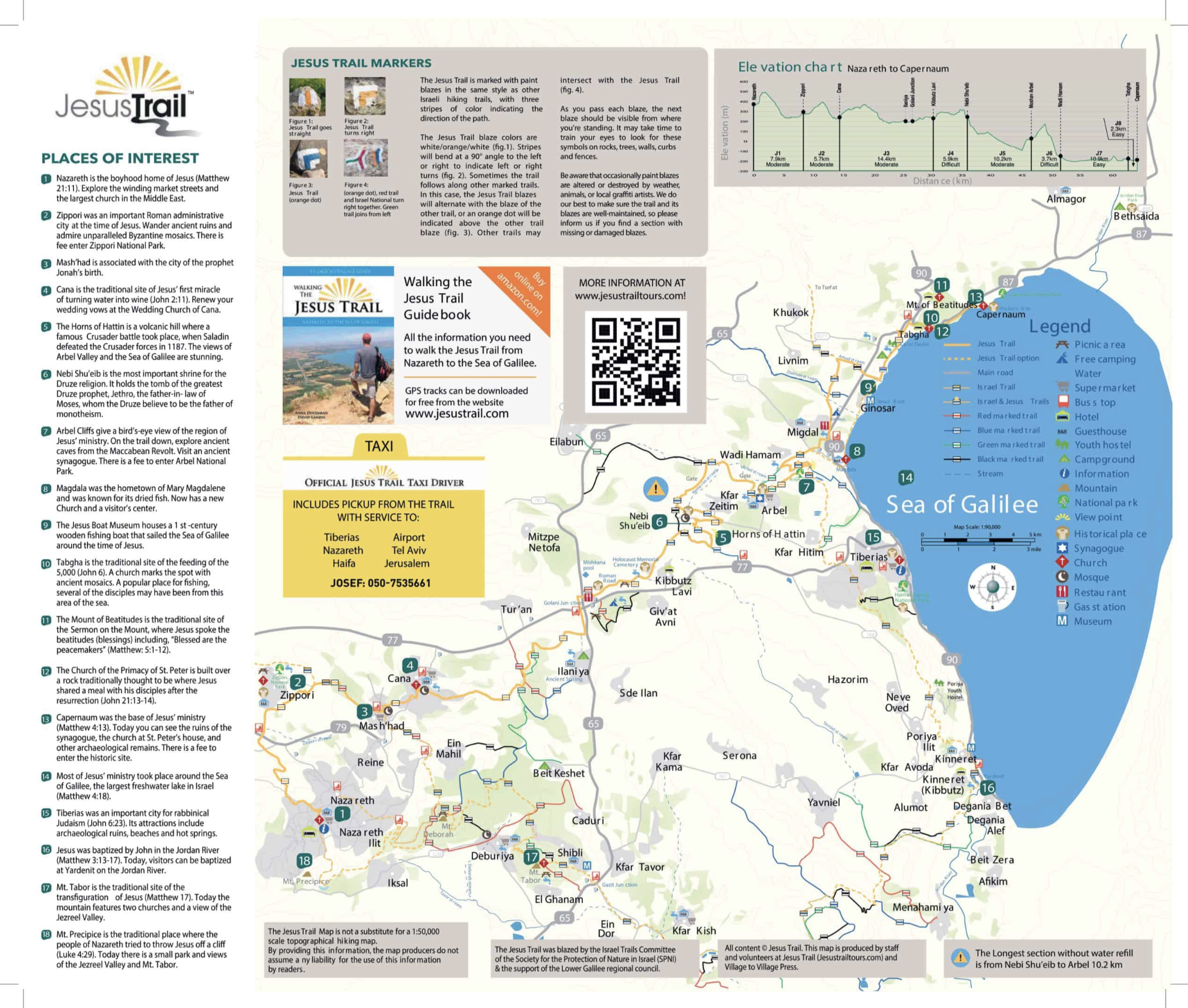
In Cana, he is met by an “official,” literally a ‘royal officer.’ This would be some official of Herod Antipas, the Tetrarch. Some have proposed he was Manaen, Herod’s foster brother, who is seen in Acts 13:1 as a member of the church in Antioch. Others suggest it was Chuza, the husband of Joanna, one of the women with Jesus and the disciples in Luke 8:3, who supported his ministry.
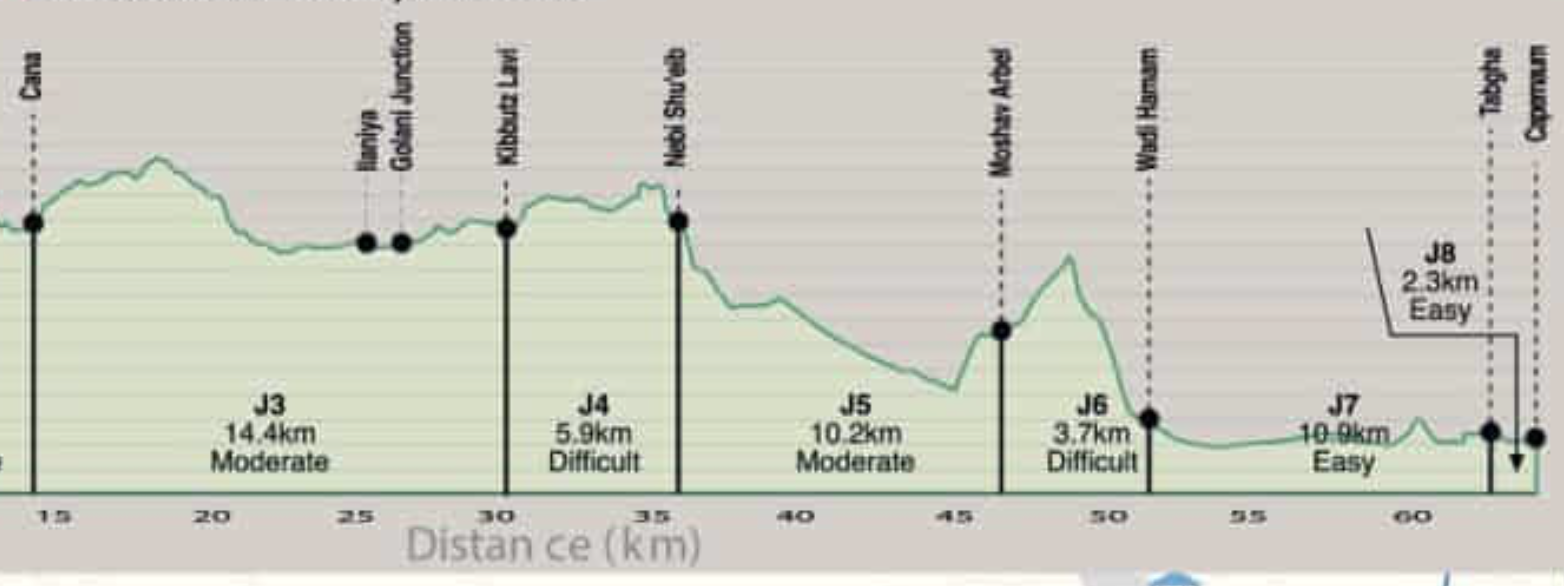
The official had heard of Jesus’ prior miracles and knew that he was coming from Judea, so he met him at Cana. He asks Jesus to “come down” to Capernaum (Capernaum is a lower altitude than Cana at the Sea of Galilee—up and down are more important when you are walking 20 miles). His son is “at the point of death.” “Asks” here may not express the intensity of the Greek. This is the same word for ‘beg,’ and the tense is continuous – so “continuously begged Jesus to come down” is appropriate. Jesus replies “to him” but speaks in the plural “you” twice in his response, so he is talking to everyone there. “Unless you [all] see signs and wonders you [all] will not believe. “Signs and wonders” is John’s way of saying ‘miracles.’1 But the word for signs is the Greek word for ‘sign-post,’ and it better conveys that these miracles of Jesus are pointing to something. Leon Morris, in the New International Commentary of the New Testament, says:
“It is plain that John uses “sign” in a distinctive fashion. For him the miracles were significant events. They set forth spiritual truths. We see this, not only in the meaning of this one word, but in the way John arranges his narratives. In them he exposes facet after facet of human need, showing at the same time human inadequacy and Jesus’ all-sufficiency. At Cana with the turning of the water into wine this concerns our inability to cope with the demands of those festivities that are normal to human life. In the case of the nobleman’s son and of the man lame for thirty-eight years it is our helplessness in the face of disease and of the tragedy of crippling physical disability. The feeding of the multitude shows up the barrenness of human resources even to supply necessary food (a lesson very much in place in the modern world), while Jesus’ walking on the water contrasts with human helplessness in the face of the awesome forces of nature unleashed in, for example, a great storm. The opening of the eyes of the blind man illustrates our failure to cope with innate handicaps while it also shows Jesus to be the light of the world. The raising of dead Lazarus underlines the ultimate human defeat by death while it reveals Jesus as the resurrection and the life. Each miracle is “sign”-ificant, meaningful. Rightly considered it points people to God, and to God’s provision in Jesus. If people will only view the miracles as they should they will be led into deeper faith.”
Jesus says, “Go; your son will live,” and the man departs. Verse 50 says, “The man believed the word that Jesus spoke to him and went on his way.” The man only gets Jesus’ word, which is enough for him. (Did you see that Gideon?) We are told this happened at the seventh hour. Remember, John uses the Jewish measure of time, not the Roman one that we are accustomed to, so the seventh hour would be seven hours after sunrise (~6 am), so our 1 pm. He then begins his 20-mile journey to Capernaum.
He is met by his slaves, who tell him that his son is recovering. He inquires when he began to improve and is told, “Yesterday at the seventh hour.” That ‘yesterday’ sounds odd to us, but remember that the day for the Jew begins around sunset (~6 pm).
Jesus says ‘go’ and the man believes and goes. He shares his belief and his whole household believes. Note that belief is accompanied by action. (From a Jewish perspective, belief without action is not belief at all.) This is a good lesson for us.
- The Synoptic Gospels typically use the word “dunamis” for Jesus’ miracles, concentrating on the power of Jesus. (‘Dunamis’ is the basis for our word ‘dynamo’ or ‘dynamite.)
- Morris, Leon. New International Commentary of the New Testament, “John”.


 Swallow No Camels