September 21, 2025 –  It’s Just Another Miracle— Acts #14

September 21, 2025 –  It’s Just Another Miracle— Acts #14
Acts 5:12-16

As we continue our study of Acts, we last saw the early church get its first threat from the Temple leaders.  They were told to stop talking about Jesus or there would be consequences.  But this didn’t slow down most of them.  They went right back to the temple, preaching Jesus and healing people.   We pick up the story in Acts 5:12

Acts 5:12-16  Now many signs and wonders were regularly done among the people by the hands of the apostles. And they were all together in Solomon’s Portico. None of the rest dared join them, but the people held them in high esteem. And more than ever, believers were added to the Lord, multitudes of both men and women, so that they even carried out the sick into the streets and laid them on cots and mats, that as Peter came by, at least his shadow might fall on some of them. The people also gathered from the towns around Jerusalem, bringing the sick and those afflicted with unclean spirits, and they were all healed.

Picture the scene: people are milling around the temple area when a few of the apostles walk in.  Someone cries out, “Hey, there they are!” and the crowd rushes over.  People want to see the miracle workers.  They have come from all around Jerusalem just to have a chance to see this.  They have brought their sick to be healed.  And this is not just a one-time thing.  Luke tells us, “signs and wonders were regularly done.  This is the natural rhythm of the early church, overflowing with the power of God.   So let me ask you, “Is this the world you live in?”

You may ask yourself, “Why don’t we see signs and wonders regularly done?”  If you are walking down Broad Street and see someone suddenly stand up from their wheelchair and start jumping up and down, what would you do?   Would you be skeptical?  What if you then saw this same person walk over to someone you recognize, a blind girl you have seen many times downtown?  And suddenly she drops her cane, exclaiming that she can see?  You know this girl.  She was blind, but now she can see.  Miracles of healing are happening around you.  What would you do next?  You would likely pull out your phone and call someone to tell them about it because signs and wonders are not “regularly done” in your world every day.   So, you may ask, why aren’t they done now as they were then?

At this particular time, the apostles and the early followers of Jesus experienced miracles that were commonplace.  However, there is a misconception that frequent miracles occurred throughout the Bible, but that is not the case.  There are many miracles, but they are concentrated in a few pockets of time.  We can see this in the words of Asaph the psalmist in Psalm 77:11

Psalm 77:11-12  I will remember the deeds of Yehovah; yes, I will remember your wonders of old.  I will ponder all your work, and meditate on your mighty deeds.”

Asaph sounds like us, looking back at the good old days when all the miracles were done.  He would have asked the same question we ask, “Why were there so many miracles back in the days of Moses, or Elijah, and not today?   And miracles are indeed concentrated in specific periods of time.   Fast forward to the New Testament times, and numerous miracles are occurring.

Matthew 9:35   And Jesus went throughout all the cities and villages, teaching in their synagogues and proclaiming the gospel of the kingdom and healing every disease and every affliction.

Jesus certainly performed frequent and regular miracles.  However, it’s worth noting that all the miracles of Jesus occurred within a remarkably short period of his ministry, spanning just over a year. And the miracles in the rest of the New Testament took place over the lifetimes of the disciples and Paul.   This explosion of miracles was for a specific purpose and was predicted by the scripture.  We need to be careful to understand why all of these healing miracles happened at this time.

Think back to when Jesus had just started his ministry, and John the Baptist was sitting in prison.  John had proclaimed that Jesus was the coming Messiah.  He pointed out to his disciples that Jesus was the Lamb of God who would take away the sins of the world.  But in Herod’s prison in Macherus, John keeps hearing how Jesus is hanging out with sinners and having parties with tax collectors, and he starts having second thoughts.  “That doesn’t sound like things I thought the Messiah would be doing.  Could I have misunderstood God about this guy?”   Remember what John had said about these days of the Messiah:

Matthew 3:7  You brood of vipers! Who warned you to flee from the wrath to come?
Matthew 3:12  His winnowing fork is in his hand, and he will clear his threshing floor and gather his wheat into the barn, but the chaff he will burn with unquenchable fire.
Matthew 3:10  Even now the axe is laid to the root of the trees. Every tree therefore that does not bear good fruit is cut down and thrown into the fire.

Wrath — Unquenchable fire — an ax to the tree — throwing in the fire.   John was expecting Jesus to show up in this sinful world with a chainsaw and a flamethrower.  John saw a Messiah who would clean house, like Jean-Claude Van Damme or Chuck Norris.  To kick butt and take names.  But that was not the report he was getting about Jesus.  So he sends his disciples to ask Jesus if he is the Messiah.

Matthew 11:2-3   Now when John heard in prison about the deeds of the Christ, he sent word by his disciples and said to him, “Are you the one who is to come, or shall we look for another?

John was having a real problem.  He told everyone that Jesus was the Messiah, but he doesn’t think Jesus looks very Messiah-like.  What do you do when the Messiah doesn’t look like what you’d thought he’d look like?  Or for us today, what do you do when God doesn’t do what you thought He would? How do you respond when you read all about God healing all these people in the Gospels and in Acts, and then God doesn’t heal you, or your loved one?   Ask John.  The Messiah is here to fix everything. Finally, the good guys should be winning.  And Jesus is out partying while John is chained to the wall of a prison. You do what John did.  You seek Him out.  So John sends his disciples to ask Jesus.

Matthew 11:4-6 “And Jesus answered them, ‘Go and tell John what you hear and see: the blind receive their sight and the lame walk, lepers are cleansed and the deaf hear, and the dead are raised up, and the poor have good news preached to them. And blessed is the one who is not offended by me.’

Jesus is directing John back to the scriptures to understand what the Messiah was really all about.  In other words, Jesus says, “Here is how you know that the messiah has come: the blind are receiving their sight, the lame are walking, and people are being healed.

Now, there are some healings in the Old Testament, but did you realize that nowhere in the Old Testament was there someone born blind who was healed? Nor was there anyone born mute who was healed.   This type of healing Jesus was doing was different.   Now, you may not have known this, but everyone in Jesus’ day knew this, because they knew their Scripture.  And Isaiah was a favorite book among many people.

The book of Isaiah is a book of both bad news/good news.  Half of it is Isaiah telling the people that they are about to be judged for their sins.  God is going to let the nation be destroyed by Assyria, and later by Babylon.  Devastation is coming.  But then he gives them the good news.  There is hope.  Yes, your city will be destroyed, but God will give you a new city, a new Jerusalem, where everyone prospers, and there is no danger from enemies anymore.    And guess which sections of Isaiah were read the most?   The good news parts. 

It is harder to read about the harvests failing, the crops all dying, the vines withering, the cities laid waste and becoming deserted, the enemies at the door.  Let’s skip all that judgment, fury, wrath, and destruction and go right to the good part when God’s mercy breaks forth.  Let’s focus on the love, grace, and compassion, rather than the warnings of destruction.  (They are a lot like us today in what we want to read and talk about in the Bible.  Let’s sing about heaven, not about the judgment here on earth.  There aren’t too many hymns about God’s punishment on us.)    So, guess which parts of Isaiah they knew the best?    Let’s skip to the good stuff. Let’s re-read chapter 35.   

Isaiah 35:1-6  The wilderness and the dry land shall be glad; the desert shall rejoice and blossom like the crocus; It shall blossom abundantly and rejoice with joy and singing. The glory of Lebanon shall be given to it, the majesty of Carmel and Sharon. They shall see the glory of Yehovah, the majesty of our God.
Strengthen the weak hands, and make firm the feeble knees. Say to those who have an anxious heart, “Be strong; fear not! Behold, your God will come with vengeance, with the recompense of God. He will come and save you.”
Then the eyes of the blind shall be opened, and the ears of the deaf unstopped;  Then shall the lame man leap like a deer, and the tongue of the mute sing for joy.”

And the people say, “Yeah, that’s what I’m talking about.  Even the desert lands grow crops.  The days of living in fear are over.  And the blind see and the mute talk.”  This is what will happen when God brings his Messiah.

Well, if you were living in Jesus’ day, you would have had access to 39 scrolls of Scripture.  Thirty-nine books in our Old Testament, and not once do you have someone born blind regaining sight or someone born mute being able to talk.  It has never happened.  But God promises here in Isaiah 35 and elsewhere that these things will happen when his kingdom breaks forth on the earth and the Messiah arrives.   

That is why Jesus answered John that way.  Jesus says, “Tell John that the blind see, the lame walk, and the mute talk.” Tell John that Isaiah 35 is happening right now.    These healings are the sign of the Kingdom of God busting out. So John has to accept that his view of what precisely the messiah would do —the view that most of the people had then — was wrong.  

When we don’t understand what God is doing, we need to seek God out and ask Him about it.  We don’t just say, “Well, God didn’t do what I thought he would, so there must not be a God.  I have seen people have a major faith crisis and quit on God when a family member is not healed.  They, like John the Baptist, had a misconception about how things would be when Jesus came.  Some preacher (probably on TV) told them that God would heal everyone if they prayed hard enough, had enough faith, or sent them money.  Like John, they misunderstood the Bible, and when it didn’t work the way they understood it, they quit.

God didn’t heal my friend, so I am leaving the church.”  No, if God is not doing everything the way you think He should, then guess who is wrong?  Not God.  You don’t throw your beliefs out the window; you go back to the scriptures and see where you misunderstood.  John the Baptist had it wrong; it is okay if you are sometimes mistaken about what God is doing, also.

So these healings that Jesus was doing were not just compassionate deeds, but proof that the Kingdom of God was breaking forth just as John said.  And these healings that Jesus does and the disciples do here in Acts, and the healings we see today, are just a taste of what is coming.  They are like the first buds of spring.  When those daffodils bloom in early spring.  They are nice, but they get me excited because they are just the heralds of hundreds of flowers of all kinds that will soon bloom in my yard.  Jesus’ healings and sermons preached the same sermon: The Kingdom of God is among you.  Each of these healings here in Acts shouts out the same message.  The Kingdom of God is here, now.  Each healing we see today is another whisper to the hearts of those who have ears to hear.   See, God’s Kingdom is still breaking forth in this sinful world and is a promise of a future with no sickness and no death.

But throughout history, God has only done a few large-scale interventions.   Creation, the deliverance of the children of Israel from slavery, and the conquering of the land, as well as the ministry of Elijah/Elisha.  The ministry of Jesus and the apostles.  Other than these few times, large groupings of miracles are rare. And even though 1 Corinthians talks about believers with gifts of healing, they weren’t doing miracles to the same degree as Jesus and the apostles.  

So while I think we overestimate the frequency of miracles in the Bible, I think we underestimate the number of miracles happening today.  I stand before you as a witness today that God is still in the miracle business..

I have told you before of some of the miracles I have seen — of medicine multiplied, appearing where it didn’t exist, of rain that started and stopped at the moment of prayer, of God placing a very rare but desperately needed item in a cigar box in a mud house in Mexico, or in a box of medical junk in Ghana.  I have seen children with rampant cancer be told there was nothing the doctors could do, only to see their following scan be clear of any disease.  I have seen lives turn around from the brink of disaster.  There is no way anyone could ever convince me that God is not doing miracles all around us.  I have seen them with my own eyes.

But some people would say they haven’t seen any miracles.    Perhaps they are from Nazareth.
Why do I say that?

Mark 6:1-6  “He went away from there and came to his hometown, and his disciples followed him. And on the Sabbath he began to teach in the synagogue, and many who heard him were astonished, saying, “Where did this man get these things? What is the wisdom given to him? How are such mighty works done by his hands?

Most of the people in Jesus’ hometown didn’t see many miracles either.   Mark is clear that their lack of belief prevented Jesus from doing many mighty works there.  That fits well with the gospel emphasis on faith for healing.   You remember Jesus saying several times, “Your faith has made you well.”  What he is saying is that because you have faith in me, I am able to do miracles for you.  No faith, no miracles.

The Greek word for unbelief (apistia) is used in the Gospels for people who totally reject Jesus, like these people in Nazareth, who don’t believe who he is.  A similar Greek word, oligopistia, is usually translated as “little faith,” and it refers to people who accept Jesus, but their faith is so small that they do nothing with it.  They don’t act on their faith.  We see this in the story of the disciples in the boat in the storm.  They were scared because they had no faith that Jesus would protect them.  They accepted who Jesus was, but that didn’t make a difference when they thought their boat would sink.  They were ruled by fear, not by faith.  So Jesus says, “Oh, you of oligopistia.  You of little faith.” A faith that just sits there and doesn’t do anything, that makes no difference – that is “little faith.”

It says that Jesus marveled at their unbelief,  their rejection of him.  “Marveled” means astonished or surprised, taken aback.  You see that word 43 times in the New Testament.  Most of the time, it is about people who are shocked when Jesus does something.    Jesus calms the sea, and the disciples marvelled.  The mute man speaks, and they marvel.   The crippled man walks, the fig tree withers, and the disciples marvel.  Twice, it is Jesus who marvels.  Two times, Jesus is surprised by others.  What astonishes Jesus?

The first instance occurs when the centurion requests Jesus to heal his paralyzed servant, stating that he doesn’t need to be present for the healing.  

Matthew 8:10   When Jesus heard this, he marveled and said to those who followed him, “Truly, I tell you, with no one in Israel have I found such faith.

The second time is in the passage we just read, he is astonished by the unbelief of the people in Nazareth.

So what astonishes Jesus?  Jesus is shocked by one Gentile man’s unexpected deep faith and by the lack of faith of his Jewish hometown people.  Jesus couldn’t do many of the things he hoped to do in Nazareth because of the unbelief he encountered in that place.   This is our story.  Jesus hopes to do many incredible, miraculous things in our lives.  But he can not do them because we prevent him.  Oh, we say we believe.  But belief is not what you think in your head, but what you do.  Belief is how you act.  You can have all the Bible knowledge in the world, but what you know does not matter unless it changes how you act.   Again, it is like the disciples in the boat in the storm.  They believed who Jesus was, but that didn’t change their reaction to a storm.  If they had faith and trusted in Jesus to protect them, then there would be no fear.  Their fear revealed their lack of faith.  And if you surrender your life to Jesus and don’t give it all to him, if you keep parts of your life under your control instead of His, then you don’t believe.

I marvel at a lot of things.   I am overwhelmed by the beauty of the clouds at sunrise, by the immensity of the ocean.  I am at times surprised and taken aback by the majesty of nature, of glaciers calving, of waterfalls, and mountain views.  I am astonished at times by how mean some people can be, and how some devote their whole lives to taking advantage of others. I marvel at a lot of things.

But Jesus in Nazareth is only surprised by one thing: that God himself would come and give his life as a ransom for people who did not deserve any mercy. He would die to remove our sin burden and grant us forgiveness that we could not otherwise obtain. Despite this, many people would choose not to follow Him or do what He says.  That leaves Jesus astonished.

The God who spoke this entire universe into existence says, “Do you want to join my family and come live with me in this incredible place where no one ever gets sick or dies?”  And people say, “No, I don’t think so.”  That astonishes Jesus.  This God who says, “Hey, I can work all things so they turn out the very best for you if you follow my ways.”  And People say, “Nah, I think I know better than you, I’ll do it my way.”  That astonishes Jesus.  Jesus offers life instead of death, forgiveness instead of condemnation, and eternal joy instead of eternal misery.  And still some reject him.  That blows my mind, too, Jesus.

That is the situation in Nazareth in Jesus’ day, and that is the situation that we live in today. We may go further than the people in Nazareth and believe that Jesus is who he says he is.  That is good.  But that is not faith.  It is only faith when we step out in obedience, trusting Him to lead us and equip us for any task He calls us to.  It is faith when we are not afraid of any storms of life because we trust in him.  It is faith when we aren’t scared of disease or cancer or natural disasters because we have complete trust in him.

And when I look at the miracles I have witnessed in my life, Most have happened when I stepped out in faith, being obedient to whatever he calls me to do.  Most of the miracles I have seen happened when I was doing something out of my usual routine or schedule.  Many on mission trips.

Following his call one summer, I found myself again working in a hospital in Ghana, Africa.   I saw a man in the clinic who had a horrible infection in his hand.  It had been going on for weeks and was getting worse. He had been treated by some person in his tribe whose position was translated to me as a ‘witch doctor.’  And his hand was horribly swollen and red and hot and draining.  He could not move a finger.   When I saw him, he needed immediate surgery so he wouldn’t lose his hand.   He needed an orthopedic specialist, a hand surgeon.  

What he got was me.  Both of the Family physicians who performed all the surgeries in that mission hospital were involved in a lengthy case.  I was it.  I have never felt so underqualified in my life.

I remembered from anatomy class many years ago that there were 10 or 11 potential spaces in the hand that would all have to be drained. And if they weren’t all drained appropriately, then the infection would worsen.  The anatomy is very complex there.  That’s why hand surgery is a specialty and should never be attempted by any other surgeon, and certainly not by a pediatrician.  So I prayed and said, “God, you put me here, and you gave me this to do, so I am going to trust you to empower me to do it.   So I found the surgical anatomy book and had a nurse hold it and turn pages for me as I did the procedure.  And God guided my eyes and my hands. And the man recovered with full use of his hand.  God did that because I couldn’t have done it without Him.  

I am convinced that God is waiting to do many miracles if only we would let him.  But we have to be obedient enough to step out and follow him.  If we don’t display that kind of faith, then we will see no miracles.  He often leads us into situations where we lack the proper resources or feel we lack the right skills.  If we only attempt to do things that we can do without God, we never leave room for Him to show out.  

This should be our prayer:  God, please call us to do things that we can’t do.  Please call us to do things that are impossible.  Please lead us to the uncomfortable places.  Give us goals that we can’t possibly reach.  Put us in situations where we will fail without your help.  We must follow Him and attempt things that are impossible for us to do without Him.  Only then can He step in and do the impossible for us and with us.

January 12, 27 A.D.  –  Guess Who’s Coming to Dinner? —   The Year of the Lord’s Favor #67

Week 48 —Guess who’s coming to dinner 
Matthew 20:1-16 

After Hanukkah, Jesus left Jerusalem and traveled east of the Jordan, spending the winter in the region of Perea.

It seems every few months, we hear of a political leader or religious leader of some denomination who is caught in some moral failure.  They may have had illicit sexual relations or have embezzled funds or whatever.  That doesn’t mean all politicians or all preachers are wicked.  You don’t judge all the pastors in churches of America by the failures of a few.

But wait a minute, isn’t that exactly how we tend to judge the Pharisees in the New Testament?  

If I say Pharisees, the first word that comes to many people’s minds is “hypocrite.”  We are often quick to over-generalize and lump them all together, but not all Pharisees were the same.  Some leaders of the Pharisees had worked their way into high positions, some even on the Sanhedrin, the Jewish Supreme Court.  These mostly stayed in Jerusalem, lived in the finest homes, and became wealthy.  These are the ones who most often find themselves in conflict with Jesus.  Understand that not all Pharisees were trying to kill Jesus, but mostly just the powerful ones in Jerusalem.1  And Jesus spent 90% of his ministry away from Jerusalem in the countryside.  Many Pharisees lived in small villages, and while they were financially stable, they were certainly not rich.  They were highly respected in their communities.   And they weren’t trying to kill Jesus; they were confused by him, and they were just trying to understand him and figure out who he was.

In Israel, in Jesus’ day, every child wanted to grow up and become a Pharisee. It was the most highly respected vocation. It was like kids in our day who aspired to grow up and be president (but kids don’t say that anymore.)  Children today want to grow up and be professional athletes or entertainers.   But if you were a child living in Israel in the first century, you wanted to become a Rabbi.  So, you would study hard in school and memorize much scripture.  You would try hard in every aspect of your life to follow every commandment.  From childhood, you would be indoctrinated in the theology of ritual cleanliness and proper sacrifices.  Hundreds of years of tradition were passed down to you on how to live as God wanted you to live. 

But only a few were chosen.  Only the brightest children would continue school past 13 years of age.  The rest would learn a trade.   If you made the cut and did well in school, perhaps you would find a rabbi who would allow you to be his disciple.  Your family would be so proud.  You would then study even harder and carefully follow all of the laws and ways of the Pharisees.  Then, one day, you would become a rabbi and gather your own disciples.   You would be in charge of the spiritual development of not only these young men but also your community.  You would take this responsibility seriously.  You would continue constantly studying and discussing the scriptures with your fellow rabbis and disciples.  You would keep ritually pure at all times.  You could quote all the written law, the oral law, and the sayings of the ancestors.  By this point, you felt that you knew all you needed to know about being a true child of God.  You had arrived.

And then this Jesus shows up.  He seems to be a prophet, but he doesn’t fit the mold you were taught.  He seems to ignore some aspects of ritual purity that you were taught were so important.  Oh, he keeps the ones written in the scripture, but he seems to ignore the ones passed down as oral law from your father and grandfathers.  He says things that challenge your teachings.  You would think he would have studied under a prominent rabbi, but he didn’t study under anyone; he just set out to gather disciples on his own.  And he is not too picky about who he chooses.   He has poor fishermen, a zealot, and even a tax collector among his disciples.  None of them had proper schooling.  He even has women following him.  Can you imagine that?  It is almost like he is making a mockery of your profession.

And yet….he heals people.  People no one else can heal.  You have never healed anyone.   He casts out demons.  You have never done that.  It is said he walked on water.  Where does that power come from if not from God?  Some of the leaders in Jerusalem say his power comes from the Satan, but that is hard for you to accept because he helps so many people and does so much good, and the adversary does not do those things.  And though he has no official rabbinic authority, he speaks with great authority.   He knows the scriptures and quotes references from scripture that back up everything he says.  But he interprets scripture in ways different from what you’ve been taught, and what he says seems to make so much sense to you.  You are simultaneously curious to know more about him but also scared of what he may do.  Some say he has claimed to be the Messiah.  Your leaders in Jerusalem have decided that he is a blasphemer, a false Messiah.  And you know that every time we have someone rise up and claim to be the Messiah and gather a large following like this, it brings enormous trouble from Rome.  Whole towns have been burned to the ground because of a rebellion started by such a person.2  That scares you most of all.

So don’t assume all Pharisees are alike. Many live outside Jerusalem in Galilee and Perea and are not angry at Jesus. They don’t want to kill him, but they are very confused by him.  

The Gospel of Luke records three instances of Jesus being invited to dinner with Pharisees.   In Roman times, people were very strategic with their dinner invitations.  Hosting dinner in Roman times was a social investment. It was a chance to increase your social standing by having important people dining in your home.   By having them as your guests, they would be expected to reciprocate and invite you for dinner in return.  You don’t invite enemies to eat with you.  You don’t invite people you don’t like.  You don’t invite people who can not return the favor or raise your social standing.  So, Jesus would never be invited to dinner with the Pharisees in Jerusalem.  They have already decided he must go.

But these Pharisees in small towns in Galilee in Luke 7 and Perea in Luke 11 and Luke 14 did invite Jesus over.   Jesus obviously can’t return the invitation.  He has no home.  So why did they invite him over?    If you assume all of the Pharisees are out to get Jesus, then you would guess that they were trying to trap him.  The Bible is clear that some did try to trap him, but this was always done in public because the point would be to make him look bad in front of a crowd.  A private dinner would not be a good place for this.  Pharisees gathered together frequently to discuss scripture and how to interpret it.  How can they best live out God’s law in their time under Roman oppression?   They wanted to see exactly who Jesus was away from the crowds.  They wanted time to ask him questions.   So, let’s look at one of those dinners with the Pharisees in Luke 14.

Luke 14:1-6   One Sabbath, when he went to dine at the house of a ruler of the Pharisees, they were watching him carefully.  And behold, there was a man before him who had dropsy.   And Jesus responded to the lawyers and Pharisees, saying, “Is it lawful to heal on the Sabbath, or not?”   But they remained silent. Then he took him and healed him and sent him away.   And he said to them, “Which of you, having a son or an ox that has fallen into a well on a Sabbath day, will not immediately pull him out?”   And they could not reply to these things.

Besides Jesus, these Pharisees also invited a man with a chronic disease.3  It was the Sabbath.  This was a set-up.  They wanted to see if Jesus would heal him.  Again, the Bible doesn’t say they were trying to “trap him” as it does three times in Matthew 22.  They were “watching him carefully.”  

Healing on the Sabbath was not against the Sabbath rules in the Scripture.  The Old Testament rules of what is allowed and not allowed on the Sabbath are not very specific.  Here is what is specifically regarded as work:

Plowing, reaping, binding, threshing, winnowing, grinding, sifting, kneading, baking, gathering wood, kindling fire, sewing, tearing, and carrying burdens (essentially any activity related to harvesting or construction of the tabernacle or preparing food, as well as tasks requiring physical labor or creating a fire)

So, in defining what is work and what is not, there were many grey areas, and the scribes and Pharisees often discussed whether something was work or not.  Together, they looked at the scripture and came to a conclusion so they could provide guidelines for their community.   For example, is walking work?  Walking 20 miles (a day’s journey) would certainly seem to qualify as work, but what about walking next door or in your home?  They had to draw the line somewhere.  So this was debated, and a strict distance was determined.   You can walk 2000 cubits, a little over half a mile.  Walking further than this was considered work and breaking the Sabbath.

The Scriptures listed carrying burdens as a violation.  But could you carry food to the table for dinner on the Sabbath?  This was debated (and you can read some of these debates recorded in the Mishna), and it was determined that you could carry things inside your house, but you could not carry things outside of your house.  So today, an orthodox Jew can not carry a handkerchief in his pocket while walking to the synagogue on Shabbat, but when he arrives home, he can carry furniture up and down the stairs without breaking the law.

This seems odd to us, but someone had to help define work so the people would not accidentally break the Sabbath laws but could still function.  It was an important job for the experts in the law.

During the Maccabean War, around 160 years before Jesus (the victory that we celebrate at Hanukkah), the Macedonians attacked a strictly observant Jewish village on the Sabbath.  The people of this village viewed warfare as work and refused to defend themselves.  Not surprisingly, all of them were killed.  The next day, the priest determined that self-defense was allowable on the Sabbath.4

Healing was also debated. There is a principle called “Pikuach Nefesh,” which means “preservation of life” and takes precedence over all other commandments, including those of the Sabbath.  You were allowed to break almost any other law if it was required to save a life. Saving a life imminently in danger was not only allowed but was required.  The Mishna says, “If any person saves a single life, Judaism considers that he has saved the whole world” (Mishnah, Sanhedrin 4.5). 

But healing outside of immediate life-saving measures was not so clear. In Jesus’ day, the question of healing was highly debated. Some sages said it was allowed on the Sabbath, and others said it was only allowed if it was immediately life-saving. We have records of this debate hundreds of years before and hundreds of years after Jesus.  

Jesus likely performed most of his healings on days other than the Sabbath. Mark 1:32 shows evidence of this: The people waited until sunset (when the Sabbath was over) to come to Jesus for healing.

Mark 1:32   That evening at sundown they brought to him all who were sick or oppressed by demons.

In Luke 13, Jesus heals a woman who had a disfiguring back problem on the Sabbath and says:

Luke 13:15-16   Does not each of you on the Sabbath untie his ox or his donkey from the manger and lead it away to water it? And ought not this woman, a daughter of Abraham whom Satan bound for eighteen years, be loosed from this bond on the Sabbath day?

Here, he is using the Jewish principle of “tzar baalei hayim,”  or the prevention of suffering to living things. 

Jesus is in line with the school of Rabbis who accept healing on the Sabbath. Scripture records instances when Pharisees opposed him for this view. However, the debate among the Rabbis raged on for hundreds of years and was not settled until around 200 AD.5

Luke 14:1-6   One Sabbath, when he went to dine at the house of a ruler of the Pharisees, they were watching him carefully.  And behold, there was a man before him who had dropsy.   And Jesus responded to the lawyers and Pharisees, saying, “Is it lawful to heal on the Sabbath, or not?”   But they remained silent. Then he took him and healed him and sent him away. 

Jesus tries to engage them in the question of healing on the Sabbath.  They don’t want to commit to the discussion and remain silent.   They set this up to see what he would do.   Jesus states his opinion by healing the man.  He then gives them an argument they can’t refute.

And he said to them, “Which of you, having a son or an ox that has fallen into a well on a Sabbath day, will not immediately pull him out?”   And they could not reply to these things.

Of course, they would all immediately retrieve their son or animal from a well. But that would be work. Jesus asked hard questions. Again, they have debated whether healing is okay on the Sabbath for hundreds of years.   And Jesus seems so sure of himself.  He speaks as though he has immediate access to the wisdom and heart of God.   They really don’t know how to respond to that.  They are silent.  So Jesus moves on.

Luke 14:7   Now he told a parable to those who were invited, when he noticed how they chose the places of honor, saying to them….

Luke then provides us with some irony. Remember that the passage began with, “They were watching him carefully,” and now Jesus is speaking after he notices their behavior. The tables have turned. Who is watching who?

Luke 14:8-11   “When you are invited by someone to a wedding feast, do not sit down in a place of honor, lest someone more distinguished than you be invited by him, and he who invited you both will come and say to you, ‘Give your place to this person,’ and then you will begin with shame to take the lowest place.  But when you are invited, go and sit in the lowest place, so that when your host comes he may say to you, ‘Friend, move up higher.’ Then you will be honored in the presence of all who sit at table with you.   For everyone who exalts himself will be humbled, and he who humbles himself will be exalted.”

What is Jesus communicating to these Pharisees and experts of the law?   He has observed their self-seeking behavior and starts with some social advice on how to avoid embarrassment.  Honor must be given, not assumed, pursued, or taken.  But then, his last sentence hints at a worldview where honor is based on a completely different measure.  In Jesus’ view, it is humility that is highly valued.

This flies in the face of the standard of dinner invitations of the day.  Again, Jesus has an entirely different worldview.   The greatest deed is doing good to someone who can not possibly repay you.   Note that there will be repayment, but it will not come now.  You will be blessed.  There is our Beatitude word, ‘Makarios’  — as in Blessed are the pure in heart….  It doesn’t mean you will receive a blessing, but it means you will be happy, fulfilled, and in a state of bliss.  You forfeit the possibility of the reward of a return dinner invitation, but you gain happiness and fulfillment from living as God would have you live.  And note there will be a reward. Not in this world but in the next.  “You will be repaid at the resurrection of the just.”  Jesus says there is a reward for doing good to those you cannot repay: ‘in as much as you have done it unto them, you have done it unto me.’  Do you want to have Jesus over for dinner?  Invite the poor, the invalid, the forgotten to your home to eat.  Jesus will one day thank you for having him over for dinner.

Then, one of the Pharisees present hears Jesus give a blessing that speaks of the resurrection and the world to come. He riffs on that and offers a blessing of his own. Or maybe, sensing the tension in the room, he is trying to change the subject quickly.

Luke 14:15   When one of those who reclined at table with him heard these things, he said to him, “Blessed is everyone who will eat bread in the kingdom of God!”

Who could disagree with that?  It is a true statement.  Those who join God in the kingdom and dine in the great messianic banquet will be most blessed.  Jesus could just say, “Amen,” and let it go.  But they are at a dinner, and Jesus is just talking about who gets invited to banquets.  Jesus knows these religious experts are making a dangerous assumption about the banquet God throws in the last days.  They are assuming they know who will be invited to God’s banquet.  Why, of course, they will be there; they are the children of Abraham.

Jesus is in the same area that John the Baptist preached and baptized.   Remember what John said when the religious elite came out to see him there:

Matthew 3:7-9     But when he saw many of the Pharisees and Sadducees coming to his baptism, he said to them, “You brood of vipers! Who warned you to flee from the wrath to come?  Bear fruit in keeping with repentance.  And do not presume to say to yourselves, ‘We have Abraham as our father,’ for I tell you, God is able from these stones to raise up children for Abraham.

John told them they needed to repent and be baptized.  It wasn’t enough that they were Jewish.  

Sometimes, we just assume people around us have a good relationship with God.  After all, they go to church, say the right things, own a Bible, and come from a good Christian family.  However, these people John called out were the religious leaders of the day, the most observant people in the country.  John said don’t presume.    Do you know where your friends and family members stand?  We don’t talk enough with each other about things that matter.

Well, Jesus is not going to let this opportunity pass.  The conversation at this dinner has been about who gets invited to dinner, and then someone brings up the dinner of the last day.  So Jesus gives a parable about who will be invited and who will attend that great banquet at the end of days. 

But we need a little context.  The Old Testament is full of references to the Messianic Banquet.   Here is one from Isaiah:

Isaiah 25:6-9   On this mountain, Yehovah of hosts will make for all peoples a feast of rich food, a feast of well-aged wine, of rich food full of marrow, of aged wine well refined.   And he will swallow up on this mountain the covering that is cast over all peoples, the veil that is spread over all nations.  He will swallow up death forever, and Yehovah Elohim will wipe away tears from all faces, and the reproach of his people he will take away from all the earth, for Yehovah has spoken.  It will be said on that day,   “Behold, this is our God; we have waited for him, that he might save us.  This is Yehovah; we have waited for him; let us be glad and rejoice in his salvation.”

A feast of rich food.  For those in Isaiah’s day, well-aged wine and bone marrow were on the menu of kings.  I have never had either one, but the chefs on the Food Network love that bone marrow.  The point is that when God throws a feast, it is the best of the best.  (I am sure there will be prime rib and Diet Coke just for my wife.)

And as the people swallow the food, God will swallow up the veil over all the nations – the veil of death.  They dine and rejoice in their salvation.  God has spoken, and God is victorious over death and reproach. This is the banquet the man at the Pharisee’s dinner referred to.  But Jesus needs to say a little about who will be there.

Luke 14:15-24   But Jesus said to him, “A man once gave a great banquet and invited many.  And at the time for the banquet, he sent his servant to say to those who had been invited, ‘Come, for everything is now ready.’   But they all alike began to make excuses. The first said to him, ‘I have bought a field, and I must go out and see it. Please have me excused.’   And another said, ‘I have bought five yoke of oxen, and I go to examine them. Please have me excused.’   And another said, ‘I have married a wife, and therefore I cannot come.’

  So the servant came and reported these things to his master. Then the master of the house became angry and said to his servant, ‘Go out quickly to the streets and lanes of the city and bring in the poor and crippled and blind and lame.’   And the servant said, ‘Sir, what you commanded has been done, and still there is room.’   And the master said to the servant, ‘Go out to the highways and hedges and compel people to come in, that my house may be filled.   For I tell you, none of those men who were invited shall taste my banquet.’”

A man gives a banquet, much like the banquet they are currently at.  He invited all the right people, and they agreed to come.  This initial RSVP was essential in those days.  Your choice of meat for the meal would depend on the number of guests coming.  You wouldn’t slaughter a cow for four people.  Whatever is prepared has to be eaten that day.  There is no refrigerator for leftovers.   But when the preparations for the meal are complete, the servant is sent out with the announcement to come now, for the banquet is ready.  

But in Jesus’ story, it says, “they all began to make excuses.”  All of them.  Jesus gives three examples.  They are flimsy and clearly fabricated excuses.   ‘I have bought a field and must go out and see it.’  This is not believable.  No one bought a field they had not inspected.  This would be like a guest calling you at the last minute before dinner and saying they could not come because they had just bought a house they had not seen yet.  The second man bought five yoke of oxen and needed to check them out.  When a team of oxen was sold, there would be a field to test them to ensure they were healthy and could pull evenly together.  That would be like your dinner guest calling to say, “I just bought five cars, and I need to see what color they are and if they can start.”  The third excuse is equally weak.  ‘I have married a wife, and therefore I can’t come.’  But they didn’t just get married.  You would have never scheduled a banquet at the same time as a wedding celebration in your town.  And you aren’t asking him to leave the country or go to war; he would be absent for only a few hours.  Jesus has them give excuses that are not reasonable.  They are just not interested in the host or his banquet.  Their land, oxen, and other people are more important than keeping their commitment to the host. 

So the food is already cooked, and his expected guests are more preoccupied with their possessions and family relations.  What does the host do?  He sends his servant out into the “streets and lanes” to the poor area of town.  Still not filling the banquet hall, he sends his servant out of town to the Gentiles to invite them to the banquet.   The host has broken all ties with the social system of status and reciprocity.  He has followed Jesus’ advice in verses 12-14.  No one is too unclean to attend this banquet.   

It is not evident when you read the parable in English, but the last line is different and key to understanding Jesus. The host in Jesus’ parable has been speaking to a single person, his servant, but in the last line, the ‘you’ is plural. That changes how you read it. I think when Jesus speaks, he tells the parable, looks up, and delivers the last line to everyone in the room.

Luke 14:24   For I tell all of you, none of those men who were invited shall taste my banquet. 

Jesus is telling them that the Messianic banquet is his banquet.

God is preparing a banquet for the end of time.  It will be a feast, a festival of celebration of salvation.  This is the great Messianic Banquet, and God has sent his suffering servant out to issue invitations to the banquet.  Many who were invited first refused to come, so Jesus extended the invitation to the unexpected – to us.  God wants his house to be full.   He is not willing that any perish but that all come to repentance.  But Jesus tells us repeatedly that those you expect to see are not there.  Those who are very sure they will attend will not be allowed in.  

The story of the Pharisee’s dinner ends right there.  We aren’t told how this group of Pharisees reacted to Jesus’ parable.  And I think Luke did that on purpose.  What is most important to know is not how they reacted but how do you react.   The day of that banquet approaches.  Everyone is invited, but not all will choose to attend.  I hope to see you there.

  1. I found 27 instances in scripture when people desired to kill Jesus.  All but two of these happened in Jerusalem.  The exceptions are after the healing of the man with the withered hand (Matthew 12:14, Mark 3.6, Luke 6:11) and after his message in the synagogue in Nazareth  (Luke 4:28).  
  2. The capital of the region of Galilee, Sepphoris, was destroyed and its 30,000 residents either crucified or sold into slavery in 4 BC, about the time of Jesus’ birth.  This was Rome’s reaction to an uprising by Judas the son of Ezekias.  Sepphoris was only 3.7 miles northwest of Nazareth and it is likely that Jesus and his father and brothers worked in Herod’s rebuilding of the city that continued throughout Jesus’ time here.
  3. “Dropsy” was the symptom of generalized swelling or edema that we now know is most commonly due to congestive heart failure or chronic kidney disease.
  4. See 2 Maccabees  2:31ff.
  5. It was Samuel of Nehardea who finally gave the final opinion on healing on the Sabbath with an interpretation of Leviticus 18:5 “You shall therefore keep my statutes and my judgments; which if a man does, he shall live in them.”  Simon “revealed” the hidden meaning that the Jewish people can only observe the Torah if they stay alive.  So, acts of healing should not be restricted on the Sabbath so that the people will be well enough to keep the Torah law.  (from The Jewish Chronicle, February 19, 2015.)

August 22, 27 A.D.  A Woman Healed by Touching His Garment #47

Week 27 ———  Woman Healed by Touching His Garment
Matthew 9:20-22 — Mark 5:24-34 — Luke 8:42-48

Luke 8:42-48     As Jesus went, the people pressed around him.   And there was a woman who had had a discharge of blood for twelve years, and though she had spent all her living on physicians, she could not be healed by anyone.   She came up behind him and touched the fringe of his garment, and immediately, her discharge of blood ceased.   And Jesus said, “Who was it that touched me?” When all denied it, Peter said, “Master, the crowds surround you and are pressing in on you!”   But Jesus said, “Someone touched me, for I perceive that power has gone out from me.”   And when the woman saw that she was not hidden, she came trembling, and falling down before him declared in the presence of all the people why she had touched him, and how she had been immediately healed.   And he said to her, “Daughter, your faith has made you well; go in peace.”

Are you having a busy week? Let me tell you what Jesus was doing almost 2000 years ago this past week.  The Gospels tell us that Jesus began this week in 27 AD teaching in parables in Capernaum but then got in a boat with the disciples, and a storm came up, and Jesus calmed the storm just by speaking.  The next day, they arrive in Gadara, in Gentile territory, where Jesus encounters a demon-possessed man.  Jesus frees him and sends the demons into a herd of pigs.  The people are so scared by this that they ask Jesus to leave immediately.  So they get back in the boat and travel back to Capernaum. Jesus begins teaching to the crowd that gathered but is interrupted by a leader of the synagogue, Jairus, whose daughter is dying.  Jesus leaves to go to the girl, and the crowds all follow him, but on the way, he is interrupted again by a woman with a disease that no doctor can cure.  And you thought your week was busy.

A few weeks ago, I talked about Jesus healing the leper and the idea of uncleanness.  (https://swallownocamels.com/2024/07/15/july-15-27-a-d-jesus-cleanses-a-leper-40/)  Remember, three things can cause uncleanness: bodily discharge like this woman, the skin disease tsa’arat (often mistranslated as leprosy), and touching a dead body.   This woman was unclean due to her constant discharge of blood.  She was ostracized from society just as the person with tsa’arat would have been.  No one would come near her, and she could never worship in the Temple or offer any sacrifice.  To touch her would make you unclean, just as to touch a leper or to touch a dead person would make you unclean.  But Jesus had the power to provide not just a temporary solution to uncleanness but also a permanent solution.  He took away the skin disease; he healed this woman’s medical problem, and he brought the dead back to life.  And don’t miss that Jesus is on his way to Jairus’ house to touch the dead body of a girl we are told is 12 years old when he is interrupted by a woman who has been unclean for how many years? Twelve.  You aren’t supposed to miss the connection between these two times when Jesus cures that which can make us unclean.

Here is a video from “The Chosen” of the scripture above:  https://www.youtube.com/watch?v=pYEmdFyWBq8

We have heard this story many times.  But have you ever asked yourself, “What led this woman to believe that touching his garment would bring her healing?”  Where did she get that idea?  And it was not only her, but according to Mark’s Gospel, it was many people:

Mark 6:56 And wherever he came, in villages, cities, or countryside, they laid the sick in the marketplaces and implored him that they might touch even the fringe of his garment. And as many as touched it were made well.

Fair warning:  This is a complicated explanation.  First, we must talk about the “fringe of the garment.”

The Greek word ‘kraspedon’ is translated in most translations (59 of 60 that I checked) as either ‘fringe of the garment’, ‘edge of the cloak’, ‘border of the garment’ or ‘hem of the garment’.  I only found one translation, Holman, that I think chose the most accurate English word to translate ‘kraspedon’.   The Holman Version says she “touched the tassel of his robe.”

Let me explain why that is the best translation.  Greek biblical dictionaries typically define ‘kraspedon’ as “a margin, specifically a fringe or tassel or border or hem.”1  One way to look deeper is to see if you can find ‘kraspedon’ in the Greek translation of the Old Testament.  This translation called the Septuagint, was done around 200 BC by Jewish scholars and is the version Paul uses when quoting scripture to a Greek audience. (As the old song goes, “It was good for Paul and Silas; it is good enough for me.”)

We find it here:

Numbers 15:38  The Lord said to Moses, “Speak to the people of Israel, and tell them to make kraspedon on the corners of their garments throughout their generations, and to put a cord of blue on the kraspedon of each corner.

Kraspedon‘ is the Greek translation for the Hebrew ‘tzitzit.’  And we know what tzitzit are.  Modern Orthodox Jews still wear ‘tzitzit’ on the corners of their garments.  The English translations have no problem translating them as ‘tassels’ in the Old Testament, but in the New Testament, it is usually translated as hem, edge, or border.  It is like they are afraid to make Jesus look too Jewish.

The passage in Numbers 15 continues:

Numbers 15:39   You will have these tassels to look at, and so you will remember all the commands of the Lord, that you may obey them and not prostitute yourselves by chasing after the lusts of your own hearts and eyes.

The tassels are there to remember.  And don’t forget that, like all Hebrew verbs, remember is an action verb.  They are to remember, not just for the memory’s sake, but that you may obey.  It is not like they were walking along and their hand brushed against these tassels hanging from their cloak, and they say, “What’s that?… Oh, yeah, I must be Jewish!”

It is like wearing a wedding ring.  It is not for me to remember that I am married but to be reminded to keep the promises of the covenant I made when I got married.  It is almost cliche in a movie for a man to remove his ring before he goes (as the Bible says) “chasing after the lusts of your own heart and eyes.”  Now, it can also serve other purposes.  It can be for others to see and know I am married.  But the best reason is to look at and remember a commitment and the promises made.  

The tzitzit are similar.  They are there for others to see who you belong to.  They represent a bond with others because the way the knots are tied varies from tribe to tribe and from family to family.  They remind the wearer of a commitment and the promises made.  But what do the tassels have to do with remembering all the commands?

To understand this, you need to know about Gematria.  Gematria is very common in ancient languages. It is the idea that words have numbers embedded that can be important.  While most modern languages have letters (ABCs) and numbers (123s), most ancient languages, like Hebrew, did not, so their letters also served as numbers.

Here is the Hebrew language with number equivalents.

So, every letter and word can have an equivalent number.  

Here is an example to show how important this idea of Gematria was in those days. It is from an Assyrian inscription dating to the 8th century BC, the time of Sargon II.

“the king built the wall of Khorsabad 16,283 cubits long to correspond with the numerical value of his name.”

This king of Assyria built an almost 5-mile-long wall, but he built it precisely 16,283 cubits to match the number value of his name.  Gematria was an important concept.

We see it used in the Bible several times.  In Matthew’s first chapter, the author emphasizes Jesus as the son of David.  So, there is a genealogy that goes back to David and beyond.  But Matthew didn’t include everyone.  He carefully selected who was included and who he left out.

Matthew 1:17   So all the generations from Abraham to David were fourteen generations, and from David to the deportation to Babylon fourteen generations, and from the deportation to Babylon to the Christ fourteen generations.

Why does 14 matter?  With Gematria, 14 is David’s numerical value.  Matthew’s Hebrew readers would have recognized that Matthew is saying in the genealogy, “David, David, David!”

The best-known example of Gematria in the Bible is in Revelation.

Revelation 13:18   This calls for wisdom: let the one who has understanding calculate the number of the beast, for it is the number of a man, and his number is 666.

Many Bible translations have a footnote at that verse that says, “Some manuscripts have ‘616’.” Well, is it 616 or 666?  It depends on your Hebrew spelling.  Nero was notorious for his horrible torture and persecution of the Jews.  ‘Nero Caesar’ had two common Hebrew spellings; the number equivalent for one was 666, and the other was 616.  John was not saying Nero was the beast.  When John wrote Revelation, Nero was dead for over 20 years.  But the terror and persecution Nero brought upon the church is a picture of what the last days will be like.  Nero is a representative of a type of ruler that will arise.

Now that you understand Gematria, we can return to our question, “What do the tassels have to do with remembering all the commands?”

The numerical value of ‘tzitzit’ is 600, and each tassel is tied with eight strands into 5 knots.  600 + 8 + 5 =613.  The rabbis say there are 613 commandments in the Tanakh, the Hebrew Bible.  So, the tassels represent ‘all the commandments.’

Looking back at Numbers 15:38, why did God command a cord of blue in each tassel?

Numbers 15:38  The Lord said to Moses, “Speak to the people of Israel and tell them to make tassels on the corners of their garments throughout their generations, and to put a cord of blue on the tassel of each corner.

Blue or purple dye was costly.  In ancient times, most blue dye came from a gland of a tiny snail that lived in shallow water.  It was a complicated process to extract the dye, and it is estimated that it would take 36,000 snails to make a teaspoon of blue dye.2   You can see why blue was the color of royalty; no one else could afford it.  (So sorry, all you classical artists out there, Mary, the mother of Jesus, did not likely wear blue.)  But blue was the color of the high priest’s robe, and it is thought that the strand of blue in the tassels was to remind the Hebrews of their role as a member of the ‘kingdom of priests’ (See Exodus 19:6).

Now that we have discussed the tassel that the woman touched let’s return to our original question:  “What led her and many others to believe that touching the tassels that hung from Jesus’ garment would bring healing?”  It comes from a verse in Malachi:

Malachi 4.2  But for you who fear my name, the sun of righteousness shall rise with healing in its wings. 

But what do ‘wings’ have to do with tassels?  (I warned you this one would be complicated.)  The Hebrew for ‘wings’ in the above verse is ‘kanaf,’ which means the extreme part of something.  For a bird, the ‘extreme part’ would be the wing.  For a piece of clothing, the ‘extreme part’ would be the hem or border, specifically the corner of the hem.

Moses told the Israelites in Deuteronomy 22:12, “You shall make yourself tassels on the four kanaf of the garment with which you cover yourself.  

The tassels were to be placed on the four corners of the garment, the ‘wings’ of the garment.  So when Malachi prophesies that the Sun of Righteousness will come with ‘healing in his wings,’ it was interpreted that the Messiah would come with healing in the corners of his garment. The woman in our story today knew the Scripture and recognized Jesus as the Messiah, knowing there would be healing in his tassels.  Did you know that scripture in Malachi?  You should.  Most of you sing a song about this scripture every year.  It goes like this:

Hail the heaven born Prince of Peace!
Hail the sun of righteousness!
Light and life to all he brings, 
Risen with healing in his wings.
Mild he lays his glory by,
Born that we no more may die,
Born to raise each child of earth,
Born to give us second birth.
Hark! The herald angels sing,
“Glory to the newborn king!”3

This song we sing at Christmas, heralding the Messiah, celebrates the Sun of Righteousness who came with healing in his wings.  (Now, hopefully, you are wondering about all the other phrases in songs you sing that you have never really thought about.)

This verse in Malachi was a very popular verse for the Israelites in Jesus’ day.  Living in a time when medicine was helpless in treating most diseases, there was hope for healing when the Messiah came.  This idea of the Sun of Righteousness, the Messiah, coming and bringing healing in his wings was well known.  There will be healing in the tassels of the Messiah when he comes.  So when Jesus came, and the people in Galilee saw his miracles and heard his teaching, they began to realize he was the promised Messiah.  This woman with the issue of blood, by grabbing Jesus’ tassel, is proclaiming him as the Messiah.

So Jesus tells her:

Luke 8:48    And he said to her, “Daughter, your faith has made you well; go in peace, and be healed of your disease.”

It is not touching the tassel that made her well; her faith made her well.  She believed in her heart that Jesus was the Messiah, the Son of God, the Sun of Righteousness, and then she acted on that belief.  She took a significant risk going into that crowd in her unclean state.  And she received more healing than she anticipated.  Jesus tells her, “Go in peace.”  And to Jesus, peace, Shalom, means total peace.  She has found peace with God.  Her relationship with God is in peace.

Twice, Jesus calls her ‘daughter.’  This woman’s family had likely rejected her because she was unclean, because of a medical problem that could not be cured.  But Jesus calls her ‘daughter.’  Jesus hasn’t just healed her; he has adopted her into his family.  As Paul says in Romans 8:15-17, “You have received the Spirit of adoption as sons, by whom we cry, “Abba! Father!” …we are children of God, and if children, then heirs—heirs of God and fellow heirs with Christ.”

Let me finish with one more Old Testament prophecy about tassels:

Zechariah 8:23   Thus says Yehovah of hosts: In those days ten men from the nations of every tongue shall take hold of the tassel of a Jew, saying, ‘Let us go with you, for we have heard that God is with you.’”

Zechariah tells us there will come a day when people of all nations on the earth will take hold of the tassel of “a Jew,” asking to follow that Jew because they see that God is with that Jew.  That day is today.   People from all nations in the world are taking hold of the tassel of a Jew — Jesus — and saying, “I want to follow you.”

How important it is that we all take hold of the tassel of a Jewish man.  We can’t actually reach out and touch Jesus’ tassel today.  He is not walking around like he was in 27 AD.  But we can figuratively take hold of his tassel.  What does that mean?

Like this woman, to take hold of his tassel is to believe that Jesus is the Messiah, the Sun of Righteousness.  It is to demonstrate that belief by some public act.  Today, we come to the front of the church and say we believe Jesus is the Messiah, the son of God. and then we follow Jesus in baptism.  Then, remembering that the purpose of the tassel is to remind you of the covenant you made to follow God’s commandments, taking hold of his tassel is to commit to following Jesus’ commandments.  It is to see that blue string and remember that we are the the people assigned to be the kingdom of priests to this world..  We have a responsibility to carry Jesus’ message to those around us.  To take hold of Jesus’ tassel is to remember that there is still healing in his wings.  Jesus will heal us all – some now, some later, but all will be healed, and not only of their physical diseases but, even more importantly, their relationship with God will be healed.  And finally, to take hold of Jesus’ tassel is to be adopted into Jesus’ family.

Have you taken hold of Jesus’ tassel lately?   Do you need a fresh touch from Jesus?  Jesus is waiting for us to follow him.

  1. Strong’s Concordance. “Krasperdon“.
  2. The color of ‘tekhelet‘ and the processing of the Murex trunculus snail glands to produce dye is a very deep rabbit hole. You will find many articles online saying there is no way to produce blue dye in this manner and then several scientific articles detailing how it can be done. (There are also YouTube videos of peope producing the dye, of course.)
  3. “Hark the Herald Angels Sing!”. Verse 3. (1739)

May 31, 27 A.D.  Healing at the Pool of Bethesda – The Year of the Lord’s Favor #34

Week 15 ———  Healing at the Pool of Bethesda
John 5:1-18

John 5:1  After this, there was a feast of the Jews, and Jesus went up to Jerusalem.
2   Now there is in Jerusalem by the Sheep Gate a pool, in Hebrew called Bethesda, which has five roofed colonnades. 
3   In these lay a multitude of invalids—blind, lame, and paralyzed. 
5   One man was there who had been an invalid for thirty-eight years. 
6   When Jesus saw him lying there and knew that he had already been there a long time, he said to him, “Do you want to be healed?” 
7   The sick man answered him, “Sir, I have no one to put me into the pool when the water is stirred up, and while I am going another steps down before me.” 
8   Jesus said to him, “Get up, take up your bed, and walk.” 
9   And at once the man was healed, and he took up his bed and walked.  Now that day was the Sabbath. 
10  So the Jews said to the man who had been healed, “It is the Sabbath, and it is not lawful for you to take up your bed.”
11   But he answered them, “The man who healed me, that man said to me, ‘Take up your bed, and walk.’” 
12   They asked him, “Who is the man who said to you, ‘Take up your bed and walk’?” 
13   Now the man who had been healed did not know who it was, for Jesus had withdrawn, as there was a crowd in the place. 
14   Afterward Jesus found him in the temple and said to him, “See, you are well! Sin no more, that nothing worse may happen to you.” 
15   The man went away and told the Jews that it was Jesus who had healed him. 
16   And this was why the Jews were persecuting Jesus because he was doing these things  on the Sabbath. 
17   But Jesus answered them, “My Father is working until now, and I am working.”
18   This was why the Jews were seeking all the more to kill him, because not only was he breaking the Sabbath, but he was even calling God his own Father, making himself equal with God

John 5:1 After this, there was a feast of the Jews, and Jesus went up to Jerusalem.
John doesn’t specify this feast. You know which feast comes next if you have studied the Old Testament. Those with only cursory knowledge might know of only Passover and not the other ‘appointed times,’ which may lead to their assuming every feast is Passover. (If this was another Passover, then a year has passed since John 2, and there is another Passover in John 6:4, which means that almost nothing happens in 2 years of their presumed 3-year ministry of Jesus.)  The timing we are using in this 70-week ministry of Jesus fits well, and we know that the next feast is Shavuot (the Feast of Weeks), which is 50 days after Passover.  

The physical setting of this story is the Pool of Bethesda, and the story of this pool is complicated. John’s gospel has two stories of healing in Jerusalem, and they both involve pools. For centuries, scholars said these pools did not exist and that the Gospel of John was historically unreliable, written by someone (not John, the disciple) who had never been to Jerusalem. They said the pools didn’t exist because they had not found evidence of them in excavations yet.  

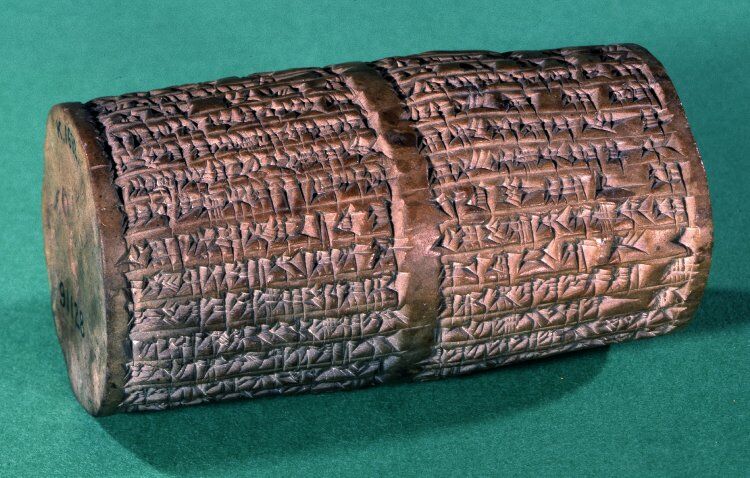
This is a recurring theme—the science of archeology disproves the Bible because we haven’t found it yet. Scholars said that Belshazzar, the king of Babylon in Daniel, never existed, for there was no record of him; thus, the book of Daniel was fiction. That is until they found this clay cylinder in 1854 that told the story of Belshazzar, forcing them to rewrite their history books to match the Bible.

The Hittites are mentioned throughout the Old Testament, but scholars maintained the Bible just made them up.  They insisted they never existed because they couldn’t find mention of the empire anywhere.  Now, it is one thing to deny the presence of one man, but it is a whole other level to deny the existence of an entire nation.  Then, in the early 1900s, they discovered in modern-day Turkey the city of Hattusha, a vast city of the Hittites with a library with over 10,000 tablets.  Again, the history books must be rewritten to align with Biblical History.

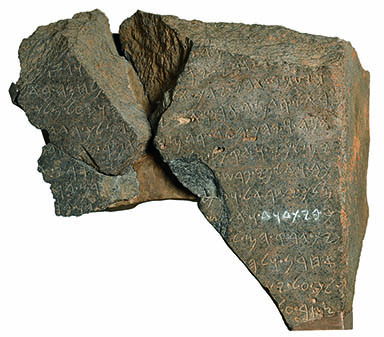
Scholars also had no evidence of a king over Israel named David or a House of David as his descendants who reigned in Israel. The House of David is a significant historical fact in a large portion of the Bible and is essential in the lineage of the Messiah. Scholars said David was merely an Israeli legend—until 1993 when a stele was found that describes the kings who were descendants of David as from the “house of David.”  

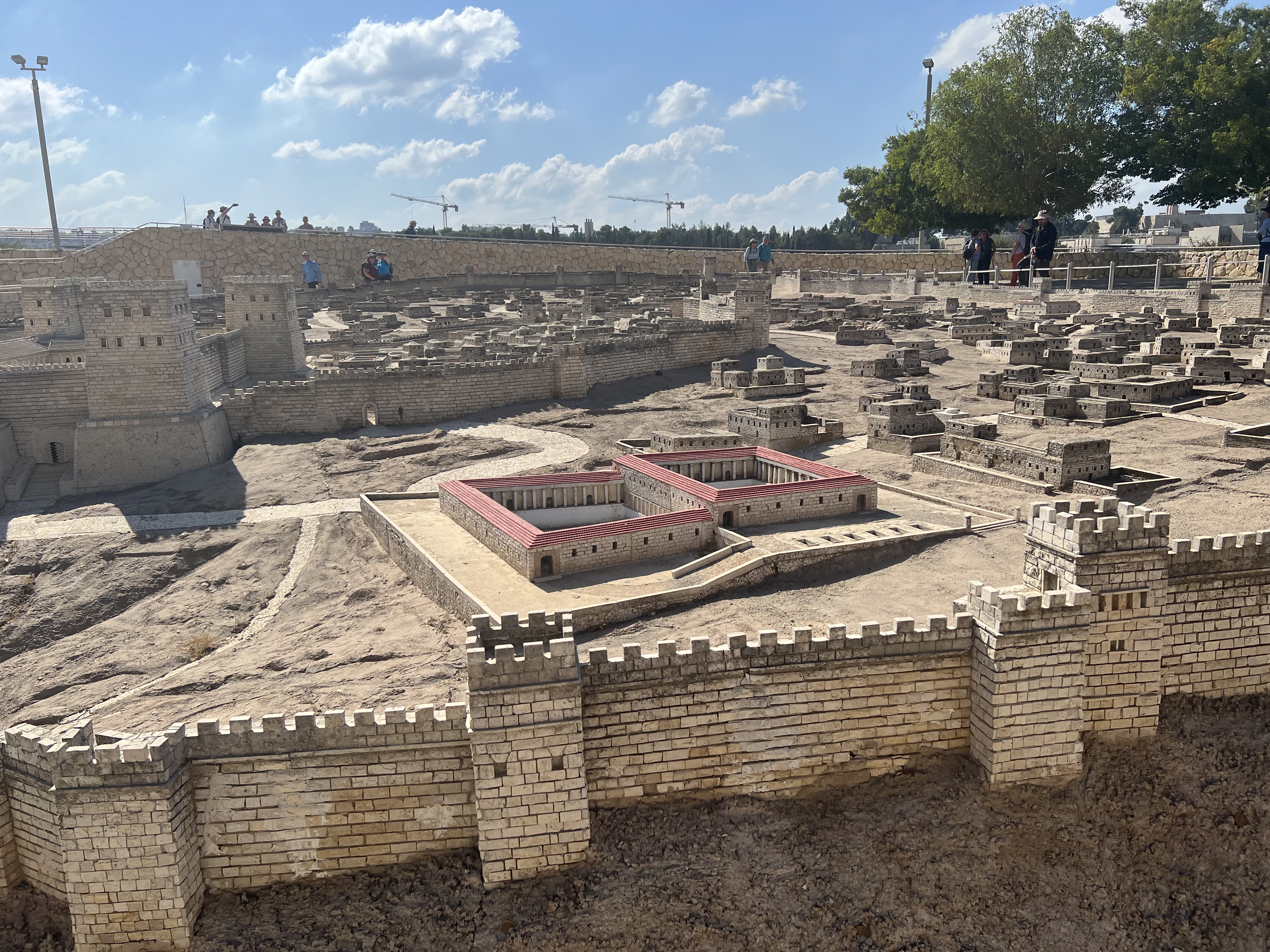
Archeology and history are important and developing sciences that have brought us a better understanding of the culture of the Bible.  But to say something does not exist because we haven’t found it yet is unreasonable. (If you ever lose your car keys, don’t call a historian and an archeologist to help you look for them; they will say that your car never had any keys and the keys don’t exist.) The pool of Bethesda is described as having five porticos (covered porches).  Archeologists had looked for a pool with five sides but found none.  Then, they found this double pool in the late 1800s with a dividing portico. (Thus, there are four side porticos and one between the pools.)  It is located just south of the temple area in Jerusalem.   Here it is in the model of First Century Jerusalem.1

Look back on our scripture from this morning.  Notice anything missing?  
There is no verse 4 in this ESV version.  In fact, verse 4 is missing from most modern translations.  Here is verse 4 in the King James Version:

4  For an angel went down at a certain season into the pool, and troubled the water: whosoever then first after the troubling of the water stepped in was made whole of whatsoever disease he had.

This is one of several examples where notes were inserted into later versions and became part of the text.  It is easy to see how this one happened.  Verse seven has the man saying, 

“Sir, I have no one to put me into the pool when the water is stirred up, and while I am going another steps down before me.”

Remember that until the invention of the printing press in the 1400s, all scripture (and all other books) was copied by hand.  What likely happened is that when copying the Bible, someone added a note explaining the reason the invalid needs to go into the pool when the water is stirred up.  Frequently, scribes add notes in the margin of the text when copying.  The problem is that the next scribe copying his work thinks that the writing in the margin is a verse that he accidentally omitted and had to write in the margin.  So that next scribe inserts it into the text. The first scribe’s note has become part of the ‘scripture.’

Here is a clear example of this.  In this copy of 1 John, the copyist wrote a note in the margin.  You can look at the earlier version of this exact text; the note is not there.  The version copied from this one incorporates the note into the text as if it were part of the original text. (1 John 5:7b-8)

Our oldest and most reliable texts do not have verse four in this passage.  The KJV relied on manuscripts after 1100 AD, while we now have manuscripts almost 1000 years earlier.  None of our texts before 500 AD have verse 4. 

 There was quite a stir when the NIV was published, and there were 49 verses “missing.” Oddly, I found this same dire warning on a friend’s FaceBook post this week after I wrote this.  Do not let this trouble you.  We are just trying to ensure we are using the most accurate copies.  I have friends who write notes in the margins of their Bibles.  I don’t think any of them want their notes to be incorporated into scripture.  In a few weeks, I will show you the one I am sure the NIV should have left out but did not.

The set of two pools functioned well as a mikvah for ceremonial bathing, which was required before entering the Temple.2  The water in mikveh had to be “living water,” flowing water from a natural source, not drawn from a well.  The upper pool would catch rainwater as it fell and serve as a holding tank.  Then, as needed, a door was opened in the wall between the pools to allow water to flow into the lower pool.   This would ensure the lower pool would not become stagnant.  When the water flowed, it was not hard to imagine that it would be ‘stirred.’   Then, it became a superstition or legend to the point that there was a multitude of people there who were “blind, lame, or paralyzed.”  People desperate for healing will believe and try almost anything. 

I am not fond of the word ‘invalid.’  I know it literally means “not strong,” and we have taken it to mean ‘weak from disease or injury,’ but it is too close to ‘invalidate’ and makes it sound (to me) like we are saying ‘worthless.’  When you have been sick for a long time, it is easy to feel worthless. And this man had been in this position for 38 years.  And now he has put his hope on healing on a pagan myth.  

Jesus sees him and doesn’t see him as worthless.  He doesn’t preach to him about his pagan thoughts.  He sees a man who has suffered for a long time and is now hopeless.  There is a lot we could talk about in this passage.  The Pharisees make a big deal because this healing took place on a Sabbath, and the man was carrying his mat, breaking their rules.  ‘Bethesda’ means house of mercy.  They ignore the miracle; they care nothing about the mercy shown and that this man is now able to walk; they focus on their own picky rule about what you can and can’t carry on the Sabbath because Jesus is a threat to their system.  But I want to focus on two things I think are important in this passage: First, Jesus’s aspect of healing, and Second, how about the other people who were there for healing but were not healed?

Jesus asks this man an odd question, and the King James Version does a better job with this translation:  “Wilt thou be made whole?”  Other versions say “…be made well” or “…be healed,” but wholeness is what Jesus is really talking about. He could have said, “Do you want to be able to walk?” but that is only one thing this man needs. He needs more than the use of his legs.  

There is a difference between being well and being whole.  There is a word in Hebrew for wholeness that I suspect Jesus would have used when he talked to this man.  It is ‘shalom.’  Shalom can be translated strictly as ‘peace.’  We define peace as an absence of war with our enemies.  The Hebrew definition is not just an absence of war but whole and complete relations with everyone and God.  Shalom is how God meant the world to be, how he created the garden in Eden to be — a place where people are in proper relations with others and with God.  Sin destroys shalom.  It breaks our relationship with others and with God.  And God is in the process of returning the world to the way it was in the garden.

When Isaiah predicts the coming Messiah, he calls him the ‘Prince of Shalom.’  Why is Jesus called the ‘Prince of Peace’?  Because only through what Jesus accomplishes on the cross can we again have true peace with God.  

Rom. 5:1   Therefore, since we have been justified by faith, we
                  have shalom with God through our Lord Jesus Christ.

Our sins broke the relationship, broke the peace.  By taking away our sins, our shalom with God can be restored.  But shalom with God is more than just a removal of our sins.  It is walking with God hand in hand, as Adam did in the garden.  Note that walking with God means walking in the same direction.  We must go God’s way to be in step with God.  If you are setting your own path and not depending on God to pick the path, then you can not walk with God.

Wholeness begins with a right relationship with God.  It is essential to get this vertical relationship settled first.  You can’t have proper relationships with any other person (horizontal relationship) until you are whole in your relationship with God.  We live in a world where over 50% of marriages end in divorce.  Why do so many relationships fail? Les Parrot, a professor of psychology, ordained pastor, and New York Times bestselling author, says the primary problem is that people believe in the romantic fairy tale and that we need to find that person who will make us whole.  We have bought into the fairy tale that there is one person out there who will make us complete.  He says most relationships fail because we rush into them before we are whole -before we settle the most important relationship with God.  Wholeness begins with a right relationship with God but does not end there.

To have true shalom, you must also be in the right relationship with others. You can’t have a broken relationship with one of God’s children and a right relationship with the Father.  

1 John 4:20-21   If anyone says, “I love God,” and hates his brother, he is a liar; for he who does not love his brother whom he has seen cannot love God whom, he has not seen. And this commandment we have from him: whoever loves God must also love his brother.

Again, you can’t be in a feud with one of God’s kids and say you love the Father.  This is why Jesus says, “Love your enemies”. 

In the Sermon on the Mount, Jesus says, “You have heard it said, do not murder, but I say to you, don’t be angry with your brother.”  Jesus has zero tolerance for broken relationships.  He wants us to have Shalom. (note)

In that same passage, Jesus tells us to walk out of the church and not to give an offering.

Matthew 5:23-24   So, if you are offering your gift at the altar and there remember that your brother has something against you, leave your gift there before the altar and go. First, be reconciled to your brother, and then come and offer your gift. 

I am still waiting for a preacher to stand up before the offering and say, “If you are about to put some money in the offering plate, and there is any person that you are not getting along with, then do not put the money in the offering plate until you have gone to them and made things right.”

Do you see how important shalom is to God?  It is so important that it became the traditional greeting of people when they met in the Old Testament, and it is still among those who speak Hebrew today.  Typically, you hear “Shalom aleichem,”  which means “peace be unto you.”  And the usual response is “Aleichem shalom,” meaning “Unto you peace.”   We often greet people with “How are you?” or “How is it going?”  The Hebrew equivalent of this is “Mah Shalomcha,”  or “How is your shalom,” or “How is your peace?”  The idea of peace and proper relations with God and others is so important.4

So Jesus asks this man, “Do you want to be whole?”  Because wholeness is more than regaining the ability to walk.  He has been down for 38 years.  Have you ever been sick for an extended period of time?  There is depression. There are thoughts that God has forgotten you or doesn’t care about you. There are feelings of uselessness. You begin to see the world differently and develop attitudes that harm your relationship with others.  Jesus sees a man who needs more than physical healing.  He needs shalom.

The man answers Jesus:
“Sir, I have no one to put me into the pool when the water is stirred up, and while I am going another steps down before me.”

He tells Jesus why he can’t get the pagan healing he is waiting for.  And Jesus does not rebuke him for his pagan beliefs.  He does not ask him to correct his theology.3  He simply says, “Rise up and walk.”   And he does.  Jesus starts him on a path to shalom by removing what this man saw as his primary problem.  Then Jesus leaves so quickly that the man doesn’t have time to get his name.   That brings me to the more difficult question this morning.   We know that there was a ‘multitude’ of sick people there at the pool.  Why did Jesus only heal this one and then quickly leave?  We could reason out some possible answers, such as that he knew the Pharisees would be after him if he hung around.  However, as we read the scriptures, there are other people Jesus doesn’t heal.  

For example, the man Peter and John see at the gate of the Temple in Acts 3:
Acts 3:1-10   Now Peter and John were going up to the temple at the hour of prayer, the ninth hour.  And a man lame from birth was being carried, whom they laid daily at the gate of the temple that is called the Beautiful Gate to ask alms of those entering the temple.   Seeing Peter and John about to go into the temple, he asked to receive alms.  And Peter directed his gaze at him, as did John, and said, “Look at us.”  And he fixed his attention on them, expecting to receive something from them.  But Peter said, “I have no silver and gold, but what I do have I give to you.  In the name of Jesus Christ of Nazareth, rise up and walk!”  And he took him by the right hand and raised him up, and immediately his feet and ankles were made strong.   And leaping up, he stood and began to walk, and entered the temple with them, walking and leaping and praising God.   And all the people saw him walking and praising God, and recognized him as the one who sat at the Beautiful Gate of the temple, asking for alms. And they were filled with wonder and amazement at what had happened to him.

This man has been daily at this gate of the Temple for a long time.  Acts 4:22 tells us he is 40 years old.  He is well-known to many people who pass by him frequently.  Jesus likely passed by him many times, but he was not healed then.  We know Jesus healed in the Temple.

Matt. 21:14   And the blind and the lame came to him in the temple, and he healed them.

Why was he not in the group healed then?  Why was he passed by without healing?  We can ask the same question ourselves.  Why doesn’t God heal everyone?

In High School, I had a friend hit by a car.  I prayed hard for him that he would survive.  He did not.  I spent hours beside my little friend Patrick’s bed when I was a resident at Children’s Hospital in Boston.  I could not bear the thought of this sweet 4-year-old dying after his Bone Marrow Transplant.  He had been through so much with Leukemia and remissions.  I had taken care of him for years.  He did not survive.  Last year, I got the call that my brother was being rushed to the hospital in serious condition.  Many prayed.  He did not recover.  Far too many times, I have found myself praying while I am in the middle of resuscitating a premature newborn that God will perform a miracle and allow these too-young lungs to function.  Far too many times, I have had to walk into a room and tell young parents the baby did not make it. We all know friends and family that we have prayed for who did not receive healing.

Why does God not heal everyone?  
He could. Sometimes, we don’t help people because we lack the resources. Some wonderful people read this blog.  I would love to give each person who reads this blog one million dollars just to see what they could do with it.  I’d like to, but I don’t have the resources. That is not God’s problem.  But there are other reasons we don’t help sometimes. We have learned this in our homeless ministry.  We have gotten calls from people to try to help get them out of jail.  But at that point in their life, jail is the best place for them.  Sometimes, you must let people hit rock bottom before they see they need to change their lives.  Sometimes, helping someone prevents them from ever learning to help themselves.  It creates dependence on you or others when they need to learn to handle their own problems.

For another explanation of why God doesn’t heal everyone, watch this clip from The Chosen.  Here, James the lesser (little James) is portrayed as a man with a severe limp.  He has just been told that the disciples will be sent out two by two and will be given the power to heal others.  James is puzzled by the fact that he will be able to heal others, but he himself has not been healed.  

Why did Jesus not heal this man?
For this man lame from birth, the Bible may give a clue in the name of the gate where he was placed.   The Greek word is ‘horaios,’ and the definition listed in Strong’s Greek Dictionary is “belonging to the right hour or season (timely), i.e. (by implication) flourishing (beauteous (figuratively)): — beautiful.”   It carries the idea of beauty due to its ‘ripeness,’ like a fruit ripens at a particular time or a flower blooms and is beautiful for just that moment.5  The writer of Ecclesiastes has that same idea:

Ecc. 3:11   He has made everything beautiful in its time. 

There is no record of a gate called “Beautiful” in any ancient document except in this section of Acts.  Therefore, we have no idea which gate they are referring to.  Perhaps it is because ‘beautiful’ is not the name of the gate but the situation.  This man was at the gate of ‘horaios, the right hour or season.’  It was the perfect time. And while he was hugging Peter and John, a stunned crowd gathers… and Peter preaches, and a thousand or more believe.  God had a purpose for that healing to happen at that exact chosen moment.  It was horaios – and it was beautiful. 

 I believe God will heal everyone one day.  One day, he will correct all wrong, cure all diseases, and bring about perfect justice.  Until then, we wait in a world full of sin and chaos for His promises to come.  We are told God will only give us good gifts.  It is hard to view horrible disease or death as good.  But we look through a glass darkly with our limited vision and understanding.  We also fail to see that our primary purpose in this world is not to live a carefree, uncomplicated life.  It is to bring glory to God.  Perhaps our illness or death will be the best way to fulfill that duty.  This is where we have to trust God.  He won’t ask us to suffer more than he asked Jesus to suffer.  The pain that Jesus endured was to bring glory to God and fulfill his will so that we may be saved.  But at the time, who could see that?  

So, how should we pray?  Most importantly, we should pray honestly.  If you study Psalms, you will see that the Psalmists are not afraid to express their deepest emotion to God, even if we might not think it is the “proper” way to speak to Yehovah.  We should, as the psalmist, pour our hearts out to God in requests for healing.  God knows your heart anyway.  But it is also acceptable to add to our heartfelt cry that we understand that God’s will may not be what we desire to happen and that we relinquish our will and ask Him to do His will.  This is how Jesus prayed in the garden.  “My Father, if it be possible, let this cup pass from me; nevertheless, not as I will, but as you will” (Matt 26.39).  This does not demonstrate a lack of faith to pray in this manner.  It was not for Jesus, and it is not for you.  In fact, it demonstrates your trust in God to vocalize your willingness to seek his will and not your own.

There is so much sickness, depression, and suffering in this world.  Many are waiting by the ‘beautiful gate’ for God’s perfect time for their healing; let it be now, or let it be in the world to come, but while we wait, let us seek wholeness, let us seek shalom.  Let us strive to be first in proper relationship with God and then in good relations with everyone.  And may our life give glory to the Father above in all we say and do.

  1. The Siloam pool, discussed in John 9, was rediscovered during excavation work for a sewer in the autumn of 2004.
  2. There is also a debate on whether the pool was built for ceremonial washing ( a mikvah) or was a pagan pool for the cult of Asclepius, or healing.  It was used as an Asclepion after the fall of Jerusalem, but I don’t think it was in the time of Jesus.  Certainly, Pharisees would not have been seen in such a pagan place.  Also, the steps are designed to function well as a mikvah.
  3. Good lesson.  Do what Jesus would do.  Just because someone’s theology seems wrong to you (even if you are right), sometimes you give them the help they need before you think about preaching to them.
  4. Paul, in Romans 12:18 says, “If possible, so far as it depends on you, live peaceably with all.”  Some people refuse to be reconciled no matter how hard you try.  (Jesus definitely understands this.)
  5. Greek has several words for time. Chronos is the usual generic word for time and is the root for our word chronology and others. Kairos refers to a special or appointed time or season. When Jesus says, “My hour has come,” the word for ‘hour’ is ‘kairos’. ‘Horaios is a smaller window of time than Kairos, a sacred moment, and is only seen four times in the New Testament, two of them in this passage.  

May 18-24, 27 A.D.  The Nobleman’s Son- The Year of the Lord’s Favor #33

Week 14 ———  The Nobleman’s Son
John 4:43-54

John 4:43   After the two days he departed for Galilee.  (For Jesus himself had testified that a prophet has no honor in his own hometown.)   So when he came to Galilee, the Galileans welcomed him, having seen all that he had done in Jerusalem at the feast. For they too had gone to the feast.  

So he came again to Cana in Galilee, where he had made the water wine. And at Capernaum there was an official whose son was ill. When this man heard that Jesus had come from Judea to Galilee, he went to him and asked him to come down and heal his son, for he was at the point of death. So Jesus said to him, “Unless you see signs and wonders you will not believe.”  The official said to him, “Sir, come down before my child dies.” 50 Jesus said to him, “Go; your son will live.” The man believed the word that Jesus spoke to him and went on his way.   As he was going down, his servants met him and told him that his son was recovering.   So he asked them the hour when he began to get better, and they said to him, “Yesterday at the seventh hour the fever left him.”   The father knew that was the hour when Jesus had said to him, “Your son will live.” And he himself believed, and all his household.   This was now the second sign that Jesus did when he had come from Judea to Galilee.

So, after spending two days in Samaria, they continue to Galilee and, as before, pass through his hometown of Nazareth and on through Sepphoris to Cana.  Already, he is not well received in Nazareth, so his path goes through Nazareth, but he does not stop there.  He explained to his disciples that a “prophet has no honor in his hometown.”  (More to come in Nazareth later.)  

In Cana, he is met by an “official,” literally a ‘royal officer.’  This would be some official of Herod Antipas, the Tetrarch. Some have proposed he was Manaen, Herod’s foster brother, who is seen in Acts 13:1 as a member of the church in Antioch. Others suggest it was Chuza, the husband of Joanna, one of the women with Jesus and the disciples in Luke 8:3, who supported his ministry.

The official had heard of Jesus’ prior miracles and knew that he was coming from Judea, so he met him at Cana. He asks Jesus to “come down” to Capernaum (Capernaum is a lower altitude than Cana at the Sea of Galilee—up and down are more important when you are walking 20 miles).  His son is “at the point of death.”  “Asks” here may not express the intensity of the Greek.  This is the same word for ‘beg,’ and the tense is continuous – so “continuously begged Jesus to come down” is appropriate.  Jesus replies “to him” but speaks in the plural “you” twice in his response, so he is talking to everyone there. “Unless you [all] see signs and wonders you [all] will not believe.  “Signs and wonders” is John’s way of saying ‘miracles.’1  But the word for signs is the Greek word for ‘sign-post,’ and it better conveys that these miracles of Jesus are pointing to something.  Leon Morris, in the New International Commentary of the New Testament, says:

Jesus says, “Go; your son will live,” and the man departs. Verse 50 says, “The man believed the word that Jesus spoke to him and went on his way.”  The man only gets Jesus’ word, which is enough for him.  (Did you see that Gideon?)  We are told this happened at the seventh hour.  Remember, John uses the Jewish measure of time, not the Roman one that we are accustomed to, so the seventh hour would be seven hours after sunrise (~6 am), so our 1 pm.  He then begins his 20-mile journey to Capernaum.

He is met by his slaves, who tell him that his son is recovering. He inquires when he began to improve and is told, “Yesterday at the seventh hour.”  That ‘yesterday’ sounds odd to us, but remember that the day for the Jew begins around sunset (~6 pm).  

Jesus says ‘go’ and the man believes and goes.  He shares his belief and his whole household believes.  Note that belief is accompanied by action.  (From a Jewish perspective, belief without action is not belief at all.)  This is a good lesson for us.

  1. The Synoptic Gospels typically use the word “dunamis” for Jesus’ miracles, concentrating on the power of Jesus. (‘Dunamis’ is the basis for our word ‘dynamo’ or ‘dynamite.)
  2. Morris, Leon.  New International Commentary of the New Testament, “John”.