November 25, 2025 –  Responses to the Gospel — “Thanks” & “No Thanks” — Acts #22

November 25, 2025 –  Responses to the Gospel — “Thanks” & “No Thanks” — Acts #22
Acts 8:9-24

One problem when you are going through a book of the Bible in a class or a sermon series is that you come to a time in the calendar when you want to cover a particular topic, like this week.  All of our thoughts turn to Thanksgiving.  And since you all are already thinking in that direction, it is important to discuss what the scripture says about what is already on our minds.  But we are slowly working through the Book of Acts, so let’s see what God gives.

Acts 8:9-24   But there was a man named Simon, who had previously practiced magic in the city and amazed the people of Samaria, saying that he himself was somebody great. They all paid attention to him, from the least to the greatest, saying, “This man is the power of God that is called Great.” And they paid attention to him because for a long time he had amazed them with his magic. But when they believed Philip as he preached good news about the kingdom of God and the name of Jesus Christ, they were baptized, both men and women. Even Simon himself believed, and after being baptized he continued with Philip. And seeing signs and great miracles performed, he was amazed.

Now when the apostles at Jerusalem heard that Samaria had received the word of God, they sent to them Peter and John, who came down and prayed for them that they might receive the Holy Spirit, for he had not yet fallen on any of them, but they had only been baptized in the name of the Lord Jesus. Then they laid their hands on them and they received the Holy Spirit. Now when Simon saw that the Spirit was given through the laying on of the apostles’ hands, he offered them money, saying, “Give me this power also, so that anyone on whom I lay my hands may receive the Holy Spirit.” But Peter said to him, “May your silver perish with you, because you thought you could obtain the gift of God with money! You have neither part nor lot in this matter, for your heart is not right before God. Repent, therefore, of this wickedness of yours, and pray to the Lord that, if possible, the intent of your heart may be forgiven you. For I see that you are in the gall of bitterness and in the bond of iniquity.” And Simon answered, “Pray for me to the Lord, that nothing of what you have said may come upon me.

Well, we have this fascinating story about a man named Simon, a magician who tried to buy the Holy Spirit from the apostles. …Happy Thanksgiving!

Remember that it was the persecution of the followers of Jesus in Jerusalem that led them to leave Jerusalem and scatter to other places.   And last week, we discussed Philip, one of the seven men chosen, along with Stephen, to help disperse the church’s funds to widows and those in need.  He flees persecution in Jerusalem and ends up in Samaria, a place Jesus’ disciples didn’t want to go.  But Jesus had predicted that his followers would take the gospel to Jerusalem, Samaria, and the ends of the earth.

Acts 1:8   But you will receive power when the Holy Spirit has come upon you, and you will be my witnesses in Jerusalem and in all Judea and Samaria, and to the end of the earth.

They reach Samaria here in Acts chapter 8.  The ends of the earth would have to wait.  Now they kept spreading in Acts, to Asia Minor, Greece, Italy, and Spain.  But Jesus’ prediction about the spread of the gospel to the ends of the earth?  To this day, it has not yet been fulfilled.  A month ago, I mentioned some villages in Sierra Leone that still don’t have any idea who Jesus is.  There, where the gospel has not yet reached, evil prevails, and child sacrifice continues.  But the gospel is now reaching those villages, and Jesus’ prophecy that the ends of the earth would be reached draws closer to its final fulfillment.

But here is Philip in Samaria, and we discussed last week that the people there were very receptive to the gospel.  Luke tells us:

Acts 8:8   So there was much joy in that city.

The gospel brings joy… to those who accept it.    And they did

Acts 8:12   But when they believed Philip as he preached good news about the kingdom of God and the name of Jesus Christ, they were baptized, both men and women.

Now, when the apostles in Jerusalem hear that Philip is baptizing Samaritans, Peter and John go to investigate.  

Acts 8:14-17   Now when the apostles at Jerusalem heard that Samaria had received the word of God, they sent to them Peter and John, who came down and prayed for them that they might receive the Holy Spirit, for he had not yet fallen on any of them, but they had only been baptized in the name of the Lord Jesus. Then they laid their hands on them and they received the Holy Spirit.

Don’t get too caught up in this particular example: they were first baptized in the name of Jesus, then the apostles prayed and laid hands on them, and they received the Spirit.  In the Bible, the spirit comes sometimes with laying on of hands, sometimes not, sometimes close to water baptism, sometimes not. There are several different ways it happens in the New Testament.  What we need to remember is that the Holy Spirit is God’s gift to us under God’s control.  God is sovereign; he gives it in His time.

And in Luke 8, he sets up a contrast in how people responded to the gospel.  Luke contrasts the reactions of the Samaritans to the gospel with those of a man named Simon.  

What do we know of this Simon?

Acts 8:9-11   But there was a man named Simon, who had previously practiced magic in the city and amazed the people of Samaria, saying that he himself was somebody great. They all paid attention to him, from the least to the greatest, saying, “This man is the power of God that is called Great.” And they paid attention to him because for a long time he had amazed them with his magic.

He practiced magic.  The Greek word is ‘mageuo’, from which we get our word ‘magic’,  but it is not magic as we think of it today.  We think of magicians like David Copperfield or other modern magicians who are, in reality, illusionists.  They perform things that trick your eyes and mind, like sawing someone in half or making things disappear.  They use elaborate props to trick you into thinking they have performed the impossible.

But a better English translation of ‘mageuo’ is ‘sorcerer’.  (And we see that word used in many English translations, KJV and NIV included.)  Throughout the Bible, sorcery is recognized not as illusion, but as a genuine power.  We know that God has miraculous power, but the Bible also recognises other supernatural powers at work in our world. Sorcery or magic in the Bible is always an actual power that is in opposition to God’s power.

This Simon in Acts 8 makes use of some supernatural power from evil spirits.  The Bible is clear that there are powers of evil at work in the world.  We too often downplay the work of evil spirits in our world, relegating this to horror movies.  But Scripture speaks of the danger of powers and principalities.  This is not something to laugh at or to toy with.  So this Simon performed some miracles with his sorcery and deceived the people into thinking he was a man of God; perhaps they even thought he was the Messiah.  The Scriptures warn us to test the spirits.  Do not believe someone is from God just because they can do amazing miracles.  The book of Revelation speaks of this as a problem in the last days.  

But now Simon encounters the true power of God, the Holy Spirit, through his indwelling presence in Philip, a follower of Jesus.  Simon recognizes that this power in Philip is greater than the power he uses.  So Simon believes what Philip is preaching, and he is baptized and stays close to Philip.   That phrase “continued with Philip” carries an intensity greater than our English words present.   Other translations note “He followed Philip everywhere.”  He wants to know more.  But what exactly does he want?

He sees signs and miracles and is amazed.  There is a difference between being amazed by a miracle or a power and being humbled by grace.   As the story goes on, we realize that Simon didn’t really become a full-fledged follower of Jesus.  And Luke drops some clues in the story.

But then Peter and John arrive. They came from Jerusalem to see what was going on with these Samaritans.  And Simon sees that Peter and John:

Acts 8:13    Even Simon himself believed, and after being baptized he continued with Philip. And seeing signs and great miracles performed, he was amazed.

For example, we read that Luke said the Samaritans “believed the good news about the kingdom of God and Jesus Christ.” (Acts 8:12)  But about Simon, he says, “Even Simon himself believed,”  but he doesn’t state exactly what Simon believes.  Sometimes it is essential to note what is not said.  That’s just a hint.  Luke makes it clear here.

Acts 8:18-19   Now when Simon saw that the Spirit was given through the laying on of the apostles’ hands, he offered them money, saying, “Give me this power also, so that anyone on whom I lay my hands may receive the Holy Spirit.” 

Simon didn’t believe the gospel message of Jesus.  He wasn’t interested in the truth of the Gospel; he was just amazed by the power.    He had made himself very popular by using the power of evil, impressing the people.  Now Peter and John come in with a greater power, and he wants to purchase it.  He thinks God works like a magician’s guild — you pay to learn the secret, the new trick.  

Now look at Peter’s response to Simon:

Acts 8:20-21  “But Peter said to him, “May your silver perish with you, because you thought you could obtain the gift of God with money!   You have neither part nor lot in this matter, for your heart is not right before God.”

Does that seem harsh to you?  Let me put this in a situation you might understand better. 

Imagine that you have a spouse who is a great cook, and one day you meet someone who is wowed by your spouse’s cooking, and they say, “Wow, she is a great cook.  How much do you want for her?  That is just not right.  But Simon’s sin is even worse than that. The Holy Spirit isn’t merely another person—He is God Himself. Simon has offered to buy God himself, as if God were something you purchased at a store!

Simon is trying to use the ways of the world to control the things of God.   So Peter reacts strongly:

Acts 8:22-23  “Repent, therefore, of this wickedness of yours, and pray to the Lord that, if possible, the intent of your heart may be forgiven you. For I see that you are in the gall of bitterness and in the bond of iniquity.

Peter says, You are still in your sins.  You have not given your heart to Jesus.    You are in the bond of iniquity — in bondage to sin — a slave to sin.   You need to repent.

And how does Simon answer?

Acts 8:24   And Simon answered, “Pray for me to the Lord, that nothing of what you have said may come upon me.”

There is fear in Simon’s response, but no repentance.  He wants to be relieved of any consequences.  He does not ask for forgiveness or cleansing.  He does not commit to changing his ways.  He wants protection, not transformation.  He still does not understand the gospel.  Repentance is not being sorry you got caught — It’s being broken because you have offended God.

Now there are a lot of lessons from this passage.  We could talk about how Simon was all about the power, all about the show.  He was drawn to the people preaching the gospel because of their powerful display.  People today are still captivated by the spectacular — they attend a church based on celebrity pastors,  or incredible music, great programs, or impressive buildings.  Unfortunately, some are like Simon the Sorcerer.  It’s all about the show.  But fascination is not faith.   

We could talk about how Simon was amazed by power—but not humbled by grace.  Simon only came to God for what he might get out of Him.  He understood nothing about the gospel. It’s possible to get close to God’s movement, to belong to a body of believers, to be baptized, and yet still not be transformed.

But I am supposed to be headed to a Thanksgiving message, so let me focus on this:Simon thought he could purchase the power of God.   If you are wealthy enough, then you can buy your way into a political office. You can buy power, prestige, and titles, but you cannot buy the Holy Spirit.  Your money will not influence God.  You can’t purchase salvation.  You can’t buy forgiveness.  These are gifts God gives freely to surrendered hearts.

It’s a good thing that God’s grace is not for sale.  There is no way any of us could ever afford it.  The price is too high.  Only Jesus could pay that price.  We should live lives of continual thanksgiving to God who gives us every breath we take.

Psalm 100:4  “Enter his gates with Thanksgiving…”
1 Thessalonians 5:18  “…give thanks in all circumstances.”
Ephesians 5:20  “…always giving thanks to God the Father for everything.”
Philippians 4:6  “…in everything, by prayer and petition, with thanksgiving, let your requests be made known to God.”

We should not come into God’s presence without a voice of gratitude.  We should always enter into prayer with an attitude of thanksgiving.  Thanksgiving is rooted in joyful repentance.  We need to check our motivation.  Are we seeking Jesus for His blessings or because He is Lord?

We need to watch our hearts.  God doesn’t just want our worship songs.  He wants our surrender.  We need to reject any attitude of entitlement. We do not give thanks because we have everything we want;  We give thanks because God has given us everything we need in Christ.  We must guard against a consumer Christianity.  We don’t make deals with God.  We can’t purchase financial success by tithing.  We can’t earn extra blessings from God by doing good deeds.  Faith isn’t a spiritual marketplace.

We do these things, we obey God because we love him.  They are acts of gratitude.  Thanksgiving is often not what you say, but what you do.

Simon shows us the danger of a heart not right with God —a faith without surrender, a belief without gratitude.  But Samaria shows us what happens when the gospel takes root —joy erupts, worship spreads, and lives are transformed.  This Thanksgiving —let us not be like Simon, pursuing what God gives.  Let us seek God Himself, the source of every good and perfect gift.

2 Corinthians 9:15   Thanks be to God for His indescribable gift!
October 7, 2025 –  The Central Message of Acts — Acts #15

October 7, 2025 –  The Central Message of Acts — Acts #15
Acts 5:17-33

As we continue our study in the Book of Acts, I want to use this story in chapter 5 to highlight the central purpose of the book.  What is the primary lesson we should learn from the book of Acts?

Acts 5:17-33  But the high priest rose up, and all who were with him (that is, the party of the Sadducees), and filled with jealousy, they arrested the apostles and put them in the public prison. But during the night, an angel of the Lord opened the prison doors and brought them out, and said, “Go and stand in the temple and speak to the people all the words of this Life.”
And when they heard this, they entered the temple at daybreak and began to teach. Now, when the high priest came and those who were with him, they called together the council, all the senate of the people of Israel, and sent to the prison to have them brought. But when the officers came, they did not find them in the prison, so they returned and reported, “We found the prison securely locked and the guards standing at the doors, but when we opened them we found no one inside.” Now, when the captain of the temple and the chief priests heard these words, they were greatly perplexed about them, wondering what this would come to. And someone came and told them, “Look! The men whom you put in prison are standing in the temple and teaching the people.” Then the captain with the officers went and brought them, but not by force, for they were afraid of being stoned by the people.
And when they had brought them, they set them before the council. And the high priest questioned them, saying, “We strictly charged you not to teach in this name, yet here you have filled Jerusalem with your teaching, and you intend to bring this man’s blood upon us.” But Peter and the apostles answered, “We must obey God rather than men. The God of our fathers raised Jesus, whom you killed by hanging him on a tree. God exalted him at his right hand as Leader and Savior, to give repentance to Israel and forgiveness of sins. And we are witnesses to these things, and so is the Holy Spirit, whom God has given to those who obey him.”
When they heard this, they were enraged and wanted to kill them.

This is the story of the second time the apostles were imprisoned before being brought before the Sanhedrin, the highest court in Jerusalem.  Remember that incarceration in these times is not punishment, but merely holding them for trial.  But this is different.  This is a real trial, for the apostles are now in violation of a direct order of this court and face severe punishment.  While it was only Peter and John the first time, now all the apostles are before the Sanhedrin.  And as we will see next week, this trial will end with the apostles being flogged.  Typically, that meant being chained to a pole and receiving 39 lashes with a whip.

First, they were warned not to speak, but they continued to preach in the Temple.  Then they were imprisoned this second time for speaking this message, but they were miraculously set free.  And what did they do next?  They went right back to the same area and did exactly what the Sanhedrin warned them not to do, but what the angel told them to do.  

Then they are brought right back into the priestly court, where they preach the same message to their accusers again.  To these same people who just months ago tortured and killed their rabbi for the same reason.  The apostles know this will likely end in at least a beating for them, if not a death sentence.  This leads us to the main lesson we can learn from the book of Acts.  What made these ordinary men so uncommon?  What made these simple disciples so powerful?  What made these once frightened men so bold, unafraid of the authorities who could sentence them to death?   If we don’t learn anything else from the Book of Acts, we have to understand this.  So I ask you, “What is the primary lesson we should learn from the Book of Acts?”

This primary lesson of the Book of Acts is evident in several passages that I want you to keep in mind as we continue through the book.  The first part is Acts 1:7-8:

Acts 1:7-8  But you will receive power when the Holy Spirit has come upon you, and you will be my witnesses in Jerusalem and in all Judea and Samaria, and to the end of the earth.

The Holy Spirit comes and gives us power, and we become witnesses.

And the second part of the central message of Acts is found in a phrase that we see repeated all through the book:

Acts 6:7  And the word of God continued to increase, and the number of the disciples multiplied greatly.
Acts 12:24  But the word of God increased and multiplied.
Acts 19:20  So the word of the Lord continued to increase and prevail mightily.

Throughout the book of Acts, we see this repeated over and over.  So it must be important.  The Word of God increased.  Now, by combining these ideas, we arrive at the primary lesson in the Book of Acts.

“The Holy Spirit comes to dwell with people of faith, enabling them to fully express the Word of God in their lives and share it with others.”

This is my one-sentence book report on Acts.  This is the theme of the book.  These are not the same men who cowered in the storm and hid in the upper room after Jesus’ crucifixion.  They are living lives without fear.  They are living lives of obedience to God, expressing godly characteristics that we call the fruits of the Spirit.  They have been forever changed.  

This is God’s doing. This is the result of salvation.  This is the work of the Holy Spirit in our lives.  Let me illustrate that.

Let’s imagine for a moment that God decided to bring salvation to one of those trees outside.  Ok, it is an analogy, but bear with me. If God brought salvation to that pine tree outside, then it would be changed.  It wouldn’t look the same as before.  It wouldn’t have pine needles and grow pine cones.   It would have different leaves and bear different fruit.  It would bear the kind of fruit God told it to, doing whatever God’s word said for that tree to do, because salvation has come to that tree.  No one would look at that tree and think it was just an ordinary tree. Everyone would immediately recognize that it is completely different.  No one looks at an apple tree and believes it is a pine tree.   It has now become the tree that God intended it to be.  That’s what salvation does.  Your life changes radically so that everyone can see that you are different from what you were, and you become who God intended you to be, producing the fruit of salvation that He intended.

When salvation comes, the Holy Spirit in you empowers you to live your life in obedience to God’s Word.   You may not have noticed this, but it is challenging to live life and follow God’s Word entirely on your own.  The temptations are so….tempting.  You can’t live that life under your own power.  That’s why Paul said, “All have sinned and fallen short of the glory of God” (Romans 3:23). We can’t do it on our own.  So we get help from God to live that way.  The Holy Spirit comes upon us to dwell in us and help us become obedient to God’s word.  And when you live that way, people notice you are different.  You are as different as a pine tree and an apple tree.

So through the power of the Holy Spirit, you live in such a way that you express the Word of God in your life.  Later on, we can discuss other expressions of the Holy Spirit in believers, such as how He gives us words to speak, divine insight, tongues, or prophecy, for example.  

But none of these things is the primary role for the Holy Spirit in our lives.  Job #1 for the Holy Spirit:  Help us live our lives in obedience to the Word of God so that we will be the person God created us to be. This is what the Holy Spirit does in your life.  That is why Paul said in his letter to the church in Galatia: 

Galatians 5:22-23  But the fruit of the Spirit is love, joy, peace, patience, kindness, goodness, faithfulness, gentleness, self-control.

The Holy Spirit within us changes us, making us as different as a pine tree and an apple tree.  We become obedient to God’s word, and this is what we look like.  This is the kind of fruit we bear.  This is what people see when they look at us.

Look at this list and ask yourself, “Am I allowing God’s Spirit to lead me to be the person that produces this fruit?  Do I need to surrender to the Holy Spirit in my life to make me more of this type of person?”

Now, Paul had another list of fruits in Galatians 5.  He listed the fruit that people bear when they are not who God wants them to be.  

Galatians 5:19-20  These are the fruits of the flesh: sexual immorality, impurity, sensuality, idolatry, sorcery, enmity, strife, jealousy, fits of anger, rivalries, dissensions, divisions, envy, drunkenness…

That is the fruit you bear before salvation, before the holy spirit comes to live in you.  If someone consistently bears this kind of fruit, then they are not listening to the Holy Spirit.  They look more like a pine tree than the apple tree God wanted them to be.  

This is why we have the Book of Acts in our Bible: to show us how the Holy Spirit transformed these first-century disciples, enabling them to live lives consistent with the Word of God and then spread this message to the world.  Look back at those verses from which we derived the central message of Acts again.   You will receive power from the Holy Spirit.  It will change you, and then you will be witnesses.  And then all through the book of Acts, this phrase:  “The Word of God increased.”   But how does the word of God increase?  

God’s word is full of life.  God spoke life into existence in Genesis 1.  In the first book of the Bible, we see that God’s word creates biological life.  Then in the Gospels, we see God’s word grant eternal life.  God’s word is life.  Remember that after the feeding of the 5,000, Jesus began teaching more difficult things, and many of His followers deserted Him.  Jesus asked the disciples if they would leave him also, and Peter replied:

John 6:68  Simon Peter answered him, “Lord, to whom shall we go? You have the words of eternal life.”

God’s word is the word of life.  God’s word is alive, and being alive, it grows and multiplies.  The author of Hebrews said it this way:

Hebrews 4:12  For the word of God is living and active, sharper than any two-edged sword, piercing to the division of soul and of spirit, of joints and of marrow, and discerning the thoughts and intentions of the heart.

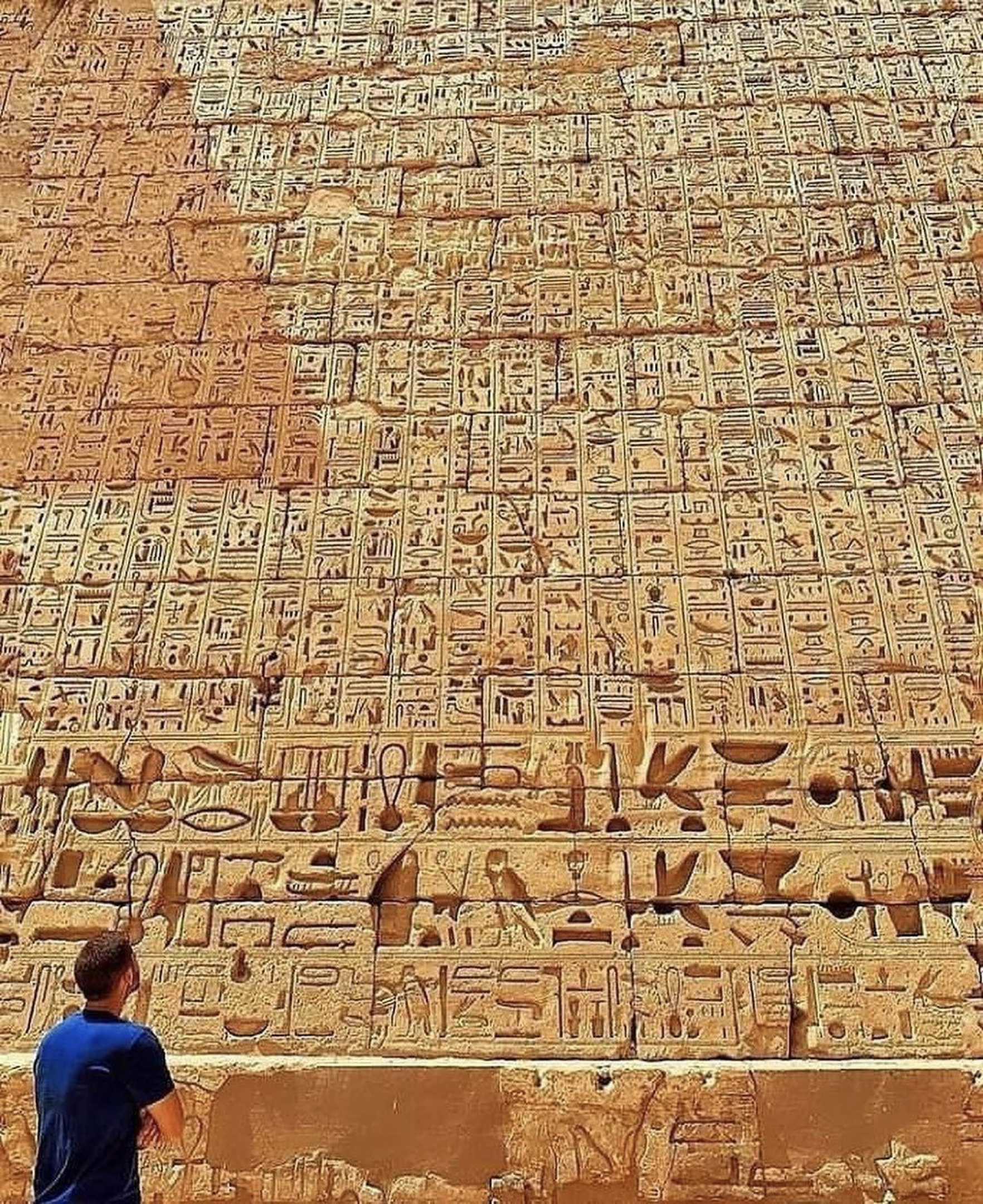
In Egypt last week, we saw walls that were a hundred feet high, filled with hieroglyphs.  Each symbol was meticulously carved into solid rock by hand.  Thousands and thousands of man-hours setting words into stone.  Some of these words were placed there 4000-5000 years ago.  But these words are dead.  They speak of a mythology whereby a pharaoh might conquer death and attain eternal life. 

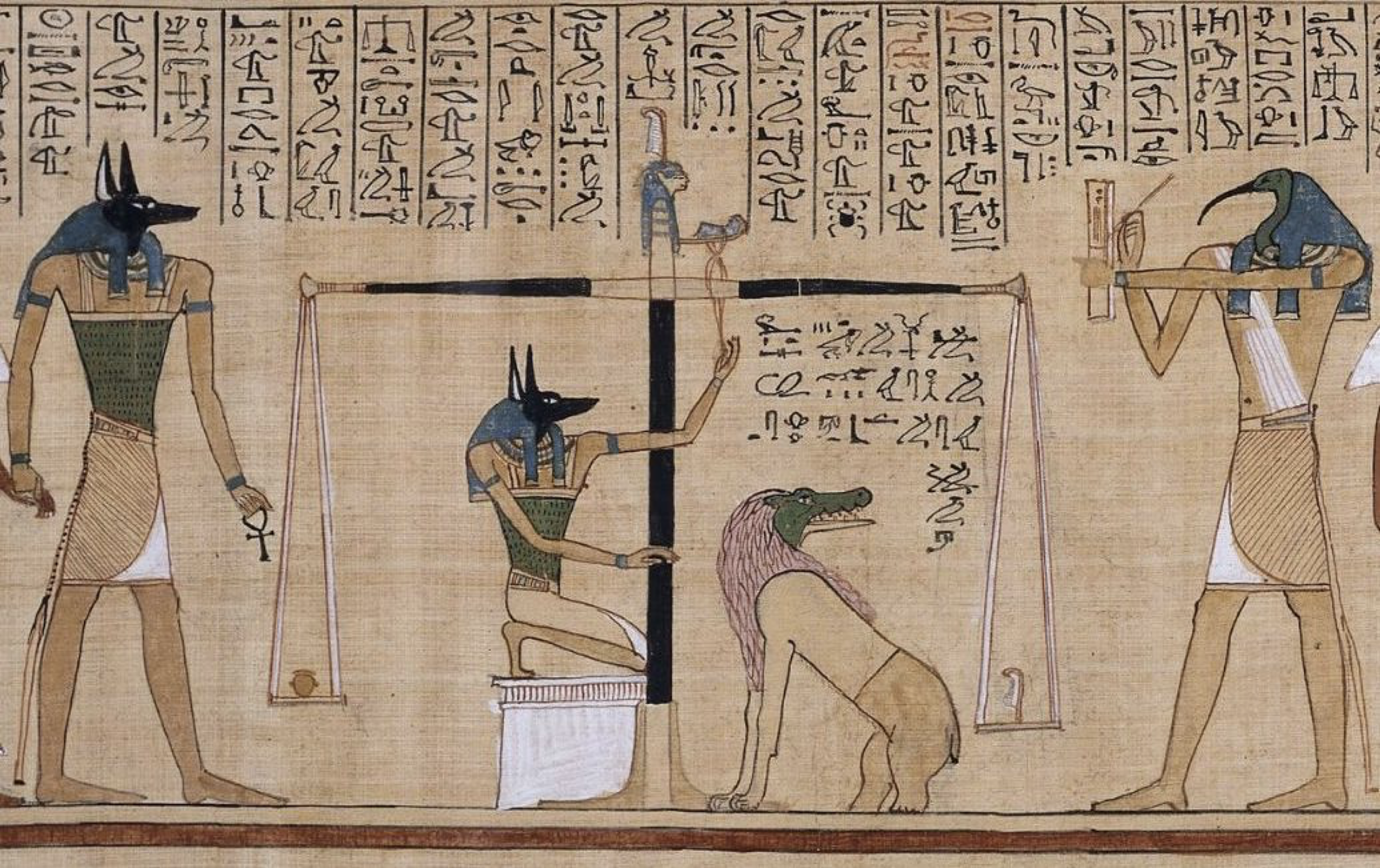
Here are words from what they call the ‘Book of the Dead.’  They thought these were words of life.  But each of these Egyptian gods was created from their imagination, dreamed up to explain the wonders of the world and to justify the rule of a supreme leader, a pharaoh who would attain a life after death and lead them to have a chance at life after death.  But we read in Exodus how Yehovah defeated these Egyptian deities.  Each of the 10 plagues in Egypt was directed at one of the major Egyptian gods.  The deliverance of the Israelites from Egypt demonstrates how all these stories in stone are nothing but myths.  These idols are not real. These stories are fiction.  No matter how hard they try to preserve Pharaoh’s body in elaborate tombs, filling them with every item he may need in the next world,  Pharaoh can not conquer death for them.  For thousands of years, these Egyptians sought a way to eternal life.  But their stories, the words on these temples, are dead.  They have no answer for death and do not bring life.  Yehovah showed that He and He alone had the words of life.  And like Egypt, many other cultures have sought ways to eternal life. 

There are people today who are seeking alternative means of eternal life.  Significant scientific research is being conducted to extend the human lifespan, and some scientists believe that immortality may be within our grasp.  I have a friend who is part of a group of scientists studying apoptosis, the mechanism by which the body causes damaged cells to die.  In some forms of cancer, the damaged cell avoids this process and continues to grow and reproduce.  Some believe that if we can learn to control this process, we could not only cause cancer cells to die but also allow normal cells to continue growing and reproducing indefinitely, resulting in no decrease in function as one ages.

Imagine skin that does not thin and lose its elasticity, remaining youthful; bones that do not lose density and compress; and vision that does not deteriorate with age.  Imagine a world with no cancer.  It sounds good, but the word of God tells me that. Immortality is not something we can achieve on our own.  We can not avoid death.  Sin has brought death into the world, and science is no match for sin.  Botox may hide wrinkles, but it can not cover sin and death.  God alone has the answer for death.  His words alone can bring life, for His word is life.  And there will be a time when aging is no more, and cancer is no more, and life is eternal.  God is preparing that future for you, not science. 

So God’s word is living.  It brings life, sustains life, and has the answer to death.  But how does God’s word increase?  God’s word increases each time it enters the heart of a new believer and each time a believer grows in faith through His word.  It is impossible to overestimate the importance of God’s word to us.  Through the Holy Spirit, it is supposed to live in us: 

Colossians 3:16  Let the word of Christ dwell in you richly, teaching and admonishing one another in all wisdom, singing psalms and hymns and spiritual songs, with thankfulness in your hearts to God.

The word is supposed to dwell in us, take up residence in us.  As it lives in us, it grows and multiplies, contagiously spreading to others.

When I was 8 years old, I joined the Rome Boys’ Club Choir.  We traveled all over the country for 10-14 days each summer in Greyhound buses.  We would pull up to a Boy’s Club in some town and watch out the window of the bus as cars arrived in the parking lot.  The local Boys’ Club would have arranged for families to house us for the night.   We would wait for our name to be called, then grab our suitcase and go to spend the night in pairs with our assigned family.  (Can you imagine doing this today?)  You always hoped that you would be chosen to go with the family that drove up in the really nice car.

I stayed in a lot of homes, some really amazing places, a few mansions, and a few that were pretty rough.   But we were almost always welcomed with great hospitality.  People went out of their way to ensure we had everything we needed and arrived at the concert on time.   Some people went above and beyond in their hospitality, hosting parties after our concert for us or arranging for us to go swimming, ride go-karts, or do other activities.

However, there was one place I recall where I felt like we were an imposition.  It was a nice enough house.  But they barely spoke to us.  They showed us our bedroom and went to the other side of the house.  They had someone they knew drive us to the concert and pick us up.  We never saw them until the next morning.  I guess they thought we would eat at the concert, so they didn’t offer us any food, and we had no supper that night.  Thankfully, my mom had packed more snacks in my suitcase than I could eat in several weeks, so we were okay. But everything they did let us know that they wished we weren’t there.  We saw them the next morning when they came to our door and said our ride was there. And we were happy to leave. That was a very uncomfortable stay.

How about you?  Have you ever stayed as a guest in a home where you didn’t feel welcome?   It’s pretty miserable.  

If you know my wife, you know that she is the model of hospitality.  She goes out of her way to make sure anyone staying with us feels at home.  There are fresh flowers in the room, and she looks after every detail.  We often have people staying in our garage apartment.  There is a family currently with us who came in town for a funeral and have stayed with us for several weeks to help settle things.  We had 20 college girls at the house Friday night for dinner who were in town for a volleyball tournament.  Hospitality is a ministry.

It is one of the best ways to show love to people who aren’t friends … yet.  You share love and grace with them through your hospitality.  They see the Word of God living in you because you bear the fruits of the Spirit in your life.  And the word of God will flow from you to them as you speak and act out the Word in your life.  Later in our study of Acts, we will take a deeper look at what the Bible says about hospitality, because God has a great deal to say about it.  However, I have a question to ask you for now.  If God’s word is supposed to dwell in us, to live with us, then let me ask you, “What kind of host or hostess have you been to this guest in your house?”

Does God’s word feel welcome in your life, or are you like the family that opened the door to their house for me but didn’t offer to feed me and didn’t even speak to me?    

God’s word dwells in us to have a relationship with us.  We are instructed in how to live.  God’s word should make a difference in the way we see others and the way we treat others. The whole 3rd chapter of Colossians teaches us how to treat others and how to live.   When God’s word dwells richly in us, we become who we are supposed to be, conduits of God’s love and mercy and grace.  We overflow with God’s goodness.  We like these disciples to become different, and we cannot help but share the grace that God has so richly poured out on us.

Through the power of the Holy Spirit, as we live our lives as God directs, showing evidence of our salvation through the fruits of the Spirit evident in our lives, we become living witnesses to God’s grace and mercy without needing to say a word.  

We need to be very sensitive to the working of the Spirit of God in us, watching for him to reveal things we need to change and paths we need to walk.  We need to leverage all the gifts God has given us to increase the Word of God in our lives and in the lives of those around us.

We have to be more involved in participatory ministries.  I want to share a passage from a book that helped shift my perspective on ministry.  It is from Shane Claiborne’s “The Irresistible Revolution.”

“It is much more comfortable to depersonalize the poor so we don’t feel responsible for the catastrophic human failure that results in someone sleeping on the street while people have spare bedrooms in their homes. We can volunteer in a social program or distribute excess food and clothing through organizations, and never have to open up our homes, our beds, our dinner tables. When we get to heaven, we will be separated into those sheep and goats Jesus talks about in Matthew 25 based on how we cared for the least among us. I’m just not convinced that Jesus is going to say, “When I was hungry, you gave a check to the United Way and they fed me,” or, “When I was naked, you donated clothes to the Salvation Army and they clothed me.”
Jesus is not seeking distant acts of charity. He seeks concrete acts of love: “you fed me…you visited me in prison…you welcomed me into your home…you clothed me.” With new government funds and faith-based initiatives, the social-work model can easily entangle the church in the efficiency of brokering services and resources in a web of “clients” and “providers” and struggling to retain God’s vision of rebirth, in which we are all family. Faith-based nonprofits can too easily be the mirror image of secular organizations, maintaining the same hierarchies of power and separation between rich and poor.
They can too easily merely facilitate the exchange of goods and services, putting plenty of professionals in the middle to guarantee that the rich do not have to face the poor and that power does not shift.
 Rich and poor are kept in separate worlds, and inequality is carefully managed but not dismantled. When the church becomes a place of brokerage rather than an organic community, she ceases to be alive. She ceases to be something we are, the living bride of Christ. The church becomes a distribution center, a place where the poor come to get stuff and the rich come to dump stuff. Both go away satisfied (the rich feel good, the poor get clothed and fed), but no one leaves transformed. No radical new community is formed.And Jesus did not set up a program but modeled a way of living that incarnated the reign of God, a community in which people are reconciled and our debts are forgiven just as we forgive our debtors (all economic words). That reign did not spread through organizational establishments or structural systems. It spread like disease—through touch, through breath, through life. It spread through people infected by love.”

Claiborn, Shane “The Irrestible Revolution”

The Word of God increases when we live our lives in such a way as to make God’s word alive in our actions.  We establish relationships with others, and God’s word flows through us in how we act and what we do.  We see this in our homeless ministry.  We offer a variety of classes for our neighbors without homes, but it is not in these classes that people change.  We give them food and a warm place to stay, but that alone doesn’t cause people to change.  It is when we sit down at the table for a meal with a few of our neighbors and get to know them, allowing them to get to know us.  That is when God does his work.  That is where lives change.  Because when you allow people to get to know you, then they can see the Holy Spirit living in you, and the Word of God living through you, and then the Word will increase. “1

Ministry must be relational.  That is always God’s plan.  Donating money to a good cause is a commendable act, but it is not a substitute for a ministry.  It is giving back to God some of what He gave to you.   To do ministry, you have to be hands-on, making relationships with others.  This is what we see in the Book of Acts: God’s Holy Spirit transforming people so that they can extend love to others, who will see the fruit of the Spirit in them. As a result, God’s word will increase as they, too, accept His word into their lives.

These disciples are examples of lives changed through the Holy Spirit.  They can not stop doing what God tells them to do.  Despite threats of beatings or death, they can’t stop being who God wants them to be.  It is because they are different now.  This is who they are now.  This is the lesson for us in the Book of Acts. This is what we must do.   Let us strive to listen to God’s holy Spirit in our lives and let God lead us to be who we are meant to be.  

I challenge you to take a hard look inward at your own life.  Are you listening to the Holy Spirit in your life as you should?  Is God’s Spirit dwelling richly in you, or have you just set Him in the corner and ignored him?  Have you welcomed God into your life with great hospitality, or have you just tolerated His presence there?  

Let me be the first to confess that I don’t always listen to the Holy Spirit as I should.  Instead, I sometimes hear my mouth saying things that aren’t consistent with the fruit of God’s Spirit.  There are times when my sweet wife, my ezer kenigdo, has to remind me that patience is a fruit of the Spirit.  So let me be the first to publicly ask you to pray for me, that God would help me to listen better and obey, that I might be who God wants me to be.  Will you pray for me?  I pray that we are all filled to overflowing with the Holy Spirit and filled to overflowing with His Word, so that His presence and His Word flow out to our community.

June 17  –  The Decision to Replace Judas — Acts #3

Acts #3 — The Decision to Replace Judas
Acts 1:15-26

Last week, we completed our 70-week study of Jesus’ ministry.  We will continue the Bible’s story with the Book of Acts, Luke’s second volume.  We have already covered the ascension and the coming of the Holy Spirit at Pentecost in Acts chapters 1 and 2.   There is one other story in Acts 1 that we will cover today, and it happens just before Pentecost.  

One thing I don’t want you to miss as we study the book of Acts is that the coming of the Holy Spirit is a turning point in the Bible and the history of the world.  Part of what we will concentrate on is the significant difference the Holy Spirit makes in God’s people.  The Holy Spirit is essential to living the abundant life Jesus discussed.  After that Pentecost, God’s Spirit is now not just in one person, Jesus, but in over 3000 people who are scattering throughout the known world.  And the number of people carrying God’s Holy Spirit continues to multiply today.  

Jesus said: 

John 14:12   “Truly, truly, I say to you, whoever believes in me will also do the works that I do; and greater works than these will he do, because I am going to the Father. 

You are going to hear this verse a lot.  It confuses many people because they first wonder how anyone could do anything greater than Jesus did.  Secondly, they don’t see how Jesus going to the Father has anything to do with his disciples doing greater works.  But remember our discussion of Jesus’ ascension.  Jesus performs the duties of our high priest.  He enters the holy place and offers the sacrifice for our sins to the Father, and then he gives the blessing from the Father – God’s very presence in the form of the Holy Spirit. Greater works than these will be done because God’s presence in our world has been multiplied. This is the difference the Holy Spirit makes.

Before this, in the time of history after the fall and before Jesus, the manifestation of God’s presence to His people was very limited.  He appeared to Noah.  He appeared to Abraham and his descendants at times.   He appeared to all of Israel at Mount Sinai and on several occasions. The Old Testament contains the stories of how God occasionally clothed people with the Holy Spirit.   But these visitations of God’s presence were very few, with at times hundreds of years between.

Moses expressed the desire that all people have God’s Holy Spirit. 

Numbers 11:29    Would that all the Yehovah’s people were prophets, that Yehovah would put his Spirit on them!

And then Jesus came, God in flesh.  And Jesus appeared to many thousands at one time on several occasions.  But think throughout history, how many people living in the world never had the opportunity to witness firsthand a specific manifestation of God.  Jesus came to change that.   Because the Holy Spirit was sent in Jesus’ name, all who believe and follow Jesus will have an encounter with God personally.  And now God’s power is available to work in every follower.  This is the difference the Holy Spirit in us makes.

But just before the Holy Spirit comes, we have this story in Acts 1:

Acts 1:15, 21-26   In those days Peter stood up among the brothers (the company of persons was in all about 120) and said, “Brothers, the Scripture had to be fulfilled, which the Holy Spirit spoke beforehand by the mouth of David concerning Judas…    
So one of the men who have accompanied us during all the time that the Lord Jesus went in and out among us, beginning from the baptism of John until the day when he was taken up from us—one of these men must become with us a witness to his resurrection.”
And they put forward two, Joseph called Barsabbas, who was also called Justus, and Matthias. And they prayed and said, “You, Lord, who know the hearts of all, show which one of these two you have chosen to take the place in this ministry and apostleship from which Judas turned aside to go to his own place.” And they cast lots for them, and the lot fell on Matthias, and he was numbered with the eleven apostles.

Why must there be a replacement for Judas?  Are eleven apostles not enough?  Jesus chose twelve disciples and told them: 

Matthew 19:28  “Truly, I say to you, in the new world, when the Son of Man will sit on his glorious throne, you who have followed me will also sit on twelve thrones, judging the twelve tribes of Israel.”

Twelve thrones must be filled.  In his complete rebellion, Judas has disqualified himself.  So, a replacement must be chosen. Note that later, when James, the son of Zebedee, is martyred by Herod Agrippa in Acts 12, there is no need to replace him.  We will see James on that throne later.  But they must replace Judas.

So this is a monumental decision.  And how do they choose the person to take this position?  First, they discussed the qualifications.  They must have been there for the entire ministry of Jesus, from his baptism in the Jordan to his resurrection.  They wanted an eyewitness.   So they narrowed it down to two individuals, and they “cast lots.”  Did they draw straws, flip a coin, or roll the dice?  We don’t know, but it was something along those lines.  Does it bother you that the decision of who will sit on a throne of judgment in Heaven was left to something like a coin toss?

Let’s say that one day you decide to hire a financial investor to help you handle your money.  You interview several people and you ask them about their investment strategies.  How will you choose where to invest my money?   One of them says, “When deciding how to invest other people’s money, I usually just flip a coin to choose which investment to take.  Sometimes I roll the dice and sometimes just close my eyes and point.”  I am going to guess that this guy would not be your first choice.  After all, no reasonable person would ever make a major life decision by flipping a coin or rolling the dice.  That is ridiculous… isn’t it?  

Yet in Acts 1, the disciples choose someone to sit on a throne and be a judge in the New World by casting lots.  Casting lots to make big decisions was standard practice in many of the cultures seen in the Old Testament.  When Jonah was running from God and the ship was in a storm, the pagan sailors cast lots to see whose God was angry at whom. 

Jonah 1:7   “And they said to one another, ‘Come, let us cast lots, that we may know on whose account this evil has come upon us.” So they cast lots, and the lot fell on Jonah.”

This was standard practice for many religions in the day. But it wasn’t just in the pagan cultures.   In Israel, when they decided to divide the promised land and determine which tribe got which property, they did it by casting lots. On the Day of Atonement each year, the High Priest would cast lots to see which of the two goats would become the scapegoat and which would be sacrificed.  The Book of Exodus gives instructions for two stones, named the Urim and Thumim, to be worn in a pouch in the High Priest’s breastplate.  They were often used to cast lots as a way to determine God’s will.

Once, in Samuel, the Israelites were at war with the Philistines, and Saul determined to attack them.  The people followed his decision, but the High Priest said they should ask God.  This was a life-or-death decision.   So they asked God, but He did not answer.  They reasoned that God refused to answer because someone in the camp had sinned.  To determine who had sinned, they again consulted the Urim and the Thumin, the High Priest’s “holy dice.”  

Here is the story:

1 Samuel 14:36-42  Then Saul said, “Let us go down after the Philistines by night and plunder them until the morning light; let us not leave a man of them.” And they said, “Do whatever seems good to you.” But the priest said, “Let us draw near to God here.” And Saul inquired of God, “Shall I go down after the Philistines? Will you give them into the hand of Israel?” But he did not answer him that day. And Saul said, “Come here, all you leaders of the people, and know and see how this sin has arisen today. For as the LORD lives who saves Israel, though it be in Jonathan my son, he shall surely die.” But there was not a man among all the people who answered him.
Then he said to all Israel, “You shall be on one side, and I and Jonathan my son will be on the other side.” And the people said to Saul, “Do what seems good to you.” Therefore Saul said, “O LORD God of Israel, why have you not answered your servant this day? If this guilt is in me or in Jonathan my son, O LORD, God of Israel, give Urim. But if this guilt is in your people Israel, give Thummim.” And Jonathan and Saul were taken, but the people escaped. Then Saul said, “Cast the lot between me and my son Jonathan.” And Jonathan was taken.”

So God answered them through the holy dice, the Urim and the Thumim, and revealed that Jonathan sinned by breaking their fast.  Again, it may seem strange to you that these life or death situations are left to the roll of two stones.  You might want to stop Saul and say, “But rolling the dice is random! That is no way to decide!”  And everyone there would think you were the heretic.  Casting lots is only odd if you think the result of tossing the stones is left to chance.  And no one in Israel thought the answer was left to chance.  God would control the result to give His answer.  This is stated very clearly in Proverbs:

Proverbs 16:33  The lot is cast into the lap, but its every decision is from the LORD.

This proverb says the dice are rolled in your lap, but the result is not random.  God intervenes and controls the result.  We still use this idea when we say “your lot in life.”   And perhaps you’ve heard of the “lottery.” But our view is that the lottery is just random, a one-in-a-million chance to win.  But this is different.  

The writer of this proverb and all those who cast lots had a very high view of God’s sovereignty — God’s control over the world.   We can all agree that God has control over His creation.  He is not some cosmic watchmaker who created the world, wound it as one would wind a watch, and then left it to run on its own.  We can all agree that we see God intervening in the world in the Bible.  But how much control does God maintain over this world and your life?  

This is a highly complex question, and many theologians, much smarter than I, reach different conclusions and use scripture to support their positions. 

My Calvinist friends believe God is completely sovereign over every aspect of life.  Not a leaf falls to the ground nor an airplane falls out of the sky that is not determined by His will.  Moreover, they maintain that God has willed (predestined) that some individuals will be saved and some will not.  And those individuals do not have a choice.  They say Judas was destined by God to betray Jesus.  God determined that Judas would do this.  Nothing else could happen.  There is no other way Judas’ story could end.   

That is not what I see in the scriptures.  I certainly believe that God is sovereign, but that he created people with free will.  People have the option to make decisions contrary to God’s will.  Even though God wants everyone to be saved, people can freely choose to reject God. 

1 Timothy 2:4   [God] desires all people to be saved and to come to the knowledge of the truth.”

Judas had a choice.  He didn’t have to betray Jesus.  They were going to arrest Jesus anyway.  Judas just made it easier.  Everyone has a choice.  God can make his plan happen without forcing people to sin.  God is so good that He can accomplish his will despite some people’s choices.  God often intervenes in the world to cause everything to work toward good.  When people choose evil and cause harm to come to others, God is in the business of taking that bad situation and causing it to work for good.   But God’s perfect will is not done on earth now due to humanity’s bad choices.  

One day, God’s will is going to be completely done on earth as it is now being done in heaven.  That is what we pray for in the Lord’s Prayer:  “Thy Kingdom come.  Thy will be done on earth as it is in heaven.”

These two ways of approaching the idea of sovereignty are much more complex than this.  So please search the scriptures for yourself and seek the guidance of the Holy Spirit.  I believe God loves us and does everything He can to encourage us to make the best decisions.  I think that applies to all people, as the Bible says.   I believe God wanted Judas to be saved.  When I read the Bible, I see God constantly intervening in people’s lives to lead them to where he would have them to be.   I don’t think our lives are random any more than the result of casting lots was random. 

But the Bible clearly says that prayerfully casting lots presumed that God determined the result.  It was His will, not just random chance.  So why are we not doing that today?  Is it because we believe God no longer has the power to control the roll of the dice?  Is it because we don’t think God cares enough about our decisions to give us the correct answer?  Is it because we are enlightened in our modern world and believe we are so intelligent that we don’t need God’s help to make good decisions?  

Though we see many instances of casting lots throughout the Old Testament and again here after Jesus’ ascension, there is not one example of casting lots in the Bible after this point in Acts chapter 1.2  Why? There are many times in the New Testament stories about the apostles making difficult and sometimes life-or-death decisions, but never after this episode in Acts 1 do we see them consulting God’s answer by casting lots.  

Why?  Because the next event in the Bible is the coming of the holy spirit.  This is what Jesus’ ministry was leading up to: victory over sin and death and the blessing of the Holy Spirit. These things are part of God’s plan to dwell with his people again.  And now that the Holy Spirit is within us, there is no need to cast lots again.  So, how does the church in Acts make decisions?

Acts 13:2   While they were worshiping the Lord and fasting, the Holy Spirit said, “Set apart for me Barnabas and Saul for the work to which I have called them.”

God speaks to them through the Holy Spirit.  “The Holy Spirit spoke while they were worshiping and fasting. Do you want to hear from the Holy Spirit?  Here is your first clue: worship and fast.   We do not hear because we don’t listen.  We have not trained ourselves to listen to God. We are too busy doing other things. Can you hear from the Holy Spirit while watching TV or surfing the internet? Absolutely. God can speak at any time. However, while you are watching TV or surfing the internet, when the Spirit speaks, His message to you might be, “Stop watching TV!” or “Get off the internet!”  But if you really want to hear God’s Spirit, you should follow his direction to worship, fast, and pray. Remember, Paul told Timothy:

2 Timothy 1:6   Fan into flame the gift of God, which is in you through the laying on of my hands,”

Fan the flame.  Encourage the Spirit by being obedient.  Cultivate a relationship with the Spirit within you. You won’t hear from the Spirit if you are constantly dumping buckets of water on the fire.  Here is another example of the Spirit’s direction:

Acts 16:6   And they went through the region of Phrygia and Galatia, having been forbidden by the Holy Spirit to speak the word in Asia.

Paul thought heading west to Ephesus was the right move, but the Spirit said NO! You can’t go there now.    “There is a way that seems right to a man”….. “Lean not on your own understanding.  In all your ways acknowledge him, and he will direct your paths.“

And we know the Holy Spirit sometimes speaks through visions:

Acts 16:9-10   And a vision appeared to Paul in the night: a man of Macedonia was standing there, urging him and saying, “Come over to Macedonia and help us.” And when Paul had seen the vision, immediately we sought to go on into Macedonia, concluding that God had called us to preach the gospel to them.”

And in Acts 15, the apostles met in Jerusalem to solve the church’s most significant question in the first century.  What about Gentiles who want to follow the Jewish Messiah?  Must they become Jewish first?   Must they be circumcised?  Must they stop eating shrimp?  

They came to that meeting with very different opinions on the matter.  And they meet and discuss this, and then they come to an agreement.  How did they decide?  Here is their report:

Acts 15:28   For it has seemed good to the Holy Spirit and to us to lay on you no greater burden than these requirements…

“It seemed good to the Holy Spirit and to us.”  The voice of the Holy Spirit came to them, and they agreed with the Spirit.   Now let me ask you, “Is this how you make decisions?”  

God loves you and wants the best for you, and he has placed His Spirit within you to guide you.  Oh, that we would listen.

The Holy Spirit is speaking to your heart, to lead you in the path God wants you to take. God is not just sitting back watching.  He is bringing people into our lives for a reason.  He is challenging you so you can grow and comforting you so that you may know peace in the storm.  If we can only open our eyes to the work of God in this world, then we will see all the times that God intervenes and directs our path, all of those bad situations we avoided, and all of the accidents we didn’t have.  We would see that really few things in our lives are coincidences, and very little is left to chance.

I recently reenrolled in Hebrew classes.  I started 10 years ago and had to stop after a few years because my Pediatric practice was leaving me with too little time.  In the past 2 weeks, I have been reviewing vocabulary words and came across this Hebrew word, miqreh, which means “chance or accident.”  I remember coming across this word years ago, and knowing the Scripture’s high view of God’s sovereignty, I wondered where it was found in the Bible and how it was used.  But I never found the time to look it up then.  But now I had the time. You only see this word 10 times in the whole Hebrew Bible.  Here is one verse:

Ruth 2:3   So she set out and went and gleaned in the field after the reapers, and she happened to come to the part of the field belonging to Boaz, who was of the clan of Elimelech.

The Book of Ruth is short, but it is packed full of wisdom. The story occurs during the period of the Judges, a bleak time of Israel’s failure and rebellion.   A famine forces Naomi, her husband, and her two sons to leave Israel and live in Moab.  Her husband dies there, and Naomi’s two sons marry women from Moab.  One of those women is Ruth.  Later, both sons die, and Naomi is left with her two daughters-in-law. Three widows left together.   Naomi returns to her country, Israel, and Ruth agrees to go, even though it means leaving her homeland.  Life is hard for the two widows.  They live in poverty, gathering the remnants of the grain harvest left in the field. 

Ruth just “happened” to come, of all the fields around Bethlehem, to the one who belonged to a relative of Naomi.  However, how the writer of Ruth has crafted the story makes it evident that this is no accident.  The writer emphasizes God’s involvement in the story all along.  God takes the horrible circumstance of the death of the three men and works the story for the good.   Ruth thought she ended up at Boaz’s field by accident.  Too often, we are like Ruth and chalk up the work of God to good luck.   Boaz becomes the kinsman-redeemer who rescues Naomi and Ruth from poverty.  Boaz and Ruth have a son, Obed, who becomes the grandfather of David and the ancestor of Jesus.  God has taken something bad and made good out of it.  And it was not an accident or coincidence.

God is just as active in our lives as he was in Ruth’s.  There are many fewer coincidences in life than we might realize.  I love how Oswald Chambers says it in his devotional, “My Utmost for His Highest”:

“God engineers our circumstances as He did those of His Son; all we have to do is to follow where He places us. The majority of us are busy trying to place ourselves.”3  

God is intimately involved and moving in our lives on a daily basis.  Just yesterday, Shirley shared with a friend at lunch about one such incident. 

We were leaving New York City, where we had been for a week.  Meriel had won a drama competition and was invited to participate in a trial run of a new Dreamworks play that they were demonstrating for some Disney executives.  We were at the airport past security when Shirley realized her purse was left at the hotel.  The purse that had our car keys for the car parked in Atlanta.  We decided it was worth the trip back, and Shirley insisted that Meriel and I take the flight that was leaving soon. She changed her flight to the next one and then took a taxi back to pick up her purse.  

She got on the plane, and a woman sat down beside her.  God ordained this meeting.  This woman was going through a terrible situation, and she needed help.  She needed some godly counseling.  And she “happened” to sit by my wife, a pastoral counselor, for a several-hour flight.   God went to a lot of trouble to set this up.  This was no more an accident than Ruth gleaning wheat in Boaz’s field.  And I could tell you many stories where God moved us and our circumstances for the cause of Christ.  God is active in our world and is working good all around us.

God is powerfully sovereign, constantly moving in the world he created.  Despite the popular Christian song, I don’t think God has to tell the sun to rise every morning.  He designed a beautiful universe where gravity and other forces keep the sun and the moon in their orbits for billions of years with no need to make adjustments.  God can intervene in the sun’s orbit if he desires it (see Job 9:7 and Joshua 10).  But he initially set things up so well that it doesn’t need regular adjustment.   He doesn’t need to push each leaf off the trees in the fall.  In his design for this world, leaves fall when it is their season.  And the sun and the leaves are obedient to the laws God set up for them in the beginning.  But people are not leaves or planets.  We have free will.  We are not always obedient.  We are capable of making decisions that run counter to God’s will.   So unlike the sun’s rising, God must constantly intervene in our lives to work things for good.  If we sin and choose a wrong path, God, out of his love, mercy, and grace, intervenes to urge us back on track.   He brings people into our lives to encourage us to return.  God’s love for us is so great that he continually adjusts our world to help us do the next right thing.

God promised that this time would come: 

Isaiah 42:16   And I will lead the blind in a way that they do not know, in paths that they have not known I will guide them.  I will turn the darkness before them into light, the rough places into level ground.  These are the things I do,  And I do not forsake them.

This is what God does.  His Holy Spirit constantly goes before us, leveling the ground in ways we do not see.  

We are often blind to God working in our lives.  Think about your past week.   Like Ruth, you might see something that happened as a chance encounter or an accidental meeting, but it was God-directed and meant for your good.  We need to have the attitude of the lot casters who said…

Proverbs 16:33  The lot is cast into the lap, but its every decision is from the LORD.

Here is the attitude we need:

Proverbs 16:9   The heart of man plans his way, but Yehovah establishes his steps.

When you walk out your door today or when you wake up tomorrow morning, you may have plans for your journey, but expect the Holy Spirit to intervene.  Remember when we discussed the Great Commission and Jesus said:   “As you go about living life, disciple people.”

Let me encourage you again to view every person that comes into your life, every “chance encounter”, as if God has purposely brought you together.  What would you say to someone, and how would you act differently if you knew God had specifically arranged for them to meet you that day?  I believe God directs our lives, so we have many daily opportunities to influence people for God’s Kingdom. This is how we fulfill the Great Commission.  Much more good is done for God’s kingdom through the encounters of his people just doing life than all the preachers and missionaries put together.   We need to be more aware that God is placing people in our path and looking for opportunities to display Jesus.

So you can get rid of your ‘Holy Dice.’  You don’t need them.  We have the Holy Spirit within us.  We must live lives of worship, prayer, and fasting, fanning the flame of God’s spirit in us.  As we go through the book of Acts in the following months, we will see how the Holy Spirit made a difference in the lives of the early church.  Let us decide to imitate their response to the coming of the Holy Spirit.  Ask God to open your eyes to see Him working all around you. Ask God to give you ears to hear.  God is speaking.  Are you listening?

  1. This is where our word comes from for the land we own.  Our “building lot” is 1.3 acres.  
  2. It is interesting that Luke begins his Gospel and the Book of Acts with a casting of lots. In Luke 1:9, we learn that Zechariah was chosen by lot to offer incense in the Temple when the angel came to announce he would have a son.
  3. Chambers, Oswald.  My Utmost for His Highest. 1924.

June 15  – Shavuot (Pentecost) — Acts #2

Acts #2 — Shavuot (Pentecost)
Acts 2:1-13
(Cross-posted in the 70 weeks with Jesus section.)

We have reached week 70 in our study. We began in January, looking at John the Baptist as the forerunner to Jesus. The 70-week study of Jesus’ ministry started on February 16th, with Jesus’ baptism. We have followed Jesus week by week as he traveled about, teaching, healing, and discipling his small group. 

As I was looking back this week, I asked many people this question: “What is the climax of Jesus’ ministry?”  Most said the climax was the crucifixion or the resurrection, which are good answers.  But to decide on the climax of the story, let’s review the plot, the story of the Bible, which is all about Jesus.

God created a world and people and said it was good.  And God and his people lived together in the same space we call the Garden of Eden.  But sin came in Genesis 3 and broke the fellowship between God and his people.  Sin and death entered the world.  And the rest of the Bible is the story of how God is working to restore his relationship with his people, to reunite heaven and earth.   

In Exodus, God tells Moses to build a tabernacle, “So I can dwell with them.” God establishes his presence in this small people group, leading them with a pillar of fire and cloud.  Later, Temples were built as places where God’s and man’s space could overlap. But even with constant sacrifice, sin is not completely dealt with. People continue to be rebellious.  

So Jesus comes, Emmanuel, God with us.  And for a short time, God is present with us in the person of Jesus.  Through Jesus’ crucifixion and resurrection, sin and death are defeated so that we have the possibility of eternal life with God.  And then in his ascension to the Father and his enthronement at the Father’s right hand, He serves as our High Priest and from there sends us the blessing of the Father, which is God’s presence with all of us.  In Jesus, God is fulfilling his goal of communion with us by sending the Holy Spirit to live in us.  And we have become temples, filled with God’s presence, where God’s space and man’s space overlap.   Is this the climax?

God is not finished, because the day is coming when Jesus will return to complete his work.  He is coming again to bring a complete end to sin and death and to restore God’s kingdom over all, and heaven and earth will be one again.  That is the day that the prayer you constantly pray will be answered.   “Thy kingdom come. Thy will be done on earth as it is in heaven.”  This is the climax of Jesus’ ministry – when he returns and God has completed his redemption of the world.

But today we are talking about the arrival of the Holy Spirit.  Just before he ascended, Jesus told the disciples the Holy Spirit was coming in a few days.  They were to wait in Jerusalem until then.  And what did they do while they were waiting?

Luke 24:50-53   While he blessed them, he parted from them and was carried up into heaven. And they worshiped him and returned to Jerusalem with great joy, and were continually in the temple blessing God.”

First, they worshipped right there.  Then they returned to Jerusalem.   And how did they spend their time there?  They were continually blessing God.  And where were they meeting to bless God?  The Jewish Temple.   What does it mean to bless God?   Blessing is from the root word to ‘bend the knee.’   We praise and thank God for who he is and what he has done.  And Jesus, as a young boy, was taught the traditional Jewish blessings.  It seemed that there was a blessing for everything. 100 blessings a day.

When we wake up: “Blessed are you, O Lord our God, King of the Universe, who has given me today the breath of life.” When we have food: “Blessed are you, O Lord our God, King of the Universe, who brings forth bread from the earth.” And when we go to bed:  “Blessed is He who brings sleep to my eyes and slumber to my eyelids.”

Blessing God — this is how we worship God every day, everywhere.

Worshipping While Waiting.  Do you like to wait?  I have to confess that I am not good at waiting. I can, at times, be annoyingly impatient, especially when driving. The light turns green, and suddenly, the three seconds it takes the car in front of me to go seem an eternity.  Am I the only one like this?  The disciples took advantage of this time of waiting to bless God.

So, this past week, I experimented with finding reasons to thank or bless God anytime I found myself waiting, worshiping in waiting. At 5:45 a.m. on Tuesday morning, driving from Georgia to Alabama, at the four red lights in a row (with no other cars present), I am blessing God.  “Blessed are you, our Lord, King of the universe, who has made such a beautiful day.  Blessed are you, Yehovah, who has created coffee so I can be fully awake.”

Later that trip, I got behind a large truck doing 15 mph up the mountain in Crossville. (This happens almost every time.) But this time, instead of complaining to myself about the delay, I am blessing God.  “Blessed are you, our Lord, king of the Universe, who has given me a chance to see this amazing view off the mountain.”  Let me tell you, it was a much better drive.

The disciples didn’t know exactly when the Spirit would come.  Jesus told them the Father’s timing was not for them to know.  

Why is God waiting 10 days?  What is He waiting for?  When you study the scriptures, you find God is very intentional with his timing.  The Old Testament often speaks of the “fullness of time.”  Jesus says over and over in his Gospels, “My hour has not yet come,” until he prays in Gethsemane, and then says, “The hour has come.”  God makes sure that Jesus is crucified as the Passover lambs are being slain, and he is resurrected on the day of the Feast of FirstFruits.  So it should not come as a surprise that God is setting up the coming of the blessing of the Holy Spirit at a special time.

Pentecost is from the Greek pentekostos, meaning “50″, because it is 50 days from Passover.  By the time of Jesus, the Jews had been celebrating that day for over a thousand years.  In the Hebrew Scriptures, it is called Shavuot, which translates into ‘sevens’ or ‘weeks.’   Leviticus 23 commanded them to count seven ‘sevens’ or seven weeks and then one day.  Then there was a special offering with grain and animals, as well as a special reading and convocation.  (Leviticus 23:15-21).   This was one of the three feasts that the scripture required all males to attend and make an offering.  (Deuteronomy 16:16).  So, as in Passover, the city is packed with over a hundred thousand Jews from all over the known world who have made their way to Jerusalem for this special day, bringing offerings of thanksgiving for God’s blessings.  

Isn’t it interesting that God tells them to count up 50 days?   The scriptures specify the day that the Passover falls as the 14th day of the 1st month.  But the Bible never says that Shavuot is on the 6th day of the third month.  It simply says to count the days.  For 50 days, they have a special grain offering in the Temple and would make a ceremony of counting the days.  It is all about anticipation.  Something great is coming.  

Shavuot is a harvest celebration.  As Passover and Firstfruits celebrate the barley harvest, Shavuot, 50 days later, celebrates the wheat harvest. But they are both more than harvest celebrations.  Passover celebrates the night they were spared the death of the firstborn, and they escaped bondage in Egypt.   Shavuot also commemorates the giving of the law on Mt Sinai, which Exodus tells us happened 50 days after the first Passover.

We talked about how seven is the number of completeness throughout the Bible.  If seven is completeness, the eighth in the series is the beginning of something new.  In Genesis, God set up the week of seven days; the eighth day is the start of a new week.  We have seen many examples of sevens in the Gospel of John.  Jesus has seven table meals in John’s Gospel with people; the eighth is after the resurrection.  There are seven confessions people make about Jesus, and then the eighth one, after the resurrection, is the one that is new and different.  For the first time, He is recognized as God.  The eighth of something is new.  So we count 7 weeks, seven sevens — complete completeness, then the next day is something radically new —Pentecost.  God is doing a new thing.   To the Jews in Jesus’ day, the new thing was the giving of the law.

And that encounter with God at Mount Sinai was dramatic and powerful.  The mountain is filled with fire and smoke and noise, with the whole mountain shaking violently.  The people were filled with fear and refused to go up the mountain as God had invited them, so they sent Moses for them.   We have discussed this powerful manifestation of God seen here, and how it is repeated at the dedication of the tabernacle with the cloud and fire consuming the sacrifice and God’s glory filling the space. 

This same overwhelming presence of God was seen again at the dedication of Solomon’s temple.  Again, fire came down from heaven, consuming the sacrifice, and again, God’s glory filled the Temple. But the people continued to rebel, and you remember that God punished his people for their sin by allowing the foreign nation of Babylon to conquer them.  

Ezekiel, the prophet, saw in a vision the presence of God leaving Solomon’s Temple.  Then the temple and the city of Jerusalem were destroyed, and all the people taken captive.  Seventy years later, when they returned to the land of Israel, they rebuilt the temple and had this grand dedication service.  But unlike the dedication of the tabernacle, unlike the dedication of Solomon’s temple, this time, God did not show up.  There was no fire, no wind, no cloud, and no sound.  God did not return because the sins that led to their exile still remained.  They had not repented.

But God revealed to Ezekiel that though God had abandoned this Temple, He had not abandoned His people.  One day, he would return to His temple.   And all the prophets in the Old Testament looked forward to this time when God would return.  As the final prophet in the Old Testament, Malachi said:

Malachi 3:1    Behold, I send my messenger, and he will prepare the way before me. And the Lord whom you seek will suddenly return to his temple;

And they waited, and they waited… 400 years they waited.   Until that messenger that Malachi spoke of came… John the Baptist – the one crying in the wilderness to prepare the way of the Lord.  And then, about 16 months later, God finally returns to the temple.

God comes to the temple in the form of Jesus.  He comes riding on a donkey as King David and Solomon did.  And he enters the temple on that Palm Sunday.  But he comes not to be praised, but to judge.  That is when he overturns the tables of the crooked money changers and drives out the corrupt animal salesmen.  He comes with harsh words of judgment for the religious leaders of the day.  And they kill him.  And he is resurrected, but he does not return to the temple again.  He is coming back to the temple just as Ezekiel and the other Old Testament prophets foresaw, but not yet.  Just look at the picture God is painting in history:

For 400 years, the children of Israel were held in slavery in Egypt.  400 years of waiting for redemption.  And Passover comes, and they are delivered from slavery, passing through the sea and traveling 50 days to Mount Sinai, where God’s presence shows up in mighty form.  Then you skip forward in history, and after the last prophet spoke in the Old Testament, for 400 years, they waited for God to return to His Temple. For 400 years, they waited for redemption. And Passover comes again, and through the death of Jesus on the cross, deliverance comes from slavery to sin. And then 50 days later, God’s presence comes in a mighty way to his temple. It is Pentecost. Could God make this any clearer?  He is about to intervene in history again, like he did at Sinai.

Let’s see what happened when God’s presence came on that first day of Shavuot, when God came on Sinai. But first, we have to realize that things of God are hard for the writers of the Bible to describe.  They are trying to represent in words something we don’t have the words to explain or the context to understand.   When Ezekiel sees God leaving the temple, he tries to give us a picture of what he is seeing, God’s throne chariot, but it is indescribable.  So he talks about wheels inside wheels that move in any direction, made of jewels, and multi-faced animals, and well, it is nothing I can picture.  

God is so much greater, so different that we cannot adequately describe his appearance.  So descriptions of God’s appearance or the descriptions of Heaven (God’s space) in Revelation are … well… just bizarre.  The Bible writers do the best they can, but it is like trying to explain a rocket ship to a caveman, or to explain colors to someone who has been blind from birth.  With that in mind, let’s look at how God’s presence at Sinai is described.  

Exodus 20:18   Now, when all the people saw the thunder and the flashes of lightning and the sound of the trumpet and the mountain smoking, the people were afraid and trembled.

Our translators are trying to translate what it says in Hebrew, but they are having problems. Did they ” see” the thunder?  In Hebrew, it actually says,  “When all people saw the voice.” That Hebrew word appears over 500 times in the Bible and is almost always translated as voice, except in Exodus. They use “thunder” to try to describe God’s voice.

Look what Job says about God’s voice:

Job 37:2-4   Listen! Listen to the roar of his voice, to the rumbling that comes from his mouth.
He unleashes his lightning beneath the whole heaven and sends it to the ends of the earth.
After that comes the sound of his roar; He thunders with his majestic voice.
When his voice resounds, He holds nothing back.

So the people “saw the voice of God” and  then “flashes of lightning.”  “Flashes of lightning” is one Hebrew word, “lappidim,” which is always translated as “torches” except in this verse.    This is not lightning.  There is another Hebrew word for lighting (barak) used 21 times in the Bible.  These are pieces of fire that are moving or, as the modern Tyndale commentary says, “fireballs”, like in Abraham’s vision of God.1  Or as Jerry Lee Lewis would say, “Great balls of fire.”2

Many times in the Bible, the voice of God is visualized as flames of fire.  Here is one example in the Psalms

Psalm 29:7   The voice of the LORD flashes forth flames of fire.
  The voice of the LORD shakes the wilderness.

So when God’s mighty presence comes at Mount Sinai, it is hard to describe, but the people see the voice of God like fireballs, and it thunders and roars. Over 1000 years later, on the same day of the year, at the celebration of that Sinai moment, God’s presence comes again on the Temple Mount.  And how does Luke describe it?

Acts 2:1-3 “When the day of Pentecost arrived, they were all together in one place. And suddenly there came from heaven a sound like a mighty rushing wind, and it filled the entire house where they were sitting. And divided tongues as of fire appeared to them and rested on each one of them.”

Notice he doesn’t feel the wind but hears the sound of a “mighty rushing wind”.  In Greek, a “violent” wind.  Have you ever been close to a tornado?  One day, my family huddled in our hall when one passed by.  The sound has been described as a freight train, a thundering, rumbling, howling sound.  It is a frightening sound.

A flame comes and divides itself into tongues of fire.  Tongue in Greek can mean the actual muscle in your mouth or, more commonly, ‘tongue’ is a language.  (We still use the term, “native tongue.”). A few verses later, when it says the disciples speak in “other tongues,” it is, of course, not saying they had different muscles in their mouth, but they spoke different languages.3  As in Sinai, fire divides into pieces, ‘tongues’ or ‘balls’ of fire.  God’s presence is being manifested in much the same way as it was at Sinai. 4 Again, Luke is trying to describe God’s presence, and like the writer of Exodus, he does the best he can.

What we can see is that the day the Old Testament prophets had looked forward to has arrived. God’s presence has finally returned to the Temple after over 400 years of waiting. But where do the flames come from to rest? Not on the Temple building, as when God came to the Tabernacle and Solomon’s temple, but on the disciples’ heads.  The temple that God returned to was not the physical building there, not Herod’s Temple.  They waited over 400 years for God to return to His Temple, and he has.  But the temple is us. 

1 Corinthians 3:16   Do you not know that you are God’s temple and that God’s Spirit dwells in you? 

Jeremiah had seen this coming. 

Jeremiah 31:33   For this is the covenant that I will make with the house of Israel after those days, declares the LORD: I will put my law within them, and I will write it on their hearts.  And I will be their God, and they shall be my people.

Who is there in the temple on that Pentecost?   Jews from all over the world gathered for the required feast—the whole house of Israel.  At the first Shavuot, God gave them the law on stone tablets.  But Jeremiah saw the day coming, a new Shavuot with a new covenant: “I will put my law within them.”  The word they translate as “law” is the Hebrew word ‘Torah.’  And Torah can mean law, or the first five books of the Bible, but it literally means “God’s instructions for living.”   If we listen to and follow the Holy Spirit, God’s Spirit within us will teach us how to live.

Ezekiel 36:26-27 “And I will give you a new heart, and a new spirit I will put within you. And I will remove the heart of stone from your flesh and give you a heart of flesh. And I will put my Spirit within you, and cause you to walk in my statutes and be careful to obey my rules.”

Again, the Holy Spirit within us will “cause us to follow God’s instructions”.   The Spirit will show us how to live and follow God’s rules.  And just after this passage is the vision God gave Ezekiel of the spirit coming.  There was a valley full of dried-up bones.  And God asked Ezekiel, “Can these bones come back to life?”  It sure didn’t look like it.  They were dead and dried up and lying in the sand.  But God said, “I will cause breath to enter you and you shall live.”   And the breath came into them, and they stood and came to life.   

And God tells Ezekiel the meaning of the vision.  The bones are the house of Israel, which is dried up without hope.  But God is going to breathe life into them.  Remember that the Hebrew word for breath is Ruach, the same word for wind or spirit.  In Genesis 1, the Spirit is hovering over the face of the waters.   Then God takes the dust and breathes life into the dust.  God places his breath, his spirit, in us.   Breath is life. 

When a baby is born, it appears lifeless at first, which can be scary. Then, it is stimulated and takes its first breath, and with that first breath come signs of life: movement and crying.  If you have ever witnessed a death, there is that last breath, a final exhale of breath from their lungs.  You can see how long ago people understood breath as life. Breath enters, and there is life; breath leaves, and there is death.  That is why they used the same word for breath, wind, and spirit (in Hebrew ‘ruach’ and in Greek ‘pneuma’). God tells us it is His Spirit, His Ruach, that gives us life.

People look at the Church in the world and see decreasing attendance in worship and decreasing membership, and they say the Church is dying.  I don’t believe that.  Because life is not measured in numbers, numerical growth does not determine life.  It is the spirit that gives life.  If we can learn to accept the presence of the Holy Spirit of God in our lives, then we live.  But so many don’t even consider the presence of God’s spirit in them.

Paul tells his apprentice Timothy:

2 Timothy 1:6   Fan into flame the gift of God, which is in you through the laying on of my hands,”

We need to be fanning the flame in ourselves.  When you invite God into your life, He comes as the Holy Spirit, that fireball from God.  We need to feed that fire by listening to the Spirit, agreeing with the Spirit, and following the Spirit.

Paul repeatedly tells us not to ignore God’s Spirit in our lives.

1 Thessalonians 5:19  Do not quench the Spirit.”
Ephesians 4:30   Do not grieve the Holy Spirit of God.

The Holy Spirit is within us to instruct us, lead us, and make our character more like Jesus so that we will look like him.  The spirit within us causes us to produce this fruit.

Galatians 5:22-23 “But the fruit of the Spirit is love, joy, peace, patience, kindness, goodness, faithfulness, gentleness, self-control;”

This is what a disciple of Jesus looks like.  This is the effect of God’s Holy Spirit in a person.  

Maybe, like me, you look at this list of nine attributes and realize you aren’t listening to the Spirit as much as you should.  Today is a good day to begin being a better listener and follower.

Let me add one more connection between that first Pentecost, that first Shavuot at Mount Sinai, and the Pentecost in Acts 2.  Do you remember when Moses was up on the mountain receiving the Ten Commandments from God? What was going on with the people of Israel?   They have given up on Moses and made a golden calf to worship.   And God sent a plague on the people, and those who were guilty were affected and were then slain by the Levites.  And 3000 died that day (Exodus 32:28).

After the Holy Spirit comes on Pentecost, Peter preaches a sermon. Many decide to follow Jesus and are baptized. How many?

Acts 2:41 “So those who received his word were baptized, and there were added that day about three thousand souls.”

God is redeeming here what was lost before.  God is still in the business of redeeming that which was lost.  And those 3000 Jews from all over the known world who just got baptized will head back to their home countries the next day.   Do you see what God just did there?  3000 missionaries spreading the Gospel to the world, all sent in one day.

And there is a world beyond our doors that is broken and lost.  And God, through His Holy Spirit in us, desires that no one perish, but all come to repentance.  Remember Jesus telling his disciples (John 14.12) that they would do greater works than he did because he was going to the Father? Jesus goes to the Father so he can send us the blessing of the Holy Spirit.  The Spirit of Christ lives in us.  We need to be doing great things.

  1. Cole, R. Alan.  Tyndale Complete Commentary, Exodus.  
  2. The phrase “Great Balls of Fire!” became popular in the southern United States in the mid-1800s, according to “Phrase Finder” (internet website) based on the references in Exodus, as the presence of God indicated by fire.  The phrase became more popular in the South after being quoted multiple times by Scarlett O’Hara in “Gone with the Wind” (1939).  But the best-known use of the phrase was in the song popularized by Jerry Lee Lewis in 1957, “Great Balls of Fire.” Lyrics and music by Otis Blackwell and Earl Burroughs.
  3. Notice that what happens at Pentecost, with all of the people able to understand each other as if they all had the same language, is the reversal of what happened at the Tower of Babel in Genesis.  Those people were arrogantly trying to build their own way to heaven.  At Pentecost, God is making a way for heaven to come to people.
  4. Where did this happen?  Tradition from the 5th century says it was at the Upper Room, where they also had the Last Supper.  But a look at the Scripture makes that less likely.   It is happening on the day of the Feastival of Shavuot, a one-day festival.   The scripture tells us they were in the Temple “continually.”  Peter mentions the time in his sermon after the Spirit comes as 9:00 am.  The temple services typically began with the first Tamid offering at 9 am.  And this service is one of the three times that the Scriptures say is required attendance. They would not have missed the service that is the highlight of the one-day celebration.  And the Scriptures mention that 3000 responded to Peter’s sermon and were baptized.  This had to happen in or near the temple grounds to have a place large enough for a crowd this large to hear them speak, and then to have a place to baptize that many.  There were over 50 mikveh near the Temple Mount, for people to immerse themselves in before entry into the Temple.

June 17, 28 A.D.  –  The Decision to Replace Judas — The Year of the Lord’s Favor #88

Week 69 — The Decision to Replace Judas
Acts 1:15-26

Last week, we completed our 70-week study of Jesus’ ministry.  We will continue the Bible’s story with the Book of Acts, Luke’s second volume.  We have already covered the ascension and the coming of the Holy Spirit at Pentecost in Acts chapters 1 and 2.   There is one other story in Acts 1 that we will cover today, and it happens just before Pentecost.  

One thing I don’t want you to miss as we study the book of Acts is that the coming of the Holy Spirit is a turning point in the Bible and the history of the world.  Part of what we will concentrate on is the significant difference the Holy Spirit makes in God’s people.  The Holy Spirit is essential to living the abundant life Jesus discussed.  After that Pentecost, God’s Spirit is now not just in one person, Jesus, but in over 3000 people who are scattering throughout the known world.  And the number of people carrying God’s Holy Spirit continues to multiply today.  

Jesus said: 

John 14:12   “Truly, truly, I say to you, whoever believes in me will also do the works that I do; and greater works than these will he do, because I am going to the Father. 

You are going to hear this verse a lot.  It confuses many people because they first wonder how anyone could do anything greater than Jesus did.  Secondly, they don’t see how Jesus going to the Father has anything to do with his disciples doing greater works.  But remember our discussion of Jesus’ ascension.  Jesus performs the duties of our high priest.  He enters the holy place and offers the sacrifice for our sins to the Father, and then he gives the blessing from the Father – God’s very presence in the form of the Holy Spirit. Greater works than these will be done because God’s presence in our world has been multiplied. This is the difference the Holy Spirit makes.

Before this, in the time of history after the fall and before Jesus, the manifestation of God’s presence to His people was very limited.  He appeared to Noah.  He appeared to Abraham and his descendants at times.   He appeared to all of Israel at Mount Sinai and on several occasions. The Old Testament contains the stories of how God occasionally clothed people with the Holy Spirit.   But these visitations of God’s presence were very few, with at times hundreds of years between.

Moses expressed the desire that all people have God’s Holy Spirit. 

Numbers 11:29    Would that all the Yehovah’s people were prophets, that Yehovah would put his Spirit on them!

And then Jesus came, God in flesh.  And Jesus appeared to many thousands at one time on several occasions.  But think throughout history, how many people living in the world never had the opportunity to witness firsthand a specific manifestation of God.  Jesus came to change that.   Because the Holy Spirit was sent in Jesus’ name, all who believe and follow Jesus will have an encounter with God personally.  And now God’s power is available to work in every follower.  This is the difference the Holy Spirit in us makes.

But just before the Holy Spirit comes, we have this story in Acts 1:

Acts 1:15, 21-26   In those days Peter stood up among the brothers (the company of persons was in all about 120) and said, “Brothers, the Scripture had to be fulfilled, which the Holy Spirit spoke beforehand by the mouth of David concerning Judas…    
So one of the men who have accompanied us during all the time that the Lord Jesus went in and out among us, beginning from the baptism of John until the day when he was taken up from us—one of these men must become with us a witness to his resurrection.”
And they put forward two, Joseph called Barsabbas, who was also called Justus, and Matthias. And they prayed and said, “You, Lord, who know the hearts of all, show which one of these two you have chosen to take the place in this ministry and apostleship from which Judas turned aside to go to his own place.” And they cast lots for them, and the lot fell on Matthias, and he was numbered with the eleven apostles.

Why must there be a replacement for Judas?  Are eleven apostles not enough?  Jesus chose twelve disciples and told them: 

Matthew 19:28  “Truly, I say to you, in the new world, when the Son of Man will sit on his glorious throne, you who have followed me will also sit on twelve thrones, judging the twelve tribes of Israel.”

Twelve thrones must be filled.  In his complete rebellion, Judas has disqualified himself.  So, a replacement must be chosen. Note that later, when James, the son of Zebedee, is martyred by Herod Agrippa in Acts 12, there is no need to replace him.  We will see James on that throne later.  But they must replace Judas.

So this is a monumental decision.  And how do they choose the person to take this position?  First, they discussed the qualifications.  They must have been there for the entire ministry of Jesus, from his baptism in the Jordan to his resurrection.  They wanted an eyewitness.   So they narrowed it down to two individuals, and they “cast lots.”  Did they draw straws, flip a coin, or roll the dice?  We don’t know, but it was something along those lines.  Does it bother you that the decision of who will sit on a throne of judgment in Heaven was left to something like a coin toss?

Let’s say that one day you decide to hire a financial investor to help you handle your money.  You interview several people and you ask them about their investment strategies.  How will you choose where to invest my money?   One of them says, “When deciding how to invest other people’s money, I usually just flip a coin to choose which investment to take.  Sometimes I roll the dice and sometimes just close my eyes and point.”  I am going to guess that this guy would not be your first choice.  After all, no reasonable person would ever make a major life decision by flipping a coin or rolling the dice.  That is ridiculous… isn’t it?  

Yet in Acts 1, the disciples choose someone to sit on a throne and be a judge in the New World by casting lots.  Casting lots to make big decisions was standard practice in many of the cultures seen in the Old Testament.  When Jonah was running from God and the ship was in a storm, the pagan sailors cast lots to see whose God was angry at whom. 

Jonah 1:7   “And they said to one another, ‘Come, let us cast lots, that we may know on whose account this evil has come upon us.” So they cast lots, and the lot fell on Jonah.”

This was standard practice for many religions in the day. But it wasn’t just in the pagan cultures.   In Israel, when they decided to divide the promised land and determine which tribe got which property, they did it by casting lots. On the Day of Atonement each year, the High Priest would cast lots to see which of the two goats would become the scapegoat and which would be sacrificed.  The Book of Exodus gives instructions for two stones, named the Urim and Thumim, to be worn in a pouch in the High Priest’s breastplate.  They were often used to cast lots as a way to determine God’s will.

Once, in Samuel, the Israelites were at war with the Philistines, and Saul determined to attack them.  The people followed his decision, but the High Priest said they should ask God.  This was a life-or-death decision.   So they asked God, but He did not answer.  They reasoned that God refused to answer because someone in the camp had sinned.  To determine who had sinned, they again consulted the Urim and the Thumin, the High Priest’s “holy dice.”  

Here is the story:

1 Samuel 14:36-42  Then Saul said, “Let us go down after the Philistines by night and plunder them until the morning light; let us not leave a man of them.” And they said, “Do whatever seems good to you.” But the priest said, “Let us draw near to God here.” And Saul inquired of God, “Shall I go down after the Philistines? Will you give them into the hand of Israel?” But he did not answer him that day. And Saul said, “Come here, all you leaders of the people, and know and see how this sin has arisen today. For as the LORD lives who saves Israel, though it be in Jonathan my son, he shall surely die.” But there was not a man among all the people who answered him.
Then he said to all Israel, “You shall be on one side, and I and Jonathan my son will be on the other side.” And the people said to Saul, “Do what seems good to you.” Therefore Saul said, “O LORD God of Israel, why have you not answered your servant this day? If this guilt is in me or in Jonathan my son, O LORD, God of Israel, give Urim. But if this guilt is in your people Israel, give Thummim.” And Jonathan and Saul were taken, but the people escaped. Then Saul said, “Cast the lot between me and my son Jonathan.” And Jonathan was taken.”

So God answered them through the holy dice, the Urim and the Thumim, and revealed that Jonathan sinned by breaking their fast.  Again, it may seem strange to you that these life or death situations are left to the roll of two stones.  You might want to stop Saul and say, “But rolling the dice is random! That is no way to decide!”  And everyone there would think you were the heretic.  Casting lots is only odd if you think the result of tossing the stones is left to chance.  And no one in Israel thought the answer was left to chance.  God would control the result to give His answer.  This is stated very clearly in Proverbs:

Proverbs 16:33  The lot is cast into the lap, but its every decision is from the LORD.

This proverb says the dice are rolled in your lap, but the result is not random.  God intervenes and controls the result.  We still use this idea when we say “your lot in life.”   And perhaps you’ve heard of the “lottery.” But our view is that the lottery is just random, a one-in-a-million chance to win.  But this is different.  

The writer of this proverb and all those who cast lots had a very high view of God’s sovereignty — God’s control over the world.   We can all agree that God has control over His creation.  He is not some cosmic watchmaker who created the world, wound it as one would wind a watch, and then left it to run on its own.  We can all agree that we see God intervening in the world in the Bible.  But how much control does God maintain over this world and your life?  

This is a highly complex question, and many theologians, much smarter than I, reach different conclusions and use scripture to support their positions. 

My Calvinist friends believe God is completely sovereign over every aspect of life.  Not a leaf falls to the ground nor an airplane falls out of the sky that is not determined by His will.  Moreover, they maintain that God has willed (predestined) that some individuals will be saved and some will not.  And those individuals do not have a choice.  They say Judas was destined by God to betray Jesus.  God determined that Judas would do this.  Nothing else could happen.  There is no other way Judas’ story could end.   

That is not what I see in the scriptures.  I certainly believe that God is sovereign, but that he created people with free will.  People have the option to make decisions contrary to God’s will.  Even though God wants everyone to be saved, people can freely choose to reject God. 

1 Timothy 2:4   [God] desires all people to be saved and to come to the knowledge of the truth.”

Judas had a choice.  He didn’t have to betray Jesus.  They were going to arrest Jesus anyway.  Judas just made it easier.  Everyone has a choice.  God can make his plan happen without forcing people to sin.  God is so good that He can accomplish his will despite some people’s choices.  God often intervenes in the world to cause everything to work toward good.  When people choose evil and cause harm to come to others, God is in the business of taking that bad situation and causing it to work for good.   But God’s perfect will is not done on earth now due to humanity’s bad choices.  

One day, God’s will is going to be completely done on earth as it is now being done in heaven.  That is what we pray for in the Lord’s Prayer:  “Thy Kingdom come.  Thy will be done on earth as it is in heaven.”

These two ways of approaching the idea of sovereignty are much more complex than this.  So please search the scriptures for yourself and seek the guidance of the Holy Spirit.  I believe God loves us and does everything He can to encourage us to make the best decisions.  I think that applies to all people, as the Bible says.   I believe God wanted Judas to be saved.  When I read the Bible, I see God constantly intervening in people’s lives to lead them to where he would have them to be.   I don’t think our lives are random any more than the result of casting lots was random. 

But the Bible clearly says that prayerfully casting lots presumed that God determined the result.  It was His will, not just random chance.  So why are we not doing that today?  Is it because we believe God no longer has the power to control the roll of the dice?  Is it because we don’t think God cares enough about our decisions to give us the correct answer?  Is it because we are enlightened in our modern world and believe we are so intelligent that we don’t need God’s help to make good decisions?  

Though we see many instances of casting lots throughout the Old Testament and again here after Jesus’ ascension, there is not one example of casting lots in the Bible after this point in Acts chapter 1.2  Why? There are many times in the New Testament stories about the apostles making difficult and sometimes life-or-death decisions, but never after this episode in Acts 1 do we see them consulting God’s answer by casting lots.  

Why?  Because the next event in the Bible is the coming of the holy spirit.  This is what Jesus’ ministry was leading up to: victory over sin and death and the blessing of the Holy Spirit. These things are part of God’s plan to dwell with his people again.  And now that the Holy Spirit is within us, there is no need to cast lots again.  So, how does the church in Acts make decisions?

Acts 13:2   While they were worshiping the Lord and fasting, the Holy Spirit said, “Set apart for me Barnabas and Saul for the work to which I have called them.”

God speaks to them through the Holy Spirit.  “The Holy Spirit spoke while they were worshiping and fasting. Do you want to hear from the Holy Spirit?  Here is your first clue: worship and fast.   We do not hear because we don’t listen.  We have not trained ourselves to listen to God. We are too busy doing other things. Can you hear from the Holy Spirit while watching TV or surfing the internet? Absolutely. God can speak at any time. However, while you are watching TV or surfing the internet, when the Spirit speaks, His message to you might be, “Stop watching TV!” or “Get off the internet!”  But if you really want to hear God’s Spirit, you should follow his direction to worship, fast, and pray. Remember, Paul told Timothy:

2 Timothy 1:6   Fan into flame the gift of God, which is in you through the laying on of my hands,”

Fan the flame.  Encourage the Spirit by being obedient.  Cultivate a relationship with the Spirit within you. You won’t hear from the Spirit if you are constantly dumping buckets of water on the fire.  Here is another example of the Spirit’s direction:

Acts 16:6   And they went through the region of Phrygia and Galatia, having been forbidden by the Holy Spirit to speak the word in Asia.

Paul thought heading west to Ephesus was the right move, but the Spirit said NO! You can’t go there now.    “There is a way that seems right to a man”….. “Lean not on your own understanding.  In all your ways acknowledge him, and he will direct your paths.“

And we know the Holy Spirit sometimes speaks through visions:

Acts 16:9-10   And a vision appeared to Paul in the night: a man of Macedonia was standing there, urging him and saying, “Come over to Macedonia and help us.” And when Paul had seen the vision, immediately we sought to go on into Macedonia, concluding that God had called us to preach the gospel to them.”

And in Acts 15, the apostles met in Jerusalem to solve the church’s most significant question in the first century.  What about Gentiles who want to follow the Jewish Messiah?  Must they become Jewish first?   Must they be circumcised?  Must they stop eating shrimp?  

They came to that meeting with very different opinions on the matter.  And they meet and discuss this, and then they come to an agreement.  How did they decide?  Here is their report:

Acts 15:28   For it has seemed good to the Holy Spirit and to us to lay on you no greater burden than these requirements…

“It seemed good to the Holy Spirit and to us.”  The voice of the Holy Spirit came to them, and they agreed with the Spirit.   Now let me ask you, “Is this how you make decisions?”  

God loves you and wants the best for you, and he has placed His Spirit within you to guide you.  Oh, that we would listen.

The Holy Spirit is speaking to your heart, to lead you in the path God wants you to take. God is not just sitting back watching.  He is bringing people into our lives for a reason.  He is challenging you so you can grow and comforting you so that you may know peace in the storm.  If we can only open our eyes to the work of God in this world, then we will see all the times that God intervenes and directs our path, all of those bad situations we avoided, and all of the accidents we didn’t have.  We would see that really few things in our lives are coincidences, and very little is left to chance.

I recently reenrolled in Hebrew classes.  I started 10 years ago and had to stop after a few years because my Pediatric practice was leaving me with too little time.  In the past 2 weeks, I have been reviewing vocabulary words and came across this Hebrew word, miqreh, which means “chance or accident.”  I remember coming across this word years ago, and knowing the Scripture’s high view of God’s sovereignty, I wondered where it was found in the Bible and how it was used.  But I never found the time to look it up then.  But now I had the time. You only see this word 10 times in the whole Hebrew Bible.  Here is one verse:

Ruth 2:3   So she set out and went and gleaned in the field after the reapers, and she happened to come to the part of the field belonging to Boaz, who was of the clan of Elimelech.

The Book of Ruth is short, but it is packed full of wisdom. The story occurs during the period of the Judges, a bleak time of Israel’s failure and rebellion.   A famine forces Naomi, her husband, and her two sons to leave Israel and live in Moab.  Her husband dies there, and Naomi’s two sons marry women from Moab.  One of those women is Ruth.  Later, both sons die, and Naomi is left with her two daughters-in-law. Three widows left together.   Naomi returns to her country, Israel, and Ruth agrees to go, even though it means leaving her homeland.  Life is hard for the two widows.  They live in poverty, gathering the remnants of the grain harvest left in the field. 

Ruth just “happened” to come, of all the fields around Bethlehem, to the one who belonged to a relative of Naomi.  However, how the writer of Ruth has crafted the story makes it evident that this is no accident.  The writer emphasizes God’s involvement in the story all along.  God takes the horrible circumstance of the death of the three men and works the story for the good.   Ruth thought she ended up at Boaz’s field by accident.  Too often, we are like Ruth and chalk up the work of God to good luck.   Boaz becomes the kinsman-redeemer who rescues Naomi and Ruth from poverty.  Boaz and Ruth have a son, Obed, who becomes the grandfather of David and the ancestor of Jesus.  God has taken something bad and made good out of it.  And it was not an accident or coincidence.

God is just as active in our lives as he was in Ruth’s.  There are many fewer coincidences in life than we might realize.  I love how Oswald Chambers says it in his devotional, “My Utmost for His Highest”:

“God engineers our circumstances as He did those of His Son; all we have to do is to follow where He places us. The majority of us are busy trying to place ourselves.”3  

God is intimately involved and moving in our lives on a daily basis.  Just yesterday, Shirley shared with a friend at lunch about one such incident. 

We were leaving New York City, where we had been for a week.  Meriel had won a drama competition and was invited to participate in a trial run of a new Dreamworks play that they were demonstrating for some Disney executives.  We were at the airport past security when Shirley realized her purse was left at the hotel.  The purse that had our car keys for the car parked in Atlanta.  We decided it was worth the trip back, and Shirley insisted that Meriel and I take the flight that was leaving soon. She changed her flight to the next one and then took a taxi back to pick up her purse.  

She got on the plane, and a woman sat down beside her.  God ordained this meeting.  This woman was going through a terrible situation, and she needed help.  She needed some godly counseling.  And she “happened” to sit by my wife, a pastoral counselor, for a several-hour flight.   God went to a lot of trouble to set this up.  This was no more an accident than Ruth gleaning wheat in Boaz’s field.  And I could tell you many stories where God moved us and our circumstances for the cause of Christ.  God is active in our world and is working good all around us.

God is powerfully sovereign, constantly moving in the world he created.  Despite the popular Christian song, I don’t think God has to tell the sun to rise every morning.  He designed a beautiful universe where gravity and other forces keep the sun and the moon in their orbits for billions of years with no need to make adjustments.  God can intervene in the sun’s orbit if he desires it (see Job 9:7 and Joshua 10).  But he initially set things up so well that it doesn’t need regular adjustment.   He doesn’t need to push each leaf off the trees in the fall.  In his design for this world, leaves fall when it is their season.  And the sun and the leaves are obedient to the laws God set up for them in the beginning.  But people are not leaves or planets.  We have free will.  We are not always obedient.  We are capable of making decisions that run counter to God’s will.   So unlike the sun’s rising, God must constantly intervene in our lives to work things for good.  If we sin and choose a wrong path, God, out of his love, mercy, and grace, intervenes to urge us back on track.   He brings people into our lives to encourage us to return.  God’s love for us is so great that he continually adjusts our world to help us do the next right thing.

God promised that this time would come: 

Isaiah 42:16   And I will lead the blind in a way that they do not know, in paths that they have not known I will guide them.  I will turn the darkness before them into light, the rough places into level ground.  These are the things I do,  And I do not forsake them.

This is what God does.  His Holy Spirit constantly goes before us, leveling the ground in ways we do not see.  

We are often blind to God working in our lives.  Think about your past week.   Like Ruth, you might see something that happened as a chance encounter or an accidental meeting, but it was God-directed and meant for your good.  We need to have the attitude of the lot casters who said…

Proverbs 16:33  The lot is cast into the lap, but its every decision is from the LORD.

Here is the attitude we need:

Proverbs 16:9   The heart of man plans his way, but Yehovah establishes his steps.

When you walk out your door today or when you wake up tomorrow morning, you may have plans for your journey, but expect the Holy Spirit to intervene.  Remember when we discussed the Great Commission and Jesus said:   “As you go about living life, disciple people.”

Let me encourage you again to view every person that comes into your life, every “chance encounter”, as if God has purposely brought you together.  What would you say to someone, and how would you act differently if you knew God had specifically arranged for them to meet you that day?  I believe God directs our lives, so we have many daily opportunities to influence people for God’s Kingdom. This is how we fulfill the Great Commission.  Much more good is done for God’s kingdom through the encounters of his people just doing life than all the preachers and missionaries put together.   We need to be more aware that God is placing people in our path and looking for opportunities to display Jesus.

So you can get rid of your ‘Holy Dice.’  You don’t need them.  We have the Holy Spirit within us.  We must live lives of worship, prayer, and fasting, fanning the flame of God’s spirit in us.  As we go through the book of Acts in the following months, we will see how the Holy Spirit made a difference in the lives of the early church.  Let us decide to imitate their response to the coming of the Holy Spirit.  Ask God to open your eyes to see Him working all around you. Ask God to give you ears to hear.  God is speaking.  Are you listening?

  1. This is where our word comes from for the land we own.  Our “building lot” is 1.3 acres.  
  2. It is interesting that Luke begins his Gospel and the Book of Acts with a casting of lots. In Luke 1:9, we learn that Zechariah was chosen by lot to offer incense in the Temple when the angel came to announce he would have a son.
  3. Chambers, Oswald.  My Utmost for His Highest. 1924.

June 15, 28 A.D.  – Shavuot (Pentecost) — The Year of the Lord’s Favor #87

Week 70 — Shavuot (Pentecost)
Acts 2:1-13

We have reached week 70 in our study. We began in January, looking at John the Baptist as the forerunner to Jesus. The 70-week study of Jesus’ ministry started on February 16th, with Jesus’ baptism. We have followed Jesus week by week as he traveled about, teaching, healing, and discipling his small group. 

As I was looking back this week, I asked many people this question: “What is the climax of Jesus’ ministry?”  Most said the climax was the crucifixion or the resurrection, which are good answers.  But to decide on the climax of the story, let’s review the plot, the story of the Bible, which is all about Jesus.

God created a world and people and said it was good.  And God and his people lived together in the same space we call the Garden of Eden.  But sin came in Genesis 3 and broke the fellowship between God and his people.  Sin and death entered the world.  And the rest of the Bible is the story of how God is working to restore his relationship with his people, to reunite heaven and earth.   

In Exodus, God tells Moses to build a tabernacle, “So I can dwell with them.” God establishes his presence in this small people group, leading them with a pillar of fire and cloud.  Later, Temples were built as places where God’s and man’s space could overlap. But even with constant sacrifice, sin is not completely dealt with. People continue to be rebellious.  

So Jesus comes, Emmanuel, God with us.  And for a short time, God is present with us in the person of Jesus.  Through Jesus’ crucifixion and resurrection, sin and death are defeated so that we have the possibility of eternal life with God.  And then in his ascension to the Father and his enthronement at the Father’s right hand, He serves as our High Priest and from there sends us the blessing of the Father, which is God’s presence with all of us.  In Jesus, God is fulfilling his goal of communion with us by sending the Holy Spirit to live in us.  And we have become temples, filled with God’s presence, where God’s space and man’s space overlap.   Is this the climax?

God is not finished, because the day is coming when Jesus will return to complete his work.  He is coming again to bring a complete end to sin and death and to restore God’s kingdom over all, and heaven and earth will be one again.  That is the day that the prayer you constantly pray will be answered.   “Thy kingdom come. Thy will be done on earth as it is in heaven.”  This is the climax of Jesus’ ministry – when he returns and God has completed his redemption of the world.

But today we are talking about the arrival of the Holy Spirit.  Just before he ascended, Jesus told the disciples the Holy Spirit was coming in a few days.  They were to wait in Jerusalem until then.  And what did they do while they were waiting?

Luke 24:50-53   While he blessed them, he parted from them and was carried up into heaven. And they worshiped him and returned to Jerusalem with great joy, and were continually in the temple blessing God.”

First, they worshipped right there.  Then they returned to Jerusalem.   And how did they spend their time there?  They were continually blessing God.  And where were they meeting to bless God?  The Jewish Temple.   What does it mean to bless God?   Blessing is from the root word to ‘bend the knee.’   We praise and thank God for who he is and what he has done.  And Jesus, as a young boy, was taught the traditional Jewish blessings.  It seemed that there was a blessing for everything. 100 blessings a day.

When we wake up: “Blessed are you, O Lord our God, King of the Universe, who has given me today the breath of life.” When we have food: “Blessed are you, O Lord our God, King of the Universe, who brings forth bread from the earth.” And when we go to bed:  “Blessed is He who brings sleep to my eyes and slumber to my eyelids.”

Blessing God — this is how we worship God every day, everywhere.

Worshipping While Waiting.  Do you like to wait?  I have to confess that I am not good at waiting. I can, at times, be annoyingly impatient, especially when driving. The light turns green, and suddenly, the three seconds it takes the car in front of me to go seem an eternity.  Am I the only one like this?  The disciples took advantage of this time of waiting to bless God.

So, this past week, I experimented with finding reasons to thank or bless God anytime I found myself waiting, worshiping in waiting. At 5:45 a.m. on Tuesday morning, driving from Georgia to Alabama, at the four red lights in a row (with no other cars present), I am blessing God.  “Blessed are you, our Lord, King of the universe, who has made such a beautiful day.  Blessed are you, Yehovah, who has created coffee so I can be fully awake.”

Later that trip, I got behind a large truck doing 15 mph up the mountain in Crossville. (This happens almost every time.) But this time, instead of complaining to myself about the delay, I am blessing God.  “Blessed are you, our Lord, king of the Universe, who has given me a chance to see this amazing view off the mountain.”  Let me tell you, it was a much better drive.

The disciples didn’t know exactly when the Spirit would come.  Jesus told them the Father’s timing was not for them to know.  

Why is God waiting 10 days?  What is He waiting for?  When you study the scriptures, you find God is very intentional with his timing.  The Old Testament often speaks of the “fullness of time.”  Jesus says over and over in his Gospels, “My hour has not yet come,” until he prays in Gethsemane, and then says, “The hour has come.”  God makes sure that Jesus is crucified as the Passover lambs are being slain, and he is resurrected on the day of the Feast of FirstFruits.  So it should not come as a surprise that God is setting up the coming of the blessing of the Holy Spirit at a special time.

Pentecost is from the Greek pentekostos, meaning “50″, because it is 50 days from Passover.  By the time of Jesus, the Jews had been celebrating that day for over a thousand years.  In the Hebrew Scriptures, it is called Shavuot, which translates into ‘sevens’ or ‘weeks.’   Leviticus 23 commanded them to count seven ‘sevens’ or seven weeks and then one day.  Then there was a special offering with grain and animals, as well as a special reading and convocation.  (Leviticus 23:15-21).   This was one of the three feasts that the scripture required all males to attend and make an offering.  (Deuteronomy 16:16).  So, as in Passover, the city is packed with over a hundred thousand Jews from all over the known world who have made their way to Jerusalem for this special day, bringing offerings of thanksgiving for God’s blessings.  

Isn’t it interesting that God tells them to count up 50 days?   The scriptures specify the day that the Passover falls as the 14th day of the 1st month.  But the Bible never says that Shavuot is on the 6th day of the third month.  It simply says to count the days.  For 50 days, they have a special grain offering in the Temple and would make a ceremony of counting the days.  It is all about anticipation.  Something great is coming.  

Shavuot is a harvest celebration.  As Passover and Firstfruits celebrate the barley harvest, Shavuot, 50 days later, celebrates the wheat harvest. But they are both more than harvest celebrations.  Passover celebrates the night they were spared the death of the firstborn, and they escaped bondage in Egypt.   Shavuot also commemorates the giving of the law on Mt Sinai, which Exodus tells us happened 50 days after the first Passover.

We talked about how seven is the number of completeness throughout the Bible.  If seven is completeness, the eighth in the series is the beginning of something new.  In Genesis, God set up the week of seven days; the eighth day is the start of a new week.  We have seen many examples of sevens in the Gospel of John.  Jesus has seven table meals in John’s Gospel with people; the eighth is after the resurrection.  There are seven confessions people make about Jesus, and then the eighth one, after the resurrection, is the one that is new and different.  For the first time, He is recognized as God.  The eighth of something is new.  So we count 7 weeks, seven sevens — complete completeness, then the next day is something radically new —Pentecost.  God is doing a new thing.   To the Jews in Jesus’ day, the new thing was the giving of the law.

And that encounter with God at Mount Sinai was dramatic and powerful.  The mountain is filled with fire and smoke and noise, with the whole mountain shaking violently.  The people were filled with fear and refused to go up the mountain as God had invited them, so they sent Moses for them.   We have discussed this powerful manifestation of God seen here, and how it is repeated at the dedication of the tabernacle with the cloud and fire consuming the sacrifice and God’s glory filling the space. 

This same overwhelming presence of God was seen again at the dedication of Solomon’s temple.  Again, fire came down from heaven, consuming the sacrifice, and again, God’s glory filled the Temple. But the people continued to rebel, and you remember that God punished his people for their sin by allowing the foreign nation of Babylon to conquer them.  

Ezekiel, the prophet, saw in a vision the presence of God leaving Solomon’s Temple.  Then the temple and the city of Jerusalem were destroyed, and all the people taken captive.  Seventy years later, when they returned to the land of Israel, they rebuilt the temple and had this grand dedication service.  But unlike the dedication of the tabernacle, unlike the dedication of Solomon’s temple, this time, God did not show up.  There was no fire, no wind, no cloud, and no sound.  God did not return because the sins that led to their exile still remained.  They had not repented.

But God revealed to Ezekiel that though God had abandoned this Temple, He had not abandoned His people.  One day, he would return to His temple.   And all the prophets in the Old Testament looked forward to this time when God would return.  As the final prophet in the Old Testament, Malachi said:

Malachi 3:1    Behold, I send my messenger, and he will prepare the way before me. And the Lord whom you seek will suddenly return to his temple;

And they waited, and they waited… 400 years they waited.   Until that messenger that Malachi spoke of came… John the Baptist – the one crying in the wilderness to prepare the way of the Lord.  And then, about 16 months later, God finally returns to the temple.

God comes to the temple in the form of Jesus.  He comes riding on a donkey as King David and Solomon did.  And he enters the temple on that Palm Sunday.  But he comes not to be praised, but to judge.  That is when he overturns the tables of the crooked money changers and drives out the corrupt animal salesmen.  He comes with harsh words of judgment for the religious leaders of the day.  And they kill him.  And he is resurrected, but he does not return to the temple again.  He is coming back to the temple just as Ezekiel and the other Old Testament prophets foresaw, but not yet.  Just look at the picture God is painting in history:

For 400 years, the children of Israel were held in slavery in Egypt.  400 years of waiting for redemption.  And Passover comes, and they are delivered from slavery, passing through the sea and traveling 50 days to Mount Sinai, where God’s presence shows up in mighty form.  Then you skip forward in history, and after the last prophet spoke in the Old Testament, for 400 years, they waited for God to return to His Temple. For 400 years, they waited for redemption. And Passover comes again, and through the death of Jesus on the cross, deliverance comes from slavery to sin. And then 50 days later, God’s presence comes in a mighty way to his temple. It is Pentecost. Could God make this any clearer?  He is about to intervene in history again, like he did at Sinai.

Let’s see what happened when God’s presence came on that first day of Shavuot, when God came on Sinai. But first, we have to realize that things of God are hard for the writers of the Bible to describe.  They are trying to represent in words something we don’t have the words to explain or the context to understand.   When Ezekiel sees God leaving the temple, he tries to give us a picture of what he is seeing, God’s throne chariot, but it is indescribable.  So he talks about wheels inside wheels that move in any direction, made of jewels, and multi-faced animals, and well, it is nothing I can picture.  

God is so much greater, so different that we cannot adequately describe his appearance.  So descriptions of God’s appearance or the descriptions of Heaven (God’s space) in Revelation are … well… just bizarre.  The Bible writers do the best they can, but it is like trying to explain a rocket ship to a caveman, or to explain colors to someone who has been blind from birth.  With that in mind, let’s look at how God’s presence at Sinai is described.  

Exodus 20:18   Now, when all the people saw the thunder and the flashes of lightning and the sound of the trumpet and the mountain smoking, the people were afraid and trembled.

Our translators are trying to translate what it says in Hebrew, but they are having problems. Did they ” see” the thunder?  In Hebrew, it actually says,  “When all people saw the voice.” That Hebrew word appears over 500 times in the Bible and is almost always translated as voice, except in Exodus. They use “thunder” to try to describe God’s voice.

Look what Job says about God’s voice:

Job 37:2-4   Listen! Listen to the roar of his voice, to the rumbling that comes from his mouth.
He unleashes his lightning beneath the whole heaven and sends it to the ends of the earth.
After that comes the sound of his roar; He thunders with his majestic voice.
When his voice resounds, He holds nothing back.

So the people “saw the voice of God” and  then “flashes of lightning.”  “Flashes of lightning” is one Hebrew word, “lappidim,” which is always translated as “torches” except in this verse.    This is not lightning.  There is another Hebrew word for lighting (barak) used 21 times in the Bible.  These are pieces of fire that are moving or, as the modern Tyndale commentary says, “fireballs”, like in Abraham’s vision of God.1  Or as Jerry Lee Lewis would say, “Great balls of fire.”2

Many times in the Bible, the voice of God is visualized as flames of fire.  Here is one example in the Psalms

Psalm 29:7   The voice of the LORD flashes forth flames of fire.
  The voice of the LORD shakes the wilderness.

So when God’s mighty presence comes at Mount Sinai, it is hard to describe, but the people see the voice of God like fireballs, and it thunders and roars. Over 1000 years later, on the same day of the year, at the celebration of that Sinai moment, God’s presence comes again on the Temple Mount.  And how does Luke describe it?

Acts 2:1-3 “When the day of Pentecost arrived, they were all together in one place. And suddenly there came from heaven a sound like a mighty rushing wind, and it filled the entire house where they were sitting. And divided tongues as of fire appeared to them and rested on each one of them.”

Notice he doesn’t feel the wind but hears the sound of a “mighty rushing wind”.  In Greek, a “violent” wind.  Have you ever been close to a tornado?  One day, my family huddled in our hall when one passed by.  The sound has been described as a freight train, a thundering, rumbling, howling sound.  It is a frightening sound.

A flame comes and divides itself into tongues of fire.  Tongue in Greek can mean the actual muscle in your mouth or, more commonly, ‘tongue’ is a language.  (We still use the term, “native tongue.”). A few verses later, when it says the disciples speak in “other tongues,” it is, of course, not saying they had different muscles in their mouth, but they spoke different languages.3  As in Sinai, fire divides into pieces, ‘tongues’ or ‘balls’ of fire.  God’s presence is being manifested in much the same way as it was at Sinai. 4 Again, Luke is trying to describe God’s presence, and like the writer of Exodus, he does the best he can.

What we can see is that the day the Old Testament prophets had looked forward to has arrived. God’s presence has finally returned to the Temple after over 400 years of waiting. But where do the flames come from to rest? Not on the Temple building, as when God came to the Tabernacle and Solomon’s temple, but on the disciples’ heads.  The temple that God returned to was not the physical building there, not Herod’s Temple.  They waited over 400 years for God to return to His Temple, and he has.  But the temple is us. 

1 Corinthians 3:16   Do you not know that you are God’s temple and that God’s Spirit dwells in you? 

Jeremiah had seen this coming. 

Jeremiah 31:33   For this is the covenant that I will make with the house of Israel after those days, declares the LORD: I will put my law within them, and I will write it on their hearts.  And I will be their God, and they shall be my people.

Who is there in the temple on that Pentecost?   Jews from all over the world gathered for the required feast—the whole house of Israel.  At the first Shavuot, God gave them the law on stone tablets.  But Jeremiah saw the day coming, a new Shavuot with a new covenant: “I will put my law within them.”  The word they translate as “law” is the Hebrew word ‘Torah.’  And Torah can mean law, or the first five books of the Bible, but it literally means “God’s instructions for living.”   If we listen to and follow the Holy Spirit, God’s Spirit within us will teach us how to live.

Ezekiel 36:26-27 “And I will give you a new heart, and a new spirit I will put within you. And I will remove the heart of stone from your flesh and give you a heart of flesh. And I will put my Spirit within you, and cause you to walk in my statutes and be careful to obey my rules.”

Again, the Holy Spirit within us will “cause us to follow God’s instructions”.   The Spirit will show us how to live and follow God’s rules.  And just after this passage is the vision God gave Ezekiel of the spirit coming.  There was a valley full of dried-up bones.  And God asked Ezekiel, “Can these bones come back to life?”  It sure didn’t look like it.  They were dead and dried up and lying in the sand.  But God said, “I will cause breath to enter you and you shall live.”   And the breath came into them, and they stood and came to life.   

And God tells Ezekiel the meaning of the vision.  The bones are the house of Israel, which is dried up without hope.  But God is going to breathe life into them.  Remember that the Hebrew word for breath is Ruach, the same word for wind or spirit.  In Genesis 1, the Spirit is hovering over the face of the waters.   Then God takes the dust and breathes life into the dust.  God places his breath, his spirit, in us.   Breath is life. 

When a baby is born, it appears lifeless at first, which can be scary. Then, it is stimulated and takes its first breath, and with that first breath come signs of life: movement and crying.  If you have ever witnessed a death, there is that last breath, a final exhale of breath from their lungs.  You can see how long ago people understood breath as life. Breath enters, and there is life; breath leaves, and there is death.  That is why they used the same word for breath, wind, and spirit (in Hebrew ‘ruach’ and in Greek ‘pneuma’). God tells us it is His Spirit, His Ruach, that gives us life.

People look at the Church in the world and see decreasing attendance in worship and decreasing membership, and they say the Church is dying.  I don’t believe that.  Because life is not measured in numbers, numerical growth does not determine life.  It is the spirit that gives life.  If we can learn to accept the presence of the Holy Spirit of God in our lives, then we live.  But so many don’t even consider the presence of God’s spirit in them.

Paul tells his apprentice Timothy:

2 Timothy 1:6   Fan into flame the gift of God, which is in you through the laying on of my hands,”

We need to be fanning the flame in ourselves.  When you invite God into your life, He comes as the Holy Spirit, that fireball from God.  We need to feed that fire by listening to the Spirit, agreeing with the Spirit, and following the Spirit.

Paul repeatedly tells us not to ignore God’s Spirit in our lives.

1 Thessalonians 5:19  Do not quench the Spirit.”
Ephesians 4:30   Do not grieve the Holy Spirit of God.

The Holy Spirit is within us to instruct us, lead us, and make our character more like Jesus so that we will look like him.  The spirit within us causes us to produce this fruit.

Galatians 5:22-23 “But the fruit of the Spirit is love, joy, peace, patience, kindness, goodness, faithfulness, gentleness, self-control;”

This is what a disciple of Jesus looks like.  This is the effect of God’s Holy Spirit in a person.  

Maybe, like me, you look at this list of nine attributes and realize you aren’t listening to the Spirit as much as you should.  Today is a good day to begin being a better listener and follower.

Let me add one more connection between that first Pentecost, that first Shavuot at Mount Sinai, and the Pentecost in Acts 2.  Do you remember when Moses was up on the mountain receiving the Ten Commandments from God? What was going on with the people of Israel?   They have given up on Moses and made a golden calf to worship.   And God sent a plague on the people, and those who were guilty were affected and were then slain by the Levites.  And 3000 died that day (Exodus 32:28).

After the Holy Spirit comes on Pentecost, Peter preaches a sermon. Many decide to follow Jesus and are baptized. How many?

Acts 2:41 “So those who received his word were baptized, and there were added that day about three thousand souls.”

God is redeeming here what was lost before.  God is still in the business of redeeming that which was lost.  And those 3000 Jews from all over the known world who just got baptized will head back to their home countries the next day.   Do you see what God just did there?  3000 missionaries spreading the Gospel to the world, all sent in one day.

And there is a world beyond our doors that is broken and lost.  And God, through His Holy Spirit in us, desires that no one perish, but all come to repentance.  Remember Jesus telling his disciples (John 14.12) that they would do greater works than he did because he was going to the Father? Jesus goes to the Father so he can send us the blessing of the Holy Spirit.  The Spirit of Christ lives in us.  We need to be doing great things.

  1. Cole, R. Alan.  Tyndale Complete Commentary, Exodus.  
  2. The phrase “Great Balls of Fire!” became popular in the southern United States in the mid-1800s, according to “Phrase Finder” (internet website) based on the references in Exodus, as the presence of God indicated by fire.  The phrase became more popular in the South after being quoted multiple times by Scarlett O’Hara in “Gone with the Wind” (1939).  But the best-known use of the phrase was in the song popularized by Jerry Lee Lewis in 1957, “Great Balls of Fire.” Lyrics and music by Otis Blackwell and Earl Burroughs.
  3. Notice that what happens at Pentecost, with all of the people able to understand each other as if they all had the same language, is the reversal of what happened at the Tower of Babel in Genesis.  Those people were arrogantly trying to build their own way to heaven.  At Pentecost, God is making a way for heaven to come to people.
  4. Where did this happen?  Tradition from the 5th century says it was at the Upper Room, where they also had the Last Supper.  But a look at the Scripture makes that less likely.   It is happening on the day of the Feastival of Shavuot, a one-day festival.   The scripture tells us they were in the Temple “continually.”  Peter mentions the time in his sermon after the Spirit comes as 9:00 am.  The temple services typically began with the first Tamid offering at 9 am.  And this service is one of the three times that the Scriptures say is required attendance. They would not have missed the service that is the highlight of the one-day celebration.  And the Scriptures mention that 3000 responded to Peter’s sermon and were baptized.  This had to happen in or near the temple grounds to have a place large enough for a crowd this large to hear them speak, and then to have a place to baptize that many.  There were over 50 mikveh near the Temple Mount, for people to immerse themselves in before entry into the Temple.

May 11-18, 27 A.D.    – The Year of the Lord’s Favor #30

Week 13   Jesus has the Spirit without measure.
John 3:25-30

Last time, we talked about John the Baptist’s attitude. His disciples came to him worried because Jesus’ disciples were baptizing more. John said that is the way it is supposed to be. I am not worthy to untie his sandals. It is not about us. We are here to introduce Jesus. “He must increase, and I must decrease.”  We continue today with John’s discussion with his disciples as he tells them why it is all about Jesus.  There is a lot here to unpack.  What is so special about Jesus?

John 3:31-36   He who comes from above is above all. He who is of the earth belongs to the earth and speaks in an earthly way.  He who comes from heaven is above all.  He bears witness to what he has seen and heard, yet no one receives his testimony. Whoever receives his testimony sets his seal to this, that God is true. For he whom God has sent utters the words of God, for he gives the Spirit without measure. The Father loves the Son and has given all things into his hand.  Whoever believes in the Son has eternal life; whoever does not obey the Son shall not see life, but the wrath of God remains on him.

John says Jesus is above all.  He says it twice for emphasis.  And John is not even aware of all of Jesus’ story.  He knows that Jesus is the expected Messiah, but there is much there that John does not know at this time.   He did not have the advantage Paul had to look back on the whole ministry of Jesus.  Paul expressed these thoughts on the supremacy of Jesus:

Col. 1:15-20   He is the image of the invisible God, the firstborn of all creation. For by him, all things were created, in heaven and on earth, visible and invisible, whether thrones or dominions or rulers or authorities—all things were created through him and for him.   And he is before all things, and in him all things hold together.   And he is the head of the body, the church. He is the beginning, the firstborn from the dead, that in everything he might be preeminent.   For in him all the fullness of God was pleased to dwell, and through him to reconcile to himself all things, whether on earth or in heaven, making peace by the blood of his cross.

John simply said that Jesus is ‘above all’. John contrasts with himself, being ‘of earth’ who can only speak in an ‘earthly way’, while Jesus, who comes from ‘above’, can talk about what he has seen and experienced in the presence of the Father. Sadly, John says that few receive the eyewitness testimony that Jesus brings.  

“For he whom God has sent utters the words of God, for he gives the Spirit without measure.”

Some versions make the pronouns challenging to resolve, but “he whom God has sent” is Jesus.  And Jesus “utters the words of God” because God gives Jesus the “Spirit without measure.”  Why does John say Jesus is given the Spirit with no limit?  To understand this, we must understand what John and the other disciples of Jesus knew about the Holy Spirit.  

But first a Bible trivia question:
When is the first time we see the Holy Spirit in the Bible?   (No peeking.)

The Spirit appears in the third sentence of the Bible.  

“And the Spirit of God was hovering over the face of the waters.”  

That Hebrew word for “hovering” is used in the Old Testament to describe how a bird hovers or flutters.  You have seen a bird ‘hovering’ over their nest as they land there to care for their young.  The Holy Spirit is pictured this way in creation.  The Hebrew word for the Spirit is ‘ruach.’  Ruach can be translated as “Spirit,” “wind,” or “breath.”  Why did the Hebrews devise these multiple uses for the word thousands of years ago?

If you look outside when a storm is coming, you will see the trees moving.  But you know trees are inanimate objects.  They don’t move by themselves.  So then, Hebrew person 4000 years ago, what moves them? It is something you can not see.  There is an invisible energy that animates them. They called it the Ruach.  It is the force of creation.  It animates the trees, and it animates us. 

We are described in Genesis 3:19 as dust.  I remember reading long ago that if our bodies were broken down into their basic chemicals, we were only worth about $1.98.  You’ll be glad to know inflation has made our bodies worth more.   Wired magazine noted in 2003 that your body contains $7.12 worth of phosphorous, $5.95 worth of potassium, and about four dollars worth of other substances for a total of $17.18.1 And now, 21 years later, we could top out over $25.  (If you plan on selling out, note that this does not include the cost of extracting these chemicals.)

But the Bible tells us we are more than dust — we are dust and spirit.

Then Yehovah God formed the man of dust from the ground and breathed into his nostrils the ruach of life, and the man became a living creature.   Genesis 2:7

God took dust and gave it ruach, His breath, his Spirit on loan to us giving us life.  Have you witnessed the birth of a baby?  When a baby emerges from the womb, it is quiet and motionless.  As a pediatrician, I have seen this moment of anxiety many times.  Then, the baby takes that first breath. Lungs that have been filled with fluid for nine months are suddenly filled with air, and there is a cry, and the baby begins to move, arching its back and stretching its arms and legs. To someone thousands of years ago, not versed in modern science, breath is seen as animating.  Have you ever witnessed death?  When someone dies, the final act is that last exhalation of breath.  The breath leaves their body and, with it, life. 

This is how the ancient Hebrews came to use the word, ruach, for wind, spirit, and breath.  Yehovah’s Holy Spirit is the source of all life and is instrumental in all creation.  The second thing we see the Holy Spirit do is enter people to empower them with abilities to perform a specific task.

So here is another Bible trivia question:  Who is the first person filled with the Spirit in the Bible? 

The answer is Joseph, and oddly, the first person to recognize the filling of the Spirit is the Pharaoh of Egypt.

Genesis 41:38  And Pharaoh said to his servants, “Can we find a man like this, in whom is the Spirit of God?

We see an important concept here: the world notices the difference when God’s Spirit is present.  When God’s Holy Spirit comes on a person in power, the world can’t help but notice.

Joseph is given insight that he could not have known by himself.  He is given inspiration from the Holy Spirit.  Divine inspiration.  Don’t you find it interesting that inspiration is a word for breathing?  To inspire is to take in a breath.  The ruach of God is breathed into Joseph, and he is given supernatural insight to interpret Pharaoh’s dream, predicting the years of plenty and the years of famine.

Bezalel is another example of an Old Testament character given the Holy Spirit as a special gifting for a particular purpose.

Exodus 31:1-3   Now the Lord spoke to Moses, saying, “See, I have called by name Bezalel, the son of Uri, the son of Hur, of the tribe of Judah. I have filled him with the Spirit of God in wisdom, in understanding, in knowledge, and in all kinds of craftsmanship…

Bezalel is empowered by the Holy Spirit with the creative ability to produce the elaborate craftsmanship in the Tabernacle, including the ark of the covenant, lamp stands, and other furnishings.

The Spirit also filled the prophets in the Old Testament.

Micah  3:8  But as for me, I am filled with power, with the Spirit of Yehovah, and with justice and might, to declare to Jacob his transgression and to Israel his sin.

This is the same language John the Baptist used to describe Jesus.  Jesus can speak the very words of God because he is given the Holy Spirit without measure.  The prophets had foretold this time when one would come with a different filling of the spirit. 

Isaiah 11:1-2 There shall come forth a shoot from the stump of Jesse, and a branch from his roots shall bear fruit. And the Spirit of Yehovah shall rest upon him, the Spirit of wisdom and understanding, the Spirit of counsel and might, the Spirit of knowledge and the fear of Yehovah.

In this Messianic prophecy, Isaiah saw that God was going to do something different. When we see the Holy Spirit come on people in the Old Testament, it typically comes on for a season, for a specific task. But this Messiah that Isaiah is predicting will have the Spirit rest on him.  He will be not just ‘clothed’ with the Spirit for a specific time or function but filled with the Spirit that would remain on him.  

And Joel saw a time  when the spirit would be poured out on not just a very few, but on everyone,

Joel 2:28-29  And it shall come to pass afterward, that I will pour out my Spirit on all flesh; your sons and your daughters shall prophesy, your old men shall dream dreams, and your young men shall see visions. Even on the male and female servants in those days I will pour out my Spirit.

Joel is saying, listen, isn’t it amazing when God gives his Spirit to a prophet?  It happens once or twice in a hundred years.  Can you imagine what will happen when God pours out his Spirit on everyone?  What a difference that will make in the world.

So we move into the New Testament, where we see the Greek word pneuma. Interestingly, pneuma can also be used for wind, spirit, or breath. (You can see the root of our words pneumatic, pneumonia, pneumothorax, etc.) The Spirit performs the task of creation and empowers people with supernatural abilities, and you also see the Spirit in the word of re-creation.

After hundreds of years of waiting, the Messiah comes, and the Bible makes it clear that the incarnation of Jesus is the work of the Holy Spirit.

Matthew 1:20   “…do not fear to take Mary as your wife, for that which is conceived in her is from the Holy Spirit.”

Several weeks ago, we discussed the Spirit descending on Jesus after his baptism.  Isaiah had pleaded with God to tear open the heavens and come down. 

Isaiah 64:1  Oh, that You would tear open the heavens and come down.

And that is how Mark described the scene: “And when he came up out of the water, immediately he saw the heavens being torn open” (Mark 1:10).  The spirit is described as descending “like a dove” reminiscent of the Holy Spirit ‘hovering” like a bird over creation.  And it comes “to rest on him” just as Isaiah had predicted.  God is doing something new.  The Messiah is given the Holy Spirit without measure. Jesus is being empowered for a mission.  The gospel writers (especially Luke) carefully note the Spirit’s presence with Jesus throughout his ministry.  

Next, we see the Holy Spirit in the work of re-creation, raising Jesus from death to life.  

Romans 1:4  [Jesus] was declared to be the Son of God in power according to the Spirit of holiness by his resurrection from the dead.

And then on the day of his resurrection we have this story:

John 20:19-22   On the evening of that day, the first day of the week, the doors being locked where the disciples were for fear of the Jews, Jesus came and stood among them and said to them, “Peace be with you.” When he had said this, he showed them his hands and his side. Then the disciples were glad when they saw the Lord.  Jesus said to them again, “Peace be with you. As the Father has sent me, even so I am sending you.” And when he had said this, he breathed on them and said to them, “Receive the Holy Spirit.”

Jesus is setting the disciples aside for a mission to lead the church and breathes on them.  Now, that would seem odd for Jesus to do if you don’t understand the concept of the ruach of God.  The breath of God, breathed into man in Genesis, is now breathed into these men as the Holy Spirit empowers them for their mission.  But we are not done. The prophet Joel saw that God was going to give the Holy Spirit to everyone, not just to a few. So we turn to Acts 2, where 120 are gathered.

Acts 2:1-4   When the day of Pentecost arrived, they were all together in one place. And suddenly there came from heaven a sound like a mighty rushing wind, and it filled the entire house where they were sitting. And divided tongues as of fire appeared to them and rested on each one of them. And they were all filled with the Holy Spirit and began to speak in other tongues as the Spirit gave them utterance.

They spoke the words of God because they were filled with the Spirit.  God’s Spirit makes a difference that the world can not ignore.  This is what Joel predicted.  The spirit is poured out on all who believe.  In the Book of Acts and the rest of the New Testament, we see that people believe in God and receive the spirit of God—everyone who believes.  And the Spirit makes a difference in their lives.

In Galatians 5, Paul discusses the work of the Spirit in believers’ lives.

Gal. 5:22-25   But the fruit of the Spirit is love, joy, peace, patience, kindness, goodness, faithfulness, gentleness, self-control; against such things there is no law.   And those who belong to Christ Jesus have crucified the flesh with its passions and desires.

If we live by the Spirit, let us also keep in step with the Spirit.

The spirit can make a difference in our lives if we allow it. We must follow and stay in step.  We all get out of step with the Spirit. I do. That old man rises up, and I say something stupid.  We have to follow the Spirit within us, not ignore it.  We can’t afford to ignore the spirit.  We can’t just continue trying to do what God wants us to do in our own power.  We can not be who God wants us to be if we are not in step with God’s spirit.

Francis Chan calls the Holy Spirit “The Forgotten God”.

“You might think that calling the Holy Spirit the “forgotten God” is a bit extreme. Maybe you agree that the church has focused too much attention elsewhere but feel it is an exaggeration to say we have forgotten about the Spirit. I don’t think so. From my perspective, the Holy Spirit is tragically neglected and, for all practical purposes, forgotten. While no evangelical would deny His existence, I’m willing to bet there are millions of churchgoers across America who cannot confidently say they have experienced His presence or action in their lives over the past year. And many of them do not believe they can. The benchmark of success in church services has become more about attendance than the movement of the Holy Spirit. The “entertainment” model of church was largely adopted in the 1980s and ’90s, and while it alleviated some of our boredom for a couple of hours a week, it filled our churches with self-focused consumers rather than self-sacrificing servants attuned to the Holy Spirit. Perhaps we’re too familiar and comfortable with the current state of the church to feel the weight of the problem. But what if you grew up on a desert island with nothing but the Bible to read? Imagine being rescued after twenty years and then attending a typical evangelical church. Chances are you’d be shocked (for a whole lot of reasons, but that is another story). Having read the Scriptures outside the context of contemporary church culture, you would be convinced that the Holy Spirit is as essential to a believer’s existence as air is to staying alive. You would know that the Spirit led the first Christians to do unexplainable things, to live lives that didn’t make sense to the culture around them, and ultimately to spread the story of God’s grace around the world. There is a big gap between what we read in Scripture about the Holy Spirit and how most believers and churches operate today. In many modern churches, you would be stunned by the apparent absence of the Spirit in any manifest way. And this, I believe, is the crux of the problem. If I were Satan and my ultimate goal was to thwart God’s kingdom and purposes, one of my main strategies would be to get churchgoers to ignore the Holy Spirit. The degree to which this has happened (and I would argue that it is a prolific disease in the body of Christ) is directly connected to the dissatisfaction most of us feel with and in the church. We understand something very important is missing. The feeling is so strong that some have run away from the church and God’s Word completely. I believe that this missing something is actually a missing Someone-namely, the Holy Spirit. Without Him, people operate in their own strength and only accomplish human-size results. The world is not moved by love or actions that are of human creation. And the church is not empowered to live differently from any other gathering of people without the Holy Spirit. But when believers live in the power of the Spirit, the evidence in their lives is supernatural. The church cannot help but be different, and the world cannot help but notice.”2

I was talking with a worship leader in a large church and asked him why the music had to be so loud. (As a pediatrician, I was concerned when the decibel level of our service was consistently over the level that can cause permanent hearing damage, especially to children.)  Why does it have to be jackhammer-level?  He said it gives a lot of energy to the service and gets people excited and involved in the worship.  And I am thinking…isn’t that what the Holy Spirit does?  So, is our entertainment-style worship with rock concert-level music and flashing lights necessary because we no longer involve the Holy Spirit?  

We can create a church service that people can enjoy. We can have professional-quality musicians, lighting, sound systems, great preaching, and wonderful programs. When people leave the service, they may talk about how good the musicians were, how good the preacher was, or how nice the people were, but they won’t leave talking about how good God is. They won’t leave inspired to worship God throughout the week or leave in awe of God. And isn’t that the reason we are here?  

We are living in difficult times.  We need the Holy Spirit to be active in our lives and churches.  We have people around us facing terrible diseases with difficult prognoses.  We have people in our communities dying without Jesus.  We can not afford to be who we were yesterday when God has so much more for us.  We need to be in step with the Spirit.  Will you join me in praying for God to move among us?

  1. Di Justo, Patrick.  Wired Magazine 2003.
  2. Chan, Francis.  Forgotten God (2009). Kindle location 44.