
Week 64 —The First Supper
Luke 24:13-35
Here we are at week 64/70 following the ministry of Jesus week by week. And last week we talked about his final week that ended in his crucifixion and resurrection. In 28 AD, Resurrection Day would have been as late as it could be, May 1. So, putting the four Gospels together, let’s look at the timeline for that day of resurrection.
The Jewish day begins at sundown, so the day of resurrection, our Sunday, starts at sundown on the sabbath (Saturday). When the Sabbath ends on Saturday, May 1, 28 AD, Jesus has been in the grave for three days and three nights. So, some time after sundown on Sunday, Jesus is resurrected from the tomb. Just before dawn, Mary Magdalene, Mary the Mother of James, and Salome head toward the tomb to anoint the body. Before they arrive, there is an earthquake as an angel rolls the stone away. The sun rises.
The angel tells the women that Jesus is risen, as he said. They depart to tell the disciples. Peter and John run to the tomb and see it is empty, but do not see Jesus. Mary remains outside the tomb, weeping, and sees Jesus, but does not recognize him at first. She goes to tell the other disciples, but they do not believe her. Jesus then goes to the throne of God and presents the firstfruits of the resurrection to the Father in Heaven. Jesus appears to two disciples on the road to Emmaus; they head back to Jerusalem.
Sundown on Sunday — a new day begins. After sundown, the Emmaus disciples arrive and report their encounter with Jesus to the disciples. Then Jesus appeared to ten disciples, and others gathered with them (Thomas was not there). The next morning (Monday, May 3, 28 AD), the eleven went to Galilee as Jesus had instructed them.
So on the actual day of Resurrection, Jesus does three things:
- He has a brief encounter with Mary.
- He appears in heaven for First Fruits (we discussed this about a year ago).
- He has a much longer encounter with two disciples headed to Emmaus.
And this encounter at Emmaus is our focus for today.
Luke 24:13-35 That very day, two of them were going to a village named Emmaus, about seven miles from Jerusalem, and they were talking with each other about all these things that had happened. While they were talking and discussing together, Jesus himself drew near and went with them. But their eyes were kept from recognizing him. And he said to them, “What is this conversation that you are holding with each other as you walk?” And they stood still, looking sad. Then one of them, named Cleopas, answered him, “Are you the only visitor to Jerusalem who does not know the things that have happened there in these days?” And he said to them, “What things?” And they said to him, “Concerning Jesus of Nazareth, a man who was a prophet mighty in deed and word before God and all the people, and how our chief priests and rulers delivered him up to be condemned to death, and crucified him.
But we had hoped that he was the one to redeem Israel. Yes, and besides all this, it is now the third day since these things happened. Moreover, some women of our company amazed us. They were at the tomb early in the morning, and when they did not find his body, they came back saying that they had even seen a vision of angels, who said that he was alive. Some of those who were with us went to the tomb and found it just as the women had said, but him they did not see.” And he said to them, “O foolish ones, and slow of heart to believe all that the prophets have spoken! Was it not necessary that the Christ should suffer these things and enter into his glory?” And beginning with Moses and all the Prophets, he interpreted to them in all the Scriptures the things concerning himself.
So they drew near to the village to which they were going. He acted as if he were going farther, but they urged him strongly, saying, “Stay with us, for it is toward evening and the day is now far spent.” So he went in to stay with them. When he was at the table with them, he took the bread, blessed and broke it, and gave it to them. And their eyes were opened, and they recognized him. And he vanished from their sight. They said to each other, “Did not our hearts burn within us while he talked to us on the road, while he opened to us the Scriptures?” And they rose that same hour and returned to Jerusalem. And they found the eleven and those who were with them gathered together, saying, “The Lord has risen indeed, and has appeared to Simon!” Then they told what had happened on the road, and how he was known to them in the breaking of the bread.
These two disciples hung around Jerusalem with the eleven disciples, waiting until Jesus had been dead for three days and nights. Why? Because you weren’t completely dead in their eyes until after that time passed (remember that is why Jesus waits to raise Lazarus, so everyone would know it was a true miracle). They were hoping he wasn’t really gone. So after the three days and nights had elapsed, they gave up and went home.
Luke 24:21. But we had hoped that he was the one to redeem Israel. Yes, and besides all this, it is now the third day since these things happened.
“We had hoped…”, but now, after 3 days and nights, hope is gone. And Luke tells us they just stood there “looking sad.” They were defeated, grieving the lost hope of a Messiah. It was a difficult 7-mile walk back home to Emmaus.1
Who were these two disciples? They are not part of the named 12 disciples, but were in the larger group (that we know at times was over 120). Luke tells us one of their names, ‘Cleopas.’ The other is unnamed. But we know they were family, living in the same house as they invited Jesus to “stay with us.” Then we have this information from John:
John 19:25 But standing by the cross of Jesus were his mother and his mother’s sister, Mary the wife of Clopas, and Mary Magdalene.
The slight spelling difference in the Greek is not significant. The two on the road were likely Cleopas and his wife.
So Jesus joins them on this road from Jerusalem. But they, like Mary Magdalene at the tomb, do not recognize Jesus when they see him.
Luke 24:16 But their eyes were kept from recognizing him.
Why did God not want them to recognize Jesus immediately? (There is a reason.) God intervenes and hides Jesus’ identity from them on purpose. (This is important.)
God wants Jesus to explain the scriptures to them. If they recognized Jesus immediately, they would be so overwhelmed at his presence that they could not focus on the very important lesson he had to teach. God performs a miracle, concealing Jesus’ identity, just so he can teach this lesson.
So they think Jesus is just some other pilgrim leaving Jerusalem. The conversation goes like this:
Jesus: Hey, what are you talking about?
Disciples: Have you been living under a rock?
You must be the only person who was in Jerusalem who doesn’t know what
happened.2
Jesus: What happened?
Disciples: Concerning Jesus of Nazareth, a man who was a prophet mighty in deed and word before God and all the people, and how our chief priests and rulers delivered him up to be condemned to death, and crucified him.
(Notice that they call him a prophet, but not “the Messiah”. )
Disciples: But we had hoped that he was the one to redeem Israel. (We thought he might be the Messiah, but he is dead.)
Disciples: Some of those who were with us went to the tomb and found it just as the women had said, but they did not see Jesus.3
Jesus: O foolish ones, and slow of heart to believe all that the prophets have spoken!
“Foolish ones” — This is a poor word choice by our translators, because if you know your Bible, you might think Jesus is calling them that word he told us in the Sermon on the Mount never to call anyone. But this is not the same Greek word; instead, it is a completely unrelated word that means someone who just doesn’t understand, lacking in wisdom. Jesus is saying, “You just don’t get it, do you?”
“Slow of heart” — The Greek is ‘Bradus Kardia.’ Now that is a very familiar term to me as a doctor. Bradycardia is a heart rate of less than 60 beats a minute (or less than 100 for a newborn). Sometimes when you’re asleep, your heart rate might fall that slow. Your slow heart would be normal when asleep.3 But if it goes too slow while you aren’t sleeping, you may feel lethargic and tired. Your slow heart would make you feel and act sleepy.
So what does Jesus mean by ‘slow of heart’? They had been disciples of Jesus for some time and had just witnessed the events of Jesus’ last week, the most important week in the Bible. 25% of the material in our Gospels is about this one week. They were there. They saw it all, but here is the problem: They could not see how these current life experiences, how the events they witnessed this past week, fit into the story of the Bible. They were confused.
What Jesus says is: “Come on! It’s like you’re sleeping through this! Wake up and see what God is doing!”
Then he says, “Was it not necessary that the Christ should suffer these things and enter into his glory?” In other words: “You should have seen this coming. The Scriptures said it would be this way. Didn’t you read Isaiah? Did you read it to understand it? Did you just read the words, or did you spend time thinking about them? Did you carefully consider, reflect on, and meditate on the scriptures? The Bible is not just words on a page; it is the very wisdom of God. We are not to read it like a first-grade reader or like the newspaper.”
The Bible is ‘Meditation Literature.’ How did the psalmists say they read the scriptures?
Psalms 119:15 I will meditate on your precepts and fix my eyes on your ways.
Psalms 77:12 I will ponder all your work,and meditate on your mighty deeds.
Psalms 119:23 Even though princes sit plotting against me, your servant will meditate on your statutes.
Even though my enemy is getting ready to attack me, I will take the time to sit and not just read the words, but think about them, meditate on your word.
This is why I like to study the Bible in the morning. I read and ponder. I wrestle with the text. I consider how people heard it on the day it was written. What was going on in the world then? What is the historical and cultural context? What words did they hear differently than I do? How does this part fit into the whole story of the Bible? And then, how does this fit into my life, what I am going through now, and God’s plan for my life? And throughout the day, God gives me insight. Those scriptures keep churning around in my head all day, and then it is like a light bulb coming on as God’s Holy Spirit reveals truth.
Then in our story, the narrator interrupts the dialogue and says,
Luke 24:27. And beginning with Moses and all the Prophets, he interpreted to them in all the Scriptures the things concerning himself.
They had the Scriptures, and they had studied them, but they didn’t see the big picture of where God was headed in them. They had no idea how the events they had just witnessed this past week fit into the story in the Scriptures. Jesus is about to connect all the Old Testament dots for these disciples.
Who remembers doing dot-to-dot pictures? You follow the numbers and connect the dots; the lines you draw help form an image. Jesus is going to connect the dots of the Old Testament for them. He will show them the prophecies he fulfilled and how all of the Scriptures, the whole Old Testament, points to him. They knew what happened, they saw it happen, but they were unable to make the connection between what they had read in scripture and what was happening right before their eyes. So Jesus takes them on a tour of the Bible and points out how all this time the whole story of the Bible was pointing to what they saw this past week.
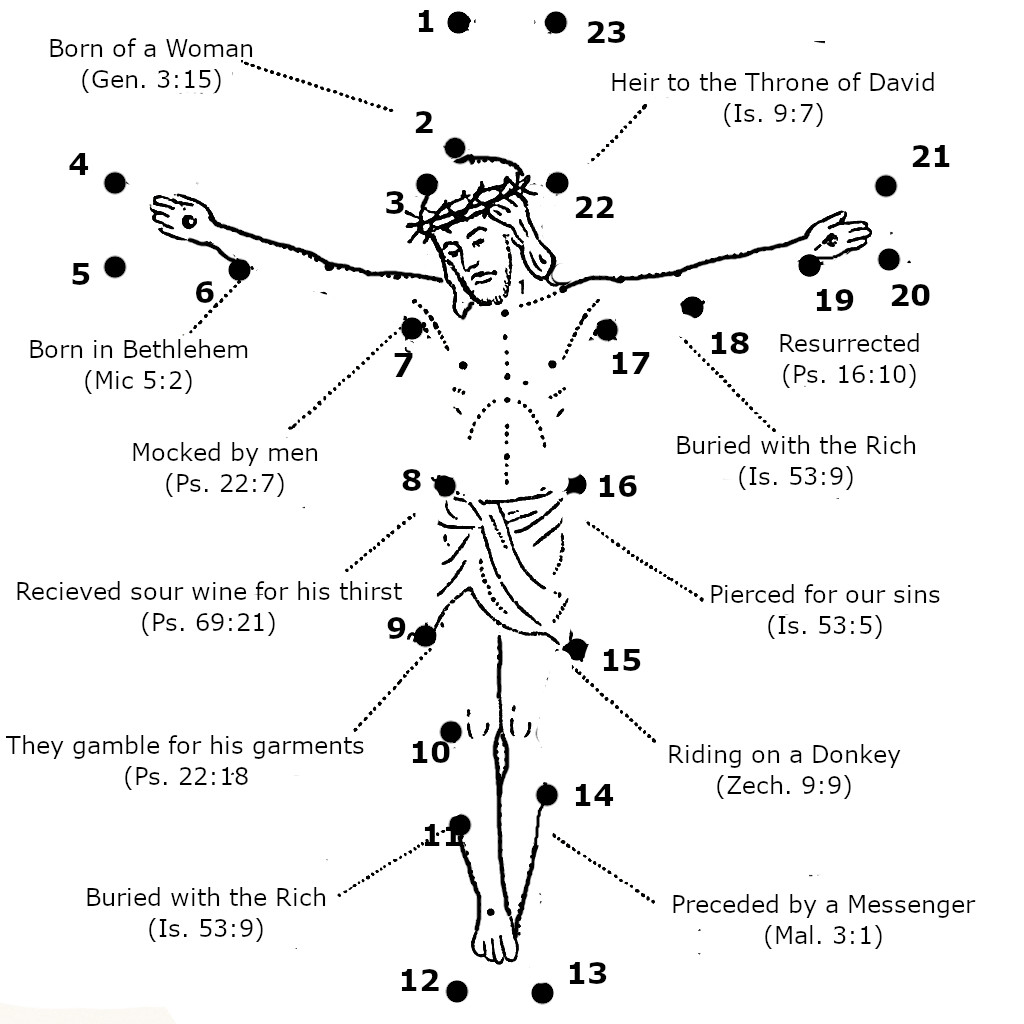

Does God care that we understand the Old Testament? You bet he does. We live in a day when some preachers shy away from the Old Testament. They say it only confuses people. They say we don’t need the Old Testament now that we have Jesus. But look at this story where God purposely keeps people from recognizing Jesus so he can walk them through the Old Testament Scriptures. Because God doesn’t want people to just see Jesus, He wants people to understand Jesus. And we can’t understand what Jesus is saying if we don’t know the context. And the context for what Jesus says and what he does is the Scripture of the Old Testament.
But they could not see how the events they had just witnessed over the past week fit into the story of the Bible. The story of the Bible is not a complicated story. It can be broken down into just three parts. And here is how the Bible is divided:
- Genesis 1 & 2: God created the world, made man, and placed man in a garden.
- Genesis 3. Humans rebelled, broke the relationship, left God’s presence, and sin and death entered the world. There is a separation between man and God.
- The rest of the Bible, from page 4 to the end, is about God’s plan to redeem mankind and restore the relationship with his creation. God is reconciling the world to himself. And that plan is all about Jesus. He comes to restore a proper understanding of God’s word. He dies and is resurrected to defeat sin and death. He is returning to gather his people who want to be with Him and restore creation.
It is not a complicated story.
So Jesus goes through the Scriptures and helps them see how they had been predicting what they witnessed this past week all along. We are now picking up the story in verse 28. They have arrived at their house in Emmaus. They stop, and Jesus “acted as if he were going farther.” But they encourage him to stay as it is ‘towards evening.’ “Stay” means abide. They thought he would stay the night. They prepare a meal, then a very odd thing happens.
Luke 24:30 When he was at the table with them, he took the bread, blessed and broke it, and gave it to them.
Now, if you don’t know the culture, you pass right by this as you are reading. But this is totally unexpected. This is odd because this is what the host in the home always does. Jesus is not the host here; he is the guest. It would be like someone coming to your house for dinner, and you greet them at the door. Then they walk into the kitchen and start stirring pots, putting the rolls in the oven, setting the dishes on the table, and telling you, “OK, let’s say a prayer and eat.” That would be weird. A guest would never assume these duties.
Now, don’t miss what is going on here. This is classic Jesus. He has just spent a while teaching them how the Old Testament predicted and explained the events of this past week. Now, he is going to demonstrate a lesson from the Old Testament. So he takes the bread, blesses God for the bread, breaks it, and gives it to them. And then, the climax of this story: their eyes were opened.
Picture what is going on here. There is a man and his wife, and there is food, and their eyes are opened. Can you think of any other time in the Bible when a man and his wife ate something and their eyes were opened?
Genesis 3:6-7 So when the woman saw that the tree was good for food, and that it was a delight to the eyes, and that the tree was to be desired to make one wise, she took of its fruit and ate, and she also gave some to her husband who was with her, and he ate. Then the eyes of both were opened,
Luke wants to make sure you don’t miss this connection. This was the lie of the Satan, the adversary. He loves to tell partial truths.
Genesis 3:4-5 But the serpent said to the woman, “You will not surely die. For God knows that when you eat of it your eyes will be opened, and you will be like God, knowing good and evil.”
The “tree of the knowledge of good and evil” is not about understanding good and evil; it is all about who decides what is good and evil and who makes the rules. Before this incident, God lived in harmony with humans. They walked together in the Garden. God made the rules, and man followed the rules. God is the king, he is the ruler, and he makes the rules. This disobedience breaks all of that. By choosing to eat the fruit, they have decided they want to make their own rules. They want to decide for themselves what is good and what is evil, what is right and what is wrong. They reject God as their king. And because they rejected the king, they no longer live in the kingdom of God.
Oh, the serpent was sort of right. Their eyes were opened all right. Their eyes were opened to the ways of the world. Open to the possibility of sin, but closed to the way of the Lord. And this is the way we have all lived since Adam, blinded to the ways of God, unable to understand the things of God. But when we accept Jesus’ sacrifice for our sin, when we recognize him as the King who gets to make the rules, then his Holy Spirit opens our eyes again to God’s truth.
So, before the apple (pomegranate), Adam and Eve were in the garden with God, and everything was good. God said it: “He saw that it was good.” They were in communion with God; they walked in the garden with him. They knew God, they heard and understood his voice. Then the Satan serves up some fruit. Their eyes were opened (to the ways of the world), and now Adam and Eve are filled with sadness and shame. They hide from God. Then we see them leaving the garden.
This opening of their eyes was actually a spiritual closing that rendered them unable to see God for who he is. They could no longer recognize their Father, who loves them. Slowness of heart, confusion, inability to see, and inability to recognize God and his designs—this is the state of Adam and Eve leaving the Garden, and this is the state of the woman and her husband, Cleopas, walking away from Jerusalem.
They are sad and hopeless; everything is wrong. They don’t see God, though he is standing right before their eyes. They don’t understand the teachings of God; they don’t recognize his voice. Then Jesus serves food. Their eyes are opened to God and the things of God- they understand the scripture and how the events they just lived through fit into the story, and they see Jesus. They leave to head back to Jerusalem with joy!
Do you see why Luke wants us to recall the Genesis 3 story here? Jesus is undoing what went wrong in Genesis 3. Jesus is restoring what went wrong in the fall. He told them with words, then gave them a picture by action. All the harm done in the fall in Genesis 3 — Jesus is redeeming all of it.
But we are not done. There is something else going on here.
Luke 24:30 When he was at the table with them, he took the bread, blessed and broke it, and gave it to them.
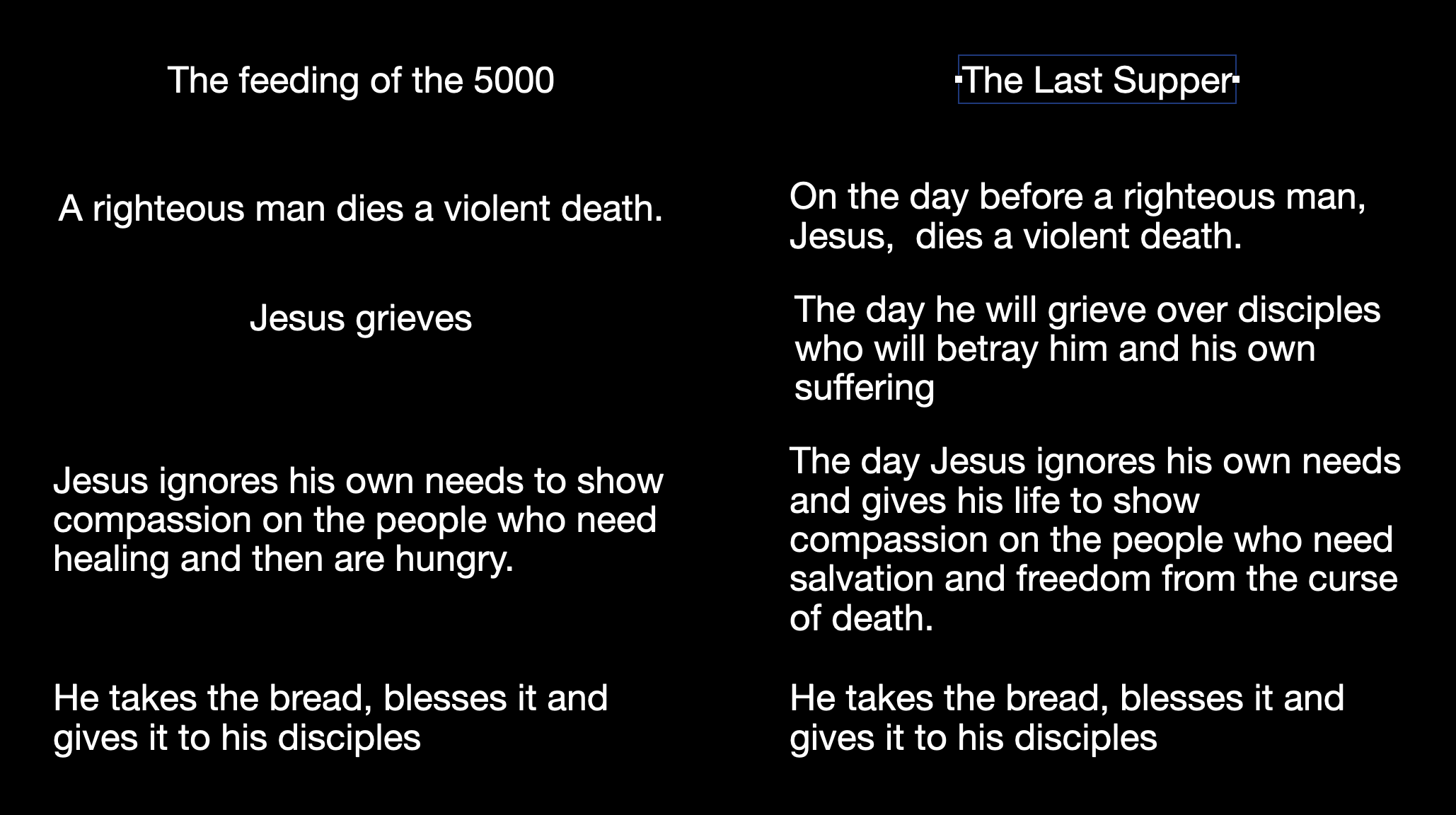
Jesus at the table in Emmaus—this has to remind you of something that just happened in Jerusalem in an upper room at the Last Supper.
Matthew 26:26 Jesus took some bread, and after a blessing, He broke it and gave it to the disciples, and said, “Take, eat; this is My body.”
Took, blessed, broke, gave…..Same verbs, same order. Jesus takes over the hosting duties in Emmaus, which is unusual because he wants to reenact the Last Supper for them. Luke’s Gospel emphasizes gathering around the table for a meal. The ‘Last Supper’ is the seventh table meal in Luke. Seven is the number of completion in Jewish thought, so the Last Supper is the completion of that group. So you could call this meal Jesus serves in Emmaus the “First Supper,” beginning a new era of sharing grace around the table.
We discussed hospitality back in September (#49) and how hospitality is a demonstration of the gospel. Remember that 1 Peter 4 tells us (my paraphrase), “Hey, the world is coming to an end, so most importantly, keep loving each other and show hospitality without grumbling.” Don’t overlook the importance of sharing meals in your home as a way to show God’s love to your community.
It was in the breaking of bread that their eyes were opened and the resurrected Jesus was made known to them. Even though it is getting dark, they head back the 7 miles to Jerusalem because some news is so good it can’t wait. And they find the disciples:
Luke 24:35 Then they told what had happened on the road, and how he was known to them in the breaking of the bread.
The breaking of bread. And remember what their problem was: Their eyes were closed. They couldn’t recognize Jesus or see how the events in their lives fit into the story God was telling. I am becoming convinced that a lot of the depression and anxiety of this world stems from our eyes being closed to these things.
If we could truly see Jesus for who He is and how the things currently going on in our lives fit into the story of our lives that God is weaving, we would see how things that appear to be disasters can be opportunities for God to show his power. The Israelites are trapped between the armies of Egypt and the Red Sea. This is not a tragedy but an occasion for God to show He is God. The Israelites see a huge giant, Goliath, coming to fight them. That is not a disaster but a chance for God to show his power. Hey, disciples in Emmaus, Jesus’s death on the cross is not the end of the world; it is God’s plan for deliverance. It is the beginning of a better world.
But this blindness to the way God is working in our lives affects us all. My wife and I, like many couples, went through a time when we desperately wanted to have another child, and we chased that dream with everything in us. We tried almost every avenue, but every surgery and procedure that promised help failed. Several times, we were set to adopt a baby, but they all fell through at he last minute. There were many tears shed in those days. These were some very difficult, frustrating, and depressing times.
Why were they so hard? Because our eyes were closed. We couldn’t see how what was going on in our lives fit into the story that God was weaving. Like the two disciples in Emmaus, who could not see how Jesus’ death fit into God’s plan. We couldn’t see the big picture of God’s plan. He had a baby for us, a specific baby picked out for us. But it was his doing, not ours – his timing, not ours. Our anxiety, depression, frustration, and grieving over a child we could not have could have been relieved if we had only been able to understand how this circumstance in our life fit into God’s big picture for us.
The Bible makes it clear that God loves us as his children and works everything for our good. Trials, hardships, unfulfilled expectations, and persecution are all viewed as good because God uses them all to refine our hearts and make us more of the people we were created to be.
The disciples in Emmaus could not see how the horrible events of their past week fit into God’s plan. So Jesus opened the scriptures to them and then opened their eyes in the breaking of bread.
The next time you participate in The Lord’s Supper, or Communion, remember these two from Emmaus. Remember Jesus, whose death was not the end but the beginning. And bring to that communion table or altar your anxieties, frustrations, and sadness.
Is there something going on in your life that doesn’t make sense? Do you find yourself wondering: Why did this happen, Jesus? Why is this person suffering from this illness? Why can’t I have healing? Why are people so mean and insensitive? Why are so many things going wrong? Why can’t this friend or family member do the right thing? Why can’t I do the right thing? Why is life so hard?
Every remembrance, every encounter with Jesus, is an opportunity to bring those concerns to the altar, and we leave them there, knowing that Jesus, who loves us, will take whatever the situation is and turn it to our good. Our eyes need to be opened, and often, that happens in the breaking of bread.
- Note that they are leaving Jerusalem before the end of the weeklong feast of Unleavened Bread. Only the first day was required. Deut. 16:7 notes that it is permissible to leave after that. Jesus’ disciples may be scattering due to disappointment in the outcome and fear of being charged next.
- This is good biblical irony. Jesus is, indeed, the only one who really knows what happened over the past week.
- Luke reports, “but him they did not see.” This is more irony, as these two telling the story can not “see” Jesus, even though he is right before their eyes.
- Athletic people can also have a slower-than-normal resting heart rate.
 Swallow No Camels