
February 3, 2026 – But Barnabus…— Acts #28
Acts 9:26–30
We last left Saul in Acts 9, traveling to Arabia to spend some time with God in the wilderness. His teachers had misled him in interpreting scripture into believing that Jesus was a fraud, and he needed to receive the truth directly from God. So he went to the place where God speaks, the wilderness, and spent 3 years in Arabia,
In Saul’s day, Arabia referred to the entire region east of Egypt, including the Sinai Peninsula, and west of Israel. Though we have no idea what his itinerary was, I think he likely went to the same mountain of speaking that Moses and Elijah went to, Mount Sinai.
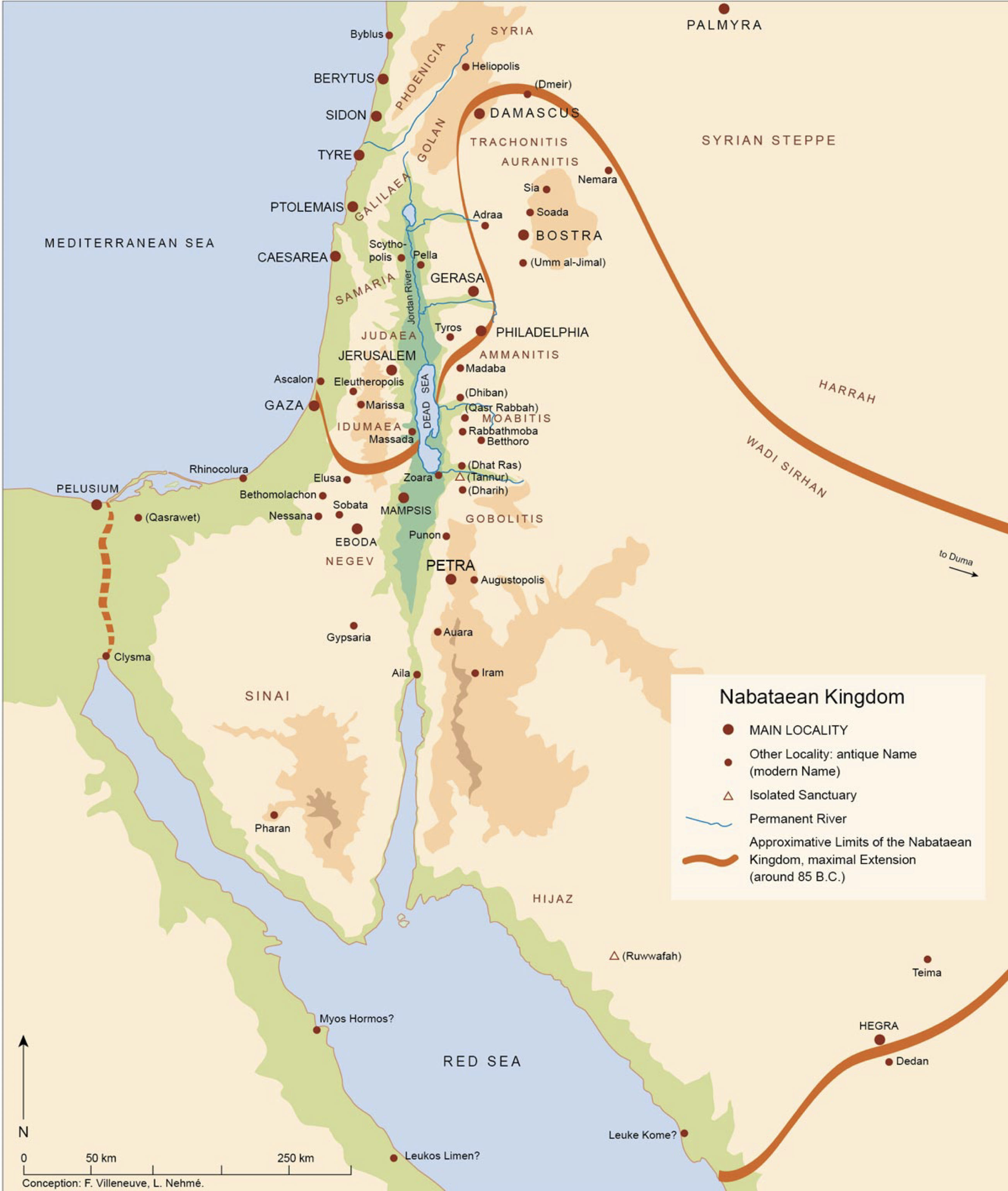
All of Arabia was under the control of the Nabateans, as far north as Damascus. They were descendants of Ishmael and initially nomadic. They arrived in this region and displaced the Edomites, descendants of Esau. While in Arabia, Saul likely also spent time in the capital and economic center of Nabataea, Petra. There, he could practice his trade of leatherwork and tent making as he sought God’s truth in preparation for his work of spreading the Gospels.
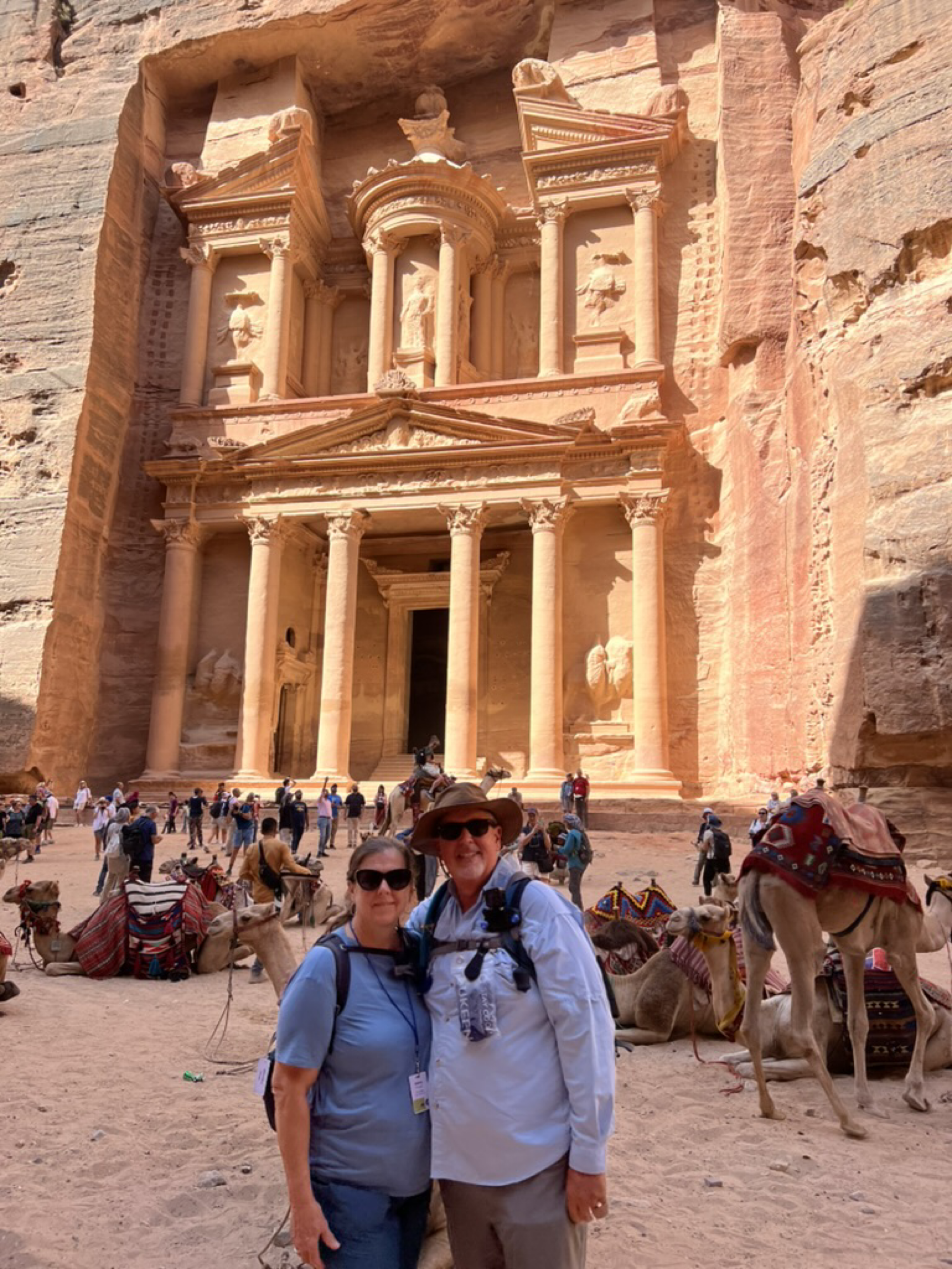
You have probably seen pictures of Petra, a city carved into the desert cliffs. You enter the city through a narrow passage known as the Siq. This 3/4 mile winding gorge is as narrow as 10 feet in some places, with cliff walls extending as high as 500 feet.

You reach the end, and it opens up on Petra’s most famous building, the Treasury. A building carved into the sandstone cliffs. (You may have seen this building in one of the Indiana Jones movies.)
And Petra was an excellent place for Saul to begin his mission. As God told Ananias:
Acts 9:15 Go, for he [Saul] is a chosen instrument of mine to carry my name before the Gentiles and kings and the children of Israel.
Saul’s mission was to the Gentiles, kings, and the children of Israel. Petra was at the crossroads of trade routes from the east to Egypt and became a very wealthy city. This resulted in a highly diverse population, many of whose members had Jewish ancestry. So it became a place where Saul could practice his witness to Gentiles, but Gentiles who had some knowledge of Jewish scripture and ways. And because it was the capital city, Saul might have the opportunity to encounter the king there. So Saul spent 3 years away from Israel in Arabia.
Acts 9:23-25 But after 3 years, Paul returned to Damascus, where he first met Jesus.“When many days had passed, the Jews plotted to kill him, but their plot became known to Saul. They were watching the gates day and night to kill him, but his disciples took him by night and let him down through an opening in the wall, lowering him in a basket.
Not quite the reception he had hoped for. Some Jewish leaders conspired against him, but in 2 Corinthians, Paul provides more detail on this plot. It originated with the governor of Damascus.
2 Corinthians 11:32-33 At Damascus, the governor under King Aretas was guarding the city of Damascus in order to seize me, but I was let down in a basket through a window in the wall and escaped his hands.
Now, why did the governor of Damascus want to arrest Saul? Scripture tells us that he was under King Aretas. Aretas reigned over the area of Damascus, but his capital was in Petra. This suggests that Saul encountered difficulties with the King while in Petra.
Paul was smuggled out of the city by lowering him in a “basket” (or net). And now he travels to Jerusalem. Since it has been three years since he left his Pharisee friends, he hopes he will not be a wanted man there and that he will find acceptance among other Jesus followers in Jerusalem. But would the followers of Jesus accept him?
Acts 9:26-30 And when he had come to Jerusalem, he attempted to join the disciples. And they were all afraid of him, for they did not believe that he was a disciple. But Barnabas took him and brought him to the apostles and declared to them how on the road he had seen the Lord, who spoke to him, and how at Damascus he had preached boldly in the name of Jesus. So he went in and out among them at Jerusalem, preaching boldly in the name of the Lord. And he spoke and disputed with the Hellenists. But they were seeking to kill him. And when the brothers learned this, they brought him down to Caesarea and sent him off to Tarsus.
Their initial reaction was fear of him. They thought he was pretending to be a follower of Jesus to infiltrate their group. The last they heard of Saul, he was putting their friends to death. So let’s see: He wasn’t welcome in Damascus, not by his former friends in the Sanhedrin, and now not even among the followers of Jesus. It looked like Saul had no place to call home now. But the next two words are very important…”but Barnabas.”
Barnabus plays a crucial role here. Everyone was too afraid to get close enough to Saul to see if he was a genuine follower. They were scared. But Barnabus was willing to take the risk to approach Saul. And because he did, see what Luke tells us happened next. Saul can preach boldly about Jesus in Jerusalem because Barnabas took a chance on him. Let’s look at this character Barnabus and see what made him different than these other followers who were too scared to reach out to Saul.
First, notice that Luke doesn’t single out a few scared disciples. He says, “They were all afraid of him.” Fear had consensus. That is usually the case. But there was Barnabus. Do you think Barnabus was scared, too? Of course, he was. But the difference was that when everyone else stepped back in fear, Barnabus stepped forward in faith. He was not being naive. He was not being reckless. But he had the faith that God could really change people, even an enemy like Saul.
What would God have done without Barnabas, who was able to convince the apostles to accept Saul? What would have happened to Saul’s mission if Barnabas hadn’t taken that risk? What would God have done? As we discussed over a month ago, whatever God wills to happen will happen. If Barnabas had not stepped up, God’s plan for Barnabas would have been thwarted, but not God’s plan for the world. As we saw before, as with Jonah, he may have given Barnabas another chance, or, as with King Saul, he may have found someone else who would be obedient. God loves to give us second chances to do the right thing, but he will not allow one man’s disobedience to derail his plans.
By approaching Saul, Barnabas was risking his safety, his reputation, and his standing with the apostles if Saul was not sincere. And Barnabas had no guarantee that Saul had changed. He had been gone for 3 years, and the last time they saw him, he was hunting them. If Saul was lying, then Barnabas risked looking foolish and endangering himself and the others. Faith often includes the possibility of being wrong. But Barnabas chooses to trust God’s work over his own fear. This is the risk faith requires. But this is who Barnabus has always been.
Let’s take a quick look at what we know about Barnabus from the Book of Acts. We first meet him in chapter 4.
Acts 4:36 Thus Joseph, who was also called by the apostles Barnabas (which means son of encouragement), a Levite, a native of Cyprus,
So his actual name was Joseph. Barnabus was a nickname that our translation says means “son of encouragement.” It is a Hebrew name, Bar-Nabba, meaning “son of a prophet.” A prophet is not so much someone who foretells, but one who proclaims God’s message. And God’s message is good news; it is encouragement. And he is from the land of Cyprus. Cyprus is an island country in the eastern Mediterranean Sea off the coast of Turkey and Syria. It had a thriving Jewish population due to trade, but was primarily composed of Gentiles. Then the next verse tells us:
Acts 4:36-37 “Thus Joseph, who was also called by the apostles Barnabas (which means son of encouragement), a Levite, a native of Cyprus, sold a field that belonged to him and brought the money and laid it at the apostles’ feet.”
We meet Barnabus in Jerusalem; he is the first to sell land and give the proceeds to support the poor among them. Barnabus was willing to take a financial risk. He stepped up in faith when there were others in need. This is just who he was.
Let’s jump ahead in Acts, a few chapters, after the stoning of Stephen, to see more of Barnabus. The persecution in Jerusalem had caused some followers to spread far, but there was a problem in Antioch.
Acts 11:19-22 Now those who were scattered because of the persecution that arose over Stephen traveled as far as Phoenicia and Cyprus and Antioch, speaking the word to no one except Jews. But there were some of them, men of Cyprus and Cyrene, who on coming to Antioch spoke to the Hellenists also, preaching the Lord Jesus. And the hand of the Lord was with them, and a great number who believed turned to the Lord. The report of this came to the ears of the church in Jerusalem, and they sent Barnabas to Antioch.
Initially, the message of Jesus, the Messiah, was only shared with other Jews. But in Antioch, they witnessed to the “Helenists also”, that is, the Greeks, people who were not Jewish.1 Word reaches Jerusalem that non-Jews are following Jesus. And they didn’t know what to do about that. Others had always been able to join with them in the Jewish faith, even at the time of the Exodus, but that involved a formal procedure and questioning. They had to agree to follow Jewish laws regarding the Sabbath, food, and ritual purity. These apostles had always considered their belief in Jesus as a continuation of their Jewish faith. What should they do with these Gentiles who wanted to join them? What should they expect from these Greek followers? Do they need to go through the age-old process to become a part of the Jewish faith?
Someone needed to go to Antioch to assess the situation and help decide what they should do. And Barnabus is the obvious choice. Some of the Jews sharing Jesus with the Greeks were from Cyprus and Cyrene, both places with a large Gentile population. Barnabus was from Cyprus. And Barnabus’s experience in dealing with Saul might come in handy. Luke tells us what happened then:
Acts 11:23-24 When he came and saw the grace of God, he was glad, and he exhorted them all to remain faithful to the Lord with steadfast purpose, for he was a good man, full of the Holy Spirit and of faith. And a great many people were added to the Lord.
Barnabus goes to Antioch and, as he did with Saul, sees past the problems and sees the potential of the people there. Then Barnabus does a really good thing. Who would be best to help this young group of Jesus followers, with a mixture of Gentiles and Jews? Saul, of course, trained as a Jewish Rabbi, but was called to preach the gospel of Jesus to the Gentiles. Acts 11:25-26 So Barnabas went to Tarsus to look for Saul, and when he had found him, he brought him to Antioch. For a whole year, they met with the church and taught a large number of people.
Note that Barnabus stays here for a year with them. He moves to Antioch for a year to help Saul. He is a man of commitment. There is one more scene in the life of Barnabus I’d like us to take a look at.
In Acts 15, the Jesus followers are still struggling with the same question of what to do with these Gentiles who are accepting Jesus. Should they make them stop eating pork? Should they have to follow all the rules of the Rabbis? They hold a major conference in Jerusalem and reach a compromise decision. We will talk more about that when we get there. But then, following this conference, they sent Saul and Barnabus out as missionaries to the Gentiles with this word.
Acts 15:36-38 And after some days Paul said to Barnabas, “Let us return and visit the brothers in every city where we proclaimed the word of the Lord, and see how they are.” Now Barnabas wanted to take with them John, called Mark. But Paul thought best not to take with them one who had withdrawn from them in Pamphylia and had not gone with them to the work.
Saul/Paul wants to revisit all the areas they have been in before to assess them. Barnabus agreed, but he wanted to take John Mark with them. John Mark was actually a cousin of Barnabas. Paul disagreed because of an earlier event. John Mark was on their previous missionary journey, and at one point, Luke tells us:
Acts 13:13 “Now Paul and his companions set sail from Paphos and came to Perga in Pamphylia. And John left them and returned to Jerusalem,”
Luke doesn’t tell us why John Mark left them and returned home, but apparently, Paul was very unhappy about it.
Acts 15:36-39“And after some days Paul said to Barnabas, ‘Let us return and visit the brothers in every city where we proclaimed the word of the Lord, and see how they are.” Now Barnabas wanted to take with them John, called Mark. But Paul thought best not to take with them one who had withdrawn from them in Pamphylia and had not gone with them to the work. And there arose a sharp disagreement, so that they separated from each other.”
They had a sharp disagreement. They had words. Barnabus wanted to give John Mark another chance. Again, it was his cousin, but this is what Barnabus would do for anyone. He doesn’t regard John Mark as a deserter, a failure, or a problem. Again, as with his encounter with Saul, he doesn’t see the problem; he sees the potential. He looks past the mistake to see the grace. This is Barnabas’ character. So look what God does here.
Acts 15:39-41“Barnabas took Mark with him and sailed away to Cyprus, but Paul chose Silas and departed, having been commended by the brothers to the grace of the Lord. And he went through Syria and Cilicia, strengthening the churches.God takes this disagreement between two preachers and, instead of causing the failure of their mission, increases it twofold. That is what God always does. He transforms our failures into multiplied successes. So we end up with not one but two missionary journeys.
We later find that Barnabas was correct about John Mark. He went on to do much and authored our Gospel of Mark. And he and Paul reconciled. Paul writes in his letter to Timothy:
2 Timothy 4:9-11 Do your best to come to me soon. … Luke alone is with me. Get Mark and bring him with you, for he is very useful to me for ministry.”
And again, we have Barnabus to thank for this. Because he thought young John Mark needed another chance, Barnabus saw that God was not finished with John Mark. Again, he saw grace, not guilt, potential, not problem.
But before we close this section, I want to go back to that passage in Acts 15 where Paul and Barnabas have their disagreement.
Acts 15:39 “And there arose a sharp disagreement, so that they separated from each other.
The Greek word we see translated as “sharp disagreement” is “paroxysmos”. The Theological Dictionary of the New Testament says it means: “to spur,” “to stir to anger,” “to be provoked, incensed.” Provocation is usually seen as a negative thing. We see the verb form of this word in Ephesians 6:4.
Ephesians 6:4 “Fathers, do not provoke your children to anger, but bring them up in the discipline and instruction of the Lord.
But again, the noun form is only in the Bible twice. First, here, describing the “sharp disagreement” between Paul and Barnabus, and the second time in the book of Hebrews. The book of Hebrews does not identify its author, but most scholars believe the author was Barnabas. And here is the other verse with paroxysmos:
Hebrews 10:24-25 “And let us consider how to stir up one another to love and good works, not neglecting to meet together, as is the habit of some, but encouraging one another, and all the more as you see the Day drawing near.
Let us consider how to paroxysmos one another. Let us consider how to provoke one another to love and good works. This is so something that would come from the pen of our Barnabas, our son of encouragement. Leave it to him to take a word that is usually negative and make it positive. You may want to call him an optimist, seeing only the good, but Barnabas had the ability to see all the good from God. I call that faith. As he did with other followers, with Paul, and with John Mark, he was always seeking ways to encourage others to reach their potential in Jesus. He refused to allow someone’s past actions to dictate their future. He was always ready to see God’s grace and forgiveness in action in the lives of others.
I don’t know about you, but I think the world needs more Barnabases. I think we all need to develop the Barnabus within us. When everyone else steps back in fear, we need someone who will step forward in faith. When people view someone as a failure, we need someone who will see them as someone God can use.
Who is today’s Saul? Who is today’s John Mark? People need someone to believe in them. Our young people need someone willing to see their possibilities and provoke them to reach their potential in Christ.
The world is full of people who have made mistakes and failed in life, who need someone to see beyond their past and help them consider their future. Shirley and I have seen many who have come through our homeless program or have served jail sentences who just need one person who will believe in them, give them another chance, and stand by them. We all have our faults. We all need the gift of grace from God, and we need the gift of grace from each other. I want us all to pray and ask God to help us be the Barnabas in someone’s life.
This is what Barnabus would say to us today:
Hebrews 10:24-25 “And let us consider how to stir up one another to love and good works, not neglecting to meet together, as is the habit of some, but encouraging one another, and all the more as you see the Day drawing near.
Let this be our prayer. Father, fill us with your Holy Spirit that we may be like Barnabus. Urge us to consider how we can provoke one another to love and good works.
- The text clearly means non-Jewish people (Gentiles), but this same term is also used in Acts 9.29 to mean Greek-speaking Jews. This is likely a manuscript problem as noted in the Tyndale Commentary: “Luke must mean Gentiles, but the text is uncertain. Instead of ‘Greeks’, the majority of the MSS (including Codex Vaticanus) have ‘Hellenists’, the word used in 6:1 and 9:29 to designate Greek-speaking Jews.”

 Swallow No Camels