December 10, 2025 –  Shalom, and the War You Didn’t Realize You Were Fighting— Acts #24

December 10, 2025 –  Shalom, and the War You Didn’t Realize You Were Fighting— Acts #24
Acts 9:1-9

Words in Hebrew have very rich meanings. Last time, we discussed the Hebrew word ‘shema’Shema means listen, but more than listen, it means listen and obey.  Obedience is not optional.  If you did not obey, then you did not hear.  Jesus said, “He who has ears to hear, let him hear.” You will find a version of this 15 times in the New Testament. That isn’t just a poetic phrase Jesus threw out there.  He isn’t speaking English.  It is about shema.  Jesus is talking about obedience.   “If you hear what I am saying, then be obedient.”

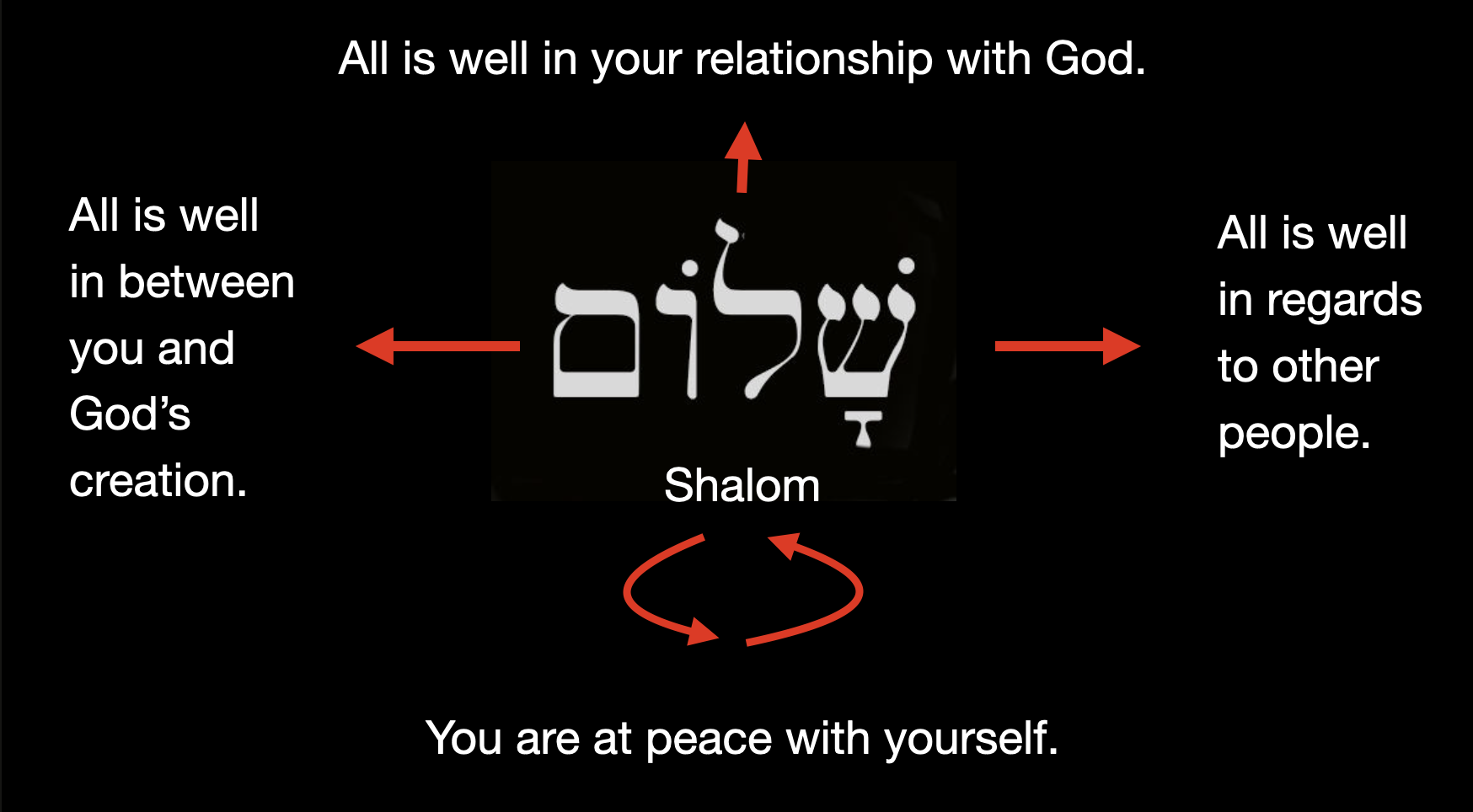
Today, we look at the word Shalom.  It begins with the same letter, ש (shin).  It means peace.  And peace is the candle that many of you lit this past week for Advent.  But like the Hebrew word shema, this word has a richer meaning.  Shalom means more than our concept of peace.  It carries the idea of wholeness, that all is well, that all is well with you, and with your relationship with your neighbor, and in your relationship with God.

  In Acts 8, Shalom was disturbed due to this great persecution of the followers of Jesus.

Acts 8:3  But Saul was ravaging the church, and entering house after house, he dragged off men and women and committed them to prison.

All was not well.   And when this persecution hit hard, as we discussed the last few weeks, the people scattered.  Philip ended up in Samaria.  Some went further north up to Damascus in Syria.  That brings us to chapter 9.

Acts 9:1-9   But Saul, still breathing threats and murder against the disciples of the Lord, went to the high priest and asked him for letters to the synagogues at Damascus, so that if he found any belonging to the Way, men or women, he might bring them bound to Jerusalem. Now, as he went on his way, he approached Damascus, and suddenly a light from heaven shone around him. And falling to the ground, he heard a voice saying to him, “Saul, Saul, why are you persecuting me?  And he said, “Who are you, Lord?” And he said, “I am Jesus, whom you are persecuting. But rise and enter the city, and you will be told what you are to do.” The men who were traveling with him stood speechless, hearing the voice but seeing no one. Saul rose from the ground, and although his eyes were opened, he saw nothing. So they led him by the hand and brought him into Damascus. And for three days he was without sight, and neither ate nor drank.

We have all heard news reports of rare incidents in which police mistakenly raid the wrong house.   Imagine waking up in the middle of the night to the sound of your front door being bashed open, a flash-bang grenade going off in your living room, and then a heavily armed SWAT team entering your home.  Unfortunately, it happens.  Sometimes the tip the police received was incorrect, or the address was incomplete, or a simple error was made. The police did not mean to raid the wrong house.  They had warrants signed by a judge granting them authority to enter the home at that address.  They were well-trained.  They were putting forth their best effort in the raid.  They were highly motivated to apprehend the suspect and protect the public. But they were utterly wrong.

That is what is happening with Saul in Acts 9.  Saul has papers from the high priest authorizing him to go into homes, arrest people, and bring them back to Jerusalem.  Saul is one of the best-trained scholars of scripture alive in his day.  He is giving 100% effort to rid the country of these Jesus followers, to protect the public from heresy.  He is highly motivated, going into homes and dragging out the followers of this splinter group.  And he is entirely wrong.  

In Saul’s mind, he is a soldier defending God’s honor. He is cleaning up Israel. He is protecting the faith. If anyone asked Saul, “Why are you doing this?” he would have said, “Because I love God!”  But he is 100% wrong.  Because sincerity does not make you right, commitment does not equal correctness, and power does not equal purity.   Legal process does not equal morality, nor does strength of conviction make you holy.   Passion without truth is dangerous.  

God has to intervene.  So he throws his own flashbang grenade at Saul’s feet, knocking him to the ground and blinding him.   And the voice from heaven asks Saul, “Saul, Saul, why are you persecuting me?”  Not why are you persecuting these people, or why are you persecuting these followers, but why are you persecuting me?  Then Saul asks an essential question: “Who are you, Lord?”

At this point, Paul is aware he is not dealing with humanity.  This blinding flash of light was nothing any human could produce.  Is he dealing with an angel, or God himself?  So he asks, “Who are you, Lord?  (Lord being the equivalent of us saying a very respectful “sir”.)  The voice responds: “I am Jesus, whom you are persecuting.”  This is a lot for Saul.  First, the voice is Jesus, whom he had been told was dead, crucified as a criminal, a blasphemer.  But instead, Jesus is very much alive.  And Jesus wields the power of God.  And Saul finds that he is not rescuing people from a heresy, but waging war against God himself.  So God gives Saul a three-day timeout.  Three days to consider all of this.  Three days when he can not see.  And he fasts from food and drink.  And you can bet blind Saul prayed, and prayed hard.

Saul thought he was waging war with these heretics who had disturbed the peace of Jerusalem.  But it was Saul who was disturbing the shalom of God by waging this war.  This story is an example of a great paradox of the message of Jesus.  As many of you read in our Advent reading this past week, the prophets say that the Messiah will come as the Prince of Peace.

Isaiah 9:6   For unto us a child is born, to us a son is given; and the government shall be upon his shoulder: and his name shall be called Wonderful, Counsellor, Mighty God, Everlasting Father, Prince of Peace.”

The Messiah is the ‘Prince of Peace.’  And the first to hear the news of Jesus’ birth were the shepherds in the field with their sheep, who heard it from the angels.  We sing it in the hymn, “It Came Upon the Midnight Clear”:

“It Came Upon the Midnight Clear, 
That glorious song of old.
From angels bending near the earth,
To touch their harps of gold;
“Peace on the earth, goodwill to men, 
From Heav’n’s all-gracious King.”

Isaiah said He is the ‘Prince of Peace’.  The angels sang that he comes to bring peace on earth.  But then how do we reconcile what Jesus says here:

Matthew 10:34-36   Do not think that I have come to bring peace to the earth. I have not come to bring peace, but a sword. For I have come to set a man against his father, and a daughter against her mother, and a daughter-in-law against her mother-in-law. And a person’s enemies will be those of his own household.

 How do we reconcile these two passages?  The peace that Jesus brings is first and foremost peace with God.  True shalom with God.  Before Jesus, we had no peace with God.  Paul says it this way:

Romans 8:7-8  “For the mind that is set on the flesh is hostile to God, for it does not submit to God’s law; indeed, it cannot. Those who are in the flesh cannot please God.  

When you are in your sin, there is hostility towards God.  You are living on the king’s land, but you do not follow the king’s rules.  You are a rebel.  You are waging war with God.  The only way to end your rebellion is to ask for forgiveness, which God freely grants through Jesus. And then to begin to live a different life that is not in rebellion to the king’s rule, but to follow him in obedience.  As Paul says in the preceding verse:  

Romans 8:6 “For to set the mind on the flesh is death, but to set the mind on the Spirit is life and peace.

You can choose peace with God (shalom) or hostility towards God.  There is no middle ground.  See this again in James:  

James 4:4 (NLT)  Don’t you realize that friendship with the world makes you an enemy of God? I say it again: If you want to be a friend of the world, you make yourself an enemy of God. 

You have to choose.  Jesus told his disciples that peace with God can be theirs:

John 14:27 (NLT)   I am leaving you with a gift—peace of mind and heart.  And the peace I give is a gift the world cannot give.  So don’t be troubled or afraid.

And the Bible is consistent.  For though the carol said “it came upon the midnight clear,” “Peace on the earth, goodwill to men, from Heaven’s all-gracious King.”  That is not what the angels said.  Here is what the angels actually said:

Luke 2:14 “Glory to God in the highest, and on earth peace among those with whom he is pleased! 

Wait, there is a catch to that peace with God the angels sang about.  The only ones who get peace are those with whom God is pleased.  Those who are in right relationship with him.  Those who follow his son Jesus in salvation and obedience.  They have peace, shalom, with God. Everyone else is still at war with God.  So let’s see that in a carol that gets it right, “Hark! the Herald Angels Sing”.  

Hark! The herald angels sing,  
Glory to the newborn King!  
Peace on earth, and mercy mild, 
God and sinners reconciled.

Peace on earth is tied to this:  God and sinners reconciled.  There is no peace for us with God until we are reconciled to him through the forgiveness of our sins and the promise we make to follow him as our Lord and live in obedience to him.  

Now look what happens with Saul.  Saul discovers on the Damascus Road that he and his SWAT teams are raiding the wrong house.  He is an enemy of God.  Once Saul stops fighting Jesus, he begins an incredible journey of reconciliation.  After he is reconciled to God, he will eventually seek fellowship with the same followers he persecuted.  And he will become a leader in this fellowship, a missionary of reconciliation.

Paul calls peace a fruit of the Holy Spirit living within us, and he says:

Romans 12:18 If possible, so far as it depends on you, live peaceably with all.

But none of that can happen until his heart is made right with God.  Jesus tried to make this clear to his disciples in John 16:

John 16:33  I have said these things to you, that in me you may have peace…

You may have shalom, peace with God.  You are at peace with God when you are in a right relationship with Him. But that is not the end of the verse.  Keep reading to see the paradox.

John 16:33  I have said these things to you, that in me you may have peace.  In the world, you will have tribulation.

If you don’t understand shalom, if you don’t understand the kind of peace Jesus is talking about, then this verse makes no sense.  “Which is it, Jesus, peace or tribulation?”  But when you have peace with God, you are then at war with the world.  You will have tribulation.  And now, finish the verse to see the best news.  

John 16:33  I have said these things to you, that in me you may have peace. In the world, you will have tribulation.  But take heart; I have overcome the world.

Your enemy, the world, has already been defeated.  The way of this world, what the Bible calls the way of the flesh, was defeated on the cross of Jesus.  Sin, which kept us enemies of God, was defeated, so now we can be friends with God.  And then death was defeated.  Jesus has overcome.  The outcome of the war has been decided.  But the battle still rages within us as long as we persist in disobedience. 

Peace can be ours now if we seek Him and obey Him.  And complete peace, complete shalom, will exist in this world one day.   The Prince of Peace will reign over all, and there will be no more enemies.  Come, Lord Jesus, come.  

Saul’s transformation begins with two simple questions: the first, “Who are You, Lord?”  This is the most critical question.  Who is Jesus to Saul at this moment of the blinding light?  He is no one to Saul, just a teacher whom the Romans killed.  But it is in this moment that Saul realizes who Jesus really is, the living Son of God.  And this makes all the difference for Saul.

Then the second question:  “What do you want me to do?” Now that Saul knows who Jesus is, he wants to listen to Jesus and obey him.  This is shema, hear and obey.  And that leads to peace with God.   Shema leads to shalom.  You have to shema (listen and obey) before you find shalom, peace with God.  Peace with God requires listening and obeying.  In Acts 8, Saul’s relationship with God is like a child pulling on a rope in a tug-of-war against his father.  He pulls with all his strength until he is exhausted. It is hopeless.  Finally, the father smiles at the child.  And the child puts the rope aside, and the father embraces the child. The child’s peace didn’t come from winning the battle—it came from surrendering into the father’s arms.   It is here in Acts 9 that Saul drops the rope and surrenders to Jesus. So must we.

It was Christmas Day, and Henry Wadsworth Longfellow was listening to the church bells ring out, representing the angels’ proclamation of peace on earth, goodwill to men.  But Longfellow had no peace.  It is 1863.  He recently lost his wife in a tragic accident.  And his son, Charles, was away fighting in our country’s brutal Civil War. And in the midst of this turmoil, he pens these words:

I heard the bells on Christmas Day
, Their old, familiar carols play,
And wild and sweet
The words repeat
Of peace on earth, goodwill to men!

And thought how, as the day had come,
The belfries of all Christendom
Had rolled along
The unbroken song
Of peace on earth, goodwill to men!

Till ringing, singing on its way,
The world revolved from night to day,
A voice, a chime,
A chant sublime
Of peace on earth, goodwill to men!

Then from each black, accursed mouth
The cannon thundered in the South,
And with the sound
The carols drowned
Of peace on earth, goodwill to men!

It was as if an earthquake rent
the hearthstones of a continent,
and made forlorn
the households born
of peace on earth, goodwill to men!

And in despair I bowed my head;
“There is no peace on earth,” I said;
“For hate is strong,
And mocks the song
Of peace on earth, goodwill to men!”

Then pealed the bells more loud and deep:
“God is not dead, nor doth He sleep;
The Wrong shall fail,
The Right prevail,
With peace on earth, goodwill to men.”

God is not dead, nor doth he sleep.  Jesus is indeed the Prince of Peace.  Jesus wants us to have that shalom with him, that right relationship that comes with His forgiveness and salvation.  The peace that comes by shema — listening to the voice of God and being obedient.  

This Christmas season, I want you to consider your peace with God.  How is that relationship?  Could it use more communication?  Could it use more obedience?  We earnestly seek the peace of God in our lives, even as we yearn for the day when God’s peace will reign supreme in this world.  We look forward to that day when God redeems the earth, that day when all is well.

December 3, 2025 –  Philip follows the Holy Spirit – Shema— Acts #23

December 3, 2025 –  Philip follows the Holy Spirit – Shema— Acts #23
Acts 8:26-40

Are you ready to be a disciple?

Shema – it means “listen” in Hebrew, but it means much more than “listen”.  Because in the Jewish culture of the Old Testament, listening implies obedience.  There is no concept of listening to God without being obedient.  It is just wrong; it is a sin.

This word is so important. It is the title and the first word of the prayer every Jewish person has prayed several times a day for thousands of years.  The prayer is a collection of passages from Deuteronomy.  And this is the first prayer Mary and Joseph taught Jesus as a small boy.  And he prayed this prayer every day.  And this concept of shema is critical to a follower of Jesus. 

We continue our story of Philip in Acts 8, and in this story, Philip shows us what it looks like to listen for God’s voice and obey without delay.  Through him, God brings salvation to a man who was seeking truth but didn’t yet know where to find it.

Acts 8:26-40   Now an angel of the Lord said to Philip, “Rise and go toward the south to the road that goes down from Jerusalem to Gaza.” This is a desert place. And he rose and went. And there was an Ethiopian, a eunuch, a court official of Candace, queen of the Ethiopians, who was in charge of all her treasure. He had come to Jerusalem to worship and was returning, seated in his chariot, and he was reading the prophet Isaiah.
And the Spirit said to Philip, “Go over and join this chariot.” So Philip ran to him and heard him reading Isaiah the prophet and asked, “Do you understand what you are reading?” And he said, “How can I, unless someone guides me?” And he invited Philip to come up and sit with him.
Now the passage of the Scripture that he was reading was this: “Like a sheep he was led to the slaughter and like a lamb before its shearer is silent, so he opens not his mouth.
In his humiliation justice was denied him. Who can describe his generation? For his life is taken away from the earth.”
And the eunuch said to Philip, “About whom, I ask you, does the prophet say this, about himself or about someone else?” Then Philip opened his mouth, and beginning with this Scripture he told him the good news about Jesus. And as they were going along the road they came to some water, and the eunuch said, “See, here is water! What prevents me from being baptized?” 
And he commanded the chariot to stop, and they both went down into the water, Philip and the eunuch, and he baptized him. And when they came up out of the water, the Spirit of the Lord carried Philip away, and the eunuch saw him no more, and went on his way rejoicing. But Philip found himself at Azotus, and as he passed through he preached the gospel to all the towns until he came to Caesarea.”

Philip was in Samaria experiencing revival.  Things were going great!  People were coming to know Jesus as their Messiah.  Lives were being changed.  Miracles were happening.  People were being healed.  Crowds were eager to hear the Gospel.  It was the perfect situation for a church leader.  Then God says, “Go south to the desert road.”  Everything is going great, so go to the desert.  How does that make sense?  Leave the crowds?  Leave success?  Leave the work God is blessing? For a desert road?   No preacher today with any sense would leave a place of great success and go to a deserted land.  (You notice preachers rarely get called to leave a big, successful church and go to a tiny, struggling church in the middle of nowhere.) That desert road led to Gaza.  Now that is a place that you probably wouldn’t want to go today.  It wasn’t much better in Philip’s day.  But God had an assignment for Philip, and Philip didn’t argue… he listened and obeyed.

Many of God’s most significant assignments begin with an interruption in routine and a disruption in comfort. Abraham is minding his own business at home, and God calls him to leave everything he knows.  Moses is tending sheep, just as he has done every day for the past 40 years.  He has a good life in Midian. He has no thoughts of ever returning to the country he was kicked out of.  But God interrupts his life and gives him a difficult task. Mary is engaged to be married.  It was an exciting time in her life. She was planning a wedding, getting everything ready to set up a household with Joseph.  And then God interrupts her in a significant way.

God’s task assignments often come with few details.  Now this can be frustrating at times.  We like to know the whole plan, including all the details, before we set out on a project.  We want to know how long it will last, how much it will cost, and what equipment we will need. But God only gave Philip step 1:   Rise and go toward the south to the road that goes down from Jerusalem to Gaza.    No mention of why.  No mention of what he would do there. But this is the way God usually works.  He rarely gives anyone the big picture up front.

We often miss this when we read the scripture in the psalms:

Psalm 119:105   Your word is a lamp to my feet… 

What is a lamp to my feet?  They didn’t have flashlights in those days.  They used oil lamps held by a string near their feet.  It provided just enough light for the next step.  They couldn’t see any further ahead.  And this is typically how God reveals his plans or tasks for us.  Just one step at a time.  That requires trust.  That requires faith.  

God sends a messenger to Philip.  (That is literally what the word translated ‘angel’ in our English Bibles means.  Both ‘angelos’ in Greek and ‘malach’ in Hebrew mean messenger.)  A few verses later in this passage, it says, “And the Spirit said to Philip…”  I am not sure that there is a big difference in these two statements of the delivery of God’s message to Philip.  In Jewish thought, there is little distinction, as seen in Acts 23:9.

Acts 23:9   Then a great clamor arose, and some of the scribes of the Pharisees’ party stood up and contended sharply, “We find nothing wrong in this man. What if a spirit or an angel spoke to him?”

God very rarely speaks through messengers who take human form.  And contrary to every painting you have ever seen, angels do not have wings.   Angels in human form are the least frequent way God sends messages.  He occasionally speaks through dreams or visions, but the most common way God speaks is through scripture. When you read the Bible, it is God’s word to you.  It is God speaking to you.  And we pray to converse with God.  Mark Batterson says that God most frequently speaks in whispers.  In his book, “Whisper”, Batterson notes that to hear someone whisper, you have to draw close to them.  God speaks to those who draw close.  And God speaks to those who listen.

But the question is: Do we give God a chance to speak to us?  

Do we allow God to speak in our prayer time?  Are we listening, not just talking?  Prayer is meant to be a conversation, not a monologue.  

When we read Scripture, do we allow time for God to speak? Tim Makie of the Bible Project frequently refers to the Bible as meditation literature.  It is not meant to be read like a cookie recipe.  It is not meant to be read like a newspaper or a history book.  It is intended to be read slowly and meditated upon.  Often God has something to whisper to you when you read scripture.  (That is when I most often hear God speak to me.)

Do we make space for God to speak to us?  If every moment of our life is filled with noise, we will miss the whisper of God.  Have you ever wondered why printed books have margins?  They could save a lot of paper if they just used all the space on the page instead of leaving an inch on all sides.  But pages printed to the edge are harder to read.  Your eyes can’t track the lines as well.  The margins are necessary.   And we need margin in our lives.  We fill every moment with constant input, from others or from a television or radio.  There is no blank time, no margin.  It is in quietness that the Spirit often whispers.

God speaks — but do we pause long enough to hear Him?

God speaks to the obedient.   You may not hear God speak because you weren’t obedient to the last request.  If Philip had not been obedient to God’s order to go to the desert, He would not have been in a position for the next instruction.  Only after he has followed God to the desert can he see the chariot, the Ethiopian, and the scroll.  You have to be obedient in the small things that you may not understand to be in a position to do the task God has for you.

But Philip follows God’s instruction to travel to the desert road.  Then he sees a man from south of Egypt, the land called Cush in the Old Testament.  (Currently known as northern Sudan.  This man is an official in the court of the Kandake (the queen mother).  (“The king of Ethiopia was venerated as the child of the sun and regarded as too sacred a personage to discharge the secular functions of royalty; these were performed on his behalf by the queen-mother, who bore the dynastic title Kandakē.”  NICNT  FF Bruce 

He has apparently been to the recent Jewish festival of Pentecost.  He is what they called a God-fearer.  He believes there is a god named Yehovah, and he is convinced of His power, but he has not fully committed. Today, we would call him a seeker.   He may have witnessed, or at least heard about, the commotion in the temple courtyard at Pentecost, and may have heard some talk about Jesus.  But he is going home confused.

God’s plan is good.  His timing is flawless.  Look at this: This person, who has been seeking God but not understanding everything, is alone on the road (he has time on his hands) and trying to read scripture about the Messiah.  He wants to understand it, but he needs help.  So God arranged Philip to be there at that moment.   It is a perfect plan.  But it all hinges on one thing—the obedience of Philip.

God’s great plan will fail if Philip does not follow it.  What happens is Philip says no?  If Philip says, “No way God is calling me to go down that desert road.  That road to Gaza is dangerous.  I am needed here in Samaria.  I am leading a massive movement here.  I am too important to the work being done here to waste that time on the road.  Notice that from Samaria, Philip will travel 50-70 miles on foot.  It will be a 3-4 day journey each way.  This will take Philip away from his work in Samaria for more than a week. And why?  He does not know any details.  The only answer he has to the question of why is obedience.

So what happens to that Ethiopian if Philip is not obedient?  Even if Philip quits on God, God is not going to quit on that Ethiopian.  God is not going to abandon a seeker.  What does God do when people fail to follow and mess up his plan?  Well, fortunately, there is a book that tells us precisely what  God does and how he deals with people.  So let’s look in the Old Testament to see two ways God accomplishes his plan when we are disobedient. 

1.  He gives the disobedient person another chance to follow.  Our example is Jonah.  God had a great plan for turning Nineveh, the capital of the nation of Assyria, to him.  It was up to Jonah to go and preach.  But Jonah was disobedient and got on a boat headed in the opposite direction.  Did God give up on Ninevah?  Did God give up on Jonah?  No.  God created a storm, and God ordained the sailors’ lots to tell them Jonah was the problem.  And then God rescued Jonah from drowning with a great fish.  And then God asks Jonah again, “So how about now, Jonah?  What do you think about going to Nineveh today?

God went to a lot of trouble to encourage Jonah to be obedient, to give him another chance.  God is forgiving of Jonah’s disobedience.  He shows Jonah great mercy.  Do you remember why Jonah didn’t want to go to Nineveh in the first place?  Because he knew God was merciful and forgiving.  Jonah knew that God would give the Ninevites a chance to repent.   And Jonah didn’t really want the Ninevites to have an opportunity for repentance.  They were his enemy.  But Jonah finally obeys and goes, and God shows mercy on the people of Nineveh.  And the end of the 4-chapter book teaches much about mercy to all people. But what would God have done if Jonah had not finally decided to be obedient? 

2.  If God’s chosen person for a task refuses to be obedient, then God chooses another person to do the task.  For an example of this, we look at King Saul in the Old Testament in 1 Samuel 13-16.  God chose Saul to be king over Israel and lead his people faithfully.  But Saul repeatedly disobeyed God’s commands.  I’ll briefly mention two specific examples: He was impatient and did not wait for the priest Samuel to perform the sacrifices before battle, so he offered them himself.  He was not a priest and was not authorized to make any sacrifices.  Secondly, he refused to carry out God’s instructions concerning the Amalekites.   The Amalekites were the nation that refused the children of Israel passage through their land, forcing them to take a considerable detour.  So Saul was to conquer the Amalekites, and everything in the city belonged to God.  No man of Saul’s army was to take any plunder from the attack.  And Saul conquered the Amalekites but allowed his people to take cattle and sheep from the land, even though God had forbidden it.  So after a long history of Saul’s disobedience, God tells the prophet, Samuel, this:

1 Samuel 15:10-11   The word of Yehovah came to Samuel: “I regret that I have made Saul king, for he has turned back from following me and has not performed my commandments.

God has watched Saul, his chosen person, be disobedient so many times that God regrets giving him the job of king.  God has given him chance after chance, but Saul refuses to be obedient. So Samuel goes to Saul, who tells him, “Look, I destroyed the Amalekites just as God said to do.”  And Samuel asks Saul, “Then what are all these sheep and cattle doing here?”  “Oh,” Saul says, “we took the best of the sheep and cattle from the Amalakites to sacrifice them to God.”   So Samuel says:

1 Samuel 15:22-23   And Samuel said, “Has Yehovah as great delight in burnt offerings and sacrifices, as in obeying the voice of Yehovah? Behold, to obey is better than sacrifice, and to listen than the fat of rams.  For rebellion is as the sin of divination, and presumption is as iniquity and idolatry. Because you have rejected the word of Yehovah, he has also rejected you from being king.

In other words, “You’re fired.”  God will appoint someone else to do the job of king, because you can not be obedient.  God then sent Samuel to Bethlehem to anoint a new king, David, a young shepherd boy, whose best qualification for kingship is his obedience.

Look at what Samuel said.  Listen and obey — shema.  What Saul did would be like someone today doing something in disobedience to God to make a lot of money and then excusing their behavior by saying, “Well, I’m going to give some of that money to the church.”  God doesn’t need your money.  He wants you to obey his voice.  He wants you to listen and obey.  You can not obey if you don’t listen.

Thankfully, Philip in Acts 8 listened and was obedient.  He went without hesitation to the desert road. Had he hesitated, he would have missed that divine appointment.  But he was able to explain the scriptures of Isaiah to the Ethiopian who accepted Jesus and asked to be baptized. There are people around us who are spiritually hungry — often quietly.  Like the Ethiopian, they may have status, authority, wealth, education, or influence.  But what they really need is understanding.  There are many people you encounter who look like they have it all together, but they are quietly asking:  How do I make sense of life?  Is this Jesus stuff real?  What am I missing?  God wants to position obedient disciples alongside searching souls, but the disciples must listen and be obedient to the call.  Sometimes all you have to do is walk across the room.  

Do you hear God’s message to you?

Some people say they have never heard God speak.  Maybe you haven’t heard God’s voice, but you have seen its evidence.  God’s initial word, spoken to the cosmos in Genesis 1, is still echoing through the universe.  He said, “Let there be light”, and “let there be stars”, and in our universe, we now have evidence that stars are still being formed.  God’s word is not finished.

Does God still speak?   I can testify that God is still speaking.  You may never experience an angel, a divine messenger.  Most people in the Bible never did either.  But He speaks through his word and through others, and through whispers.   The real question is:  Are you listening? Or is God’s voice crowded out by other voices?   We also see in this passage that God honors those who seek him.  I challenge you to seek God this next week earnestly.  Spend some time in the quiet.  Spend time meditating on His word.  Listen for his whispers.  And be obedient.  As Samuel said, 

1 Samuel 3:10.  Speak, Lord, for your servant is listening.

November 18, 2025 –  The Turning Point in Acts— Acts #21

November 18, 2025 –  The Turning Point in Acts— Acts #21
Acts 8:1-8

Today, we come to a significant turning point in the book of Acts.  

Acts 8:1-3  And there arose on that day a great persecution against the church in Jerusalem, and they were all scattered throughout the regions of Judea and Samaria, except the apostles. Devout men buried Stephen and made great lamentation over him. But Saul was ravaging the church, and entering house after house, he dragged off men and women and committed them to prison.

Have you ever been in an earthquake?  Now I have felt some tremors a few times, but I have never been where the ground is actually shaking.  I remember watching a man being interviewed on a newscast years ago after a large quake in California.  He had recently moved there, and it was his first major quake.  He said, “I had no idea what to do.  My first instinct was to run back inside my house.  Your home is supposed to be your safe place.  But everything in the house was shaking, and pictures were falling off the walls.  I just froze.

You may have never been in an earthquake, but you know that feeling.  When things are uncertain, you want to return home, to your safe place.  We humans love our comfort zones, familiar routines, stable jobs, and predictable communities because what is familiar feels secure.  We like to know what’s happening in advance.  We want to do things we know we are successful at.  We prefer doing things we have done before instead of trying something new.  

Max Lucado wrote a book entitled “A Heart Like Jesus.” In that book, Lucado asks us to imagine what it would be like if, for one day, Jesus became you.  He wakes up in your bed, wears your clothes, and takes on your schedule, responsibilities, and friends.  “Jesus lives your life with his heart. His priorities govern your actions.  His passions drive your decisions.  His love directs your behavior.”  Lucado asks, “Would your friends notice the difference?  Would your schedule change?    What if you lived by Jesus’ heart and not your own?”1

Lucado says,  “God loves you just the way you are, but He refuses to leave you that way.  He wants you to be just like Jesus.”   We sing that song, “Just As I Am,” and that is how we come to God.  But Lucado is right, God has no intention of letting us stay the way we were.  

And I see this throughout the Bible; I see God constantly calling people to go to places they have never been before, to do things they have never done before, and to strive to become more than they were.  He told a man who had never seen an ocean or felt a raindrop to build a giant boat.  He told Abraham to leave his homeplace and go to a land he had never seen before.  He told Moses to return to the country he had fled in fear and to tell the most powerful ruler in the world to set all his slaves free.

God told prophet after prophet to deliver bad news to a king.  Jesus told a group of young men to leave their jobs and follow him, and then later said to them that people would hate them and persecute them.   You can not read the Bible and come away with the idea that God wants us to be safe and comfortable, or that it is okay to do nothing and remain the same person you were.

God’s primary interest is not your comfort and safety.   Oh, He believes in a time of rest.  He built a whole day of it into a week, and he is serious about it.  He wants us to rest in Him, not in ourselves.  We like our lives to be calm, peaceful, easy-going, and free from disruption.   But we live in a world that is not calm, peaceful, or easygoing.  It is often more like an earthquake.

And so it happens to all of us sometimes, the ground shakes beneath us. Life is a series of disruptions.   Something happens to upset our safe, calm existence.  It could be a death in the family, a sudden or chronic illness, the loss of a job, or a change in the world.  And all of a sudden, our life is filled with uncertainty and fear.

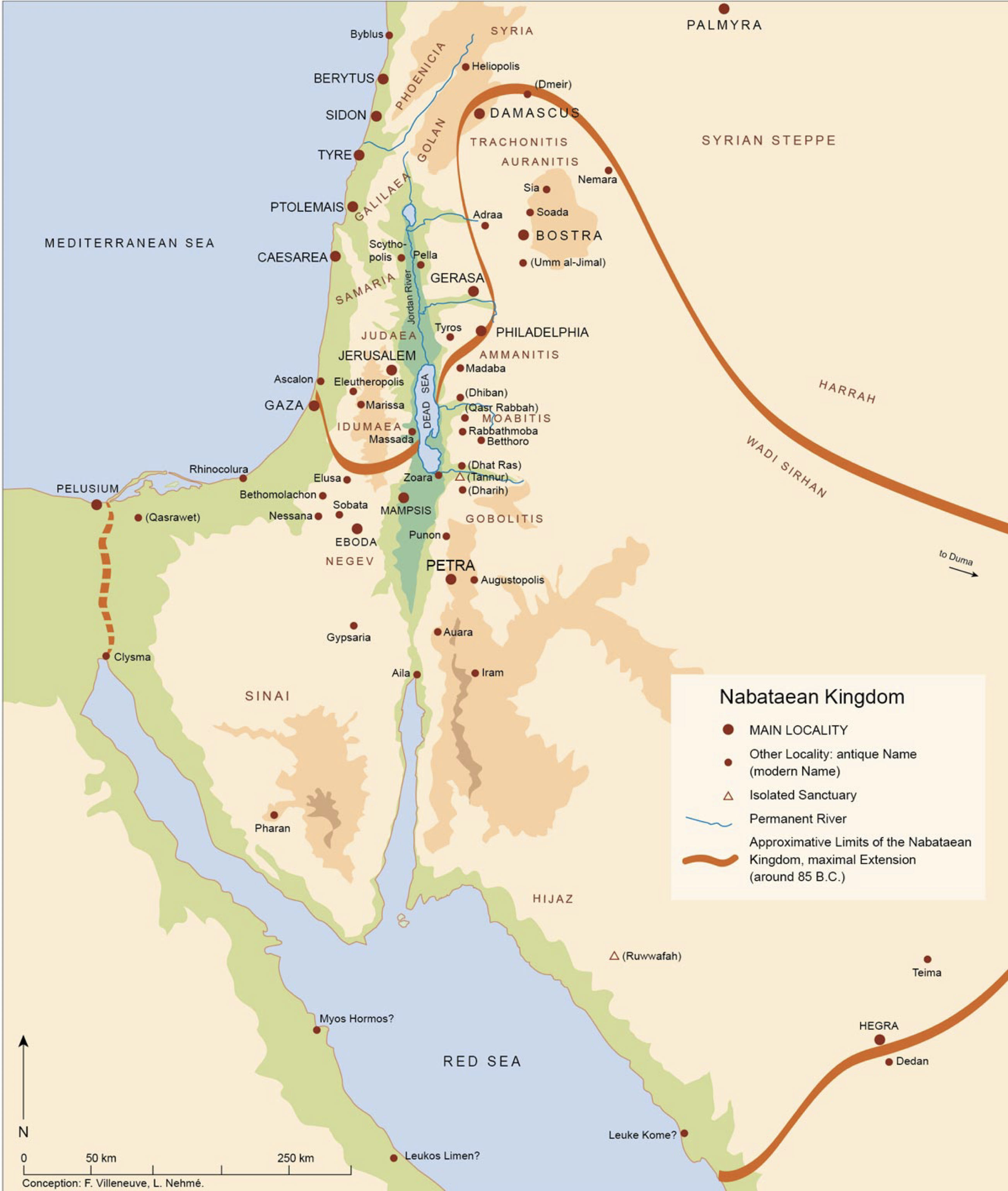
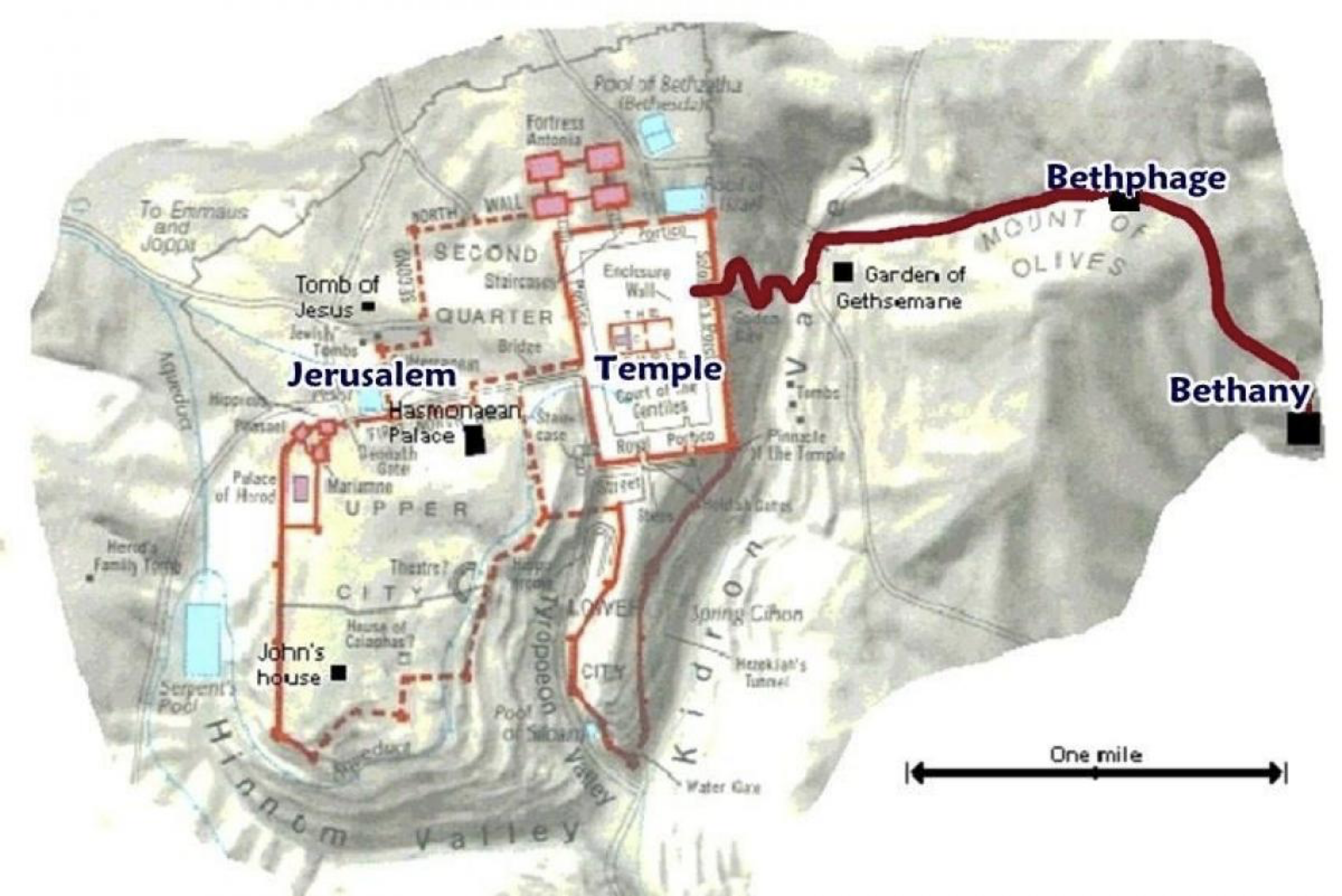
That’s precisely what happens to the early church in Acts 8. Up until this point, everything in Acts has been happening in Jerusalem, this small city on the map below.  It is so small that the dot on the map is too small to see. 

There in Jerusalem, there is powerful preaching, miracles, generosity, and a caring community.  Thousands are being saved.   Imagine, for a moment, you are a leader in a church like that: thousands of people joining and coming to Jesus in a few months, everyone being cared for, miracles happening.   It’s everything a pastor or church leader dreams of.   If you have all that, you may feel that it is enough.  Things are going well. We just need to keep doing what we are doing.

But in God’s eyes, the tremendous growth in Jerusalem was great, but it wasn’t enough because it was just a tiny dot.   A little bit that you can barely see in a world full of people who need the Gospel.   God sees a bigger picture than we do.  We look at our corner of the county.  See your tiny dot on the map, and then see the whole world like God sees it. 

John 3:16   For  God so loved the world, that he gave his only Son, that whoever believes in him should not perish but have eternal life.

God so loved the world.  It is not, “God so loved our tiny dot…” Not just the people in Jerusalem, Jesus also taught the disciples that He came because God loved the Samaritans.  And later the church in Acts would realize that God so loved not just the Jews, but the people in Asia Minor, and Greece, and even those horrible Romans.  God loves the world, and he wanted the early church to love the world too.  It was not enough that they loved the other Jews in Jerusalem who were just like them.  Things were good there, a growing, caring church.   But God wanted more.  He wants us not just to love each other and the people around us who are mostly like us.   God wants us to love the whole world, not just the small corner we can see.

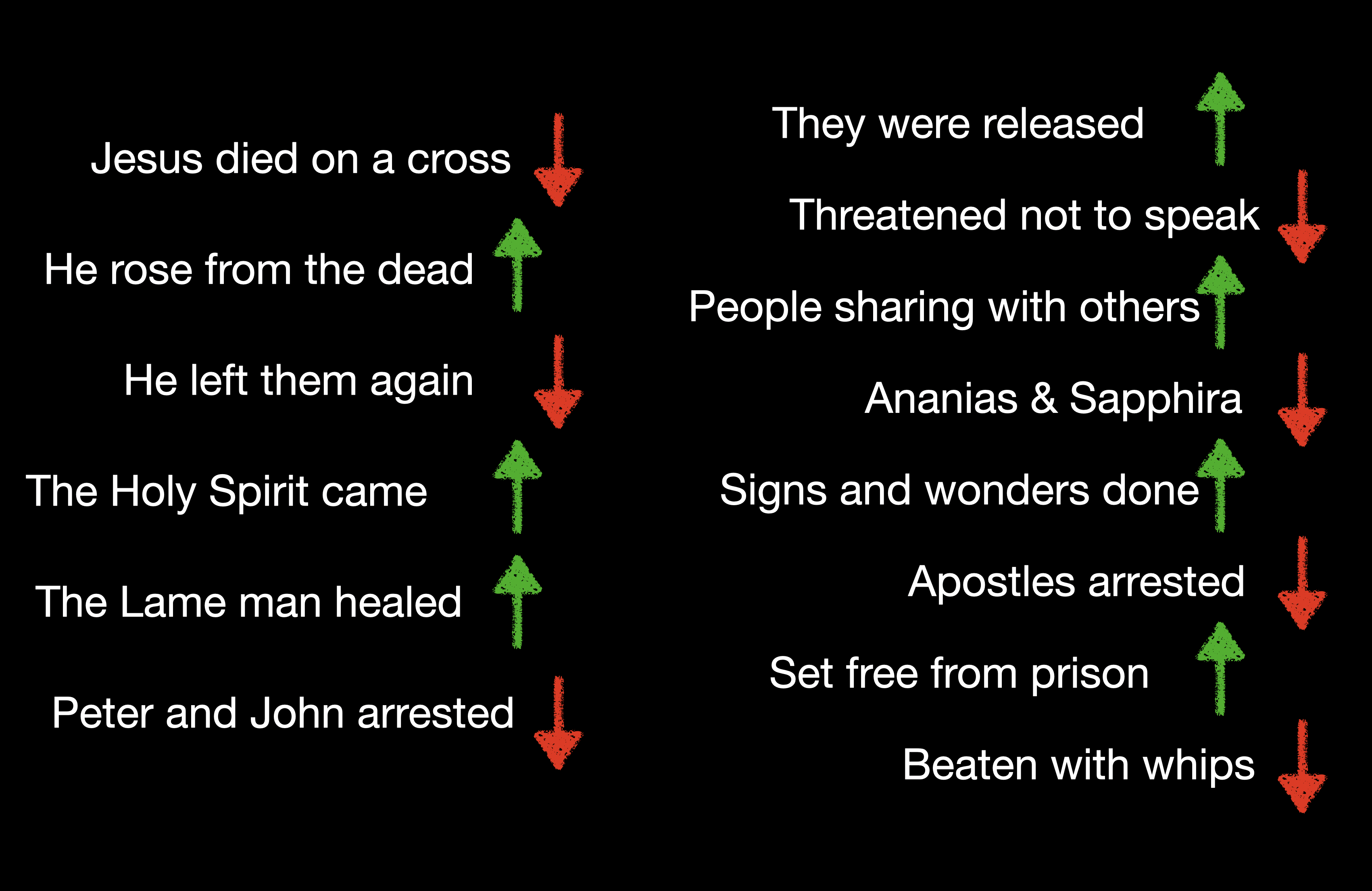
To really appreciate Acts 8, we need to remember what’s come before. The story of Acts so far has been a spiritual rollercoaster — full of ups and downs, triumphs and trials, good news and bad news.  So let’s recap the Book of Acts.  

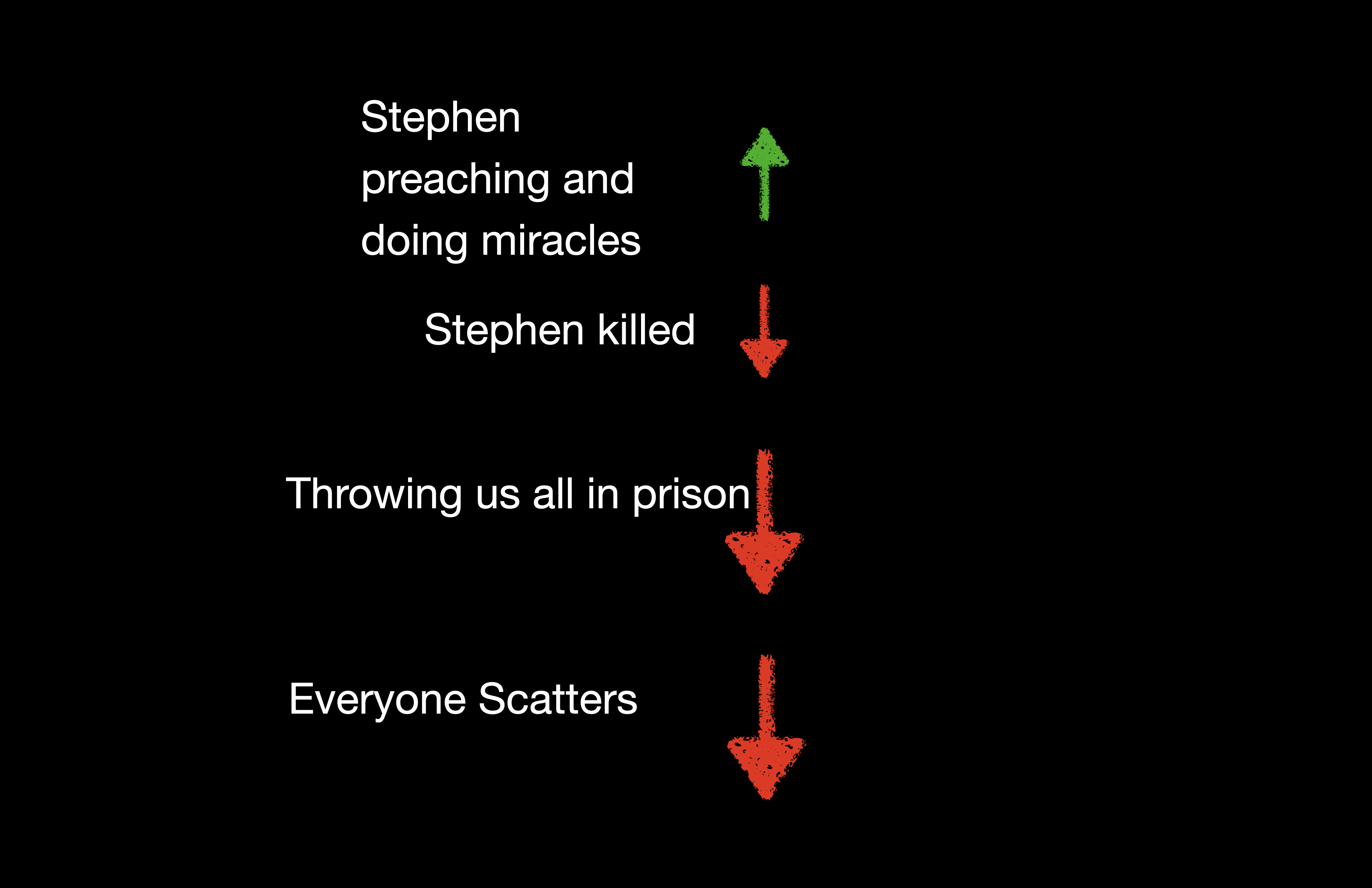
Jesus had died on a cross, which looked bad, but 3 days later he rose from the dead, which was really good. Jesus stayed 40 days teaching his disciples, and then left them, going up to heaven, which was kind of sad. But it was good because He said the Holy Spirit would come.  And that day the Spirit came was a really good day.   And then the day that Peter and John healed the lame man in the Temple was great, until they were arrested and put in jail.  That was bad.  But they were released, and that was good, but they threatened them not to speak anymore about Jesus, which was bad.  Then we read about everyone sharing with those who had needs.   That was good.  But then the story of Ananias and Sapphira, which wasn’t good.  

Then miracles were being done, and over 5000 followers had joined the disciples.  Things were going good…until the apostles were arrested (that was bad).  But it was good because an angel set them free, though then, after the court hearing, they were beaten with whips.  Then we read of Stephen, full of the Holy Spirit, preaching and doing miracles.   That was good, until he was killed.  And after that, things got really bad.

  This is a defining moment. For the first time, the church experiences organized, targeted persecution. The honeymoon period is over for these early followers of Jesus.  This is bad.   

Acts 8:1,3  And Saul approved of his execution.   And there arose on that day a great persecution against the church in Jerusalem, and they were all scattered throughout the regions of Judea and Samaria, except the apostles. …But Saul was ravaging the church, and entering house after house, he dragged off men and women and committed them to prison.

This is not just a young man who just watched the clothes while others stoned Stephen.  This zealous rabbi voted in the council to kill Stephen and then went on a rampage, going into homes and dragging off men and women.  Imagine the fear and confusion. Families are split apart. Homes raided. The fellowship they’ve built in Jerusalem — shattered.   They are scared to do or say anything.  They are scared to death.  This is bad news.

By the time we reach Acts 8, the church has experienced incredible highs and devastating lows.   Every time there’s a victory, opposition follows.  Just when things seem to be going good, here comes trouble.  The book of Acts has so far been a rollercoaster of highs and lows, but now, in Acts 8, it seems to be plummeting toward destruction.

Do you see this in your life also?  A rollercoaster of highs and lows, good and bad?  Just when things seem to be going good, here comes trouble.  How do you respond when things go wrong?  Disappointment?  Depression?  Fear?  Hopelessness?  Do you want to question God?  Why did you let them put the apostles in prison?  Why did you let them kill Stephen?  Why did my friend get cancer?  Why do evil people prosper?  Why is there so much trouble in the world?

This persecution should not have been surprising to them or us.  Jesus said:

John 15:18, 20   If the world hates you, know that it has hated me before it hated you…
If they persecuted me, they will also persecute you.”

And remember, He also said this:

Matthew 5:11-12   Blessed are you when others revile you and persecute you and utter all kinds of evil against you …

Oh, but as we discussed before, “Blessed” is the Greek “makarios,” which really means “happy are you” or “how fortunate you are,” so let’s read it that way…

Matthew 5:11-12   How wonderful it is for you when others revile you and persecute you and utter all kinds of evil against you falsely on my account. Rejoice and be glad, for your reward is great in heaven, for so they persecuted the prophets who were before you.

Jesus says that when you are persecuted, you are the lucky ones!  Do you think the followers in Jerusalem saw it that way?  Saul is dragging them out of their houses and throwing them in prison.  And do you think they are celebrating their good fortune?  How does this make sense?

To understand how you are lucky or happy when persecuted, you have to be able to see things from God’s view and not your own.  We need to look through God’s eyes.  We need to see the bigger picture again.   There are three reasons that persecution is good. 

1.  Persecution helps the believer mature and grow in Christ.

Romans 5:3-5   Not only that, but we rejoice in our sufferings, knowing that suffering produces endurance, and endurance produces character, and character produces hope, and hope does not put us to shame, because God’s love has been poured into our hearts through the Holy Spirit who has been given to us.

We need suffering to grow.  It is only when we experience failure, disappointment, persecution, and defeat that we are able to understand that we are not enough.  We learn to depend on our Father instead of ourselves.  We mature as followers of Jesus.

2.  Persecution purifies the church.

It is sad, but there are always those in the church who are not faithful followers but wolves in sheep’s clothing.  But when trouble comes, when persecution comes, their truth is revealed.   We see this in 1 John, and Jesus speaks of it in his parable of the soils.  

Matthew 13:20-21   As for what was sown on rocky ground, this is the one who hears the word and immediately receives it with joy, yet he has no root in himself, but endures for a while, and when tribulation or persecution arises on account of the word, immediately he falls away.

When persecution comes, some will leave the church.  They were never really a member anyway.  We have not had persecution in our time.  So, from what Jesus said, you would expect the church to have a lot of people who aren’t really committed to Jesus.  They are there with joy, but have never given their life to Christ.  And if persecution does come, they will fall away.

3.  Persecution causes the church to grow

Now this doesn’t seem to make a lot of sense.  If Paul is going from house to house in Acts 8, dragging people out to put them in prison, that seems it would have a negative effect on the group of followers in Jerusalem.  But look what happens:

Acts 8:4   Now those who were scattered went about preaching the word.

Verse 4 is a hinge in the book of Acts.  The word “scattered” here — diaspeirō in Greek — is the same word used for scattering seed. It’s not a random dispersal; it’s purposeful planting.  The devil tried to stamp out the fire in Jerusalem, but all he did was scatter the embers — and they caught flame in new places.  Everywhere these believers went, they carried the gospel. They didn’t have a denomination, a mission-sending agency, a church building, a program, or a budget. What they had was the message of Jesus, and that was enough.

Acts 8:5    Philip went down to the city of Samaria and proclaimed to them the Christ.

Philip, one of the seven deacons appointed back in Acts 6, goes to Samaria! Remember how the disciples first responded when Jesus took them through Samaria? They couldn’t believe he was actually going there.   They hated the Samaritans.  They called them half-breed Jews.  They wouldn’t even talk to them.  Jews and Samaritans had centuries of hostility, but the gospel breaks that barrier wide open.  That’s a remarkable scene,  See how the Holy Spirit has changed these followers to be more like Jesus?

Philip is crossing cultural and religious boundaries.   What began with Stephen’s death in Jerusalem leads to joy in Samaria.  The chapter that opened with mourning ends with rejoicing.
The story that began with persecution ends with proclamation.  The bad news becomes the vehicle for the good news.  This is the power of the gospel. And they went further…

Acts 11:19   Now those who were scattered because of the persecution that arose over Stephen traveled as far as Phoenicia and Cyprus and Antioch, speaking the word to no one except Jews.

At the beginning of Acts 4, the entire church, the gathering of followers of Jesus, is all in one city.  All in that one little dot.  But because of the persecution, they scatter like seed and are planted here.

So what is the lesson we learn from this passage in Acts 8?

Application 1: God’s Good News Often Moves Through Bad News
This is a pattern we see all through Scripture. Joseph was sold into slavery so he could save his family. Moses fled Egypt before leading God’s people out of it. The cross looked like defeat until resurrection morning.  Acts 8 continues that pattern — what looks like a disaster becomes divine strategy.  Maybe you’ve seen that in your own life. You lose a job and end up finding a deeper purpose. A relationship breaks down, and you discover how faithful God really is. A closed door becomes the very thing that pushes you toward your calling.

Romans 8:28  And we know that for those who love God all things work together for good, for those who are called according to his purpose.

Listen, God did not want this persecution.  God loved Stephen.  He did not want Stephen to be stoned.  But God gave men free will, and men choose evil.  But God takes the evil that man has done and makes it work for good.  God has a way of turning scattering into sowing — pain into purpose, loss into mission.  So when you get bad news, a bad diagnosis, a financial bad turn, or some tragedy, if you are a follower of Jesus, know that God, who loves you, will take that tragedy and work it for good.

Application 2: Comfort Can Become the Enemy of God’s Purpose

The church in Jerusalem had everything — community, teaching, worship, generosity, and miracles. But all of that was happening inside one city.  And we have to admit, many of our churches today fall into the same pattern. We have programs, fellowship, music, structure — often much more of these than mission. We love being together, but we can easily become so inward-focused that we forget why we exist.

Sometimes, God allows discomfort — in a church, in a ministry, even in a nation — to push His people outward again.  The early church didn’t plan a missions strategy.  Persecution became their mission strategy. God used shaking to send them out.

Application 3: Wherever God Scatters You, Carry the Gospel

Acts 8:4   Now those who were scattered went about preaching the word.

Notice that Acts 8:4 doesn’t say “the apostles” went preaching — it says “those who were scattered.” Ordinary believers. Shopkeepers, craftsmen, mothers, widows, servants. They didn’t have seminary training, but they had stories of grace.  They didn’t have pulpits, but they had conversations.  They didn’t have missionary boards, but they had neighbors. Every believer was a messenger. And wherever they went, the gospel went too.

Maybe God has “scattered” you in a way you didn’t expect — a new job, a new city, a new season of life. Don’t see it as random. See it as God planting you where the gospel can take root.  If you find yourself in an oncology waiting room, find a way to be the gospel there, and maybe even use words.  Stuck in an elevator, waiting in a long line, wherever.  And if you are somewhere uncomfortable, be alert for opportunities to share.  Sometimes God shakes our comfort so He can share His comfort through us.

I don’t go to the movie theater much anymore.  (Even though I love paying $25 for some popcorn and a soda.)  But at a movie, I sit in my seat and watch, and when it is over, then I walk out of the theater and go about my life as if nothing has happened.  Once a week, we come to our seats at church and watch.  And when it’s over, then what?  Is this like a movie, or have we had an encounter with the God of the Universe who wants us to leave this place changed, to leave this place with a mission?  We are not saved to sit.  We are saved to serve.  We can’t fulfill God’s plan for our lives in this building.  

Jesus’ great commission was not “Go to church on Sunday and then go home (after you go out and eat lunch).   It was “Go into all the world and do something that will likely make you uncomfortable.”   

The passage ends in verse 8: “So there was much joy in that city.”   The church’s pain became someone else’s joy.  Their scattering became someone else’s salvation.   That’s the rhythm of the gospel — out of suffering comes life, out of loss comes joy, out of persecution comes expansion.  So when life shakes beneath your feet — when bad news comes — don’t assume God has abandoned you. He might take this opportunity to move you into the next chapter of His plan.  The ground may be shaking, but God is sowing.  What feels like bad news may be the start of very good news indeed.

  1. Lucado, Max. A Heart Like Jesus: Lessons for Living a Christ-Like Life. Kindle Edition. Location 33.

May 19, 28 A.D.  – “Doubting Thomas” — The Year of the Lord’s Favor #83

Week 66 — “Doubting Thomas”
John 20:24-29

John 20:24-29   Now Thomas, one of the twelve, called the Twin, was not with them when Jesus came. So the other disciples told him, “We have seen the Lord.” But he said to them, “Unless I see in his hands the mark of the nails, and place my finger into the mark of the nails, and place my hand into his side, I will never believe.”
Eight days later, his disciples were inside again, and Thomas was with them. Although the doors were locked, Jesus came and stood among them and said, “Peace be with you.”  Then he said to Thomas, “Put your finger here, and see my hands; and put out your hand, and place it in my side. Do not disbelieve, but believe.”  Thomas answered him, “My Lord and my God!”   Jesus said to him, “Have you believed because you have seen me? Blessed are those who have not seen and yet have believed.”

Poor Thomas, so famously known for one moment in his life.  This is how we often perceive people.  We tend to reduce them to that one moment that we remember.   And sadly, like Thomas, it may be a moment we view negatively.  Thomas is not the only person who, unfortunately, becomes known for one moment in their life.

If you are a baseball fan, there is one name that comes to your mind.  Bill Buckner.  It is Game 6 of the 1986 World Series.  The Red Sox lead the Mets in the series, three games to 2.  A win in this game will mean Boston will have their first World Series Championship since 1918.  Boston was leading this game, but the Mets tied it up, and the game went into extra innings.  In the top of the 10th inning, Boston scored two runs to go ahead again, 5-3.  In the bottom of the 10th, the Mets scored twice to tie the game again at 5-5.  The Mets had a man on second, but there were two outs, and they were down to their last strike.  One more strike and the game goes to the 11th inning.

Mookie Wilson hits a slow roller down the first baseline.  Bill Buckner is there to field the ball, but it goes between his legs and rolls into right field.  The runner scores and the Mets win.  The Mets go on to win the World Series, denying Boston yet again.  The term ‘Buckner Play’ became synonymous with a costly sports blunder.

Bill Buckner played Major League Baseball for 21 years. He ended his career with over 2,700 hits and almost 500 doubles, having batted over .300 seven times. He retired as one of the most effective first basemen in major league history, but is still remembered for one error.

“Doubting Thomas.”  Does he deserve this title?  Should he be known for this one event?  We don’t have as much written in the Gospel accounts about Thomas as we do Peter or John, but there is more to him than this one story.  Thomas was a bold, dedicated follower of Jesus.  When Jesus says he is going back to Jerusalem, and the disciples say, “Wait, you know they are looking to kill you there?”  It is Thomas who steps up and says, “Let us also go, that we may die with him.”

Another time, Jesus tells the disciples:

“And if I go and prepare a place for you, I will come again and will take you to myself, that where I am, you may be also.   And you know the way to where I am going.”

But none of them understood, and they were scared to admit it.   Only Thomas has the courage to speak up.”

“Lord, we do not know where you are going. How can we know the way?”     

And because Thomas was bold enough to ask, we get this from Jesus:

Jesus said to him, “I am the way, and the truth, and the life. No one comes to the Father except through me.”

The reason we have this verse is that Thomas was bold enough to ask the question that the others were scared to ask.  But what do we remember about Thomas?  He was the doubter.    And is doubt really that bad of a thing?  Do we even understand what doubt means in the Bible?

According to modern dictionaries, doubt is “a feeling of uncertainty or a lack of conviction”. If that is what doubt means, then we might think of the opposite of doubt as faith, which is defined as “complete trust or confidence in someone or something.”  These would seem to be near opposites.  But these modern-day dictionary definitions don’t fit with the way the Bible uses these words.  You see, this is the Greek view, not the Biblical view.

Our thinking is significantly influenced by the ideas of Greek thinkers.  We tend to want proof with absolute certainty before we ‘believe’ something. In fact, the very idea of proving something is Greek.  It comes from the Greek mathematicians Euclid and Thales, who devised a method of proof for mathematical theorems.  (I am suddenly having flashbacks of writing proofs in Geometry in High School.  Anyone else nauseous?)

 However, in life, absolute certainty is rare.  So, then it takes a leap of faith.  You finally have to be convinced enough to accept something.  So the Greek idea of faith is what you mentally agree with.  If you have Greek faith, then you are mentally convinced, your mind is made up. 

However, the Biblical notion of faith is not from the Greek mindset but from the Hebrew.  Faith in Hebrew is ‘emet’ (from which we get our word ‘Amen’); it is about reliability, trustworthiness, and consistency of actions.  God is always consistent.  He always keeps his promises.  He is faithful.  Faith is about actions, not thoughts.  It is what you do, not what you think.  (It helps us to read “faith” as “faithfulness” as it is an action, not a thought.)

So, biblical faith is not just accepting God and His word, but acting in obedience to His word.  But if Biblical faith is about action, then what is doubt in the Bible?  The Biblical Hebrew word for Doubt is — wait, there is no Biblical Hebrew word for doubt.   Does that surprise you?  There is a word for doubt in modern spoken Hebrew (safek), but you won’t find that word in the Bible.  While we view doubt or mental uncertainty as a negative thing, the Old Testament doesn’t even assign a word to it.

You do see people in a time of mental uncertainties in the Bible, but it is not called doubt.  Abraham and Sarah both laughed when God told them they would have a child in their old age.  And while God corrects them, he does not rebuke them.  Twice, Gideon seeks confirmation of God’s plan before he acts because he is unsure.  Similarly, Moses needs assurance from God because he is uncertain that he is the right man for the job.

God doesn’t rebuke any of these people for having some mental uncertainty.  He helps them through it.  Jesus does the same with Thomas, yet you don’t hear “doubting Abraham” or “doubting Sarah.”  Instead, you see the author of Hebrews put all of these people who had uncertainties in the Hall of Fame for faith in Hebrews 11.  And for all of the “heroes of faith,” in that ‘roll call of faith, ’ you read not what they believed, but what they did.  Their faith is not what they thought about God, but their actions.  (Abraham offered up Isaac, Noah built an ark, Moses kept the passover, sacrificed the lamb, walked through the sea, etc.)

While there is no word for doubt in the Old Testament, you do see the word doubt in the New Testament a few times.  There are 2 Greek words that are translated as ‘doubt’:
Diakrino, which means to distinguish between two things, is occasionally translated as ‘doubt.’
Distazo, which means to waver, hesitate, or delay, is translated as ‘doubt’ twice.  However, it is clear that neither word accurately captures our modern understanding of doubt. The best example of how these words are used is the story of Jesus walking on water.  We reviewed this back in the fall, but let’s revisit it here to see what Jesus says that gets translated as ‘doubt.’

The disciples are in a boat in a storm.  Jesus is casually walking on the water by them.  Peter says, “Lord, if it is you, command me to come to you on the water.”  Jesus replies, “Come.”  Peter hops out of the boat and begins walking on the water. 

Matthew 14:30-31   But when he saw the wind, he was afraid…    

Wait a minute.  Can you see the wind? No, you can only see the results of the action of the wind.  Hang on to that thought for a minute.

Matthew 14:30-31   But when he saw the wind, he was afraid, and beginning to sink, he cried out, “Lord, save me.”

What is going on? Why is Peter sinking?  Peter is wavering between two thoughts:
1. Jesus told me to walk on water, so I should be obedient.
2. It is impossible to walk on water (do you see those waves?)
And Peter is stuck.  He stops walking and becomes stuck in his thoughts, pondering between these two ideas.  This is similar to our concept of doubt.

Some call this Analysis Paralysis – His mental confusion led to an inability to do what Jesus commanded.  His mental uncertainty causes him to stop obeying Jesus’ command to come.  So, how does Jesus respond to Peter?

Matthew 14:31     Jesus immediately reached out his hand and took hold of him. “Lord, save me.”

This is important.  Jesus does not punish Peter for having mental confusion; he reaches out his hand to pull him up, and says, 

“Oh, you of little faith, why did you doubt?”

Why does Jesus say Peter has “little faith”?  First, remember that Jesus said if you have faith as small as a mustard seed, you could move mountains.  A mustard seed was the smallest item he could show them, smaller than a grain of sand.  So the point is any faith at all is sufficient, even the smallest amount, because the outcome is not dependent on the amount of faith you have, but the amount of power God has.  “Little faith” really means no faith.

Why does Jesus say Peter has no faith?  Faith is like the wind.  You can’t see it, but you can see the result of it.  Remember when the paralyzed man’s friends let him down through the roof to Jesus?  The Bible says, “Jesus saw their faith.”   You can see faith because faith is an action.  Biblical faith is characterized by reliability, trustworthiness, and consistency of action.  Peter stops walking.  He is inconsistent in his actions. Therefore, he has no faith.

“Oh, you of little faithfulness, why did you doubt?”  Jesus isn’t asking Peter if he is theologically confused or has doctrinal issues.  He is asking Peter why he stopped walking.

This Greek word doesn’t mean ‘doubt’ as we think, but instead has the meaning of hesitating and/or delaying.  To Jesus, the problem is not mental questioning or uncertainty; the problem is his hesitation or refusal to do what he called Peter to do.  To Jesus, the issue with doubt is the lack of obedience.

The Bible doesn’t call us to be certain in our minds.  (It is not Greek.). Proofs are not necessary.  The Bible leaves room for uncertainty.  But it does not leave room for disobedience.

Jesus never said, “Understand everything I say and don’t ask questions.”  He said, “Follow me.”  It’s all about the action, all about obedience.  Jesus is fine with your questions.  He has no problem with your consideration as long as it does not lead to disobedience.

We see that with Thomas.  Thomas was an eyewitness to Jesus’ life; he knew Jesus had died.  If Jesus were alive again, Thomas would need to see Him again.  Jesus doesn’t fuss at him. He gives him exactly what he needs.  You need to see my hands and side.  Here they are..  Jesus solves his uncertainty.  Mental uncertainty is fine, as long as you remain obedient.

But there can be a huge potential problem with resolving mental uncertainty.  We need to go back to Genesis. There is a tree in the garden.  Eve says, “That fruit looks delicious!  It looks so good to me, but God said, ‘Don’t eat it.’”  So, where does Eve go when she has uncertainty?  Where does Eve go when she is confused?  She goes to the serpent and listens to what he has to say.  Then she reasons within herself.  Her mental uncertainty led to disobedience, as she sought advice from the snake and then decided that she was more capable of making decisions than God.

If Adam and Eve had some mental uncertainty or questions about the tree of knowledge of good and evil, then they should have asked God about it on their next walk in the Garden, not the snake.  The answers we need are not going to come from our reasoning, and certainly not from the snake and the world he controls.

Proverbs 3:5-6.  (Message)  “Trust God from the bottom of your heart; don’t try to figure out everything on your own. Listen for God’s voice in everything you do, everywhere you go; He’s the one who will keep you on track.”

If you find yourself confused or questioning, don’t go to the serpent for advice. Don’t go to the world that he currently runs.  And then don’t think you can decide better than God.   The next verse in Proverbs says, “Don’t be wise in your own eyes.

Luke tells us this also.  In the book of Acts, Luke writes about Paul’s ministry and says:

Acts 17:11. Now these Jews were more noble than those in Thessalonica; they received the word with all eagerness, examining the Scriptures daily to see if these things were so. 

Paul was saying some things they had trouble understanding.  You may not have noticed this, but Paul can be difficult to understand. (See 2 Peter 3:16 for Peter’s opinion on this.)   So what do you do?  You don’t go asking a snake about it.  And you don’t just sit around thinking you can reason it out in your own mind.

I frequently see this in Bible studies.   People ask, “What do you think the scripture is saying? What makes sense to you?”  I apologize, but that is not the correct way to interpret scripture. That’s what got Adam and Eve in trouble.  “The fruit looks good.  It makes sense to me to eat it!”  Use the Bible, God’s Word, to interpret the Bible, not your own understanding.  Don’t make the same mistake Adam and Eve made.  Ask questions about it, but go to the right place for answers.  Listen, if we spend hours in front of a television and never find time to study God’s word, it is no wonder we are confused.  Search the scriptures and ask God to help you understand them.

So it is all about action.   Christianity’s leap of faith is not a mental leap but a leap of action.

Remember the story of Naaman the leper?  He came to the prophet Elisha seeking healing.  He was expecting some grand gesture from the prophet, but Elisha sent a servant to instruct Naaman to wash in the Jordan.  Naaman was angry that Elisha didn’t even bother to speak to him personally, and he was mad that all he offered him was to bathe in a river.  What would that do?  But Naaman’s servant said, You’ve come all this way, what could it hurt to try the river that the prophet said?   So Naaman goes and washes 7 times in the Jordan.

Did Naaman, after his healing, understand how the water would heal him?  Did he solve his uncertainty about the prophet’s command?  No, but he was obedient, and he was healed, and his obedience led to faith. He goes back to the prophet and says, “Behold, I know that there is no God in all the earth but in Israel” (2 Kings 5:15). His obedience preceded his belief, and his obedience led to his belief.  Understanding is not a prerequisite to obedience.

Faith comes by obedience.  Let me ask you, “When has your faith grown?”  I have been in some beautiful church buildings and heard some fantastic music, and I enjoyed the time of worship, but that did not deepen my faith.  I have listened to some incredible preachers deliver great sermons, and I have learned a lot, but that hasn’t deepened my faith.    I have heard some amazing testimonies from others, but that alone didn’t make my faith grow.  However, all of these things contributed to inspiring me to do the one thing that ultimately led to my faith growing: walking out of the building and being obedient to what God led me to do.

It was when I followed God in obedience and stepped out to do something that my faith grew.  And often they were things that I didn’t really want to do or things I felt inadequate to do.   But as I stepped out, like Peter, God empowered me to do what I thought I couldn’t do.  And in obedience, faith grows.

Again, faith is not about mental agreement; it is about action.  Read the book of James.  James says faith without action is worthless.  It is dead.  It only exists if there is action with it.

Have you ever been rappelling?   Essentially, you attach a rope to the top of a cliff, hook into the rope with a harness, then lean back off the side of the cliff and walk backward down the cliff wall.  There is a big difference between believing that the rope is strong enough to support your weight and then stepping off the side of the cliff and depending on the rope.   Faith is not “believing that the rope will hold you”; it is leaning back off the side of the cliff on that rope.

James 1:6 But let him ask in faith, with no doubting, for the one who doubts is like a wave of the sea that is driven and tossed by the wind.

James is clearly thinking of Peter on the water here.  Doubt (wavering between two things) is like the back-and-forth waves in the sea, just being tossed around.  “Let him ask in faith.”  Don’t be like Peter, who stopped being obedient while he considered the physics of water-walking.

We must also guard against analysis paralysis. I don’t know about you, but I like to stop and think about things first – I’m not Peter, just quickly jumping out of the boat.  I want to follow Jesus, but sometimes I’m not quite sure it’s His voice I’m hearing.  It is okay to be sure, but it is not okay to use that as an excuse for delaying obedience.

How often have I been prompted to do something – give something away, visit someone, whatever – and I have not done it because I second-guessed myself, not believing the prompting was from God. A wise friend told me that if it were an act of kindness that could not harm anyone, then don’t hesitate.  It would certainly be tragic to miss a command from God because I was questioning my motivations.  Remember, Jesus is fine with our questioning, but not with our delay and hesitation in obedience.

So “Doubting Thomas”?  No.  Thomas was no different than any of the other disciples.  None of them believed Mary or the disciples from Emmaus when they came and told them about Jesus’ resurrection.  They had all seen him alive and seen him die.  They all needed to see him alive again.  Let’s look at the end of the story again.

John 20:26-29   Eight days later, his disciples were inside again, and Thomas was with them. Although the doors were locked, Jesus came and stood among them and said, “Peace be with you.”  Then he said to Thomas, “Put your finger here, and see my hands; and put out your hand, and place it in my side. Do not disbelieve, but believe.”  Thomas answered him, “My Lord and my God!”   Jesus said to him, “Have you believed because you have seen me? Blessed are those who have not seen and yet have believed.”

“My Lord and my God!”   The clearest confession of Jesus’ divinity in the Gospels.1  Many called Jesus ‘Lord’, but that was a title of reverence and used as a standard greeting, as we say ‘sir’ or ‘mister’.  Some called him the ‘Son of God,’ but this term is used frequently in the Bible to refer to angels, the nation of Israel as a whole, and some kings, not specifically to a divine being. ‘Son of Man’ can be used as a reference to human beings or as a special reference to the Daniel 7 exalted figure called the ‘Son of Man.’

John began his Gospel, “In the beginning was the word, and the word was with God and the word was God.”  This is a statement about the divinity of Jesus.  And now John is ending his Gospel with the same statement.  How ironic that this most bold statement of faith comes from the man we call “Doubting Thomas.”

How does Thomas’ story end?  The Bible doesn’t say, but history tells us Thomas, the disciple who stated his willingness to follow Jesus to death, traveled further than any other apostle to spread the Gospel.  He traveled the trade routes east, outside the Roman Empire, through Persia to India, likely arriving there by 49 AD.  He started numerous churches and was later martyred there.  The man known for doubting followed Jesus further than anyone.

So what is our take-home message?

  1. It is ok to question God.  He can handle our questions.  If you are drowning in uncertainties, Jesus will reach out his hand to help you.
  2. If you are uncertain or questioning, do not go to the world and do not go to the serpent, and do not think you can reason it out on your own.  Go to God’s Word and God in prayer.  Don’t make the Adam and Eve mistake.
  3. Faith is something you can see.  It is not a creed, a list of things we believe.  It is the actions of a life that is based on that creed.  It is what you do, not what you think.
  4. If God calls you to do something, do not delay or hesitate; act promptly.  Be consistent in your obedience.

God brought us into his kingdom to do the work of the kingdom.  He gave us talents to use them.  There is nothing I can say to help you grow your faith.  I hope to inspire you to walk into God’s world and do what God leads you to do.   I truly believe God is calling each of us to do something for the kingdom this week.  And as we do, our faith grows.

  1. Last week, I mentioned that the Last Supper was the seventh meal Jesus had at the table in John.  Seven is the number of completion.  And then the next meal in Emmaus was a kind of ‘first supper,’ marking the beginning of a new era in the world following Jesus’ resurrection.  There are many ‘sevens’ in John.  There are seven miracles, and the eighth one, marking a newness of life in the world, is the resurrection of Jesus.  There are seven “I am” statements by Jesus.  There are seven statements by seven witnesses that Jesus is the Messiah, followed by the eighth one after the resurrection, the climactic witness that Jesus is divine.

May 13, 28 A.D.  – Why They Didn’t Understand — The Year of the Lord’s Favor #82

Week 65 — Why They Didn’t Understand
Mark 16:12-14, Luke 24:36-49, John 20:19-23

Last week, we discussed what Jesus did on the day He was resurrected. He met the two disciples who were on their way home to Emmaus.  He opened up the scriptures to them and then opened their eyes when he broke bread with them. That day ends with the two disciples from Emmaus traveling back to Jerusalem to tell the disciples gathered there of their encounter with the risen Jesus.  We have descriptions of this in the Gospels of Mark, Luke, and John.  Mark’s account is the briefest:

Mark 16:12-14   After these things, he appeared in another form to two of them, as they were walking into the country.  And they went back and told the rest, but they did not believe them.  Afterward, he appeared to the eleven themselves as they were reclining at the table, and he rebuked them for their unbelief and hardness of heart, because they had not believed those who saw him after he had risen. 

Mark mentions the disciples from Emmaus and tells us the disciples “did not believe them.”

How frustrating when you are telling something you are all excited about, and they don’t believe a word you say.  And Mary Magdalene is over there in the corner of the room saying, “Same.  They didn’t believe me either.”   While they are discussing this, Jesus appears in the midst of them and rebukes them “for their unbelief and hardness of heart:

Why did the disciples have such a hard time believing Jesus was alive?  To us, 2000 years later, the resurrection seems so obvious. How could they have missed it?  Of course, things are always simpler when you are looking back.  It is difficult for us to put ourselves in the disciples’ shoes.  It is hard for us to imagine their trouble believing in Jesus’ resurrection.  Hadn’t Jesus explained this several times?  

I think there are three reasons why they couldn’t see what we see now. First, they were overcome with fear.  John tells us they were in a room with locked doors “for fear of the Jewish authorities” (John 20:19).1 They are in hiding.  The weeklong Feast of Unleavened Bread continues, and the city is still on high alert.  They were the core followers of a movement that the authorities had just deemed as blasphemers, insurrectionists, and traitors.  Their leader had just been dealt the most severe punishment thinkable.  They feel like they barely escaped.  Hadn’t Peter almost been discovered to be “one of them” in the courtyard of the high priest?  Peter had to lie to avoid being named as one of the conspirators.  They are scared.

Do not underestimate the effect that fear has on your thinking.  Fear activates the parts of the brain, such as the amygdala, that are designed to ensure self-preservation.  And that portion of the brain takes over.  Your body’s resources are all diverted to one goal: staying alive. Stress hormones, such as adrenaline and cortisol, are released.  Your heart rate, blood pressure, and breathing rate increase to prepare for rapid, strong physical reactions.  Your pupils dilate, allowing you to see the threat more clearly.  And as these parts of the brain take over, your prefrontal cortex gears down.  This is the part of the brain that is responsible for rational thinking and decision-making.  You can’t do higher-level thinking when you are ruled by fear.

This system is designed to help you best react to immediate physical threats.  You start to step, but you see a snake, so you instinctively jump back.  That’s good… unless you are walking on the edge of a cliff when you see the snake.  It is not good to let this fear response run loose.  You may make terrible decisions you wouldn’t usually make, because your higher-level brain functions are suppressed. 

What about people who live in constant fear?  We see this with people living in areas of warfare where bombs are dropping around them.  But we have a word for the most common scenario of chronic fear: anxiety.  Anxiety and stress produce the same fear response and the same effects on your brain.  And the incidence of anxiety has increased in the US over the past 5 years.  The National Institute of Mental Health data from last year noted that 19% of adults in the US had an anxiety disorder.  That is almost 1 out of 5 people living in a state of chronic fear. 

Maintaining this fear response over more extended periods is physically harmful to the body.  Studies show chronic anxiety causes increased cardiovascular disease, increased gastrointestinal disease, weakened immune function, and physical changes to your brain as your prefrontal cortex shrinks.  The part of your brain responsible for higher-level thinking and decision-making loses mass.

Is it any wonder that the most common commandment in the Bible is “Fear not!”?  These disciples were scared that the Romans were coming for them next, and they couldn’t see past their fear to think about what Jesus had told them.  Jesus said this fear was a faith problem.  He calls them hard-hearted.  

The second reason I believe the disciples didn’t believe the stories of Jesus’ resurrection is that they didn’t understand Jesus’ mission.  Every Jewish person was expected to pray daily for the Messiah to come.  They had been praying and waiting for hundreds of years.  Over the past year with Jesus, the disciples began to understand that Jesus was the promised Messiah, but their concept of the Messiah was tainted by tradition.  They had been taught all their lives that the Messiah was coming to overthrow the enemy, which they naturally assumed was Rome.  Toward the end of his ministry, Jesus tried to make it plain to them:

Matthew 17:22-23   As they were gathering in Galilee, Jesus said to them, “The Son of Man is about to be delivered into the hands of men, and they will kill him, and he will be raised on the third day.” 

That seems pretty plain, doesn’t it?  ‘Men are going to kill me, but I’ll only be dead for 3 days, then I’ll be back.’  But look at the rest of verse 23:  “And they were greatly distressed.”  ‘You’re going to die?  But you can’t die; you’re the Messiah.’ Fear kicks in, and the stress hormones surge, causing their brains to shut down. They didn’t even hear the ‘rise in three days’ part.  They sure didn’t process it.  Look at another time Jesus tried to tell them in Mark:

Mark 9:30-32   They went on from there and passed through Galilee. And he did not want anyone to know, for he was teaching his disciples, saying to them, “The Son of Man is going to be delivered into the hands of men, and they will kill him. And when he is killed, after three days he will rise.”

Again, look at their response in the following sentence:  “But they did not understand the saying, and were afraid to ask him.”  They didn’t understand.  Knowing what they knew and had always been taught about the Messiah, it didn’t make any sense, and they were afraid to even ask about it.  Their thoughts were captive to the erroneous teaching of their leaders.  They were unable to see the truth of scripture. They were blinded by tradition and blinded by fear.

They didn’t understand the scriptures about Jesus’ mission because they had the wrong paradigm.  A paradigm is a dominant way of understanding or interpreting the world, a framework of assumptions and beliefs that shapes how we perceive and interact with reality.  More simply put, it is your worldview that shapes how you interpret everything.  For example, some people have the basic political assumption that we need more governmental intervention, more governmental oversight, and regulation.  Other people have a completely different assumption that we need less governmental intervention, less oversight, and less regulation.  Your evaluation of a particular political candidate will depend on the paradigm you operate under. Two people can examine the same candidate and arrive at totally opposite conclusions due to their differing paradigms.

Have you ever been at a high school basketball game when there is a very close play, and people on one side of the court are completely certain their player was fouled, but the people on the other side are equally certain there was no foul? They both saw the same thing, but they have different basic assumptions.  Different paradigms.  So they came to different conclusions.

The Jews in Jesus’ day, as well as the Jews today, have the same Old Testament Scriptures that we read, the same ones Jesus explained to the disciples; however, they reach a different conclusion.  Why?  They have a different starting point, a different point of view.   So when Jesus goes through the scriptures with the disciples in Emmaus and the disciples in the room, he is not giving them new scriptures; he is giving them a new paradigm.   This is how their eyes were opened.  

We can have the same problem. Could it be that there are aspects of Jesus’ mission that we also don’t understand?  We must always be vigilant for instances where our preconceived notions influence our thinking.  We all have blind spots where our discernment is clouded by tradition.  What are yours?

To recap, why did the disciples initially refuse to believe that Jesus was resurrected?
1. They were overcome by fear.
2. They didn’t understand his mission.
And finally,
3.  They were overly focused on the natural and blind to the supernatural.

They knew Jesus as a person. Some saw him grow up from an awkward teenager. They saw him on the days he was dirty, and his breath smelled bad. They saw him trip on a rock on the path and spill his drink at the table. Sometimes we struggle to think of Jesus as a human with all the human issues we face, but the people around Jesus had a different problem.  It was all too obvious he was human.  The problem for them was seeing him as more than human.   This was hardest on his brothers, who, at one point, upon hearing him claim to be the Messiah, thought he had lost his mind.

Mark 3:21  And when his family heard it, they went out to seize him, for they were saying, “He is out of his mind.”

I can hear James talking to Jude now.
James:  “Hey, older brother has lost it.”
Jude:  “Really, what is he doing this time?”
James: “He is running around telling people he is the Messiah.”  
Jude:  “Seriously?”
James:  “Yeah, he’s gone off the deep end now.   We had better stop him before he gets in trouble.”

They knew him as their older brother, the one who never got in trouble.  As kids, they probably saw him as the brother who thought he was better than them, kind of like how Joseph’s brothers saw him.

“But,” you say, “the disciples saw all of those miracles!”  Yes, but look at how they responded.  On Thursday, September 18, the disciples witnessed the miraculous feeding of the 5000, a truly supernatural event.  Everyone is amazed.  The people wanted to make Jesus king right then.  Jesus sends the disciples off in a boat without him. That night, they end up in a storm and see someone walking on the water.  They were terrified, thinking it was a ghost (there goes the fear again).  They find out it is Jesus, and Peter walks on the stormy water.  But then Jesus gets in the boat, and the storm immediately stops.  That’s pretty amazing.  But look at the following verse:

Mark 6.52   for they had not understood about the loaves; their hearts were hardened. 

They witnessed the miracle of the loaves being multiplied; they were the ones distributing them.  But a few hours later, they have forgotten the supernatural event and are back to thinking only of the natural.  This miracle on the water surprised them. You would think that after the bread miracle that day, they would not be so shocked, but they just didn’t understand it.  They are said to be  “hardhearted”, the same thing Jesus said this about the disciples when he appeared to them in the room after his resurrection. He said this is a faith problem. But wait, there is more…

You have these very supernatural events, and six days later, they are in a different area of the country, and this happens:

Matthew 15:32-33   Then Jesus called his disciples to him and said, “I have compassion on the crowd because they have been with me now three days and have nothing to eat. And I am unwilling to send them away hungry, lest they faint on the way.” And the disciples said to him, “Where are we to get enough bread in such a desolate place to feed so great a crowd?”

It’s just been six days. This guy walks on water, calms a storm, and just 6 days ago made food appear from nowhere.  And now these disciples can’t imagine where they could find enough bread to feed these people.  Even after what they witnessed, their minds are thinking on a purely natural level, ignoring the possibility of the supernatural. 

I get it.  We tend to draw firm lines between what we call natural and supernatural. We define them this way:  the “natural” realm encompasses what we can understand and explain through science and the laws of nature. In contrast, the “supernatural” refers to events or phenomena that go beyond these natural laws, often involving spiritual or divine realms. My problem with these distinctions is that what we can understand and explain through science is a moving target.  

Many phenomena that were once thought to be supernatural have been explained by science.  In the past, lightning, earthquakes, weather patterns, and mental illness were all felt to be supernatural events. Until the 17th century, people believed that a supernatural force acted to move blood through the body.  William Harvey proved that blood was contained in tubes throughout the body, and the heart served as a pump.   What was once deemed supernatural was now considered natural.  From there, the idea emerged that science could eventually explain everything, and the realm of the supernatural shrank significantly as the “Age of Enlightenment” began.2  However, as time passes, we come to realize that the more we learn about the human body and the universe, the less we truly understand.  We have only begun to discover the complexities of science. And there is so much that science will never be able to explain.

But even the things we can currently explain with science could not have begun to exist by themselves.  We know why things fall when you drop them – gravity.  And we know gravity keeps planets in orbit.  We have also calculated the gravitational constant.  But if that number varied by the tiniest fraction (0.000000000000001), then the universe could not exist.  If it were that tiny bit smaller, then no planets or stars would have formed and stayed together.  If it were just that tiny bit larger, then the Big Bang would be followed by a Big Crunch, where everything would collapse back down to a single point.  And that is only one of many such constants that all have to be exactly as they are for us to exist.    Our universe is incredibly complex in its design.  Science shows that it could not have happened by accident.  The natural world only exists because God designed it with incredible precision.  We only have a “natural world” because a supernatural God ordained it.  

 So while we want to categorize things as either natural or supernatural, I see Jesus moving back and forth between them with complete freedom.  Notice in this passage in Luke how Jesus casually moves from “the supernatural” to “the natural” in this room with the disciples.

Luke 24:36-42   As they were talking about these things, Jesus himself stood among them, and said to them, “Peace to you!”  But they were startled and frightened and thought they saw a spirit.   And he said to them, “Why are you troubled, and why do doubts arise in your hearts?   See my hands and my feet, that it is I myself. Touch me, and see. For a spirit does not have flesh and bones, as you see that I have.”   And when he had said this, he showed them his hands and his feet.   And while they still disbelieved for joy and were marveling, he said to them, “Have you anything here to eat?”   They gave him a piece of broiled fish, and he took it and ate before them.

Remember that he just vanished from the home in Emmaus. Just disappeared. Then he suddenly materializes in a room with secured doors in Jerusalem.  You thought Star Trek transporters were cool?  Jesus was doing that two thousand years ago.   Then he gives a casual greeting.  Peace be unto you.  In Hebrew, that’s Shalom Aleikem. That’s still a standard greeting in the Middle East (Jews and Arabs).    So Jesus is like,  “Hi Guys!  Don’t be scared, it’s just me alive again.  See these holes in my hands, Yep, still there.  No worries.  Sure, stick your hand in that hole in my side.  Pretty cool, huh?  Anyhow, you got any food?  I haven’t eaten for days.  Oh great, fish!”

The disciples are flabbergasted. To Jesus, everything is just routine. They are blind to the supernatural, and to Jesus, the supernatural is just, well, natural.  Death is a mystery to us, but not to Jesus.  Resurrection is hard for us to imagine, but not for Jesus.  We draw firm lines between the natural and the supernatural.  Jesus didn’t.  Because he understood nothing was impossible for God.  The disciples hadn’t grasped that, and we haven’t either.

So if right now, Jesus suddenly appeared out of nowhere right there in the room with you and said, “Hey, everybody! How’s it going?” How would you react?  Do you believe God can do miracles?  Do you believe God is still at work in our world today?  Then why do we live our lives ignoring the possibility of God working in our midst to do God things?  Why do we look at the problems in our lives and think we have to figure them out ourselves and find a way to solve them without God’s help?  We are no better than the disciples.  We see a problem like their 4000 hungry people, and say, “That problem is just too big to solve.”   Like the disciples, the problem only seems big if you see your God as small.   Jesus said this is a faith problem.

Let’s finish the story:

Luke 24:44-49   Then he said to them, “These are my words that I spoke to you while I was still with you, that everything written about me in the Law of Moses and the Prophets and the Psalms must be fulfilled.”   Then he opened their minds to understand the Scriptures,   and said to them, “Thus it is written, that the Christ should suffer and on the third day rise from the dead, and that repentance for the forgiveness of sins should be proclaimed in his name to all nations, beginning from Jerusalem.  You are witnesses to these things.  And behold, I am sending the promise of my Father upon you. But stay in the city until you are clothed with power from on high.”

So Jesus goes through the scriptures, opening their minds by changing their paradigm. Then he tells them, ‘And by the way, you are going to be witnesses, spreading the need for repentance and the news of forgiveness through me to the whole world.  Now that is a big job.  So, if you’re going to do that, you’ll need some serious help.  You will need God’s power.  You can’t just depend on the natural; you have to learn to depend on the supernatural.. So sit tight until God empowers you.’

John gives more details:

John 20:21  Jesus said to them again, “Peace be with you. As the Father has sent me, so I am sending you.”  

 We could spend hours unpacking what it means for us to be sent to the world in the same ways that Jesus was sent to us.  However, we will focus on the one aspect that Jesus emphasized.   How is Jesus sending us?  The next verse:

John 20:22  And when he had said this, he breathed on them…

Jesus exhales a breath.  Is that odd?  Every time Jesus does something that seems weird to us, you had better pay attention, because he is teaching an important lesson.  Just like the Old Testament prophets, Jesus is a very visual teacher.

John 20:22. And when he had said this, he breathed on them and said to them, “Receive the Holy Spirit.

Now we know these disciples will receive the Spirit on the day of Pentecost, the Feast of Shavuot, and the countdown to that Feast has begun, 50 days from Passover.  What Jesus is doing now is demonstrating a lesson about receiving the Spirit.

Jesus isn’t speaking English, and when he says ‘spirit,’ it is ‘ruach,’ the same Hebrew word as ‘breath’ and ‘wind’.  Here we have Jesus, God, breathing on man.  Pay attention, we’re going back to Genesis again.  It is the beginning of creation, without form and void, and what is hovering over the face of the waters? 

Genesis 1:2   And the ‘Ruach’ of God was hovering over the face of the waters.

 The Spirit of God, the wind, the breath of God.  In Genesis 2, we see God take dust and form a person from it. How does he give life to this dust?

Genesis 2:7. Then Yehovah God formed the man of dust from the ground and breathed into his nostrils the breath of life, and the man became a living being.

God breathed life into Adam, and now, God is going to breathe new life into these disciples.

Jesus’ life, death, and resurrection draw a big vertical line in history. There was creation, when life was first made, and God dwelt with man in the Garden.  Then came the fall, when sin caused death to become a part of the world, and then God was separated from his people.  Now Jesus comes, Emmanuel, God with us, and He demonstrates what life is, then destroys the power of death. Now life reigns again.  Everything from here on out is different. God’s plan to redeem his people is happening. 

Then, 50 days after Jesus dies on the cross, it is the time of the Holy Spirit.  Now it is not God with us but God in us, God’s Holy Spirit within us.  God is breathing on humans again — to give them life again.  A life where death does not prevail and a life that is abundant.  No longer will people be separated from God.  No longer will people have to travel to a temple to commune with God, for he will be God with us and in us.  We will be the temple of the Holy Spirit.  

The Spirit descends on the face of the waters at creation.  The Spirit descends on the church in a mighty rushing wind at Pentecost, a time of recreation.  God breathes life into Adam, and God breathes abundant life into his church. So, the countdown has begun to the climax of Jesus’ ministry, the culmination of God’s plan to restore fellowship with His creation. Pentecost is coming.

However, if we are to live an abundant, spirit-filled life, then we must overcome the same issues the disciples faced.  We have to drop our fear.  We can’t be afraid of what God will do.  We can’t fear how others will react.  We can’t let fear of doing something new or something hard cause us to be disobedient to whatever God calls us to do.  We must have the faith to believe that God loves us and will be with us always.  He will work everything to good.  Fear not!

We have to understand our mission.  When I was growing up, I heard many sermons that said every Christian should be knocking on doors and witnessing to people.  And I have friends who can talk to anyone, who can do door-to-door evangelism. But I also have friends who are introverts.  Talking to people is not their gift. And for years, they had listened to the church tell them they weren’t good Christians if they didn’t go witnessing.  Do not be blinded by this traditional teaching.

God has given people a variety of gifts.  Some are evangelists, but not all of them.   We are sent to build up the Kingdom of God, but it is not just about the number of converts.  The Kingdom of God is about following God’s will, and that includes feeding the hungry, housing the homeless, comforting the grieving, loving the unloved, caring for the sick, freeing the oppressed, and giving sight to the blind.  And many times it is in doing these things that people are drawn to the Kingdom.  

Finally, we have to expect God to work in supernatural ways.   We have to expect the supernatural.  The disciples were shocked every time Jesus did a miracle.  Wow! Look at that miracle!  We’ve never seen anything like that before!  (Yes, you did!  You saw the same miracle 6 days ago.) To be people of faith is to expect God to do God things!  We can’t be hard-hearted and live our lives as if God doesn’t exist, and God still doesn’t act in this world.  

We can’t go through life trying to solve problems on our own and ignoring God’s help.  If we only attempt to do things that we can do by ourselves without God’s help, then we are living faithless, empty lives.  If we can do it without God, then where is God’s place?  How can God get glory from that? 

John 14:12   “Truly, truly, I say to you, whoever believes in me will also do the works that I do; and greater works than these will he do, because I am going to the Father.  

Read that again — Whoever believes will do Jesus things, and works greater than His!  Every believer is capable of doing Jesus-sized works!     But hold that thought… Why does Jesus going to the Father help us do greater works?

John 16:7   It is to your advantage that I go away, for if I do not go away, the Helper will not come to you. But if I go, I will send him to you. 

And 50 days after Passover, after Jesus’ crucifixion, is the day of Pentecost, when Jesus sent the Holy Spirit in power.  We will do greater works because the Holy Spirit is in us.  It took the disciples some time to grasp the concept of greater works.   But they did.  And we have to also.   Why did God put the Holy Spirit within us if we are never going to listen to Him or do the things that require His power?

  1.   The Greek term, “Ioudaios,” is often translated as “Jews,” but typically is understood to be “the Jewish authorities.”
  2. The starting date for the Age of Enlightenment or Age of Reason is typically given as 1685, when Louis XIV revoked the Edict of Nantes, followed in the next few years by Isaac Newton’s publication of “Principia Mathematica” and John Locke’s “Essay Concerning Human Understanding.”

April 27, 28 A.D.  – Jesus rides in a parade, rearranges furniture, and kills a tree.— The Year of the Lord’s Favor #80

Week 63 — Jesus rides in a parade, rearranges furniture, and kills a tree.
Matthew 21:18-19

As we follow Jesus’ ministry day by day, in 28 AD, this is the week of Passover, the week between Palm Sunday and the Resurrection.  At times over the past year, I had only had one short scripture passage to cover the events of that week in Jesus’ ministry.  But the week between the triumphal entry and the resurrection is so important to the story of Jesus that there is a lot of material: Seven chapters of Matthew, five chapters of Mark and Luke, and eight chapters of John.   Almost one-fourth of the material in the four gospels is about this final week.

There is no way to cover the material in those 20 chapters.   So I want to step back this week and get one aspect of the big picture of what is going on in the story of the Bible in that week.  The Bible is one cohesive story of how God is working to reestablish his relationship with his creation, and the key to that plan is what happens in this week and 50 days later.  Jesus does three symbolic acts at the beginning of that week.  We have already discussed two of them, so today, we will look at the third one and see how these fit into that big picture.

Matthew 21:18-19   In the morning, as he was returning to the city, he became hungry.  And seeing a fig tree by the wayside, he went to it and found nothing on it but only leaves. And he said to it, “May no fruit ever come from you again!” And the fig tree withered at once.  

I know what you’re thinking.  “So, out of 20 chapters of Gospel Material from Jesus’ final week, this is what you pick as a focal passage?  And why is Jesus hating on a fig tree? “

At the beginning of Jesus’ passion week, he performs three significant symbolic acts, which carry a lot of meaning to his followers who are familiar with the scriptures. He rides a donkey into the city (the Palm Sunday triumphal entry that we discussed two weeks ago). He drives the money changers and animal salespeople out of the temple area (which we discussed last year), and then he curses a fig tree.

These may seem out of character for the Jesus we have seen this past year—that meek and mild Jesus who told people not to talk about his miracles, who was leaving town when he gathered crowds to try to fly under the radar, and who mostly avoided confrontation. Here, we see him in a big parade entering the capital city, jumping into the middle of a confrontation in the temple, and then performing a miracle of destruction. What has changed? Let’s look at these events.

The cleansing of the Temple happens twice in Jesus’ ministry.  Both at the same time of the year, just before Passover..  Every Jewish person at that same time every year would, in preparation for the feast of Unleavened Bread, go to great lengths to remove every bit of yeast from their homes.  This is to commemorate the exodus from Egypt when they left after Passover and ate only unleavened bread, because they didn’t have time to let the bread rise as they hurried out of Egypt.  Yeast came to represent sin and corruption.  So every home would be cleansed to remove any traces of yeast every year.  Walls would be scrubbed, and cooking utensils boiled in water.  This still happens in Orthodox Jewish homes today.  Jesus enters the Temple and sees that the House of God is full of corruption and takes it upon himself to do some spring cleaning in preparation for the festival.  This has great symbolic meaning to the people of Jesus’ day.  (You can go back to my blog entry of April 10 last year to review.)

Then there is this episode about the fig tree, which seems odd to us.  Again, these are very symbolic acts.  To understand what is really going on in these events, you have to have a good working knowledge of the first 2/3 of the Bible.  But most people don’t spend much time in the ‘First Testament.’  We call it the ‘Old Testament.’   Why study something old when you have something newer?   I really don’t like the ‘old/new’ nomenclature.  Jesus just called the Old Testament ‘the Scriptures.’  The only Bible that Jesus and the disciples ever read is the one that very few people now ever read.

But the Old Testament is the context for the New Testament. Jesus assumes you have a working knowledge of the Scriptures when he talks. Ten percent of his teachings are quotes from the Old Testament.  If you don’t understand his quotes, then you misunderstand what Jesus is saying.  These acts are a good example.  We miss what God is communicating if we are ignorant of the context and connection to the Scriptures.  So bear with me while I go way back to give you the big picture you need to understand the fig tree.

The key to these incidents is found in Malachi, the last book of the Old Testament.  

Malachi 3:1-2a “And the Lord whom you seek will suddenly come to his temple; and the messenger of the covenant in whom you delight, behold, he is coming, says Yehovah Tzavaot. But who can endure the day of his coming, and who can stand when he appears?”

Let me put this verse in its historical context for you.  The Jews were conquered by Babylon in 586 BC.  The Babylonians destroyed the city and the temple. Most of the Jews were taken to Babylon, where they lived in exile for 70 years.  When they finally returned, they rebuilt the wall around the city and the temple.  But they didn’t have the riches of Solomon to build the temple this time, and this temple they built was a sad imitation of the grand structure that had been.  The people came back from Babylon expecting to have all the promises of the prophets come true, that the Messiah would come and set up God’s kingdom over Israel and restore the nation with a time of prosperity, justice, and peace.

But the people don’t see that, so in Malachi, they complain to God, 

“Hey God, things are going very well.”  

And God could answer, 

“You’re telling me, I allowed your country to be conquered because of your sins, hoping that the time of exile would lead to repentance and that you would come back ready to truly follow me and my commandments and abandon your idols.  But you have not repented.  You are committing the same sins as your ancestors did, which got them exiled.”

The people keep complaining to God. (The book has six disputes between the people and God), And he says, 

“You are on my last nerve with all this griping and complaining and bad behavior.”  

(Or maybe that was my wife talking to one of my sons in the backseat of the car one day.)  But Malachi says it this way:

Malachi 2:17  “You have wearied Yehovah with your words.”    [He is tired of your griping.]

They are asking, “Where are you, God?”   Why are they asking this?  They have been back in the land for almost 100 years.  They had rebuilt the temple, and everyone came to the grand opening except God.   He didn’t show up.  To understand this, we have to go back even further.

Remember when Israel first encountered Yehovah in the wilderness of Sinai.  They had escaped from Egypt, and 50 days later came to Mt Sinai.  God invited them to come up on the mountain with him, but on that day, God came on the mountain with a great cloud of smoke, and with fire and the sound of a loud shofar, like a roaring wind.  And it scared the people so that they would not go up on the mountain to meet God.   So Moses goes for them, and while up on Mount Sinai, God gives him instructions to build a tabernacle, a tent of meeting.  God told Moses, 

Exodus 25:8  “Have them build me a tabernacle, a holy place so that I might dwell with them.”

God wants to dwell with his people.  He wants to walk with us like he did with Adam and Eve in the Garden.  Sin destroyed the fellowship between humans and God in the Garden, and the whole story of the Bible is God working a way to restore that fellowship so that he may dwell with his people again.

So they built the tabernacle, and when they dedicated it:

Exodus 40:34-38   Then the cloud covered the tent of meeting, and the glory of Yehovah filled the tabernacle. And Moses was not able to enter the tent of meeting because the cloud settled on it, and the glory of Yehovah filled the tabernacle.

Leviticus 9:23-24  And Moses and Aaron went into the tent of meeting, and when they came out, they blessed the people, and the glory of Yehovah appeared to all the people. And fire came out from before Yehovah and consumed the burnt offering and the pieces of fat on the altar, and when all the people saw it, they shouted and fell on their faces.

Just like on Mount Sinai, God comes in a cloud with fire.  Since they wouldn’t come up on the mountain, God comes to dwell with them in the cloud and fire and leads them with a pillar of cloud by day and a pillar of fire by night.

 And 400 years later, Solomon builds a more permanent structure. And the nation of Israel was at the pinnacle of its wealth.  So this temple was very impressive.  And when it is time to dedicate the temple:

2 Chronicles 7:1-3    As soon as Solomon finished his prayer, fire came down from heaven and consumed the burnt offering and the sacrifices, and the glory of Yehovah filled the temple. And the priests could not enter the house of Yehovah, because the glory of Yehovah filled Yehovah’s house. When all the people of Israel saw the fire come down and the glory of the Yehovah on the temple, they bowed down with their faces to the ground on the pavement and worshiped and gave thanks to Yehovah, saying, “For he is good, for his steadfast love endures forever.”

First at Sinai, then at the tabernacle, and now at Solomon’s temple, God’s presence comes in mighty fashion.  Have you ever been in a church service where you wondered if God was present?  No one left these dedication services wondering if God showed up.  

But things go downhill in Israel, and God punishes the Northern and Southern Kingdoms by allowing them to be conquered by a foreign nation.  Four hundred years after Solomon’s Temple was built, the Jews were conquered by Babylon in 586 BC.  The Babylonians destroyed the city and this wonderful Temple. Most of the Jews were taken to Babylon, where they lived in exile for 70 years.  And that horrible day of destruction is still mourned by Israel today on their calendar on the ninth day of their month of Av.

But the worst part of this tragedy is seen in a vision by the prophet Ezekiel.  Now, most people reading the Bible miss this because Ezekiel is not exactly an easy book to read.  In his vision in Ezekiel 10, he sees God on His throne leave the temple in Jerusalem.  This is that odd vision of the throne chariot with the cherubim and the ‘wheels within wheels.’  God abandoned his temple and allowed the temple to be destroyed.  

Ezekiel 11:23. And the glory of Yehovah went up from the midst of the city and stood on the mountain that is on the east side of the city.   

(What mountain is on the east?  The Mount of Olives.)

But in Ezekiel, there is hope.  God abandoned the temple, but he didn’t abandon his people, and Ezekiel talked about God preserving a remnant and that God will one day take away the heart of stone and give them a new heart.   And in Ezekiel, we have the vision of the restoration, the valley of dry bones brought back to life.  And finally, in Ezekiel, there is a vision of God’s presence returning to the temple. Ezekiel sees God coming back from the East

Ezekiel 43:1-2   Then he led me to the gate, the gate facing east.  And behold, the glory of the God of Israel was coming from the east. 

And 70 years later, Ezekiel’s prophecies started coming true.  A remnant of the people returned from Babylon to Jerusalem and rebuilt the city and the temple, though as I said, it was nowhere near as grand a structure.  And as before, they held a dedication service:

Ezra 6:16-18   And the people of Israel, the priests and the Levites, and the rest of the returned exiles, celebrated the dedication of this house of God with joy.  They offered at the dedication of this house of God 100 bulls, 200 rams, 400 lambs, and as a sin offering for all Israel 12 male goats, according to the number of the tribes of Israel. And they set the priests in their divisions and the Levites in their divisions, for the service of God at Jerusalem, as it is written in the Book of Moses.

It was a grand service, and huge numbers of people crowded in to see the spectacle. But something was missing.  God was missing.  There is no great storm of wind, thunder, clouds, and fire that shows God’s presence in the temple.  They set up the altar, but this time, fire didn’t come from heaven to consume the sacrifice.  They have to light the fire themselves, because God doesn’t show up.

That is why the people of Malachi’s day asked, “Where is God? We rebuilt the temple, but he didn’t show up.”

They knew Zechariah had prophesied of the time when God would return.

Zechariah 8:3  Thus says Yehovah: I have returned to Zion and will dwell in the midst of Jerusalem, and Jerusalem shall be called the faithful city, and the mountain of the Yehovah Tzavaot, the holy mountain.

So we see in Malachi that they complain that God has not returned as he promised. They had conveniently forgotten the first part of Zechariah, which made it clear to them that this was a conditional promise.  

Zechariah 1:3  Therefore, say to them, Thus declares Yehovah Tzavaot: Return to me, and I will return to you, says Yehovah Tzavaot.

But God explains, “You returned to the land, you returned to the city, but you didn’t return to me.  You haven’t repented.   You are still committing the same sins your fathers did that got them exiled.  So I have not returned to you. 

But when the people complain, Malachi answers, “Oh, God is going to come back to his Temple…”

Malachi 3:1 “Behold, I send my messenger, and he will prepare the way before me. And the Lord whom you seek will suddenly come to his temple; and the messenger of the covenant in whom you delight, behold, he is coming, says the Yehovah Tzavaot.”

Malachi says that a messenger of the covenant will come, and then God is coming back to his temple, but he may not come exactly like you want him to come.  The next verse, Malachi 3:2a

“But who can endure the day of his coming and who can stand when he appears?”   

Uh-oh… he is coming in judgment.  Malachi is the last prophet in the Old Testament. There would be 400 years of waiting until another prophet comes, until the time Malachi predicted.  And the Gospels tell us the messenger did come, John the Baptist, preaching repentance, and after that, God returns to the temple 

So in his final week, Jesus is again staying at the home of Lazarus, Martha, and Mary in Bethany.  He has his disciples get a donkey from the nearby town of Bethphage.  And Jesus rides into Jerusalem on the colt of a donkey, with people shouting praise and proclaiming him as king, and he enters the temple. This is the first of those three symbolic acts Jesus did this past week. People of his time easily recognized the symbol of the king being coronated and triumphantly entering the city just as David and Solomon did.  But more than that, God, in the form of Jesus, is coming back to the temple as Zechariah and Malachi prophesied.  And he is coming just as Ezekiel predicted, from the east, from the Mount of Olives.

Ezekiel said, “Behold, the glory of the God of Israel was coming from the east.”  The Triumphal Procession on Palm Sunday – God returning to his temple.

And how does Jesus enter the temple?  As Malachi said, He comes not in peace but in judgment.  God’s presence will eventually come, never to depart again.  And it will come with a great sound of rushing and with fire.  But first, God has to deal with the problem of sin.  There has to be a cleansing of the temple first.  Jesus enters the Temple and sees that the House of God is full of corruption, and begins the process of cleaning it out.

Matthew 21:12-13   And Jesus entered the temple and drove out all who sold and bought in the temple, and he overturned the tables of the money-changers and the seats of those who sold pigeons.   He said to them, “It is written, ‘My house shall be called a house of prayer,’ but you make it a den of robbers.”

He drives out the money changers who are charging exorbitant fees for the special coin that could be used to pay the temple tax. Then he turns over the seats of those selling animals and taking advantage of people who have to purchase animals to sacrifice.  And which animals does Matthew specifically note? The pigeons. They were the sacrifices of the poor who could not afford a sheep or goat.  Religion for profit, stealing money from the poor.

He is coming to judge.  As Malachi asked, “Who can endure the day of his coming, and who can stand when he appears?”  But Jesus is just getting started with the cleansing.  Every time he comes back into the temple, the next week he is coming with his gloves off, he speaks in judgment, especially of the Scribes and Pharisees.  Matthew chapter 23 has 7 statements of woe on these leaders because they are ‘hypocrites,’ ‘false teachers,’ ‘blind guides,’ ‘all show and no substance,’ ‘dead on the inside,’ ‘sons of snakes,’ ‘people who will not enter the kingdom of God.’

This is the same Judgment God had passed on Israel in the past.  Look at the similarities from the prophet Jeremiah:

Jeremiah 7:2-11   Hear the word of Yehovah, all you people of Judah who come through these gates to worship Yehovah.  This is what the Yehovah Almighty, the God of Israel, says: Reform your ways and your actions, and I will let you live in this place.  Do not trust in deceptive words and say, “This is the temple of the LORD, the temple of the LORD, the temple of the LORD!”   If you really change your ways and your actions and deal with each other justly, if you do not oppress the foreigner, the fatherless or the widow and do not shed innocent blood in this place, and if you do not follow other gods to your own harm, then I will let you live in this place, in the land I gave your ancestors for ever and ever.

But look, you are trusting in deceptive words that are worthless.  Will you steal and murder, commit adultery and perjury, burn incense to Baal and follow other gods you have not known, and then come and stand before me in this house, which bears my Name, and say, “We are safe”—safe to do all these detestable things?   Has this house, which bears my Name, become a den of robbers to you?  But I have been watching! declares Yehovah.”

And the third symbolic act we find in Matthew 21:

Matthew 21:18-19   In the morning, as he was returning to the city, he became hungry.  And seeing a fig tree by the wayside, he went to it and found nothing on it but only leaves. And he said to it, “May no fruit ever come from you again!” And the fig tree withered at once.  

He sees this fig tree full of leaves.  And these fig trees produce an early fruit that comes when the leaves appear.  It is not as big as the later harvest of figs in the summer.  This fruit is not as good or mature, but these early figs bring the promise of more mature fruit later.   Early figs in Hebrew are ‘phage.’  And this happened in a town called Bethphage, which is in Hebrew, the house of early figs.

If you know the scriptures (the Old Testament), you know the prophets frequently used this symbol of early figs. I could give a bunch of examples, but we only have time for one.

Micah 3:9-12   Hear this, you leaders of Jacob, you rulers of Israel, who despise justice and distort all that is right; who build Zion with bloodshed, and Jerusalem with wickedness.  Her leaders judge for a bribe, her priests teach for a price, and her prophets tell fortunes for money.

Yet they look for Yehovah’s support and say, “Is not Yehovah among us? No disaster will come upon us.”  Therefore, because of you, Zion will be plowed like a field, Jerusalem will become a heap of rubble, the temple hill a mound overgrown with thickets.

Micah 7:1-4  What misery is mine!  There is no cluster of grapes to eat, none of the early figs that I crave.  The faithful have been swept from the land;  not one upright person remains.…

Now is the time of your judgment.

You are wicked and producing no fruit.  You will be judged.

So, as Malachi predicted, God would come back to his Temple, but in judgment. This condemnation of this fruit tree that was all leaves and no fruit is a symbol of Jerusalem. Its leadership is all leaves and no fruit, all show and no substance.  

You have to bear fruit.  This is the message of the messenger that Malachi predicted would come before God came back to the temple.  That messenger was John the Baptist, and he had a 2-part message.

First, “Repent for the kingdom of heaven is at hand.”  — Clean your house, God is coming back.  So all these people were coming to repent, and John said, “Hey, that’s great that you want to repent, but you can’t just say ‘I repent ‘ and then get baptized.  Your life has to change.  

Repentance is not something you say; it is something you do.

So the second part of the message is “You have to bring fruits worthy of repentance.”  You have to perform acts that are consistent with the life you have decided to live.  Don’t tell God you are going to change — show God how you have changed.  Then he warns them that a time of judgment is coming— either bear fruit or perish. And Jesus shows that symbolically with the fig tree.

Remember the reason God didn’t come back to the Temple they built in Malachi’s day?  They didn’t repent.  There is a reason Malachi saw the messenger coming before God came back to his Temple.  There is a reason John comes before Jesus.  The Messenger has to preach repentance before God returns. 

 And John told them it is judgment time, either bear fruit or perish.  Because the Kingdom of God is near.  God it about to return to his temple.  And we are in week 63 of this 70-week study.  You don’t want to miss week 70.  Because that is when God returns in power to his temple, as he did before with fire and the sound of a rushing windstorm.  But first, the temple must be cleansed.   First, there must be repentance.

Repentance is the necessary step everyone must take before establishing a relationship with God, and it is a step we must all continue to take as we walk with Jesus.  The old man dies hard.  We want to make our own rules.  We want to go the way that seems right to us, even though we are warned it leads to destruction.

Don’t miss the story of the fig tree.   But I can’t finish this morning without looking at Jesus’ other story of the fig tree Jesus tells in Luke:

Luke 13:6-9   And he told this parable: “A man had a fig tree planted in his vineyard, and he came seeking fruit on it and found none.  And he said to the vinedresser, ‘Look, for three years now I have come seeking fruit on this fig tree, and I find none. Cut it down. Why should it use up the ground?’  And he answered him, ‘Sir, let it alone this year also, until I dig around it and put on manure.  Then if it should bear fruit next year, well and good; but if not, you can cut it down.’”

Why does this tree get a second chance when the other fig tree is condemned immediately? This Fig tree has been barren for years.  It is just taking up space in the vineyard.  How do we reconcile these two stories?   What is the difference?

This tree has an advocate—a vinedresser who intervenes and asks for mercy on its behalf. Someone who will show this tree more care and love in an effort to encourage it to produce fruit.  Thanks be to God that we have an advocate.

Romans 8:34. Christ Jesus is the one who died—more than that, who was raised—who is at the right hand of God, who indeed is interceding for us.

1 John 2:1  We have an advocate with the Father—Jesus Christ, the Righteous One.

We have a loving, merciful Father who remembers his children not for the day of their trouble, but the day of their salvation.  He remembers us not for our worst day but for our best day.

And Jesus and the Spirit within us are interceding for us.   And we can intercede for each other.  We can go before the Father asking God to be merciful just as this vinedresser interceded for this tree.  We can then, as the vinedresser did for the tree, show these people love and encourage them to produce more fruit.

Time is short.  Spend time in prayer before the Father on behalf of your friends and family.  And each day, seize the opportunity to produce fruit.

September 28, 27 A.D.  –  Who is Jesus to You? —   The Year of the Lord’s Favor #55

Week 33 ———  An Important Question in an Unusual Place
Matthew 16:13-20      Mark 8:27-9:1    Luke 9:18-27

Matthew 16:13-20   Now, when Jesus came into the district of Caesarea Philippi, he asked his disciples, “Who do people say that the Son of Man is?”   And they said, “Some say John the Baptist, others say Elijah, and others Jeremiah or one of the prophets.”   He said to them, “But who do you say that I am?”   Simon Peter replied, “You are the Christ, the Son of the living God.”   And Jesus answered him, “Blessed are you, Simon Bar-Jonah! For flesh and blood has not revealed this to you, but my Father who is in heaven.   And I tell you, you are Peter, and on this rock I will build my church, and the gates of hell shall not prevail against it.   I will give you the keys of the kingdom of heaven, and whatever you bind on earth shall be bound in heaven, and whatever you loose on earth shall be loosed in heaven.”  Then he strictly charged the disciples to tell no one that he was the Christ.

The day of trumpets passed for Jesus in 27 AD, and they are in the ten days of Awe.  It is a time of reflecting on their lives over the past year.  A time of repentance before the Day of Atonement.  The one day of the year that the High Priest enters the Holy of Holy and makes atonement for the nation’s sins.  Today in 2024, we had the Day of Trumpets last Wednesday, and we are in the days of Awe before the Day of Atonement this year, which begins at sunset on Friday.  

In this most holy time of the year, in the days of repentance, Jesus takes his disciples to a most unusual place.  It is one of the most pagan sites in the world, a place where idol worship began in Israel in 900 BC and where idol worship was rampant in his day.  And they are there because it is time to consider who they will follow.    Jesus asks them, who am I to you?   Am I just your teacher, or am I your Messiah?  Am I your high priest who will make the ultimate sacrifice for your sins?

Jesus heads north again, this time to what was once the furthest reaches of Israel, where the tribe of Dan settled.  In Old Testament times, the northeastern area of Israel became a center for Baal worship. In the nearby city of Dan, Israelite king Jeroboam built a high place that angered God and eventually led the Israelites to worship false gods.  When the Greeks conquered the land, it was called Panius, and the worship of the baals was replaced with worship of Greek fertility gods, specifically Pan (the city named for his honor). It became the religious center for Pan worship.  The Hebrews translated that to Banius.

Years later, when the Romans conquered the territory, Herod Philip rebuilt the city and named it in honor of Caesar and after himself. But Caesarea Philippi continued to focus on the worship of Greek gods. On the cliff above the city, local people built shrines and temples to Pan.  

It must have been quite a sight in those days. The Banius River (one of the tributaries to the Jordan) originated from a cave carved out of a sheer cliff face. Water gushed from the mouth of the cave until an earthquake in 1202 relocated the outflow to a lower flat section, from which it flows today.  A great temple was built for Pan near the cave’s mouth, and many niches were carved in the face of the cliff for idols.

Here is what it looks like today: you can see the large cave opening and where the river would flow out.  You can see the remains of the temples of false gods that stood in Jesus’ day.

Here is an artist’s conception of what it looked like in Jesus’ day.

If you want to know the interesting story of who the false god Pan was and how the ancient portrayals of Pan became how we picture “the devil” with horns, pointed ears, and part goat, and if you want to know how we got the name Lucifer mistakenly inserted into the Bible around 300 AD, you’ll have to read my blog entry later this week.

But this was a substantial pagan center of worship.  Some say that people in that day felt the mouth of the cave was the “gates of hell” and that all the fertility gods used it as a passage to the underworld.  (I can’t find any direct sources for this.)   It is this place that Jesus chooses to go to ask this most important question.

On the way there, Jesus asks, “Who do people say that the Son of Man is?”   ‘Son of Man’ is Jesus’s most common title to refer to himself.  In Hebrew, ‘son of man’ can have two meanings.  It can just be the son of Adam, a human, a descendant of Adam, as Luke records in his genealogy of Jesus.  Or it could be a reference to the Son of Man figure in the book of Daniel.

Daniel 7:13-14   “I saw in the night visions, and behold, with the clouds of heaven there came one like a son of man, and he came to the Ancient of Days and was presented before him.  And to him was given dominion and glory and a kingdom, that all peoples, nations, and languages should serve him; his dominion is an everlasting dominion, which shall not pass away, and his kingdom one that shall not be destroyed.

So, this “son of man” comes before God to be crowned as king.  (Not coming on the clouds as in a second coming.)   

Look at the encounter Jesus has with the High Priest at his trial before some of the Sanhedrin.

Matthew 26:62-64  And the high priest stood up and said, “Have you no answer to make? What is it that these men testify against you?”  But Jesus remained silent. And the high priest said to him, “I adjure you by the living God, tell us if you are the Christ, the Son of God.” Jesus said to him, “You have said so.

Jesus wasn’t the first to claim to be the Messiah.  Josephus said there were at least a dozen before Jesus.  You could claim to be the Messiah, and the Jewish leaders would sit back and watch to see what happened.  And “son of God” can refer to an earthly king (as in David).   It was not considered blasphemy to make this claim.  But Jesus doesn’t stop there.

Matthew 26:64-66   But I tell you, from now on you will see the Son of Man seated at the right hand of Power and coming on the clouds of heaven.”   Then the high priest tore his robes and said, “He has uttered blasphemy. What further witnesses do we need? You have now heard his blasphemy.  What is your judgment?” They answered, “He deserves death.” 

Jesus has claimed to be the Son of Man from Daniel 7.  This claim to deity would be considered blasphemous because they did not recognize his deity.

But Jesus is not asking, ‘Who am I?’ but, ‘Who do people say I am?’

Am I just a man, the son of Adam (son of man), or am I Daniel’s “Son of Man” who comes on the clouds?

Some say John the Baptist…
Why would they think Jesus was John the Baptist?  Indeed, we know Herod Antipas believed that Jesus was the reincarnation of John the Baptist, whom he beheaded.  

Matthew 14:1   At that time Herod the tetrarch heard about the fame of Jesus, and he said to his servants, “This is John the Baptist. He has been raised from the dead; that is why these miraculous powers are at work in him.”

Some say, Elijah…
Why would they say that?  It is well known that before the Great Day of the Lord came, Elijah would come.  And in Jesus’ day, and still today, at every Passover seder every year in every Jewish household, they set the table with an empty chair for Elijah.  At a certain point in the meal, they ask a child present to open the door and look outside to see if Elijah is coming.  They are looking forward to the great day.

Malachi 4:5  “See, I will send you the prophet Elijah before that great and dreadful day of the Lord comes.

But Jesus has already told the disciples that John the Baptist was the one who came in the spirit of Elijah…

Matthew 11:13-14  “All the prophets and the law prophesied until John. And if you are willing to receive it, he is Elijah who is to come.”

Jeremiah or one of the prophets…

This concept is not seen in Scripture but was noted in the folklore of the day.

Interestingly, among these opinions of who people think Jesus is, “Messiah” is not one of them.

Not after the feeding of the 5000.  Remember, after the miraculous feeding, they wanted to force Jesus to be king, but he refused.  They wanted a Messiah with an earthly kingdom who would defeat the Romans, make them independent again (and feed them free bread.)  But that was not the Messiah Jesus was to be.  (This was one of the temptations in the wilderness.)  They wanted a different Jesus.  So many left him after that.   No longer would the crowds see Jesus as a potential Messiah.

“But who do you say that I am?”

This is the critical question.  It is not “Who is Jesus?”   Because no matter what you believe, Jesus is who he is.  Despite millions who may not recognize it yet, Jesus is the Son of God who came to deliver us.  And one day, every knee will bow, and every tongue will confess that Jesus is Lord of all.   The important question is:  “Who is Jesus to you?”  If you don’t have a relationship with Jesus as your Lord, if he is not the one who tells you what to do (and you are obedient), if you haven’t pledged your life to him, then Jesus is not your Messiah; he is just a Messiah.  He is not your deliverer; he is a deliverer.  

“Blessed are you, Simon Bar-Jonah! For flesh and blood has not revealed this to you, but my Father who is in heaven.

Notice that Jesus calls Peter “Simon Bar-Jonah” here? You get only the Hebrew name Simon, son of Jonah. He doesn’t use the nickname he gave him the first time Jesus met him.

John 1:42 He [Andrew] brought him to Jesus. Jesus looked at him and said, “You are Simon the son of John? You shall be called Cephas” (which means Petros). 

It is a fairly common nickname today.  Just ask Sylvester Stallone (“Rocky”) or Dwayne Johnson (“The Rock”).   Jesus calling Peter ‘the rock’ probably brought snickers from other disciples, for Simon was often not rock-like until the future.  But that is the way Biblical names frequently work.  Names usually reflect a character trait or destiny yet to be revealed.

Abram is renamed Abraham, father of many when he is 99, a year before Isaac is born.  Jesus’ name means “Yehovah saves” to tell of his future actions.  But here, Jesus uses his original Hebrew name.  Shimon is from the Hebrew ‘shema’ to hear, so the name Simon means  “the one who hears.”  Then Jesus says, “Flesh and blood have not revealed it to you.”  God gave this understanding to Simon Peter.  It was a divine gift.  Over and over in the gospels, we see people who can’t understand the things of God.  God will give the gift of understanding to those who seek him and are willing to accept gifts from him.  If you only get your knowledge about God and the things of God from a person, you are missing it.  You must study God’s words in Scripture and pray for understanding.  People may mislead you.  There are many wolves in sheep’s clothing out there.  God will never mislead you.  So Jesus is really saying, “Blessed are you, Simon, the one who hears because you have heard it from above.”

When Peter said, “You are the Messiah, the son of the living God,” what did he mean?  Did he understand what ‘Messiah’ meant, or did he accept the common belief of the time – that the Messiah would be a military/political/religious leader who would free the Jews from Roman rule and reinstate the powerful reign of David?  Check out verse 22.  Obviously, Peter didn’t understand all of what this meant.

Jesus continues:
“And I tell you, you are Peter, and on this rock I will build my church, and the gates of hell shall not prevail against it.  I will give you the keys of the kingdom of heaven, and whatever you bind on earth shall be bound in heaven, and whatever you loose on earth shall be loosed in heaven.”

There is a lot to unpack here because so many have taken this verse and made it mean what they wanted it to mean.  The Catholic Church has used this verse to say that Peter is the Rock on which the church was built, and he has the authority to govern and make theological decisions.  I can’t agree with this interpretation.  First, I don’t believe Jesus calls Peter the rock on which the church is built.  If you look at the Greek, the two words for rock in that verse are different.  Jesus says to Peter, “You are Petros.”  A petros is a small rock, a pebble.  Then Jesus says, “And on this petra, I will build…”  A petra is a massive stone formation.  (Think of the city of Petra, carved into a solid rock cliff face.)  Let’s see how the Bible uses the word ‘petra.’  

Matthew 7:24   “Everyone then who hears these words of mine and does them will be like a wise man who built his house on the rock (petra).

You build on a solid foundation on the bedrock.  No one builds anything on a pebble (petros).  

So what is this bedrock that will be built upon?   Jesus’ disciples, familiar with the Old Testament, would know the answer.  (So would we if we read the Old Testament.)  Here  is a verse you likely know:

Psalm 19:14    Let the words of my mouth and the meditation of my heart be acceptable in your sight,  O LORD, my rock and my redeemer.  

If you memorized this in the King James version (as I did), God is “my strength and my redeemer.”  That is not a bad translation because the idea of strength is what the psalmist was going for with ‘rock.’    Let’s look at some other verses:

Deuteronomy 32:4    “The Rock, his work is perfect, for all, his ways are justice.  A God of faithfulness and without iniquity, just and upright is he.
1 Samuel 2:2    “There is none holy like the LORD: for there is none besides you; there is no rock like our God.
2 Samuel 22:32    “For who is God, but the LORD?  And who is a rock, except our God?
2 Samuel 22:47    “The LORD lives, and blessed be my rock, and exalted be my God, the rock of my salvation,
Psalm 62:2 He alone is my rock and my salvation, my fortress; I shall not be greatly shaken.
Psalm 78:35 They remembered that God was their rock, the Most High God their redeemer.
1 Corinthians 3:11  For no one can lay a foundation other than that which is laid, which is Jesus Christ.

Peter was not the rock to build on.  He was but a stone (petros) built on the bedrock (petra) of the Father built on the cornerstone of Jesus, with all the prophets and apostles being part of the foundation.

“…and on this rock I will build my church, and the gates of hell shall not prevail against it.”

So upon this rock I will build what?  In your English version, it says, “church.”  But Jesus would not have said ‘church’ for many reasons.  First, he didn’t speak English.  ‘Church’ is from the German ‘Kirika’, which comes from the Greek ‘kyriakon’, an adjective that means “of the Lord.” This Greek word was used for houses of Christian worship since around 330 A.D.  (Before Constantine, there were no Christian houses of worship legally.  The first “followers of the Way” met in synagogues (for almost all were Jewish).  Later, as the synagogue congregation got tired of the talk of Jesus, they were forced to worship in homes.)  But ‘kyriakon’ is not the Greek word we find here.

“…and on this petra, I will build my ekklesia…”

An ekklesia is an assembly or gathering.  It had no religious connotation at the time Jesus used it.  In the Greek Old Testament (the Septuagint that Paul often quoted from), ekklesia was used for various assemblies.  (The group gathered at Sinai was called an ‘ekklesia’ (Deuteronomy 9:10), and Psalm 26:5 speaks of an “assembly (ekklesia) of evildoers.”)  There was a Greek word for a religious assembly — ‘synagogue’- a word for any religious assembly that, upon adoption into Latin, became used explicitly for Jewish religious assemblies.  

Our English translations are not consistent with how they translate these Greek words.  

Ekklesia’ occurs 114 times in the New Testament.  It is always translated as “church” except in these instances:

Acts 7:38 This is the one [Moses] who was in the congregation (ekklesia) in the wilderness with the angel who spoke to him at Mount Sinai, and with our fathers. He received living oracles to give to us.

Acts 19:32  Now some cried out one thing, some another, for the assembly (ekklesia) was in confusion, and most of them did not know why they had come together. [This was a town hall meeting in Ephesus.]

Heb. 2:12 [quoting Psalm 22:22]  “saying, “I will tell of your name to my brothers; in the midst of the congregation (ekklesia) I will sing your praise.”

There is a clear effort in our English translations to use “church” for ekklesia when it is only Jesus’ follower’s meeting.  ‘Synagogue’ is in the New Testament 56 times and is translated (or not translated) as ‘synagogue’ except on one occasion:

James 2:2 For if a man wearing a gold ring and fine clothing comes into your assembly (synagogue), and a poor man in shabby clothing also comes in…

Apparently, our English translators didn’t want people to think that James was writing his letter to a synagogue, even though we know that is where the believers were meeting.  (Again, we see this forced separation from anything Jewish.)

I don’t believe it was Jesus’s intention to build a church as we think of it.  What did Jesus say his primary mission was? He came to regather the lost sheep of Israel.  He was not here to make a new organization.  He is assembling a called-out community of people who recognize the living God and see Jesus as the Messiah.  Jesus’ movement is not a synagogue, nor is it a church.  It is the recovery of God’s reign and rule in the hearts and actions of men and women. as it was established at Sinai. After all, it is His assembly, the same assembly called to hear the word of God at the base of the mountain.  He is calling all to join his Kingdom.  

We get so tied up in how best to build a church.  Hundreds of books exist on the best way to build a church.  But I don’t think Jesus wanted us to build churches.  He wants us to build up the Kingdom of God.  We think too small, building our own little kingdoms, recruiting and proselytizing members.  We think the Great Commission is all about church planting, but Jesus’ Great Commission is all about making disciples.  Jesus is most concerned with pouring life into other lives so that others will experience God’s presence in their midst first-hand. This is what we should be doing.

But ‘Church’ is big business.  People love to build empires, People love to build buildings, People love to build organizations.   When we were in Egypt, our teacher showed us the magnificent temples and pyramids the pharaohs built.  Egypt was all about building huge buildings.  And he said…”The Kingdoms of this world build buildings. Our God builds people.  

Matthew 16:19-20  I will give you the keys of the kingdom of heaven, and whatever you bind on earth shall be bound in heaven, and whatever you loose on earth shall be loosed in heaven.”  Then he strictly charged the disciples to tell no one that he was the Christ.

There is so much to unpack in these verses but I’m going to be brief.  If you go to a church or museum and see statues of the apostles, it is always easy to pick out Peter.  He is the one holding a bunch of keys. (It is also from this verse we get the idea of Peter being the gatekeeper of Heaven.)   I agree with John Piper, who said the key to heaven is the knowledge of the true identity of Jesus.  That is what this whole passage is about.  Piper said, “When any faithful Christian who speaks the words with the bedrock of Jesus’s identity at the center — when you speak those words faithfully, you are using the keys of the kingdom to open the kingdom in people’s lives.”  Knowing Jesus as your Messiah is the key.

Binding and loosing are rabbinic idioms that say what is allowed and what is not.  (

think of binding an animal to a hitching post.  If you bind it there, it is restricted.  If you loose it, it is free to roam around.)  What does it mean to observe the Sabbath?  Who decides what is permitted or allowed?  The Pharisees had taken that authority and run with it (and never stopped running.)  What could you carry, how far could you walk, etc.  But Jesus said they did this poorly.

Matthew 23:4  They tie up heavy burdens, hard to bear, and lay them on people’s shoulders, but they themselves are not willing to move them with their finger.

But someone has to interpret the law.  So Jesus is passing that authority on to these disciples. It is not to Peter only, because the ‘you’ in verse 19 is plural, “I am giving y’all the keys to the kingdom….”  (Jesus restates the binding and loosing in Matthew 18:18 with the plural ‘you.’)

Jesus went on a several-day journey to the northernmost reaches of the promised land.  It was a place none of the disciples had ever been.  It was the place where things went wrong in Israel.  It was where 900 years before Jesus, King Jeroboam built altars to idols, the baals, and fertility gods, and told the people of Israel — this is your God who brought you out of Egypt. This place, where in Jesus’ day, thousands came to worship a fertility god they called Pan.  A place some called the ‘Gates of Hell.’  And Jesus brings his disciples there to ask them this question:  “Who do you say that I am?”  Because if you really understand who I am and if you follow me, you will be part of a community of believers that the Gates of Hell can not stand against.  In Jesus’ day, gates were defensive structures built to withstand the enemy.  Jesus said if you accept me as your Messiah and as your Lord (meaning you follow my orders), then you will storm the Gates of Hell.  It is not a defense against hell but an offense against it.  And there are people in your community, some of your neighbors, who are bound for hell, and we need to stop hiding in church buildings and go on the offensive.

Jesus brought them here because they have to make a choice.  When they came into this promised land, Joshua called them all together and said you have to choose

Joshua 24:14   “Now therefore fear Yehovah and serve him in sincerity and in faithfulness. Put away the gods that your fathers served beyond the river and in Egypt, and serve Yehovah.  And if it is bad in your eyes to serve Yehovah, choose this day whom you will serve, whether the gods your fathers served in the region beyond the river or the gods of the Amorites in whose land you dwell.  But as for me and my house, we will serve Yehovah.”

Years after Joshua, 10 of the 12 tribes chose to follow the idols.  Right here in this place.  In Jesus’ day, people still chose to worship Pan there and said he was the god who would make their land fertile so they could be rich.  Jesus says am I a prophet?  Am I just your teacher?  Am I just a Messiah, or am I your Messiah?  And now, you and I have to choose, and we choose every day.  I don’t have to take you to a pagan place of idols.  You walk among idols every day.   We walk among people who worship the idols of this world and say they will make them rich, healthy, and successful.  What are we building?  Are we building our own little kingdoms and buildings?  Or are we building people for the kingdom of God?  Are we making disciples?  Who is Jesus to you?

September 22, 27 A.D.  –  The Woman Who Would Not Give Up —   The Year of the Lord’s Favor #53

Week 32 ———  The Woman Who Would Not Give Up
Matthew 15:22-28      Mark 7:24-30

Several weeks ago, Jesus fed the largest crowd recorded in his ministry (5000 men plus women and children). Last week, he taught on the Bread of Life and spoke for the first time to a crowd plainly of eternal life resurrection on the last day because that evening began the Day of Trumpets. I told you then that we were at a turning point in his ministry.

His popularity was at its highest after the feeding of the 5000.  It was so popular that John tells us the people wanted to force him to be king.  And Jesus is king, but not the kind of king they think.  So he withdrew (John 6:14-15).  The next day, the crowd finds him again.  They want him to repeat the bread miracle.  But Jesus tells him he is the Bread of Life.  They cannot understand what he is saying because their mind is stuck on earthly things.  And that brings us to one of the saddest verses in the Bible:

John 6:66  After this many of his disciples turned back and no longer walked with him.

But God granted understanding to Simon Peter:

John 6:66-69  So Jesus said to the twelve, “Do you want to go away as well?”   Simon Peter answered him, “Lord, to whom shall we go? You have the words of eternal life, and we have believed, and have come to know, that you are the Holy One of God.” 

That evening, the new moon is visible, and it is the Day of Trumpets, which is a required day of rest.  (So both Saturday and Sunday were Sabbath rests that week.)  A group of Pharisees from Jerusalem had been waiting for Jesus to return to Capernaum.  On the Day of Trumpets, they confront Jesus because he and his disciples don’t wash their hands the way the Rabbis had instructed them to keep ritually pure.  (Note that this was not a law from scripture, but something the rabbis added and Jesus found unnecessary.)  It would be like you visiting a church one Sunday, and one of the church elders comes to you and fusses at you because you didn’t wear a jacket and tie.  “Everyone here wears a suit to church.  Next time you come, dress correctly.”    Jesus was all about rules, but only God’s rules.  He had no trouble ignoring their traditions that seemed more important to them than God’s rules.  And this was not a friendly discussion but a confrontation.  The disciples realized that contradicting these authorities could be a problem, and they asked Jesus:

Matthew 15:12  Then the disciples came and said to him, “Do you know that the Pharisees were offended when they heard this saying?”

Jesus answered by telling the disciples that the Pharisees were ‘blind guides’ and challenging their whole concept of purity.  

The following day, Jesus and the disciples traveled north out of Galilee, out of Jewish territory, into Syria, the region controlled by the two large cities, Tyre and Sidon. These were very wealthy coastal cities, profiting from their position in the spice trade.  They controlled the region of Syria north of Galilee, and it was not Jewish.1

Now, the people in Syria had already heard about Jesus.  As Matthew noted just before the sermon on the Mount:

Matthew 4:24-25   So his fame spread throughout all Syria, and they brought him all the sick, those afflicted with various diseases and pains, those oppressed by demons, those having seizures, and paralytics, and he healed them.

 So, some of the people from Syria had already come south to Galilee, blended in with the crowds around Jesus, and found healing. But now, Jesus goes there.

Matthew 15:21-28   And Jesus went away from there and withdrew to the district of Tyre and Sidon. And behold, a Canaanite woman from that region came out and was crying, “Have mercy on me, O Lord, Son of David; my daughter is severely oppressed by a demon.”   But he did not answer her a word. And his disciples came and begged him, saying, “Send her away, for she is crying out after us.”  He answered, “I was sent only to the lost sheep of the house of Israel.”   But she came and knelt before him, saying, “Lord, help me.” And he answered, “It is not right to take the children’s bread and throw it to the dogs.” She said, “Yes, Lord, yet even the dogs eat the crumbs that fall from their masters’ table.” Then Jesus answered her, “O woman, great is your faith! Be it done for you as you desire.” And her daughter was healed instantly.

Jesus enters the southernmost part of this region, and his disciples are likely thinking he is leaving to have some time away from the crowds and the religious leaders who are becoming increasingly antagonistic to him. But Jesus has a hidden agenda.  He doesn’t seek out anyone, but a woman whose child was possessed by a demon hears that Jesus is in the area, so she comes to ask for healing for her child.  The fact that she is not Jewish is much emphasized in the Scriptures.  Matthew (writing to a Jewish audience) describes her as a “Canaanite woman,” using a term that recalls the Old Testament history of Canaanites being the enemy whose worship of idols was a persistent threat to the proper worship of the Israelites.  That the Messiah of Israel would bring healing to a Canaanite, of all people, would be a shocking statement to Matthew’s readers that Jesus’ ministry is for all people.  Matthew furthers the shock value of the story, recording that the pagan woman then addresses Jesus as the “Son of David,” a Jewish messianic title.  

This is an odd Bible story. You probably won’t get it in Vacation Bible School, so we must examine it more closely.

Mark adds the detail that Jesus is trying to escape notice from the people. 

Mark 7:24   And from there he arose and went away to the region of Tyre and Sidon.   And he entered a house and did not want anyone to know, yet he could not be hidden. 

He is not there to minister.  He doesn’t seek out anyone, but a woman whose child was possessed by a demon hears that Jesus is in the area, so she comes to ask for healing for her child.  Both Mark and Matthew emphasize the fact that she is not Jewish.  Mark says, “Now the woman was a Gentile, a Syrophoenician by birth” (Mark 7:26).   Matthew (writing to a Jewish audience) describes her as a “Canaanite woman,” using a term that recalls the Old Testament history of Canaanites being the enemy whose worship of idols was a persistent threat to the proper worship of the Israelites.  This was a derogatory term.  That the Messiah of Israel would bring healing to a Canaanite, of all people, would be a shocking statement to Matthew’s readers.  Matthew furthers the shock value of the story, recording that the pagan woman then addresses Jesus as the “Son of David,” a Jewish messianic title.

She “comes out” of her village to seek out Jesus, leaving her daughter at home.  She begs for mercy.  How would you expect Jesus to respond to this woman desperate for healing for her daughter?   Jesus does not even respond to her at all.  But she is persistent, and she will not be turned aside.  Eventually, the disciples ask Jesus to send her away “for she is crying out after us.”  They begged Jesus to heal her daughter so she would leave.  But Jesus responds:

“I was sent only to the lost sheep of the house of Israel.”

We have heard Jesus use that phrase before, when he was sending out the 12.

Matthew 10:5-7   These twelve Jesus sent out, instructing them, “Go nowhere among the Gentiles and enter no town of the Samaritans, but go rather the lost sheep of the house of Israel.  And proclaim as you go, saying, ‘The kingdom of heaven is at hand.’

So Jesus ignored this woman’s request for help because she is a Gentile?  He has healed some Gentiles before.  What is going on?  Still, she doesn’t give up.2

But she came and knelt before him, saying, “Lord, help me.”
And then Jesus replies:  “It is not right to take the children’s bread and throw it to the dogs.”

Whoa, Jesus.  That sounds bad, even in our culture, where we love dogs and some treat them like children.  But in the Jewish world of Jesus’ day, dogs are not pets. They are scavengers, a nuisance, unclean animals. It is definitely a derogatory reference.   The disciples were not surprised at all when Jesus said this.  They probably were thinking the same thing.  What is Jesus doing?

But this woman won’t let that comment slow her down. She is a mother with a sick child.  She will not be dismissed so easily.  “Even the dogs eat the crumbs that fall from the master’s table.”  She embraces the derogatory comment and continues to make her case.  Somehow, this Gentile woman has got it into her head that Jesus is her Messiah also.

After his death and resurrection, Jesus told the disciples to go into all the world.  His ministry will be for all, not just the Jews.  But this woman begs Jesus to take that future hope for the Gentiles to be part of God’s kingdom and make it happen now.  

And suddenly, everything changes.  

Jesus turned and said, “O woman, great is your faith! Be it done for you as you desire.” Her daughter was healed instantly.

Jesus has a crucial lesson to teach these disciples.  But this lesson is so contrary to their thinking that he knows he will have to take extreme measures to teach it.  He has emphasized several times that his mission was first to the Jews, which is just what was foretold in Scripture. Jesus is being faithful to the story of the Bible.

Once, there was only one nation in the world, but they rebelled against God, building a tower they hoped would rise to heaven.  So, God divides them into many nations.  And God chooses one man from all the nations to be the way he will restore the world.  This man, Abraham, will be the “father of many nations,” and his family will be the means of redemption for all.  His people are rescued from slavery in Egypt,

After deliverance from Egypt, God tells the children of Israel they are to be a kingdom of priests to carry his message through the world.  But they fail to follow God and be that kingdom of priests. So God chooses a king to lead the people in justice, mercy, and obedience, but David fails also.  Then God promises that one day, a king will come from the house of David who will succeed in keeping God’s covenant and be the leader that will bring all nations together under God.  And that king is Jesus.

Isaiah had predicted a time when all nations would come to the house of the God of Jacob.

Isaiah 2:2-4   It shall come to pass in the latter days that the mountain of the house of the LORD shall be established as the highest of the mountains, and shall be lifted up above the hills; and all the nations shall flow to it, and many peoples shall come, and say: “Come, let us go up to the mountain of the LORD, to the house of the God of Jacob, that he may teach us his ways and that we may walk in his paths.” For out of Zion shall go forth the law, and the word of the LORD from Jerusalem.  He shall judge between the nations, and shall decide disputes for many peoples; and they shall beat their swords into plowshares, and their spears into pruning hooks; nation shall not lift up sword against nation, neither shall they learn war anymore.

“I ain’t gonna study war no more.” the old spiritual song says.  Why? Because all the nations will one day be united under Jesus.  There will be no more war.  But this is all in the future.  First, Jesus must come and reach out to the lost sheep of Israel.  He plans to take his gospel to the rest of the world, but all in due order.  Jesus has to fulfill a covenant promise to Abraham.  How many disciples are there?  How many tribes of Israel were there?  Jesus is rebuilding the house of Israel so that they will finally become the kingdom of priests. Are these 12 ready to fulfill that mission?  Unfortunately, not yet. 

Like us, the disciples are slow learners.  Something drilled into you from your childhood is difficult to shake off.  Many of my generation grew up in families where racism was the norm.  Some of my friends have struggled to shake off those old prejudices and hate.  Changing your mind often takes a real-life experience with someone who surprises you by not meeting your negative expectations.  When people found out we were adopting a biracial girl, some people thought we were crazy.  But they watched this girl grow up, and they grew to love her.  Those same people who were so against our adoption would now fight anyone who made a racial statement around our girl.  

Racism is removed through relationships.

We have seen that in our churches who minister to our homeless community.  As part of our program, we encourage churches to sit at the dinner table and have discussions with our ‘neighbors without homes.’  This helps in two ways.  Our church members discover that our ‘neighbors without homes’ are real people with real problems.  They lose many of their prejudices and become more interested in helping.  Secondly, our neighbors, many of whom have had poor encounters with churches, meet church people who care about them.  Conversations around a table go a long way to remove their memories of bad experiences with people who see them as worthless.

Prejudice is overcome through experience.

So, what happened in Syria with this woman is a critical step in God’s plan.  I think God set Jesus up.  God sent Jesus and the disciples walking about 16 miles to this region in Syria, and Mark tells us Jesus doesn’t want to be seen.  But God makes sure this woman with a sick child finds out Jesus is there.  God is using her as the catalyst to begin Jesus’ ministry to the Gentiles.  They walk 16 miles from home, encounter this persistent mother, and the next morning, get up and start walking 20 miles back south.  Something profound has happened.  Look at where Jesus goes.  This time, he doesn’t return to his home base in Capernaum but goes further west to the Decapolis, an area of the Gentiles.   Here, Jesus will test his disciples to see if they learned anything from his interaction with the Gentile woman the previous day.

Jesus and the disciples have been here before.  It was where they landed in the boat after the stormy night when Jesus calmed the seas.  They encountered the demoniac, and Jesus sent the demons into the pigs that hurled themselves into the sea.  After losing about 2000 pigs, the people did not favor Jesus staying around.  So they insisted he leave.  The former demoniac asked to go with Jesus, but Jesus said:

Mark 5:19-20   “Go home to your friends and tell them how much the Lord has done for you, and how he has had mercy on you.”  And he went away and began to proclaim in the Decapolis how much Jesus had done for him, and everyone marveled.

Now, I like the ESV translation, but they missed it here.  “Go home to your friends…”  This man didn’t have any friends.  He was the scary, strong man who lived in the graveyard and busted out of chains when they tried to restrain him.   That Greek literally says, “Go home to yours.”    The NIV gets it right: “Go home to your people.”

Jesus is saying: “Don’t come with me; I’m going back to the Jewish side of the lake; you go witness to your people, the Gentiles.”

The last time he was in the Decapolis, just a little over a month ago, Jesus was there only a few hours and was kicked out of the country.   Wait until you see what happens this time…

Peter will not understand this concept of the expansion of the Kingdom to the Gentiles until Acts 10, and it will take a vision of a sheet from heaven and a devout Roman soldier to convince him.  The tradition that God was for the Jews alone ran very deep in the psyche of all the Jews.  Jesus will take extreme measures with this woman to begin the lesson.  He demonstrates their own racism in how he initially treats her.  Sometimes, we can see things in others we cannot see in ourselves.

Jesus is being very intentional. He began his ministry only to the Jews but, as predicted in the scriptures, will eventually expand his kingdom to everyone. In Matthew 28, he tells the disciple, “Go into all the world…”   And we are at a turning point.  He makes this journey into Syria and will go to the Decapolis, another primary Gentile territory, and then up to Caesarea Philippi all in the next week.  He will test the disciples to see if they have learned the lesson to have compassion for the nations.  (And they will fail.)

Like us, the disciples are slow learners.  Something drilled into you from your childhood is difficult to shake off.  Many of my generation grew up in families where racism was the norm.  Some of my friends have struggled to shake off those old prejudices and hate.  Changing your mind often takes a real-life experience with someone who surprises you by not meeting your negative expectations.  We have seen that in our churches who minister to our homeless community.  As part of our program, we encourage churches to sit at the dinner table and have honest discussions with our ‘neighbors without homes.’  This helps in two ways.  Our church members discover that our ‘neighbors without homes’ are real people with real problems.  They lose many of their prejudices and become more interested in helping.  Secondly, our neighbors meet church people who care about them.  Conversations around a table go a long way to remove their memories of bad experiences with people who see them as worthless.

Jesus has already shocked his followers by offering to go to the centurion’s home after the sermon on the mount, by touching a leper, and by ministering to a Samaritan woman.  But he is now going to push them further.  Let’s see what he does next.

  1. It is interesting to note some similarities between the visit of the prophet Elijah to this same region.  Elijah encounters a widow in Zarephath (felt to be modern-day Sarafand, a city between Tyre and Sidon.)  This is another woman whose child is healed.  It is amid a famine in the land, and God multiplied her oil and flour so that the little she had never ran out, just as Jesus multiplied the loaves and fishes. 
  2. Don’t miss how the Bible displays this woman’s initiative in a positive light.  This is atypical of narratives about women in this day.  And this is not the only gospel story that does this.  (See also the initiative of the women with the 12 years of bleeding and the woman in the parable Jesus tells in Luke 18 of the woman who would not stop pleading with the unrighteous judge for justice.

September 18, 27 A.D.  Jesus Walks on the Water #51

Week 31 ———  Jesus Walks on the Water
Matthew 14:22-33 — Mark 6:45–52 — John 6:16-21

Jesus got the bad news about John’s death.  He wanted to go off by himself to grieve but ended up healing and teaching a large crowd and then performing a miracle to feed them.  

Matthew 14:22-23  Immediately, he made the disciples get into the boat and go before him to the other side, while he dismissed the crowds.  And after he had dismissed the crowds, he went up on the mountain by himself to pray. When evening came, he was there alone.

Jesus made (not asked)1 the disciples get in a boat to go to the other side of the lake.  He finally gets some time alone and goes to the mountain to pray.

Matthew 14:24-25  …but the boat by this time was a long way from the land, beaten by the waves, for the wind was against them.  And in the fourth watch of the night…

You remember the last time the disciples made a night trip in a boat a few weeks ago.  The storm was so bad they thought they would die, but Jesus was in the boat with them, and he calmed the storm.  Well, the wind was against them again, and this trip should have only taken a few hours in the boat, but now it is the fourth watch (between 3-6 am).  They have been rowing a boat against the wind for 6 hours.  They are exhausted and getting nowhere.  Matthew tells us they are “many stadion.” (A stadia is about 600 feet2)   The sea is beating them down, and Jesus is not in the boat with them this time.  They are on their own.  During the last storm, Jesus said they had no faith, zero faith.  Jesus is now testing their faith.  Have they learned anything from the previous storm, from the last few weeks of teaching and miracles?   

Matthew is telling these stories to let us know how Jesus taught them what it means to be a disciple — a disciple of one who controls the wind and waves, one who always acts out of compassion, one who fills the needs of people when there aren’t resources.  A disciple must have the faith to do what is asked despite any circumstances.   So he made them get back in the boat and gave them another storm.  And the Bible doesn’t say they are scared to death- good, maybe they have faith now.  But the test is not over.

Matthew 14:26   But when the disciples saw him walking on the sea, they were terrified and said, “It is a ghost!” and they cried out in fear.

So the wind and waves don’t scare them. But they see this figure walking on top of the water (this same water that is so churned up they can’t get anywhere).  And they are terrified again.

Mark 6:48-50   And about the fourth watch of the night he came to them, walking on the sea. He meant to pass by them, but when they saw him walking on the sea, they thought it was a ghost and cried out, for they all saw him and were terrified.  But immediately, he spoke to them and said, “Take heart; it is I. Do not be afraid.” 

He meant to pass by them.  (Thanks for the smile, Mark.) In the last storm, Jesus was sleeping; this time, he was just out for a stroll.  What’s the message?  Don’t be afraid of storms.  Don’t be scared of ghosts.  What is the most common command in the Bible?  Do not fear!   

Matthew 14:28  And Peter answered him, “Lord, if it is you, command me to come to you on the water.” He said, “Come.” So Peter got out of the boat, walked on the water, and came to Jesus.

Peter wanted to be a disciple.  Again, the goal of a disciple is not to know what the rabbi knows; it is to be who the rabbi is.  To do what he does.  To follow.  And this is not Peter’s brashness talking.  He wouldn’t step out of the boat unless Jesus told him to.  At this point, we would all say of Peter, “Wow! he sure has a lot of faith!”   I don’t see the other 11 disciples stepping out.  But keep reading…

Matthew 14:30-31   But when he saw the wind, he was afraid, and beginning to sink he cried out, “Lord, save me.”  Jesus immediately reached out his hand and took hold of him, saying to him, “O you of little faith, why did you doubt?”

What happened?  Jesus says Peter has no faith.  We talked last week about how Jesus defines “little faith.”  It is less faith than the smallest thing in their world, a mustard seed.  It is zero faith.  Jesus seems to say that you either have faith or don’t.  It is not a measurable commodity.  And here, Jesus says Peter does not have faith.  But let’s look at that scripture:

Luke 17:5-6   The apostles said to the Lord, “Increase our faith!”   And the Lord said, “If you had faith like a grain of mustard seed, you could say to this mulberry tree, ‘Be uprooted and planted in the sea,’ and it would obey you. 

The disciples thought faith was measurable and that you could get more of it. We know this because they asked Jesus for more faith. Then Jesus tells this parable that, at first, looks odd.

Luke 17:7-10  “Will any one of you who has a servant plowing or keeping sheep say to him when he has come in from the field, ‘Come at once and recline at table’?  Will he not rather say to him, ‘Prepare supper for me, and dress properly, and serve me while I eat and drink, and afterward you will eat and drink’?  Does he thank the servant because he did what was commanded?   So you also, when you have done all that you were commanded, say, ‘We are unworthy servants; we have only done what was our duty.’”

The story’s point is that the slave is just doing what he is supposed to do.  His position is to be obedient to his master.  And when he is obedient, he is not greatly rewarded for his obedience.  He is not invited to the table to eat but is expected to serve the meal. The master does not lavish honor and thanks on the servant; he is just doing what he is supposed to do.  And when the slave has completed his tasks he says: “I don’t deserve a reward; I have done only what was expected of me.”

What a strange answer to a request for more faith!  But wait, maybe it isn’t so strange.  What it tells us is that faith is not something I am given as a reward.  It is not something given as a sign of privilege.  Faith comes by obedience – and obedience is expected!  We are not obedient to God to earn a reward or honor.  We are obedient because it is our position to be obedient.  He is God.  We are not.  And God does not owe us anything for our obedience.  What God gives us, especially salvation, is not due to our obedience but out of his love, mercy, and grace.  

If you ask for more faith, God will not just go to his cabinet, get out a bottle of faith, and pour more on you.  He will simply give you more to do.  If you obey Him, you will discover that your obedience is the faith you desire.  To request an increase in faith is to ask for the opportunity to be more obedient.  The times in my life that I have felt my faith was the strongest was after I had been obedient to some difficult things.

You don’t need more faith; you just need to continue being obedient. The power to fling mulberry trees or mountains around is not dependent on the measure of our faith but on the measure of God’s power, which is limitless.  

Paul said that faith comes through obedience, in a much-misunderstood verse.  

Romans 10:17   So faith comes from hearing, and hearing through the word of God.

Paul is not saying that you get faith by reading the Bible.  This verse is only valid if you remember that Paul is a Jewish Rabbi.  To Paul, hearing is not just listening but obedience. Shema (Hebrew for ‘to hear’) means to hear AND obey.  So, in this verse, Paul says, “Faith is a result of hearing the word of God and doing it.  Faith is not the prerequisite for obedience but the result of obedience.  First, I am obedient to what God calls me to do, and by doing so, I discover that I can stand on his word.  That is faith.  Faith is impossible without obedience. If you do not obey God, you have no faith.

Peter steps out and stands on the water, but he ‘sees the wind’ and then starts sinking.  Of course, you can’t see the wind; you can only see the results of the action of the wind.  You can’t see faith either; you can only see the actions of faith  – because faith is obedience.)  What did Peter doubt?  He didn’t doubt Jesus; Jesus seemed to be just fine standing on the water waiting for him.

What is doubt?  There is no Hebrew word for doubt.  Why not?  The answer is in Genesis 3.

The serpent asks, “Did God really say that?  You won’t really die.  You will be like God, able to make your own decisions and decide for yourself.”  So Eve looks at the fruit, and to her, it looks good, so she weighs that against what God said, decides for herself, and is disobedient.  It is what makes sense to her.  She didn’t doubt God; she just decided that she was a better judge of what was best for her.  

The Greek word for doubt is ‘distazo.’  It comes from a root meaning ‘two.’  Peter looks at the wind and waves and how crazy this is. Like Eve, he weighs that against what Jesus has shown him and decides for himself.  He should have kept walking but stopped and considered the two options.  Is God right, or is my understanding of physics right?  He hesitates to walk any further while he tries to decide between the two viewpoints.  And he sinks.  

It is okay to ask God ‘why’.  It is not okay to wonder if God is telling the truth, if God means what he says, or if God is God.  What kind of arrogance does it take for someone to think they are smart enough to decide if God is right or wrong?  It takes Adam’s and Eve’s kind of arrogance, yours, and my kind of arrogance. This is the opposite of faith, and it is sinful.  When Jesus asks Peter why he doubted, he is asking why he stopped walking.  Doubt is hesitation; it is stopping your obedience to consider if God is right.  James said it this way:

James 1:6-8  But let him ask in faith, with no doubting, for the one who doubts is like a wave of the sea that is driven and tossed by the wind.  For that person must not suppose that he will receive anything from the Lord; he is a double-minded man, unstable in all his ways.

I have to think James is thinking about the story of Peter on the water, comparing doubt to a wave in the sea.  Doubt is being double-minded, wavering between two worldviews.  

Let’s tie this all together.  Jesus is trying to teach these young men what it means to be a disciple.  Look at the world and have compassion for the people.  Don’t walk through the world with blinders on.  We pass by people who are hungry and homeless and depressed and sick and tired and hopeless without Jesus every day.  See the needs around you.  Then, take it to Jesus.  Pray to Jesus:  these people need help!  And Jesus will smile at you and say, “Good, you go help them.”  And then bring whatever you have to Jesus to solve the problem.  Even though there is no way your little can begin to solve a huge problem.  Bring it to Jesus; be willing to bring your all.  And Jesus will multiply it and give it back to you to hand out.  Don’t waver.  Don’t be double-minded.  Don’t hesitate on your obedience by stopping to consider how it doesn’t make sense.

It doesn’t make sense that you can feed thousands of people with five loaves and two fish; it doesn’t make sense that you can treat a hundred children with four antibiotics.  It doesn’t make sense that you can walk on water.  It doesn’t make sense that God would love us, despite our rebellion, that he would send his Son to suffer and die for our sins.   And the issue is not how strong your faith is but how strong the object of your faith is.  It is not the power of your faith but how powerful God is.  We don’t need faith in our faith, but faith in Jesus.  And faith comes by obedience.  

  1. The Greek verb for ‘made’ (the disciples get into the boat) is ‘anagkazo’, a very forceful verb, elsewhere in the New Testament translated as ‘compelled’ or ‘forced’.  It makes you wonder if the disciples might have hesitated to get back in a boat in the evening after their most recent evening trip that ended in a storm that scared them to death.
  2. The Greek stadia was a measure of length equal to 1/8 of a Roman mile or about 600 feet (or about 1 furlong for horse racing fans). This is the distance of two 100-yard football fields. Interestingly, the plural ‘stadion’ came to refer to the race track itself. The track at Olympia was 192 meters or one stadia. From this, we get the word ‘stadium’ to refer to the facility with the running track and then to any sports event.

August 24, 27 A.D.  Do not be Afraid Any Longer #48

Week 28 ———  Do not be Afraid Any Longer
Matthew 8:18 – 9:26  — Mark 4:35-5:43 — Luke 8:22-8:56

(**Note: Portions of the following are from a sermon done on 9/1/2024.  Some material is repeated from #47, “Jesus Calms the Storm.”)

Last week, we discussed the woman with the issue of blood that touched Jesus.  We talked about what a busy week that was for Jesus.  He calmed the storm on the Sea of Galilee; he cast demons from a man on the Gentile side of the Sea.  He was teaching in Capernaum when he was interrupted by a man whose daughter was dying, and on the way to heal his daughter, he was touched by a woman who had been bleeding for 12 years. 

This week, Jesus sent the disciples on a three-week mission trip to the Galilee. We know that during those three weeks, Jesus spent time teaching and healing near Capernaum, but because none of the disciples were around, we don’t have any specific accounts of that time. Next week, we will talk about Jesus sending out the 12, but today, I want to go back and look at some of the previous week’s events that we didn’t cover.  

Mark 4:35-41   On that day, when evening had come, he said to them, “Let us go across to the other side.”…  And a great windstorm arose, and the waves were breaking into the boat, so that the boat was already filling.   But he was in the stern, asleep on the cushion. And they woke him and said to him, “Teacher, do you not care that we are perishing?”   And he awoke and rebuked the wind and said to the sea, “Peace! Be still!” And the wind ceased, and there was a great calm.  He said to them, “Why are you so afraid? Have you still no faith?”  And they were filled with great fear and said to one another, “Who then is this, that even the wind and the sea obey him?”

The Sea of Galilee is not actually a sea but a lake.  It is about 8 miles wide and 13 miles long.  But the area’s unusual geography can cause this small lake to have waves that were measured at 10 feet in 1992. Shirley and I had a chance to witness 4-5 feet waves on our first trip to Israel.  Our boat trip was canceled, and looking at those waves, I didn’t want to be out there.   Here is a picture of waves on the sea looking from the eastern side to the west.   The steep northern slope of Mt. Arbel is visible on the other side of the sea.

The boats used on the Sea of Galilee in Jesus’ day were not large.  A drought in 1982 exposed the hull of a first-century fishing boat that had sunk and was covered in mud.  It is in a museum on the shore now.  This is what it would have originally looked like:

It was 27 feet long, 7.5 feet wide, and only 4 feet high. It could carry 13-15 people. Its very shallow draft allowed it to get very close to shore, but this also made it susceptible to taking on water from wind and waves. 

So, the 13 of them are in a small boat in a storm with large waves.  Some of these men with Jesus were professional fishermen.  They were very familiar with this boat and this lake.  But the storm that blew up that night was especially violent.  Mark tells us that the boat was filling with water, and Jesus was sleeping in the stern.  They wake Jesus, saying, “Teacher, do you not care that we are perishing?” Or “How can you possibly be sleeping when we are all about to die?”  They were scared to the point of death.  They were scared of death.

Have you ever been scared of death?  I have.

We were on a flight, and the turbulence got bad. The plane was bouncing all over and, at one point, dropped straight down about 10 feet. Many were getting sick and using those bags in the seat back pocket. And everyone, if they would admit it, was scared.

One winter night, we were on our way to Memphis on a two-lane road and hit a patch of black ice. Our vehicle began spinning round and round, and an oncoming car was heading toward us. We had no control of the car. We were all scared.

I was lying on a stretcher one morning alone in a room before a major surgery.  As a medical student and resident, I saw many things go wrong in the Operating Room.  I had seen very healthy people not wake up after simple surgeries. I saw a young man have a severe reaction other than anesthesia and never make it to the first incision.  And for a few minutes, fear swept over me to the point I broke out in a cold sweat.  

But I would bet that everyone here in this room has had a few times in their life that they were scared they were about to die.

These disciples thought they were about to die.   And what was Jesus doing while they were scared to death?  Jesus was sleeping in the back of the boat.  They couldn’t imagine how Jesus could be sleeping when they were scared to the point of death.  But Jesus couldn’t imagine how they could be so concerned about a storm when they were in the boat with God.

He asks them, “Why are you afraid?”   What kind of question is that? Are you kidding?  As Max Lucado says, it is like one swimmer asking another, “Why are you wet?”1  

“And Matthew records that he said to them, “Why are you afraid, O you of little faith?”  In Matthew 17:20, Jesus describes ’little faith’ as faith less than the smallest thing he can show them, a mustard seed, so ‘little faith’ means no faith at all.  That is how Mark said it in the passage we just read: “Why are you so afraid? Have you still no faith?”  They had “no” faith.

 Why did Jesus say they had ‘no faith’?  Because, at this point, they really don’t understand who Jesus is.   Oh, they have seen him perform miracles and heal people.  But they knew the stories of prophets in the Bible who had done such things.  They thought he was a great prophet, perhaps even the Messiah.  But they didn’t have the full knowledge of who Jesus was.

God spoke the sea into existence. They are in the boat with the creator of the sea, and they don’t know it.  They don’t yet have that understanding, or, more importantly, they don’t have that relationship. Remember that understanding or knowledge in the Bible means relationship.  You don’t know something until you experience it for yourself.  They knew a lot about Jesus.  Some of them have been with him for months. They know him as a great teacher, prophet, and healer.  They know him as a great man of God — but they don’t yet know him as the man who is God.  And that is all the difference.  

There are a lot of people today who are, well, in the same boat.  They know Jesus as the man in the New Testament who did miracles and taught.  They may have sat in church for years and heard stories after stories of what Jesus did.  They may be church members, give money to the church, or hold office there.  But none of that will help when the time comes when you are scared to death.  You must have knowledge through a relationship with Jesus as the Son of God.  Unless you know him as your personal savior, then you have no faith.  As Billy Graham often said, there will be a lot of surprises on the day of judgment for people who thought they were good with God because they did all the right things, but then Jesus said, “Depart from me.” And why does Jesus tell these people to leave?  “For I never knew you.”  On the day of judgment, either you have a personal relationship with Jesus or you don’t.

But at this point, these disciples have zero faith.  But this week, Jesus is going to challenge their thinking. If they thought of him as just a prophet, he will show them how he calms a storm and later raises the dead. 

For you see, faith is trust built up through experience.  Our faith grows as we witness God’s trustworthiness.  God sees us through something, and our faith grows.  God keeps his promise, and our faith grows. This is one reason it is so important to study the Scriptures.  In them, we see the long history of God being faithful to his promises.  We learn more about God’s trustworthiness through the people’s experiences with God in history.  Perhaps we won’t have to learn every lesson for ourselves the hard way.  This is why sharing our walk with God with the people around us is so important.  Our faith can grow through each other’s experiences by telling the stories of God’s faithfulness.  We don’t spend enough time telling each other our stories.  With whom are you sharing your stories of your walk with God?

But these disciples are not there yet.  They have no faith so they are scared to death in a storm.

Then Jesus, who in the beginning, spoke the water into existence, calms the storm with a word.  The storm is over; the waters are calm, and the danger has passed.  So now the disciples should be relieved. But Luke tells us that they are afraid.

Luke 8:25  And they were afraid, and they marveled, saying to one another, “Who then is this, that he commands even winds and water, and they obey him?”

What are the disciples afraid of now?  They had seen Jesus do miracles before, but he just turned off the forces of nature like we would flip a light switch. They were amazed and confused after this awesome display of power.   Who is this guy?  I imagine the rest of that boat trip was really quiet.   There were prophets of old who could heal or do miracles, but this controlling nature is God-stuff.  Whatever they thought of Jesus before has been challenged.  Just who is this man that speaks and the world obeys him?  Who is this guy who has the power of God himself?  And honestly, they are scared of the answers to those questions.

But the boat arrives safely, and we continue:

Mark 5:1-20   They came to the other side of the sea, to the country of the Gerasenes.  And when Jesus had stepped out of the boat, immediately there met him out of the tombs a man with an unclean spirit.   He lived among the tombs. And no one could bind him anymore, not even with a chain, for he had often been bound with shackles and chains, but he wrenched the chains apart, and he broke the shackles in pieces. No one had the strength to subdue him.   Night and day among the tombs and on the mountains, he was always crying out and cutting himself with stones.   And when he saw Jesus from afar, he ran and fell down before him.  

 The Bible doesn’t tell us how the disciples reacted to this, but don’t just read the words; picture them in your mind.  This man who is so strong no one can subdue him, strong enough to break chains and shackles, sees Jesus from afar and comes running out of a graveyard towards them, and he is naked.  Imagine how the disciples felt.  How do you think they reacted?  Were they afraid?  Did some of them start running toward the boat?

 “And crying out with a loud voice, he said, “What have you to do with me, Jesus, son of the Most High God? I adjure you by God, do not torment me.”  

The demons know something the disciples haven’t figured out yet: Jesus is the son of the most high God.  And they are terrified of Jesus.   They should be afraid, for they stand in opposition to God. James, in his discussion about belief without the obedience of good works, said it well: (James 2:19) “The demons believe [there is one God] and they tremble.”  

“For he was saying to him, “Come out of the man, you unclean spirit!”   And Jesus asked him, “What is your name?” He replied, “My name is Legion, for we are many.”   And he begged him earnestly not to send them out of the country.   Now a great herd of pigs was feeding there on the hillside,  and they begged him, saying, “Send us to the pigs; let us enter them.”   So he gave them permission. And the unclean spirits came out and entered the pigs, and the herd, numbering about two thousand, rushed down the steep bank into the sea and drowned in the sea.

“The herdsmen fled and told it in the city and in the country. And people came to see what it was that had happened.   And they came to Jesus and saw the demon-possessed man, the one who had had the legion, sitting there, clothed and in his right mind, and they were afraid.   And those who had seen it described to them what had happened to the demon-possessed man and to the pigs.   And they began to beg Jesus to depart from their region.”

This man was possessed by many demons.  This whole area lived in fear of him.  But Jesus comes and heals the man; he casts out the demons, and then we see him clothed and in his right mind, sitting at the feet of Jesus.  So, how do the villagers respond?  Well, of course, they throw a big party.  They celebrate that this scary man is not scary anymore.  They celebrate that Jesus has healed one of their own.  Nope.  “They began to beg Jesus to depart from their region.”  They were no longer scared of the man; they were now afraid of Jesus.  Just like the disciples in the boat, they went from fear of a situation to fear of Jesus because they, too, didn’t understand who he was.

As he was getting into the boat, the man who had been possessed by demons begged him that he might be with him.  And he did not permit him…

Notice the difference between the villagers’ and the healed man’s reactions.  The villagers beg Jesus to leave.  The man who was healed begged to stay with Jesus.  What is the difference?  It is faith built on experience.  This man has seen firsthand what Jesus can do.  He has experienced the power of God.   And this experience is the difference.   He is the only one in these two stories that gets it.   So, he wants to stay with Jesus.  But Jesus refuses to let this man stay.  Is it because he is not Jewish?  No.  Jesus has a mission: 

“Go home to your friends and tell them how much the Lord has done for you, and how he has had mercy on you.”  And he went away and began to proclaim in the Decapolis how much Jesus had done for him, and everyone marveled.

Jesus just sent this man, the former crazy, naked, strong man living in a graveyard, to be his witness in the Gentile area of the Decapolis.  And in about three weeks, Jesus will return to the same area that he was asked to leave. And you can’t believe how different the people will react to Jesus.  He will be welcomed, and thousands will stay for days to hear him teach and be healed.  And how in the world is it possible for things to change so much so quickly?  Who or what made these people change their minds about Jesus?  We’ll talk about that in 3 weeks.

But for now, they were asked to leave, so they headed back in the boat to Capernaum.

Jesus is then teaching in Capernaum, but he gets interrupted by one of the synagogue leaders, Jairus, whose daughter is dying.  Jarius is afraid.  He fears for his daughter’s life.  Nothing strikes fear in the heart of a parent or grandparent than a child who is sick or in danger.  On the way to Jairus’ house, Jesus is interrupted by the woman we talked about last week who is healed by touching the tassel on his garment.  While Jesus is talking to her, a man comes to Jairus and says, “Your daughter is dead. Why trouble the Teacher any further?”  Jairus’ heart sank.  His worst fears are realized.  His daughter has died—a parent’s worst moment.

But then Jesus interrupts:

But overhearing what they said, Jesus said to the ruler of the synagogue, “Do not fear, only believe.”

And Jairus stands in the middle between these two. Between horror on one side and hope on the other.   Between disaster and diety.   Between fear and faith.  Have you lived in that moment between the two?  That’s why Matthew is telling these stories.  In this troubled world, we are often thrust into the middle between fear and faith.  What are you afraid of?

The Greek word for fear in the New Testament is ‘phobos,’ the base for our word phobia.  There are currently more than 550 named phobias.  The four most common are: 1. Social Phobias (fear of crowds, social situations, speaking, etc.)   2. Fear of Animals (dogs, snakes, insects, or mice), 3. Claustrophobia (fear of closed-in spaces), and 4. Acrophobia (fear of heights).   However, how words are used changes over time, and this can cause confusion when reading what the Bible says about fear.  For example, if I asked you to quote a Bible verse about fear, you might say:

Proverbs 9:10   The fear of the LORD [Yehovah] is the beginning of wisdom.

And then I might ask you, “Are you afraid of God?”  Does that seem like an odd question?  These days, when God is pictured as a ‘kind old man’ or ‘your best buddy,’ it may seem strange.  But I remember hearing many “fire and brimstone” sermons as a child that made me very scared of what God might do.

The Bible is not telling us to be afraid of God.  As a matter of fact, the most common command in the Bible is “Do not be afraid.”  So what is Proverbs 9:10 saying?  Remember that the way words are used changes over time.  Think back to the days when people were ruled by kings who held absolute power over their subjects.  To ‘fear the king’ did not mean the same thing as to ‘be afraid of the king.’  To fear the king meant to be utterly loyal to the king, carrying the idea of awe and respect in the realization that this king has absolute power over you.  In contrast, to be afraid of the king was to be scared of what the king might do.  So “the fear of Yehovah” in this verse is about having absolute loyalty and obedience to God, with awe and respect.  

There can, however, be a good reason to be afraid of God, as Jesus implies:

Matthew 10:28-31 And do not fear those who kill the body but cannot kill the soul.

For those who oppose God (like the demons we talked about earlier), fear of God’s justice is warranted. This fear can lead some to repentance. However, contrary to my childhood experience of scary sermons, this should not be our primary tool for evangelism.

Now, we can see how the disciples’ reaction to Jesus in the boat differs from that of the people across the lake.  The disciples witnessed Jesus do more than any prophet had ever done before.  They have awe and respect after that display of power.  After learning that Jesus had cast out the demons from the man into the pigs, who ran into the sea, the villagers were scared of what Jesus might do next.  They were already missing 2000 pigs and weren’t happy about that.  These are two different displays of fear.

The difference in these reactions is significant.  This is the place Jairus was standing, between fear and faith. The difference is your worldview.  What kind of world do you live in?  

Skip Moen said it this way:

“There are two different worldviews competing for your allegiance.  The first is the world of constant familiarity.  It is a world of risk and fear.   It is the world of the nightly news where tragedy, risk and trauma are given prime importance.  This world is the world of security concerns, insurance protection, hedge funds and hurricane warnings.  It is the world of the terrorist, the thief, the con man and the kidnapper.  In this world, being afraid is an important component of capitalism.  We are taught to be afraid of bad breath, crooked teeth, wrinkles and out-of-fashion clothes.  This kind of fear produces all sorts of actions in attempt to reduce risk.  But in the end, this world is unpredictable, hostile and dangerous.  When I believe that the world is ultimately fearful, nothing I can do will actually overcome my dread of the future.  I will always confront “but what if”.

The second paradigm is God’s view of the world.  It is not based on fear.  It is based on the fact that God loves what He creates and that He can be trusted to manage His creation.  From God’s perspective, the only proper fear is the fear of Who He is.  That fear is designed to bring me to repentance and seek Him.  That fear produces faith in His grace and trustworthiness.  When I believe that the world is actually in the hands of an almighty God Who loves me and has my best interests at heart, I no longer dread the future.  In fact, I can give up trying to manage the consequences of my life.  I stop living with the myth of control and start living with the reality of submission.”2

One view says God is irrelevant and that we should all live scared to death of many things. The other says God is sovereign—in complete control of everything—and we need not be afraid of anything or anyone, but we are to be loyal, obey, awe, and respect God alone.

The airplane drops 10 feet, and  I get scared.  Oh, me of ‘little faith.’  
The car spins on the ice, and I am afraid.  Oh, me of ‘little faith.’
I imagine everything that can go wrong as I enter surgery, and I become frightened. Oh, me of ‘little faith.’   

Moen said, “Fear produces faith.”  How does that work?   

The airplane drops, but we are all okay. The car spins, and through a miracle of God, the ongoing vehicle doesn’t hit us. On the day of my pre-surgical fear, God’s voice comes to me as clear as you hear me now and says, “Don’t worry; I’ve got this. ” Though I could look at my previous fears as failings, God used them as experiences where my faith could grow.  

Aristotle said the thing to be feared most is death because it appeared to be the end of everything.3

Mark 5:36  (NASB)  But Jesus, overhearing what was being spoken, said to the synagogue official, “Do not be afraid any longer, only believe.”

Hear the good news as Jairus did!  You do not need to be afraid any longer!   You do not need to fear storms, weird people in the graveyard, or even death.  (Aristotle was wrong about this and pretty much everything he ever said.)  Jesus said, “Fear not anything that can kill the body.”  You aren’t leaving this earth until Jesus says so.  This past week, my friend Danny died.  He was a wonderful man of God who spent his whole life as a teacher and coach, influencing young people for Jesus.  Let me tell you, Danny did not fear death because Danny knew Jesus, not just knew of him, but had an active relationship with him. 

The most common command in the Bible:  “Do not be afraid!”
The most common promise in the Bible:  “I will be with you.”

Do you see how these fit together?  We do not need to be afraid because God is with us.  This is the message of the Bible from beginning to end.

Psalm 23:4   “Even though I walk through the valley of the shadow of death, I will fear no evil for you are with me.”

John 14:1-2  (NLT)  “Don’t let your hearts be troubled. Trust in God, and trust also in me.  There is more than enough room in my Father’s home.  If this were not so, would I have told you that I am going to prepare a place for you? When everything is ready, I will come and get you so that you will always be with me where I am.

God has promised to always be with us.  We need not fear the storms because Jesus is in the boat with us.  We need not fear death because when we leave this world, God does not abandon us – He will be with us forever.  

Hebrews 12:1-2  Therefore, since we are surrounded by such a great cloud of witnesses, let us throw off everything that hinders and the sin that so easily entangles. And let us run with perseverance the race marked out for us, fixing our eyes on Jesus, the pioneer and perfecter of faith.

Danny outran me to the Father’s house.  I will see him soon.  There is plenty of room.  I look forward to seeing you there also.

  1. Lucado, Max.  Fearless.  Page 6.
  2. Moen, Skip.  “Do Not Fear”  February 9, 2005
  3. King, R.A.H. Aristotle on Life and Death. 2001.