June 1, 2026 – Prayer Basics — Acts #43
Acts. 13:1-3
Last time, we looked at a man named Manaen and discussed how he ended up as a prophet and teacher in the church community of Antioch, even though he was raised in the home of Herod the Great. Today, I want to begin to look at this worship service they were having in the church on this day in Acts 13.
Acts 13:1-3 Now in the church at Antioch there were prophets and teachers: Barnabas, Simeon called Niger, Lucius of Cyrene, Manaen (who had been brought up with Herod the tetrarch), and Saul. While they were worshiping the Lord and fasting, the Holy Spirit said, “Set apart for me Barnabas and Saul for the work to which I have called them.” So after they had fasted and prayed, they placed their hands on them and sent them off.
Now I don’t know about you, but this is a worship service I would like to be a part of. The Holy Spirit speaks to the people, giving them a specific task. And don’t miss the importance of this worship service. The task the Spirit assigns this day becomes the greatest missionary effort in the world and becomes the basis for 14 books of the 29 books in our New Testament. This is an incredibly important worship service.
When was the last time you were in a worship service and the Holy Spirit spoke like this? I want desperately to hear the voice of God’s Holy Spirit giving our church instruction. And I look at this scripture, and I want to shout out to God, “Yes! Speak to us, Lord!” But perhaps we are not spiritually prepared for the Spirit to speak. Perhaps our worship service is not conducive to or welcoming of the Spirit speaking. So I have to ask, Do we worship as God desires, or are we merely following a tradition of how we worship? What can we do to better welcome God’s voice in our service and in our lives?
So I want to focus on particular elements of worship in the book of Acts as we encounter them in the Scripture. In the next few weeks, we will take another look at the two elements mentioned here: prayer and fasting. The Bible says so much about prayer that we could talk about it for months. But I want to start today with the basic ideas of prayer. And to understand the basics of anything in the Bible, you have to begin at the beginning.
So we go back to Genesis and see that Adam and Eve walked with God in the garden. We learn that men and women are special; we were created in the image of God. We were created to have fellowship with God. We are unique in His creation. Puppies nor plants nor planets talk to God. We were uniquely created to enjoy the blessing of relationship with God. And we learn in Genesis that our relationship is one of partnership. God, from the beginning, asks humans to join Him in managing his creation.
Genesis 1:28 And God blessed them. And God said to them, “Be fruitful and multiply and fill the earth and subdue it, and have dominion over the fish of the sea and over the birds of the heavens and over every living thing that moves on the earth.”
This is our assignment: to subdue the earth and have dominion. We are to rule the earth in partnership with God. But in Genesis 3, sin broke the fellowship with God. They disobeyed the only rule He gave them. And the shame of their disobedience led Adam and Eve to hide. But look what happens next.
Genesis 3:9 “But Yehovah God called to the man and said to him, “Where are you?”
God comes looking for them. God desires to continue the relationship with them despite their unfaithfulness to Him. In the midst of their sin, even as they are hiding from Him, God still pursues them. And that is true for us today. Our relationship with God begins with His pursuit of us, not our pursuit of Him. We are bent towards sinning. We do not seek God unless he calls us. Jesus said,
John 6:44 No one can come to Me unless the Father who sent Me draws him.
It is God’s grace towards us as he pursues us in the midst of our sin, just as he pursued Adam and Eve in their sin. This is an important lesson. Know that when you wander from God, He is not going just to let you leave. He pursues us despite our wandering from him. God pursued you in love long ago and drew you to Him. He will not stop pursuing you, because His love for you has not changed. He still desires that relationship with you. He will not stop.
Just think about that for a few minutes. God, the supreme being, the creator of the universe, the being who is eternal, who put the stars in place and designed everything we see, and who spoke it into existence. He seeks you.
But there is a huge problem. God desires a relationship with us; he designed us to have that relationship with Him. But the relationship is broken by sin. God is a God of justice. Remember how he describes Himself to Moses:
Exodus 34:6-7 “Yehovah, Yehovah, a God merciful and gracious, slow to anger, and abounding in steadfast love and faithfulness, keeping steadfast love for thousands, forgiving iniquity and transgression and sin, but who will by no means clear the guilty…”
God will by no means clear the guilty. He is just. Justice must prevail. The guilty must be punished, and we are all guilty. God told Adam and Eve the punishment for their sin, and we know it also: the wages of sin is death. But we also know God is merciful and gracious. So there is a problem. We have sinned, and the just punishment is death. He does not desire for us to die and be separated from Him. God wants to show us mercy, but he must be just. So how does God reconcile this problem?
This concept is so critical to understanding how God works in our world. God designed a way for justice to prevail and for us to be spared through the role of an intercessor who would come before God and speak on our behalf to seek God’s mercy and grace.
In this plan, revealed to Adam and Eve, an intercessor would come and defeat the serpent, take the penalty of sin on Himself so that God’s justice would be served and we could still commune with Him. God’s plan was revealed from the beginning: His son Jesus, who became our intercessor before God.
This is the way God designed the cosmos to work. But Jesus is not the only intercessor. We are called, in our partnership with God, to be intercessors for other people. Jesus is the model for us to follow. Let’s look at a few examples in Scripture of how we are called to partner with God as intercessors.
In Genesis we see God pursuing Abram. Abram was living in a pagan land when God sought him out. And God gave Abram direction and promise. But I want to focus on one meeting of Abraham with God. Abraham and Lot have gone their separate ways. And God comes with a few angels to visit Abraham.
Genesis 18:22-26 So the men turned from there and went toward Sodom, but Abraham still stood before Yehovah. Then Abraham drew near and said, “Will you indeed sweep away the righteous with the wicked? Suppose there are fifty righteous within the city. Will you then sweep away the place and not spare it for the fifty righteous who are in it? Far be it from you to do such a thing, to put the righteous to death with the wicked, so that the righteous fare as the wicked! Far be that from you! Shall not the Judge of all the earth do what is just?” And Yehovah said, “If I find at Sodom fifty righteous in the city, I will spare the whole place for their sake.”
And you know what happens next. Abraham bargains God down to fewer and fewer righteous people required.
Genesis 18:31-33 He said, “Behold, I have undertaken to speak to the Lord. Suppose twenty are found there.” He answered, “For the sake of twenty I will not destroy it.” Then he said, “Oh let not the Lord be angry, and I will speak again but this once. Suppose ten are found there.” He answered, “For the sake of ten I will not destroy it.” And Yehovah went his way, when he had finished speaking to Abraham, and Abraham returned to his place.
In this conversation with God, Abraham serves as an intercessor for those who are condemned to death for their sins. Now, unfortunately, there were not 10 righteous found in Sodom, so it was destroyed. But Abraham’s plea to God not to sweep away the righteous with the wicked is answered, and God spares Lot and his family from the destruction with the wicked. All because Abraham spoke up for them.
We are talking about prayer. Prayer is not just “Thank you, God, for the food.” It is not just “Please help my house sell.” Unfortunately for some people, prayer is all about petition. But our goal in prayer is not to get things from God. Our goal is to know God, to love God, and to enjoy a relationship with God. That is the central goal of prayer. Prayer is the pursuit of God, not just His gifts. If all you pray for is things, then you are dangerously close to idolatry, showing you want the created things more than you want the creator.
Our petitions to God should be primarily about people, not things. One of the most holy privileges we have is to intercede for others in prayer to God. And look at Abraham’s boldness before God. Abraham is bargaining down with God as he would someone in a marketplace. And how does God react to Abraham’s boldness? He responds positively.
We see that same boldness with Jacob. He wrestles all night long with God in a dream and says, “I will not let you go until you bless me.” Wow! Do you pray like that? That is bold. How does God respond to Jacob’s boldness? Why did God come to Jacob at night and start this wrestling? Because God wanted to bless Jacob. But Jacob had to come to the point where he could accept God’s blessing. He had to confess who he was to God: Jacob, a deceiver, a trickster. Only then could God bless him as he planned to do. Philip Brooks says it this way:
“Prayer is not conquering God’s reluctance but taking hold of God’s willingness.”1
God wants to do so much in our lives if we will let him. Let’s move on to Exodus and look at another example of intercession.
In Exodus 32, Moses is up on the mountain talking to God. Now God had invited all of Israel to come up with him, but they were too frightened by this trembling mountain of fire and smoke. And Moses had been gone for 40 days, and they thought he died up there. So they made a golden calf and worshiped it. Meanwhile, up on the mountain:
Exodus 32:7-10 And Yehovah said to Moses, “Go down, for your people, whom you brought up out of the land of Egypt, have corrupted themselves. They have turned aside quickly out of the way that I commanded them. They have made for themselves a golden calf and have worshiped it and sacrificed to it and said, ‘These are your gods, O Israel, who brought you up out of the land of Egypt!’” And the LORD said to Moses, “I have seen this people, and behold, it is a stiff-necked people. Now therefore let me alone, that my wrath may burn hot against them and I may consume them, in order that I may make a great nation of you.”
Here is the problem. The people sinned big time. They committed the same sin that we talked about 2 weeks ago that the shiny robed Herod Agrippa broke. They broke the first two commandments God gave them. They put something else above God. So here is the judgment for their sins. The wages of sin is death. But Moses interceded for the people. And what happens?
Exodus 32:13 And Yehovah relented from the disaster that he had spoken of bringing on his people.
Wait! God relented. God changed his mind? I have struggled with the idea of God changing His mind. We have talked about it before. It has puzzled me because I see scriptures that seem to point both ways. But God led me to an answer through some sermons of David Platt. Thank you, Jesus.
First of all, know that God’s attributes never change. He is always holy, loving, just. Those attributes God tells Moses in Exodus; they don’t change.
Malachi 3:6 For I, Yehovah, do not change.
Numbers 23:19 God is not man, that he should lie, or a son of man, that he should change his mind. Has he said, and will he not do it? Or has he spoken, and will he not fulfill it?”
God’s purposes do not change; God’s promises do not change. But it certainly does look like God changed his mind here in Exodus. God told Moses the Israelites deserved death. Then Moses spoke, and God relented.
Remember how God designed the world. He will exact judgment unless there is an intercessor to speak for the people. And Moses is that mediator who speaks to the people for God and who speaks to God for the people. Moses asks for a chance for the people to repent. This was God’s plan all along.
That’s why he tells Moses in verse 7 to go down from the mountain. God could have dispensed judgment on the people right then and there. But instead he tells Moses to go down the mountain, enlisting him as their intercessor. God’s plan was to spare his people as they repented through the actions of their intercessor, Moses. God is partnering with Moses to deliver His people. Moses is an integral part of God’s plan.
Why does God stop by Abraham’s tent on the way to Sodom? What is the purpose of His visit with Abraham? He wants Abraham to intercede. He needs Abraham to intercede. I love how David Platt says it:
“When Moses prays for them, he does not change God’s plan; he fulfills it.”2
This is the outcome God desired from the beginning. Let me jump out of Genesis for a moment and give you another example from the book of Jonah: God says that the awful evil of the city of Nineveh has come up to him. They are to be destroyed. In 40 days Nineveh shall be overthrown. But at the same time, God sends a prophet to warn them. Why? Because God didn’t want to have to destroy Nineveh. That was his last resort to fulfill justice. What God wanted was for Nineveh to repent so that he could show them mercy.
So God judges them for their sin and, at the same time, sends Jonah to warn them so they will repent. And Jonah eventually goes, and this happens:
Jonah 3:10 When God saw what they did, how they turned from their evil way, God relented of the disaster that he had said he would do to them, and he did not do it.
God relented. God didn’t change His mind. He got exactly what he wanted: the people of Nineveh repented, and He didn’t have to destroy them. It is the same way for the Israelites in Exodus, and it is the same way for us. We are all sinners, every one of us. And the wages of sin is death; that is the justice we deserve. If you sin, you will die. We all stand under judgment for the death we deserve. But God said to His son as He said to Moses, Go down, for the people have all sinned, and unless someone stands in the gap for them, justice requires that they all be judged.
1 Timothy 2:5-6 For there is one God, and there is one mediator between God and men, the man Christ Jesus, who gave himself as a ransom for all.
Jesus is our mediator, the only one who can pay the price for our sins. And he is our intercessor and the model for us to intercede for others. And he brings us God’s salvation. And look, for what purpose does God save us anyway? We learn this in Exodus. Why did God deliver His people then:
Exodus 3:12 He said, “But I will be with you, and this shall be the sign for you, that I have sent you: when you have brought the people out of Egypt, you shall worship God on this mountain.
Exodus 3:12 And I say to you, “Let my son go that he may serve me.”
Exodus 7:16 Let my people go, that they may serve me in the wilderness.’ Eight times the scripture says that God is delivering Israel from Egypt so they may worship him.
God delivered them from Egypt so that they might worship Him freely, know Him more through the instruction they received at Mt Sinai, and that He might dwell with them as He had Moses construct the tabernacle.
So why does God save us? For the same reasons: That we might worship Him, know Him more through His Word and through prayer, and that He might dwell with us forever. It is not so we can get our tickets punched to heaven. Oh, God wants to dwell with us, but that begins now, not when we die. God wants that relationship to begin now.
Read this passage from Exodus and picture it in your mind:
Exodus 33:7–11 Now Moses used to take the tent and pitch it outside the camp, far off from the camp, and he called it the tent of meeting. And everyone who sought the Lord would go out to the tent of meeting, which was outside the camp. Whenever Moses went out to the tent, all the people would rise up, and each would stand at his tent door, and watch Moses until he had gone into the tent. When Moses entered the tent, the pillar of cloud would descend and stand at the entrance of the tent, and the Lord would speak with Moses. And when all the people saw the pillar of cloud standing at the entrance of the tent, all the people would rise up and worship, each at his tent door. Thus the Lord used to speak to Moses face to face, as a man speaks to his friend.
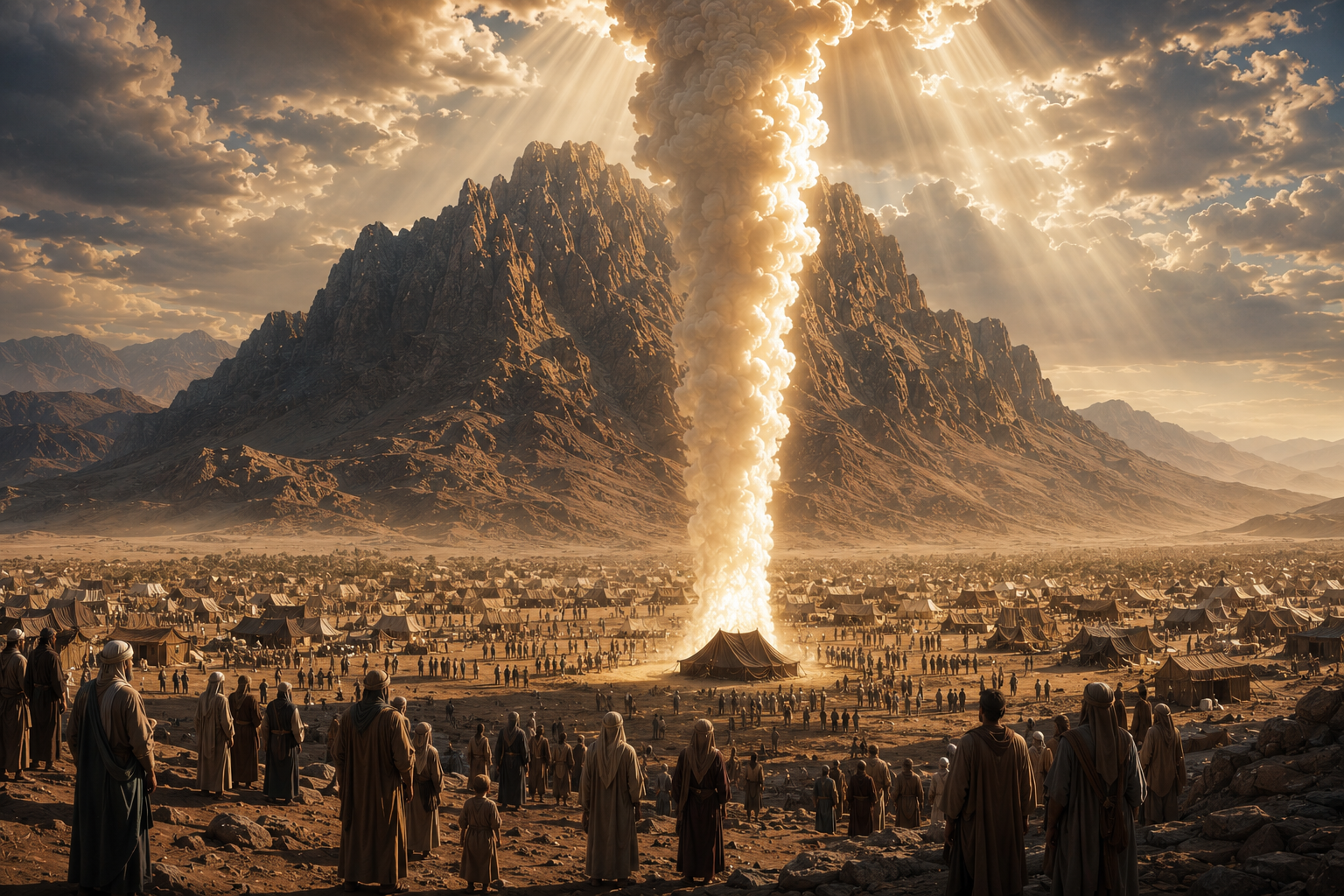
It must have been an awesome sight. All standing in front of their tent in silence as Moses goes into the tent of meeting to talk with God. But think about it. When you go to your church this week, you won’t go to stand around silently and watch someone go into a tent to talk with God. Because now everyone can go into the tent. But wait, it’s even better than that. You don’t have to go into a tent, because you are the tent. You are the temple of the Holy Spirit. You have access to what those children of Israel could not even imagine. Each one of us has access to God right where we sit. We can have this experience in Exodus before we get out of bed in the morning. This is the privilege of prayer for us.
That brings me to a shocking verse:
Exodus 8:13 And Yehovah did according to the word of Moses.
The first time I read this verse, I read it, “and Moses did according to the word of Yehovah.” That is what I was expecting to read. But it says that God acted because Moses spoke.
Prayer is an invitation to join with God in affecting the course of history. And we have primarily just looked at the first 2 books of the Bible, but if we had time to go through the rest of the Old Testament, we see that when people pray, things happen: fire falls from heaven, the sun stands still, the lame walk, the blind see, the hungry are fed, the dead come to life. When we pray, people are given another chance to repent.
Prayer is a powerful way we participate in His plan — He chose to design the world this way. He doesn’t have to have us. He could do it all without us. But He wants to partner with us (as he told Adam and Eve in the garden). God is inviting us, through prayer, to partner with Him to accomplish the plans He has for the world.
When we pray, God acts. Our prayers affect the way God acts in the world. So as we continue to go through the book of Acts, notice this: Every major act of God in the book of Acts comes in response to the prayers of God’s people.
Acts 1:14 All these with one accord were devoting themselves to prayer, together with the women and Mary the mother of Jesus, and his brothers.
Acts 2:42 And they devoted themselves to the apostles’ teaching and the fellowship, to the breaking of bread and the prayers.
Acts 6:4 But we will devote ourselves to prayer and to the ministry of the word.
Why were they so devoted to prayer? Because they were completely dependent on God’s power to do anything. And we wonder why we see so many churches where nothing seems to be happening. Because what does a church do without prayer, without the power of Jesus? Jesus said it:
John 15:5 Apart from me you can do nothing.
We need to pray. We were created to commune with God. We have been saved, delivered from sin, so that we may worship Him, learn more about Him through prayer and worship, and dwell with Him. And we have been called to be intercessors for others in our community. Listen to how the great preacher Charles Spurgeon said it:
“Believe me, if a church does not pray, it is dead. Instead of putting united prayer last, put it first. Everything will hinge upon the power of prayer in the church.”2
or Jonathan Edwards:
“When God has something very great to accomplish for His church, it is His will that there should precede it, the extraordinary prayers of His people.”3
God wants to do more in our churches than He does because we don’t ask. It is like we are soldiers in the trenches and our mission is to take the next hill, but we can’t because we are pinned down by machine gun fire. And we sit in the trenches, fretting that we cannot accomplish our mission because it is impossible. So we sit, and nothing happens. It is like we forgot we had a radio, and all we have to do is call the base and ask for air support to come in and take care of the problem.
James 4:2 You do not have because you do not ask.
I believe God wants to shower his love, grace, and mercy on this community. But He is waiting for some faithful intercessors. Like when Peter was released from Prison, there are miracles on our doorstep, and we won’t open the door.
These people in Antioch in 45 AD prayed, and the Spirit spoke to them, and they sent out the greatest missionary movement in the world, a movement that turned the world upside down. A movement that has resulted in 3 billion people following Jesus today. What would happen if we prayed like that? I do not know exactly what God will do if we devote ourselves to prayer. But I know what will happen if we don’t.
John 15:5 Apart from me you can do nothing.
I am asking you to be a faithful intercessor. To go before God for your community, as Moses went before God, as Jesus went before God for us, as Jesus, right this moment, by the throne of the Father, is speaking on your behalf. Let me close with another David Platt quote:
“Through prayer, God has called us not to watch history but to shape history for the glory of His great name”4
1. Brooks, Philip. from “Addresses”. 1893.
2. Platt, David. From a series of sermons on prayer that a friend had recorded. Much of this post is heavily influenced by his discussions.
3. Spurgeon, Charles. (popular quote, source unknown)
4. Edwards, Johnathan. “An Humble Attempt to Promote Explicit Agreement and Visible Union of God’s People in Extraordinary Prayer.” 1747.
5. Platt, David.


Leave a Reply